










REGIONAL SCENARIO
PLANNING: PROVEN
RESULTS
Alex Joyce // Fregonese Associates
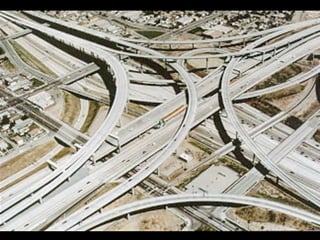
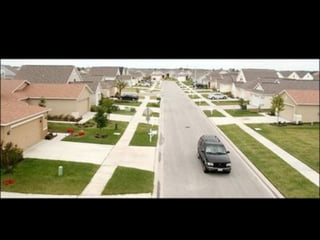
The future will not be like
 the past, nor the present
The future will not be like
 the past, nor the present
The future will not be like
 the past, nor the present
The future will not be like
 the past, nor the present
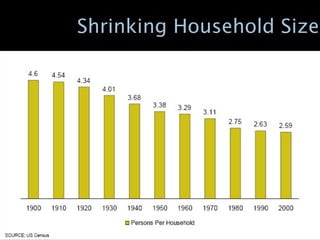
Shrinking Household Size
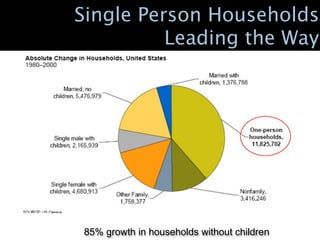
Single Person Households
          Leading the Way


85% growth in households without children
Changing Consumer Preferences


               Dr. Arthur C. Nelson, University of Utah
SCENARIOS
 preparing our regions for
 resilience in the face of
 uncertainty
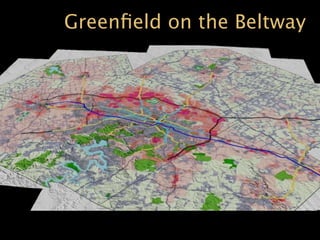
Greenfield on the Beltway
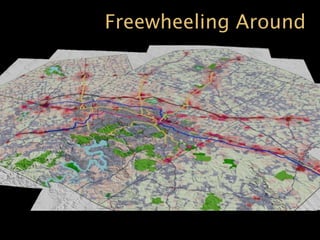
Freewheeling Around
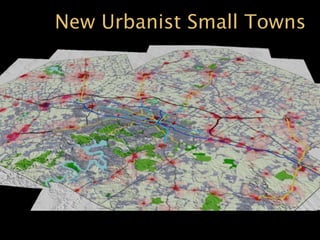
New Urbanist Small Towns
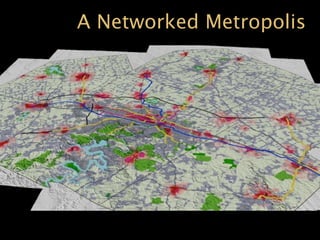
A Networked Metropolis
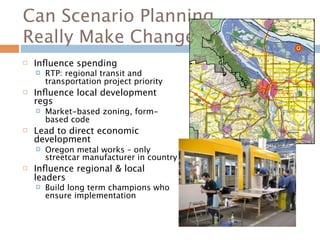
Can Scenario Planning
Really Make Change?
   Influence spending
       RTP: regional transit and
        transportation project priority
   Influence local development
    regs
       Market-based zoning, form-
        based code
   Lead to direct economic
    development
       Oregon metal works – only
        streetcar manufacturer in country
   Influence regional & local
    leaders
       Build long term champions who
        ensure implementation
WASATCH FRONT:
WASATCH CHOICES
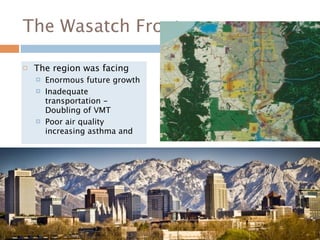
The Wasatch Front

   The region was facing
       Enormous future growth
       Inadequate
        transportation -
        Doubling of VMT
       Poor air quality
        increasing asthma and
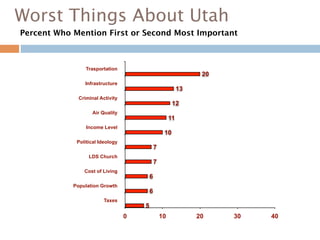
Worst Things About Utah
Percent Who Mention First or Second Most Important


                 Trasportation
                                                                  20
                Infrastructure
                                                            13
              Criminal Activity
                                                        12
                    Air Quality
                                                       11
                 Income Level
                                                   10
             Political Ideology
                                              7
                  LDS Church
                                              7
                Cost of Living
                                          6
            Population Growth
                                          6
                         Taxes
                                      5
                                  0               10             20    30   40
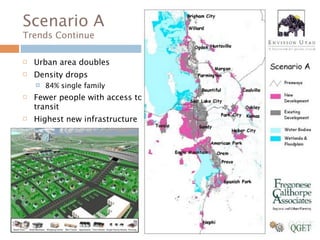
Scenario A
Trends Continue

   Urban area doubles
   Density drops
       84% single family
   Fewer people with access to
    transit
   Highest new infrastructure
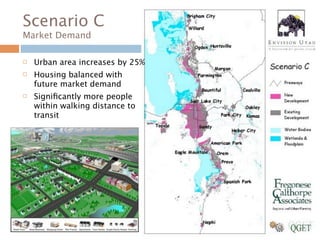
Scenario C
Market Demand

   Urban area increases by 25%
   Housing balanced with
    future market demand
   Significantly more people
    within walking distance to
    transit
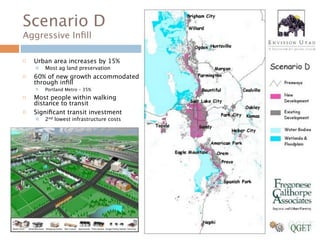
Scenario D
Aggressive Infill

   Urban area increases by 15%
       Most ag land preservation
   60% of new growth accommodated
    through infill
       Portland Metro – 35%
   Most people within walking
    distance to transit
   Significant transit investment
       2nd lowest infrastructure costs
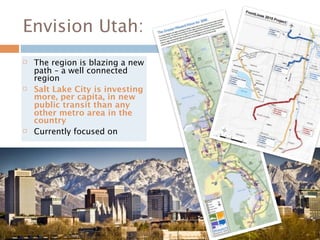
Envision Utah:
   The region is blazing a new
    path – a well connected
    region
   Salt Lake City is investing
    more, per capita, in new
    public transit than any
    other metro area in the
    country
   Currently focused on
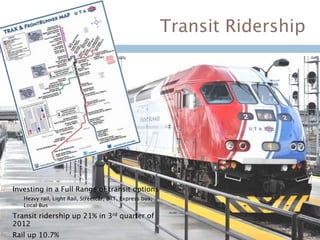
Transit Ridership


   Investing in a Full Range of transit options
       Heavy rail, Light Rail, Streetcar, BRT, Express bus,
        Local Bus
   Transit ridership up 21% in 3rd quarter of
    2012
   Rail up 10.7%
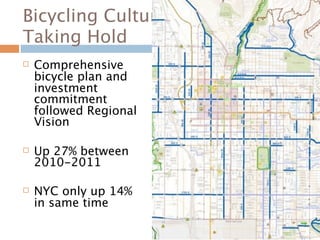
Bicycling Culture
Taking Hold
   Comprehensive
    bicycle plan and
    investment
    commitment
    followed Regional
    Vision

   Up 27% between
    2010-2011

   NYC only up 14%
    in same time
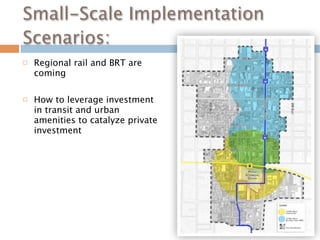
Small-Scale Implementation
Scenarios:
   Regional rail and BRT are
    coming

   How to leverage investment
    in transit and urban
    amenities to catalyze private
    investment
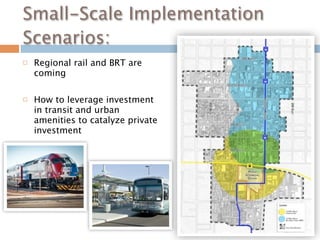
Small-Scale Implementation
Scenarios:
   Regional rail and BRT are
    coming

   How to leverage investment
    in transit and urban
    amenities to catalyze private
    investment
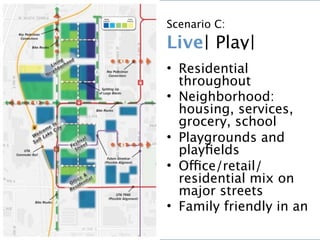
Scenario C:
Live| Play|
• Residential
  throughout
• Neighborhood:
  housing, services,
  grocery, school
• Playgrounds and
  playfields
• Office/retail/
  residential mix on
  major streets
• Family friendly in an
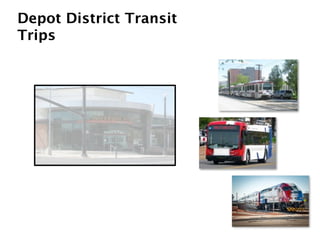
Depot District Transit
Trips
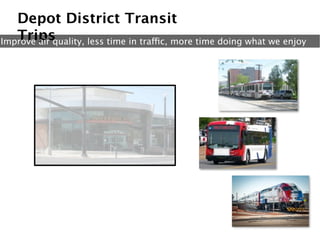
Depot District Transit
   Trips
Improve air quality, less time in traffic, more time doing what we enjoy
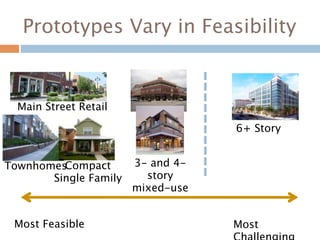
Prototypes Vary in Feasibility


  Main Street Retail

                                   6+ Story


TownhomesCompact       3- and 4-
       Single Family     story
                       mixed-use


 Most Feasible                     Most
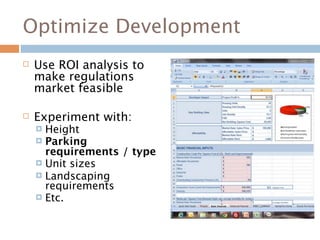
Optimize Development
   Use ROI analysis to
    make regulations
    market feasible

   Experiment with:
     Height
     Parking
      requirements / type
     Unit sizes
     Landscaping
      requirements
     Etc.
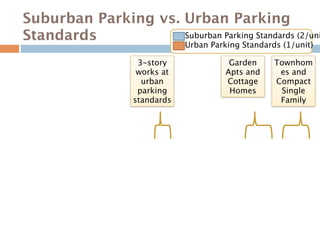
Suburban Parking vs. Urban Parking
Standards            Suburban Parking Standards (2/uni
                               Urban Parking Standards (1/unit)

                    3-story               Garden     Townhom
                    works at             Apts and     es and
                     urban               Cottage     Compact
                    parking               Homes        Single
                   standards                          Family
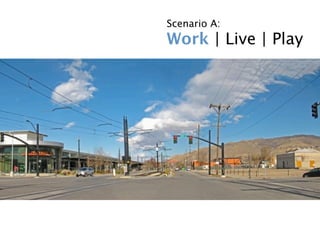
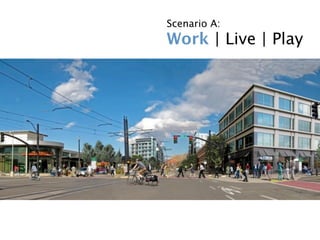
Scenario A:
Work | Live | Play
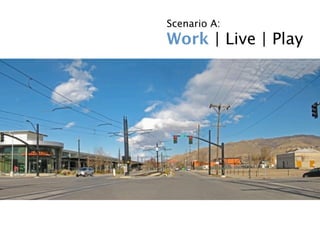
Scenario A:
Work | Live | Play
Scenario A:
Work | Live | Play
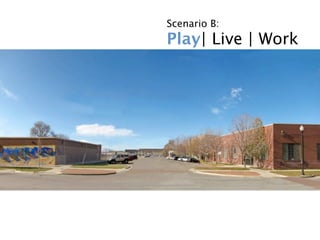
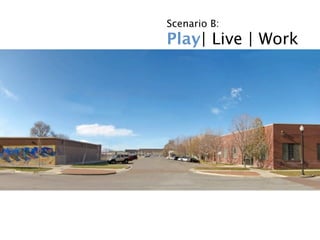
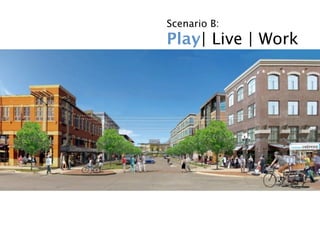
Scenario B:
Play| Live | Work
Scenario B:
Play| Live | Work
Scenario B:
Play| Live | Work
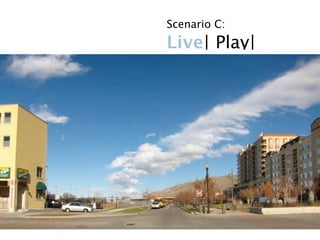
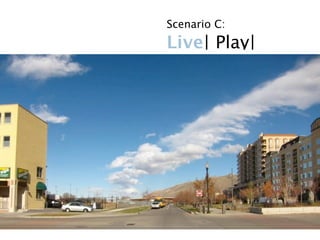
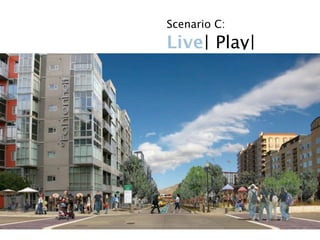
Scenario C:
Live| Play|
Scenario C:
Live| Play|
Scenario C:
Live| Play|
PORTLAND METRO:
2040 GROWTH
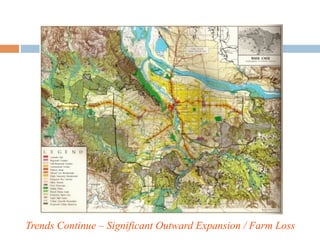
Trends Continue – Significant Outward Expansion / Farm Loss
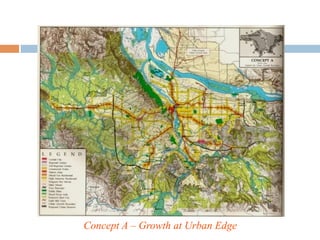
Concept A – Growth at Urban Edge
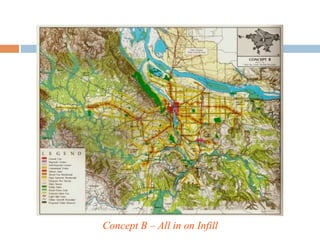
Concept B – All in on Infill
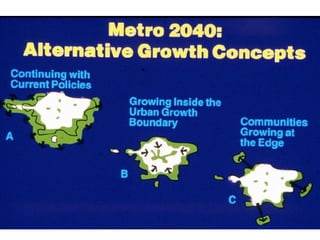
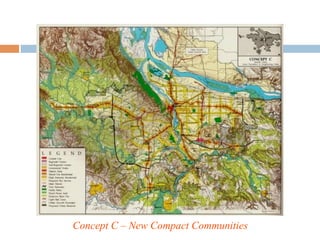
Concept C – New Compact Communities
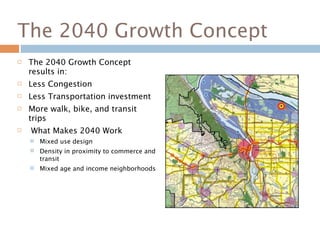
The 2040 Growth Concept
   The 2040 Growth Concept
    results in:
   Less Congestion
   Less Transportation investment
   More walk, bike, and transit
    trips
   What Makes 2040 Work
       Mixed use design
       Density in proximity to commerce and
        transit
       Mixed age and income neighborhoods
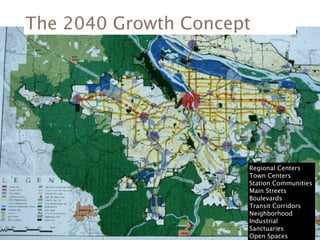
The 2040 Growth Concept


                      Regional Centers
                      Town Centers
                      Station Communities
                      Main Streets
                      Boulevards
                      Transit Corridors
                      Neighborhood
                      Industrial
                      Sanctuaries
                      Open Spaces
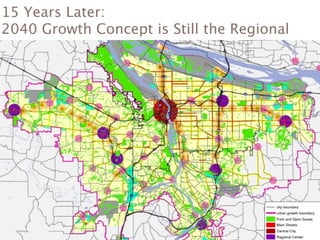
15 Years Later:
2040 Growth Concept is Still the Regional
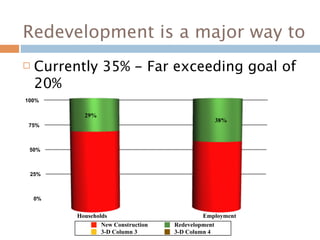
Redevelopment is a major way to
   Currently 35% - Far exceeding goal of
    20%
100%

            29%
                                                 38%
 75%


 50%


 25%


    0%


          Households                          Employment
                  New Construction   Redevelopment
                  3-D Column 3       3-D Column 4
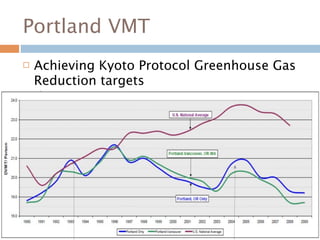
Portland VMT
   Achieving Kyoto Protocol Greenhouse Gas
    Reduction targets
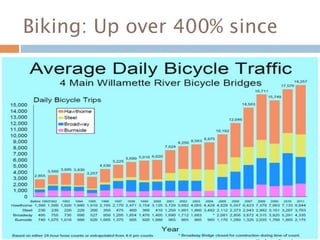
Biking: Up over 400% since
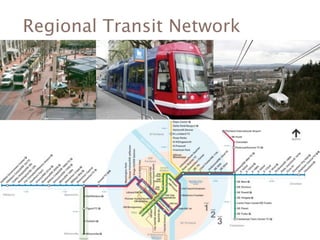
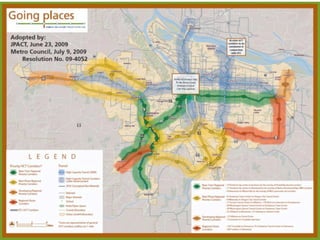
Regional Transit Network
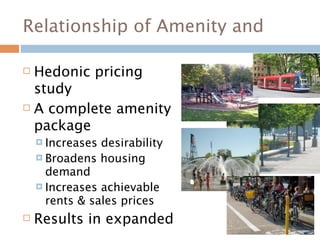
Relationship of Amenity and

 Hedonic pricing
  study
 A complete amenity

  package
     Increases desirability
     Broadens housing
      demand
     Increases achievable
      rents & sales prices
   Results in expanded
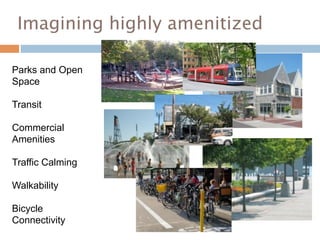
Imagining highly amenitized

Parks and Open
Space

Transit

Commercial
Amenities

Traffic Calming

Walkability

Bicycle
Connectivity
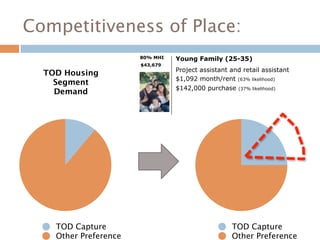
Competitiveness of Place:
                       80% MHI   Young Family (25-35)
                       $43,679
                                 Project assistant and retail assistant
  TOD Housing
                                 $1,092 month/rent (63% likelihood)
    Segment
                                 $142,000 purchase (37% likelihood)
    Demand


    TOD Capture                                    TOD Capture
    Other Preference                               Other Preference
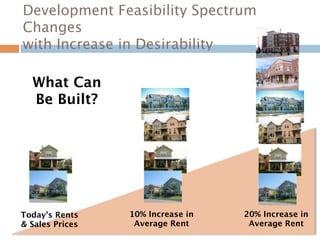
Development Feasibility Spectrum
Changes
with Increase in Desirability

  What Can
  Be Built?


Today’s Rents    10% Increase in   20% Increase in
& Sales Prices    Average Rent      Average Rent
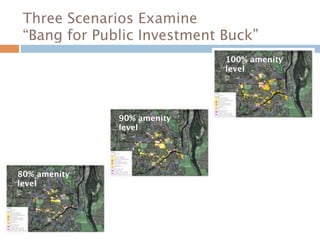
Three Scenarios Examine
 “Bang for Public Investment Buck”
                             100% amenity
                             level


              90% amenity
              level


80% amenity
level
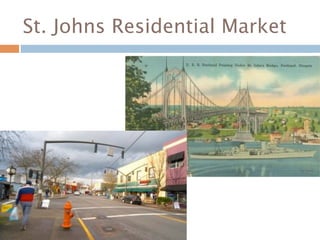
St. Johns Residential Market
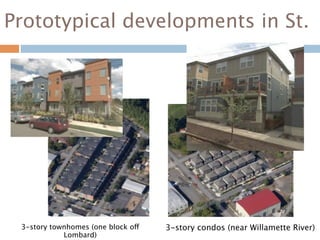
Prototypical developments in St.


 3-story townhomes (one block off   3-story condos (near Willamette River)
            Lombard)
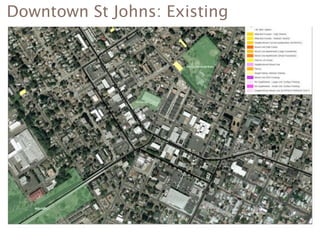
Downtown St Johns: Existing
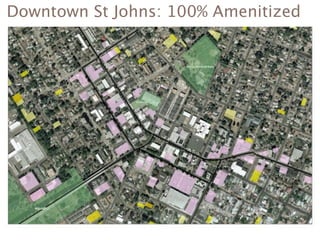
Downtown St Johns: 100% Amenitized
THANK YOU
Alex Joyce // alex@frego.com

regional scenario planning | Alex Joyce

Editor's Notes

  • #2 \n
  • #3 The future will not be like the past, or even the present\nThere is a lot we know:\nBaby boomers, immigrants and young professionals are changing urban markets\nThere is also a lot of uncertainty to prepare for:\nClimate change, economic and political uncertainty\n
  • #4 The future will not be like the past, or even the present\nThere is a lot we know:\nBaby boomers, immigrants and young professionals are changing urban markets\nThere is also a lot of uncertainty to prepare for:\nClimate change, economic and political uncertainty\n
  • #5 The future will not be like the past, or even the present\nThere is a lot we know:\nBaby boomers, immigrants and young professionals are changing urban markets\nThere is also a lot of uncertainty to prepare for:\nClimate change, economic and political uncertainty\n
  • #6 Older baby boomers (55-64) will constitute a senior population unprecedented in size;\nYounger boomers (46-54) many of whom won’t be able to sell their current suburban homes to move to new jobs;\nGeneration Y (late teens-early 30s), which may be renting housing far longer than did past generations; and\nImmigrants and their children, who may want to move to suburbs but may be priced out even after the current drop in prices.\n
  • #7 \n
  • #8 The shift we are experiencing is driven by several factors, including smaller household sizes – basically, a decease in family size. \n
  • #9 So we can see this in greater detail here – this is data from the real estate research firm RCLCO – and it show the change in households between 1980 and 2000 and we see the greatest increase in the number of one person households, which grew by 85%. This is followed by households occupied by people that are married without children and then single women with children. The classic household – people married with children – grew the least. \n
  • #10 What we are looking at here is the difference between existing stock and projected demand for three housing types: (1) Attached; aparments, lofts, condominiums, etc; (2) small lot single family; and (3) large lot single family. \n
  • #11 \n
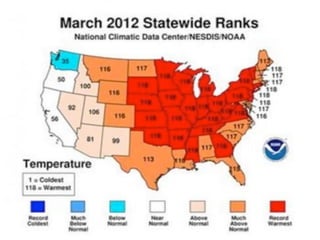
  • #12 Hottest March on record for most of the country\n
  • #13 Global climate change\n
  • #14 US housing crash – financial crisis – no more free money\n
  • #15 European debt crisis – global economic uncertainty\n
  • #16 Arab Spring – political stability – fuel supply and dependency\n
  • #17 \n
  • #18 \n
  • #19 \n
  • #20 \n
  • #21 \n
  • #22 \n
  • #23 \n
  • #24 \n
  • #25 \n
  • #26 \n
  • #27 \n
  • #28 \n
  • #29 \n
  • #30 \n
  • #31 \n
  • #32 \n
  • #33 \n
  • #34 Been through the same process of choosing in Provo, working toward a long-term vision\nWhat’s feasible in the shorter term?\n
  • #35 Been through the same process of choosing in Provo, working toward a long-term vision\nWhat’s feasible in the shorter term?\n
  • #36 \n
  • #37 That means an increase in transit trips – about 5-6ooo tran\nImprove air quality,\nSpend less time in traffic\nMore time for doing what matters to us\n
  • #38 \n
  • #39 \n
  • #40 \n
  • #41 We’ve explored what these modeled scenarios might look like on the ground.\n\nThe station, looking north, imagining significant job growth in the area…\n
  • #42 \n
  • #43 \n
  • #44 Standing on the steps of the historic Rio Grande Depot looking toward the new station, imagining a festival street…\n
  • #45 \n
  • #46 \n
  • #47 Just west of the Gateway, imagine new urban neighborhoods, think family friendly in an urban way\n
  • #48 \n
  • #49 \n
  • #50 \n
  • #51 \n
  • #52 \n
  • #53 \n
  • #54 \n
  • #55 \n
  • #56 \n
  • #57 \n
  • #58 \n
  • #59 \n
  • #60 \n
  • #61 \n
  • #62 \n
  • #63 \n
  • #64 \n
  • #65 -Not all amenities are created equal – bring a suburban area up to fully amentized… add nuance.\n
  • #66 \n
  • #67 \n
  • #68 \n
  • #69 \n
  • #70 \n
  • #71 \n
  • #72 \n
  • #73 \n
  • #74 \n
  • #75 \n