SOUTHEAST
UNIVERSITY
A PRESENTATION ON
Lyocell Fibre
Group-Squad
Submited By Submited To
Md. Monirul Islam Farida Previn
ID: 201900410054 Lecturer
Tonmoy Poddar Dept. of Textile Eng.
ID: 2019000410058
Md. Fazle Rabby Rahat
ID: 2019000410052
Md. Jasim Uddin
ID: 2019000410040 Date: 01-10-2020
Content of Lyocell Fibre
• Introduction
• Lyocell Manufacturing Process
• Lyocell Fiber Properties
• Environmental Impact of Lyocell
• Uses of lyocell Fiber
• Main differences between Lyocell and
cotton
• Lyocell Merits & Demerits
• Conclusion of Lyocell Fiber
Introduction
• Lyocell is a form of rayon.
• It consists of cellulose fibre, made from
dissolving pulp and then reconstituting it
by dry jet-wet spinning.
• The fibre is used to make textiles for
clothing and other purposes
• Lyocell [Lyo from Greek lyein=dissolve &
Cell= from cellulose]
• The lyocell process was developed in
1972 by a team at the now defunct
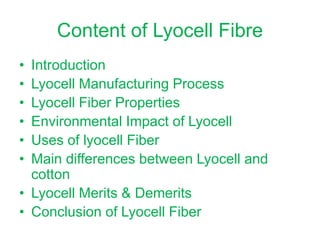
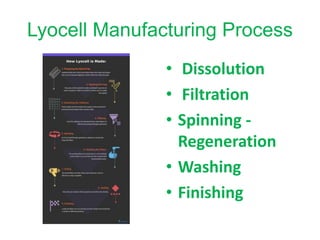
Lyocell Manufacturing Process
• Dissolution
• Filtration
• Spinning -
Regeneration
• Washing
• Finishing
Lyocell Fiber Properties
1. Soft, Strong, absorbent.
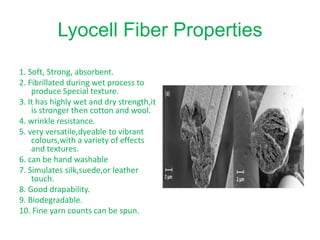
2. Fibrillated during wet process to
produce Special texture.
3. It has highly wet and dry strength,it
is stronger then cotton and wool.
4. wrinkle resistance.
5. very versatile,dyeable to vibrant
colours,with a variety of effects
and textures.
6. can be hand washable
7. Simulates silk,suede,or leather
touch.
8. Good drapability.
9. Biodegradable.
10. Fine yarn counts can be spun.
Environmental Impact of Lyocell
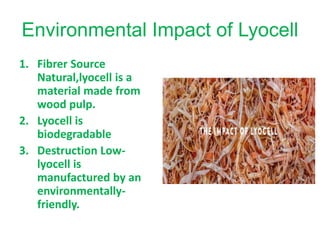
1. Fibrer Source
Natural,lyocell is a
material made from
wood pulp.
2. Lyocell is
biodegradable
3. Destruction Low-
lyocell is
manufactured by an
environmentally-
friendly.
Uses of lyocell Fiber
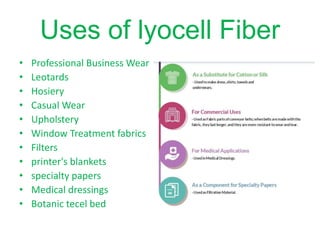
• Professional Business Wear
• Leotards
• Hosiery
• Casual Wear
• Upholstery
• Window Treatment fabrics
• Filters
• printer's blankets
• specialty papers
• Medical dressings
• Botanic tecel bed
Main differences between Lyocell
and cotton
1. Comfort
2. Hygiene
3. Freshness
4. Durability
5. The price
6. Aesthetics
Lyocell Merits & Demerits
Merits
• Durability
• Anti-bacterial
• Fabric texture
• Moisture Absorbent
• Appropriate for
sensitive skin
• Flexible
Demerits
1. Price
From a consumer’s perspective,
lyocell fabric is more expensive. This
is because of the technology used in
processing.
2. Fairly low surface energy
The fairly low surface energy of Lyocell
fiber makes it difficult for dyes to
bind to it during production.
Summary Of Lyocell Fiber
1. Lyocell is 100% cellulose and such it is biodegradable.
2. The fibre has also the potential for re-used and
remanufacture
3. Thes low fibrillation fibers are also considered to be
more resistant to biodegradation.
4.Composting, incineration and landfill can all be used as
end of life options.
Regenerated fibre lyocell

Regenerated fibre lyocell

  • 1.
    SOUTHEAST UNIVERSITY A PRESENTATION ON LyocellFibre Group-Squad Submited By Submited To Md. Monirul Islam Farida Previn ID: 201900410054 Lecturer Tonmoy Poddar Dept. of Textile Eng. ID: 2019000410058 Md. Fazle Rabby Rahat ID: 2019000410052 Md. Jasim Uddin ID: 2019000410040 Date: 01-10-2020
  • 2.
    Content of LyocellFibre • Introduction • Lyocell Manufacturing Process • Lyocell Fiber Properties • Environmental Impact of Lyocell • Uses of lyocell Fiber • Main differences between Lyocell and cotton • Lyocell Merits & Demerits • Conclusion of Lyocell Fiber
  • 3.
    Introduction • Lyocell isa form of rayon. • It consists of cellulose fibre, made from dissolving pulp and then reconstituting it by dry jet-wet spinning. • The fibre is used to make textiles for clothing and other purposes • Lyocell [Lyo from Greek lyein=dissolve & Cell= from cellulose] • The lyocell process was developed in 1972 by a team at the now defunct
  • 4.
    Lyocell Manufacturing Process •Dissolution • Filtration • Spinning - Regeneration • Washing • Finishing
  • 5.
    Lyocell Fiber Properties 1.Soft, Strong, absorbent. 2. Fibrillated during wet process to produce Special texture. 3. It has highly wet and dry strength,it is stronger then cotton and wool. 4. wrinkle resistance. 5. very versatile,dyeable to vibrant colours,with a variety of effects and textures. 6. can be hand washable 7. Simulates silk,suede,or leather touch. 8. Good drapability. 9. Biodegradable. 10. Fine yarn counts can be spun.
  • 6.
    Environmental Impact ofLyocell 1. Fibrer Source Natural,lyocell is a material made from wood pulp. 2. Lyocell is biodegradable 3. Destruction Low- lyocell is manufactured by an environmentally- friendly.
  • 7.
    Uses of lyocellFiber • Professional Business Wear • Leotards • Hosiery • Casual Wear • Upholstery • Window Treatment fabrics • Filters • printer's blankets • specialty papers • Medical dressings • Botanic tecel bed
  • 8.
    Main differences betweenLyocell and cotton 1. Comfort 2. Hygiene 3. Freshness 4. Durability 5. The price 6. Aesthetics
  • 9.
    Lyocell Merits &Demerits Merits • Durability • Anti-bacterial • Fabric texture • Moisture Absorbent • Appropriate for sensitive skin • Flexible Demerits 1. Price From a consumer’s perspective, lyocell fabric is more expensive. This is because of the technology used in processing. 2. Fairly low surface energy The fairly low surface energy of Lyocell fiber makes it difficult for dyes to bind to it during production.
  • 10.
    Summary Of LyocellFiber 1. Lyocell is 100% cellulose and such it is biodegradable. 2. The fibre has also the potential for re-used and remanufacture 3. Thes low fibrillation fibers are also considered to be more resistant to biodegradation. 4.Composting, incineration and landfill can all be used as end of life options.