Reflecting on Coaching
as aVocation
(The End of the Beginning)
#SpCP13 Week 14
Link
Living Off, Living For
Max Weber, Science as aVocation, 1946
1. Plan and deliver sport and physical activity
initiatives in the community.
2. Review, evaluate and communicate evidence-
based resources relevant to sport coaching pedagogy
and teaching.
3. Assess their sport coaching and teaching
performance through a reflective framework.
4. Use an e-portfolio to share their work with
others.
Prebendary, Honorifically
Max Weber, Science as aVocation, 1946
Science today is a 'vocation' organised in special
disciplines in the service of self-clarification and
knowledge of interrelated facts.
Max Weber, Science as aVocation, 1946
An occupational culture:
Similar personal characteristics, backgrounds and experiences
Social interaction, shared experience, common training and
affiliation
Mutual support, associated values and norms
A distinct jargon
Shapes perceptions of reality by developing classification systems
to describe experiences and concepts
Johnson, Koh and Killough, 2009
Observing the behaviour of more experienced coaches during
practice and games and listening during informal periods
leaves its mark on novice coaches.
It is largely through such experiences that collective
understandings begin to develop, and the shared meanings
about the occupational culture of coaching starts to take shape.
... much of what a new coach learns is through ongoing
interactions in the practical coaching context, as well as a
variety of informal sources.
Cushion, Armour and Jones, 2003
About Coaching
Woodman, L. (1993). Coaching:A Science, an art, an emerging profession.
Sport Science Review, 2(2), 1-13.
Wiman, L., Salmoni, A. & Hall, C. (2010).An Examination of the Definition
and Development of Expert Coaching.
International Journal of Coaching Science, 4(2), 37-60.
Link
Link
Link
I have always looked at reflective practice as a
compass of sorts to guide teachers when they may
be seeking direction as to what they are doing in their
classrooms.
The metaphor of reflection as a compass enables
teachers to stop, look, and discover where they
are at that moment and then decide where they want
to go (professionally) in the future.
Farrell (2012)
Teacherhood must be based on a profound understanding
about the influence of childhood events on teacher students’
present identity—and on their future identity as teachers as
well.
Heikkilä, Uusiautti & Määttä (2012)
Pedagogy
Performance
Reflection
Personal Performance
Review
1. Communicate
2. Analyse and inquire.
3. Solve problems.
4. Work independently and with others.
5. Professional and socially responsible.
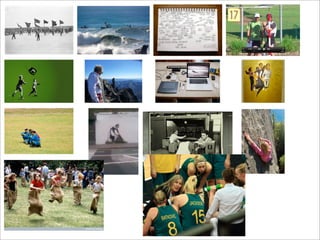
Photo Credits
Week 1: The Young Australia League marching across Sydney Harbour Bridge, February 1931
Week 2: Personal Development Plans
Week 3: Planning Programs
Week 4: Observation and Augmented Information (Keith Lyons, CC BY 3.0)
Week 5: Sharing and Presenting Information 1
Week 6: Mentoring 1
Week 7: Using Digital Media: Produsing Resources
Week 8: Class Free Week (Keith Lyons, CC BY 3.0)
Week 9: The Expert Pedagogue
Week 10: Sharing Information 2
Week 11: Managing Information
Week 12: Mentoring 2
Week 13: Long Term Athlete Development
Week 14: Reflecting on Coaching as a Vocation
Waving goodbye
Reflecting on Coaching as a Vocation

Reflecting on Coaching as a Vocation

  • 1.
    Reflecting on Coaching asaVocation (The End of the Beginning) #SpCP13 Week 14
  • 3.
  • 4.
    Living Off, LivingFor Max Weber, Science as aVocation, 1946
  • 5.
    1. Plan anddeliver sport and physical activity initiatives in the community. 2. Review, evaluate and communicate evidence- based resources relevant to sport coaching pedagogy and teaching. 3. Assess their sport coaching and teaching performance through a reflective framework. 4. Use an e-portfolio to share their work with others.
  • 6.
    Prebendary, Honorifically Max Weber,Science as aVocation, 1946
  • 7.
    Science today isa 'vocation' organised in special disciplines in the service of self-clarification and knowledge of interrelated facts. Max Weber, Science as aVocation, 1946
  • 8.
    An occupational culture: Similarpersonal characteristics, backgrounds and experiences Social interaction, shared experience, common training and affiliation Mutual support, associated values and norms A distinct jargon Shapes perceptions of reality by developing classification systems to describe experiences and concepts Johnson, Koh and Killough, 2009
  • 9.
    Observing the behaviourof more experienced coaches during practice and games and listening during informal periods leaves its mark on novice coaches. It is largely through such experiences that collective understandings begin to develop, and the shared meanings about the occupational culture of coaching starts to take shape. ... much of what a new coach learns is through ongoing interactions in the practical coaching context, as well as a variety of informal sources. Cushion, Armour and Jones, 2003
  • 10.
    About Coaching Woodman, L.(1993). Coaching:A Science, an art, an emerging profession. Sport Science Review, 2(2), 1-13. Wiman, L., Salmoni, A. & Hall, C. (2010).An Examination of the Definition and Development of Expert Coaching. International Journal of Coaching Science, 4(2), 37-60.
  • 11.
  • 12.
  • 13.
  • 17.
    I have alwayslooked at reflective practice as a compass of sorts to guide teachers when they may be seeking direction as to what they are doing in their classrooms. The metaphor of reflection as a compass enables teachers to stop, look, and discover where they are at that moment and then decide where they want to go (professionally) in the future. Farrell (2012)
  • 18.
    Teacherhood must bebased on a profound understanding about the influence of childhood events on teacher students’ present identity—and on their future identity as teachers as well. Heikkilä, Uusiautti & Määttä (2012)
  • 19.
  • 20.
  • 21.
    1. Communicate 2. Analyseand inquire. 3. Solve problems. 4. Work independently and with others. 5. Professional and socially responsible.
  • 22.
    Photo Credits Week 1:The Young Australia League marching across Sydney Harbour Bridge, February 1931 Week 2: Personal Development Plans Week 3: Planning Programs Week 4: Observation and Augmented Information (Keith Lyons, CC BY 3.0) Week 5: Sharing and Presenting Information 1 Week 6: Mentoring 1 Week 7: Using Digital Media: Produsing Resources Week 8: Class Free Week (Keith Lyons, CC BY 3.0) Week 9: The Expert Pedagogue Week 10: Sharing Information 2 Week 11: Managing Information Week 12: Mentoring 2 Week 13: Long Term Athlete Development Week 14: Reflecting on Coaching as a Vocation Waving goodbye