Recruitment[HR]
Presenting By-Avinash Sullad
Recruitment
• process of discovering potential candidates and
of generating a pool of qualified applicants by
encouraging qualified candidates to apply for
actual or anticipated job vacancies within the
organization
Objectives
1. Making large number of qualified applicants aware
of employment opportunities available in the
organization.
2. Attracting the attention of qualified.
Methods
• Company Databases
• Job Posting and bidding
• Advertisements
• Referrals and recommendations
• Executive Search agencies
• Campus Recruitment
Purposes and Importance
 Decide the present and future requirements
 Increase the pool of job candidates at minimum cost
 Increase the success rate of the Recruitment
selection process
 Increase organizational and individual’s effectiveness
Why Recruit ?
• Some of the more common business reasons for hiring include:
• Business Expansion or Diversification
• New Client, Customer, Market or Product
• Career Progression or Retirement
• Dismissal
• Attrition
• Increasing the capability of your firm by
• adding new skill sets
Also, as a recruiter you should know your organisation very well and
determine the need for recruitment. Know the Vision, Mission,
Objective, Culture, Policies and the Long term and Short term
business need of your organisation.
EFFECTS
• Positive Recruitment Process
– Attract highly qualified and competent people
– Ensure that the selected candidates stay longer with
the company
– Make sure that there is match between cost and
benefit
EFFECTS
• Negative Recruitment Process
– Failure to generate qualified applicants
– There is no match between cost and benefit
– Extra cost on training and supervision
– Increases the entry level pay scales
Recruitment Strategy
• Make Or Buy
• Technological sophistication
• Where to look
• How to look
– Internal Recruitment
• Present Employees
• Employee Referrals
• Former Employees
• Previous Applicants
RECRUITMENT PROCESS
• Planning
• Strategy development
• Searching
• Screening
• Evaluation and control
The recruitment process
• Recruitment sequence/procedure in any organization is as follows:
• Identify vacancy
• Prepare job description and person specification
• Advertise
• Managing the response
• Short-listing
• Visits
• References
• Arrange interviews
• Conduct the interview
• Decision making
• Convey the decision
• Appointment action
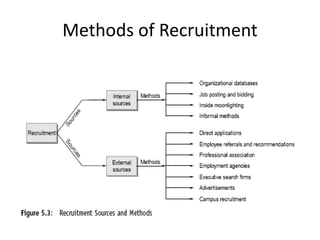
Methods of Recruitment
External Recruitment
• Professional Trade associations
• Advertisements
• Employment exchanges
• College / University / Institute placement
services
• Walk-ins
• Consultants
• Contractors
• Competitors
E - Recruiting
– Conduct background checks
– Interview through video conferencing
EVALUATION & CONTROL
• Salaries for Recruiters
• Management & professional time spent on
preparing job description, job specification
advertisements, association etc..
• Cost of advertisement
• Cost of overtime & outsourcing
New Approaches to Recruiting
• Employer Branding
• Special Events Recruiting
• E Recruitment
• Outsourcing recruitment
Thank You……

Recruitment_Avinash Sullad

  • 1.
  • 2.
    Recruitment • process ofdiscovering potential candidates and of generating a pool of qualified applicants by encouraging qualified candidates to apply for actual or anticipated job vacancies within the organization
  • 4.
    Objectives 1. Making largenumber of qualified applicants aware of employment opportunities available in the organization. 2. Attracting the attention of qualified. Methods • Company Databases • Job Posting and bidding • Advertisements • Referrals and recommendations • Executive Search agencies • Campus Recruitment
  • 5.
    Purposes and Importance Decide the present and future requirements  Increase the pool of job candidates at minimum cost  Increase the success rate of the Recruitment selection process  Increase organizational and individual’s effectiveness
  • 6.
    Why Recruit ? •Some of the more common business reasons for hiring include: • Business Expansion or Diversification • New Client, Customer, Market or Product • Career Progression or Retirement • Dismissal • Attrition • Increasing the capability of your firm by • adding new skill sets Also, as a recruiter you should know your organisation very well and determine the need for recruitment. Know the Vision, Mission, Objective, Culture, Policies and the Long term and Short term business need of your organisation.
  • 7.
    EFFECTS • Positive RecruitmentProcess – Attract highly qualified and competent people – Ensure that the selected candidates stay longer with the company – Make sure that there is match between cost and benefit
  • 8.
    EFFECTS • Negative RecruitmentProcess – Failure to generate qualified applicants – There is no match between cost and benefit – Extra cost on training and supervision – Increases the entry level pay scales
  • 9.
    Recruitment Strategy • MakeOr Buy • Technological sophistication • Where to look • How to look – Internal Recruitment • Present Employees • Employee Referrals • Former Employees • Previous Applicants
  • 10.
    RECRUITMENT PROCESS • Planning •Strategy development • Searching • Screening • Evaluation and control
  • 11.
    The recruitment process •Recruitment sequence/procedure in any organization is as follows: • Identify vacancy • Prepare job description and person specification • Advertise • Managing the response • Short-listing • Visits • References • Arrange interviews • Conduct the interview • Decision making • Convey the decision • Appointment action
  • 13.
  • 14.
    External Recruitment • ProfessionalTrade associations • Advertisements • Employment exchanges • College / University / Institute placement services • Walk-ins • Consultants • Contractors • Competitors
  • 15.
    E - Recruiting –Conduct background checks – Interview through video conferencing
  • 16.
    EVALUATION & CONTROL •Salaries for Recruiters • Management & professional time spent on preparing job description, job specification advertisements, association etc.. • Cost of advertisement • Cost of overtime & outsourcing
  • 17.
    New Approaches toRecruiting • Employer Branding • Special Events Recruiting • E Recruitment • Outsourcing recruitment
  • 18.