Reconstruction
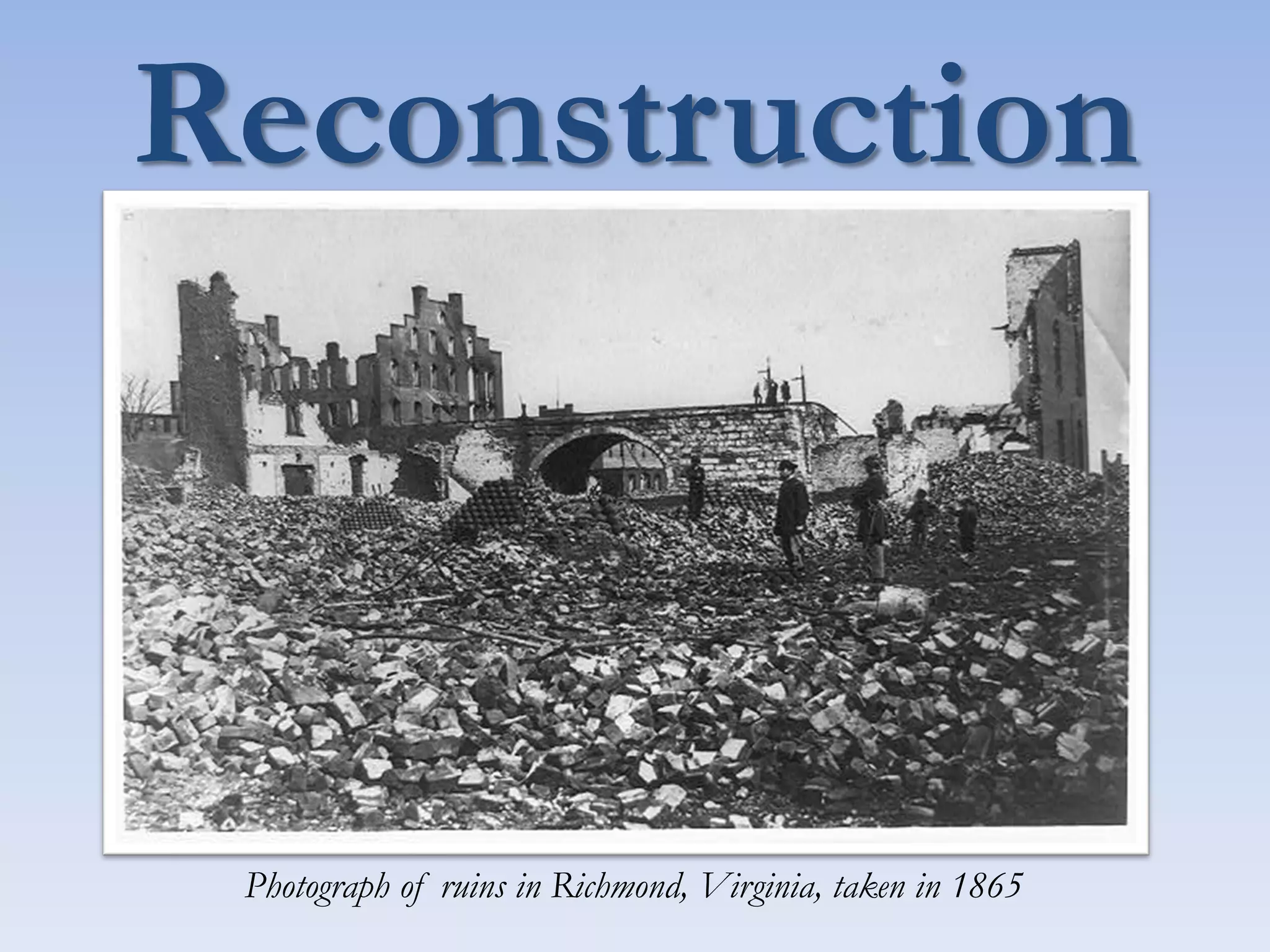
Photograph of ruins in Richmond, Virginia, taken in 1865
Major Questions After the Civil War
• How should the South be rebuilt?
• How should the states that seceded be brought back into
the Union?
• Should people who fought against the United States be
recognized as citizens? Should they be punished?
• What challenges faced freedmen and women?
• What branch of government should control the process
of Reconstruction?
Phases of Reconstruction
1865-1877
1. Wartime/10% (Lincoln)
2. Presidential (Johnson)
3. Congressional/Radical/Military Reconstruction
(Thaddeus Stevens and Rad. Republicans)
With malice toward none, with charity for
all, with firmness in the right as God
gives us to see the right, let us strive on to
finish the work we are in, to bind up the
nation's wounds, to care for him who
shall have borne the battle and for his
widow and his orphan, to do all which
may achieve and cherish a just and
lasting peace . . .
- Abraham Lincoln, Second Inaugural Address, March 4, 1865
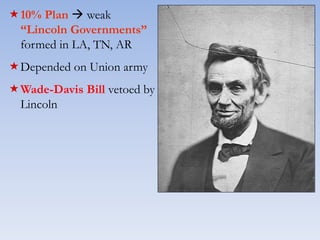
10% Plan  weak
“Lincoln Governments”
formed in LA, TN, AR
Depended on Union army
Wade-Davis Bill vetoed by
Lincoln
13th Amendment
 Ratified December 1865
 Neither slavery nor involuntary servitude, except as
punishment for crime whereof the party shall have been
duly convicted, shall exist within the United States or
any place subject to their jurisdiction.
 Congress shall have power to enforce this article by
appropriate legislation.
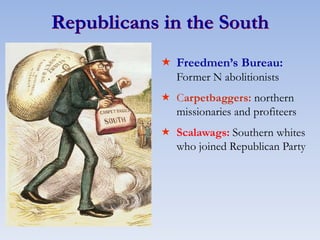
Republicans in the South
 Freedmen’s Bureau:
Former N abolitionists
 Carpetbaggers: northern
missionaries and profiteers
 Scalawags: Southern whites
who joined Republican Party
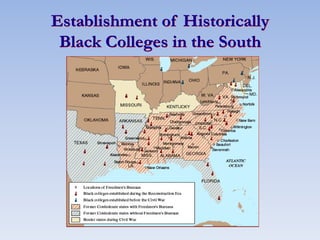
Establishment of Historically
Black Colleges in the South
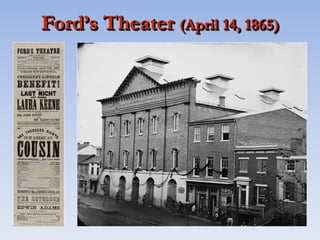
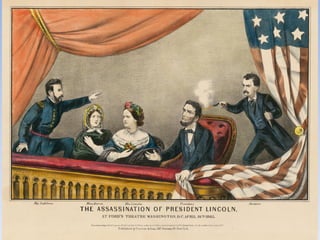
Ford’s Theater (April 14, 1865)
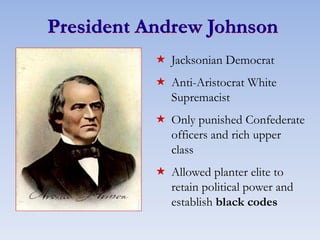
President Andrew Johnson
 Jacksonian Democrat
 Anti-Aristocrat White
Supremacist
 Only punished Confederate
officers and rich upper
class
 Allowed planter elite to
retain political power and
establish black codes
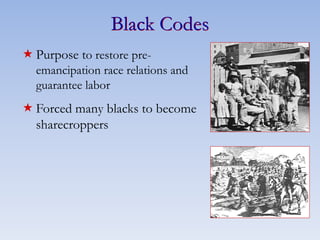
Black Codes
 Purpose to restore pre-
emancipation race relations and
guarantee labor
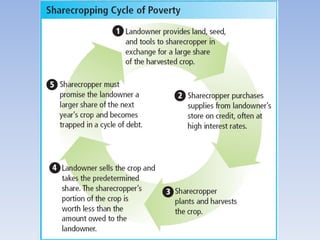
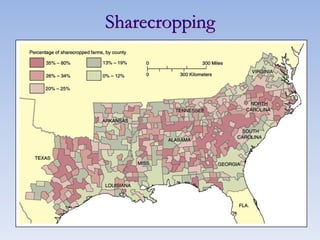
 Forced many blacks to become
sharecroppers
Sharecropping
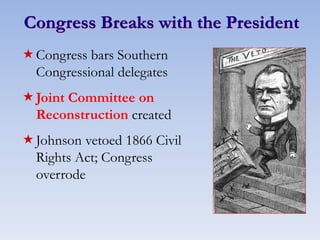
Congress Breaks with the President
Congress bars Southern
Congressional delegates
Joint Committee on
Reconstruction created
Johnson vetoed 1866 Civil
Rights Act; Congress
overrode
14th Amendment
Ratified in July, 1868.
* defined natural citizenship
* equal rights
* due process of the law
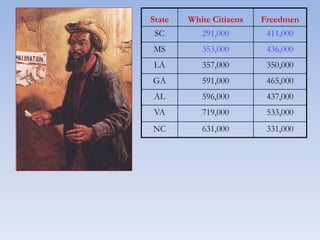
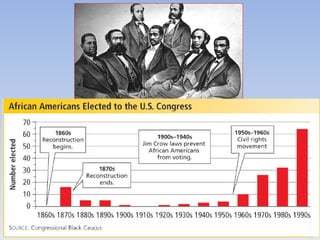
African American citizens can vote
State White Citizens Freedmen
SC 291,000 411,000
MS 353,000 436,000
LA 357,000 350,000
GA 591,000 465,000
AL 596,000 437,000
VA 719,000 533,000
NC 631,000 331,000
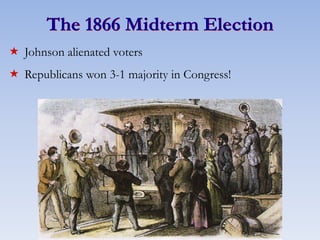
The 1866 Midterm Election
 Johnson alienated voters
 Republicans won 3-1 majority in Congress!
Radical Plan for Readmission
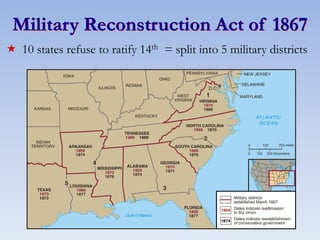
 Civil authorities in South subject to military
supervision
 New state constitutions required to ratify 13th and
14th Amendments and include black suffrage
Military Reconstruction Act of 1867
 10 states refuse to ratify 14th = split into 5 military districts
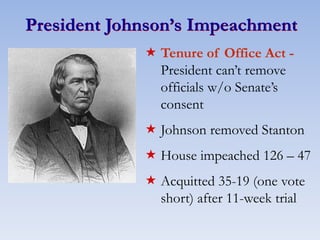
President Johnson’s Impeachment
 Tenure of Office Act -
President can’t remove
officials w/o Senate’s
consent
 Johnson removed Stanton
 House impeached 126 – 47
 Acquitted 35-19 (one vote
short) after 11-week trial
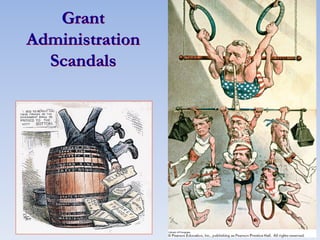
Grant
Administration
Scandals
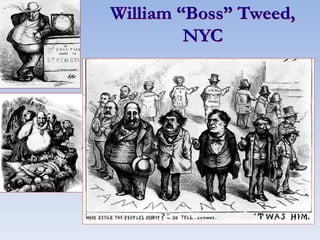
William “Boss” Tweed,
NYC
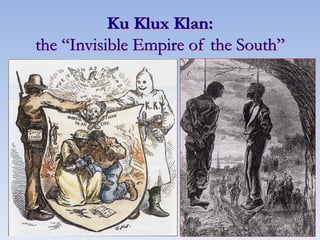
Ku Klux Klan:
the “Invisible Empire of the South”
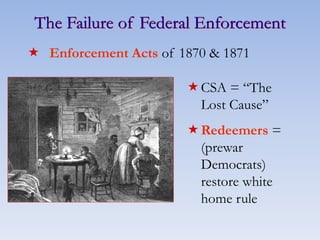
The Failure of Federal Enforcement
 Enforcement Acts of 1870 & 1871
CSA = “The
Lost Cause”
Redeemers =
(prewar
Democrats)
restore white
home rule
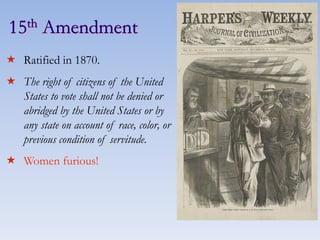
15th Amendment
 Ratified in 1870.
 The right of citizens of the United
States to vote shall not be denied or
abridged by the United States or by
any state on account of race, color, or
previous condition of servitude.
 Women furious!
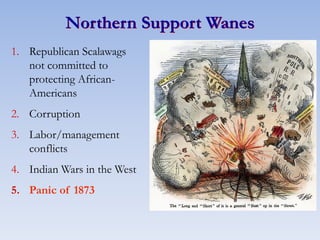
Northern Support Wanes
1. Republican Scalawags
not committed to
protecting African-
Americans
2. Corruption
3. Labor/management
conflicts
4. Indian Wars in the West
5. Panic of 1873
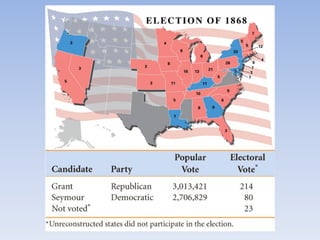
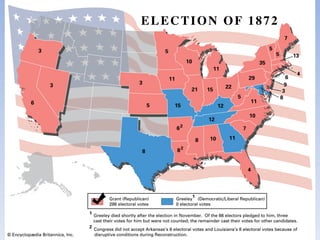
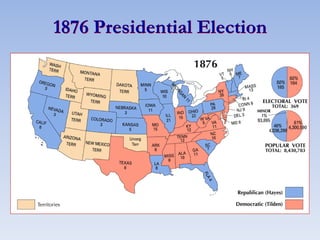
1876 Presidential Election
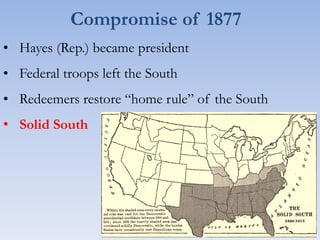
Compromise of 1877
• Hayes (Rep.) became president
• Federal troops left the South
• Redeemers restore “home rule” of the South
• Solid South

Reconstruction.pdf

  • 1.
    Reconstruction Photograph of ruinsin Richmond, Virginia, taken in 1865
  • 2.
    Major Questions Afterthe Civil War • How should the South be rebuilt? • How should the states that seceded be brought back into the Union? • Should people who fought against the United States be recognized as citizens? Should they be punished? • What challenges faced freedmen and women? • What branch of government should control the process of Reconstruction?
  • 3.
    Phases of Reconstruction 1865-1877 1.Wartime/10% (Lincoln) 2. Presidential (Johnson) 3. Congressional/Radical/Military Reconstruction (Thaddeus Stevens and Rad. Republicans)
  • 5.
    With malice towardnone, with charity for all, with firmness in the right as God gives us to see the right, let us strive on to finish the work we are in, to bind up the nation's wounds, to care for him who shall have borne the battle and for his widow and his orphan, to do all which may achieve and cherish a just and lasting peace . . . - Abraham Lincoln, Second Inaugural Address, March 4, 1865
  • 6.
    10% Plan weak “Lincoln Governments” formed in LA, TN, AR Depended on Union army Wade-Davis Bill vetoed by Lincoln
  • 7.
    13th Amendment  RatifiedDecember 1865  Neither slavery nor involuntary servitude, except as punishment for crime whereof the party shall have been duly convicted, shall exist within the United States or any place subject to their jurisdiction.  Congress shall have power to enforce this article by appropriate legislation.
  • 8.
    Republicans in theSouth  Freedmen’s Bureau: Former N abolitionists  Carpetbaggers: northern missionaries and profiteers  Scalawags: Southern whites who joined Republican Party
  • 9.
  • 10.
  • 13.
    President Andrew Johnson Jacksonian Democrat  Anti-Aristocrat White Supremacist  Only punished Confederate officers and rich upper class  Allowed planter elite to retain political power and establish black codes
  • 14.
    Black Codes  Purposeto restore pre- emancipation race relations and guarantee labor  Forced many blacks to become sharecroppers
  • 16.
  • 17.
    Congress Breaks withthe President Congress bars Southern Congressional delegates Joint Committee on Reconstruction created Johnson vetoed 1866 Civil Rights Act; Congress overrode
  • 19.
    14th Amendment Ratified inJuly, 1868. * defined natural citizenship * equal rights * due process of the law African American citizens can vote
  • 20.
    State White CitizensFreedmen SC 291,000 411,000 MS 353,000 436,000 LA 357,000 350,000 GA 591,000 465,000 AL 596,000 437,000 VA 719,000 533,000 NC 631,000 331,000
  • 22.
    The 1866 MidtermElection  Johnson alienated voters  Republicans won 3-1 majority in Congress!
  • 23.
    Radical Plan forReadmission  Civil authorities in South subject to military supervision  New state constitutions required to ratify 13th and 14th Amendments and include black suffrage
  • 24.
    Military Reconstruction Actof 1867  10 states refuse to ratify 14th = split into 5 military districts
  • 25.
    President Johnson’s Impeachment Tenure of Office Act - President can’t remove officials w/o Senate’s consent  Johnson removed Stanton  House impeached 126 – 47  Acquitted 35-19 (one vote short) after 11-week trial
  • 28.
  • 29.
  • 30.
    Ku Klux Klan: the“Invisible Empire of the South”
  • 31.
    The Failure ofFederal Enforcement  Enforcement Acts of 1870 & 1871 CSA = “The Lost Cause” Redeemers = (prewar Democrats) restore white home rule
  • 32.
    15th Amendment  Ratifiedin 1870.  The right of citizens of the United States to vote shall not be denied or abridged by the United States or by any state on account of race, color, or previous condition of servitude.  Women furious!
  • 33.
    Northern Support Wanes 1.Republican Scalawags not committed to protecting African- Americans 2. Corruption 3. Labor/management conflicts 4. Indian Wars in the West 5. Panic of 1873
  • 34.
  • 35.
    Compromise of 1877 •Hayes (Rep.) became president • Federal troops left the South • Redeemers restore “home rule” of the South • Solid South