HOW TO USE THE RECIPROCAL
ALLOCATION METHOD
By Paulino Silva
Introduction:
As part of management accounting, the use of departmental cost
allocation method for assigning indirect costs, despite its old origins,
it is still widely used today.
Introduction:
One of the problems in using departmental cost allocation method, is
the existence of reciprocal charges between service departments.
Through a practical example we will see how to solve this problem.
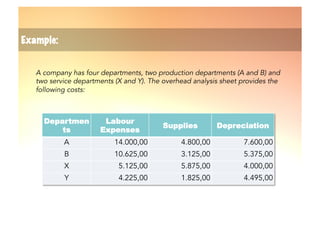
Departmen
ts
Labour
Expenses
Supplies Depreciation
A 14.000,00 4.800,00 7.600,00
B 10.625,00 3.125,00 5.375,00
X 5.125,00 5.875,00 4.000,00
Y 4.225,00 1.825,00 4.495,00
Example:
A company has four departments, two production departments (A and B) and
two service departments (X and Y). The overhead analysis sheet provides the
following costs:
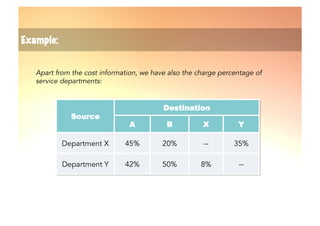
Source
Destination
A B X Y
Department X 45% 20% -- 35%
Department Y 42% 50% 8% --
Example:
Apart from the cost information, we have also the charge percentage of
service departments:
QUESTION:
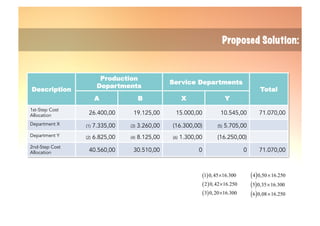
Present the two-stage cost allocation process.
Example:
1st STEP:
Elimination of reciprocal charges.
Proposed Solution:
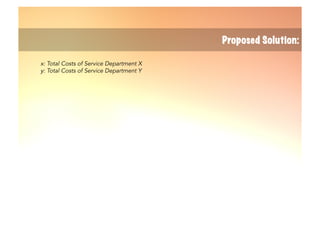
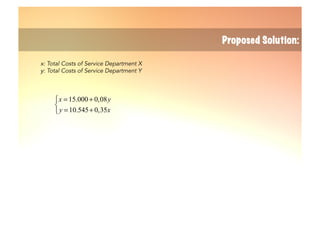
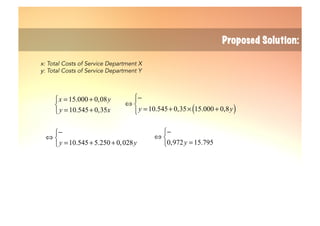
x: Total Costs of Service Department X
y: Total Costs of Service Department Y
Proposed Solution:
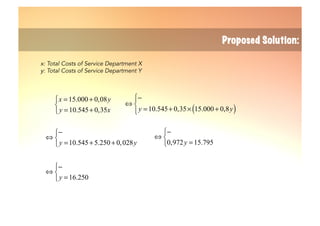
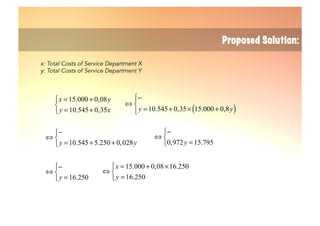
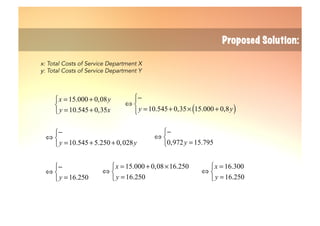
x = 15.000 + 0,08y
y = 10.545+ 0,35x
⎧
⎨
⎩
Proposed Solution:
x: Total Costs of Service Department X
y: Total Costs of Service Department Y
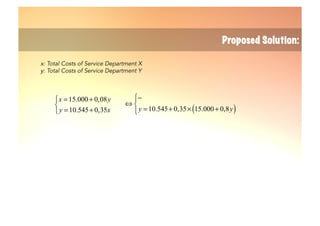
x = 15.000 + 0,08y
y = 10.545+ 0,35x
⎧
⎨
⎩
⇔
−
y = 10.545+ 0,35× 15.000 + 0,8y( )
⎧
⎨
⎪
⎩⎪
Proposed Solution:
x: Total Costs of Service Department X
y: Total Costs of Service Department Y
x = 15.000 + 0,08y
y = 10.545+ 0,35x
⎧
⎨
⎩
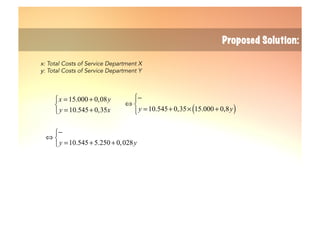
10.545 5.250 0,028y y
−⎧
⇔ ⎨
= + +⎩
⇔
−
y = 10.545+ 0,35× 15.000 + 0,8y( )
⎧
⎨
⎪
⎩⎪
Proposed Solution:
x: Total Costs of Service Department X
y: Total Costs of Service Department Y
x = 15.000 + 0,08y
y = 10.545+ 0,35x
⎧
⎨
⎩
10.545 5.250 0,028y y
−⎧
⇔ ⎨
= + +⎩
⇔
−
0,972y = 15.795
⎧
⎨
⎩
⇔
−
y = 10.545+ 0,35× 15.000 + 0,8y( )
⎧
⎨
⎪
⎩⎪
Proposed Solution:
x: Total Costs of Service Department X
y: Total Costs of Service Department Y
x = 15.000 + 0,08y
y = 10.545+ 0,35x
⎧
⎨
⎩
10.545 5.250 0,028y y
−⎧
⇔ ⎨
= + +⎩
⇔
−
0,972y = 15.795
⎧
⎨
⎩
⇔
−
y = 10.545+ 0,35× 15.000 + 0,8y( )
⎧
⎨
⎪
⎩⎪
⇔
−
y = 16.250
⎧
⎨
⎩
Proposed Solution:
x: Total Costs of Service Department X
y: Total Costs of Service Department Y
x = 15.000 + 0,08y
y = 10.545+ 0,35x
⎧
⎨
⎩
10.545 5.250 0,028y y
−⎧
⇔ ⎨
= + +⎩
⇔
−
0,972y = 15.795
⎧
⎨
⎩
⇔
x = 15.000 + 0,08×16.250
y = 16.250
⎧
⎨
⎩
⇔
−
y = 10.545+ 0,35× 15.000 + 0,8y( )
⎧
⎨
⎪
⎩⎪
⇔
−
y = 16.250
⎧
⎨
⎩
Proposed Solution:
x: Total Costs of Service Department X
y: Total Costs of Service Department Y
x = 15.000 + 0,08y
y = 10.545+ 0,35x
⎧
⎨
⎩
10.545 5.250 0,028y y
−⎧
⇔ ⎨
= + +⎩
⇔
−
0,972y = 15.795
⎧
⎨
⎩
⇔
x = 15.000 + 0,08×16.250
y = 16.250
⎧
⎨
⎩
⇔
−
y = 10.545+ 0,35× 15.000 + 0,8y( )
⎧
⎨
⎪
⎩⎪
⇔
x = 16.300
y = 16.250
⎧
⎨
⎩
⇔
−
y = 16.250
⎧
⎨
⎩
Proposed Solution:
x: Total Costs of Service Department X
y: Total Costs of Service Department Y
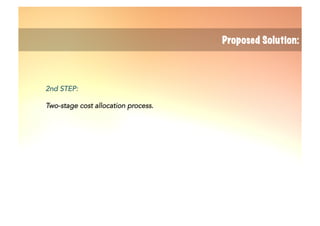
2nd STEP:
Two-stage cost allocation process.
Proposed Solution:
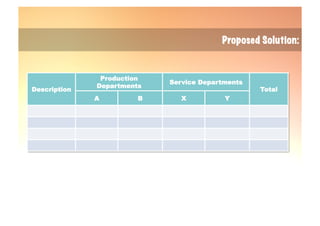
Description
Production
Departments
Service Departments
Total
A B X Y
Proposed Solution:
Description
Production
Departments
Service Departments
Total
A B X Y
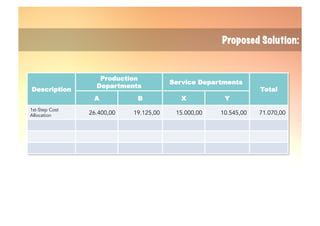
1st-Step Cost
Allocation 26.400,00 19.125,00 15.000,00 10.545,00 71.070,00
Proposed Solution:
Description
Production
Departments
Service Departments
Total
A B X Y
1st-Step Cost
Allocation 26.400,00 19.125,00 15.000,00 10.545,00 71.070,00
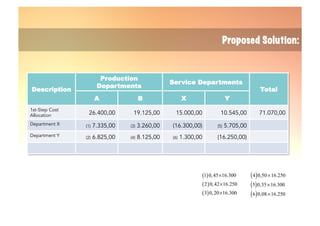
Department X (1) 7.335,00 (3) 3.260,00 (16.300,00) (5) 5.705,00
Department Y (2) 6.825,00 (4) 8.125,00 (6) 1.300,00 (16.250,00)
( )
( )
( )
1 0,45 16.300
2 0,42 16.250
3 0,20 16.300
×
×
×
4( )0,50 ×16.250
5( )0,35×16.300
6( )0,08×16.250
Proposed Solution:
Description
Production
Departments
Service Departments
Total
A B X Y
1st-Step Cost
Allocation 26.400,00 19.125,00 15.000,00 10.545,00 71.070,00
Department X (1) 7.335,00 (3) 3.260,00 (16.300,00) (5) 5.705,00
Department Y (2) 6.825,00 (4) 8.125,00 (6) 1.300,00 (16.250,00)
2nd-Step Cost
Allocation 40.560,00 30.510,00 0 0 71.070,00
( )
( )
( )
1 0,45 16.300
2 0,42 16.250
3 0,20 16.300
×
×
×
4( )0,50 ×16.250
5( )0,35×16.300
6( )0,08×16.250
Proposed Solution:
PAULINO SILVA
www.paulinosilva.com
Acknowledgements:	
  

Reciprocal Allocation Method

  • 1.
    HOW TO USETHE RECIPROCAL ALLOCATION METHOD By Paulino Silva
  • 2.
    Introduction: As part ofmanagement accounting, the use of departmental cost allocation method for assigning indirect costs, despite its old origins, it is still widely used today.
  • 3.
    Introduction: One of theproblems in using departmental cost allocation method, is the existence of reciprocal charges between service departments. Through a practical example we will see how to solve this problem.
  • 4.
    Departmen ts Labour Expenses Supplies Depreciation A 14.000,004.800,00 7.600,00 B 10.625,00 3.125,00 5.375,00 X 5.125,00 5.875,00 4.000,00 Y 4.225,00 1.825,00 4.495,00 Example: A company has four departments, two production departments (A and B) and two service departments (X and Y). The overhead analysis sheet provides the following costs:
  • 5.
    Source Destination A B XY Department X 45% 20% -- 35% Department Y 42% 50% 8% -- Example: Apart from the cost information, we have also the charge percentage of service departments:
  • 6.
    QUESTION: Present the two-stagecost allocation process. Example:
  • 7.
    1st STEP: Elimination ofreciprocal charges. Proposed Solution:
  • 8.
    x: Total Costsof Service Department X y: Total Costs of Service Department Y Proposed Solution:
  • 9.
    x = 15.000+ 0,08y y = 10.545+ 0,35x ⎧ ⎨ ⎩ Proposed Solution: x: Total Costs of Service Department X y: Total Costs of Service Department Y
  • 10.
    x = 15.000+ 0,08y y = 10.545+ 0,35x ⎧ ⎨ ⎩ ⇔ − y = 10.545+ 0,35× 15.000 + 0,8y( ) ⎧ ⎨ ⎪ ⎩⎪ Proposed Solution: x: Total Costs of Service Department X y: Total Costs of Service Department Y
  • 11.
    x = 15.000+ 0,08y y = 10.545+ 0,35x ⎧ ⎨ ⎩ 10.545 5.250 0,028y y −⎧ ⇔ ⎨ = + +⎩ ⇔ − y = 10.545+ 0,35× 15.000 + 0,8y( ) ⎧ ⎨ ⎪ ⎩⎪ Proposed Solution: x: Total Costs of Service Department X y: Total Costs of Service Department Y
  • 12.
    x = 15.000+ 0,08y y = 10.545+ 0,35x ⎧ ⎨ ⎩ 10.545 5.250 0,028y y −⎧ ⇔ ⎨ = + +⎩ ⇔ − 0,972y = 15.795 ⎧ ⎨ ⎩ ⇔ − y = 10.545+ 0,35× 15.000 + 0,8y( ) ⎧ ⎨ ⎪ ⎩⎪ Proposed Solution: x: Total Costs of Service Department X y: Total Costs of Service Department Y
  • 13.
    x = 15.000+ 0,08y y = 10.545+ 0,35x ⎧ ⎨ ⎩ 10.545 5.250 0,028y y −⎧ ⇔ ⎨ = + +⎩ ⇔ − 0,972y = 15.795 ⎧ ⎨ ⎩ ⇔ − y = 10.545+ 0,35× 15.000 + 0,8y( ) ⎧ ⎨ ⎪ ⎩⎪ ⇔ − y = 16.250 ⎧ ⎨ ⎩ Proposed Solution: x: Total Costs of Service Department X y: Total Costs of Service Department Y
  • 14.
    x = 15.000+ 0,08y y = 10.545+ 0,35x ⎧ ⎨ ⎩ 10.545 5.250 0,028y y −⎧ ⇔ ⎨ = + +⎩ ⇔ − 0,972y = 15.795 ⎧ ⎨ ⎩ ⇔ x = 15.000 + 0,08×16.250 y = 16.250 ⎧ ⎨ ⎩ ⇔ − y = 10.545+ 0,35× 15.000 + 0,8y( ) ⎧ ⎨ ⎪ ⎩⎪ ⇔ − y = 16.250 ⎧ ⎨ ⎩ Proposed Solution: x: Total Costs of Service Department X y: Total Costs of Service Department Y
  • 15.
    x = 15.000+ 0,08y y = 10.545+ 0,35x ⎧ ⎨ ⎩ 10.545 5.250 0,028y y −⎧ ⇔ ⎨ = + +⎩ ⇔ − 0,972y = 15.795 ⎧ ⎨ ⎩ ⇔ x = 15.000 + 0,08×16.250 y = 16.250 ⎧ ⎨ ⎩ ⇔ − y = 10.545+ 0,35× 15.000 + 0,8y( ) ⎧ ⎨ ⎪ ⎩⎪ ⇔ x = 16.300 y = 16.250 ⎧ ⎨ ⎩ ⇔ − y = 16.250 ⎧ ⎨ ⎩ Proposed Solution: x: Total Costs of Service Department X y: Total Costs of Service Department Y
  • 16.
    2nd STEP: Two-stage costallocation process. Proposed Solution:
  • 17.
  • 18.
    Description Production Departments Service Departments Total A BX Y 1st-Step Cost Allocation 26.400,00 19.125,00 15.000,00 10.545,00 71.070,00 Proposed Solution:
  • 19.
    Description Production Departments Service Departments Total A BX Y 1st-Step Cost Allocation 26.400,00 19.125,00 15.000,00 10.545,00 71.070,00 Department X (1) 7.335,00 (3) 3.260,00 (16.300,00) (5) 5.705,00 Department Y (2) 6.825,00 (4) 8.125,00 (6) 1.300,00 (16.250,00) ( ) ( ) ( ) 1 0,45 16.300 2 0,42 16.250 3 0,20 16.300 × × × 4( )0,50 ×16.250 5( )0,35×16.300 6( )0,08×16.250 Proposed Solution:
  • 20.
    Description Production Departments Service Departments Total A BX Y 1st-Step Cost Allocation 26.400,00 19.125,00 15.000,00 10.545,00 71.070,00 Department X (1) 7.335,00 (3) 3.260,00 (16.300,00) (5) 5.705,00 Department Y (2) 6.825,00 (4) 8.125,00 (6) 1.300,00 (16.250,00) 2nd-Step Cost Allocation 40.560,00 30.510,00 0 0 71.070,00 ( ) ( ) ( ) 1 0,45 16.300 2 0,42 16.250 3 0,20 16.300 × × × 4( )0,50 ×16.250 5( )0,35×16.300 6( )0,08×16.250 Proposed Solution:
  • 21.