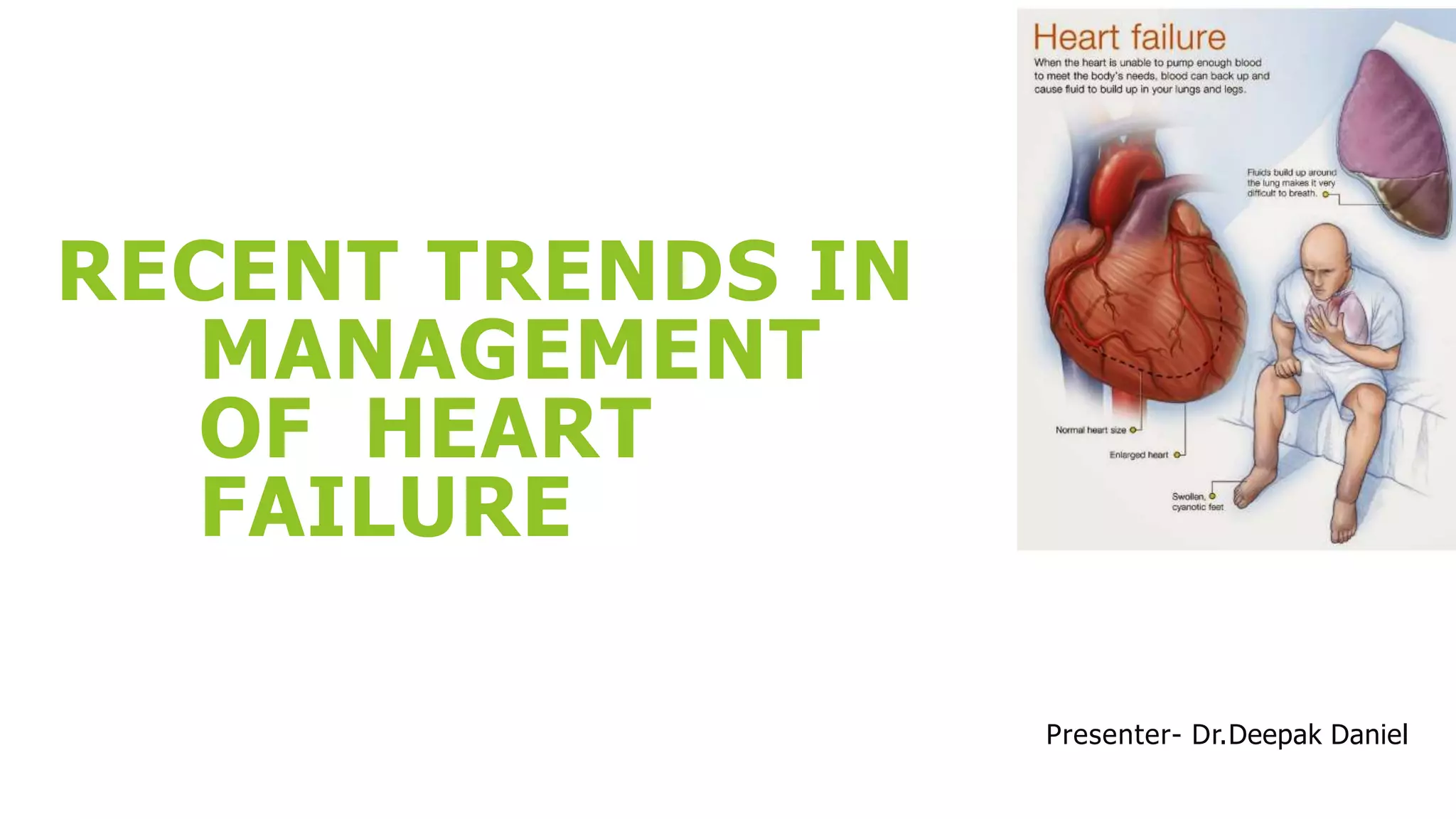
RECENT TRENDS IN
MANAGEMENT
OF HEART
FAILURE
Presenter- Dr.Deepak Daniel
OUTLINE OF TODAY’S SEMINAR
Introduction
Epidemiology
Classification
Pathophysiology
Management
Recent advances
Summary
INTRODUCTION
A pathophysiologic state in which an
abnormality of cardiac function is
responsible for failure of the heart to
pump blood at a rate commensurate with
metabolic requirements of the tissues.
EPIDEMIOLOGY
Prevalance- 2% in developed countries and in India- 1.87 %
Its prevalence is increasing worldwide, likely due to
improved survival because of early diagnosis and better
treatment.
HF prevalence follows an exponential pattern, rising with age,
and affects 6–10% of people over age 65.
Approx 10% of patients with HF die each year.
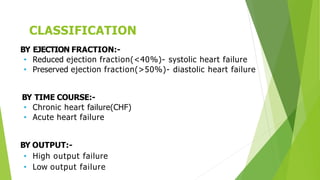
CLASSIFICATION
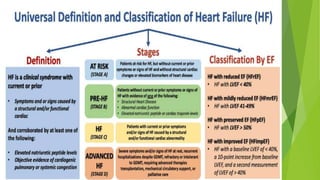
BY EJECTION FRACTION:-
• Reduced ejection fraction(<40%)- systolic heart failure
• Preserved ejection fraction(>50%)- diastolic heart failure
BY TIME COURSE:-
• Chronic heart failure(CHF)
• Acute heart failure
BY OUTPUT:-
• High output failure
• Low output failure
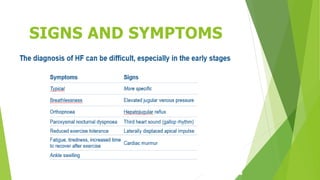
SIGNS AND SYMPTOMS
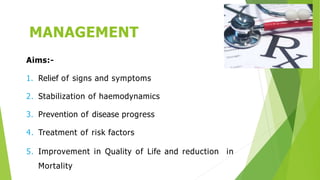
MANAGEMENT
Aims:-
1. Relief of signs and symptoms
2. Stabilization of haemodynamics
3. Prevention of disease progress
4. Treatment of risk factors
5. Improvement in Quality of Life and reduction in
Mortality
PHARMACOLOGICAL THERAPY
Drugs with positive inotropic effects:-
• Cardiac Glycosides:- Digoxin, Digitoxin
• Phosphodiesterase Inhibitors:- Milrinone,
Enoximone, Levosimendan
• Beta- Agonists:- Dopamine, Dobutamine, Nor-
adrenaline
 Drugs without positive inotropic effects:-
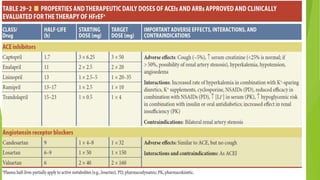
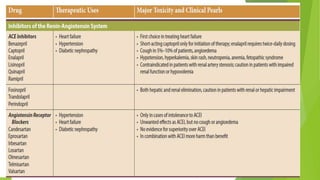
• ACEIs:- Enalapril, Lisinopril, Captopril, Ramipril
• ARBs:- Losartan, Candesartan, Irbesartan
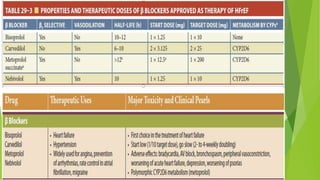
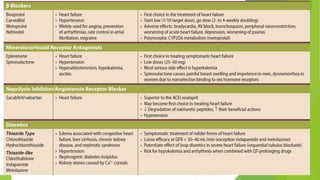
• Beta-Blockers:- Bisoprolol, Carvedilol, Metoprolol
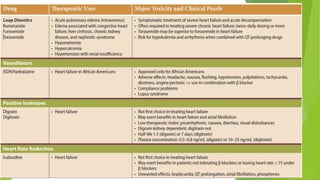
• Vasodilators:- Hydralazine, Isosorbide Dinitrate,
Nitroprusside
TREATMENT PRINCIPLES
1. Neurohumoral modulation
2. Preload reduction
3. Afterload reduction
4. Increasing Cardiac contractility
5. Heart rate reduction
Treatment Principle I:
Neurohumoral Modulation
• Is The Cornerstone Of Heart Failure Therapy.
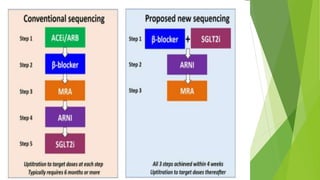
• Therapy consists of ACEIs/ARBs, β blockers, and MRAs.
Renin Angiotensin system
(RAS) Inhibitors
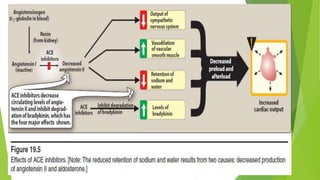
 ACE inhibitors and ARBs are used to block RAS.
 They are thus recommended for all grades of CHF,
unless contraindicated, or if renal function deteriorates.
 ACE inhibitor therapy is generally started at low doses
which are gradually increased.
Currently used as First line agents in symptomatic and
asymptomatic
Used as Combination with diuretics to make first line therapy in
HF
Slow : progress of ventricular dilatation
Prolong survival : prevent pathological remodelling : heart &
blood vessels
ß-Blockers
 Prevent the changes that occur because of chronic activation
of the sympathetic nervous system.
 Decrease heart rate and inhibit release of renin in the kidneys.
 In addition, β-blockers prevent the deleterious effects of norepinephrine
on the cardiac muscle fibers,
decreasing remodeling, hypertrophy, and cell death.
BETA BLOCKERS
Heart Failure Raised epinephrine and non-epinephrine
level Cardiac Hypertrophy, Remodelling, Apoptosis,
Peripheral vasoconstriction
The β blockers competitively reduce β receptor–mediated
actions of Catecholamines:-
Reduce heart rate and force
Slow relaxation
Slow AV conduction
Suppress arrhythmias
Lower renin levels
And permit more or less bronchoconstriction, vasoconstriction,
and lowering of hepatic glucose production
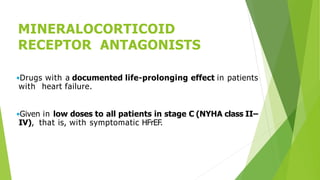
MINERALOCORTICOID
RECEPTOR ANTAGONISTS
•Drugs with a documented life-prolonging effect in patients
with heart failure.
•Given in low doses to all patients in stage C (NYHA class II–
IV), that is, with symptomatic HFrEF.
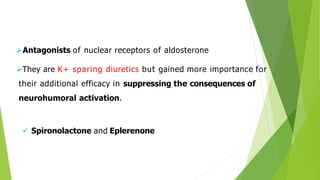
Antagonists of nuclear receptors of aldosterone
They are K+ sparing diuretics but gained more importance for
their additional efficacy in suppressing the consequences of
neurohumoral activation.
 Spironolactone and Eplerenone
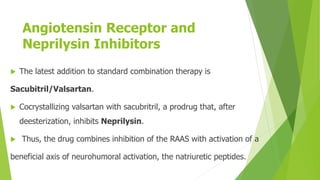
Angiotensin Receptor and
Neprilysin Inhibitors
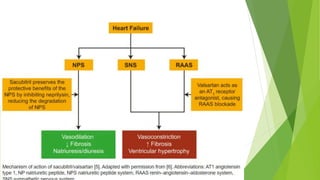
 The latest addition to standard combination therapy is
Sacubitril/Valsartan.
 Cocrystallizing valsartan with sacubritril, a prodrug that, after
deesterization, inhibits Neprilysin.
 Thus, the drug combines inhibition of the RAAS with activation of a
beneficial axis of neurohumoral activation, the natriuretic peptides.
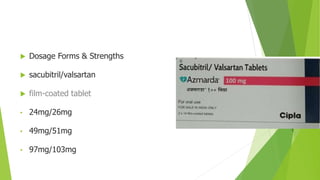
 Dosage Forms & Strengths
 sacubitril/valsartan
 film-coated tablet
• 24mg/26mg
• 49mg/51mg
• 97mg/103mg
Treatment Principle II: Preload
Reduction
 Fluid overload with increased filling pressures (increased
preload) and dilation of the ventricles in heart failure is the
consequence of decreased kidney perfusion and activation
of the RAAS.
Treatment Principle III: Afterload
Reduction
 The failing heart is exquisitely sensitive to increased arterial
resistance (i.e., afterload) .
 Vasodilators, therefore, should have beneficial effects on patients
with heart failure by reducing afterload and allowing the heart to
expel blood against lower resistance.
Hydralazine–Isosorbide Dinitrate
 A remarkable exception is the therapeutic effect of a fixed combination
of hydralazine and ISDN.
 The benefit was restricted to improvement in the cohort of African
Americans.
 It was FDA-approved in 2006, the first ethnically restricted approval.
 The fixed-combination formulation in use contains 37.5 mg hydralazine
and 20 mg ISDN.
Treatment Principle IV: Increasing
Cardiac
Contractility
 Historically physicians attempted to stimulate force generation with
positive inotropic drugs.
 Unfortunately, when used chronically, these agents do not improve
life expectancy or cardiac performance.
Rather, chronic use of positive inotropes is associated with excess mortality.
INCREASING CARDIAC
CONTRACTILITY
1.Na+/K+ ATPase Inhibitors:- Cardiac Glycosides
2.cAMP-Dependent Inotropes:- Milrinone, Enoximone
3.Myofilament Ca2+ Sensitizers:- Levosimendan
Actions of Digoxin:-
Positive Inotropic Effect by raising intracellular [Ca2+] and
enhanced contractility
This Increased cardiac output provides symptomatic relief in
patients
with heart failure
Currently given when ACEI & Diuretics fail to control symptoms
Used in Low output heart failure due to HT, IHD & arrhythmias
Dose:
oOral route is preferred: 0.125-0.5mg/day.
1) Slow loading with 0.125-0.25 mg/day
2) Rapid method with 0.5-0.75 mg every 8hrs for 1 day followed
by 0.125-0.25 mg/day( rare)
oIV 0.5 to 1 mg but is seldom required
cAMP-DEPENDENT INOTROPES
The cAMP-PDE inhibitors decrease cellular cAMP degradation
leading to elevated levels of cAMP.
This results in positive inotropic and chronotropic effects in
the heart.
Also causes dilatation of resistance and capacitance vessels,
effectively decreasing preload and afterload.
The drugs included here are Milrinone and Enoximone
Milrinone
Milrinone inhibits human heart PDE3 and PDE4 with similar
potency
The loading dose of milrinone is ordinarily 25–75 μg/kg, and
the continuous infusion rate ranges from 0.375 to 0.75
μg/kg/min
 Enoximone
Congener of inamrinone, is a relative selective Inhibitor of
PDE3.
IV in acute heart failure.
Better tolerated and improves physical quality of life.
Bolus doses of enoximone at 0.5–1.0 mg/kg over 5–10
min are followed by an infusion of 5–20 μg/kg/min
MYOFILAMENT CA2+ SENSITIZERS
In some countries, calcium sensitizers are approved for the short-term
treatment of acutely decompensated heart failure.
Increase the sensitivity of contractile myofilaments to Ca2+.
This causes an increased force for a given cytosolic Ca2+
concentration.
The drugs included are Levosimendan and Pimobendan
Treatment Principle V: Heart Rate
Reduction
 Heart rate is a strong determinant of cardiac
energy consumption.
 Higher heart rates in patients with heart
failure are associated with poor Prognosis.
IVABRADINE
Ivabradine acts by reducing the heart rate via specific
inhibition of the pacemaker current.
Used in combination with beta blockers in people with:-
 Heart failure with LVEF lower than 35 %
 Inadequately controlled by beta blockers alone
 Heart rate exceeds 70 beats per minute
Combination decreases the risk of hospitalization for heart
failure
Drug Treatment of Acutely Decompensated
Heart Failure
Drug treatment of acutely
decompensated heart failure
 The therapy of acutely decompensated heart failure aims at
fast symptom relief, fast recompensation, and reduction of
readmission rates.
 The main principles are diuretics and vasodilators, with
positive inotropes in selected cases and mechanical support
systems as an ultimate step.
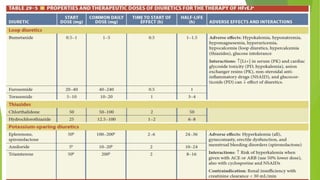
Diuretics
 Promptly treated with an intravenous loop diuretic such as
furosemide.
 Optimal doses and regimens need to be adapted to the clinical
picture.
 Intravenous bolus of 40–80 mg furosemide is a common starting
dose,
 often continued by an infusion of furosemide.
Vasodilators
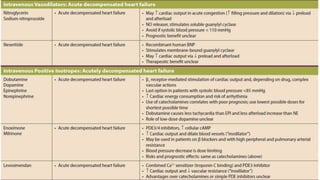
 Vasodilators such as nitroglycerin and nitroprusside reduce preload
and afterload.
 Best suited for patients with hypertension.
Nesiritide
Recombinant form of human BNP
.
Binds to surface receptors on vascular smooth muscle cells and
endothelial cells and activates cGMP.
MOA:-
o↓ arteriolar and venous tone (↑ cGMP in smooth muscle cells-
smooth muscle relaxation)
oAlso causes Natriuresis (Inhibits Na+ absorption in collecting
duct)
APPROVED for acute decompensated HF
POSITIVE INOTROPIC DRUGS
Dobutamine:-
 Dobutamine is the β adrenergic agonist of choice for the
management of
patients with acute CHF with systolic dysfunction
 Continuous infusions initiated at 2–3 μg/kg/ min and
uptitrated
 S/E:- tachycardia and supraventricular/ventricular arrhythmias
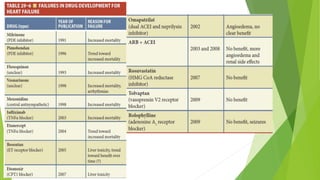
Recent Drugs Used in
Heart Failure
Dapagliflozin
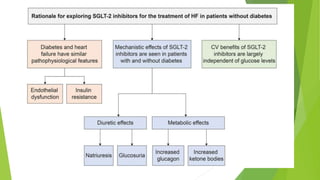
 Recently FDA approved drug for heart failure.(05/05/2020).
 Indicated to reduce the risk of cardiovascular death and hospitalization
for heart failure (HF) in adults with HF (NYHA class II-IV) with reduced
ejection fraction
 10 mg PO qDay
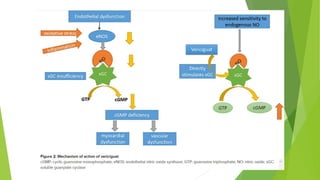
Vericiguat
 Recently FDA approved drug for heart failure.(20/01/2021).
Vericiguat is a soluble guanylate cyclase stimulator.
 Indicated to reduce risk of cardiovascular death and heart failure (HF)
hospitalization following a hospitalization for HF or need for outpatient IV
diuretics, in adults with symptomatic chronic HF and ejection fraction <45%
 Initial: 2.5 mg PO qDay
 Maintenance: Double dose ~q2Weeks as tolerated to target dose of 10 mg
PO qDay
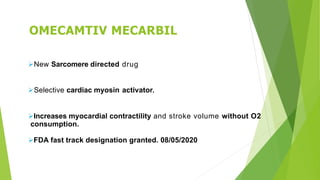
OMECAMTIV MECARBIL
New Sarcomere directed drug
Selective cardiac myosin activator.
Increases myocardial contractility and stroke volume without O2
consumption.
FDA fast track designation granted. 08/05/2020
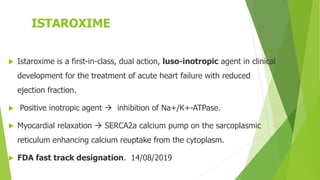
ISTAROXIME
 Istaroxime is a first-in-class, dual action, luso-inotropic agent in clinical
development for the treatment of acute heart failure with reduced
ejection fraction.
 Positive inotropic agent  inhibition of Na+/K+-ATPase.
 Myocardial relaxation  SERCA2a calcium pump on the sarcoplasmic
reticulum enhancing calcium reuptake from the cytoplasm.
 FDA fast track designation. 14/08/2019
Conclusion
 Heart failure is a significant clinical challenge associated with high
morbidity, mortality and economic burden.
 The prevalence of chronic heart failure is continuously increasing
globally.
 The short- and long-term morbidity and mortality in acute heart
failure is still unacceptably high.
 Further advances in understanding of pathophysiology of heart
failure will probably help to identify novel therapeutic agents for
patients with poor prognosis of heart failure.
recent trends in heart failure.pptx

recent trends in heart failure.pptx

  • 1.
    RECENT TRENDS IN MANAGEMENT OFHEART FAILURE Presenter- Dr.Deepak Daniel
  • 2.
    OUTLINE OF TODAY’SSEMINAR Introduction Epidemiology Classification Pathophysiology Management Recent advances Summary
  • 3.
    INTRODUCTION A pathophysiologic statein which an abnormality of cardiac function is responsible for failure of the heart to pump blood at a rate commensurate with metabolic requirements of the tissues.
  • 4.
    EPIDEMIOLOGY Prevalance- 2% indeveloped countries and in India- 1.87 % Its prevalence is increasing worldwide, likely due to improved survival because of early diagnosis and better treatment. HF prevalence follows an exponential pattern, rising with age, and affects 6–10% of people over age 65. Approx 10% of patients with HF die each year.
  • 5.
    CLASSIFICATION BY EJECTION FRACTION:- •Reduced ejection fraction(<40%)- systolic heart failure • Preserved ejection fraction(>50%)- diastolic heart failure BY TIME COURSE:- • Chronic heart failure(CHF) • Acute heart failure BY OUTPUT:- • High output failure • Low output failure
  • 9.
  • 12.
    MANAGEMENT Aims:- 1. Relief ofsigns and symptoms 2. Stabilization of haemodynamics 3. Prevention of disease progress 4. Treatment of risk factors 5. Improvement in Quality of Life and reduction in Mortality
  • 13.
    PHARMACOLOGICAL THERAPY Drugs withpositive inotropic effects:- • Cardiac Glycosides:- Digoxin, Digitoxin • Phosphodiesterase Inhibitors:- Milrinone, Enoximone, Levosimendan • Beta- Agonists:- Dopamine, Dobutamine, Nor- adrenaline
  • 14.
     Drugs withoutpositive inotropic effects:- • ACEIs:- Enalapril, Lisinopril, Captopril, Ramipril • ARBs:- Losartan, Candesartan, Irbesartan • Beta-Blockers:- Bisoprolol, Carvedilol, Metoprolol • Vasodilators:- Hydralazine, Isosorbide Dinitrate, Nitroprusside
  • 15.
    TREATMENT PRINCIPLES 1. Neurohumoralmodulation 2. Preload reduction 3. Afterload reduction 4. Increasing Cardiac contractility 5. Heart rate reduction
  • 16.
    Treatment Principle I: NeurohumoralModulation • Is The Cornerstone Of Heart Failure Therapy. • Therapy consists of ACEIs/ARBs, β blockers, and MRAs.
  • 17.
    Renin Angiotensin system (RAS)Inhibitors  ACE inhibitors and ARBs are used to block RAS.  They are thus recommended for all grades of CHF, unless contraindicated, or if renal function deteriorates.  ACE inhibitor therapy is generally started at low doses which are gradually increased.
  • 18.
    Currently used asFirst line agents in symptomatic and asymptomatic Used as Combination with diuretics to make first line therapy in HF Slow : progress of ventricular dilatation Prolong survival : prevent pathological remodelling : heart & blood vessels
  • 20.
    ß-Blockers  Prevent thechanges that occur because of chronic activation of the sympathetic nervous system.  Decrease heart rate and inhibit release of renin in the kidneys.  In addition, β-blockers prevent the deleterious effects of norepinephrine on the cardiac muscle fibers, decreasing remodeling, hypertrophy, and cell death.
  • 21.
    BETA BLOCKERS Heart FailureRaised epinephrine and non-epinephrine level Cardiac Hypertrophy, Remodelling, Apoptosis, Peripheral vasoconstriction The β blockers competitively reduce β receptor–mediated actions of Catecholamines:- Reduce heart rate and force Slow relaxation Slow AV conduction Suppress arrhythmias Lower renin levels And permit more or less bronchoconstriction, vasoconstriction, and lowering of hepatic glucose production
  • 22.
    MINERALOCORTICOID RECEPTOR ANTAGONISTS •Drugs witha documented life-prolonging effect in patients with heart failure. •Given in low doses to all patients in stage C (NYHA class II– IV), that is, with symptomatic HFrEF.
  • 23.
    Antagonists of nuclearreceptors of aldosterone They are K+ sparing diuretics but gained more importance for their additional efficacy in suppressing the consequences of neurohumoral activation.  Spironolactone and Eplerenone
  • 24.
    Angiotensin Receptor and NeprilysinInhibitors  The latest addition to standard combination therapy is Sacubitril/Valsartan.  Cocrystallizing valsartan with sacubritril, a prodrug that, after deesterization, inhibits Neprilysin.  Thus, the drug combines inhibition of the RAAS with activation of a beneficial axis of neurohumoral activation, the natriuretic peptides.
  • 26.
     Dosage Forms& Strengths  sacubitril/valsartan  film-coated tablet • 24mg/26mg • 49mg/51mg • 97mg/103mg
  • 27.
    Treatment Principle II:Preload Reduction  Fluid overload with increased filling pressures (increased preload) and dilation of the ventricles in heart failure is the consequence of decreased kidney perfusion and activation of the RAAS.
  • 29.
    Treatment Principle III:Afterload Reduction  The failing heart is exquisitely sensitive to increased arterial resistance (i.e., afterload) .  Vasodilators, therefore, should have beneficial effects on patients with heart failure by reducing afterload and allowing the heart to expel blood against lower resistance.
  • 30.
    Hydralazine–Isosorbide Dinitrate  Aremarkable exception is the therapeutic effect of a fixed combination of hydralazine and ISDN.  The benefit was restricted to improvement in the cohort of African Americans.  It was FDA-approved in 2006, the first ethnically restricted approval.  The fixed-combination formulation in use contains 37.5 mg hydralazine and 20 mg ISDN.
  • 31.
    Treatment Principle IV:Increasing Cardiac Contractility  Historically physicians attempted to stimulate force generation with positive inotropic drugs.  Unfortunately, when used chronically, these agents do not improve life expectancy or cardiac performance. Rather, chronic use of positive inotropes is associated with excess mortality.
  • 32.
    INCREASING CARDIAC CONTRACTILITY 1.Na+/K+ ATPaseInhibitors:- Cardiac Glycosides 2.cAMP-Dependent Inotropes:- Milrinone, Enoximone 3.Myofilament Ca2+ Sensitizers:- Levosimendan
  • 33.
    Actions of Digoxin:- PositiveInotropic Effect by raising intracellular [Ca2+] and enhanced contractility This Increased cardiac output provides symptomatic relief in patients with heart failure
  • 34.
    Currently given whenACEI & Diuretics fail to control symptoms Used in Low output heart failure due to HT, IHD & arrhythmias Dose: oOral route is preferred: 0.125-0.5mg/day. 1) Slow loading with 0.125-0.25 mg/day 2) Rapid method with 0.5-0.75 mg every 8hrs for 1 day followed by 0.125-0.25 mg/day( rare) oIV 0.5 to 1 mg but is seldom required
  • 35.
    cAMP-DEPENDENT INOTROPES The cAMP-PDEinhibitors decrease cellular cAMP degradation leading to elevated levels of cAMP. This results in positive inotropic and chronotropic effects in the heart. Also causes dilatation of resistance and capacitance vessels, effectively decreasing preload and afterload. The drugs included here are Milrinone and Enoximone
  • 36.
    Milrinone Milrinone inhibits humanheart PDE3 and PDE4 with similar potency The loading dose of milrinone is ordinarily 25–75 μg/kg, and the continuous infusion rate ranges from 0.375 to 0.75 μg/kg/min
  • 37.
     Enoximone Congener ofinamrinone, is a relative selective Inhibitor of PDE3. IV in acute heart failure. Better tolerated and improves physical quality of life. Bolus doses of enoximone at 0.5–1.0 mg/kg over 5–10 min are followed by an infusion of 5–20 μg/kg/min
  • 38.
    MYOFILAMENT CA2+ SENSITIZERS Insome countries, calcium sensitizers are approved for the short-term treatment of acutely decompensated heart failure. Increase the sensitivity of contractile myofilaments to Ca2+. This causes an increased force for a given cytosolic Ca2+ concentration. The drugs included are Levosimendan and Pimobendan
  • 39.
    Treatment Principle V:Heart Rate Reduction  Heart rate is a strong determinant of cardiac energy consumption.  Higher heart rates in patients with heart failure are associated with poor Prognosis.
  • 40.
    IVABRADINE Ivabradine acts byreducing the heart rate via specific inhibition of the pacemaker current. Used in combination with beta blockers in people with:-  Heart failure with LVEF lower than 35 %  Inadequately controlled by beta blockers alone  Heart rate exceeds 70 beats per minute Combination decreases the risk of hospitalization for heart failure
  • 41.
    Drug Treatment ofAcutely Decompensated Heart Failure Drug treatment of acutely decompensated heart failure  The therapy of acutely decompensated heart failure aims at fast symptom relief, fast recompensation, and reduction of readmission rates.  The main principles are diuretics and vasodilators, with positive inotropes in selected cases and mechanical support systems as an ultimate step.
  • 42.
    Diuretics  Promptly treatedwith an intravenous loop diuretic such as furosemide.  Optimal doses and regimens need to be adapted to the clinical picture.  Intravenous bolus of 40–80 mg furosemide is a common starting dose,  often continued by an infusion of furosemide.
  • 43.
    Vasodilators  Vasodilators suchas nitroglycerin and nitroprusside reduce preload and afterload.  Best suited for patients with hypertension.
  • 44.
    Nesiritide Recombinant form ofhuman BNP . Binds to surface receptors on vascular smooth muscle cells and endothelial cells and activates cGMP. MOA:- o↓ arteriolar and venous tone (↑ cGMP in smooth muscle cells- smooth muscle relaxation) oAlso causes Natriuresis (Inhibits Na+ absorption in collecting duct) APPROVED for acute decompensated HF
  • 45.
    POSITIVE INOTROPIC DRUGS Dobutamine:- Dobutamine is the β adrenergic agonist of choice for the management of patients with acute CHF with systolic dysfunction  Continuous infusions initiated at 2–3 μg/kg/ min and uptitrated  S/E:- tachycardia and supraventricular/ventricular arrhythmias
  • 46.
    Recent Drugs Usedin Heart Failure
  • 47.
    Dapagliflozin  Recently FDAapproved drug for heart failure.(05/05/2020).  Indicated to reduce the risk of cardiovascular death and hospitalization for heart failure (HF) in adults with HF (NYHA class II-IV) with reduced ejection fraction  10 mg PO qDay
  • 49.
    Vericiguat  Recently FDAapproved drug for heart failure.(20/01/2021). Vericiguat is a soluble guanylate cyclase stimulator.  Indicated to reduce risk of cardiovascular death and heart failure (HF) hospitalization following a hospitalization for HF or need for outpatient IV diuretics, in adults with symptomatic chronic HF and ejection fraction <45%  Initial: 2.5 mg PO qDay  Maintenance: Double dose ~q2Weeks as tolerated to target dose of 10 mg PO qDay
  • 51.
    OMECAMTIV MECARBIL New Sarcomeredirected drug Selective cardiac myosin activator. Increases myocardial contractility and stroke volume without O2 consumption. FDA fast track designation granted. 08/05/2020
  • 52.
    ISTAROXIME  Istaroxime isa first-in-class, dual action, luso-inotropic agent in clinical development for the treatment of acute heart failure with reduced ejection fraction.  Positive inotropic agent  inhibition of Na+/K+-ATPase.  Myocardial relaxation  SERCA2a calcium pump on the sarcoplasmic reticulum enhancing calcium reuptake from the cytoplasm.  FDA fast track designation. 14/08/2019
  • 59.
    Conclusion  Heart failureis a significant clinical challenge associated with high morbidity, mortality and economic burden.  The prevalence of chronic heart failure is continuously increasing globally.  The short- and long-term morbidity and mortality in acute heart failure is still unacceptably high.  Further advances in understanding of pathophysiology of heart failure will probably help to identify novel therapeutic agents for patients with poor prognosis of heart failure.