Recent therapeutic approaches for 
dyslipidaemia 
Marwa oraby 
April 2014
Dyslipidemia 
• is a range of disorders that include both 
abnormally high and low lipoprotein levels, as 
well as disorders in the composition of these 
particles. 
• the term is applied to lipid levels for which 
treatment has proven beneficial
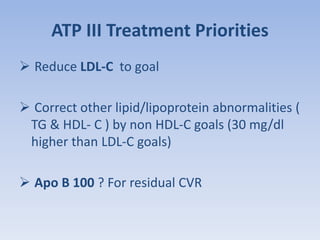
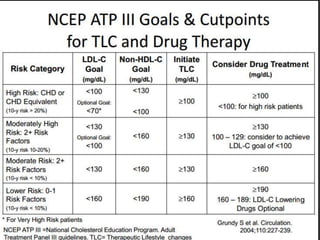
ATP III Treatment Priorities 
 Reduce LDL-C to goal 
 Correct other lipid/lipoprotein abnormalities ( 
TG & HDL- C ) by non HDL-C goals (30 mg/dl 
higher than LDL-C goals) 
 Apo B 100 ? For residual CVR
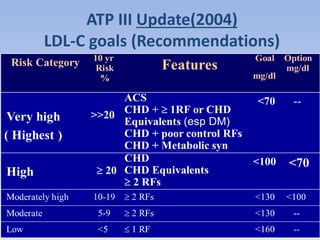
ATP III Update(2004) 
LDL-C goals (Recommendations)
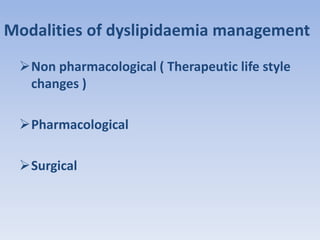
Modalities of dyslipidaemia management 
Non pharmacological ( Therapeutic life style 
changes ) 
Pharmacological 
Surgical
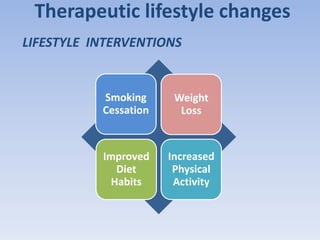
Therapeutic lifestyle changes 
LIFESTYLE INTERVENTIONS 
Smoking 
Cessation 
Weight 
Loss 
Improved 
Diet 
Habits 
Increased 
Physical 
Activity
Smoking Cessation 
 Advice all patients 
not to smoke (A) 
 Initiate cessation 
counseling (B) 
 Offer combined 
pharmacological 
and behavioral 
interventions(B)
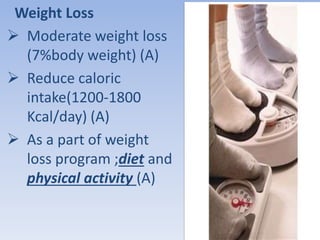
Weight Loss 
 Moderate weight loss 
(7%body weight) (A) 
 Reduce caloric 
intake(1200-1800 
Kcal/day) (A) 
 As a part of weight 
loss program ;diet and 
physical activity (A)
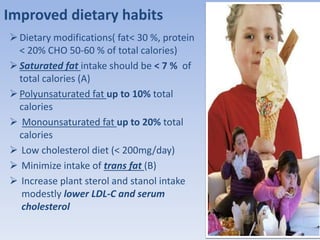
Improved dietary habits 
 Dietary modifications( fat< 30 %, protein 
< 20% CHO 50-60 % of total calories) 
 Saturated fat intake should be < 7 % of 
total calories (A) 
 Polyunsaturated fat up to 10% total 
calories 
 Monounsaturated fat up to 20% total 
calories 
 Low cholesterol diet (< 200mg/day) 
 Minimize intake of trans fat (B) 
 Increase plant sterol and stanol intake 
modestly lower LDL-C and serum 
cholesterol
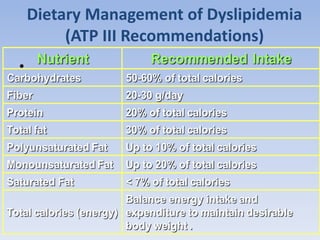
Dietary Management of Dyslipidemia 
(ATP III Recommendations) 
•
Increased physical activity 
 Regular physical activity ( 
150 min / week ) (A) 
“moderate-intensity aerobic 
exercise“ 
 Resistance training ( 3 
times / week ) unless 
containdicated (A) 
 Start gradually and slowly 
build intensity
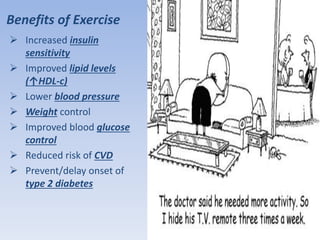
Benefits of Exercise 
 Increased insulin 
sensitivity 
 Improved lipid levels 
(↑HDL-c) 
 Lower blood pressure 
 Weight control 
 Improved blood glucose 
control 
 Reduced risk of CVD 
 Prevent/delay onset of 
type 2 diabetes
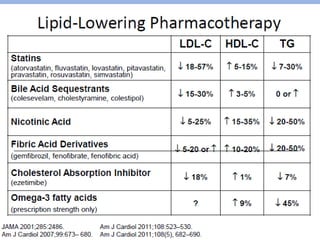
PHARMACOLOGICAL MANAGEMENT
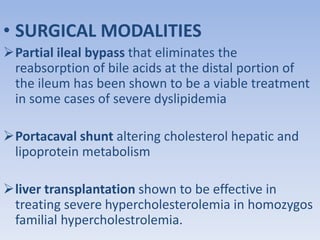
• SURGICAL MODALITIES 
Partial ileal bypass that eliminates the 
reabsorption of bile acids at the distal portion of 
the ileum has been shown to be a viable treatment 
in some cases of severe dyslipidemia 
Portacaval shunt altering cholesterol hepatic and 
lipoprotein metabolism 
liver transplantation shown to be effective in 
treating severe hypercholesterolemia in homozygos 
familial hypercholestrolemia.
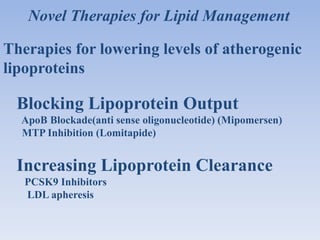
Novel Therapies for Lipid Management 
Therapies for lowering levels of atherogenic 
lipoproteins 
Blocking Lipoprotein Output 
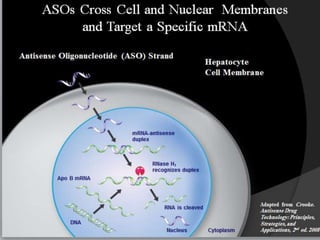
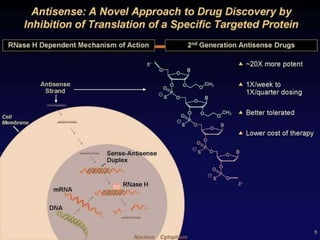
ApoB Blockade(anti sense oligonucleotide) (Mipomersen) 
MTP Inhibition (Lomitapide) 
Increasing Lipoprotein Clearance 
PCSK9 Inhibitors 
LDL apheresis
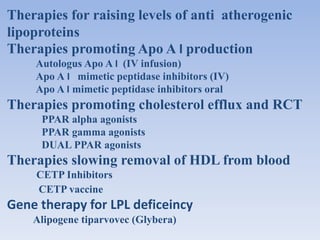
Therapies for raising levels of anti atherogenic 
lipoproteins 
Therapies promoting Apo A I production 
Autologus Apo A I (IV infusion) 
Apo A I mimetic peptidase inhibitors (IV) 
Apo A I mimetic peptidase inhibitors oral 
Therapies promoting cholesterol efflux and RCT 
PPAR alpha agonists 
PPAR gamma agonists 
DUAL PPAR agonists 
Therapies slowing removal of HDL from blood 
CETP Inhibitors 
CETP vaccine 
Gene therapy for LPL deficeincy 
Alipogene tiparvovec )Glybera)
Therapies for lowering levels of 
atherogenic lipoproteins 
Blocking Lipoprotein Output 
ApoB Blockade(anti sense oligonucleotide) (Mipomersen) 
MTP Inhibition (Lomitapide) 
Increasing Lipoprotein Clearance 
PCSK9 Inhibitors 
LDL apheresis
Blocking Lipoprotein Output
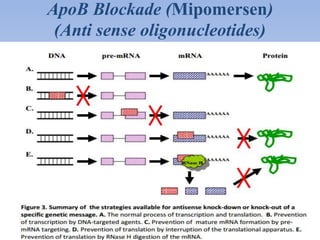
ApoB Blockade (Mipomersen) 
(Anti sense oligonucleotides)
Mipomersen sodium (Kynamro) 
 Approved January 30, 2013 
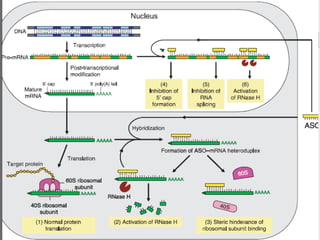
 Antisense oligonucleotide that decreases secretion of apo B 
containing lipoproteins from the liver by decreasing the number 
of specific mRNA available for translation of the encoded protein 
in the hepatic synthesis of apoB 100 
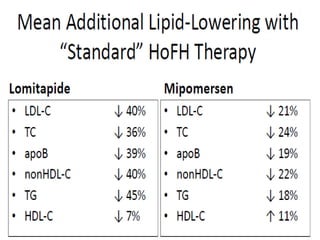
 Approved to reduce LDL‐C, apo B, TC, non‐HDL‐C in patients with 
homozygous familial hypercholesterolemia (HoFH) 
 Dosing: 200 mg once weekly subcutaneous injection . 
 Adverse effects: 
 injection site reactions (84%), 
 flu‐like symptoms (30%), 
 elevated hepatic transaminases
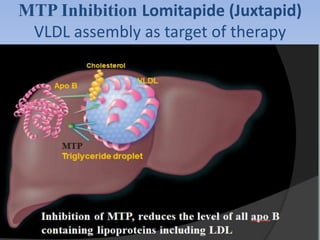
MTP Inhibition Lomitapide (Juxtapid) 
VLDL assembly as target of therapy
MTP Inhibition Lomitapide (Juxtapid) 
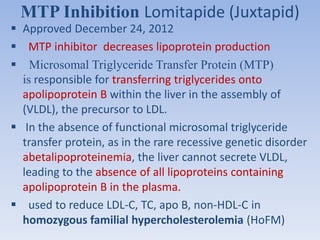
 Approved December 24, 2012 
 MTP inhibitor decreases lipoprotein production 
 Microsomal Triglyceride Transfer Protein (MTP) 
is responsible for transferring triglycerides onto 
apolipoprotein B within the liver in the assembly of 
(VLDL), the precursor to LDL. 
 In the absence of functional microsomal triglyceride 
transfer protein, as in the rare recessive genetic disorder 
abetalipoproteinemia, the liver cannot secrete VLDL, 
leading to the absence of all lipoproteins containing 
apolipoprotein B in the plasma. 
 used to reduce LDL‐C, TC, apo B, non‐HDL‐C in 
homozygous familial hypercholesterolemia (HoFM)
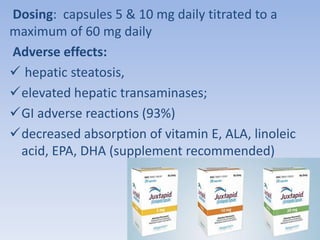
Dosing: capsules 5 & 10 mg daily titrated to a 
maximum of 60 mg daily 
Adverse effects: 
 hepatic steatosis, 
elevated hepatic transaminases; 
GI adverse reactions (93%) 
decreased absorption of vitamin E, ALA, linoleic 
acid, EPA, DHA (supplement recommended)
Increasing Lipoprotein Clearance
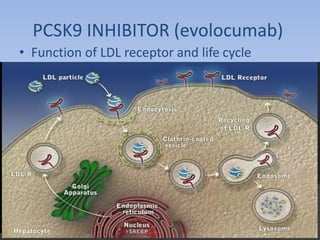
PCSK9 INHIBITOR (evolocumab) 
• Function of LDL receptor and life cycle
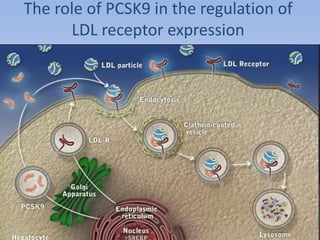
The role of PCSK9 in the regulation of 
LDL receptor expression
PCSK9 INHIBITOR (evolocumab) 
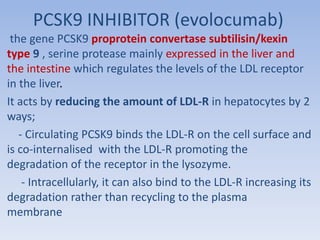
the gene PCSK9 proprotein convertase subtilisin/kexin 
type 9 , serine protease mainly expressed in the liver and 
the intestine which regulates the levels of the LDL receptor 
in the liver. 
It acts by reducing the amount of LDL-R in hepatocytes by 2 
ways; 
- Circulating PCSK9 binds the LDL-R on the cell surface and 
is co-internalised with the LDL-R promoting the 
degradation of the receptor in the lysozyme. 
- Intracellularly, it can also bind to the LDL-R increasing its 
degradation rather than recycling to the plasma 
membrane
• LAPLACE-2 is a large phase III study of PCSK9 
INHIBITOR (evolocumab) 
 The monoclonal antibody evolocumab produced 
highly significant reductions in low-density 
lipoprotein (LDL) cholesterol, the "bad cholesterol," 
as an add-on to statins in all treatment groups, 
 Evolocumab was well tolerated, with adverse 
event rates similar to those in placebo and 
ezetimibe-treated groups and no sign of liver damage 
or muscle problems. 
• The ongoing FOURIER trial will assess whether 
additional lowering of LDL cholesterol with 
evolocumab, on top of high and moderate-intensity 
statin therapy, reduces the number of cardiovascular 
events over a period of years.
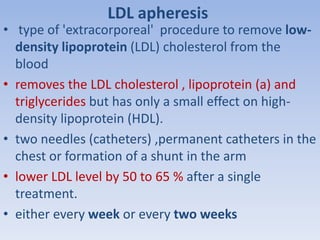
LDL apheresis
LDL apheresis 
• type of 'extracorporeal' procedure to remove low-density 
lipoprotein (LDL) cholesterol from the 
blood 
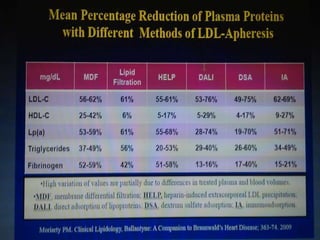
• removes the LDL cholesterol , lipoprotein (a) and 
triglycerides but has only a small effect on high-density 
lipoprotein (HDL). 
• two needles (catheters) ,permanent catheters in the 
chest or formation of a shunt in the arm 
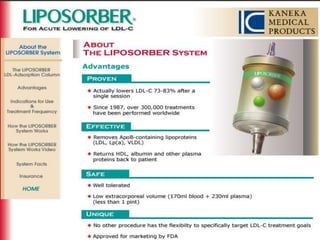
• lower LDL level by 50 to 65 % after a single 
treatment. 
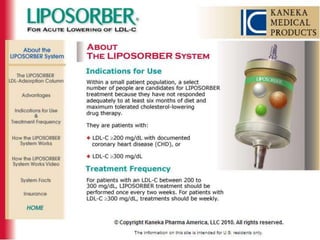
• either every week or every two weeks
• Indications 
refractory forms of homozygous familial 
hypercholesterolaemia (FH) 
preventing the progression of coronary 
artery disease in heterozygotes and 
others with severe dyslipidaemia who are 
refractory to or intolerant of high doses 
of lipid-lowering drugs , despite the 
maximum amount of drug treatment and 
a cholesterol lowering diet
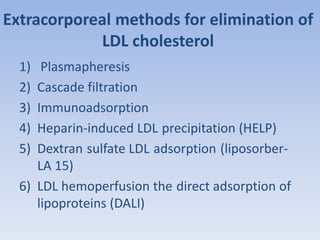
Extracorporeal methods for elimination of 
LDL cholesterol 
1) Plasmapheresis 
2) Cascade filtration 
3) Immunoadsorption 
4) Heparin-induced LDL precipitation (HELP) 
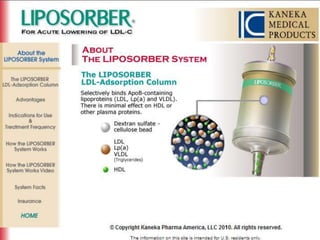
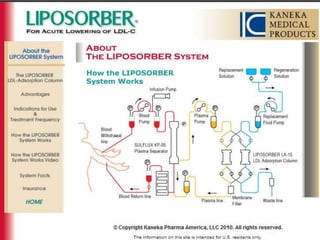
5) Dextran sulfate LDL adsorption (liposorber- 
LA 15) 
6) LDL hemoperfusion the direct adsorption of 
lipoproteins (DALI)
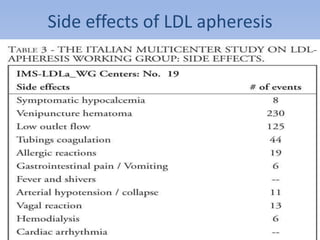
Side effects of LDL apheresis
•
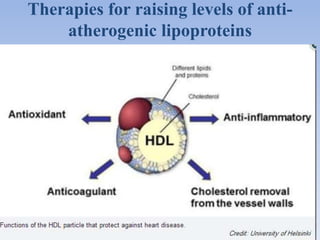
Therapies for raising levels of anti-atherogenic 
lipoproteins
Therapies for raising levels of anti 
atherogenic lipoproteins 
Therapies promoting Apo A1 production 
Autologus Apo A1 (IV infusion) 
Apo A1 mimetic peptidase inhibitors (IV) 
Apo A1 mimetic peptidase inhibitors oral 
Therapies promoting cholesterol efflux and RCT 
PPAR alpha agonists 
PPAR gamma agonists 
DUAL PPAR agonists 
Therapies slowing removal of HDL from blood 
CETP Inhibitors 
CETP vaccine
Therapies promoting Apo A1 production 
Autologus Apo A1 (IV infusion) 
Apo A1 mimetic peptidase inhibitors (IV) 
Apo A1 mimetic peptidase inhibitors oral
Autologus Apo A1 (IV infusion) 
• pateint’s own Apo A1 
• Apo A1 is more effective at promoting 
cholesterol efflux from macrophages than mature 
HDL 
• Selectively delipidate HDL in whole plasma ex 
vivo generating lipid poor Apo A1 then reinfused 
• Promote cholesterol efflux and RCT thus slowing 
or regressing atherogenesis
Autologus Apo A I (IV infusion) 
• Acute effects of bolus iv infusion of Apo A I in 
humans 
• 5 weekly infusions of recombinant Apo A I 
milano 
• Resulted in a significant reduction of coronary 
atheroma volume as measured by IVUS.
rHDL (CSL-111) 
• CSL-111 is an apolipoprotein A-I isolated from human plasma and 
phosphatidylcholine derived from soybean at 1:150 mol/mol 
• Effect of rHDL (CSL-111) on Atherosclerosis Safety and Efficacy 
(ERASE) trial. 
• patients needing coronary angiography were given infusions of 
reconstituted HDL cholesterol isolated from human plasma as 4 
weekly infusions at 2 different strengths or placebo. 
• Use of the high-dose infusion was discontinued early in the trial 
after biochemical and laboratory liver test abnormalities were 
detected, and these patients were moved into the low-dose infusion 
or placebo groups. 
• At the end of the study, no significant differences in coronary 
atheroma volume were found between the groups. Those receiving 
the CLS-111 infusions also had significant changes in plaque 
characterization index.
Apo A I mimetic peptidase inhibitors 
(IV) 
• small synthetic peptides having properties 
similar to Apo A I including promotion of cellular 
cholesterol efflux 
• Injection of Apo A I mimetic peptide (L-5F) into 
mice significantly reduced the progression of 
atherosclerosis 
• ETC-642 (RLT peptides) in early trials . 
• Parenteral administration is a logistical barrier to 
long term administration so in the clinical trials as 
“ acute induction therapy” for rapid plaque 
regression or stabilization in patients with ACS
Apo A I mimetic peptidase inhibitors 
oral 
• D-4F : oral Apo A I mimetic peptide 
• Not recognized by gut peptidases so not 
degraded 
• Showed dramatic reduction of atherosclerosis 
in mice 
• Promoted macrophage RCT in vivo in mice
RVX-208 ( Resverlogix) 
• a novel small molecule that increases production 
of ApoA-1, taken orally which raises HDL levels 
and is thought to enhance reverse cholesterol 
transport 
• the ASSURE (phase 2b multicenter, double-blind, 
randomized, parallel group, placebo-controlled 
trial ) had failed to meet its primary endpoint. 
• the trial did meet the secondary endpoints of 
regression of total (coronary) atheroma volume 
(TAV) and increases in Apolipoprotein A-I (ApoA-I) 
and HDL cholesterol The company said that 
results in the placebo arm of the study were 
stronger than expected.
Therapies promoting cholesterol 
efflux and RCT 
PPAR alpha agonists 
PPAR gamma agonists 
DUAL PPAR agonists
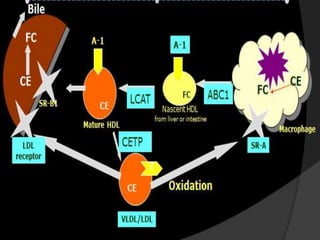
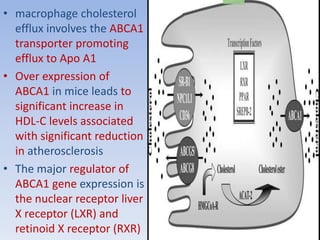
• macrophage cholesterol 
efflux involves the ABCA1 
transporter promoting 
efflux to Apo A1 
• Over expression of 
ABCA1 in mice leads to 
significant increase in 
HDL-C levels associated 
with significant reduction 
in atherosclerosis 
• The major regulator of 
ABCA1 gene expression is 
the nuclear receptor liver 
X receptor (LXR) and 
retinoid X receptor (RXR)
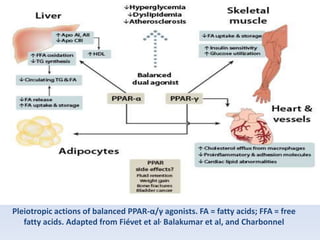
Pleiotropic actions of balanced PPAR-α/γ agonists. FA = fatty acids; FFA = free 
fatty acids. Adapted from Fiévet et al, Balakumar et al, and Charbonnel
PPAR alpha agonists 
• Clofibrate ,Fenofibrate, Bezafibrate, Gemfibrozil 
• PPAR-α is metabolically active in the liver, heart, kidney, 
skeletal muscle and brown fat. 
• It is also present in all vascular cells, including endothelial 
cells, smooth muscle cells and monocytes/macrophages. 
• The effects of PPAR-α include hypolipidemic action,an anti-inflammatory 
effect on the vascular wall and metabolic 
effects on the myocardium 
• clinical trials of fibrates have demonstrated their beneficial 
effects on cardiovascular clinical outcomes, particularly in 
patients suffering with metabolic syndrome and diabetes. 
• Treatment of macrophages in vitro with fibrates led to 
upregulation of ABCA1 and increased cholesterol efflux
selective PPAR-α agonist, LY518674 
• (LY5) is similar to fenofibrate but pproximately 
10 000 times more potent. 
• LY518674 and fenofibrate demonstrated evidence 
of increasing the serum creatinine levels; this 
effect was substantial in some cases. 
• The novel PPAR-α agonist was not better than 
fenofibrate or statin monotherapy in achieving 
the intended improvement of the lipid profile, 
and it appeared to worsen renal function.
PPAR γ agonists 
• macrophages also express PPAR - gamma 
• Thiazolidendiones (TZDs) , agonists of PPAR – 
gamma promote macrophage cholesterol efflux in 
vitro 
• Potentially also through up regulation of LXR , 
ABCA1 expression 
• Troglitazone (Glaxo Smith Kline) Withdrawn from 
Market. 
• Rosiglitazone ,Pioglitazone
PPAR α and γ agonist (Dual PPAR agonists) 
• targeting both PPAR- alpha and PPAR- gamma 
promoting more macrophage cholesterol efflux 
• Muraglitazar (Bristol Mayer, Merck) first 
developed , but data analysis suggested incraesed 
incidence of adverse CV events 
• Naveglitazar increased risk of bladder cancer 
• Tesaglitazar has risk of renal dysfunction 
• Aleglitazar the latest and most promising , 
SYNCHRONY study showed decreased LDL , 
decreased glucose and incrased HDL.
Therapies slowing removal of HDL from 
blood 
CETP Inhibitors 
CETP Vaccine
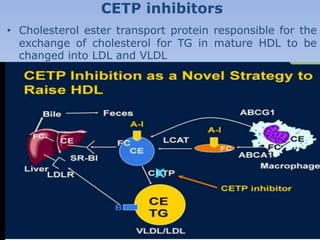
CETP inhibitors 
• Cholesterol ester transport protein responsible for the 
exchange of cholesterol for TG in mature HDL to be 
changed into LDL and VLDL
cholesteryl ester transfer protein (CETP) 
inhibitor 
dalcetrapib, torcetrapib 
• Torcetrapib (from Pfizer) not only failed to show 
a reduction in risk when HDL was increased, but 
actually showed an increase in cardiovascular risk. 
• Dalcetrapib ( from Roche) was halted in May 
2012 for lack of effectiveness. 
• Both of these related drugs significantly increased 
HDL levels, but doing so did not result in any 
demonstrated clinical benefit.
Anacetrapib &evacetrapib 
• cholesteryl ester transfer protein (CETP) inhibitor 
• Produce dose-dependent increases in HDL-C 
• When administered in combination with statin 
therapy, evacetrapib, increased HDL-C levels and 
resulted in greater reductions in LDL-C and non- 
HDL-C 
• Both evacetrapib and anacetrapib give a more 
dramatic HDL elevation, and a sizeable LDL 
reduction .
CETP vaccine 
• novel strategy using CETP based peptide for 
IMMUNIZATION to raise inhibiting auto 
antibodies against CETP ( anti CETP antibodies) 
• Single injection of the CETP peptide can develop 
anti CETP antibodies 
• Second injection of the active vaccine develop 
significant levels of anti CETP antibodies 
• Interesting approach with the advantage of 
avoiding the need to take a daily pill
Gene therapy
Gene therapy 
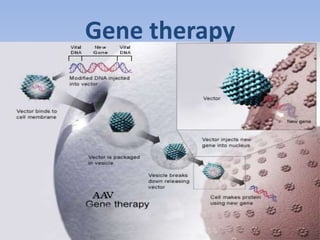
• The adeno-associated virus serotype 1 (AAV1) 
viral vector delivers an intact copy of the 
human lipoprotein lipase (LPL) gene 
• In two Phase II/III clinical trials, LPLD patients 
received a series of injections into the thigh 
muscle, followed by several weeks of 
immunosuppressive drugs to blunt immune 
responses to the viral capsids 
• fat concentrations in blood were reduced 
between 3 and 12 weeks after injection(IM) , in 
nearly all patients
• advantages of AAV include 
 lack of pathogenicity, 
 delivery to non-dividing cells, 
 non-integrating in contrast to retroviruses, 
which show random insertion with risk 
of cancer 
 very low immunogenicity, mainly restricted to 
generating neutralizing antibodies, and little 
well defined cytotoxic response.
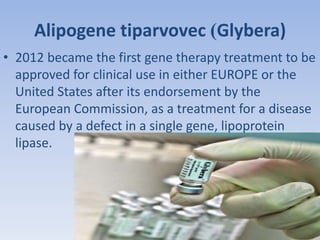
Alipogene tiparvovec )Glybera) 
• 2012 became the first gene therapy treatment to be 
approved for clinical use in either EUROPE or the 
United States after its endorsement by the 
European Commission, as a treatment for a disease 
caused by a defect in a single gene, lipoprotein 
lipase.
Recent dyslipidemia therapy

Recent dyslipidemia therapy

  • 1.
    Recent therapeutic approachesfor dyslipidaemia Marwa oraby April 2014
  • 2.
    Dyslipidemia • isa range of disorders that include both abnormally high and low lipoprotein levels, as well as disorders in the composition of these particles. • the term is applied to lipid levels for which treatment has proven beneficial
  • 3.
    ATP III TreatmentPriorities  Reduce LDL-C to goal  Correct other lipid/lipoprotein abnormalities ( TG & HDL- C ) by non HDL-C goals (30 mg/dl higher than LDL-C goals)  Apo B 100 ? For residual CVR
  • 4.
    ATP III Update(2004) LDL-C goals (Recommendations)
  • 7.
    Modalities of dyslipidaemiamanagement Non pharmacological ( Therapeutic life style changes ) Pharmacological Surgical
  • 8.
    Therapeutic lifestyle changes LIFESTYLE INTERVENTIONS Smoking Cessation Weight Loss Improved Diet Habits Increased Physical Activity
  • 9.
    Smoking Cessation Advice all patients not to smoke (A)  Initiate cessation counseling (B)  Offer combined pharmacological and behavioral interventions(B)
  • 10.
    Weight Loss Moderate weight loss (7%body weight) (A)  Reduce caloric intake(1200-1800 Kcal/day) (A)  As a part of weight loss program ;diet and physical activity (A)
  • 11.
    Improved dietary habits  Dietary modifications( fat< 30 %, protein < 20% CHO 50-60 % of total calories)  Saturated fat intake should be < 7 % of total calories (A)  Polyunsaturated fat up to 10% total calories  Monounsaturated fat up to 20% total calories  Low cholesterol diet (< 200mg/day)  Minimize intake of trans fat (B)  Increase plant sterol and stanol intake modestly lower LDL-C and serum cholesterol
  • 12.
    Dietary Management ofDyslipidemia (ATP III Recommendations) •
  • 13.
    Increased physical activity  Regular physical activity ( 150 min / week ) (A) “moderate-intensity aerobic exercise“  Resistance training ( 3 times / week ) unless containdicated (A)  Start gradually and slowly build intensity
  • 14.
    Benefits of Exercise  Increased insulin sensitivity  Improved lipid levels (↑HDL-c)  Lower blood pressure  Weight control  Improved blood glucose control  Reduced risk of CVD  Prevent/delay onset of type 2 diabetes
  • 16.
  • 18.
    • SURGICAL MODALITIES Partial ileal bypass that eliminates the reabsorption of bile acids at the distal portion of the ileum has been shown to be a viable treatment in some cases of severe dyslipidemia Portacaval shunt altering cholesterol hepatic and lipoprotein metabolism liver transplantation shown to be effective in treating severe hypercholesterolemia in homozygos familial hypercholestrolemia.
  • 19.
    Novel Therapies forLipid Management Therapies for lowering levels of atherogenic lipoproteins Blocking Lipoprotein Output ApoB Blockade(anti sense oligonucleotide) (Mipomersen) MTP Inhibition (Lomitapide) Increasing Lipoprotein Clearance PCSK9 Inhibitors LDL apheresis
  • 20.
    Therapies for raisinglevels of anti atherogenic lipoproteins Therapies promoting Apo A I production Autologus Apo A I (IV infusion) Apo A I mimetic peptidase inhibitors (IV) Apo A I mimetic peptidase inhibitors oral Therapies promoting cholesterol efflux and RCT PPAR alpha agonists PPAR gamma agonists DUAL PPAR agonists Therapies slowing removal of HDL from blood CETP Inhibitors CETP vaccine Gene therapy for LPL deficeincy Alipogene tiparvovec )Glybera)
  • 21.
    Therapies for loweringlevels of atherogenic lipoproteins Blocking Lipoprotein Output ApoB Blockade(anti sense oligonucleotide) (Mipomersen) MTP Inhibition (Lomitapide) Increasing Lipoprotein Clearance PCSK9 Inhibitors LDL apheresis
  • 22.
  • 23.
    ApoB Blockade (Mipomersen) (Anti sense oligonucleotides)
  • 27.
    Mipomersen sodium (Kynamro)  Approved January 30, 2013  Antisense oligonucleotide that decreases secretion of apo B containing lipoproteins from the liver by decreasing the number of specific mRNA available for translation of the encoded protein in the hepatic synthesis of apoB 100  Approved to reduce LDL‐C, apo B, TC, non‐HDL‐C in patients with homozygous familial hypercholesterolemia (HoFH)  Dosing: 200 mg once weekly subcutaneous injection .  Adverse effects:  injection site reactions (84%),  flu‐like symptoms (30%),  elevated hepatic transaminases
  • 28.
    MTP Inhibition Lomitapide(Juxtapid) VLDL assembly as target of therapy
  • 29.
    MTP Inhibition Lomitapide(Juxtapid)  Approved December 24, 2012  MTP inhibitor decreases lipoprotein production  Microsomal Triglyceride Transfer Protein (MTP) is responsible for transferring triglycerides onto apolipoprotein B within the liver in the assembly of (VLDL), the precursor to LDL.  In the absence of functional microsomal triglyceride transfer protein, as in the rare recessive genetic disorder abetalipoproteinemia, the liver cannot secrete VLDL, leading to the absence of all lipoproteins containing apolipoprotein B in the plasma.  used to reduce LDL‐C, TC, apo B, non‐HDL‐C in homozygous familial hypercholesterolemia (HoFM)
  • 30.
    Dosing: capsules 5& 10 mg daily titrated to a maximum of 60 mg daily Adverse effects:  hepatic steatosis, elevated hepatic transaminases; GI adverse reactions (93%) decreased absorption of vitamin E, ALA, linoleic acid, EPA, DHA (supplement recommended)
  • 32.
  • 33.
    PCSK9 INHIBITOR (evolocumab) • Function of LDL receptor and life cycle
  • 34.
    The role ofPCSK9 in the regulation of LDL receptor expression
  • 35.
    PCSK9 INHIBITOR (evolocumab) the gene PCSK9 proprotein convertase subtilisin/kexin type 9 , serine protease mainly expressed in the liver and the intestine which regulates the levels of the LDL receptor in the liver. It acts by reducing the amount of LDL-R in hepatocytes by 2 ways; - Circulating PCSK9 binds the LDL-R on the cell surface and is co-internalised with the LDL-R promoting the degradation of the receptor in the lysozyme. - Intracellularly, it can also bind to the LDL-R increasing its degradation rather than recycling to the plasma membrane
  • 36.
    • LAPLACE-2 isa large phase III study of PCSK9 INHIBITOR (evolocumab)  The monoclonal antibody evolocumab produced highly significant reductions in low-density lipoprotein (LDL) cholesterol, the "bad cholesterol," as an add-on to statins in all treatment groups,  Evolocumab was well tolerated, with adverse event rates similar to those in placebo and ezetimibe-treated groups and no sign of liver damage or muscle problems. • The ongoing FOURIER trial will assess whether additional lowering of LDL cholesterol with evolocumab, on top of high and moderate-intensity statin therapy, reduces the number of cardiovascular events over a period of years.
  • 37.
  • 38.
    LDL apheresis •type of 'extracorporeal' procedure to remove low-density lipoprotein (LDL) cholesterol from the blood • removes the LDL cholesterol , lipoprotein (a) and triglycerides but has only a small effect on high-density lipoprotein (HDL). • two needles (catheters) ,permanent catheters in the chest or formation of a shunt in the arm • lower LDL level by 50 to 65 % after a single treatment. • either every week or every two weeks
  • 39.
    • Indications refractoryforms of homozygous familial hypercholesterolaemia (FH) preventing the progression of coronary artery disease in heterozygotes and others with severe dyslipidaemia who are refractory to or intolerant of high doses of lipid-lowering drugs , despite the maximum amount of drug treatment and a cholesterol lowering diet
  • 40.
    Extracorporeal methods forelimination of LDL cholesterol 1) Plasmapheresis 2) Cascade filtration 3) Immunoadsorption 4) Heparin-induced LDL precipitation (HELP) 5) Dextran sulfate LDL adsorption (liposorber- LA 15) 6) LDL hemoperfusion the direct adsorption of lipoproteins (DALI)
  • 41.
    Side effects ofLDL apheresis
  • 42.
  • 48.
    Therapies for raisinglevels of anti-atherogenic lipoproteins
  • 49.
    Therapies for raisinglevels of anti atherogenic lipoproteins Therapies promoting Apo A1 production Autologus Apo A1 (IV infusion) Apo A1 mimetic peptidase inhibitors (IV) Apo A1 mimetic peptidase inhibitors oral Therapies promoting cholesterol efflux and RCT PPAR alpha agonists PPAR gamma agonists DUAL PPAR agonists Therapies slowing removal of HDL from blood CETP Inhibitors CETP vaccine
  • 51.
    Therapies promoting ApoA1 production Autologus Apo A1 (IV infusion) Apo A1 mimetic peptidase inhibitors (IV) Apo A1 mimetic peptidase inhibitors oral
  • 52.
    Autologus Apo A1(IV infusion) • pateint’s own Apo A1 • Apo A1 is more effective at promoting cholesterol efflux from macrophages than mature HDL • Selectively delipidate HDL in whole plasma ex vivo generating lipid poor Apo A1 then reinfused • Promote cholesterol efflux and RCT thus slowing or regressing atherogenesis
  • 53.
    Autologus Apo AI (IV infusion) • Acute effects of bolus iv infusion of Apo A I in humans • 5 weekly infusions of recombinant Apo A I milano • Resulted in a significant reduction of coronary atheroma volume as measured by IVUS.
  • 54.
    rHDL (CSL-111) •CSL-111 is an apolipoprotein A-I isolated from human plasma and phosphatidylcholine derived from soybean at 1:150 mol/mol • Effect of rHDL (CSL-111) on Atherosclerosis Safety and Efficacy (ERASE) trial. • patients needing coronary angiography were given infusions of reconstituted HDL cholesterol isolated from human plasma as 4 weekly infusions at 2 different strengths or placebo. • Use of the high-dose infusion was discontinued early in the trial after biochemical and laboratory liver test abnormalities were detected, and these patients were moved into the low-dose infusion or placebo groups. • At the end of the study, no significant differences in coronary atheroma volume were found between the groups. Those receiving the CLS-111 infusions also had significant changes in plaque characterization index.
  • 55.
    Apo A Imimetic peptidase inhibitors (IV) • small synthetic peptides having properties similar to Apo A I including promotion of cellular cholesterol efflux • Injection of Apo A I mimetic peptide (L-5F) into mice significantly reduced the progression of atherosclerosis • ETC-642 (RLT peptides) in early trials . • Parenteral administration is a logistical barrier to long term administration so in the clinical trials as “ acute induction therapy” for rapid plaque regression or stabilization in patients with ACS
  • 56.
    Apo A Imimetic peptidase inhibitors oral • D-4F : oral Apo A I mimetic peptide • Not recognized by gut peptidases so not degraded • Showed dramatic reduction of atherosclerosis in mice • Promoted macrophage RCT in vivo in mice
  • 57.
    RVX-208 ( Resverlogix) • a novel small molecule that increases production of ApoA-1, taken orally which raises HDL levels and is thought to enhance reverse cholesterol transport • the ASSURE (phase 2b multicenter, double-blind, randomized, parallel group, placebo-controlled trial ) had failed to meet its primary endpoint. • the trial did meet the secondary endpoints of regression of total (coronary) atheroma volume (TAV) and increases in Apolipoprotein A-I (ApoA-I) and HDL cholesterol The company said that results in the placebo arm of the study were stronger than expected.
  • 58.
    Therapies promoting cholesterol efflux and RCT PPAR alpha agonists PPAR gamma agonists DUAL PPAR agonists
  • 59.
    • macrophage cholesterol efflux involves the ABCA1 transporter promoting efflux to Apo A1 • Over expression of ABCA1 in mice leads to significant increase in HDL-C levels associated with significant reduction in atherosclerosis • The major regulator of ABCA1 gene expression is the nuclear receptor liver X receptor (LXR) and retinoid X receptor (RXR)
  • 60.
    Pleiotropic actions ofbalanced PPAR-α/γ agonists. FA = fatty acids; FFA = free fatty acids. Adapted from Fiévet et al, Balakumar et al, and Charbonnel
  • 61.
    PPAR alpha agonists • Clofibrate ,Fenofibrate, Bezafibrate, Gemfibrozil • PPAR-α is metabolically active in the liver, heart, kidney, skeletal muscle and brown fat. • It is also present in all vascular cells, including endothelial cells, smooth muscle cells and monocytes/macrophages. • The effects of PPAR-α include hypolipidemic action,an anti-inflammatory effect on the vascular wall and metabolic effects on the myocardium • clinical trials of fibrates have demonstrated their beneficial effects on cardiovascular clinical outcomes, particularly in patients suffering with metabolic syndrome and diabetes. • Treatment of macrophages in vitro with fibrates led to upregulation of ABCA1 and increased cholesterol efflux
  • 62.
    selective PPAR-α agonist,LY518674 • (LY5) is similar to fenofibrate but pproximately 10 000 times more potent. • LY518674 and fenofibrate demonstrated evidence of increasing the serum creatinine levels; this effect was substantial in some cases. • The novel PPAR-α agonist was not better than fenofibrate or statin monotherapy in achieving the intended improvement of the lipid profile, and it appeared to worsen renal function.
  • 63.
    PPAR γ agonists • macrophages also express PPAR - gamma • Thiazolidendiones (TZDs) , agonists of PPAR – gamma promote macrophage cholesterol efflux in vitro • Potentially also through up regulation of LXR , ABCA1 expression • Troglitazone (Glaxo Smith Kline) Withdrawn from Market. • Rosiglitazone ,Pioglitazone
  • 64.
    PPAR α andγ agonist (Dual PPAR agonists) • targeting both PPAR- alpha and PPAR- gamma promoting more macrophage cholesterol efflux • Muraglitazar (Bristol Mayer, Merck) first developed , but data analysis suggested incraesed incidence of adverse CV events • Naveglitazar increased risk of bladder cancer • Tesaglitazar has risk of renal dysfunction • Aleglitazar the latest and most promising , SYNCHRONY study showed decreased LDL , decreased glucose and incrased HDL.
  • 65.
    Therapies slowing removalof HDL from blood CETP Inhibitors CETP Vaccine
  • 66.
    CETP inhibitors •Cholesterol ester transport protein responsible for the exchange of cholesterol for TG in mature HDL to be changed into LDL and VLDL
  • 67.
    cholesteryl ester transferprotein (CETP) inhibitor dalcetrapib, torcetrapib • Torcetrapib (from Pfizer) not only failed to show a reduction in risk when HDL was increased, but actually showed an increase in cardiovascular risk. • Dalcetrapib ( from Roche) was halted in May 2012 for lack of effectiveness. • Both of these related drugs significantly increased HDL levels, but doing so did not result in any demonstrated clinical benefit.
  • 68.
    Anacetrapib &evacetrapib •cholesteryl ester transfer protein (CETP) inhibitor • Produce dose-dependent increases in HDL-C • When administered in combination with statin therapy, evacetrapib, increased HDL-C levels and resulted in greater reductions in LDL-C and non- HDL-C • Both evacetrapib and anacetrapib give a more dramatic HDL elevation, and a sizeable LDL reduction .
  • 69.
    CETP vaccine •novel strategy using CETP based peptide for IMMUNIZATION to raise inhibiting auto antibodies against CETP ( anti CETP antibodies) • Single injection of the CETP peptide can develop anti CETP antibodies • Second injection of the active vaccine develop significant levels of anti CETP antibodies • Interesting approach with the advantage of avoiding the need to take a daily pill
  • 70.
  • 71.
    Gene therapy •The adeno-associated virus serotype 1 (AAV1) viral vector delivers an intact copy of the human lipoprotein lipase (LPL) gene • In two Phase II/III clinical trials, LPLD patients received a series of injections into the thigh muscle, followed by several weeks of immunosuppressive drugs to blunt immune responses to the viral capsids • fat concentrations in blood were reduced between 3 and 12 weeks after injection(IM) , in nearly all patients
  • 72.
    • advantages ofAAV include  lack of pathogenicity,  delivery to non-dividing cells,  non-integrating in contrast to retroviruses, which show random insertion with risk of cancer  very low immunogenicity, mainly restricted to generating neutralizing antibodies, and little well defined cytotoxic response.
  • 73.
    Alipogene tiparvovec )Glybera) • 2012 became the first gene therapy treatment to be approved for clinical use in either EUROPE or the United States after its endorsement by the European Commission, as a treatment for a disease caused by a defect in a single gene, lipoprotein lipase.

Editor's Notes