Recent Advances in
Pharmacotherapy of
CCF
Dr Ketan Asawalle
JR3 Dept of Pharmacology
SVNGMC Yavatmal
Scope of Presentation
• Definition
• Epidemiology
• Classification of Heart Failure
• Etiology and Pathophysiology
• Signs and Symptoms
• Management
• Summary
• Conclusion
Heart Failure
• A pathophysiologic state in which an abnormality of cardiac function is
responsible for failure of the heart to pump blood at a rate commensurate
with metabolic requirements of the tissues -E Braunwald.
• Heart Failure is a clinical syndrome which occurs because of an inherited
of acquired abnormality of
1.Cardiac Structure. 2. Cardiac Function.
Developing a constellation of
1. Clinical Symptoms - dyspnoea and fatigue.
2. Signa - edema and rales.
that lead to frequent hospitalizations, a poor quality of life, and a shortened
life expectancy- Harrison’s princilple of internal medicine 18th ed.
Epidemiology
• Prevalence - 2% in developing countries.
• More than 20 million people affected worldwide.
• Affects 10% of people over 65 year.
• It is the most common condition for which patients 65 +
require admission to hospitals.
• Affects over 50% of people with 85+ years.
• Approx 10% of patients with HF die each year.
• Prevalance in india- 1.87 %
Classification
• BY EJECTION FRACTION
• Reduced ejection fraction(<40-50%)- systolic heart failure
• Preserved ejection fraction(>40-50%)- diastolic heart failure
• BY TIME COURSE
• Chronic heart failure(CHF)
• Acute heart failure (Cardiogenic Shock)
• ANATOMICALLY
• Left sided- LHF
• Right sided- RHF(CHF)
• BY OUTPUT
• High output failure-Thyrotoxicosis, Paget's dis, Anemia, Pregnancy, A-V fistula
• Low output failure – 95% of HF is this
Etiology
• Reduced ejection fraction(< 50%)
• Condition that leads to an alteration in LV structure or function can predispose a patient to developing HF.
• Coronary artery disease - MI, Angina (60- 70 %)
• Chronic pressure overload disease - Hypertension( 75%), valvular disease
• Chronic volume overload- intracardiac and extracardiac shunting
• Non ischaemic cardiomyopathy
• Drug induced damage- metabolic disorder
• Disorders of rate and rhythm
• Preserved ejection fraction(> 50%)
• Pathologic hypertrophy
• Restrictive cardiomyopathy
• Fibrosis
• Aging
• Pulmonary heart disease - Cor pulmonale, pulmonary vascular dis
RISK FACTORS
SIGNS and SYMPTOMS
Management of CCF
Non Pharmacological
• Activity-
• Routine modest exercise for class I-III
• For eu-volemic patients- regular isotonic exercise such as walking
or riding a stationary bicycle ergometer
• Diet-
• Restriction of sodium (2-3 g daily) is recommended in all patients,
Extra < 2g reduction in moderate to severe cases.
• Fluid restriction (<2 L/day) if hyponatremia (<130 meq/L)
• Caloric supplementation- with advanced HF and unintentional
weight loss or muscle wasting (cardiac cachexia)
Pharmacological measures
DRUGS FOR
ACUTE DECOMPENSATED HF
• DIURETICS- Furosemide
/hydrochlorthiazide
• VASODILATORS-
Nitroprusside,
Nitroglycerin, Nesiritide
• INOTROPIC AGENTS-
dobutamine, dopamine,
milrinone, levosimendan
Drug Therapy for Chronic HF
Due to Systolic Dysfunction
DIURETICS-furosemide /
hydrochlorthiazide
ACE-INHIBITORS*-captopril
• ARBs*- losartan
• HYDRALAZINE +
ISOSORBIDE*-when ACE-I or
ARB contraindicated or not fully
effective
• BETA BLOCKERS*
• SPIRONOLACTONE*
• DIGOXIN
Surgical measures
• Cardiac Re-synchronization
• Implantable Cardiac Defibrillators
• Intra-aortic balloon counter pulsation
• Percutaneous and surgically implanted LV assist devices
• Cardiac transplantation
Mechanism of Action
of Drugs Used in CCF
Diuretics
• High ceiling diuretics (furosemide, bumetanide) are the diuretics of choice
for mobilizing edema fluid.
• In advanced CHF after chronic use, resistance may develop.
• Addition of a thiazide/ metolazone/spironolactone to furosemide may
overcome the resistance.
• Diuretics:
(a) Decrease preload and improve ventricular efficiency by reducing
circulating volume.
(b) Remove peripheral edema and pulmonary congestion.
• Used in combination with venodilators.
• Diuretics have no role in asymptomatic left ventricular dysfunction, and brisk
diuresis can worsen some cases.
• They do not influence the disease process in CHF.
• Diuretics may cause activation of RAS (if hypovolemia occurs) which has
adverse cardiovascular consequences.
• Chronic diuretic therapy tends to cause hypokalaemia, alkalosis and
carbohydrate intolerance.
Renin Angiotensin system (RAS)
Inhibitors
• ACE inhibitors and ARBs are used to block RAS.
• They afford symptomatic as well as disease modifying benefits in
CHF by causing vasodilatation, retarding/preventing ventricular
hypertrophy, myocardial cell apoptosis, fibrosis intercellular matrix
changes and re-modeling
• ACE inhibitors raise the level of kinins which stimulate generation of
cardioprotective NO and PGs
• They are thus recommended for all grades of CHF, unless
contraindicated, or if renal function deteriorates.
• ACE inhibitor therapy is generally started at low doses which are
gradually increased.
Vasodilators
• First used i.v. to treat acute heart failure that occurs in advanced cases or following
MI,
• Their use by oral route has been extended to long-term therapy of chronic CHF
• Preload Reduction
- Nitrates cause pooling of blood in systemic capacitance vessels to reduce
ventricular end-diastolic pressure and volume
- It is indicated when the central venous pressure (CVP) is raised and in dilated
cardiomyopathy.
- However, lowering of preload (by vasodilators + strong diuretics) beyond a limit
may reduce output of a failing heart
- Occurrence of nitrate tolerance limits their utility in routine treatment of CHF
• After load reduction
- Hydralazine dilates resistance vessels and reduces aortic impedance so that even
weaker ventricular contraction is able to pump more blood
- Systolic wall stress is reduced.
- It is effective in forward failure when cardiac index (CI = min output/body surface
area) is low (< 2.5 L/min/m2) without a marked increase in CVP (< 18 mm Hg).
- Marked tachycardia, worsening of myocardial ischaemia and fluid retention limit
long-term use of hydralazine monotherapy.
Vasodilators
• Pre- and After load reduction
- Sodium nitroprusside is a high efficacy i.v. dilator with equal action on the
two types of vessels.
- reduces ventricular filling pressure as well as systemic vascular resistance.
- Cardiac output and renal blood flow are increased
- employed in conjunction with a loop diuretic + i.v. inotropic drug to tide
over crisis in severely decompensated patients.
• When Hydrazine and Nitrates are combined they supplement each other and
nitrate tolerance is attenuated by Hydralazine
• Severe CHF patients already receiving ACE inhibitors + digoxin + diuretic
have obtained extra benefit from addition of hydralazine with or without a
nitrate.
ß-Adrenergic Blockers
• Metoprolol, Bisoprolol, Nebivolol and the nonselective + selective  1
blocker Carvedilol in mild to moderate CHF treated with ACE inhibitor ±
diuretic, digitalis.
• A large number of randomized trials including
- Metoprolol in dilated cardiomyopathy trial (1993),
- US carvedilol trial (1996), MERIT-HF trial (1999), CIBIS-II trial (1999),
- CAPRICORN trial (2001),
- COPERNICUS trial (2002)
have demonstrated subjective, objective, prognostic and mortality benefits
of the above named blockers over and above that afforded by ACE
inhibitors + diuretic ± digitalis.
ß-Adrenergic Blockers
• Immediate hemodynamic action of β blockers is to depress cardiac
contractility and ejection fraction, these parameters gradually improve
over weeks.
• The benefits appear to be due to antagonism of
- ventricular wall stress enhancing,
- apoptosis promoting and
- pathological remodeling effects
of excess sympathetic activity (occurring reflexly) in CHF, as well as
due to prevention of sinister arrhythmias.
• Lower plasma markers of activation of sympathetic, renin-angiotensin
systems and endothelin-1
ß-Adrenergic Blockers
• Greatest utility of blockers has been shown in mild to moderate
(NYHA class II, III) cases of dilated cardiomyopathy with systolic
dysfunction
• Encouraging results (upto 35% decrease in mortality) have been
obtained in class IV cases as well
• There is no place for blockers in decompensated patients.
• Starting dose should be very low—then titrated upward as tolerated
to the target level (carvedilol 50 mg/day, bisoprolol 10 mg/day,
metoprolol 200 mg/day).
• A long-acting preparation (e.g. sustained release metoprolol) or 2–3
times daily dosing to produce round-the-clock blockade should be
selected.
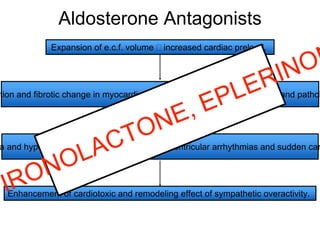
Aldosterone Antagonists
ation and fibrotic change in myocardium worsening systolic dysfunction and pathol
Expansion of e.c.f. volume increased cardiac preload.
a and hypomagnesemia increased risk of ventricular arrhythmias and sudden car
Enhancement of cardiotoxic and remodeling effect of sympathetic overactivity.
Aldosterone Antagonists
• It is indicated as add-on therapy to ACE inhibitors + other drugs in
moderate-to-severe CHF.
• It can retard disease progression, reduce episodes of decompensation and
death due to heart failure as well as sudden cardiac deaths, over and above
the protection afforded by ACE inhibitors/ARBs ± blockers.
• Only low doses (12.5–25 mg/day) of spironolactone should be used to avoid
hyperkalaemia; particularly because of concurrent ACE inhibitor/ARB
therapy.
• It may help restoration of diuretic response to furosemide when
refractoriness has developed. .
• The onset of benefit of aldosterone antagonist in CHF is slow.
• It is contraindicated in renal insufficiency because of risk of hyperkalemia—
requires serum K+ monitoring.
SYMPATHOMIMETIC INOTROPIC
DRUGS
• Drugs with 1 adrenergic and dopaminergic D1 agonistic actions have
positive inotropic and vasodilator properties.
• Dobutamine (2–8 g/kg/min) a relatively selective 1 agonist with
prominent inotropic action is the preferred drug for i.v. infusion in
acute heart failure accompanying myocardial infarction (MI), cardiac
surgery as well as to tide over crisis in advanced decompensated CHF.
• Dopamine (3–10 g/kg/min by i.v. infusion) has been used in
cardiogenic shock due to MI and other causes.
• Low rates of dopamine infusion (~2 g/kg/min) cause selective renal
vasodilatation (D1 agonistic action) which improves renal perfusion
and g.f.r.
• Development of tolerance and cardiotoxic potential when used
Phosphodiesterase 3 Inhibitors
Inamrinone (amrinone)
• Bipyridine derivative is a selective phosphodiesterase 3 (PDE3) inhibitor.
• Specific for intracellular degradation of cAMP in heart, blood vessels and
bronchial smooth muscles.
• Amrinone increases myocardial cAMP and transmembrane influx of
Ca2+.
• It does not inhibit Na+K+ATPase, and its action is independent of tissue
catecholamines as well as adrenergic receptors.
• The two most important actions of amrinone are positive inotropy and
direct vasodilatation: has been called an ‘inodilator’
• Both preload and after load are reduced
Phosphodiesterase 3 Inhibitors
• In CHF patients i.v. amrinone action starts in 5 min and lasts 2–3 hours;
elimination t1⁄2 is 2–4 hours.
• Adverse effects - Thrombocytopenia is the most prominent and dose
related side effect,
• It is indicated only for short-term i.v. use in severe and refractory CHF,
as an additional drug to conventional therapy with digitalis, diuretics
and vasodilators.
• Dose: 0.5 mg/kg bolus injection followed by 5–10 μg/kg/ min i.v.
infusion (max. 10 mg/kg in 24 hours).
• Milrinone
Related to inamrinone, it has similar action but is more selective for
PDE3, and is at least 10 times more potent. It is shorter-acting with a t1⁄2
Nesiritide
• This recombinant brain natriuretic peptide (BNP) has been
approved for i.v. use to relieve dyspnoea and other symptoms in
refractory CHF.
• It enhances salt and water excretion and is a potent vasodilator with
profile of action similar to i.v. glyceryl trinitrate;
• Reduces ventricular filling pressure.
• Additional haemodynamic and symptomatic improvement can be
obtained for short periods, but no long term benefits are evident in
CHF.
Tolvaptan
• This is an orally active nonpeptide vasopressin V2 receptor
antagonist introduced recently for the correction of water
retention and hyponatremia occurring in ‘syndrome of
inappropriate ADH secretion’ (SIADH) as well as in advanced
CHF.
• Tolvaptan has afforded short-term improvement by increasing
water excretion, restoring serum Na+ and relieving dyspnoea.
• However, no long-term benefits have been noted.
Medicines used in the first line management of heart failure
DRUG CLASS DOSE REGIME SIDE EFFECTS
ACEIs
Ramipril
Perindopril
Lisinopril
Enalapril
Captopril
1.25 – 10mg daily (2 divided doses)
2.5 – 5mg daily
2.5 – 35mg daily
2.5mg daily – 10-20mg twice daily
6.25 – 50mg three times daily
Postural hypotension; dry
cough; ↑ plasma K+;
caution with renal
dysfunction. Rarely angio-
oedema.
Not to be used during
pregnancy
β-blockers
Bisoprolol
Nebivolol
Carvedilol
1.25 – 10mg daily
1.25 – 10mg daily
3.125 – 25mg twice daily
Bradycardia; worsening of
heart failure; hypotension;
fatigue; GI disturbances; cold
extremities
Diuretics:
Furosemide
Bumetanide
Bendroflumethiazide
20 – 40mg once or twice daily
0.5 - 2mg daily
2.5mg daily – 10mg daily
Loop diuretics: ↓ K+ and ↓
Na+ ; hypovolaemia;
hypotension; ↑ creatinine; ↑
risk of gout
Thiazides: ↓ K+ ; ↑ risk of
gout; ↑ risk
of diabetes mellitus. Rarely ↓
Na+
Medicines used in the second-line management of heart failure
DRUG CLASS DOSE REGIME CLASS SIDE EFFECTS
ARBs
Valsartan
Losartan
Candesartan
40-160mg twice daily
12.5 – 150mg daily
4 – 32mg daily
Postural hypotension; ↑ plasma
K+; caution with renal
dysfunction.
Not to be used during
pregnancy
Aldosterone
(mineralocorticoid
receptor) Antagonists
Spironolactone
Eplerenone
12.5 – 50mg+ daily
25 – 50mg daily
↑ plasma K+ - discontinue if K+
levels > 5mmol/L; caution with
↓ renal function.
Gynaecomastia (with
spironolactone).
Do not use eplerenone with
strong inhibitors of CYP 3A4
Other drugs which can be used in HF-
INOTROPIC AGENTS- Cardiac Glycosides, Phosphodiesterase inhibitors, dopamine receptor
agonists
Ivabradin
Anticoagulants
Antiarrhythmic agents
Pathophysiology and
Pharmacotherapy in CCF
Reduced Cardiac
Output
Compensatory
mechanisms
Symp. stimulation
RAS activation
Increased systemic
vascular resistance
Increased impedance
to ventricular outflow
Myocardial
inadequacy
Volume
Expansion
Increased
stroke volume
initially
Ventricular
Dilatation
Ventricular
Remodelling
Aldosterone
Venodilators Diuretics
Digitalis
Arteriolar
Dilators Spironolactone
ACEI
ß B
Diagnosis
• Detailed history, clinical examination, ECHO and/or serum natriuretic peptide levels
• Confirm heart failure and Assess the severity of symptoms
Treatment
• Education on lifestyle management and exercise training
Step- 1
• ACE inhibitor (or ARB if ACEI not tolerated) +/- β-blocker**
• Concomitant therapy with β-blocker + Diuretic (or ARB if ACEI not tolerated)
• If still symptomatic with optimised triple therapy (ACEI, β-blocker, diuretic)
Step- 2
• ADD mineralocorticoid receptor antagonist (MRA) (ARB may be considered if MRA not suitable)
• hydralazine + isosorbide may be useful in black populations / patients not responding or intolerant of
step 2 combinations
Step- 3
• Consider adding in digoxin / ivabradine / use of non-surgical interventional therapies (ICD, CRT)
ent trend of drugs used in CCf according to the grade of Heart fa
NEED FOR NEWER THERAPIES
• Available drugs treat only
symptomatically
• Even the available drugs do
not control symptoms
effectively
• Associated side effects are
more
• Needed life long treatment
• HF is associated with high
morbidity and mortality
Novel Agents n CCF
• Newer Inotropes-
• Cardiac myosin activators- Omecamtive mecarbil
• Na/K-ATPase inhibitors- Istaroxime
• Ryanodine receptor stabilizers- JTV-519(K 201),S107,S44121
• SERCA2a activators- MYDICAR
• Vasodilators- Relaxin
• Neuregulins-
• recombinant human NRG-1β2
• Novel RAAS blockers-
• Direct renin inhibitors- Oral Aliskiren,IV Remikiren, IV
Enalkiren
• Angiotensin receptor & neprilysin inhibitors- LCZ696, AHU377
,Candoxatril, Ecadotril
• Aldosterone blockers-
• Non steroidal minrelocorticoid receptor antagonist-
PF3882845,BR-4628
• Aldosterone synthase inhibitors- FAD286, LCI699
• Dual ACE/NEP Inhibition – Vasopeptidase Inhibitors
• Omapatrilat, sampatrilat, fasidotrilat, MDL 100240, Z13752A, BMS
189921 and mixanpril
• Dual NEP & ECE(endothelin converting enz.) inhibitors
• GGS34043, GGS34226, GGS26303, SLV306
• Triple enzyme inhibitors of ECE/NEP/ACE
• GGS26670
• Dual dopamine D2-α2 agonist
• Nolomirol
• Dopamine β-Hydroxylase inhibitor
• Nepicastat
• Adenosine A1 receptor antagonists
• BG9719,BG9928
• Carnitine palmitoyl transferase-1(CPT-1) inhibitors
• Etoxomir, Oxenicine
• Matrix Metalloproteinase (MMP) Inhibitors
• Batimastat, ilomastat, marimastat and prinomastat
• Immune modulator
• CelacadeTM
Newer
Inotropic
Agents
• Cardiac myosin activators-
Omecamtive mecarbil
• Na/K-ATPase inhibitors-
Istaroxime
• Ryanodine receptor
stabilizers- JTV-519(K
201),S107,S44121
• SERCA2a activators-
MYDICAR
Cardiac Myosin Activators-
Omecamtive mecarbil (Phase II b)
Previously referred to as CK-1827452
Cardiac-specific myosin activator.
Studied for a potential role in the treatment of left ventricular systolic heart failure.
Targets and activates myocardial ATPase and improves energy utilization.
Enhances effective myosin cross-bridge formation and duration, while the velocity
of contraction remains the same.
It also increases the rate of phosphate release from myosin, thereby accelerating the
rate-determining step of the cross-bridge cycle.
Disadvantage :As it prolongs systole, shorten diastole- inadequate coronary flow &
ventricular filling so lowers threshold for myocardial ischemia in patients with
CAD
Cardiac Myosin Activators-
Omecamtive mecarbil
• MOA:
accelerate transition of actin-myosin complex from a weakly bound to strongly
bound configuration
↓
↑ myosin head interaction with actin
↓ nonproductive ATP hydrolysis
↓
↑duration of systole
↑stroke volume
improvement in myocardial systolic function in absence of arrythmogenesis & ↑ O2
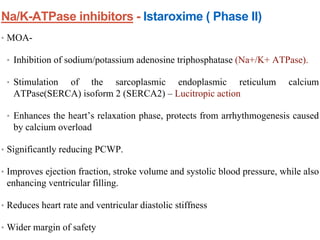
Na/K-ATPase inhibitors - Istaroxime ( Phase II)
• MOA-
• Inhibition of sodium/potassium adenosine triphosphatase (Na+/K+ ATPase).
• Stimulation of the sarcoplasmic endoplasmic reticulum calcium
ATPase(SERCA) isoform 2 (SERCA2) – Lucitropic action
• Enhances the heart’s relaxation phase, protects from arrhythmogenesis caused
by calcium overload
• Significantly reducing PCWP.
• Improves ejection fraction, stroke volume and systolic blood pressure, while also
enhancing ventricular filling.
• Reduces heart rate and ventricular diastolic stiffness
• Wider margin of safety
Ryanodine receptor stabilizers (JTV519 )
• Ca+2 entry in SR triggers further its release via activating the ryanodine
receptor 2 (RyR2)
• Diastolic Ca2+ leak through dysfunctional RyR2, leak may lead to a
reduction in SR Ca2+ content, with less Ca2+ available for release and
consequently weaker muscle contractions.
• Calstabin proteins increase the probability of the channel to be in its
closed state, RyR channel stabilizers.
• MOA- JTV519 (originally called K201), S107, S44121 enhances RyR-
calstabin binding and stabilizes the closed state of the RyR thus
preventing SR Ca2+ leak
• Preserve left ventricular systolic and diastolic function
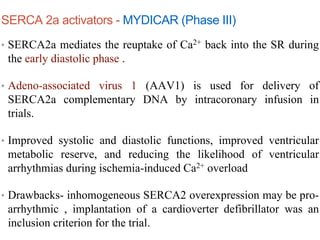
SERCA 2a activators - MYDICAR (Phase III)
• SERCA2a mediates the reuptake of Ca2+ back into the SR during
the early diastolic phase .
• Adeno-associated virus 1 (AAV1) is used for delivery of
SERCA2a complementary DNA by intracoronary infusion in
trials.
• Improved systolic and diastolic functions, improved ventricular
metabolic reserve, and reducing the likelihood of ventricular
arrhythmias during ischemia-induced Ca2+ overload
• Drawbacks- inhomogeneous SERCA2 overexpression may be pro-
arrhythmic , implantation of a cardioverter defibrillator was an
inclusion criterion for the trial.
Vasodilators
• Relaxin
• Serelaxin
Vasodilators - Serelaxin (Phase III)
• Recombinant human relaxin- 2
• Relaxin- circulating peptide found in pregnant women
• Regulates systemic vasodilation
• The rapid vasodilatory responses of relaxin are mediated by activation of
endothelial NOS.
• Reduces pulmonary capillary wedge pressure and systemic vascular resistance
• Improves dyspnea significantly
• Reduces hospital stay with HF
• Dose 30 μg/kg/day infusion
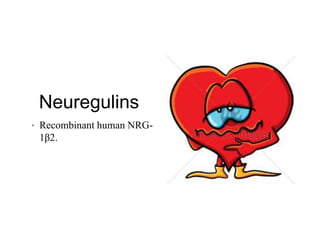
Neuregulins
• Recombinant human NRG-
1β2.
Neuregulins - Recombinant human NRG - 1ß2 (Phase III)
• Growth-promoting proteins of the epidermal growth factor family .
• Neuregulin-1 (NRG-1) plays a key role in cardiac chamber differentiation and
trabeculation in the developing embryo and in cardiac function.
• Act through the ErbB family of tyrosine kinase receptors.
• In the later stages of HF, both NRG-1 expression and NRG-1/ErbB signaling are
inhibited, enhanced susceptibility of cardiomyocytes to cell death and progression
of HF.
• Recombinant human NRG-1β2 infusion improve cardiac structure and function
by 90 days
• Increase in cardiac output as well as vasodilator effect.
• Drawbacks- potential for acceleration of tumor growth , administered
intravenously over many hours on a daily basis, thus limiting its utility in chronic
Novel blockers
of RAS
• Direct renin inhibitors- Oral Aliskiren,IV
Remikiren, IV Enalkiren
• Angiotensin receptor & neprilysin
inhibitors- LCZ696, AHU377
,Candoxatril, Ecadotril
• Aldosterone blockers-
• Non steroidal minrelocorticoid receptor
antagonist-PF3882845,BR-4628
• Aldosterone synthase inhibitors-
FAD286, LCI699
RAS
Direct renin inhibitors - Oral Aliskiren,IV
Remikiren, IV Enalkiren
• Reduce increased plasma renin activity directly
• Independent of plasma levels of BNP, background effect of beta
blockers & ACEI.
• MOA- inhibit conversion of Angiotensinogen to angiotensin-I
• Reduces systemic vascular resistance & PCWP
• Ventricular remodeling significantly attenuated
• Delays cardiovascular death and hospitalization
• Drawback- hyperkalemia, hypotension
Angiotensin receptor and neprilysin inhibitors -
• Candoxatril, Ecadotril
• LCZ696 (Angiotensin receptor blocker)
• AHU377 moiety (neprilysin inhibitor)
• Phase II
• Atrial natriuretic peptide, B, C and exogenous D-type, possess
differing degrees of hemodynamic, neurohormonal, renal and
cardiac effects
• Preservation of systemic blood pressures while causing significant
reductions in central pressures
• Increases in urine sodium excretion and increased urinary volume
while preserving glomerular filtration.
Non-steroidal mineralocorticoid receptor antagonists
• PF3882845 -greater blood pressure reduction and renal protection
• BR-4628 -dihydropyridine (DHP) structure
• specific MR antagonist without pronounced L-type calcium channel
activity .
Aldosterone synthase inhibitors
• There is induction of aldosterone synthase (CYP11β2) or angiotensin II
in the failing ventricle
• FAD286 - improved cardiac hemodynamic parameters, preventing
progressive LV remodeling
• LCI699 - reduction in blood pressure
Multiple modes
of action
• Dual ACE/NEP Inhibition – Vasopeptidase
Inhibitors
• Omapatrilat, sampatrilat, fasidotrilat, MDL
100240, Z13752A, BMS 189921 and mixanpril
• Dual NEP & ECE(endothelin converting enz.)
inhibitors
• GGS34043, GGS34226, GGS26303, SLV306
• Triple enzyme inhibitors of ECE/NEP/ACE
• GGS26670
• Dual dopamine D2-α2 agonist
• Nolomirol
• Dopamine β-Hydroxylase inhibitor
• Nepicastat
Rx of CCF
Dual ACE/NEP(Neutral Endopeptidase) Inhibition
– Vasopeptidase Inhibitors
• Omapatrilat, sampatrilat, fasidotrilat, MDL 100240, Z13752A,
BMS 189921 and mixanpril
• Superior to ACE inhibitors in increasing glomerular filtration rate
and sodium excretion and decreasing PCWP
• Improvement in ventricular function in NYHA class II to IV heart
failure.
• Drawback- Severe angioedema than ACEI
Dual Neutral Endopeptidase (NEP) and Endothelin
Converting Enzyme (ECE) Inhibitors
• Endothelin converting enzyme helps in production of ET-1- a potent
vasoconstrictor
• NEP degrades BNP and ANP- helps in natriuresis
• GGS 34226 and GGS 26303 are dual inhibitors of above enzymes
• Decreased preload, afterload and LV hypertrophy and increased
cardiac output.
• Reducing right and left cardiac filling pressures
Triple Enzyme Inhibitors of ECE/NEP/ACE
• GGS 26670
• Improved LV function and reduced LV collagen accumulation
better than either ACE alone or ECE-NEP inhibition
Dual Dopamine D2- a 2 Adrenoceptor agonist
• Nolomirole
• Inhibits catecholamine release from sympathetic nerve endings and
also inhibits the release of TNF-a from cardiac tissue
• Significantly reduces hypertrophy and attenuates signs and
symptoms
Dopamine ß - Hydroxylase Inhibitor
• DBH catalyses the conversion of dopamine (DA) to norepinephrine
(NE) in sympathetic nerves
• Nepicastat (Phase II)- reduce norepinephrine synthesis.
• Attenuates ventricular remodeling and prevents systolic dysfunction
• Augments level of DA leading to renal vasodilation
Adenosine A1 receptor antagonists
• BG 9928, BG 9719
• Protects renal function and exerts additive natriuretic effects without
excessive potassium loss
Carnitine Palmitoyl Transferase-1 (CPT-1) Inhibitors
• CPT-1 enzyme helps in metabolism of fatty acid which is a source of energy
production in heart
• Etoxomir, Oxfenicine
• Convert energy production of heart from fatty acids to glucose
• Preserves cardiac function and prevents ventricular dilation, reduced PCWP.
prevents ventricular remodeling.
Matrix Metalloproteinase (MMP) Inhibitors
• Enhanced expression of MMP triggers signaling cascade of cardiac remodeling
• Batimastat, ilomastat, marimastat and prinomastat, PG-53072
• Prevent ventricular dysfunction and delay heart failure progression
Immune modulator
• CelacadeTM
• Prevents chronic inflammation and apoptotic cell death by activating
physiological immune system’s IL -10 mediated anti-inflammatory
process
• Celacade is a device-based outpatient procedure involving ex vivo
exposure of 10ml autologous blood to heat, ultraviolet irradiation,
controlled oxidative ozone therapy and subsequent intramuscular
administration at monthly intervals.
• Improve quality of life in patients of NYHA class III or IV heart failure.
• Reduce the risk of death and hospitalization due to chronic heart failure
Summary
Drug/Molecule MOA Phase of Clinical Trial
Omecamtiv mecarbil Inotropic - Cardiac Myosite Activator II b
Istaroxime Na+/K+/ATPase inhibitor II
Serelaxin Vasodilator III
MYDICAR SERCA2a Activator III
Recombinant human
NRG-1β2
Neuregulins III
Candoxatril, Ecadotril
LCZ696
AHU377
Angiotensin receptor and neprilysin inhibitors
Angiotensin receptor
Neprilysin inhibitors
II
PF3882845
BR-4628
Non-steroidal mineralocorticoid receptor antagonists I
FAD286
LCI699
Aldosterone synthase inhibitors I
Nepicastat Dopamine b -Hydroxylase Inhibitor II
BG 9928, BG 9719 Adenosine A1 receptor antagonists I
Etoxomir, Oxfenicine Carnitine Palmitoyl Transferase-1 (CPT-1) Inhibitors II
Batimastat, ilomastat,
marimastat and Matrix Metalloproteinase (MMP) Inhibitors IIIx
Conclusion
• The newer therapeutics may be potential candidates in future for
heart as increasing in understanding of pathophysiology of heart
failure.
• Agents directly acting on remodeling process may even reverse
current pathological condition of heart failure.
• Newer agents are seems to be beneficial over the older one in
efficacy and safety wise eg: newer inotropes, RAAS antagonists…
• Gene therapy is also emerging as newer technique for HF seems to
be promising in near future.
ed food, less butter and ghee. Second, exercise d
Take Home Message
References
• Harrison’s principles of internal medicine 18th ed.
• Essentials of medical Pharmacology; KD Tripathi; 7th edition
• Basic and Clinical Pharmacology; Kazung; 12th edition.
• Pharmacology & Therapeutics Volume 135, Issue 1, July 2012,
Pages 1–17
• Novel Strategies for the Treatment of Heart Failure.
RMMJ|www.rmmj.org.il.1 April 2012.Volume 3(2).0011
• Emerging Drug Therapies for Heart Failure.Ijpt. July 2006 | vol.
5 | no. 2 | 87-94

Recent Advances in CCF

  • 1.
    Recent Advances in Pharmacotherapyof CCF Dr Ketan Asawalle JR3 Dept of Pharmacology SVNGMC Yavatmal
  • 2.
    Scope of Presentation •Definition • Epidemiology • Classification of Heart Failure • Etiology and Pathophysiology • Signs and Symptoms • Management • Summary • Conclusion
  • 3.
    Heart Failure • Apathophysiologic state in which an abnormality of cardiac function is responsible for failure of the heart to pump blood at a rate commensurate with metabolic requirements of the tissues -E Braunwald. • Heart Failure is a clinical syndrome which occurs because of an inherited of acquired abnormality of 1.Cardiac Structure. 2. Cardiac Function. Developing a constellation of 1. Clinical Symptoms - dyspnoea and fatigue. 2. Signa - edema and rales. that lead to frequent hospitalizations, a poor quality of life, and a shortened life expectancy- Harrison’s princilple of internal medicine 18th ed.
  • 4.
    Epidemiology • Prevalence -2% in developing countries. • More than 20 million people affected worldwide. • Affects 10% of people over 65 year. • It is the most common condition for which patients 65 + require admission to hospitals. • Affects over 50% of people with 85+ years. • Approx 10% of patients with HF die each year. • Prevalance in india- 1.87 %
  • 5.
    Classification • BY EJECTIONFRACTION • Reduced ejection fraction(<40-50%)- systolic heart failure • Preserved ejection fraction(>40-50%)- diastolic heart failure • BY TIME COURSE • Chronic heart failure(CHF) • Acute heart failure (Cardiogenic Shock) • ANATOMICALLY • Left sided- LHF • Right sided- RHF(CHF) • BY OUTPUT • High output failure-Thyrotoxicosis, Paget's dis, Anemia, Pregnancy, A-V fistula • Low output failure – 95% of HF is this
  • 7.
    Etiology • Reduced ejectionfraction(< 50%) • Condition that leads to an alteration in LV structure or function can predispose a patient to developing HF. • Coronary artery disease - MI, Angina (60- 70 %) • Chronic pressure overload disease - Hypertension( 75%), valvular disease • Chronic volume overload- intracardiac and extracardiac shunting • Non ischaemic cardiomyopathy • Drug induced damage- metabolic disorder • Disorders of rate and rhythm • Preserved ejection fraction(> 50%) • Pathologic hypertrophy • Restrictive cardiomyopathy • Fibrosis • Aging • Pulmonary heart disease - Cor pulmonale, pulmonary vascular dis
  • 8.
  • 9.
  • 10.
  • 11.
    Non Pharmacological • Activity- •Routine modest exercise for class I-III • For eu-volemic patients- regular isotonic exercise such as walking or riding a stationary bicycle ergometer • Diet- • Restriction of sodium (2-3 g daily) is recommended in all patients, Extra < 2g reduction in moderate to severe cases. • Fluid restriction (<2 L/day) if hyponatremia (<130 meq/L) • Caloric supplementation- with advanced HF and unintentional weight loss or muscle wasting (cardiac cachexia)
  • 12.
    Pharmacological measures DRUGS FOR ACUTEDECOMPENSATED HF • DIURETICS- Furosemide /hydrochlorthiazide • VASODILATORS- Nitroprusside, Nitroglycerin, Nesiritide • INOTROPIC AGENTS- dobutamine, dopamine, milrinone, levosimendan Drug Therapy for Chronic HF Due to Systolic Dysfunction DIURETICS-furosemide / hydrochlorthiazide ACE-INHIBITORS*-captopril • ARBs*- losartan • HYDRALAZINE + ISOSORBIDE*-when ACE-I or ARB contraindicated or not fully effective • BETA BLOCKERS* • SPIRONOLACTONE* • DIGOXIN
  • 13.
    Surgical measures • CardiacRe-synchronization • Implantable Cardiac Defibrillators • Intra-aortic balloon counter pulsation • Percutaneous and surgically implanted LV assist devices • Cardiac transplantation
  • 14.
    Mechanism of Action ofDrugs Used in CCF
  • 15.
    Diuretics • High ceilingdiuretics (furosemide, bumetanide) are the diuretics of choice for mobilizing edema fluid. • In advanced CHF after chronic use, resistance may develop. • Addition of a thiazide/ metolazone/spironolactone to furosemide may overcome the resistance. • Diuretics: (a) Decrease preload and improve ventricular efficiency by reducing circulating volume. (b) Remove peripheral edema and pulmonary congestion. • Used in combination with venodilators. • Diuretics have no role in asymptomatic left ventricular dysfunction, and brisk diuresis can worsen some cases. • They do not influence the disease process in CHF. • Diuretics may cause activation of RAS (if hypovolemia occurs) which has adverse cardiovascular consequences. • Chronic diuretic therapy tends to cause hypokalaemia, alkalosis and carbohydrate intolerance.
  • 16.
    Renin Angiotensin system(RAS) Inhibitors • ACE inhibitors and ARBs are used to block RAS. • They afford symptomatic as well as disease modifying benefits in CHF by causing vasodilatation, retarding/preventing ventricular hypertrophy, myocardial cell apoptosis, fibrosis intercellular matrix changes and re-modeling • ACE inhibitors raise the level of kinins which stimulate generation of cardioprotective NO and PGs • They are thus recommended for all grades of CHF, unless contraindicated, or if renal function deteriorates. • ACE inhibitor therapy is generally started at low doses which are gradually increased.
  • 17.
    Vasodilators • First usedi.v. to treat acute heart failure that occurs in advanced cases or following MI, • Their use by oral route has been extended to long-term therapy of chronic CHF • Preload Reduction - Nitrates cause pooling of blood in systemic capacitance vessels to reduce ventricular end-diastolic pressure and volume - It is indicated when the central venous pressure (CVP) is raised and in dilated cardiomyopathy. - However, lowering of preload (by vasodilators + strong diuretics) beyond a limit may reduce output of a failing heart - Occurrence of nitrate tolerance limits their utility in routine treatment of CHF • After load reduction - Hydralazine dilates resistance vessels and reduces aortic impedance so that even weaker ventricular contraction is able to pump more blood - Systolic wall stress is reduced. - It is effective in forward failure when cardiac index (CI = min output/body surface area) is low (< 2.5 L/min/m2) without a marked increase in CVP (< 18 mm Hg). - Marked tachycardia, worsening of myocardial ischaemia and fluid retention limit long-term use of hydralazine monotherapy.
  • 18.
    Vasodilators • Pre- andAfter load reduction - Sodium nitroprusside is a high efficacy i.v. dilator with equal action on the two types of vessels. - reduces ventricular filling pressure as well as systemic vascular resistance. - Cardiac output and renal blood flow are increased - employed in conjunction with a loop diuretic + i.v. inotropic drug to tide over crisis in severely decompensated patients. • When Hydrazine and Nitrates are combined they supplement each other and nitrate tolerance is attenuated by Hydralazine • Severe CHF patients already receiving ACE inhibitors + digoxin + diuretic have obtained extra benefit from addition of hydralazine with or without a nitrate.
  • 19.
    ß-Adrenergic Blockers • Metoprolol,Bisoprolol, Nebivolol and the nonselective + selective  1 blocker Carvedilol in mild to moderate CHF treated with ACE inhibitor ± diuretic, digitalis. • A large number of randomized trials including - Metoprolol in dilated cardiomyopathy trial (1993), - US carvedilol trial (1996), MERIT-HF trial (1999), CIBIS-II trial (1999), - CAPRICORN trial (2001), - COPERNICUS trial (2002) have demonstrated subjective, objective, prognostic and mortality benefits of the above named blockers over and above that afforded by ACE inhibitors + diuretic ± digitalis.
  • 20.
    ß-Adrenergic Blockers • Immediatehemodynamic action of β blockers is to depress cardiac contractility and ejection fraction, these parameters gradually improve over weeks. • The benefits appear to be due to antagonism of - ventricular wall stress enhancing, - apoptosis promoting and - pathological remodeling effects of excess sympathetic activity (occurring reflexly) in CHF, as well as due to prevention of sinister arrhythmias. • Lower plasma markers of activation of sympathetic, renin-angiotensin systems and endothelin-1
  • 21.
    ß-Adrenergic Blockers • Greatestutility of blockers has been shown in mild to moderate (NYHA class II, III) cases of dilated cardiomyopathy with systolic dysfunction • Encouraging results (upto 35% decrease in mortality) have been obtained in class IV cases as well • There is no place for blockers in decompensated patients. • Starting dose should be very low—then titrated upward as tolerated to the target level (carvedilol 50 mg/day, bisoprolol 10 mg/day, metoprolol 200 mg/day). • A long-acting preparation (e.g. sustained release metoprolol) or 2–3 times daily dosing to produce round-the-clock blockade should be selected.
  • 22.
    Aldosterone Antagonists ation andfibrotic change in myocardium worsening systolic dysfunction and pathol Expansion of e.c.f. volume increased cardiac preload. a and hypomagnesemia increased risk of ventricular arrhythmias and sudden car Enhancement of cardiotoxic and remodeling effect of sympathetic overactivity.
  • 23.
    Aldosterone Antagonists • Itis indicated as add-on therapy to ACE inhibitors + other drugs in moderate-to-severe CHF. • It can retard disease progression, reduce episodes of decompensation and death due to heart failure as well as sudden cardiac deaths, over and above the protection afforded by ACE inhibitors/ARBs ± blockers. • Only low doses (12.5–25 mg/day) of spironolactone should be used to avoid hyperkalaemia; particularly because of concurrent ACE inhibitor/ARB therapy. • It may help restoration of diuretic response to furosemide when refractoriness has developed. . • The onset of benefit of aldosterone antagonist in CHF is slow. • It is contraindicated in renal insufficiency because of risk of hyperkalemia— requires serum K+ monitoring.
  • 24.
    SYMPATHOMIMETIC INOTROPIC DRUGS • Drugswith 1 adrenergic and dopaminergic D1 agonistic actions have positive inotropic and vasodilator properties. • Dobutamine (2–8 g/kg/min) a relatively selective 1 agonist with prominent inotropic action is the preferred drug for i.v. infusion in acute heart failure accompanying myocardial infarction (MI), cardiac surgery as well as to tide over crisis in advanced decompensated CHF. • Dopamine (3–10 g/kg/min by i.v. infusion) has been used in cardiogenic shock due to MI and other causes. • Low rates of dopamine infusion (~2 g/kg/min) cause selective renal vasodilatation (D1 agonistic action) which improves renal perfusion and g.f.r. • Development of tolerance and cardiotoxic potential when used
  • 25.
    Phosphodiesterase 3 Inhibitors Inamrinone(amrinone) • Bipyridine derivative is a selective phosphodiesterase 3 (PDE3) inhibitor. • Specific for intracellular degradation of cAMP in heart, blood vessels and bronchial smooth muscles. • Amrinone increases myocardial cAMP and transmembrane influx of Ca2+. • It does not inhibit Na+K+ATPase, and its action is independent of tissue catecholamines as well as adrenergic receptors. • The two most important actions of amrinone are positive inotropy and direct vasodilatation: has been called an ‘inodilator’ • Both preload and after load are reduced
  • 26.
    Phosphodiesterase 3 Inhibitors •In CHF patients i.v. amrinone action starts in 5 min and lasts 2–3 hours; elimination t1⁄2 is 2–4 hours. • Adverse effects - Thrombocytopenia is the most prominent and dose related side effect, • It is indicated only for short-term i.v. use in severe and refractory CHF, as an additional drug to conventional therapy with digitalis, diuretics and vasodilators. • Dose: 0.5 mg/kg bolus injection followed by 5–10 μg/kg/ min i.v. infusion (max. 10 mg/kg in 24 hours). • Milrinone Related to inamrinone, it has similar action but is more selective for PDE3, and is at least 10 times more potent. It is shorter-acting with a t1⁄2
  • 27.
    Nesiritide • This recombinantbrain natriuretic peptide (BNP) has been approved for i.v. use to relieve dyspnoea and other symptoms in refractory CHF. • It enhances salt and water excretion and is a potent vasodilator with profile of action similar to i.v. glyceryl trinitrate; • Reduces ventricular filling pressure. • Additional haemodynamic and symptomatic improvement can be obtained for short periods, but no long term benefits are evident in CHF.
  • 28.
    Tolvaptan • This isan orally active nonpeptide vasopressin V2 receptor antagonist introduced recently for the correction of water retention and hyponatremia occurring in ‘syndrome of inappropriate ADH secretion’ (SIADH) as well as in advanced CHF. • Tolvaptan has afforded short-term improvement by increasing water excretion, restoring serum Na+ and relieving dyspnoea. • However, no long-term benefits have been noted.
  • 29.
    Medicines used inthe first line management of heart failure DRUG CLASS DOSE REGIME SIDE EFFECTS ACEIs Ramipril Perindopril Lisinopril Enalapril Captopril 1.25 – 10mg daily (2 divided doses) 2.5 – 5mg daily 2.5 – 35mg daily 2.5mg daily – 10-20mg twice daily 6.25 – 50mg three times daily Postural hypotension; dry cough; ↑ plasma K+; caution with renal dysfunction. Rarely angio- oedema. Not to be used during pregnancy β-blockers Bisoprolol Nebivolol Carvedilol 1.25 – 10mg daily 1.25 – 10mg daily 3.125 – 25mg twice daily Bradycardia; worsening of heart failure; hypotension; fatigue; GI disturbances; cold extremities Diuretics: Furosemide Bumetanide Bendroflumethiazide 20 – 40mg once or twice daily 0.5 - 2mg daily 2.5mg daily – 10mg daily Loop diuretics: ↓ K+ and ↓ Na+ ; hypovolaemia; hypotension; ↑ creatinine; ↑ risk of gout Thiazides: ↓ K+ ; ↑ risk of gout; ↑ risk of diabetes mellitus. Rarely ↓ Na+
  • 30.
    Medicines used inthe second-line management of heart failure DRUG CLASS DOSE REGIME CLASS SIDE EFFECTS ARBs Valsartan Losartan Candesartan 40-160mg twice daily 12.5 – 150mg daily 4 – 32mg daily Postural hypotension; ↑ plasma K+; caution with renal dysfunction. Not to be used during pregnancy Aldosterone (mineralocorticoid receptor) Antagonists Spironolactone Eplerenone 12.5 – 50mg+ daily 25 – 50mg daily ↑ plasma K+ - discontinue if K+ levels > 5mmol/L; caution with ↓ renal function. Gynaecomastia (with spironolactone). Do not use eplerenone with strong inhibitors of CYP 3A4 Other drugs which can be used in HF- INOTROPIC AGENTS- Cardiac Glycosides, Phosphodiesterase inhibitors, dopamine receptor agonists Ivabradin Anticoagulants Antiarrhythmic agents
  • 31.
  • 32.
    Reduced Cardiac Output Compensatory mechanisms Symp. stimulation RASactivation Increased systemic vascular resistance Increased impedance to ventricular outflow Myocardial inadequacy Volume Expansion Increased stroke volume initially Ventricular Dilatation Ventricular Remodelling Aldosterone Venodilators Diuretics Digitalis Arteriolar Dilators Spironolactone ACEI ß B
  • 33.
    Diagnosis • Detailed history,clinical examination, ECHO and/or serum natriuretic peptide levels • Confirm heart failure and Assess the severity of symptoms Treatment • Education on lifestyle management and exercise training Step- 1 • ACE inhibitor (or ARB if ACEI not tolerated) +/- β-blocker** • Concomitant therapy with β-blocker + Diuretic (or ARB if ACEI not tolerated) • If still symptomatic with optimised triple therapy (ACEI, β-blocker, diuretic) Step- 2 • ADD mineralocorticoid receptor antagonist (MRA) (ARB may be considered if MRA not suitable) • hydralazine + isosorbide may be useful in black populations / patients not responding or intolerant of step 2 combinations Step- 3 • Consider adding in digoxin / ivabradine / use of non-surgical interventional therapies (ICD, CRT)
  • 34.
    ent trend ofdrugs used in CCf according to the grade of Heart fa
  • 35.
    NEED FOR NEWERTHERAPIES • Available drugs treat only symptomatically • Even the available drugs do not control symptoms effectively • Associated side effects are more • Needed life long treatment • HF is associated with high morbidity and mortality
  • 36.
    Novel Agents nCCF • Newer Inotropes- • Cardiac myosin activators- Omecamtive mecarbil • Na/K-ATPase inhibitors- Istaroxime • Ryanodine receptor stabilizers- JTV-519(K 201),S107,S44121 • SERCA2a activators- MYDICAR • Vasodilators- Relaxin • Neuregulins- • recombinant human NRG-1β2 • Novel RAAS blockers- • Direct renin inhibitors- Oral Aliskiren,IV Remikiren, IV Enalkiren • Angiotensin receptor & neprilysin inhibitors- LCZ696, AHU377 ,Candoxatril, Ecadotril • Aldosterone blockers- • Non steroidal minrelocorticoid receptor antagonist- PF3882845,BR-4628 • Aldosterone synthase inhibitors- FAD286, LCI699
  • 37.
    • Dual ACE/NEPInhibition – Vasopeptidase Inhibitors • Omapatrilat, sampatrilat, fasidotrilat, MDL 100240, Z13752A, BMS 189921 and mixanpril • Dual NEP & ECE(endothelin converting enz.) inhibitors • GGS34043, GGS34226, GGS26303, SLV306 • Triple enzyme inhibitors of ECE/NEP/ACE • GGS26670 • Dual dopamine D2-α2 agonist • Nolomirol • Dopamine β-Hydroxylase inhibitor • Nepicastat • Adenosine A1 receptor antagonists • BG9719,BG9928 • Carnitine palmitoyl transferase-1(CPT-1) inhibitors • Etoxomir, Oxenicine • Matrix Metalloproteinase (MMP) Inhibitors • Batimastat, ilomastat, marimastat and prinomastat • Immune modulator • CelacadeTM
  • 38.
    Newer Inotropic Agents • Cardiac myosinactivators- Omecamtive mecarbil • Na/K-ATPase inhibitors- Istaroxime • Ryanodine receptor stabilizers- JTV-519(K 201),S107,S44121 • SERCA2a activators- MYDICAR
  • 39.
    Cardiac Myosin Activators- Omecamtivemecarbil (Phase II b) Previously referred to as CK-1827452 Cardiac-specific myosin activator. Studied for a potential role in the treatment of left ventricular systolic heart failure. Targets and activates myocardial ATPase and improves energy utilization. Enhances effective myosin cross-bridge formation and duration, while the velocity of contraction remains the same. It also increases the rate of phosphate release from myosin, thereby accelerating the rate-determining step of the cross-bridge cycle. Disadvantage :As it prolongs systole, shorten diastole- inadequate coronary flow & ventricular filling so lowers threshold for myocardial ischemia in patients with CAD
  • 40.
    Cardiac Myosin Activators- Omecamtivemecarbil • MOA: accelerate transition of actin-myosin complex from a weakly bound to strongly bound configuration ↓ ↑ myosin head interaction with actin ↓ nonproductive ATP hydrolysis ↓ ↑duration of systole ↑stroke volume improvement in myocardial systolic function in absence of arrythmogenesis & ↑ O2
  • 42.
    Na/K-ATPase inhibitors -Istaroxime ( Phase II) • MOA- • Inhibition of sodium/potassium adenosine triphosphatase (Na+/K+ ATPase). • Stimulation of the sarcoplasmic endoplasmic reticulum calcium ATPase(SERCA) isoform 2 (SERCA2) – Lucitropic action • Enhances the heart’s relaxation phase, protects from arrhythmogenesis caused by calcium overload • Significantly reducing PCWP. • Improves ejection fraction, stroke volume and systolic blood pressure, while also enhancing ventricular filling. • Reduces heart rate and ventricular diastolic stiffness • Wider margin of safety
  • 44.
    Ryanodine receptor stabilizers(JTV519 ) • Ca+2 entry in SR triggers further its release via activating the ryanodine receptor 2 (RyR2) • Diastolic Ca2+ leak through dysfunctional RyR2, leak may lead to a reduction in SR Ca2+ content, with less Ca2+ available for release and consequently weaker muscle contractions. • Calstabin proteins increase the probability of the channel to be in its closed state, RyR channel stabilizers. • MOA- JTV519 (originally called K201), S107, S44121 enhances RyR- calstabin binding and stabilizes the closed state of the RyR thus preventing SR Ca2+ leak • Preserve left ventricular systolic and diastolic function
  • 47.
    SERCA 2a activators- MYDICAR (Phase III) • SERCA2a mediates the reuptake of Ca2+ back into the SR during the early diastolic phase . • Adeno-associated virus 1 (AAV1) is used for delivery of SERCA2a complementary DNA by intracoronary infusion in trials. • Improved systolic and diastolic functions, improved ventricular metabolic reserve, and reducing the likelihood of ventricular arrhythmias during ischemia-induced Ca2+ overload • Drawbacks- inhomogeneous SERCA2 overexpression may be pro- arrhythmic , implantation of a cardioverter defibrillator was an inclusion criterion for the trial.
  • 49.
  • 50.
    Vasodilators - Serelaxin(Phase III) • Recombinant human relaxin- 2 • Relaxin- circulating peptide found in pregnant women • Regulates systemic vasodilation • The rapid vasodilatory responses of relaxin are mediated by activation of endothelial NOS. • Reduces pulmonary capillary wedge pressure and systemic vascular resistance • Improves dyspnea significantly • Reduces hospital stay with HF • Dose 30 μg/kg/day infusion
  • 51.
  • 52.
    Neuregulins - Recombinanthuman NRG - 1ß2 (Phase III) • Growth-promoting proteins of the epidermal growth factor family . • Neuregulin-1 (NRG-1) plays a key role in cardiac chamber differentiation and trabeculation in the developing embryo and in cardiac function. • Act through the ErbB family of tyrosine kinase receptors. • In the later stages of HF, both NRG-1 expression and NRG-1/ErbB signaling are inhibited, enhanced susceptibility of cardiomyocytes to cell death and progression of HF. • Recombinant human NRG-1β2 infusion improve cardiac structure and function by 90 days • Increase in cardiac output as well as vasodilator effect. • Drawbacks- potential for acceleration of tumor growth , administered intravenously over many hours on a daily basis, thus limiting its utility in chronic
  • 53.
    Novel blockers of RAS •Direct renin inhibitors- Oral Aliskiren,IV Remikiren, IV Enalkiren • Angiotensin receptor & neprilysin inhibitors- LCZ696, AHU377 ,Candoxatril, Ecadotril • Aldosterone blockers- • Non steroidal minrelocorticoid receptor antagonist-PF3882845,BR-4628 • Aldosterone synthase inhibitors- FAD286, LCI699 RAS
  • 54.
    Direct renin inhibitors- Oral Aliskiren,IV Remikiren, IV Enalkiren • Reduce increased plasma renin activity directly • Independent of plasma levels of BNP, background effect of beta blockers & ACEI. • MOA- inhibit conversion of Angiotensinogen to angiotensin-I • Reduces systemic vascular resistance & PCWP • Ventricular remodeling significantly attenuated • Delays cardiovascular death and hospitalization • Drawback- hyperkalemia, hypotension
  • 55.
    Angiotensin receptor andneprilysin inhibitors - • Candoxatril, Ecadotril • LCZ696 (Angiotensin receptor blocker) • AHU377 moiety (neprilysin inhibitor) • Phase II • Atrial natriuretic peptide, B, C and exogenous D-type, possess differing degrees of hemodynamic, neurohormonal, renal and cardiac effects • Preservation of systemic blood pressures while causing significant reductions in central pressures • Increases in urine sodium excretion and increased urinary volume while preserving glomerular filtration.
  • 56.
    Non-steroidal mineralocorticoid receptorantagonists • PF3882845 -greater blood pressure reduction and renal protection • BR-4628 -dihydropyridine (DHP) structure • specific MR antagonist without pronounced L-type calcium channel activity . Aldosterone synthase inhibitors • There is induction of aldosterone synthase (CYP11β2) or angiotensin II in the failing ventricle • FAD286 - improved cardiac hemodynamic parameters, preventing progressive LV remodeling • LCI699 - reduction in blood pressure
  • 57.
    Multiple modes of action •Dual ACE/NEP Inhibition – Vasopeptidase Inhibitors • Omapatrilat, sampatrilat, fasidotrilat, MDL 100240, Z13752A, BMS 189921 and mixanpril • Dual NEP & ECE(endothelin converting enz.) inhibitors • GGS34043, GGS34226, GGS26303, SLV306 • Triple enzyme inhibitors of ECE/NEP/ACE • GGS26670 • Dual dopamine D2-α2 agonist • Nolomirol • Dopamine β-Hydroxylase inhibitor • Nepicastat Rx of CCF
  • 58.
    Dual ACE/NEP(Neutral Endopeptidase)Inhibition – Vasopeptidase Inhibitors • Omapatrilat, sampatrilat, fasidotrilat, MDL 100240, Z13752A, BMS 189921 and mixanpril • Superior to ACE inhibitors in increasing glomerular filtration rate and sodium excretion and decreasing PCWP • Improvement in ventricular function in NYHA class II to IV heart failure. • Drawback- Severe angioedema than ACEI
  • 59.
    Dual Neutral Endopeptidase(NEP) and Endothelin Converting Enzyme (ECE) Inhibitors • Endothelin converting enzyme helps in production of ET-1- a potent vasoconstrictor • NEP degrades BNP and ANP- helps in natriuresis • GGS 34226 and GGS 26303 are dual inhibitors of above enzymes • Decreased preload, afterload and LV hypertrophy and increased cardiac output. • Reducing right and left cardiac filling pressures
  • 60.
    Triple Enzyme Inhibitorsof ECE/NEP/ACE • GGS 26670 • Improved LV function and reduced LV collagen accumulation better than either ACE alone or ECE-NEP inhibition Dual Dopamine D2- a 2 Adrenoceptor agonist • Nolomirole • Inhibits catecholamine release from sympathetic nerve endings and also inhibits the release of TNF-a from cardiac tissue • Significantly reduces hypertrophy and attenuates signs and symptoms
  • 61.
    Dopamine ß -Hydroxylase Inhibitor • DBH catalyses the conversion of dopamine (DA) to norepinephrine (NE) in sympathetic nerves • Nepicastat (Phase II)- reduce norepinephrine synthesis. • Attenuates ventricular remodeling and prevents systolic dysfunction • Augments level of DA leading to renal vasodilation Adenosine A1 receptor antagonists • BG 9928, BG 9719 • Protects renal function and exerts additive natriuretic effects without excessive potassium loss
  • 62.
    Carnitine Palmitoyl Transferase-1(CPT-1) Inhibitors • CPT-1 enzyme helps in metabolism of fatty acid which is a source of energy production in heart • Etoxomir, Oxfenicine • Convert energy production of heart from fatty acids to glucose • Preserves cardiac function and prevents ventricular dilation, reduced PCWP. prevents ventricular remodeling. Matrix Metalloproteinase (MMP) Inhibitors • Enhanced expression of MMP triggers signaling cascade of cardiac remodeling • Batimastat, ilomastat, marimastat and prinomastat, PG-53072 • Prevent ventricular dysfunction and delay heart failure progression
  • 63.
    Immune modulator • CelacadeTM •Prevents chronic inflammation and apoptotic cell death by activating physiological immune system’s IL -10 mediated anti-inflammatory process • Celacade is a device-based outpatient procedure involving ex vivo exposure of 10ml autologous blood to heat, ultraviolet irradiation, controlled oxidative ozone therapy and subsequent intramuscular administration at monthly intervals. • Improve quality of life in patients of NYHA class III or IV heart failure. • Reduce the risk of death and hospitalization due to chronic heart failure
  • 64.
    Summary Drug/Molecule MOA Phaseof Clinical Trial Omecamtiv mecarbil Inotropic - Cardiac Myosite Activator II b Istaroxime Na+/K+/ATPase inhibitor II Serelaxin Vasodilator III MYDICAR SERCA2a Activator III Recombinant human NRG-1β2 Neuregulins III Candoxatril, Ecadotril LCZ696 AHU377 Angiotensin receptor and neprilysin inhibitors Angiotensin receptor Neprilysin inhibitors II PF3882845 BR-4628 Non-steroidal mineralocorticoid receptor antagonists I FAD286 LCI699 Aldosterone synthase inhibitors I Nepicastat Dopamine b -Hydroxylase Inhibitor II BG 9928, BG 9719 Adenosine A1 receptor antagonists I Etoxomir, Oxfenicine Carnitine Palmitoyl Transferase-1 (CPT-1) Inhibitors II Batimastat, ilomastat, marimastat and Matrix Metalloproteinase (MMP) Inhibitors IIIx
  • 65.
    Conclusion • The newertherapeutics may be potential candidates in future for heart as increasing in understanding of pathophysiology of heart failure. • Agents directly acting on remodeling process may even reverse current pathological condition of heart failure. • Newer agents are seems to be beneficial over the older one in efficacy and safety wise eg: newer inotropes, RAAS antagonists… • Gene therapy is also emerging as newer technique for HF seems to be promising in near future.
  • 66.
    ed food, lessbutter and ghee. Second, exercise d Take Home Message
  • 68.
    References • Harrison’s principlesof internal medicine 18th ed. • Essentials of medical Pharmacology; KD Tripathi; 7th edition • Basic and Clinical Pharmacology; Kazung; 12th edition. • Pharmacology & Therapeutics Volume 135, Issue 1, July 2012, Pages 1–17 • Novel Strategies for the Treatment of Heart Failure. RMMJ|www.rmmj.org.il.1 April 2012.Volume 3(2).0011 • Emerging Drug Therapies for Heart Failure.Ijpt. July 2006 | vol. 5 | no. 2 | 87-94