Realism and Impressionism
Lesson 2
REALISM IN ART
France – Honoré Daumier (1808-79)
• Daumier was a satirist whose satire was
rooted in realistic observation.
• He depicted working-class sympathetically
in paintings such The Third-Class Carriage.
• In his Rue Transnonian he expressed horror
at injustice and brutality.
Daumier – Two Paintings
Daumier – Third Class Carriage (1863-65) Daumier – Rue Transnonian (1834)
France – Gustave Courbet (1819-77)
• Courbet painted erotic subjects and
Romantic self-portraits.
• His unsentimental portraits of
contemporary life made him the leading
modern Realistic painter.
Courbet’s Burial at Ornans (1849-50)
• No illusionistic depth
• Lack of a formal
composition
• Radical approach to
subject matter
More About Courbet’s Realism
• Courbet used broken paint surfaces to
make the outside world more tangible.
• Courbet’s Realism was associated with left-
wing dissidence.
• In his later career he experimented with
different approaches to landscapers, still
lifes, portraits, and the figure.
Courbet’s The Source of the Loue (1864)
English Colorists
• Constable, Turner, & Bonington influenced
French Romantics and the Impressionists.
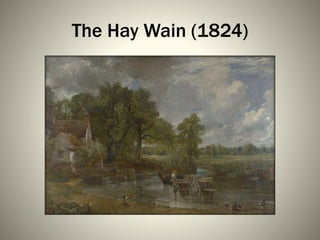
• Constable’s The Hay Wain (1824) was
known for its radiant color.
• Constable’s paintings rarely made reference
to the harsh realities of agricultural life
during this time.
The Hay Wain (1824)
Ford Maddox Brown (1821-1893)
• Paintings showed
realities of working
class in England
• This painting is the
most complete
testament to edifying
and redemptive of
hard toil.
Pre-Raphaelites
• Founded by:
– William Holman Hunt (1827-1910)
– John Everett Millais (1829-1896)
– Dante Gabriel Rossetti (1828-1882)
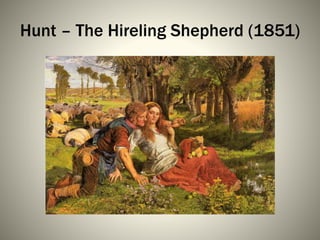
• They wanted to paint their paintings to show
the exact textures, colors, light, and outlines
of nature.
Hunt – The Hireling Shepherd (1851)

Realismandimpressionism

  • 1.
  • 2.
  • 3.
    France – HonoréDaumier (1808-79) • Daumier was a satirist whose satire was rooted in realistic observation. • He depicted working-class sympathetically in paintings such The Third-Class Carriage. • In his Rue Transnonian he expressed horror at injustice and brutality.
  • 4.
    Daumier – TwoPaintings Daumier – Third Class Carriage (1863-65) Daumier – Rue Transnonian (1834)
  • 5.
    France – GustaveCourbet (1819-77) • Courbet painted erotic subjects and Romantic self-portraits. • His unsentimental portraits of contemporary life made him the leading modern Realistic painter.
  • 6.
    Courbet’s Burial atOrnans (1849-50) • No illusionistic depth • Lack of a formal composition • Radical approach to subject matter
  • 7.
    More About Courbet’sRealism • Courbet used broken paint surfaces to make the outside world more tangible. • Courbet’s Realism was associated with left- wing dissidence. • In his later career he experimented with different approaches to landscapers, still lifes, portraits, and the figure.
  • 8.
    Courbet’s The Sourceof the Loue (1864)
  • 9.
    English Colorists • Constable,Turner, & Bonington influenced French Romantics and the Impressionists. • Constable’s The Hay Wain (1824) was known for its radiant color. • Constable’s paintings rarely made reference to the harsh realities of agricultural life during this time.
  • 10.
  • 11.
    Ford Maddox Brown(1821-1893) • Paintings showed realities of working class in England • This painting is the most complete testament to edifying and redemptive of hard toil.
  • 12.
    Pre-Raphaelites • Founded by: –William Holman Hunt (1827-1910) – John Everett Millais (1829-1896) – Dante Gabriel Rossetti (1828-1882) • They wanted to paint their paintings to show the exact textures, colors, light, and outlines of nature.
  • 13.
    Hunt – TheHireling Shepherd (1851)