
REALISM
CONSTRUCTIVIS
M
PSY 660 PHILOSOPHICAL ,
PSYCHOLOGICAL, AND
SOCIOLOGICAL
FOUNDATIONS OF
GUIDANCE
REALISM
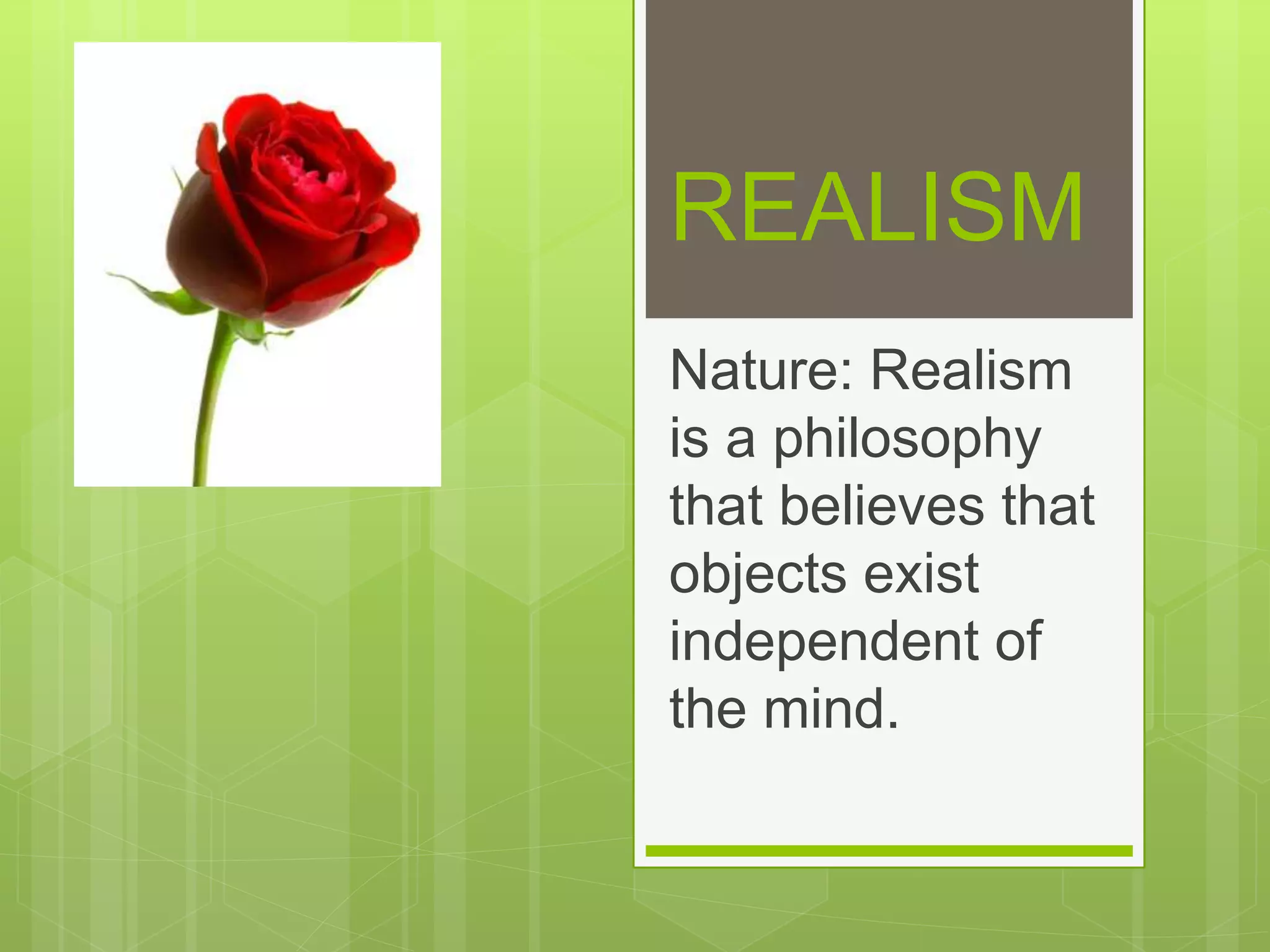
Nature: Realism
is a philosophy
that believes that
objects exist
independent of
the mind.
REALISM
 Form of objectivism that assumes that
some sort of reality is separate from
the mind (ontology); to know is to have
a correspondence between the world
and the mind (epistemology).
 Realism is an act of accepting reality in
its actual spirit and essence including
facts, physical universe, events,
necessities of life, ground realities,
favourable or unfavourable situations,
conditions and atmosphere, as they
are, as opposed to the abstract or ideal.
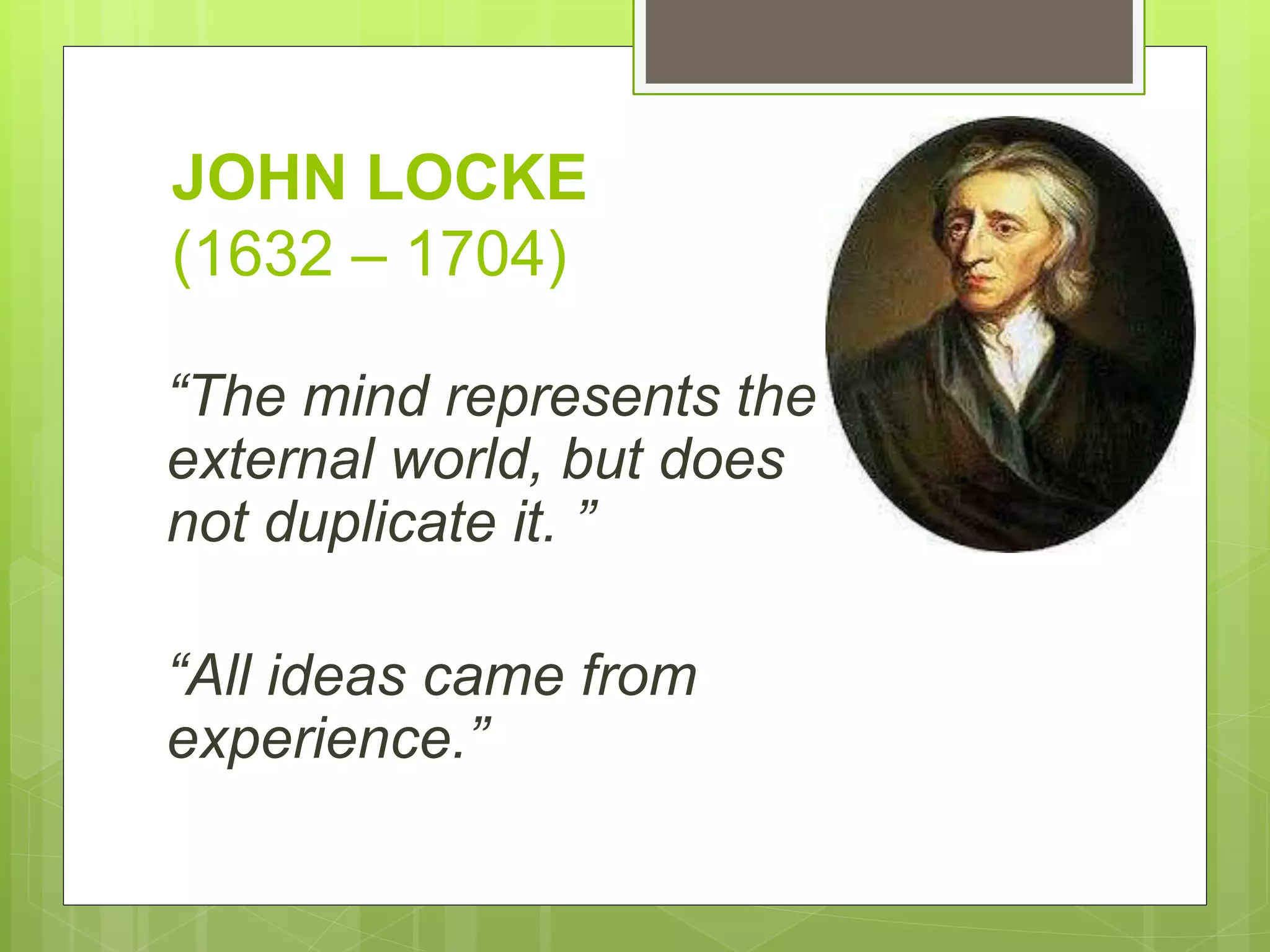
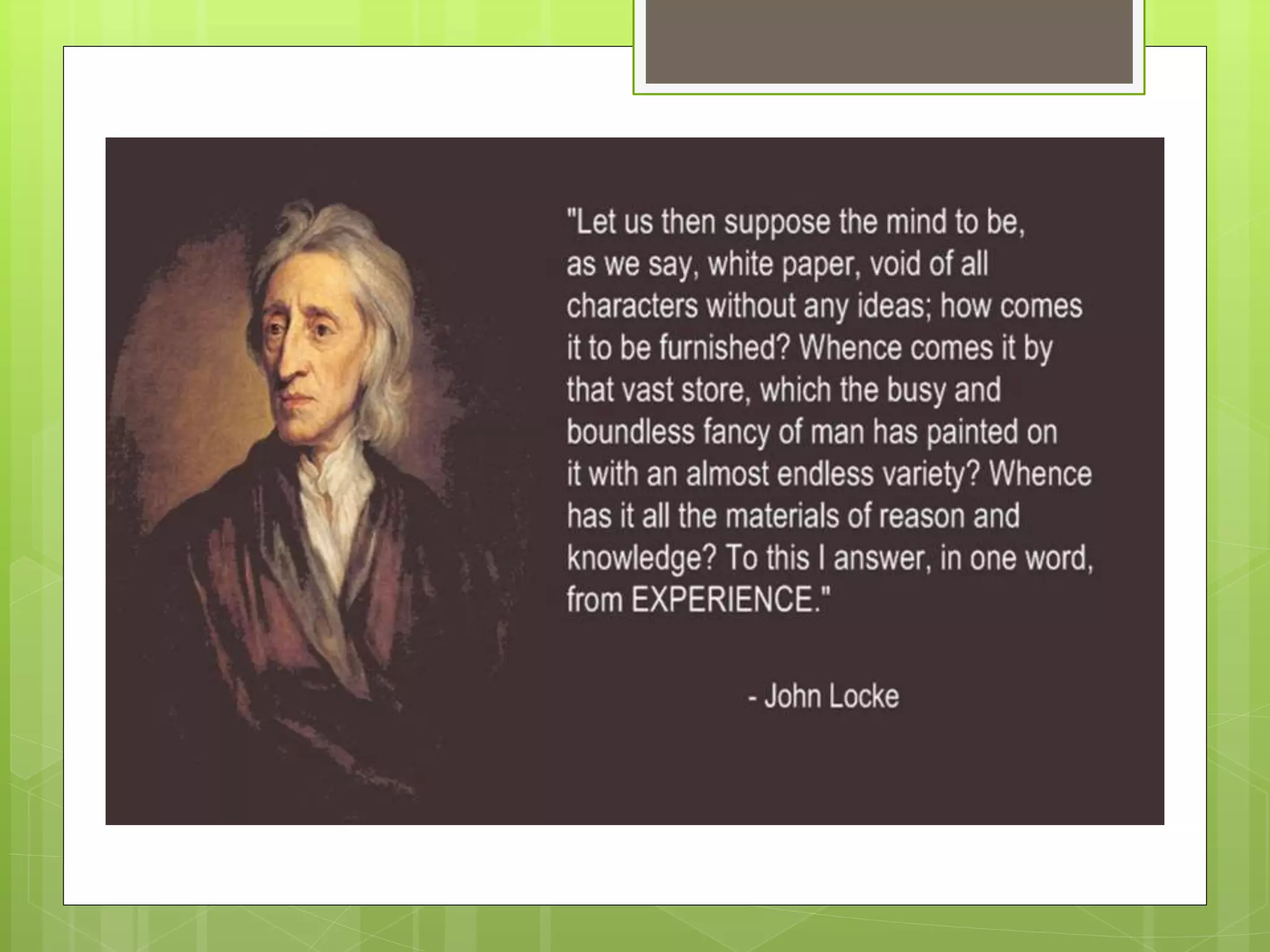
JOHN LOCKE
(1632 – 1704)
“The mind represents the
external world, but does
not duplicate it. ”
“All ideas came from
experience.”
 The key term in Locke's Essay is "idea,"
which he defined as ". . . whatsoever is the
object of the under-standing when a man
thinks, . . . whatever is meant by phantasm,
notion, species, or whatever it is which the
mind can be employed about in thinking"
(I.i.8).
 Any object of awareness or of
consciousness must be an idea.
Realism and aims of education
1. Preparing the child for a happy and successful
life.
2. Preparing the child for a real life
3. Emphasis on training of senses
4. Equal importance to individuality and
sociability
5. Developing scientific attitude
6. Developing vocational efficiency
7. Acquainting a child with nature and social
environment
Client / Pupil
 An organism with a highly developed brain,
superior to others
 4 principles comprises the essence of the human
self:
 Appetitive
 Self-determination
 Self-realization
 Self-integration
Realist behaviors:
 Gathers interpretable data from client.
 Persuades client to change behavior to
become more self-disciplining.
 Verbally predicts possible client behavior.
 Explains to client, how he, the counselor,
solves problem
 Changes client’s environment
Realistic career guidance
 Careers are voyages of discovery.
 Leading the client from behind
works best.
 A strength focus is more effective
than a deficit focus.
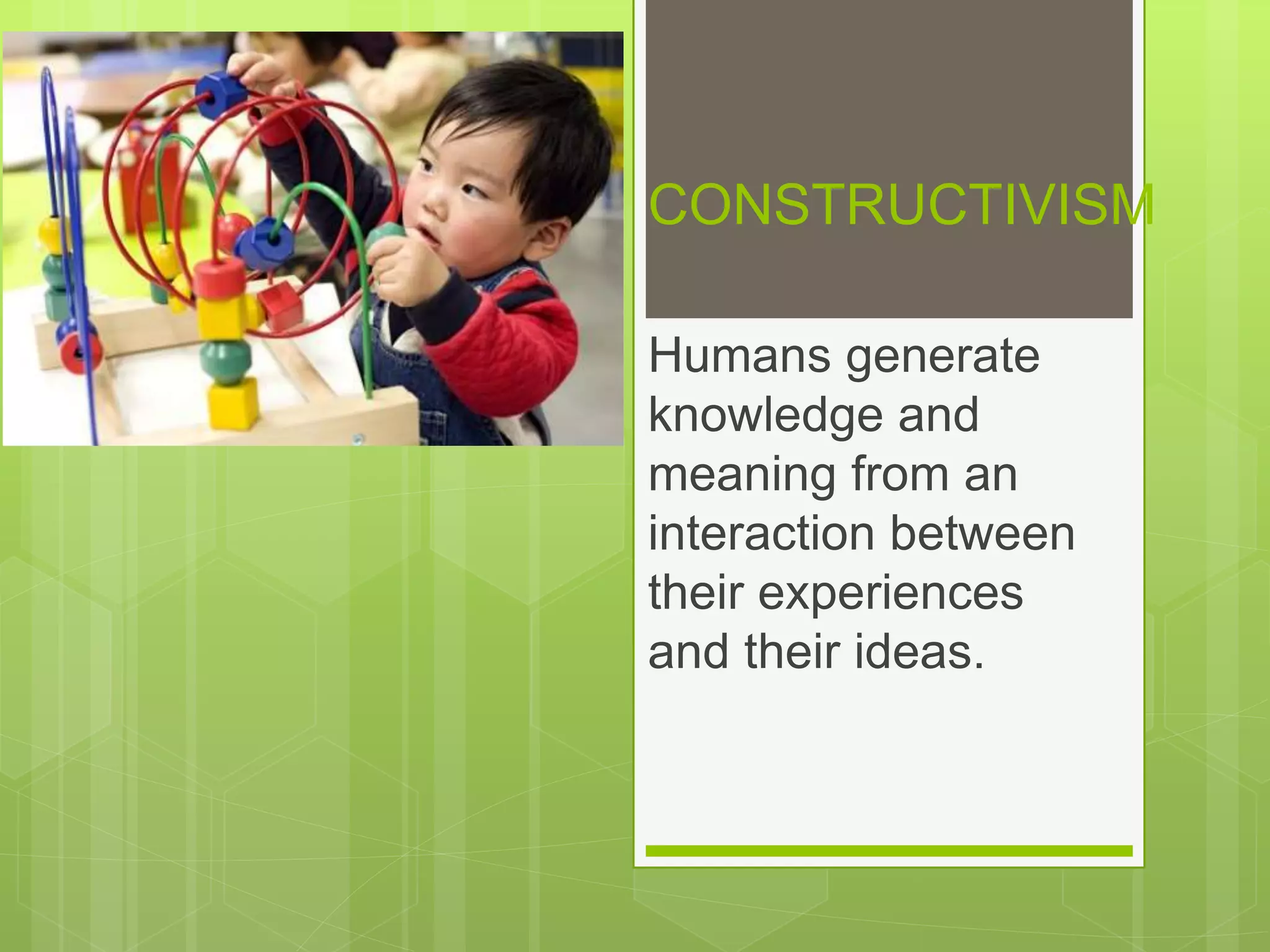
CONSTRUCTIVISM
Humans generate
knowledge and
meaning from an
interaction between
their experiences
and their ideas.
 Constructivism's central idea is that human
learning is constructed, that learners build
new knowledge upon the foundation of
previous learning.
 In constructivism, there is not a 'one and
only true way' to solve a task. The solution of
a problem rather depends upon individual
experiences and thoughts.
CONSTRUCTIVISM
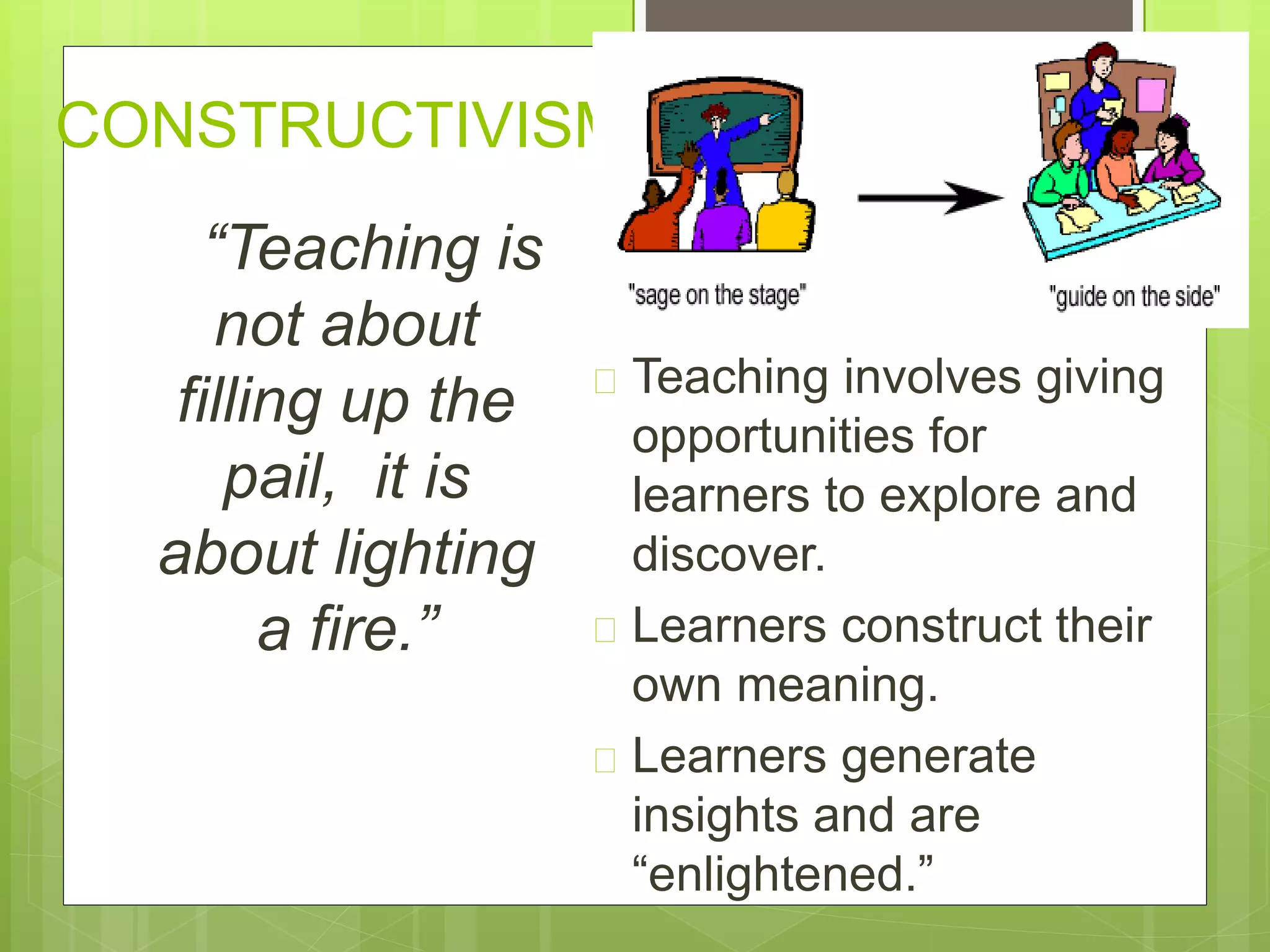
“Teaching is
not about
filling up the
pail, it is
about lighting
a fire.”
 Teaching involves giving
opportunities for
learners to explore and
discover.
 Learners construct their
own meaning.
 Learners generate
insights and are
“enlightened.”
2 views of constructivism
 Individual constructivism – emphasizes
individual, internal construction of
knowledge.
 Social constructivism – knowledge exists
in a social context and is initially shared
with others instead of being represented
solely in the mind of an individual.
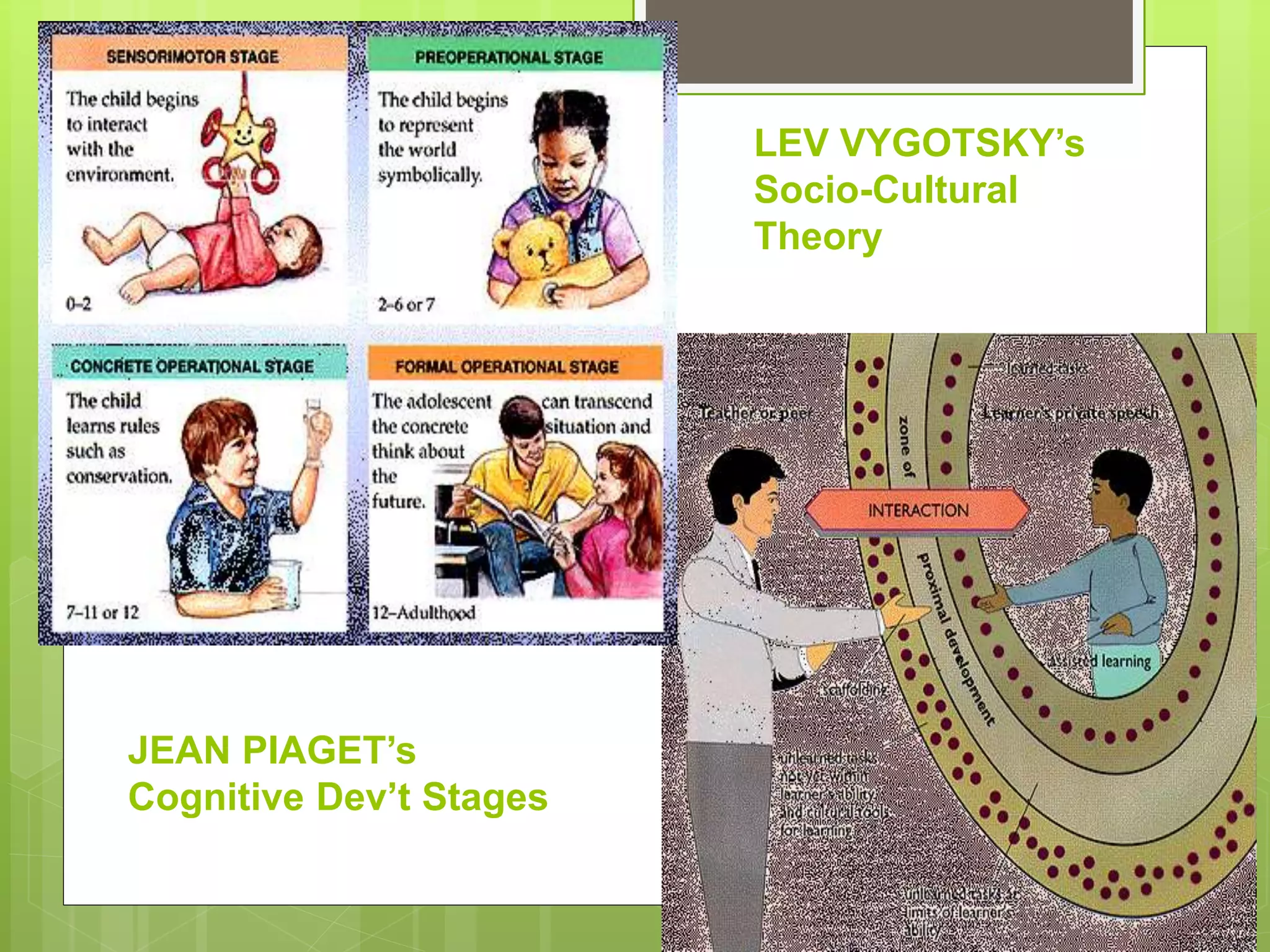
JEAN PIAGET’s
Cognitive Dev’t Stages
LEV VYGOTSKY’s
Socio-Cultural
Theory
Characteristics of Constructivism
 Learners construct understanding.
 New learning depends on current
understanding.
 Learning is facilitated by social
interaction.
 Meaningful learning occurs within
authentic learning tasks.
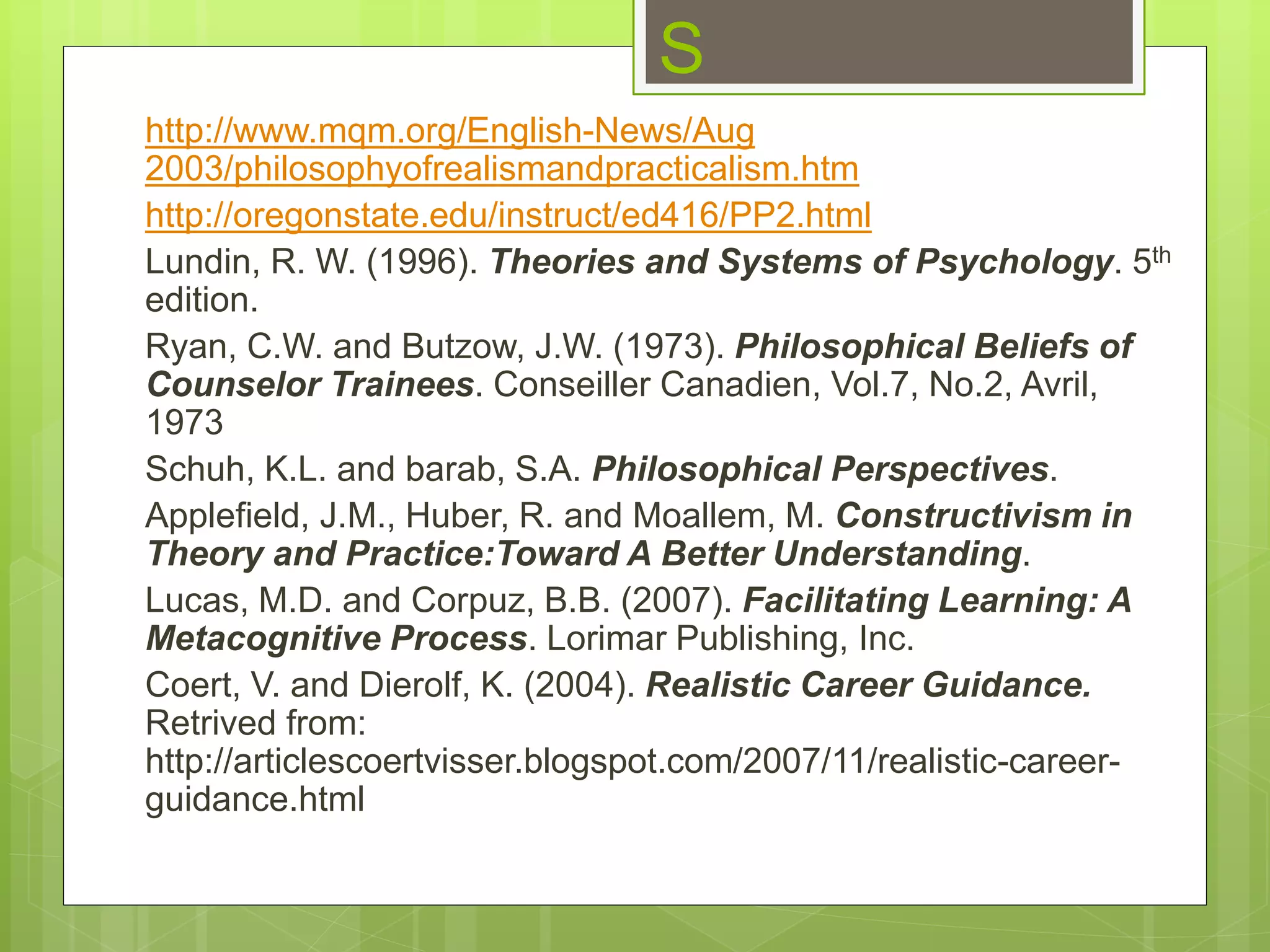
S
http://www.mqm.org/English-News/Aug
2003/philosophyofrealismandpracticalism.htm
http://oregonstate.edu/instruct/ed416/PP2.html
Lundin, R. W. (1996). Theories and Systems of Psychology. 5th
edition.
Ryan, C.W. and Butzow, J.W. (1973). Philosophical Beliefs of
Counselor Trainees. Conseiller Canadien, Vol.7, No.2, Avril,
1973
Schuh, K.L. and barab, S.A. Philosophical Perspectives.
Applefield, J.M., Huber, R. and Moallem, M. Constructivism in
Theory and Practice:Toward A Better Understanding.
Lucas, M.D. and Corpuz, B.B. (2007). Facilitating Learning: A
Metacognitive Process. Lorimar Publishing, Inc.
Coert, V. and Dierolf, K. (2004). Realistic Career Guidance.
Retrived from:
http://articlescoertvisser.blogspot.com/2007/11/realistic-career-
guidance.html
Thank you.
PRESENTED BY:
MARIA ANGELA L. DIOPOL
MP-SP

REALISM / CONSTRUCTIVISM

  • 1.
    REALISM CONSTRUCTIVIS M PSY 660 PHILOSOPHICAL, PSYCHOLOGICAL, AND SOCIOLOGICAL FOUNDATIONS OF GUIDANCE
  • 2.
    REALISM Nature: Realism is aphilosophy that believes that objects exist independent of the mind.
  • 3.
    REALISM  Form ofobjectivism that assumes that some sort of reality is separate from the mind (ontology); to know is to have a correspondence between the world and the mind (epistemology).
  • 4.
     Realism isan act of accepting reality in its actual spirit and essence including facts, physical universe, events, necessities of life, ground realities, favourable or unfavourable situations, conditions and atmosphere, as they are, as opposed to the abstract or ideal.
  • 6.
    JOHN LOCKE (1632 –1704) “The mind represents the external world, but does not duplicate it. ” “All ideas came from experience.”
  • 8.
     The keyterm in Locke's Essay is "idea," which he defined as ". . . whatsoever is the object of the under-standing when a man thinks, . . . whatever is meant by phantasm, notion, species, or whatever it is which the mind can be employed about in thinking" (I.i.8).  Any object of awareness or of consciousness must be an idea.
  • 11.
    Realism and aimsof education 1. Preparing the child for a happy and successful life. 2. Preparing the child for a real life 3. Emphasis on training of senses 4. Equal importance to individuality and sociability 5. Developing scientific attitude 6. Developing vocational efficiency 7. Acquainting a child with nature and social environment
  • 12.
    Client / Pupil An organism with a highly developed brain, superior to others  4 principles comprises the essence of the human self:  Appetitive  Self-determination  Self-realization  Self-integration
  • 13.
    Realist behaviors:  Gathersinterpretable data from client.  Persuades client to change behavior to become more self-disciplining.  Verbally predicts possible client behavior.  Explains to client, how he, the counselor, solves problem  Changes client’s environment
  • 14.
    Realistic career guidance Careers are voyages of discovery.  Leading the client from behind works best.  A strength focus is more effective than a deficit focus.
  • 15.
    CONSTRUCTIVISM Humans generate knowledge and meaningfrom an interaction between their experiences and their ideas.
  • 16.
     Constructivism's centralidea is that human learning is constructed, that learners build new knowledge upon the foundation of previous learning.  In constructivism, there is not a 'one and only true way' to solve a task. The solution of a problem rather depends upon individual experiences and thoughts.
  • 17.
    CONSTRUCTIVISM “Teaching is not about fillingup the pail, it is about lighting a fire.”  Teaching involves giving opportunities for learners to explore and discover.  Learners construct their own meaning.  Learners generate insights and are “enlightened.”
  • 18.
    2 views ofconstructivism  Individual constructivism – emphasizes individual, internal construction of knowledge.  Social constructivism – knowledge exists in a social context and is initially shared with others instead of being represented solely in the mind of an individual.
  • 19.
    JEAN PIAGET’s Cognitive Dev’tStages LEV VYGOTSKY’s Socio-Cultural Theory
  • 20.
    Characteristics of Constructivism Learners construct understanding.  New learning depends on current understanding.  Learning is facilitated by social interaction.  Meaningful learning occurs within authentic learning tasks.
  • 21.
    S http://www.mqm.org/English-News/Aug 2003/philosophyofrealismandpracticalism.htm http://oregonstate.edu/instruct/ed416/PP2.html Lundin, R. W.(1996). Theories and Systems of Psychology. 5th edition. Ryan, C.W. and Butzow, J.W. (1973). Philosophical Beliefs of Counselor Trainees. Conseiller Canadien, Vol.7, No.2, Avril, 1973 Schuh, K.L. and barab, S.A. Philosophical Perspectives. Applefield, J.M., Huber, R. and Moallem, M. Constructivism in Theory and Practice:Toward A Better Understanding. Lucas, M.D. and Corpuz, B.B. (2007). Facilitating Learning: A Metacognitive Process. Lorimar Publishing, Inc. Coert, V. and Dierolf, K. (2004). Realistic Career Guidance. Retrived from: http://articlescoertvisser.blogspot.com/2007/11/realistic-career- guidance.html
  • 22.
    Thank you. PRESENTED BY: MARIAANGELA L. DIOPOL MP-SP