PSYCH-ANALYSIS: 
READING FOR THE SOCIAL 
SCIENCES 
NWACC 
READING 
WORKSHOPS 
SPRING 2014
“It was books that taught me that the 
things that tormented me most were 
the very things that connected me 
with all the people 
who were alive, 
or who had ever been 
alive.” 
–James 
Baldwin author, 
playwright
THE SOCIAL SCIENCES, WHICH 
INCLUDE HISTORY, ECONOMICS, 
PSYCHOLOGY, SOCIOLOGY, AND 
PHILOSOPHY, SEEK TO EXPLAIN AND 
UNDERSTAND THE ESSENCE OF 
WHAT IT MEANS TO BE HUMAN.
• Students often enjoy the social sciences 
because they give an understanding of 
the connections between themselves 
and each other. 
• The social sciences better enable 
students to begin to understand some of 
the most enigmatic and universal things 
about human existence: politics, culture, 
religion, love, hate, violence, money, 
social status, family and other 
interpersonal relationships, and much 
more. 
These are things that humanity has been 
trying to comprehend– and master– for a very 
long time.
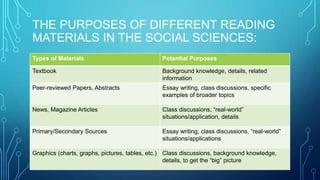
THE PURPOSES OF DIFFERENT READING 
MATERIALS IN THE SOCIAL SCIENCES: 
Types of Materials Potential Purposes 
Textbook Background knowledge, details, related 
information 
Peer-reviewed Papers, Abstracts Essay writing, class discussions, specific 
examples of broader topics 
News, Magazine Articles Class discussions, “real-world” 
situations/application, details 
Primary/Secondary Sources Essay writing, class discussions, “real-world” 
situations/applications 
Graphics (charts, graphs, pictures, tables, etc.) Class discussions, background knowledge, 
details, to get the “big” picture
PURPOSE FOR READING IN THE SOCIAL 
SCIENCES 
Purpose could be any, all, or any combination of the following things: 
• To identify arguments. 
• To weigh evidence. 
• To evaluate sources (and resources). 
• To look for conflicts of interest and opinions disguised as facts. 
• To question assumptions. 
• To understand the “big picture.” 
• To add additional details to other sources (such as lecture).
MAPPING IS PARTICULARLY USEFUL 
READING AND UNDERSTANDING SOCIAL 
SCIENCE TEXTS 
• Mapping is a visual note taking style that emphasizes relationships 
between ideas and the “big picture.” 
• Mapping lends itself to the social sciences as it allows the student to see all 
the details (so often emphasized by instructors) as well as how those details 
fit into the larger subject. 
• Mapping has many different ways it can be done depending on the material 
itself. Mapping can be used in either lecture note taking or book note taking.
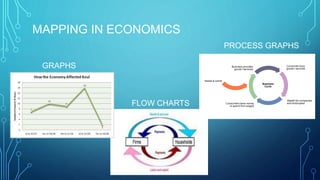
MAPPING IN ECONOMICS 
GRAPHS 
FLOW CHARTS 
PROCESS GRAPHS
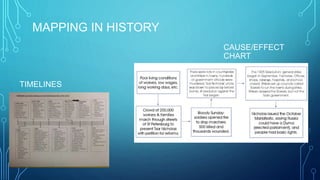
MAPPING IN HISTORY 
TIMELINES 
CAUSE/EFFECT 
CHART
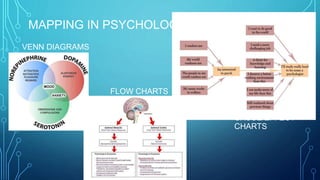
MAPPING IN PSYCHOLOGY 
VENN DIAGRAMS 
FLOW CHARTS 
CAUSE/EFFECT 
CHARTS
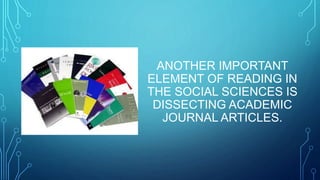
ANOTHER IMPORTANT 
ELEMENT OF READING IN 
THE SOCIAL SCIENCES IS 
DISSECTING ACADEMIC 
JOURNAL ARTICLES.
“WHAT IS AN ACADEMIC JOURNAL?” 
• Academic journals are periodicals in which researchers 
publish articles on their work. Most often these articles 
discuss recent research. 
• Journals also publish theoretical discussions and articles that 
critically review already published work. 
• Academic journals are typically peer-reviewed journals. Some 
search engines that search for periodical sources identify 
whether or not the sources are from peer-reviewed 
publications, so look for that information when you do 
searches.
HOW ARE JOURNAL ARTICLES 
ORGANIZED? 
SUBTITLES OFTEN INCLUDE… 
• Abstract 
• Theories & Evidence 
• Background 
• Methods or Data & Methods 
• Results 
• Discussion or Discussion & 
Conclusion 
• Notes 
• References 
• Acknowledgements 
• Funding
“WHAT IS THIS ARTICLE ABOUT?” 
•Abstract: Most articles start with a paragraph called 
the abstract, which very briefly summarizes the 
whole article. 
• Introduction: This section introduces the topic of 
the article completely and discusses what the article 
contributes to existing knowledge on the topic.
“WHAT DO WE ALREADY KNOW ABOUT 
THIS TOPIC, AND WHAT IS LEFT TO 
DISCOVER?” 
• Literature review: A review of existing research and theory on the 
topic is either included in the introduction or comes after the 
introduction under its own subtitle. 
• The review of literature is meant to discuss previous work on the topic, 
point out what questions remain, and relate the research presented in 
the rest of the article to the existing literature. 
• Here should also be a clear discussion of what the hypotheses were 
at the beginning of the project.
“HOW DID THE AUTHOR DO THE 
RESEARCH?” 
• Methods and data gathering: There is always some 
discussion of the methods used to conduct the study being 
reported. 
• Sampling: Information about who the subjects were, how 
they were selected, and what roles they played (control or 
variable group, etc.) 
• Instrumentation: Interview guides, surveys, normed tests, 
journals, questionnaires, etc.
“WHAT DID THE AUTHOR FIND AND HOW 
DID THEY FIND IT?” 
• Analysis: Another important section or sections will be 
devoted to discussing the kind of analysis that was 
conducted on the data and 
• Results: The research will then reveal the results of the 
study. If it is quantitative in nature, the results will usually 
have statistical significance and be in numerical form. 
Qualitative results will reveal the words, essence, and/or 
descriptive qualities of the subjects.
“WHAT DOES IT ALL MEAN AND WHY IS IT 
IMPORTANT?” 
• Discussion and Conclusion: Articles typically end by 
discussing what the results mean and how the study 
contributes to existing knowledge. 
• Here the research questions are answered, and it should be 
clear at this point whether or not the hypotheses were 
supported or not. 
• The conclusion is usually the final section. It typically places 
the research in a larger context, explaining the importance of 
the research and discussing where future research on the 
topic should be headed.
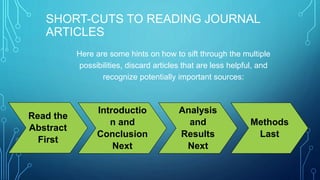
SHORT-CUTS TO READING JOURNAL 
ARTICLES 
Read the 
Abstract 
First 
Here are some hints on how to sift through the multiple 
possibilities, discard articles that are less helpful, and 
Introductio 
n and 
Conclusion 
Next 
Analysis 
and 
Results 
Next 
Methods 
Last 
recognize potentially important sources:
READ THE ABSTRACT FIRST 
• Titles don’t always give much information. The abstract should give 
you just enough information to let you know the basics of the article. 
• From this you will know whether you should read on or look elsewhere 
for your project. 
• Some journals print a list of keywords pertaining to the article as well. 
These are further clues about the article.
INTRODUCTION AND CONCLUSION NEXT 
•These sections will give you the main argument of 
the article, which should be helpful in determining its 
relevance to you and your project. 
• You’ll also get a glimpse of the findings of the 
research being reported.
ANALYSIS AND RESULTS NEXT 
• If you decide that you are committed to this article, you 
should read in more detail about this research. 
• Do the results support or refute your hypothesis, thesis, or 
argument? 
• Are the results important or significant to you? Why or why 
not?
METHODS LAST 
• If what you’ve read so far interests you, then spend some 
time on understanding how the research was done. 
• Is it a qualitative or quantitative project? 
• What data are the study based on? 
• What can you learn from the methodology about doing 
research?
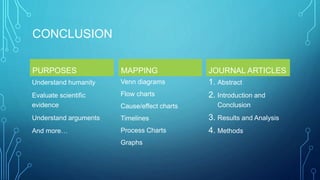
CONCLUSION 
PURPOSES 
Understand humanity 
Evaluate scientific 
evidence 
Understand arguments 
And more… 
MAPPING 
Venn diagrams 
Flow charts 
Cause/effect charts 
Timelines 
Process Charts 
Graphs 
JOURNAL ARTICLES 
1. Abstract 
2. Introduction and 
Conclusion 
3. Results and Analysis 
4. Methods

Reading the social sciences

  • 1.
    PSYCH-ANALYSIS: READING FORTHE SOCIAL SCIENCES NWACC READING WORKSHOPS SPRING 2014
  • 2.
    “It was booksthat taught me that the things that tormented me most were the very things that connected me with all the people who were alive, or who had ever been alive.” –James Baldwin author, playwright
  • 3.
    THE SOCIAL SCIENCES,WHICH INCLUDE HISTORY, ECONOMICS, PSYCHOLOGY, SOCIOLOGY, AND PHILOSOPHY, SEEK TO EXPLAIN AND UNDERSTAND THE ESSENCE OF WHAT IT MEANS TO BE HUMAN.
  • 4.
    • Students oftenenjoy the social sciences because they give an understanding of the connections between themselves and each other. • The social sciences better enable students to begin to understand some of the most enigmatic and universal things about human existence: politics, culture, religion, love, hate, violence, money, social status, family and other interpersonal relationships, and much more. These are things that humanity has been trying to comprehend– and master– for a very long time.
  • 5.
    THE PURPOSES OFDIFFERENT READING MATERIALS IN THE SOCIAL SCIENCES: Types of Materials Potential Purposes Textbook Background knowledge, details, related information Peer-reviewed Papers, Abstracts Essay writing, class discussions, specific examples of broader topics News, Magazine Articles Class discussions, “real-world” situations/application, details Primary/Secondary Sources Essay writing, class discussions, “real-world” situations/applications Graphics (charts, graphs, pictures, tables, etc.) Class discussions, background knowledge, details, to get the “big” picture
  • 6.
    PURPOSE FOR READINGIN THE SOCIAL SCIENCES Purpose could be any, all, or any combination of the following things: • To identify arguments. • To weigh evidence. • To evaluate sources (and resources). • To look for conflicts of interest and opinions disguised as facts. • To question assumptions. • To understand the “big picture.” • To add additional details to other sources (such as lecture).
  • 7.
    MAPPING IS PARTICULARLYUSEFUL READING AND UNDERSTANDING SOCIAL SCIENCE TEXTS • Mapping is a visual note taking style that emphasizes relationships between ideas and the “big picture.” • Mapping lends itself to the social sciences as it allows the student to see all the details (so often emphasized by instructors) as well as how those details fit into the larger subject. • Mapping has many different ways it can be done depending on the material itself. Mapping can be used in either lecture note taking or book note taking.
  • 8.
    MAPPING IN ECONOMICS GRAPHS FLOW CHARTS PROCESS GRAPHS
  • 9.
    MAPPING IN HISTORY TIMELINES CAUSE/EFFECT CHART
  • 10.
    MAPPING IN PSYCHOLOGY VENN DIAGRAMS FLOW CHARTS CAUSE/EFFECT CHARTS
  • 11.
    ANOTHER IMPORTANT ELEMENTOF READING IN THE SOCIAL SCIENCES IS DISSECTING ACADEMIC JOURNAL ARTICLES.
  • 12.
    “WHAT IS ANACADEMIC JOURNAL?” • Academic journals are periodicals in which researchers publish articles on their work. Most often these articles discuss recent research. • Journals also publish theoretical discussions and articles that critically review already published work. • Academic journals are typically peer-reviewed journals. Some search engines that search for periodical sources identify whether or not the sources are from peer-reviewed publications, so look for that information when you do searches.
  • 13.
    HOW ARE JOURNALARTICLES ORGANIZED? SUBTITLES OFTEN INCLUDE… • Abstract • Theories & Evidence • Background • Methods or Data & Methods • Results • Discussion or Discussion & Conclusion • Notes • References • Acknowledgements • Funding
  • 14.
    “WHAT IS THISARTICLE ABOUT?” •Abstract: Most articles start with a paragraph called the abstract, which very briefly summarizes the whole article. • Introduction: This section introduces the topic of the article completely and discusses what the article contributes to existing knowledge on the topic.
  • 15.
    “WHAT DO WEALREADY KNOW ABOUT THIS TOPIC, AND WHAT IS LEFT TO DISCOVER?” • Literature review: A review of existing research and theory on the topic is either included in the introduction or comes after the introduction under its own subtitle. • The review of literature is meant to discuss previous work on the topic, point out what questions remain, and relate the research presented in the rest of the article to the existing literature. • Here should also be a clear discussion of what the hypotheses were at the beginning of the project.
  • 16.
    “HOW DID THEAUTHOR DO THE RESEARCH?” • Methods and data gathering: There is always some discussion of the methods used to conduct the study being reported. • Sampling: Information about who the subjects were, how they were selected, and what roles they played (control or variable group, etc.) • Instrumentation: Interview guides, surveys, normed tests, journals, questionnaires, etc.
  • 17.
    “WHAT DID THEAUTHOR FIND AND HOW DID THEY FIND IT?” • Analysis: Another important section or sections will be devoted to discussing the kind of analysis that was conducted on the data and • Results: The research will then reveal the results of the study. If it is quantitative in nature, the results will usually have statistical significance and be in numerical form. Qualitative results will reveal the words, essence, and/or descriptive qualities of the subjects.
  • 18.
    “WHAT DOES ITALL MEAN AND WHY IS IT IMPORTANT?” • Discussion and Conclusion: Articles typically end by discussing what the results mean and how the study contributes to existing knowledge. • Here the research questions are answered, and it should be clear at this point whether or not the hypotheses were supported or not. • The conclusion is usually the final section. It typically places the research in a larger context, explaining the importance of the research and discussing where future research on the topic should be headed.
  • 19.
    SHORT-CUTS TO READINGJOURNAL ARTICLES Read the Abstract First Here are some hints on how to sift through the multiple possibilities, discard articles that are less helpful, and Introductio n and Conclusion Next Analysis and Results Next Methods Last recognize potentially important sources:
  • 20.
    READ THE ABSTRACTFIRST • Titles don’t always give much information. The abstract should give you just enough information to let you know the basics of the article. • From this you will know whether you should read on or look elsewhere for your project. • Some journals print a list of keywords pertaining to the article as well. These are further clues about the article.
  • 21.
    INTRODUCTION AND CONCLUSIONNEXT •These sections will give you the main argument of the article, which should be helpful in determining its relevance to you and your project. • You’ll also get a glimpse of the findings of the research being reported.
  • 22.
    ANALYSIS AND RESULTSNEXT • If you decide that you are committed to this article, you should read in more detail about this research. • Do the results support or refute your hypothesis, thesis, or argument? • Are the results important or significant to you? Why or why not?
  • 23.
    METHODS LAST •If what you’ve read so far interests you, then spend some time on understanding how the research was done. • Is it a qualitative or quantitative project? • What data are the study based on? • What can you learn from the methodology about doing research?
  • 24.
    CONCLUSION PURPOSES Understandhumanity Evaluate scientific evidence Understand arguments And more… MAPPING Venn diagrams Flow charts Cause/effect charts Timelines Process Charts Graphs JOURNAL ARTICLES 1. Abstract 2. Introduction and Conclusion 3. Results and Analysis 4. Methods