Developing Reading Skills
across the Curriculum
Re-imagining Comprehensions
Old style comprehensions have their place in
developing reading skills , often requiring students to
search for information or ideas.
Comprehending the next
generation
It is all about identifying different ways
for the students to interact with texts.
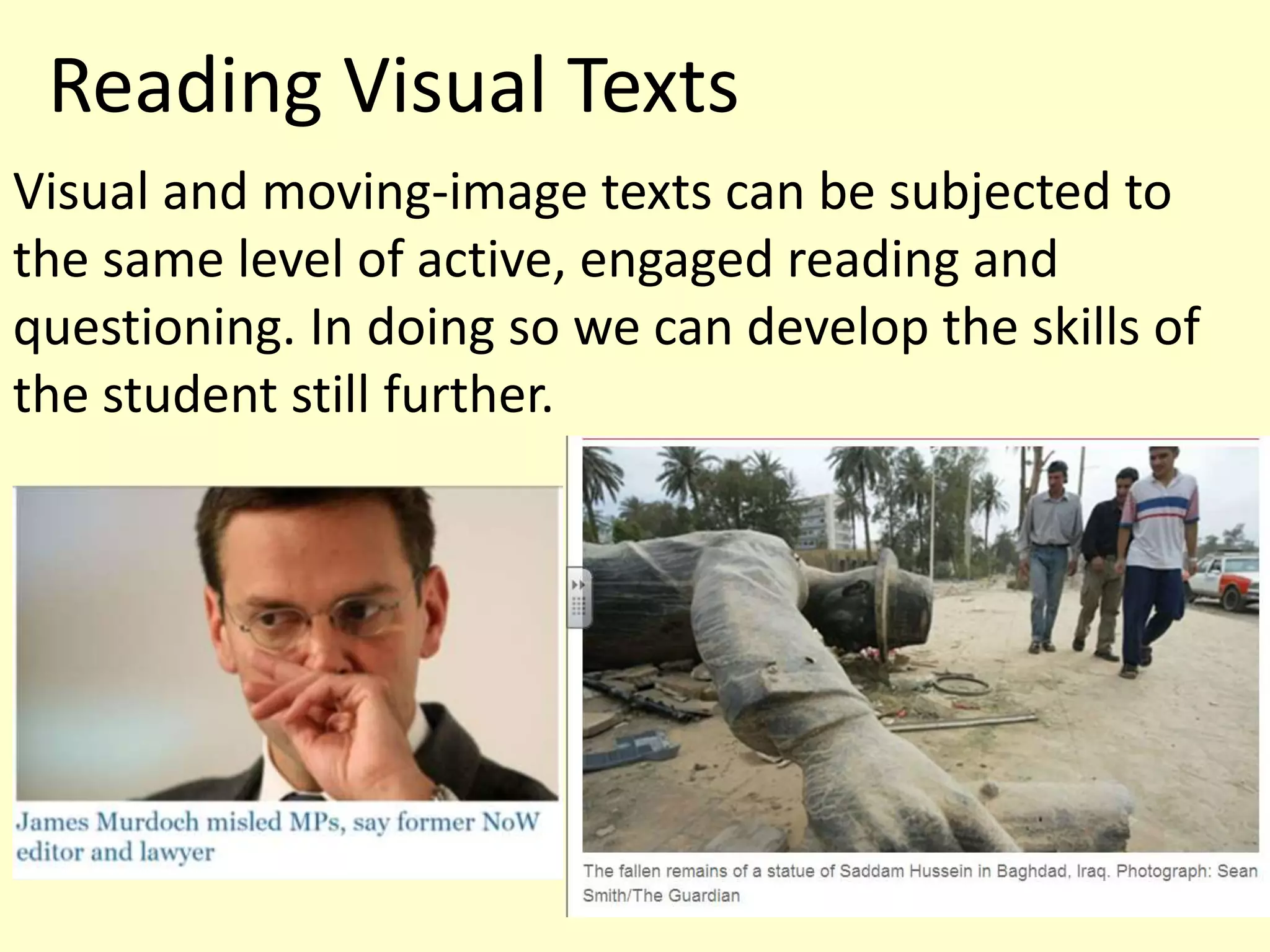
Reading Visual Texts
Visual and moving-image texts can be subjected to
the same level of active, engaged reading and
questioning. In doing so we can develop the skills of
the student still further.
Decoding difficult words
Guessing: What might that word mean?
Accepting partial understa: What do you think is the gist? Leave that bit and come back to
it.
Testing out: Have a guess at that bit and see if it goes on to make sense.
Re-reading: Go back, read that bit again carefully.
Visualising: Can you picture…? What might a _________ look like?
Referring to prior knowledge: What do you know about…? Where have you come across
the word…?
Reading aloud: If you try reading that sentence aloud, what’s the most important word?
Translating: What is another word for __________?
Referring to examples: If you think of … then does that help you to…?
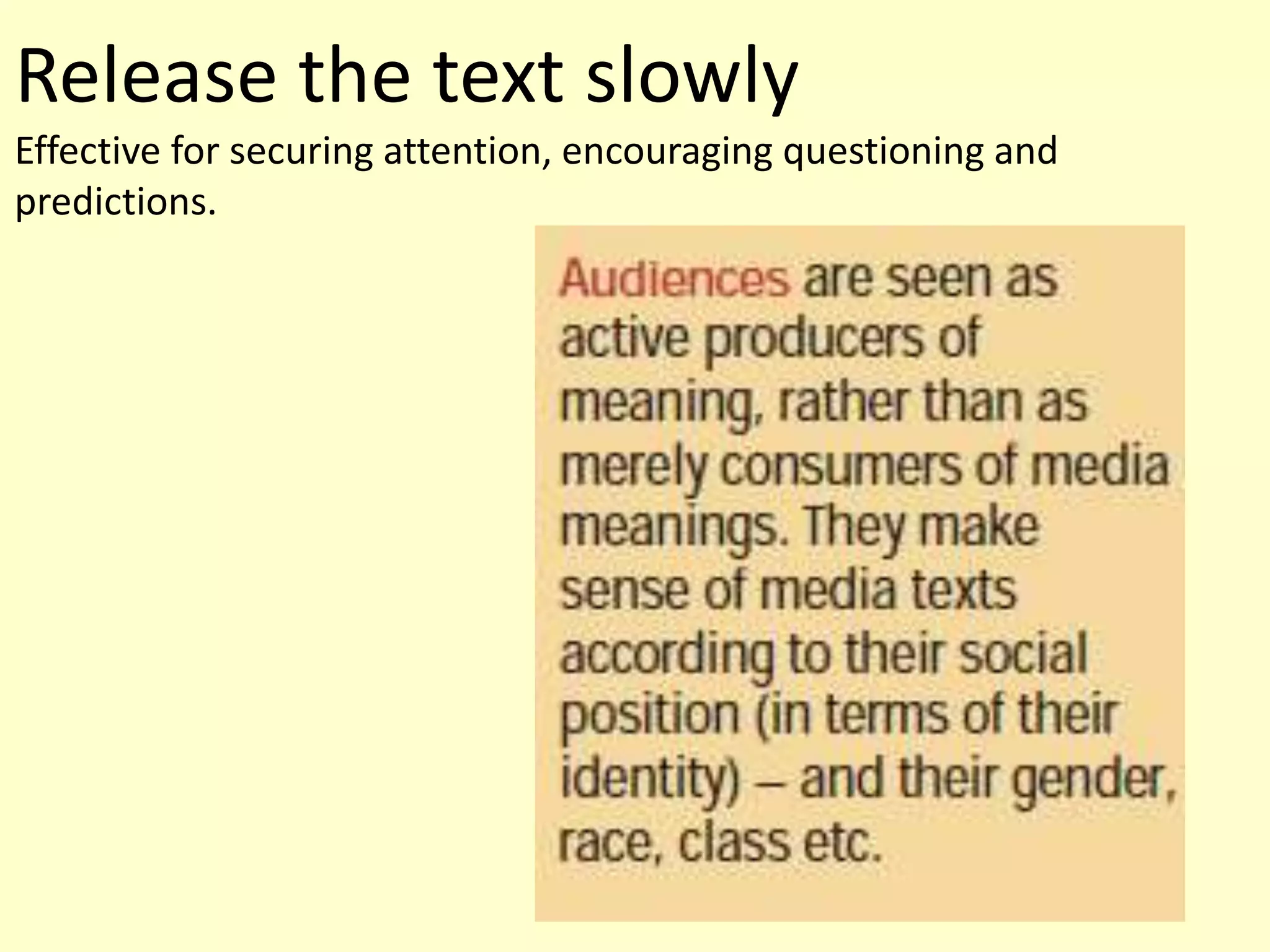
Release the text slowly
Effective for securing attention, encouraging questioning and
predictions.
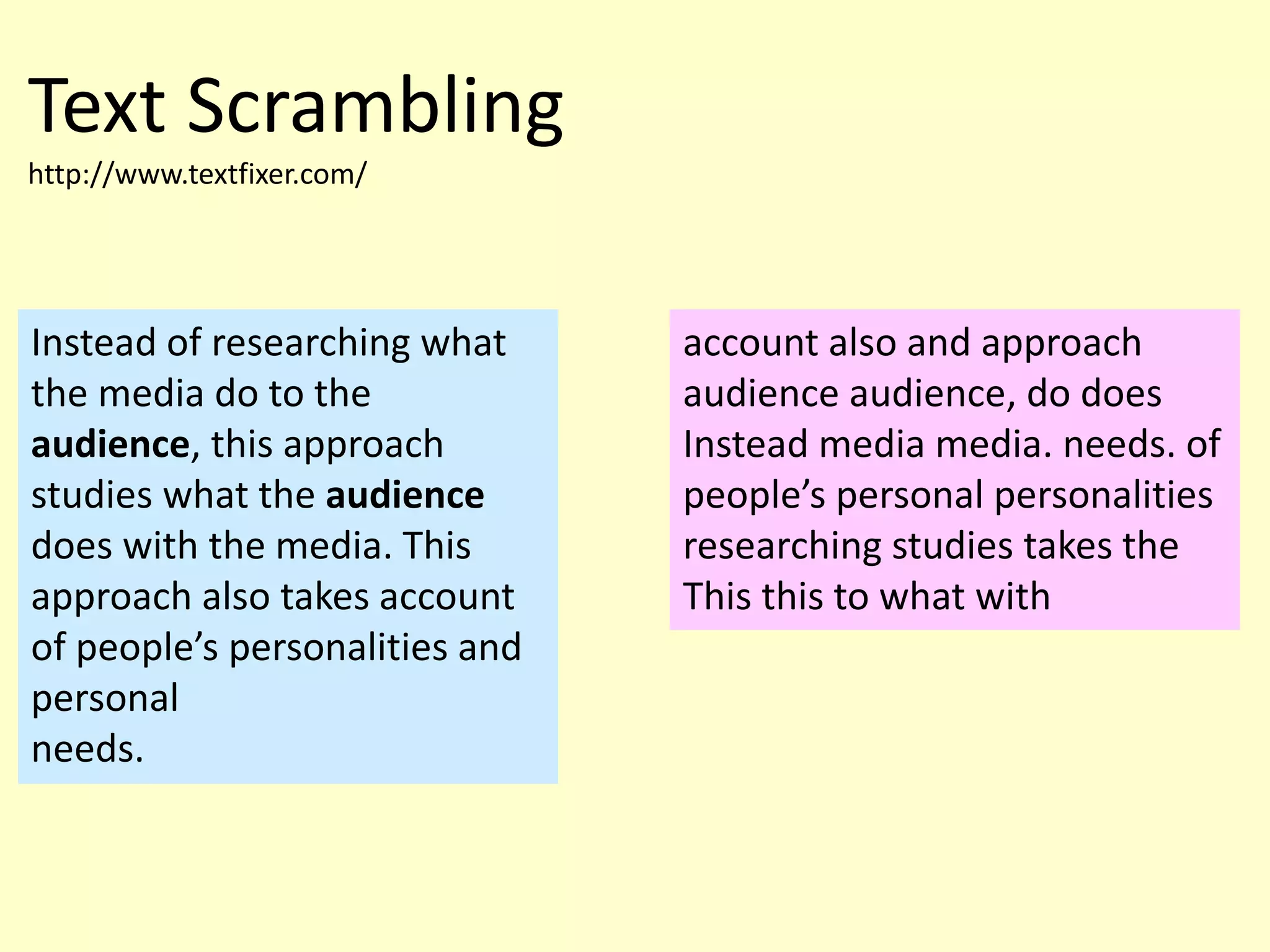
Text Scrambling
http://www.textfixer.com/
account also and approach
audience audience, do does
Instead media media. needs. of
people’s personal personalities
researching studies takes the
This this to what with
Instead of researching what
the media do to the
audience, this approach
studies what the audience
does with the media. This
approach also takes account
of people’s personalities and
personal
needs.
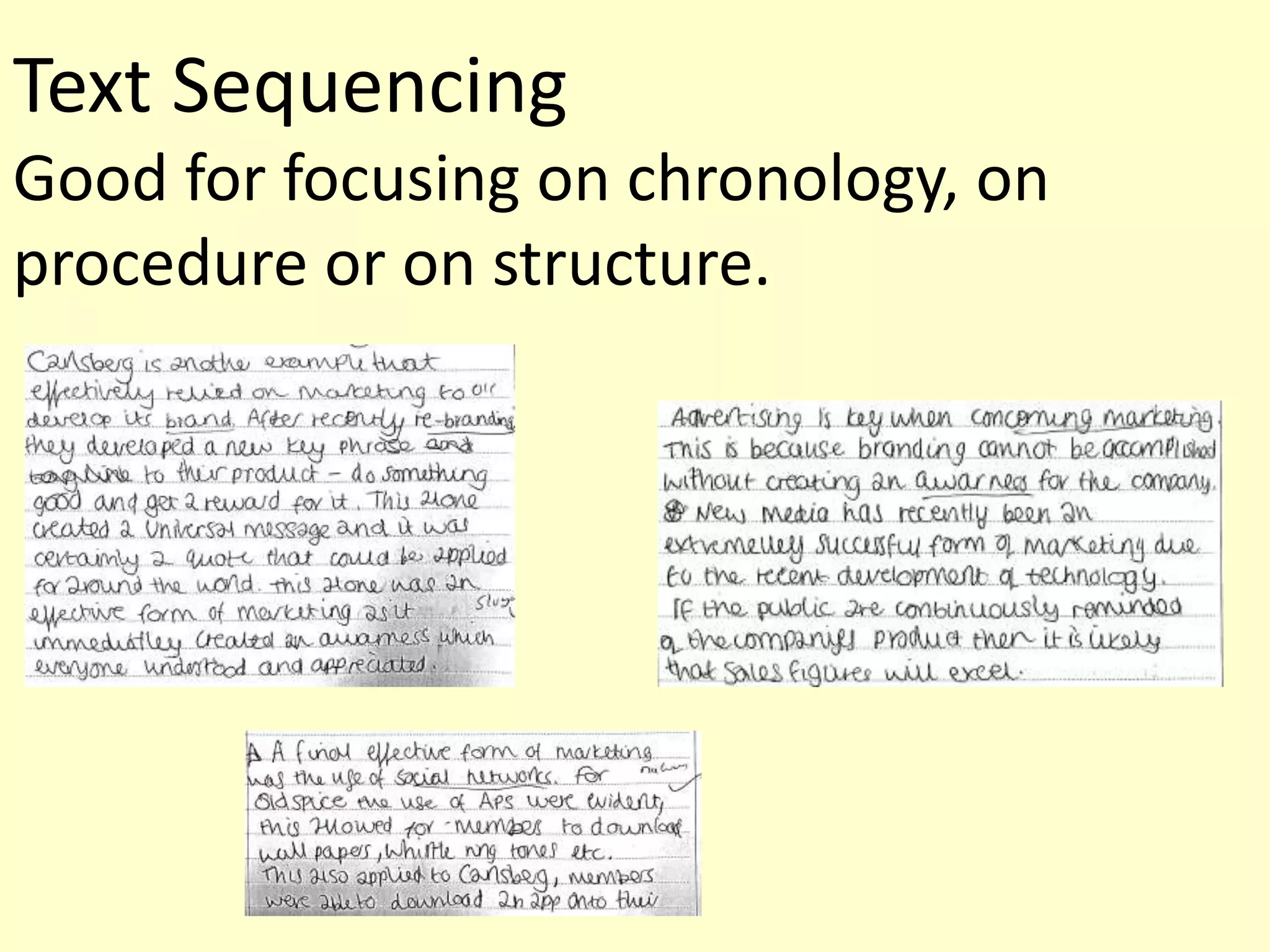
Text Sequencing
Good for focusing on chronology, on
procedure or on structure.

Reading edutainment

  • 1.
  • 2.
    Re-imagining Comprehensions Old stylecomprehensions have their place in developing reading skills , often requiring students to search for information or ideas.
  • 3.
    Comprehending the next generation Itis all about identifying different ways for the students to interact with texts.
  • 4.
    Reading Visual Texts Visualand moving-image texts can be subjected to the same level of active, engaged reading and questioning. In doing so we can develop the skills of the student still further.
  • 5.
    Decoding difficult words Guessing:What might that word mean? Accepting partial understa: What do you think is the gist? Leave that bit and come back to it. Testing out: Have a guess at that bit and see if it goes on to make sense. Re-reading: Go back, read that bit again carefully. Visualising: Can you picture…? What might a _________ look like? Referring to prior knowledge: What do you know about…? Where have you come across the word…? Reading aloud: If you try reading that sentence aloud, what’s the most important word? Translating: What is another word for __________? Referring to examples: If you think of … then does that help you to…?
  • 6.
    Release the textslowly Effective for securing attention, encouraging questioning and predictions.
  • 7.
    Text Scrambling http://www.textfixer.com/ account alsoand approach audience audience, do does Instead media media. needs. of people’s personal personalities researching studies takes the This this to what with Instead of researching what the media do to the audience, this approach studies what the audience does with the media. This approach also takes account of people’s personalities and personal needs.
  • 8.
    Text Sequencing Good forfocusing on chronology, on procedure or on structure.