Academic (Extensive) 
Reading 
Book Overview 
By IRMA 
FITRIANI/F12112052
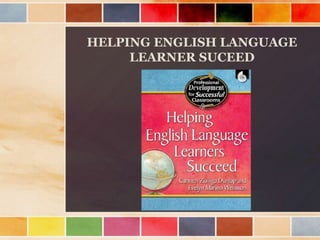
HELPING ENGLISH LANGUAGE 
LEARNER SUCEED
General 
Overview of the 
Book 
Book Authors 
The Content of 
the Book 
Conception about 
the Book 
Why we need the book?
Part I: 
GENERAL OVERVIEW OF 
THE BOOK
• Authors : 
• Editor: 
• Publisher : 
• Price : 
• Target of the 
book: 
• Carmen Zuniga Dunlap, 
Evelyn Marino Weisman 
• Maria Elvira Gallardo, 
Sharon Coan 
• Shell Education, 2006. 
USA 
• $ 24,99 
• Teacher, Classroom 
Teacher
Part II: 
BOOK’ AUTHORS
Major Study: 
Applied linguistics from the University of 
Illinois, Urbana-Champaign. 
Research focused: 
• Language and literacy development, 
particularly relate to second language 
learners. 
•Parent involvement. 
Contribution: 
Journal of Teacher Education, 
Journal of Research and 
Development in Education, Journal 
of Educational Issues of Language 
Minority Students, and other 
professional journals. 
DR Carmen Zuniga Dunlap 
PhD
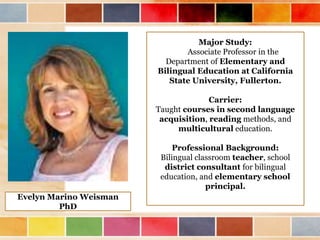
Major Study: 
Associate Professor in the 
Department of Elementary and 
Bilingual Education at California 
State University, Fullerton. 
Carrier: 
Taught courses in second language 
acquisition, reading methods, and 
multicultural education. 
Professional Background: 
Bilingual classroom teacher, school 
district consultant for bilingual 
education, and elementary school 
principal. 
Evelyn Marino Weisman 
PhD
Part III: 
THE CONTENT OF THE 
BOOK
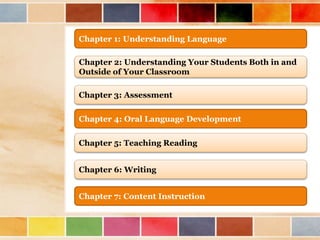
Chapter 1: Understanding Language 
Chapter 2: Understanding Your Students Both in and 
Outside of Your Classroom 
Chapter 3: Assessment 
Chapter 4: Oral Language Development 
Chapter 5: Teaching Reading 
Chapter 6: Writing 
Chapter 7: Content Instruction
Chapter 1: Understanding Language 
8 Elements of 
Language 
Observe some 
aspect of 
language in our 
students 
Ways to guide 
your student 
Language . . . . 
1. Develops naturally 
2. Develops in stage 
3. Has structure 
4. Intertwined with 
culture 
5. Is linked to cognition 
6. Has varieties 
7. Is learned is social 
context 
8. Influence by purpose 
and context
Chapter 2: Understanding Your Students Both in and 
Outside of Your Classroom 
Teacher creates (+) 
Environment
Chapter 3: Assessment 
Some way to assets student in order to : 
1. Identify students who need instruction 
2. Placement 
3.Move student from different level 
4.Monitor student development 
5. Program evaluation 
6. Establish instructional and student 
accountability
3: Assessment 
Some way to assets student in order to : 
1. Identify students who need instruction 
2. Placement 
3.Move student from different level 
4.Monitor student development 
5. Program evaluation 
6. Establish instructional and student 
accountability
Chapter 4: Oral Language Development 
This chapter explain about how teacher 
can establish better oral language 
proficiency to their students. 
Also some approaches to reach that.
Part IV: 
CONCEPTION ABOUT THE 
BOOK
Strength of the Book: 
•The book use newest research (Callahan, De Jong&Harper) 
•The explanation is clear and fulfill all of level in the English 
learning process 
• Use factual example that already happened in the school 
environment. 
•Use post reading reflection and vignettes 
Weaknesses : 
• Even, first time the book seems stress education in multicultural 
environment but the explanation about it is limited.
Part IV: 
WHY WE NEED THE BOOK?
1. As a reference about the other country education 
system. 
2. Provide guide to teach in the multicultural education 
and multi language. 
3. The book remind teacher that, teacher should care not 
only inside the classroom but also outside classroom. 
4. For those, who become a classroom teacher this book 
is really match, because this book emphasize most in 
the classroom teacher. 
5. There are many tips to handle English language 
learner in every level, such as beginner, intermediate, 
and advance.
Thank 
you

Reading

  • 1.
    Academic (Extensive) Reading Book Overview By IRMA FITRIANI/F12112052
  • 2.
    HELPING ENGLISH LANGUAGE LEARNER SUCEED
  • 3.
    General Overview ofthe Book Book Authors The Content of the Book Conception about the Book Why we need the book?
  • 4.
    Part I: GENERALOVERVIEW OF THE BOOK
  • 5.
    • Authors : • Editor: • Publisher : • Price : • Target of the book: • Carmen Zuniga Dunlap, Evelyn Marino Weisman • Maria Elvira Gallardo, Sharon Coan • Shell Education, 2006. USA • $ 24,99 • Teacher, Classroom Teacher
  • 6.
  • 7.
    Major Study: Appliedlinguistics from the University of Illinois, Urbana-Champaign. Research focused: • Language and literacy development, particularly relate to second language learners. •Parent involvement. Contribution: Journal of Teacher Education, Journal of Research and Development in Education, Journal of Educational Issues of Language Minority Students, and other professional journals. DR Carmen Zuniga Dunlap PhD
  • 8.
    Major Study: AssociateProfessor in the Department of Elementary and Bilingual Education at California State University, Fullerton. Carrier: Taught courses in second language acquisition, reading methods, and multicultural education. Professional Background: Bilingual classroom teacher, school district consultant for bilingual education, and elementary school principal. Evelyn Marino Weisman PhD
  • 9.
    Part III: THECONTENT OF THE BOOK
  • 10.
    Chapter 1: UnderstandingLanguage Chapter 2: Understanding Your Students Both in and Outside of Your Classroom Chapter 3: Assessment Chapter 4: Oral Language Development Chapter 5: Teaching Reading Chapter 6: Writing Chapter 7: Content Instruction
  • 11.
    Chapter 1: UnderstandingLanguage 8 Elements of Language Observe some aspect of language in our students Ways to guide your student Language . . . . 1. Develops naturally 2. Develops in stage 3. Has structure 4. Intertwined with culture 5. Is linked to cognition 6. Has varieties 7. Is learned is social context 8. Influence by purpose and context
  • 12.
    Chapter 2: UnderstandingYour Students Both in and Outside of Your Classroom Teacher creates (+) Environment
  • 13.
    Chapter 3: Assessment Some way to assets student in order to : 1. Identify students who need instruction 2. Placement 3.Move student from different level 4.Monitor student development 5. Program evaluation 6. Establish instructional and student accountability
  • 14.
    3: Assessment Someway to assets student in order to : 1. Identify students who need instruction 2. Placement 3.Move student from different level 4.Monitor student development 5. Program evaluation 6. Establish instructional and student accountability
  • 15.
    Chapter 4: OralLanguage Development This chapter explain about how teacher can establish better oral language proficiency to their students. Also some approaches to reach that.
  • 16.
    Part IV: CONCEPTIONABOUT THE BOOK
  • 17.
    Strength of theBook: •The book use newest research (Callahan, De Jong&Harper) •The explanation is clear and fulfill all of level in the English learning process • Use factual example that already happened in the school environment. •Use post reading reflection and vignettes Weaknesses : • Even, first time the book seems stress education in multicultural environment but the explanation about it is limited.
  • 18.
    Part IV: WHYWE NEED THE BOOK?
  • 19.
    1. As areference about the other country education system. 2. Provide guide to teach in the multicultural education and multi language. 3. The book remind teacher that, teacher should care not only inside the classroom but also outside classroom. 4. For those, who become a classroom teacher this book is really match, because this book emphasize most in the classroom teacher. 5. There are many tips to handle English language learner in every level, such as beginner, intermediate, and advance.
  • 20.