at
“Top microservices and
fast data experts in the world.”
How Events Are Reshaping Modern Systems
Jonas Bonér

Lightbend CTO
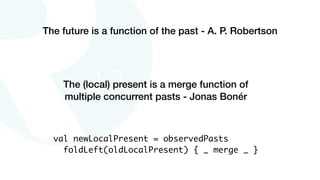
The future is a function of the past - A. P. Robertson
The (local) present is a merge function of
multiple concurrent pasts - Jonas Bonér
val newLocalPresent = observedPasts
foldLeft(oldLocalPresent) { _ merge _ }
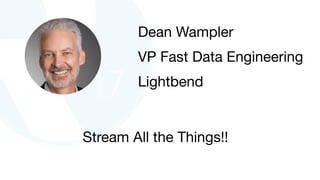
Stream All the Things!!
Dean Wampler

VP Fast Data Engineering

Lightbend
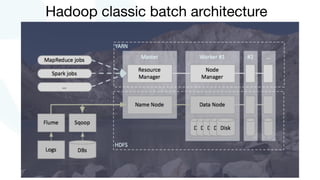
Hadoop classic batch architecture
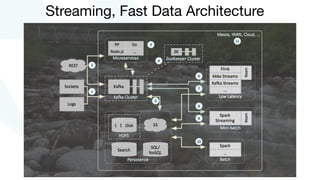
Streaming, Fast Data Architecture
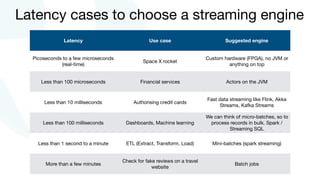
Latency Use case Suggested engine
Picoseconds to a few microseconds
(real-time)
Space X rocket
Custom hardware (FPGA), no JVM or
anything on top
Less than 100 microseconds Financial services Actors on the JVM
Less than 10 milliseconds Authorising credit cards
Fast data streaming like Flink, Akka
Streams, Kafka Streams
Less than 100 milliseconds Dashboards, Machine learning
We can think of micro-batches, so to
process records in bulk. Spark /
Streaming SQL
Less than 1 second to a minute ETL (Extract, Transform, Load) Mini-batches (spark streaming)
More than a few minutes
Check for fake reviews on a travel
website
Batch jobs
Latency cases to choose a streaming engine
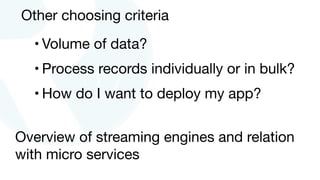
Other choosing criteria
• Volume of data?

• Process records individually or in bulk?

• How do I want to deploy my app?
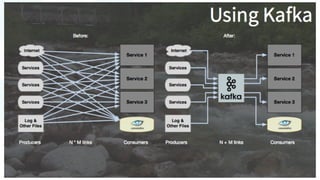
Overview of streaming engines and relation
with micro services
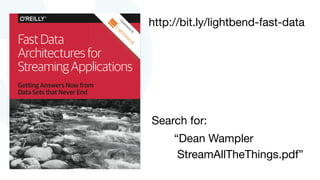
“Dean Wampler

StreamAllTheThings.pdf”
http://bit.ly/lightbend-fast-data
Search for:
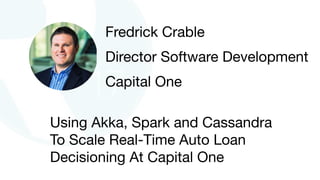
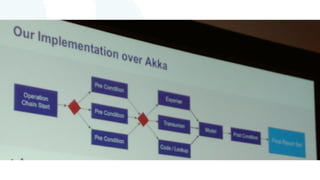
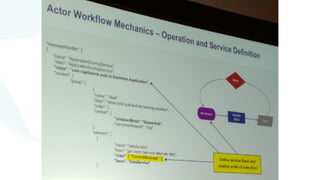
Using Akka, Spark and Cassandra
To Scale Real-Time Auto Loan
Decisioning At Capital One
Fredrick Crable

Director Software Development

Capital One
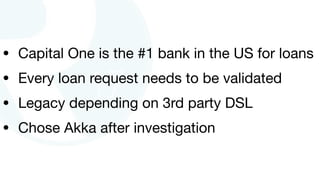
• Capital One is the #1 bank in the US for loans

• Every loan request needs to be validated

• Legacy depending on 3rd party DSL

• Chose Akka after investigation
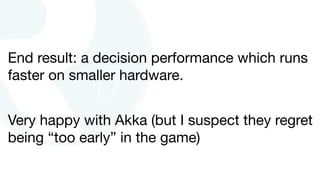
End result: a decision performance which runs
faster on smaller hardware.
Very happy with Akka (but I suspect they regret
being “too early” in the game)
Islands in the Stream: Integrating
Akka Streams and Akka Actors
Colin Breck

Tesla
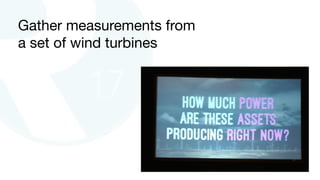
Gather measurements from
a set of wind turbines
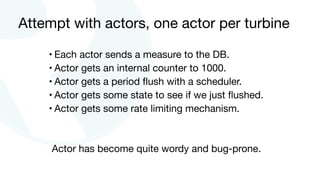
Attempt with actors, one actor per turbine
• Each actor sends a measure to the DB.

• Actor gets an internal counter to 1000.

• Actor gets a period flush with a scheduler.

• Actor gets some state to see if we just flushed.

• Actor gets some rate limiting mechanism.
Actor has become quite wordy and bug-prone.
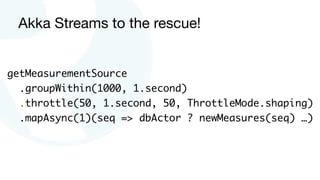
Akka Streams to the rescue!
getMeasurementSource
.groupWithin(1000, 1.second)
.throttle(50, 1.second, 50, ThrottleMode.shaping)
.mapAsync(1)(seq => dbActor ? newMeasures(seq) …)
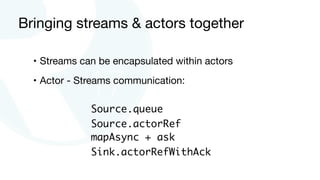
Source.queue
Source.actorRef
mapAsync + ask
Sink.actorRefWithAck
Bringing streams & actors together
• Streams can be encapsulated within actors

• Actor - Streams communication:
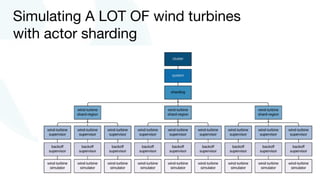
Simulating A LOT OF wind turbines
with actor sharding
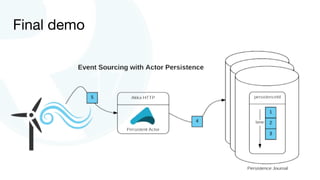
Final demo
http://blog.colinbreck.com
Speeding up innovation at Verizon

(part of IBM’s talk)
Keyur Shah 

Associate Fellow

Verizon
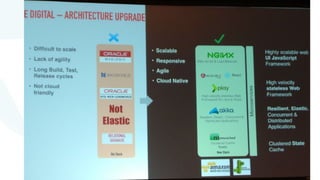
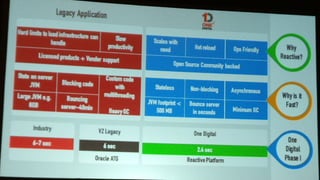
• Two years ago: massive monolithic app - 2+
months to rollout new features

• Set up a small team and investigated the
possible platforms.

• They picked up the Reactive platform,
completely microservices driven.
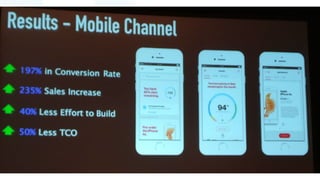
They liked it so much that they want to have
all groups in Verizon to adpot it.
Next on the roadmap, try to use all this data
better. Looking at IBM Watson.
8 Akka Anti-Patterns you better be aware of
Manuel Bernhardt

Consultant
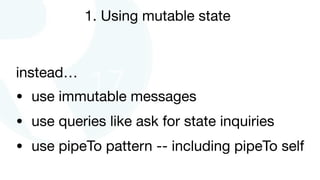
1. Using mutable state
• use immutable messages

• use queries like ask for state inquiries

• use pipeTo pattern -- including pipeTo self
instead…
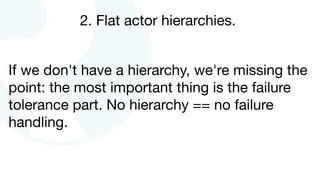
2. Flat actor hierarchies.
If we don't have a hierarchy, we're missing the
point: the most important thing is the failure
tolerance part. No hierarchy == no failure
handling.
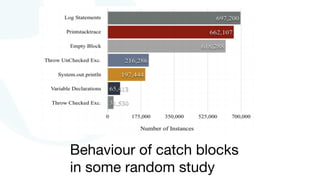
Behaviour of catch blocks
in some random study
3. Too many ActorSystems
1. string concatenation
2. non-async logging
3. not turning debug logging off in prod system
4. logging to files (we should stop doing that)
4. Wrong logging
a. use Akka's logging facility
b. carefully consider the logback appenders, with async variants
c. use placeholders: log.debug("{} hell", callback)
d. use a logging aggregation like logstash, don’t log to files
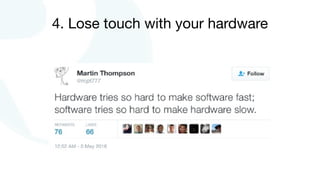
4. Lose touch with your hardware
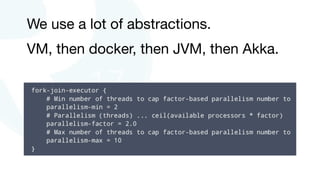
We use a lot of abstractions. 

VM, then docker, then JVM, then Akka.
a. know your hardware (and configure
accordingly)

b. beware of virtualization 

c. run load tests on the same hardware of
the production system (!!!)
6. Blocking.
a. use a dedicated dispatcher if you really
must block.

b. if you need to wait, instead of
Thread.sleep, use a context scheduler.
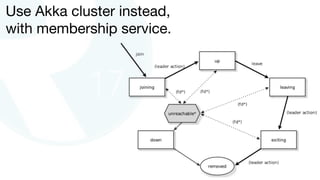
7. Using Akka Remoting directly.
Use Akka cluster instead,
with membership service.
8. Using Java serialization.
Bad performance!
Use a proper binary format from the start (avro,
thrift, kryo), because once you are in production
it's already too late.
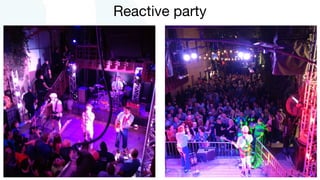
Reactive party
Thanks!

Reactive Summit 2017 Highlights!

  • 1.
  • 2.
    “Top microservices and fastdata experts in the world.”
  • 3.
    How Events AreReshaping Modern Systems Jonas Bonér Lightbend CTO
  • 14.
    The future isa function of the past - A. P. Robertson The (local) present is a merge function of multiple concurrent pasts - Jonas Bonér val newLocalPresent = observedPasts foldLeft(oldLocalPresent) { _ merge _ }
  • 21.
    Stream All theThings!! Dean Wampler VP Fast Data Engineering Lightbend
  • 22.
  • 23.
  • 25.
    Latency Use caseSuggested engine Picoseconds to a few microseconds (real-time) Space X rocket Custom hardware (FPGA), no JVM or anything on top Less than 100 microseconds Financial services Actors on the JVM Less than 10 milliseconds Authorising credit cards Fast data streaming like Flink, Akka Streams, Kafka Streams Less than 100 milliseconds Dashboards, Machine learning We can think of micro-batches, so to process records in bulk. Spark / Streaming SQL Less than 1 second to a minute ETL (Extract, Transform, Load) Mini-batches (spark streaming) More than a few minutes Check for fake reviews on a travel website Batch jobs Latency cases to choose a streaming engine
  • 26.
    Other choosing criteria •Volume of data? • Process records individually or in bulk? • How do I want to deploy my app? Overview of streaming engines and relation with micro services
  • 27.
  • 29.
    Using Akka, Sparkand Cassandra To Scale Real-Time Auto Loan Decisioning At Capital One Fredrick Crable Director Software Development Capital One
  • 30.
    • Capital Oneis the #1 bank in the US for loans • Every loan request needs to be validated • Legacy depending on 3rd party DSL • Chose Akka after investigation
  • 33.
    End result: adecision performance which runs faster on smaller hardware. Very happy with Akka (but I suspect they regret being “too early” in the game)
  • 34.
    Islands in theStream: Integrating Akka Streams and Akka Actors Colin Breck Tesla
  • 35.
    Gather measurements from aset of wind turbines
  • 36.
    Attempt with actors,one actor per turbine • Each actor sends a measure to the DB. • Actor gets an internal counter to 1000. • Actor gets a period flush with a scheduler. • Actor gets some state to see if we just flushed. • Actor gets some rate limiting mechanism. Actor has become quite wordy and bug-prone.
  • 37.
    Akka Streams tothe rescue! getMeasurementSource .groupWithin(1000, 1.second) .throttle(50, 1.second, 50, ThrottleMode.shaping) .mapAsync(1)(seq => dbActor ? newMeasures(seq) …)
  • 38.
    Source.queue Source.actorRef mapAsync + ask Sink.actorRefWithAck Bringingstreams & actors together • Streams can be encapsulated within actors • Actor - Streams communication:
  • 39.
    Simulating A LOTOF wind turbines with actor sharding
  • 40.
  • 41.
  • 42.
    Speeding up innovationat Verizon (part of IBM’s talk) Keyur Shah Associate Fellow Verizon
  • 43.
    • Two yearsago: massive monolithic app - 2+ months to rollout new features • Set up a small team and investigated the possible platforms. • They picked up the Reactive platform, completely microservices driven.
  • 47.
    They liked itso much that they want to have all groups in Verizon to adpot it. Next on the roadmap, try to use all this data better. Looking at IBM Watson.
  • 48.
    8 Akka Anti-Patternsyou better be aware of Manuel Bernhardt Consultant
  • 49.
    1. Using mutablestate • use immutable messages • use queries like ask for state inquiries • use pipeTo pattern -- including pipeTo self instead…
  • 50.
    2. Flat actorhierarchies. If we don't have a hierarchy, we're missing the point: the most important thing is the failure tolerance part. No hierarchy == no failure handling.
  • 51.
    Behaviour of catchblocks in some random study
  • 52.
    3. Too manyActorSystems
  • 53.
    1. string concatenation 2.non-async logging 3. not turning debug logging off in prod system 4. logging to files (we should stop doing that) 4. Wrong logging a. use Akka's logging facility b. carefully consider the logback appenders, with async variants c. use placeholders: log.debug("{} hell", callback) d. use a logging aggregation like logstash, don’t log to files
  • 54.
    4. Lose touchwith your hardware
  • 55.
    We use alot of abstractions. VM, then docker, then JVM, then Akka.
  • 56.
    a. know yourhardware (and configure accordingly) b. beware of virtualization c. run load tests on the same hardware of the production system (!!!)
  • 57.
    6. Blocking. a. usea dedicated dispatcher if you really must block. b. if you need to wait, instead of Thread.sleep, use a context scheduler.
  • 58.
    7. Using AkkaRemoting directly.
  • 59.
    Use Akka clusterinstead, with membership service.
  • 60.
    8. Using Javaserialization. Bad performance! Use a proper binary format from the start (avro, thrift, kryo), because once you are in production it's already too late.
  • 61.
  • 64.