New Roles / New Rules
Information Professionals in Research Data
Management

Sally Gore, MS, MS LIS
Informationist and Embedded Librarian
Lamar Soutter Library
University of Massachusetts Medical School


                                             HELLO MY NAME IS


                                              Sally
TODAY
In this course you will explore the current relationships between
libraries and their stakeholders seeking institutional support managing
their research data. Data-intensive science and research are providing
opportunities for new roles to emerge for information professionals. This
course explores these roles and services, and uses the case study
method to prepare participants from all academic backgrounds for roles
in scientific research data management. This course aims to help
prepare information professionals for engaging with scientists and for
developing data management plans for their stakeholders' research
projects. The course examines the data practices of researchers in
scientific fields such as biomedicine and engineering to illustrate how
researchers produce data, and how other researchers re-use these
data for purposes of inquiry. We will explore the information tools used
for research data management planning, research, data, and graduate
student lifecycles, and we will explore a variety of strategies information
professionals are using to provide data consultancy services to their
institutions' researchers.
TODAY
   What is the library’s role in RDM?
   What is an embedded librarian?
   What is a data librarian?
   What is an eScience librarian?
   Who is a data scientist? (I really have no idea.)
TODAY
 What do I do?
 How do I do it?
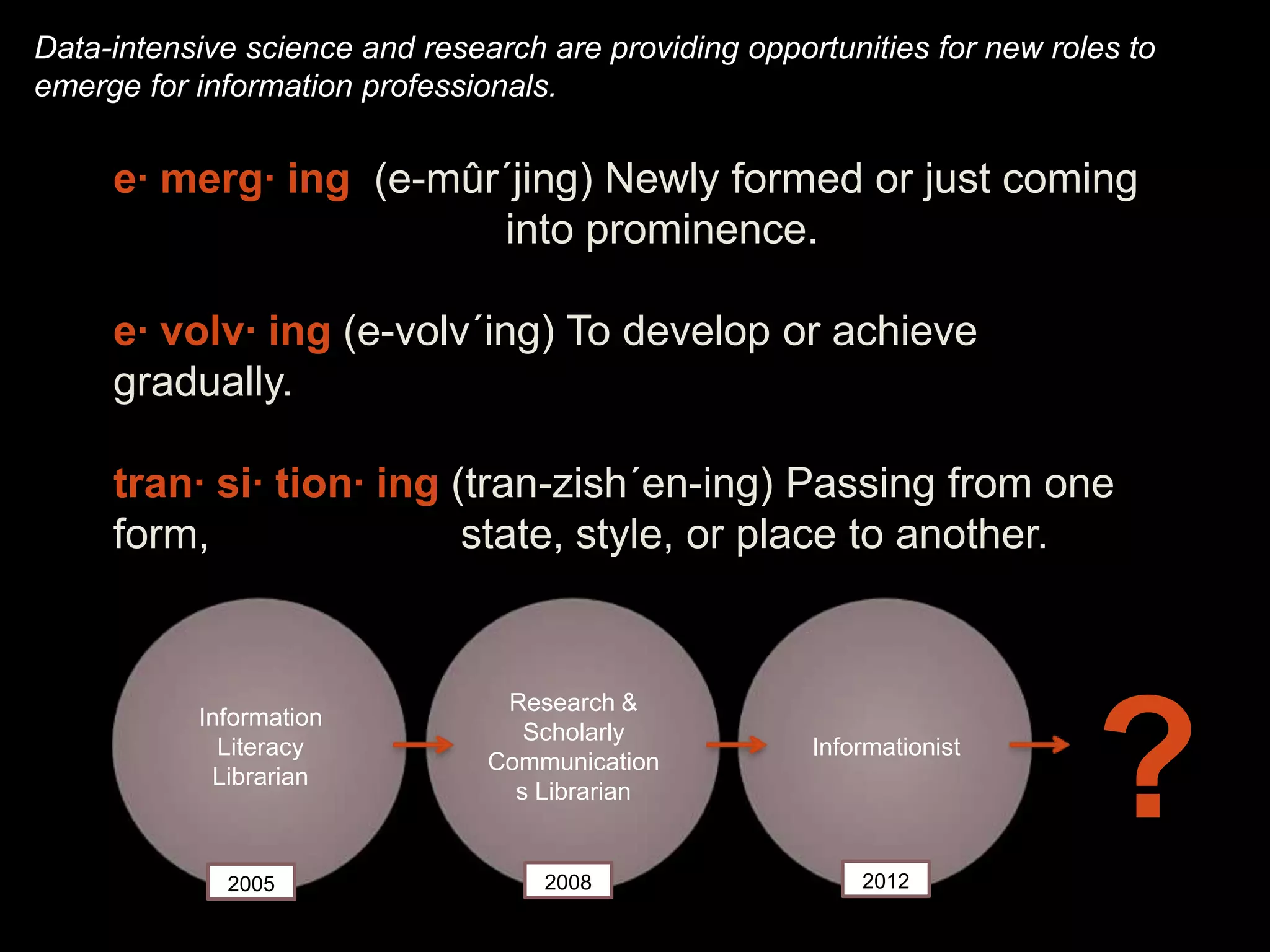
Data-intensive science and research are providing opportunities for new roles to
emerge for information professionals.


     e· merg· ing (e-mûr´jing) Newly formed or just coming
                        into prominence.

     e· volv· ing (e-volv´ing) To develop or achieve
     gradually.

     tran· si· tion· ing (tran-zish´en-ing) Passing from one
     form,                state, style, or place to another.


                                 Research &


                                                                           ?
           Information
                                   Scholarly
             Literacy                                  Informationist
                                Communication
            Librarian
                                  s Librarian


             2005                   2008                   2012
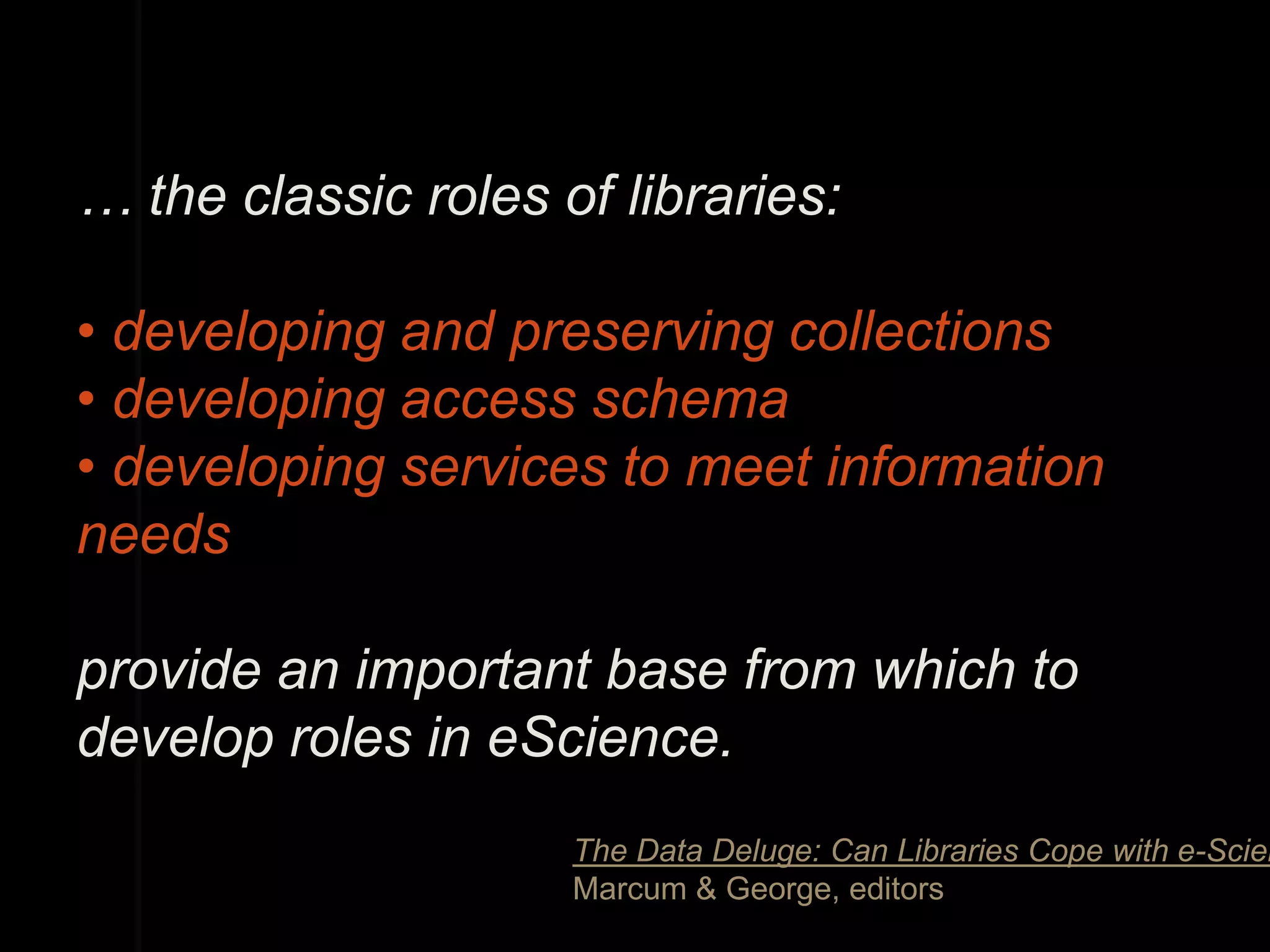
… the classic roles of libraries:

• developing and preserving collections
• developing access schema
• developing services to meet information
needs

provide an important base from which to
develop roles in eScience.
                     The Data Deluge: Can Libraries Cope with e-Scien
                     Marcum & George, editors
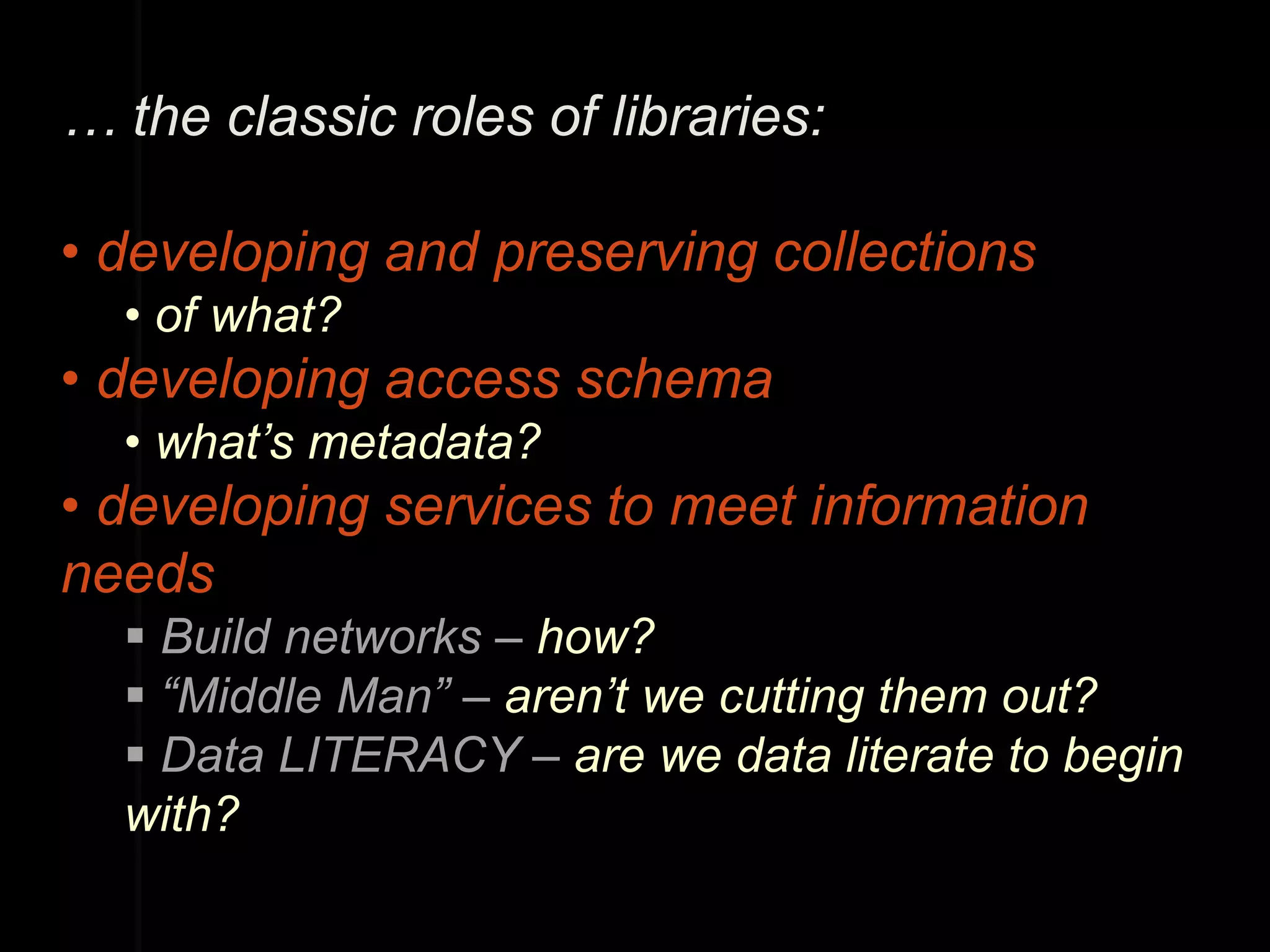
… the classic roles of libraries:

• developing and preserving collections
  • of what?
• developing access schema
  • what’s metadata?
• developing services to meet information
needs
   Build networks – how?
   “Middle Man” – aren’t we cutting them out?
   Data LITERACY – are we data literate to begin
  with?
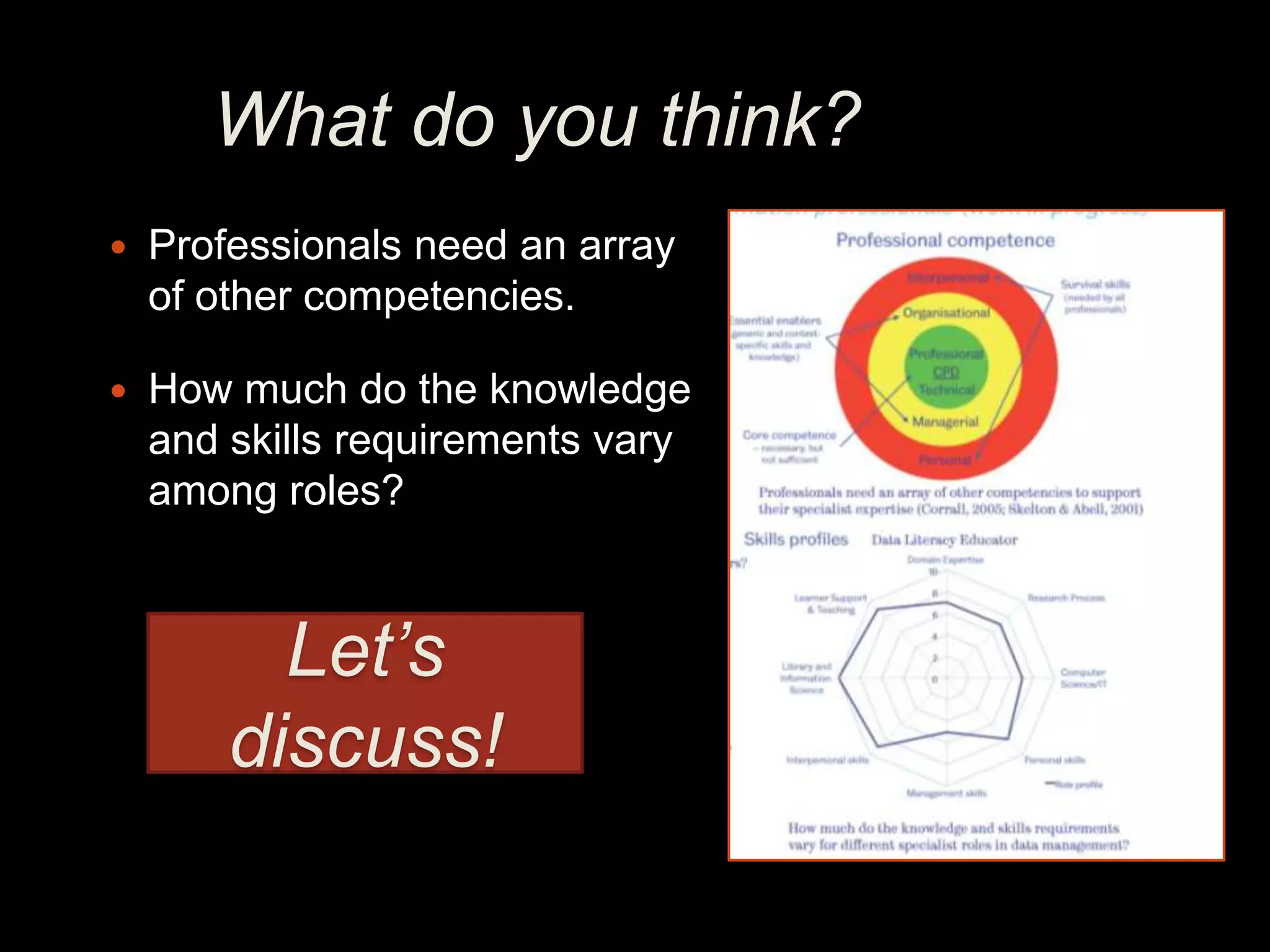
What do you think?
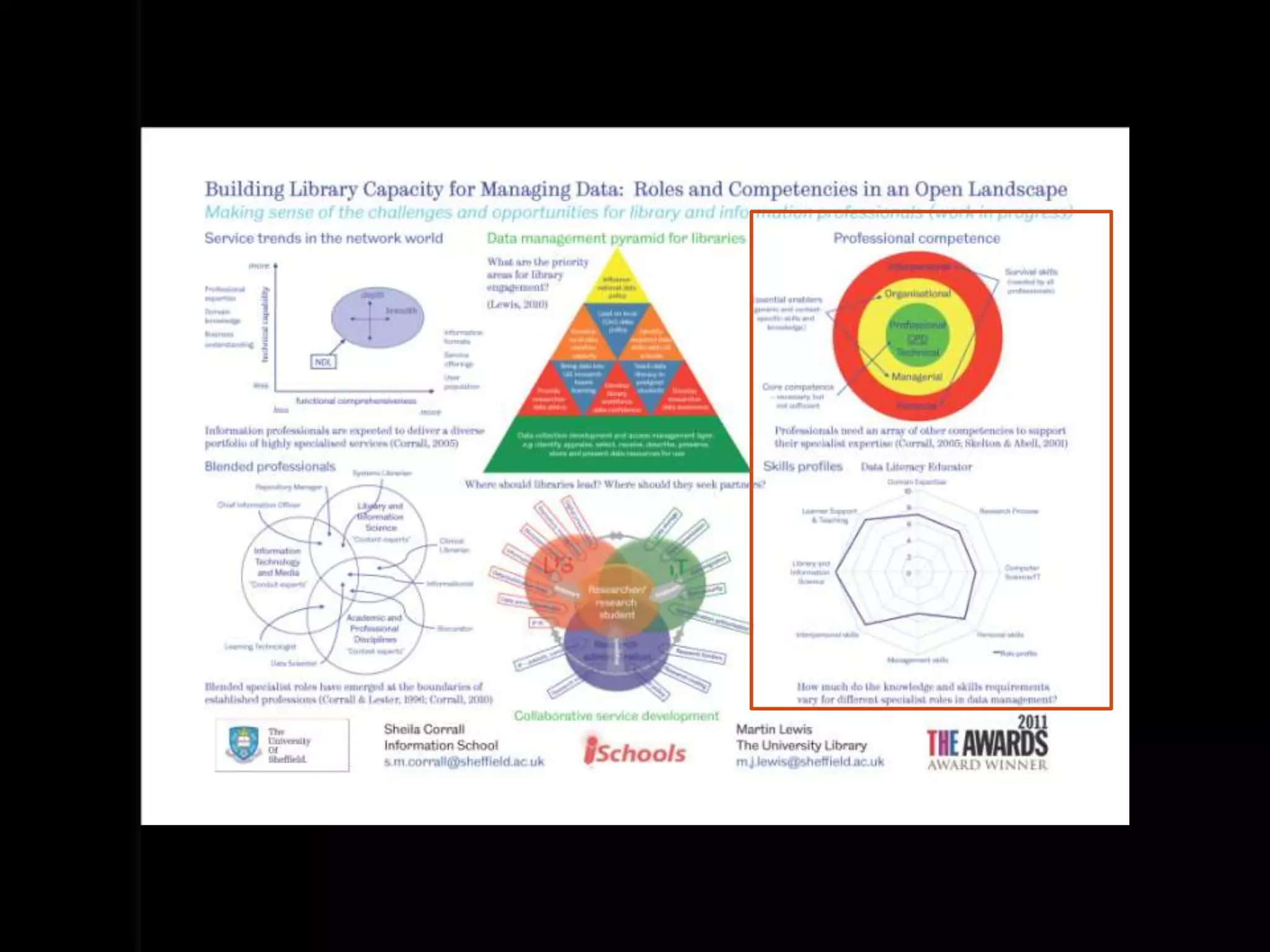
   Professionals need an array
    of other competencies.

   How much do the knowledge
    and skills requirements vary
    among roles?


          Let’s
        discuss!
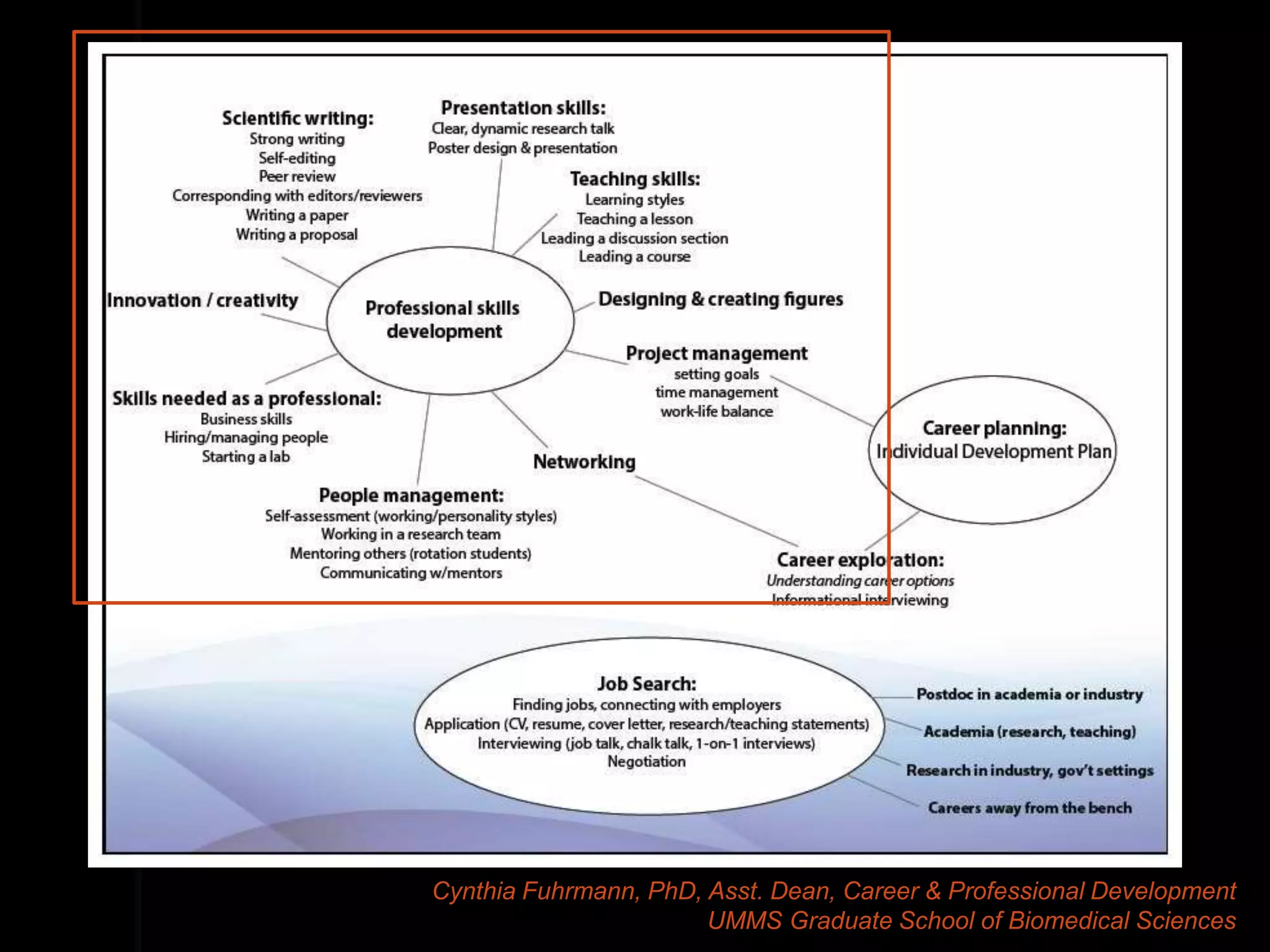
Cynthia Fuhrmann, PhD, Asst. Dean, Career & Professional Development
                       UMMS Graduate School of Biomedical Sciences
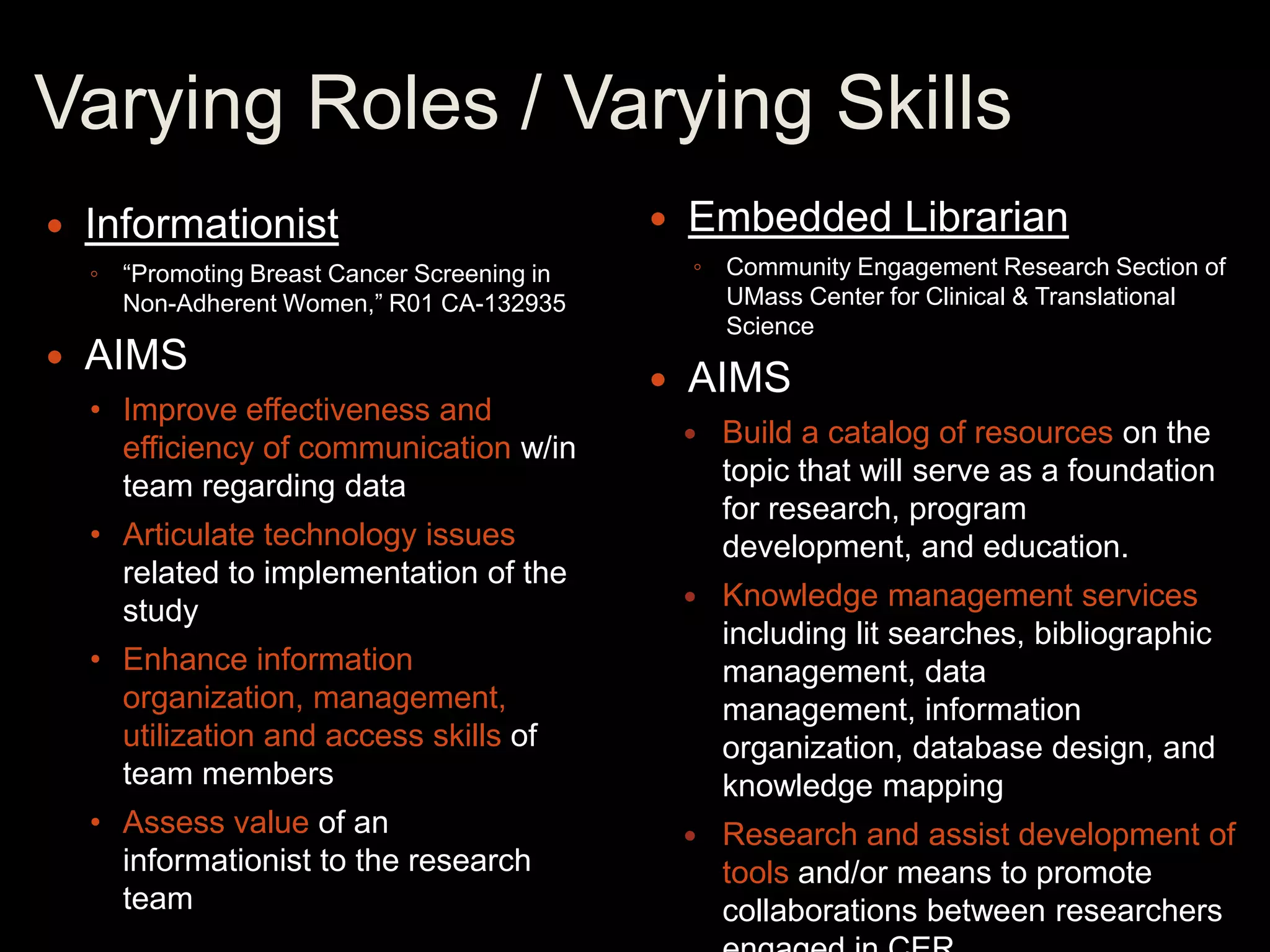
Varying Roles / Varying Skills
   Informationist                               Embedded Librarian
    ◦ “Promoting Breast Cancer Screening in       ◦ Community Engagement Research Section of
      Non-Adherent Women,” R01 CA-132935            UMass Center for Clinical & Translational
                                                    Science
   AIMS
                                                 AIMS
    • Improve effectiveness and
      efficiency of communication w/in               Build a catalog of resources on the
      team regarding data                             topic that will serve as a foundation
                                                      for research, program
    • Articulate technology issues                    development, and education.
      related to implementation of the
      study                                          Knowledge management services
                                                      including lit searches, bibliographic
    • Enhance information                             management, data
      organization, management,                       management, information
      utilization and access skills of                organization, database design, and
      team members                                    knowledge mapping
    • Assess value of an                             Research and assist development of
      informationist to the research                  tools and/or means to promote
      team                                            collaborations between researchers
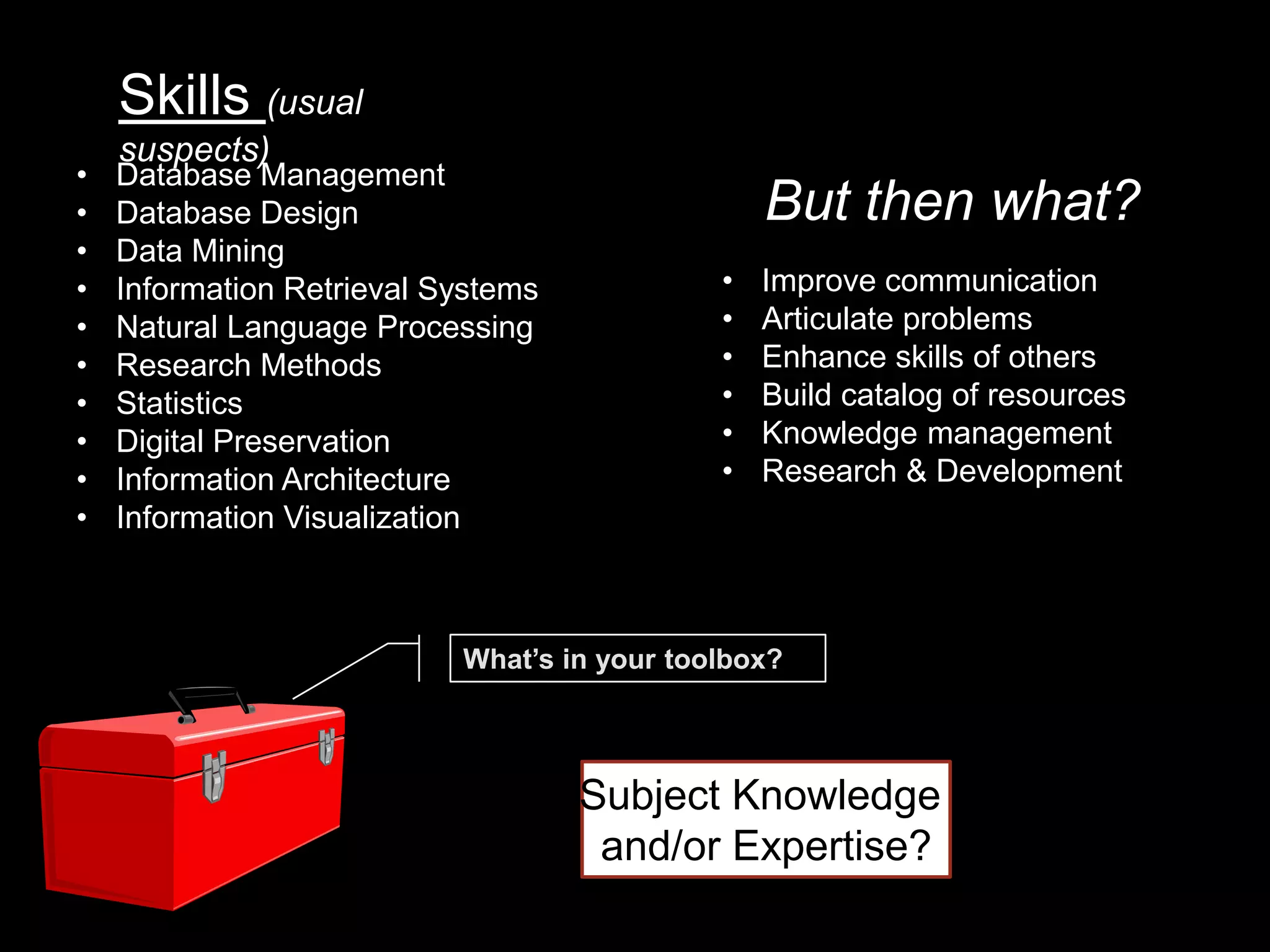
Skills (usual
    suspects)
•   Database Management
•   Database Design                              But then what?
•   Data Mining
•   Information Retrieval Systems            •   Improve communication
•   Natural Language Processing              •   Articulate problems
•   Research Methods                         •   Enhance skills of others
•   Statistics                               •   Build catalog of resources
•   Digital Preservation                     •   Knowledge management
•   Information Architecture                 •   Research & Development
•   Information Visualization


                           What’s in your toolbox?


                                    Subject Knowledge
                                     and/or Expertise?
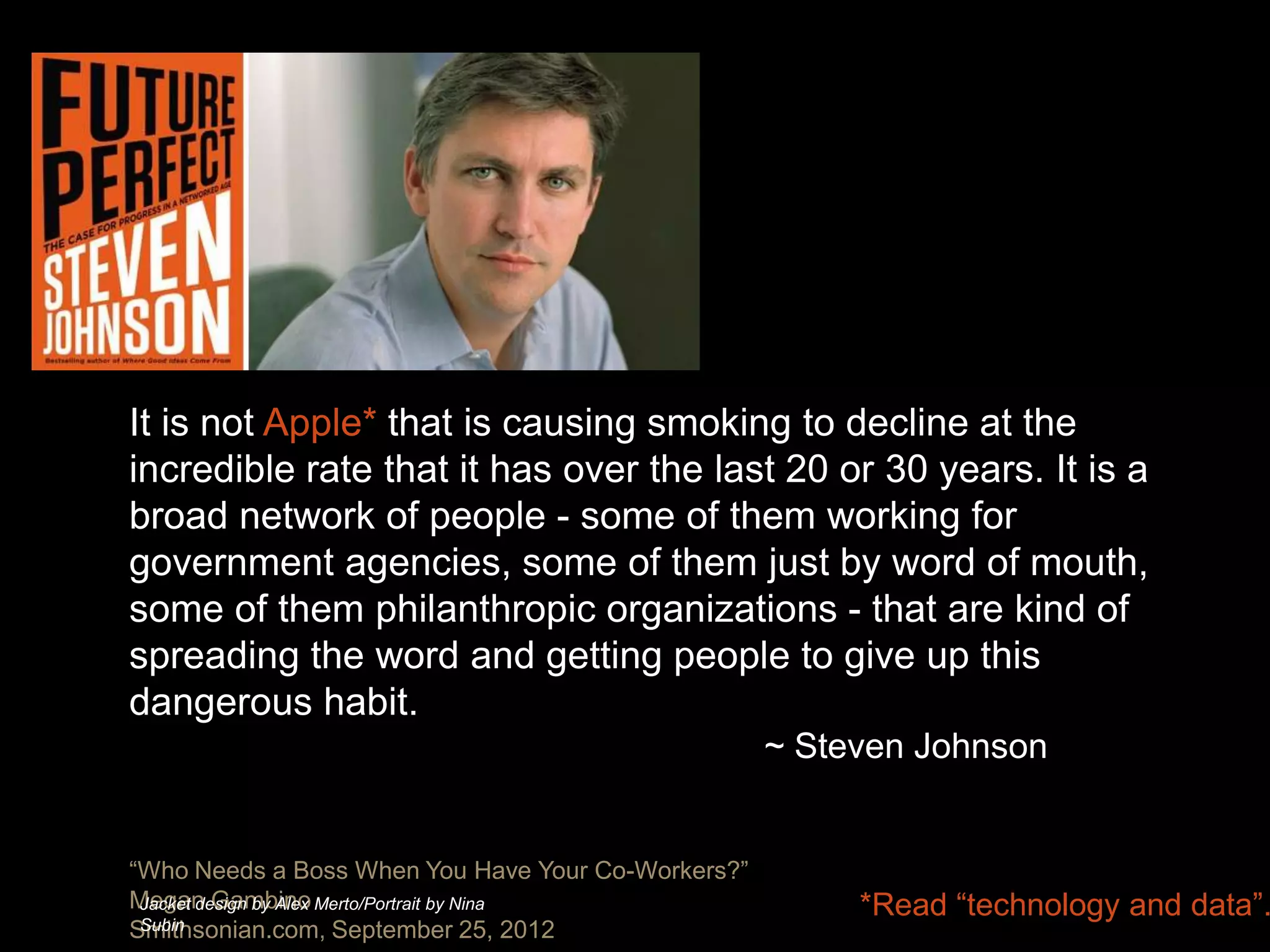
It is not Apple* that is causing smoking to decline at the
incredible rate that it has over the last 20 or 30 years. It is a
broad network of people - some of them working for
government agencies, some of them just by word of mouth,
some of them philanthropic organizations - that are kind of
spreading the word and getting people to give up this
dangerous habit.
                                                    ~ Steven Johnson


“Who Needs a Boss When You Have Your Co-Workers?”
Megan Gambino Merto/Portrait by Nina
 Jacket design by Alex
 Subin
                                                         *Read “technology and data”.
Smithsonian.com, September 25, 2012
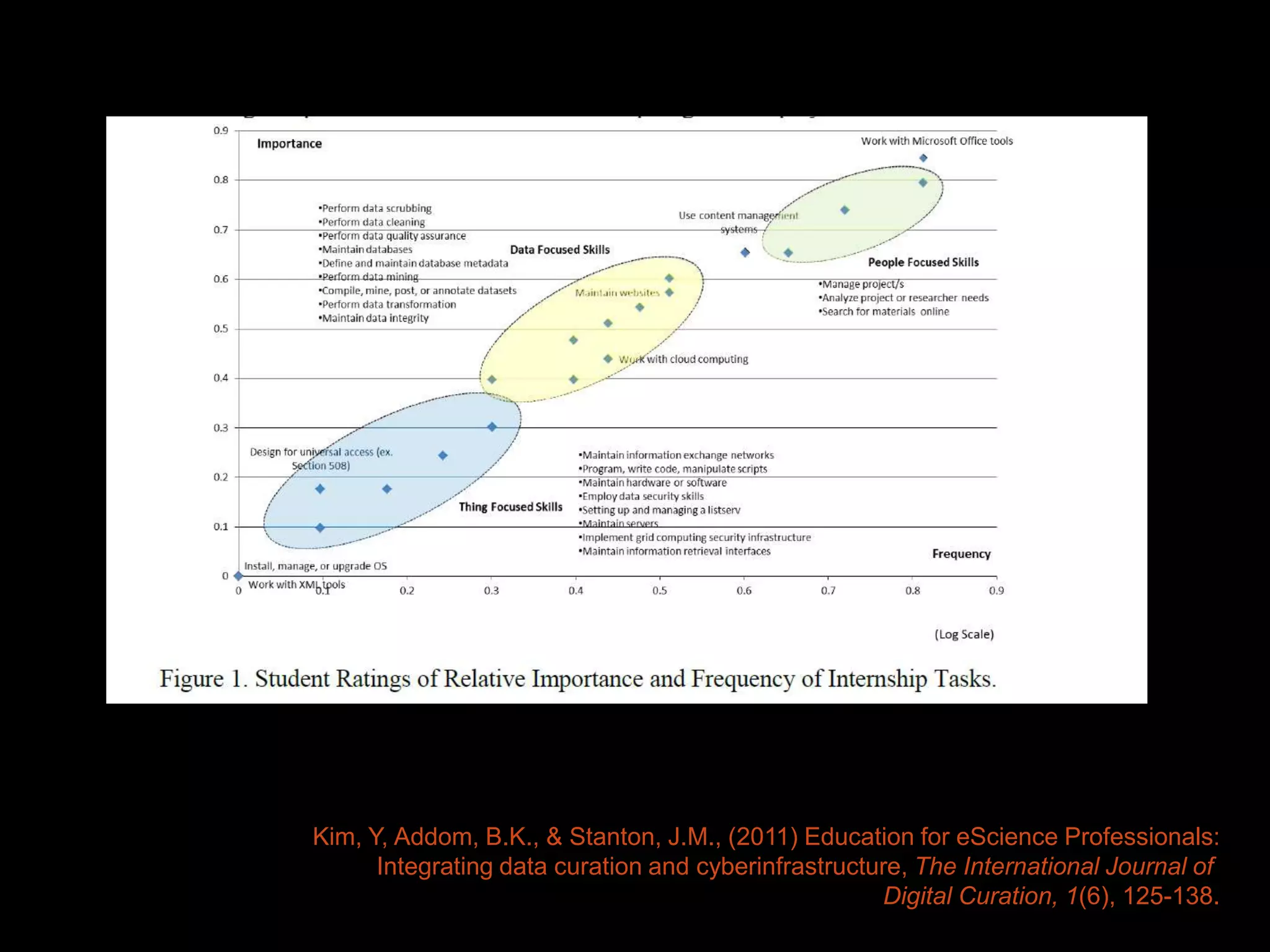
Kim, Y, Addom, B.K., & Stanton, J.M., (2011) Education for eScience Professionals:
      Integrating data curation and cyberinfrastructure, The International Journal of
                                                     Digital Curation, 1(6), 125-138.
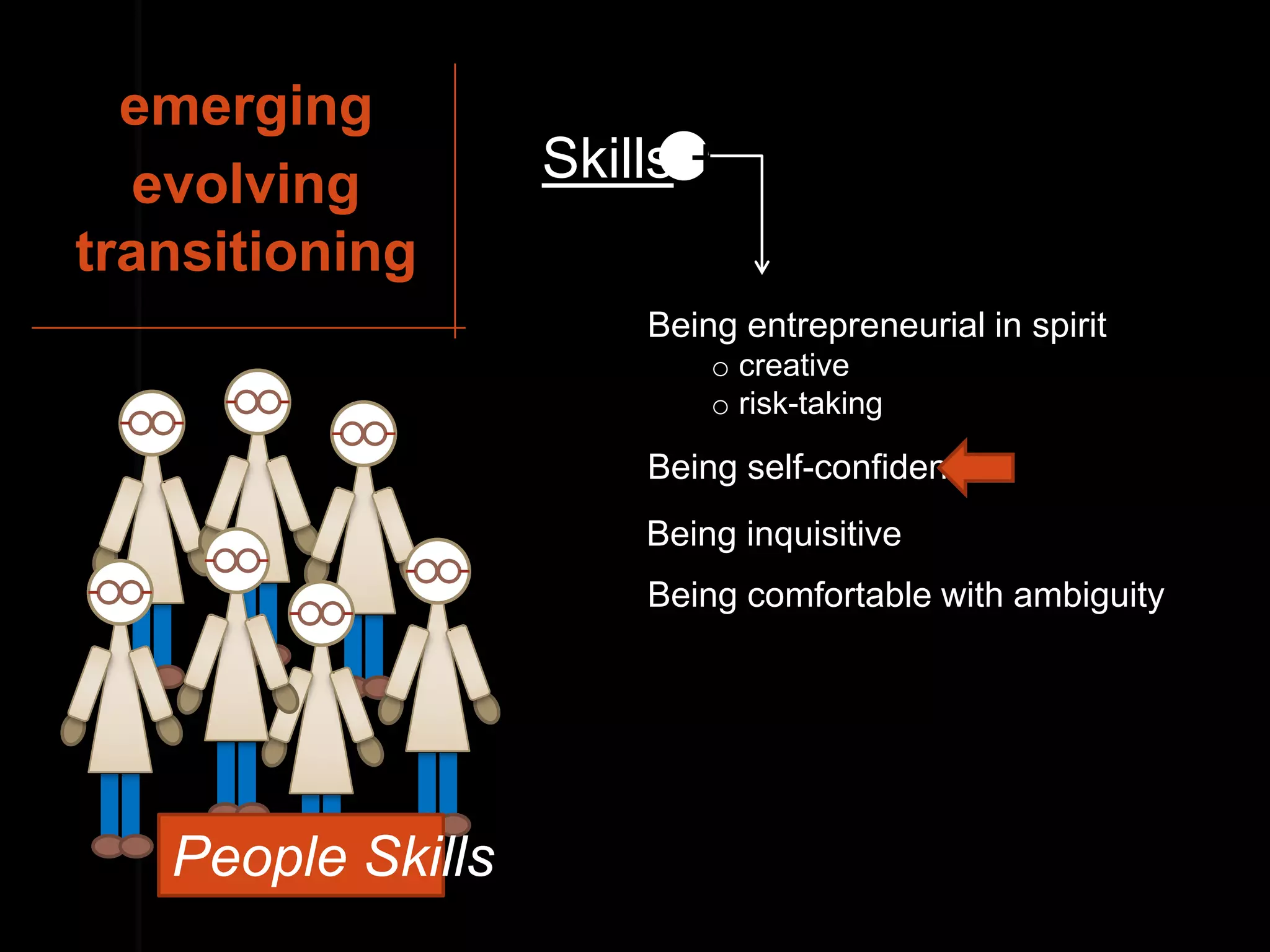
emerging
  evolving         Skills +
transitioning
                       Being entrepreneurial in spirit
                           o creative
                           o risk-taking

                       Being self-confident
                       Being inquisitive
                       Being comfortable with ambiguity


   People Skills
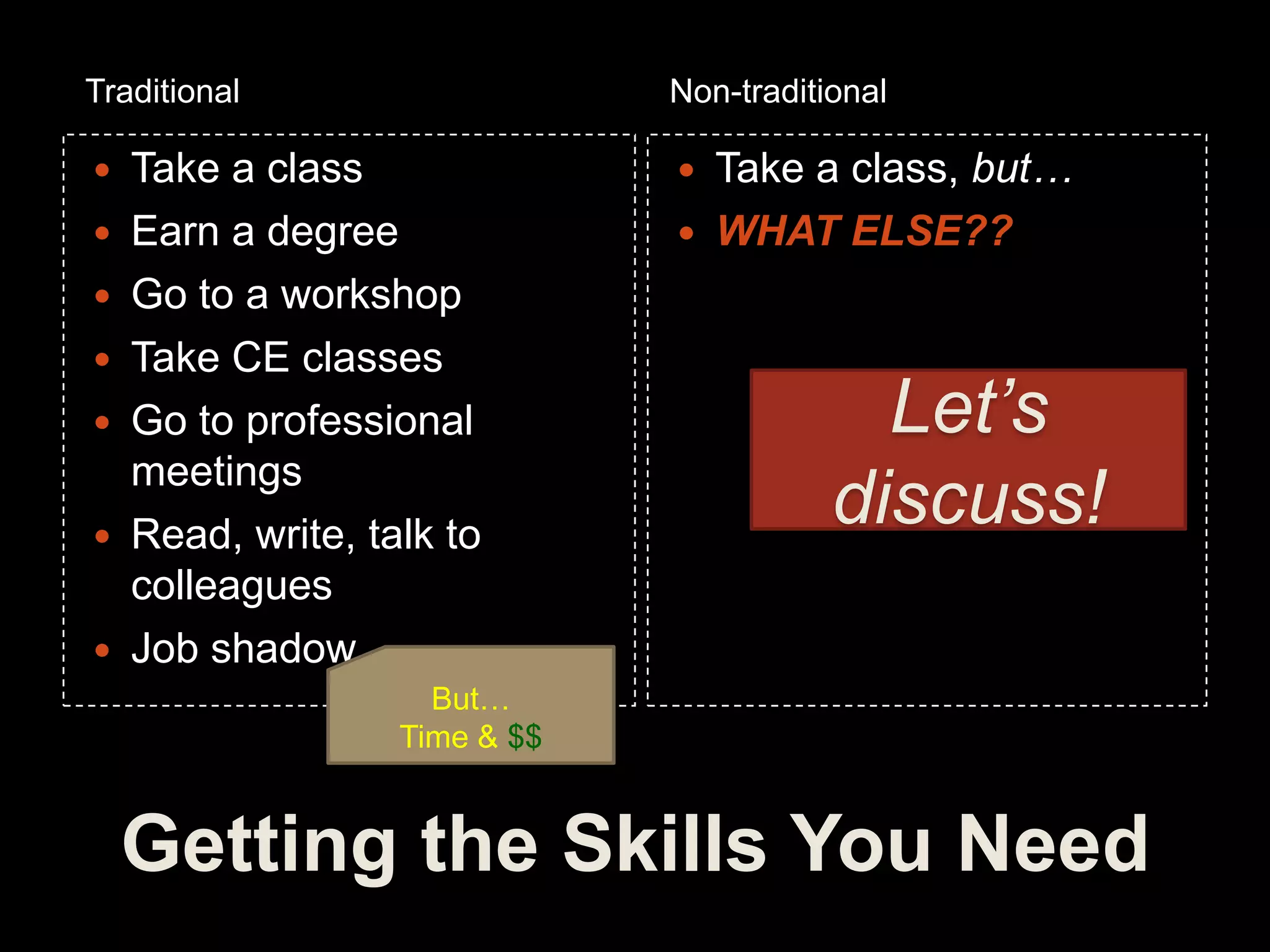
Traditional                  Non-traditional

 Take a class                  Take a class, but…
 Earn a degree                 WHAT ELSE??
 Go to a workshop
 Take CE classes
 Go to professional                      Let’s
  meetings
 Read, write, talk to
                                        discuss!
  colleagues
 Job shadow
                   But…
                 Time & $$


    Getting the Skills You Need
On the horizon…
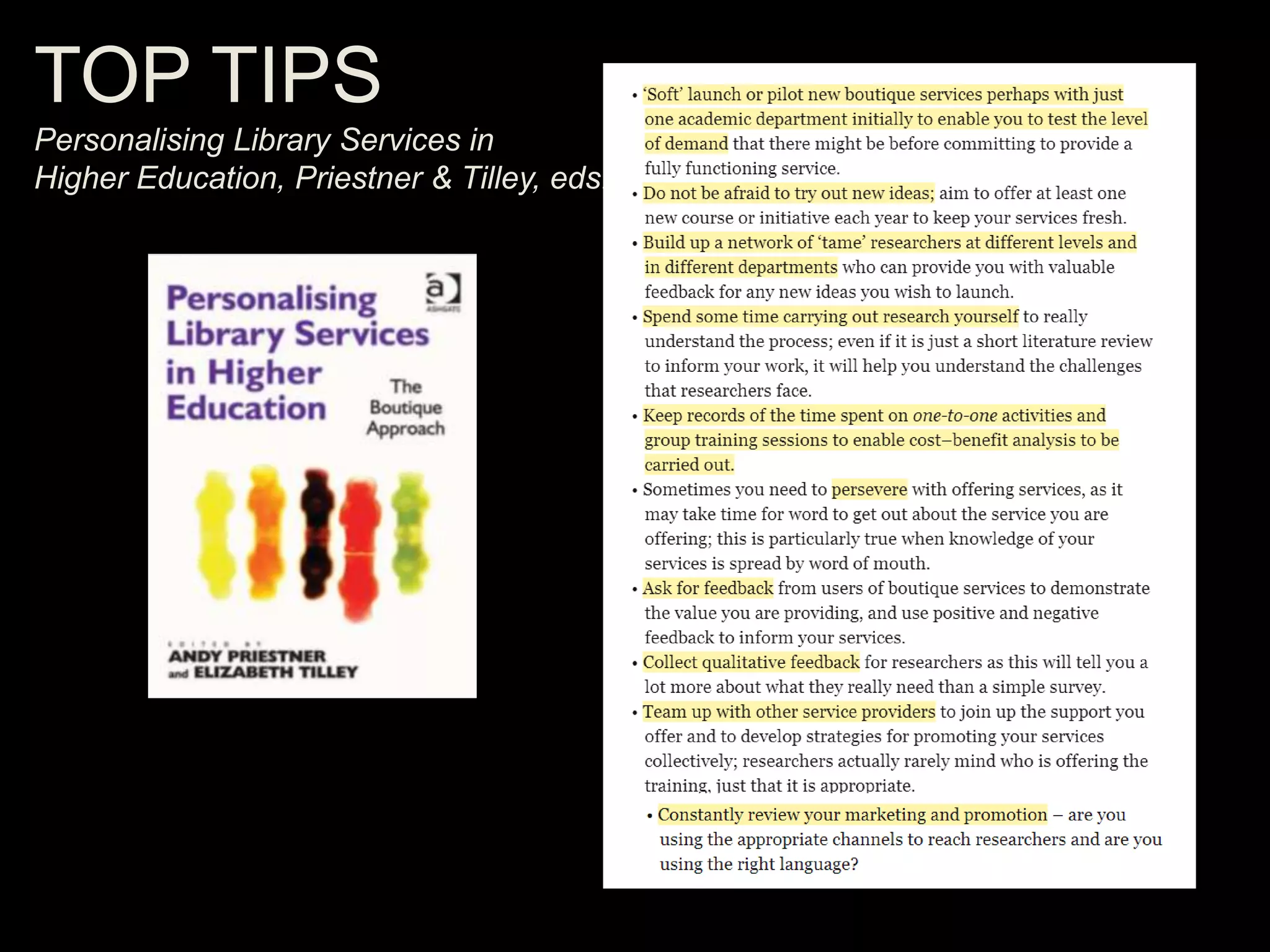
TOP TIPS
Personalising Library Services in
Higher Education, Priestner & Tilley, eds.
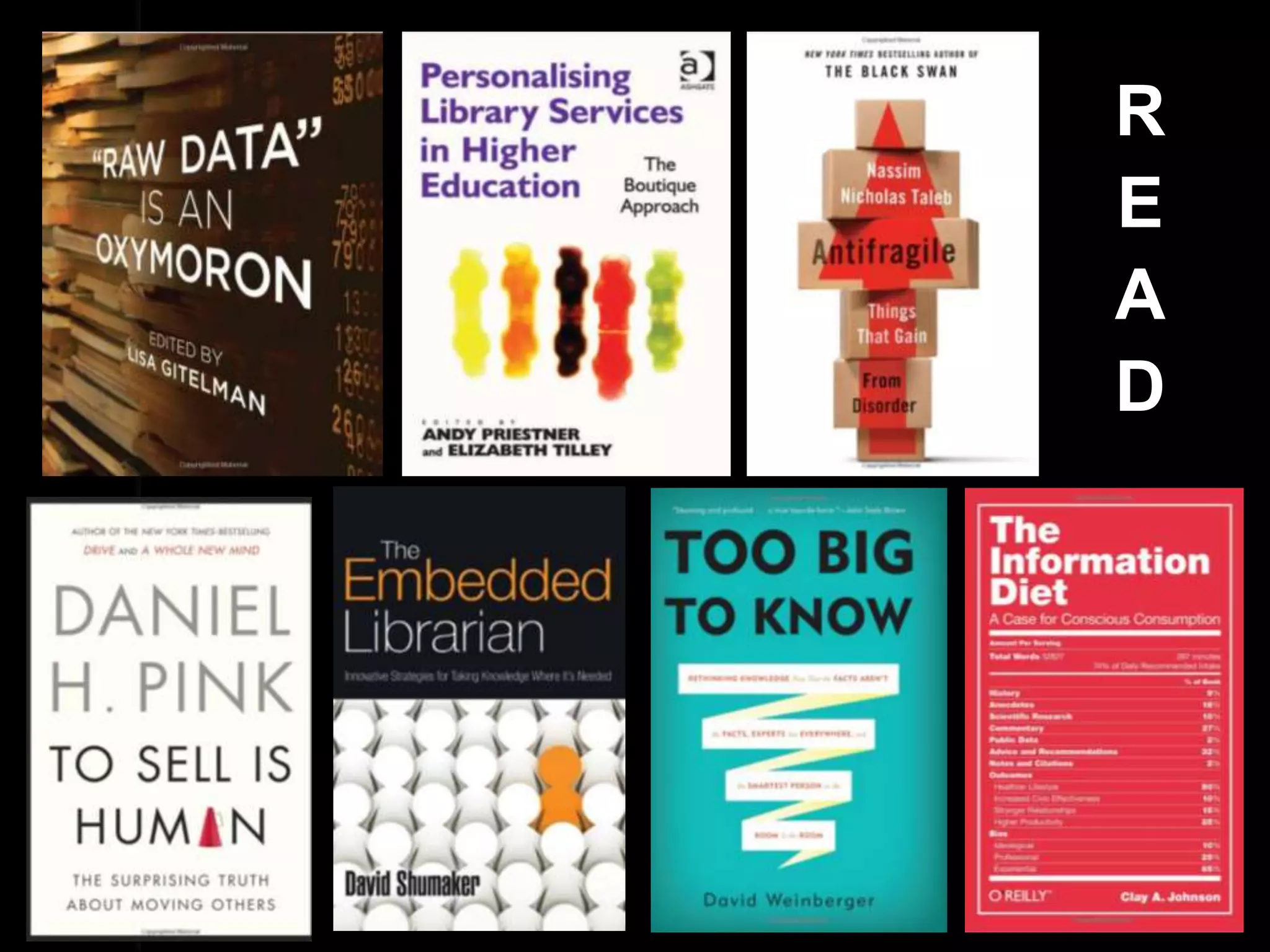
R
E
A
D
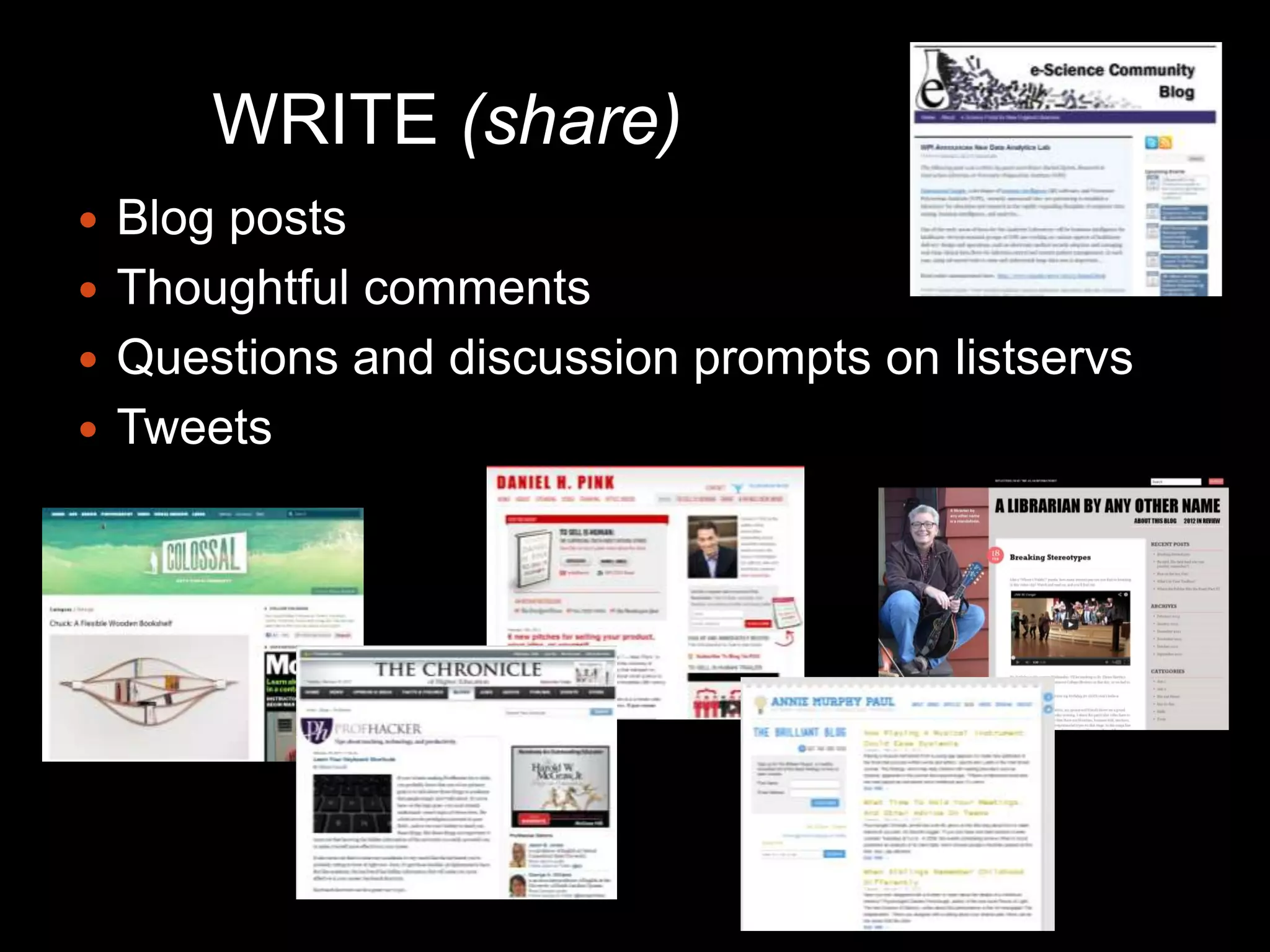
WRITE (share)
 Blog posts
 Thoughtful comments
 Questions and discussion prompts on listservs
 Tweets
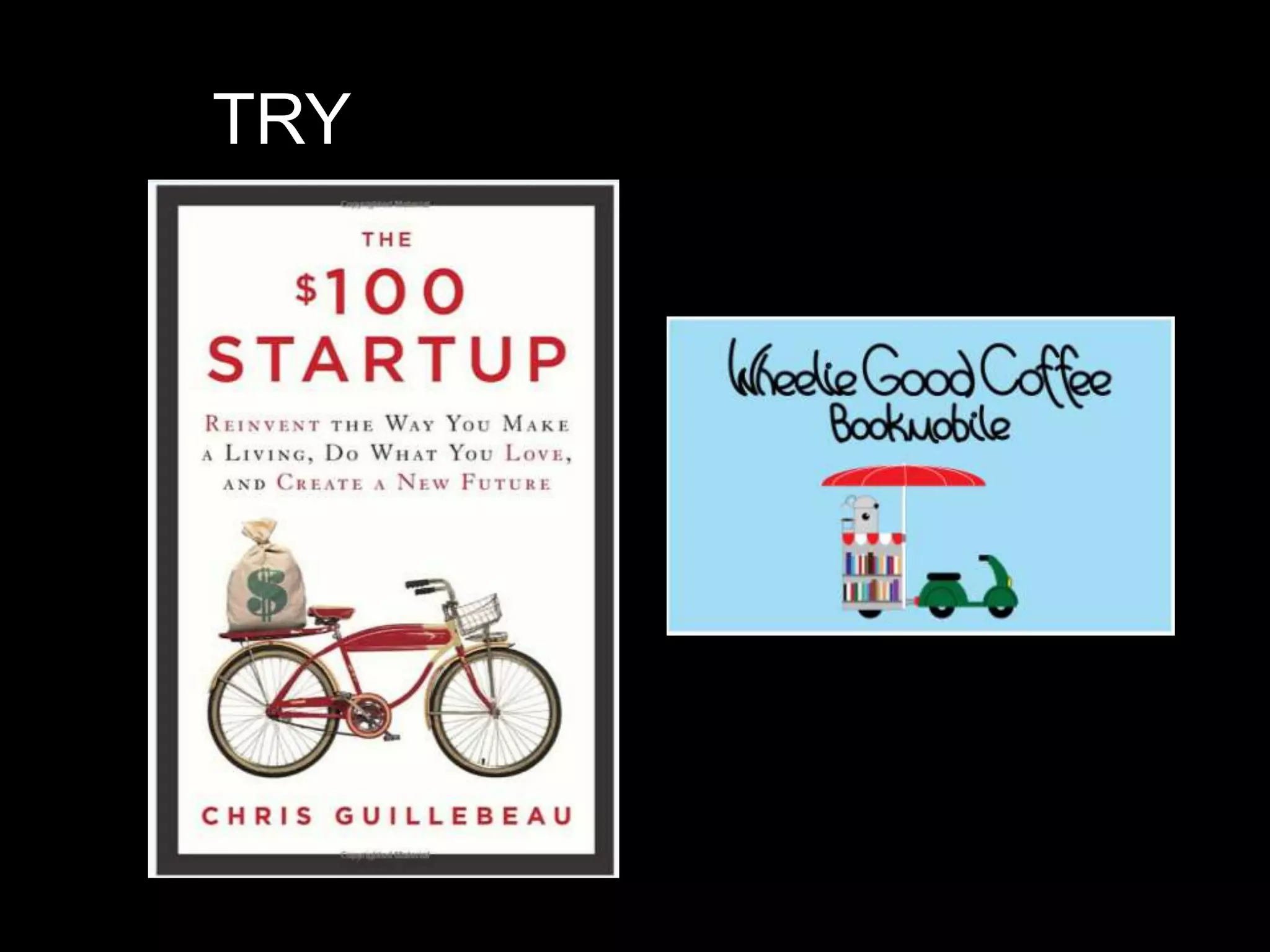
TRY
Questions?
Comments?
Thoughts?
Ideas?
Cake?
             Thank You!
             Sally.Gore@umassmed.edu

New Roles / New Rules: Information Professionals in Research Data Manageme…

  • 1.
    New Roles /New Rules Information Professionals in Research Data Management Sally Gore, MS, MS LIS Informationist and Embedded Librarian Lamar Soutter Library University of Massachusetts Medical School HELLO MY NAME IS Sally
  • 2.
    TODAY In this courseyou will explore the current relationships between libraries and their stakeholders seeking institutional support managing their research data. Data-intensive science and research are providing opportunities for new roles to emerge for information professionals. This course explores these roles and services, and uses the case study method to prepare participants from all academic backgrounds for roles in scientific research data management. This course aims to help prepare information professionals for engaging with scientists and for developing data management plans for their stakeholders' research projects. The course examines the data practices of researchers in scientific fields such as biomedicine and engineering to illustrate how researchers produce data, and how other researchers re-use these data for purposes of inquiry. We will explore the information tools used for research data management planning, research, data, and graduate student lifecycles, and we will explore a variety of strategies information professionals are using to provide data consultancy services to their institutions' researchers.
  • 3.
    TODAY  What is the library’s role in RDM?  What is an embedded librarian?  What is a data librarian?  What is an eScience librarian?  Who is a data scientist? (I really have no idea.)
  • 4.
    TODAY  What doI do?  How do I do it?
  • 5.
    Data-intensive science andresearch are providing opportunities for new roles to emerge for information professionals. e· merg· ing (e-mûr´jing) Newly formed or just coming into prominence. e· volv· ing (e-volv´ing) To develop or achieve gradually. tran· si· tion· ing (tran-zish´en-ing) Passing from one form, state, style, or place to another. Research & ? Information Scholarly Literacy Informationist Communication Librarian s Librarian 2005 2008 2012
  • 6.
    … the classicroles of libraries: • developing and preserving collections • developing access schema • developing services to meet information needs provide an important base from which to develop roles in eScience. The Data Deluge: Can Libraries Cope with e-Scien Marcum & George, editors
  • 7.
    … the classicroles of libraries: • developing and preserving collections • of what? • developing access schema • what’s metadata? • developing services to meet information needs  Build networks – how?  “Middle Man” – aren’t we cutting them out?  Data LITERACY – are we data literate to begin with?
  • 9.
    What do youthink?  Professionals need an array of other competencies.  How much do the knowledge and skills requirements vary among roles? Let’s discuss!
  • 10.
    Cynthia Fuhrmann, PhD,Asst. Dean, Career & Professional Development UMMS Graduate School of Biomedical Sciences
  • 11.
    Varying Roles /Varying Skills  Informationist  Embedded Librarian ◦ “Promoting Breast Cancer Screening in ◦ Community Engagement Research Section of Non-Adherent Women,” R01 CA-132935 UMass Center for Clinical & Translational Science  AIMS  AIMS • Improve effectiveness and efficiency of communication w/in  Build a catalog of resources on the team regarding data topic that will serve as a foundation for research, program • Articulate technology issues development, and education. related to implementation of the study  Knowledge management services including lit searches, bibliographic • Enhance information management, data organization, management, management, information utilization and access skills of organization, database design, and team members knowledge mapping • Assess value of an  Research and assist development of informationist to the research tools and/or means to promote team collaborations between researchers
  • 12.
    Skills (usual suspects) • Database Management • Database Design But then what? • Data Mining • Information Retrieval Systems • Improve communication • Natural Language Processing • Articulate problems • Research Methods • Enhance skills of others • Statistics • Build catalog of resources • Digital Preservation • Knowledge management • Information Architecture • Research & Development • Information Visualization What’s in your toolbox? Subject Knowledge and/or Expertise?
  • 13.
    It is notApple* that is causing smoking to decline at the incredible rate that it has over the last 20 or 30 years. It is a broad network of people - some of them working for government agencies, some of them just by word of mouth, some of them philanthropic organizations - that are kind of spreading the word and getting people to give up this dangerous habit. ~ Steven Johnson “Who Needs a Boss When You Have Your Co-Workers?” Megan Gambino Merto/Portrait by Nina Jacket design by Alex Subin *Read “technology and data”. Smithsonian.com, September 25, 2012
  • 14.
    Kim, Y, Addom,B.K., & Stanton, J.M., (2011) Education for eScience Professionals: Integrating data curation and cyberinfrastructure, The International Journal of Digital Curation, 1(6), 125-138.
  • 15.
    emerging evolving Skills + transitioning Being entrepreneurial in spirit o creative o risk-taking Being self-confident Being inquisitive Being comfortable with ambiguity People Skills
  • 16.
    Traditional Non-traditional  Take a class  Take a class, but…  Earn a degree  WHAT ELSE??  Go to a workshop  Take CE classes  Go to professional Let’s meetings  Read, write, talk to discuss! colleagues  Job shadow But… Time & $$ Getting the Skills You Need
  • 17.
  • 18.
    TOP TIPS Personalising LibraryServices in Higher Education, Priestner & Tilley, eds.
  • 19.
  • 20.
    WRITE (share)  Blogposts  Thoughtful comments  Questions and discussion prompts on listservs  Tweets
  • 21.
  • 22.
    Questions? Comments? Thoughts? Ideas? Cake? Thank You! Sally.Gore@umassmed.edu

Editor's Notes

  • #3 Course Objective(s)
  • #4 Class Objective (s)
  • #5 The readings prior to your visit center on discussing the needed skill sets for librarians to engage in eScience/data management/embedded roles. If there is a specific blog post/reading on the embedded informationist that you would like students to have read before class or that you could recommend to us, please email me and I'll add it to the syllabus and will send it to students.
  • #6 Add to this that the way we use information and data, in general, is providing a whole host of opportunities for new roles.USE = generate, create, utilize, manipulate, comodify, access, engage, take in, synthesize, understand…
  • #13 Required Courses:IST 659 Data Administration Concepts and Database Management
IST 687 Applied Data Science

Elective CoursesChoose three from the specialization(s) of your choiceData AnalyticsIST 565 Data Mining
IST 657 Basics of Information Retrieval Systems
IST 664 Natural Language Processing
IST 718 Advanced Information Analytics
IST 776 Research Methods in Information Science and Technology
IST 777 Statistical Methods in Information Science and TechnologyData Storage and ManagementIST 558 Technologies for Web Content Management
IST 676 Foundations of Digital Data
IST 677 Creating, Managing, and Preserving Digital Assets
IST 722 Data Warehousing
IST 769 Advanced Database ManagementData VisualizationIST 553 Information Architecture for Internet Services
IST 719 Information VisualizationGeneral Systems ManagementIST 639 Enterprise Technologies
IST 645 Managing Information Systems Projects
IST 654 Information Systems Analysis
  • #16 EXAMPLE:Monica and John - writers
  • #21 Quote from “The Information Diet” – importance of creating information, not just consuming/using it