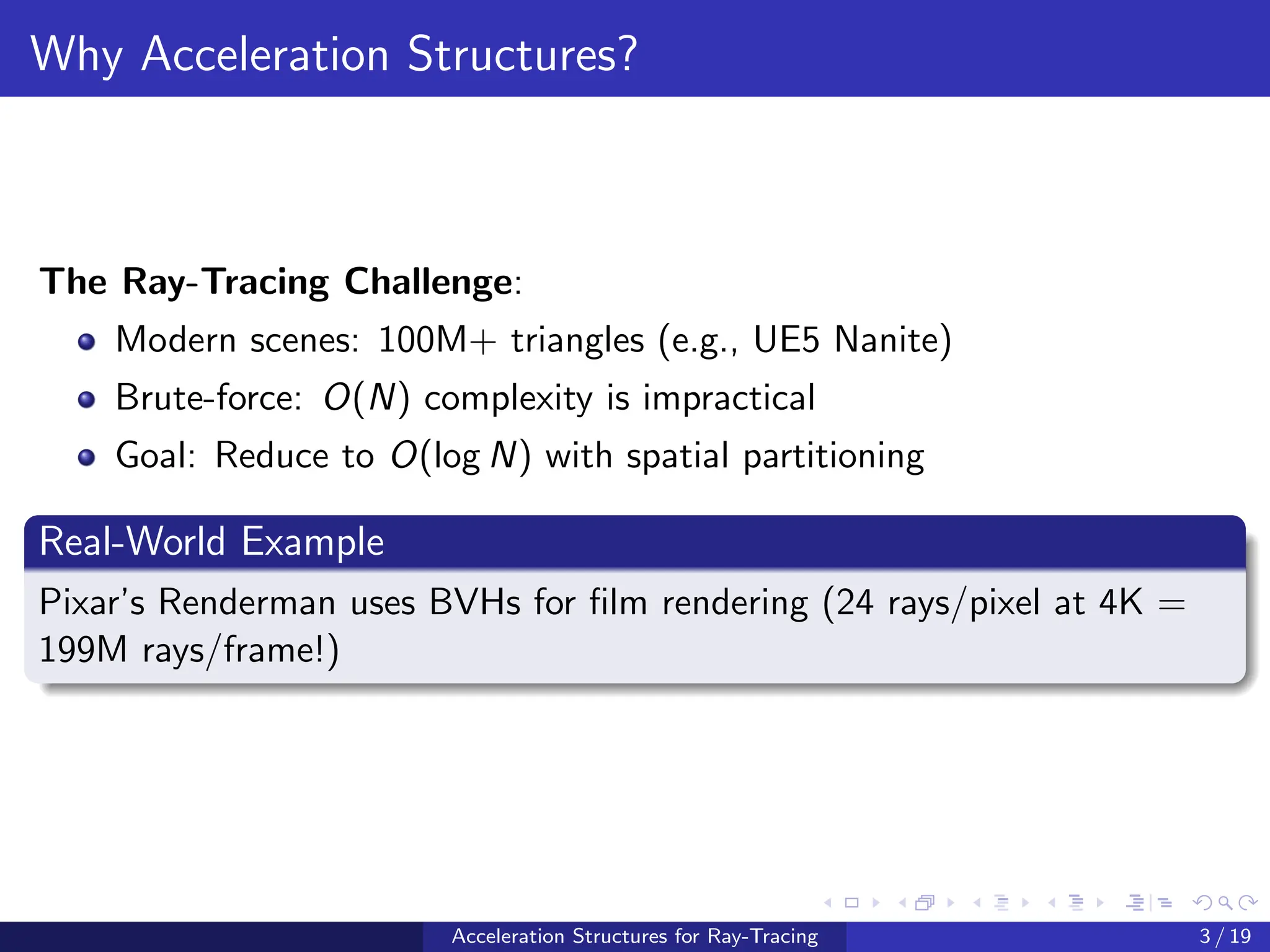
Ray-tracing has revolutionized computer graphics by simulating the physical behavior of light, but its computational demands would make it utterly impractical without acceleration structures. A single modern scene can contain hundreds of millions of triangles - consider that Unreal Engine 5's Nanite system routinely handles over a billion polygons. In a 4K resolution frame (8.3 million pixels), even basic one-ray-per-pixel rendering would require 8.3 trillion ray-triangle intersection tests if using brute-force methods. At an optimistic rate of one test per nanosecond, this would demand over two hours to render just one frame, making real-time performance completely impossible. This is where acceleration structures become essential, reducing the algorithmic complexity from O(N) to O(log N) through intelligent spatial organization of scene geometry.
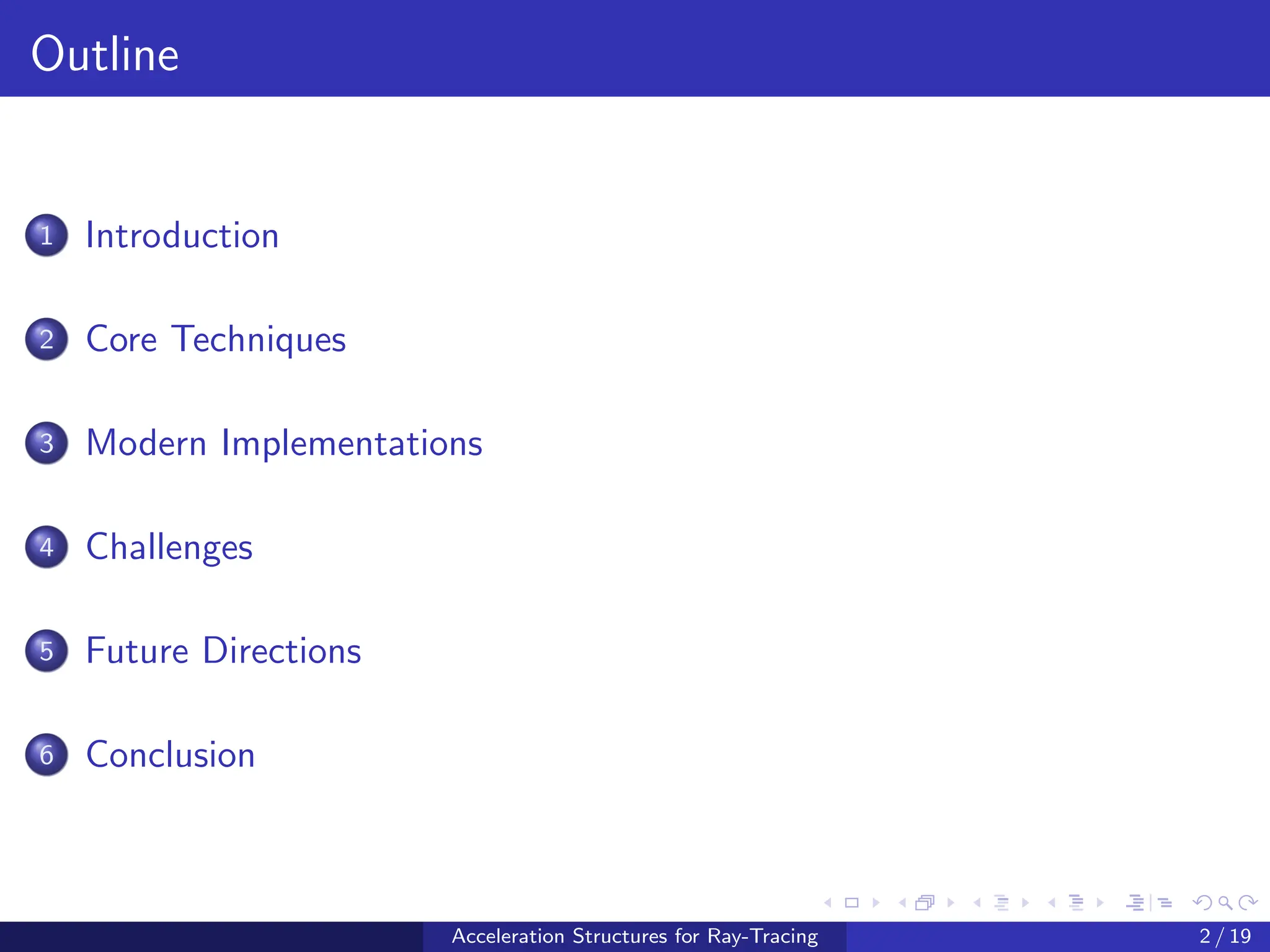
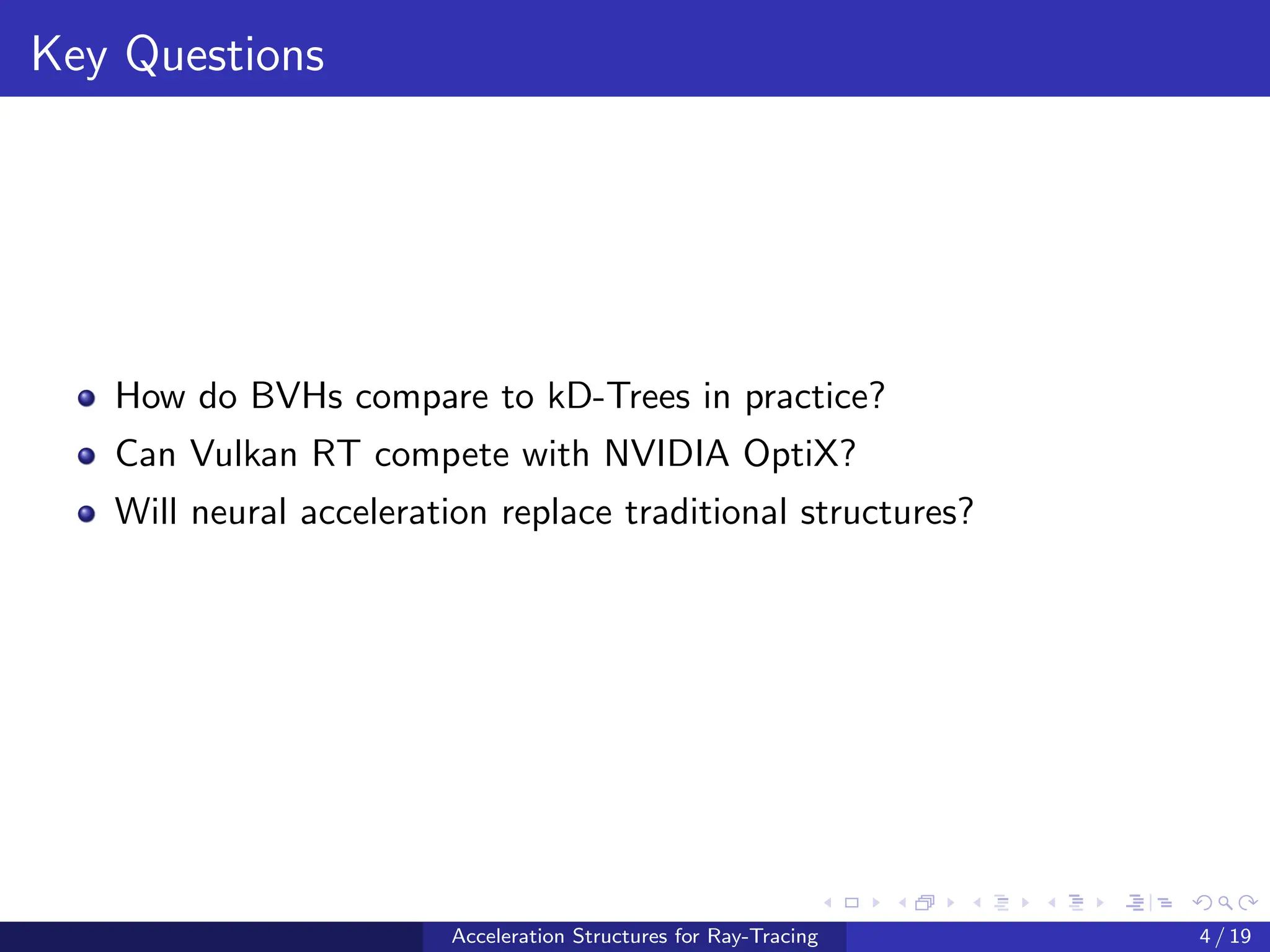
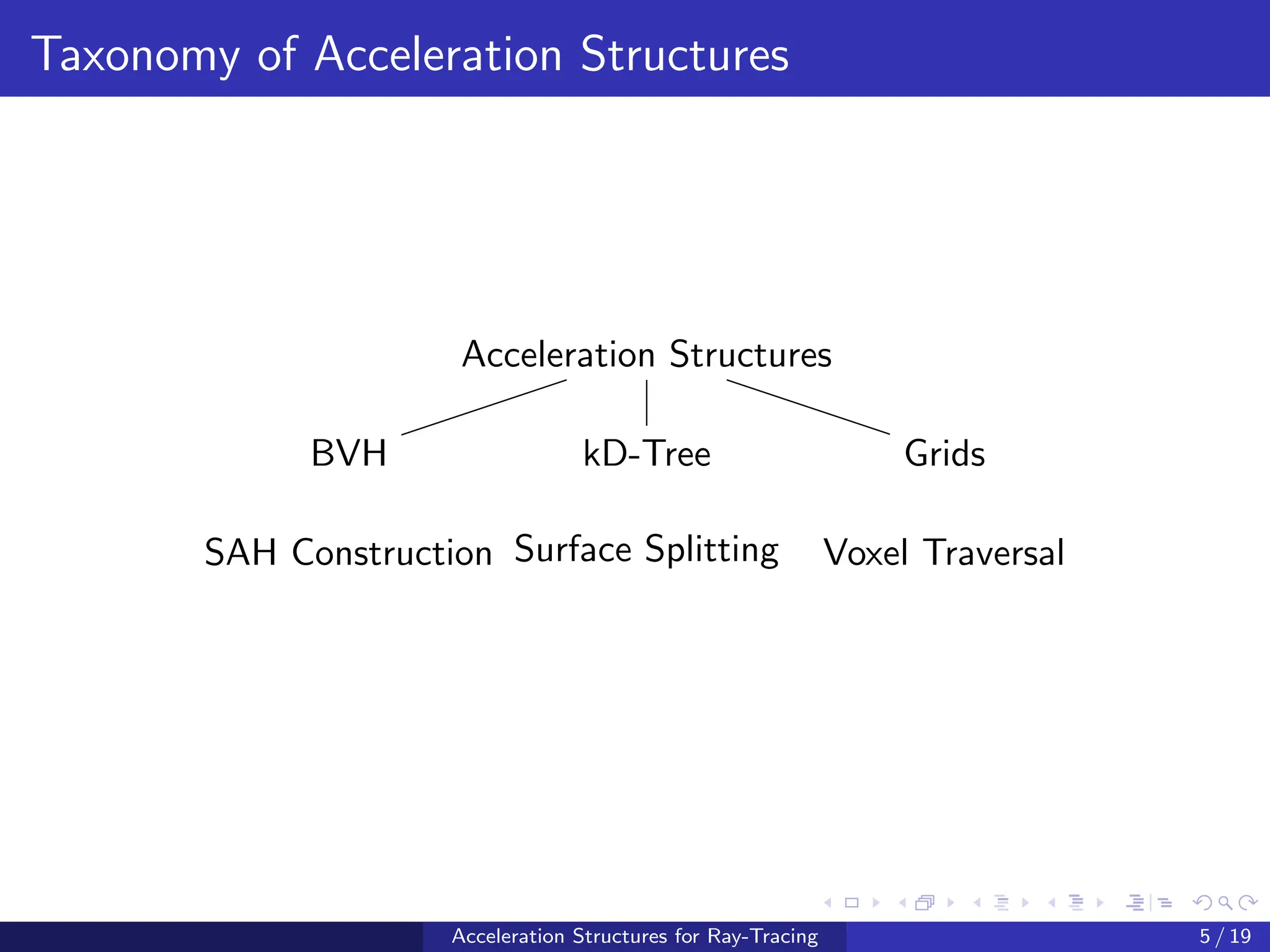
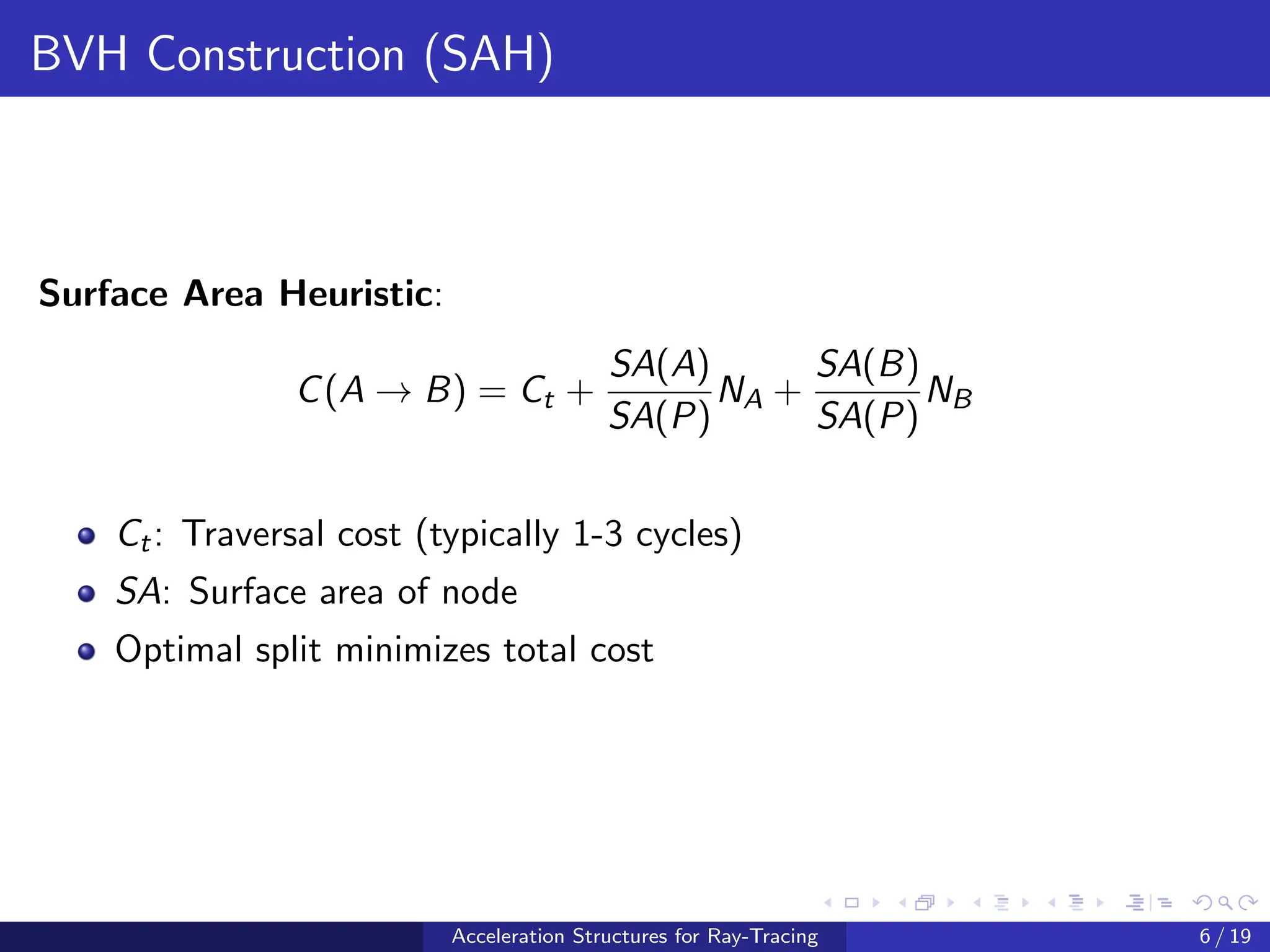
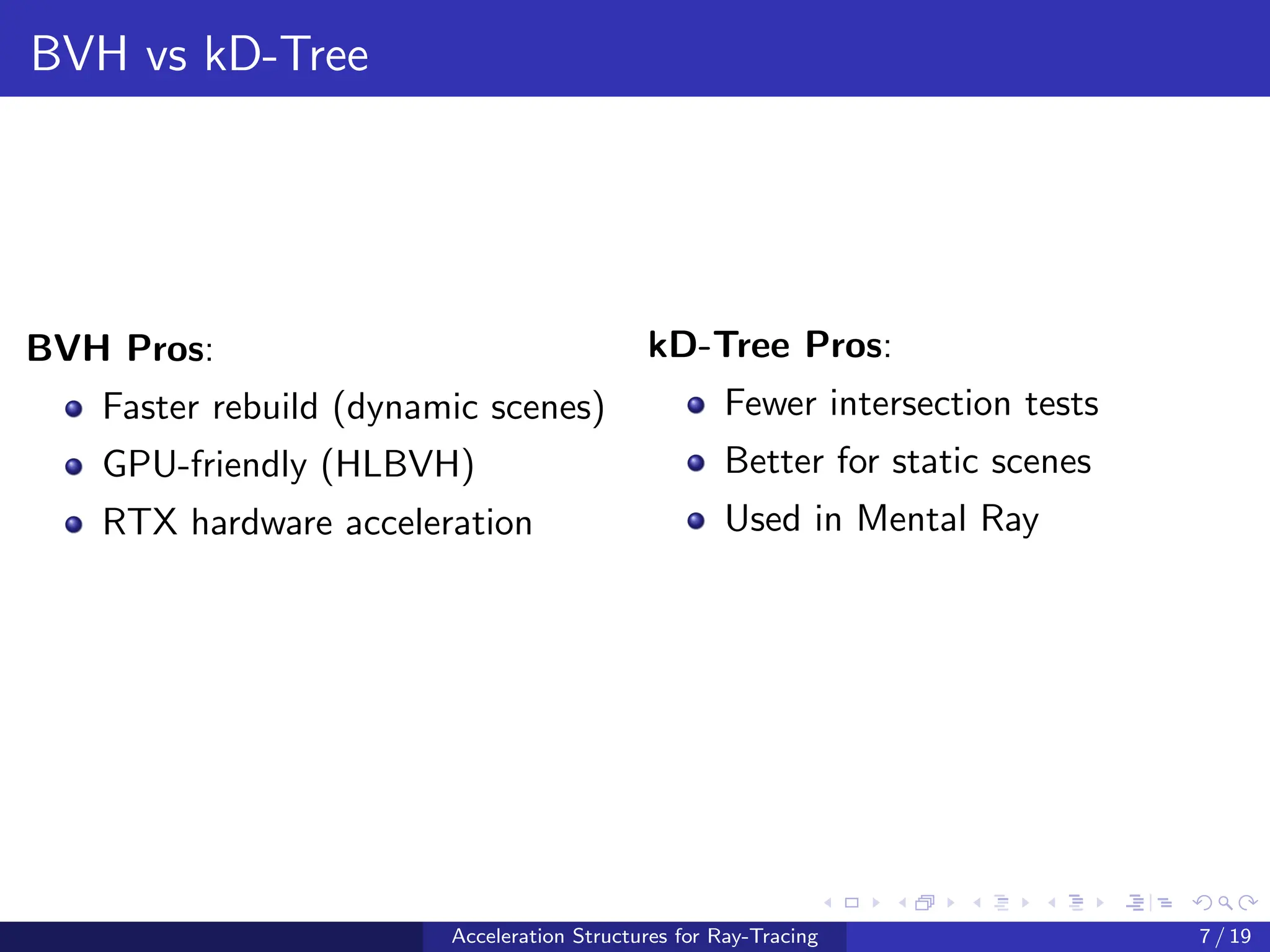
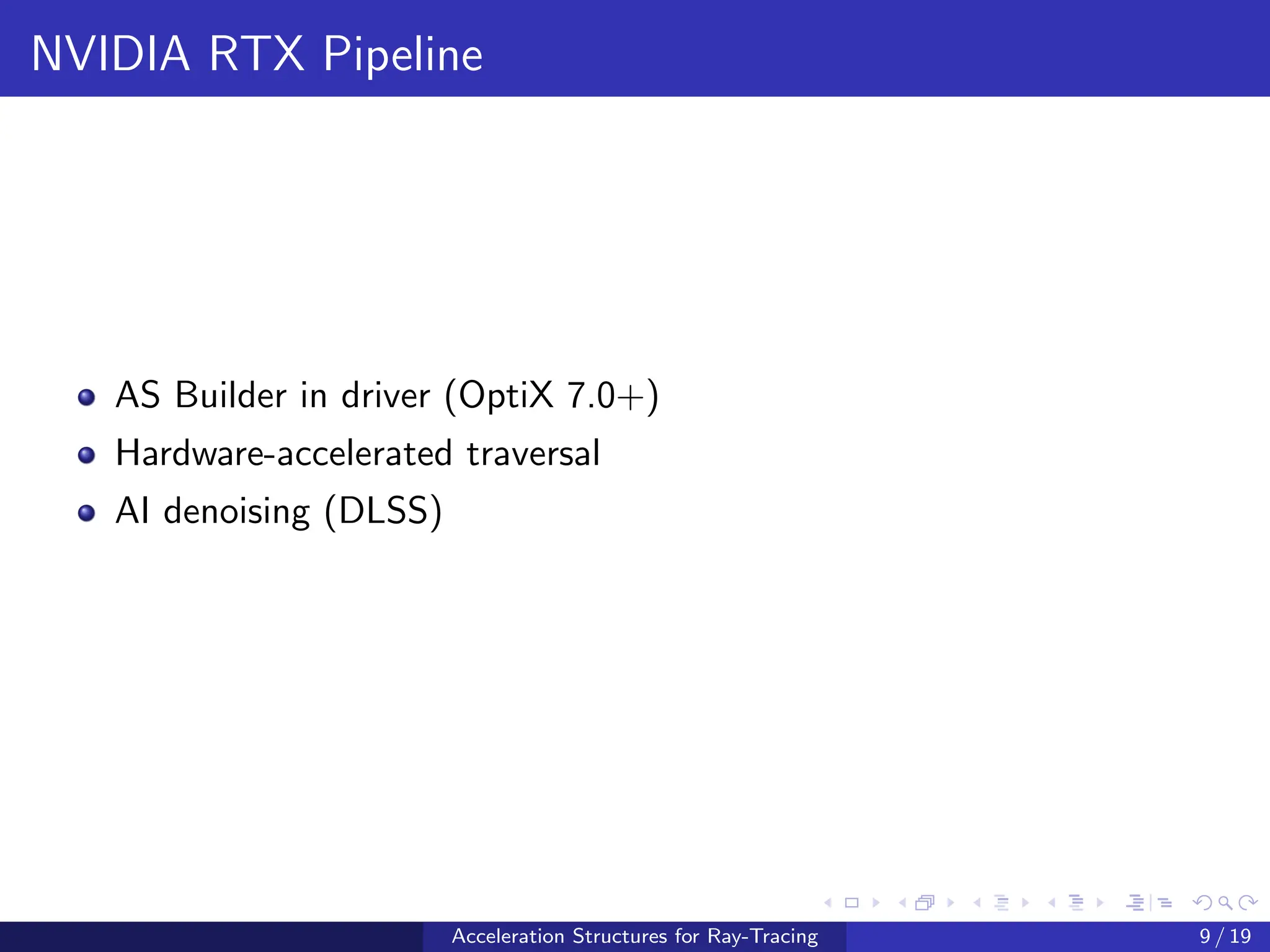
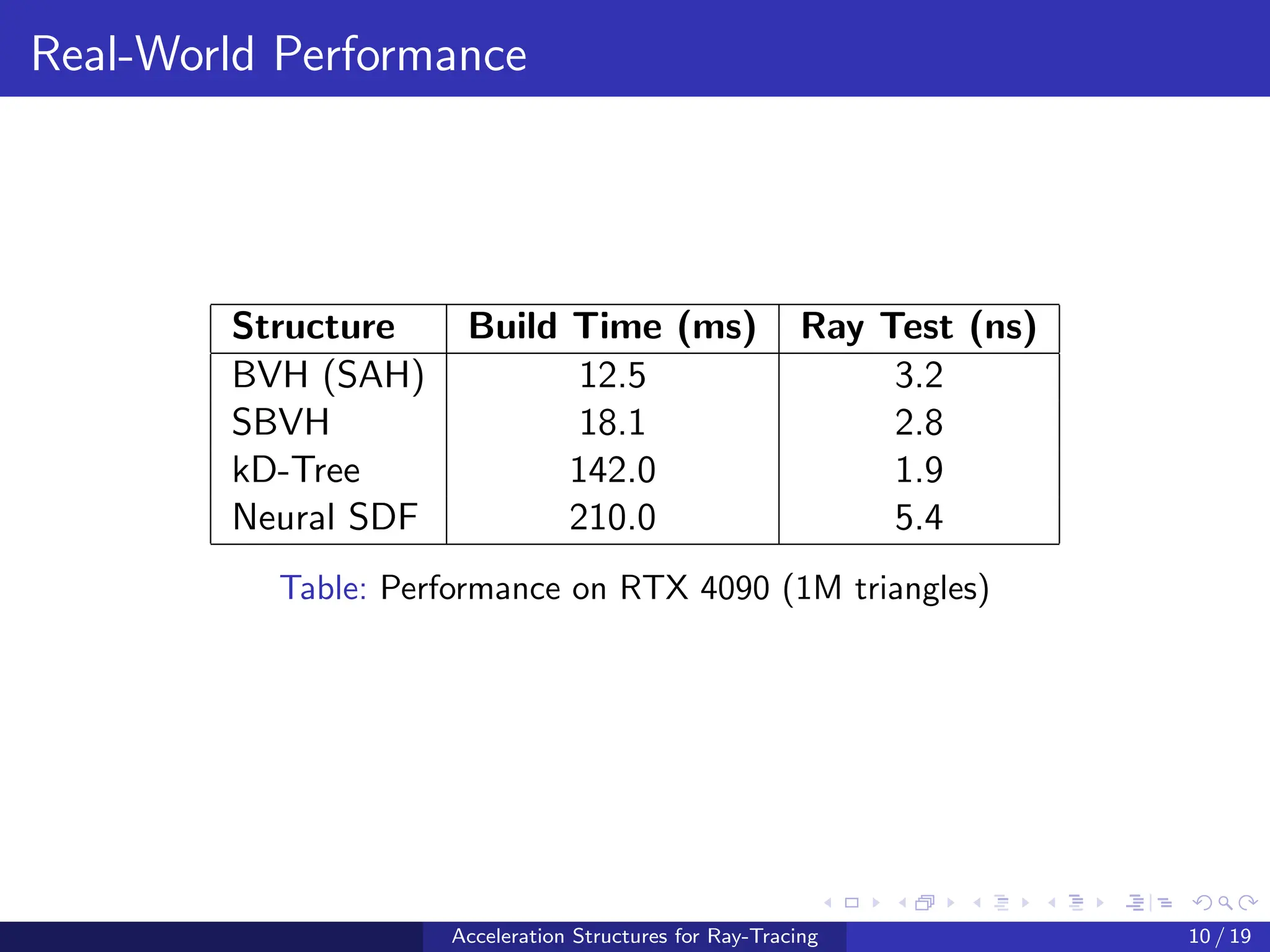
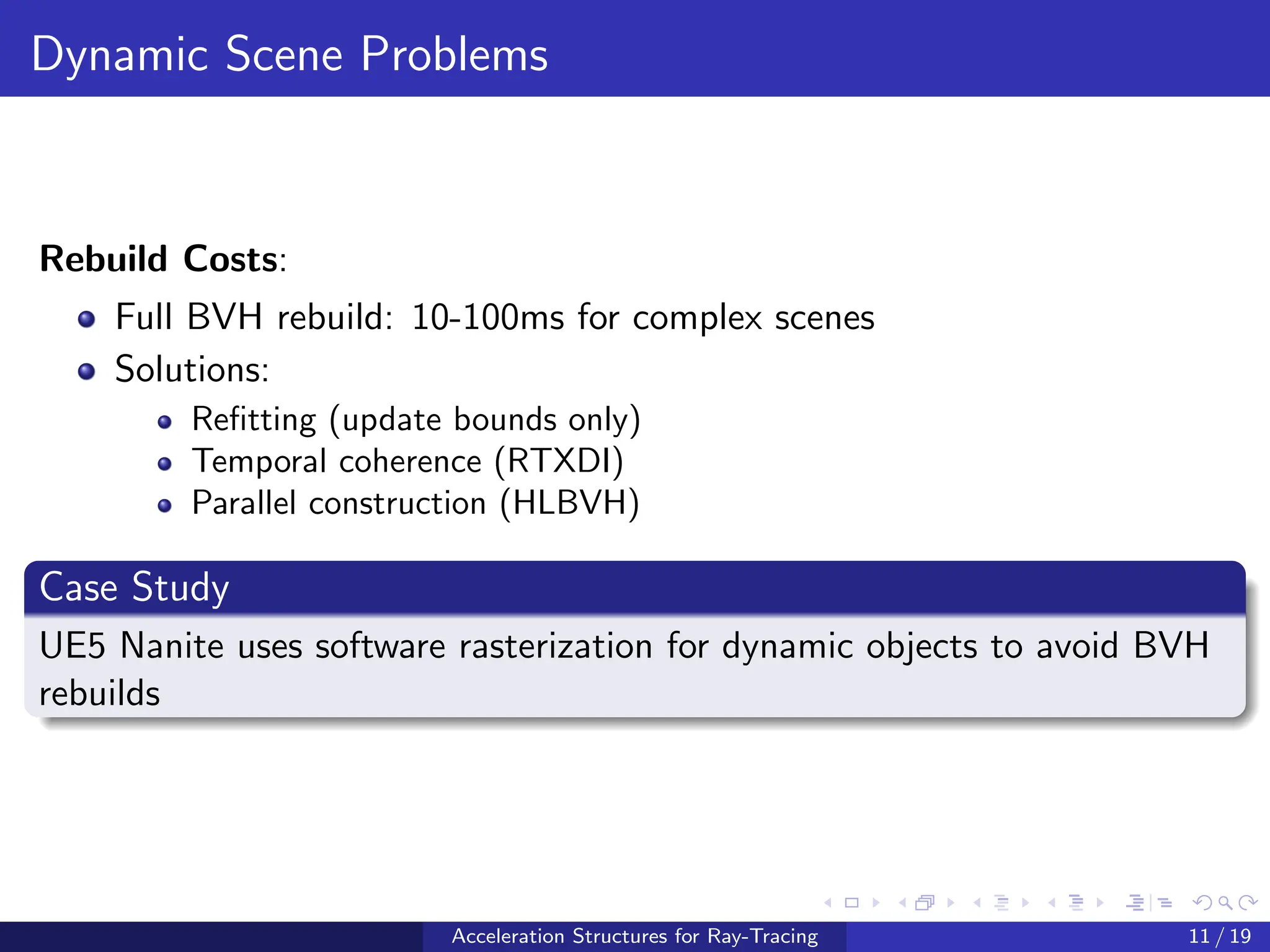
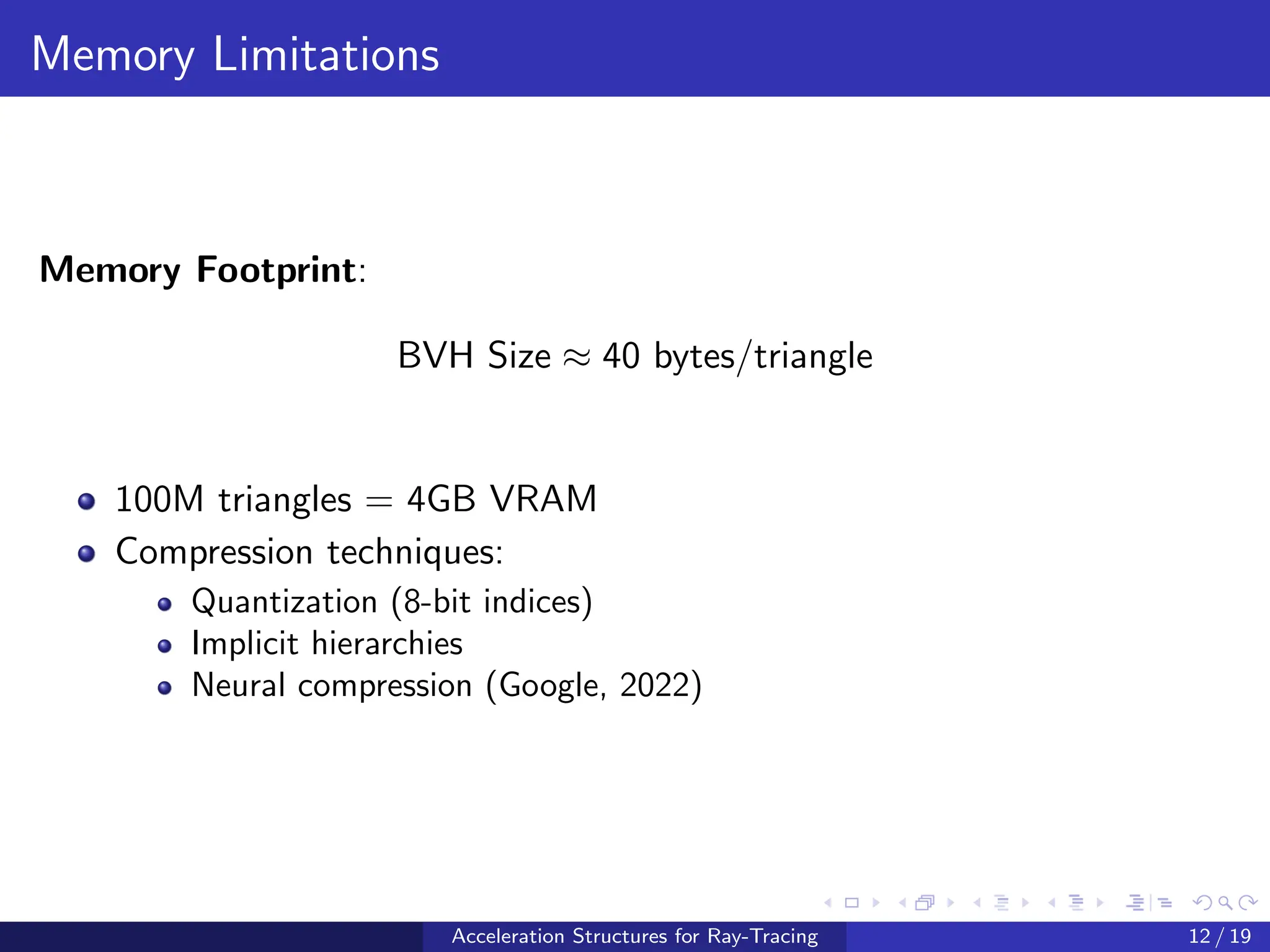
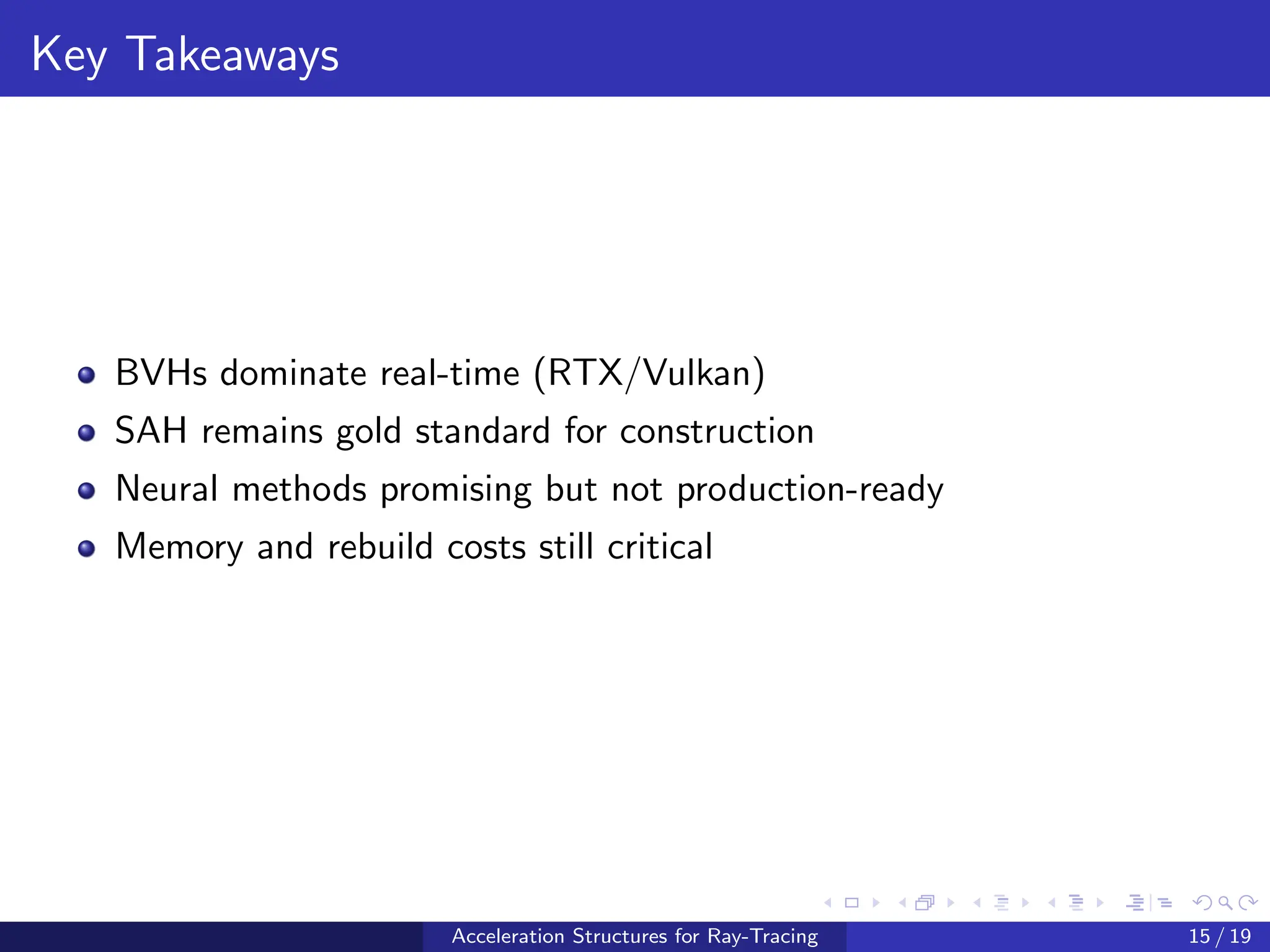
The presentation will explore how bounding volume hierarchies (BVHs) have emerged as the gold-standard acceleration structure, particularly through their implementation in modern GPU ray-tracing hardware. We'll examine the critical Surface Area Heuristic (SAH) that guides optimal BVH construction, balancing the costs of traversal versus intersection testing. The mathematical formulation of SAH shows how it minimizes expected computational cost by weighting probabilities based on relative surface areas. Real-world implementations like NVIDIA's RTX platform demonstrate this theory in action, where dedicated hardware can traverse BVH structures at astonishing speeds of tens of billions of ray-triangle tests per second. However, challenges remain - dynamic scenes force difficult tradeoffs between rebuild quality and speed, while memory consumption grows prohibitively large for complex scenes, with BVH structures typically requiring about 40 bytes of storage per triangle.
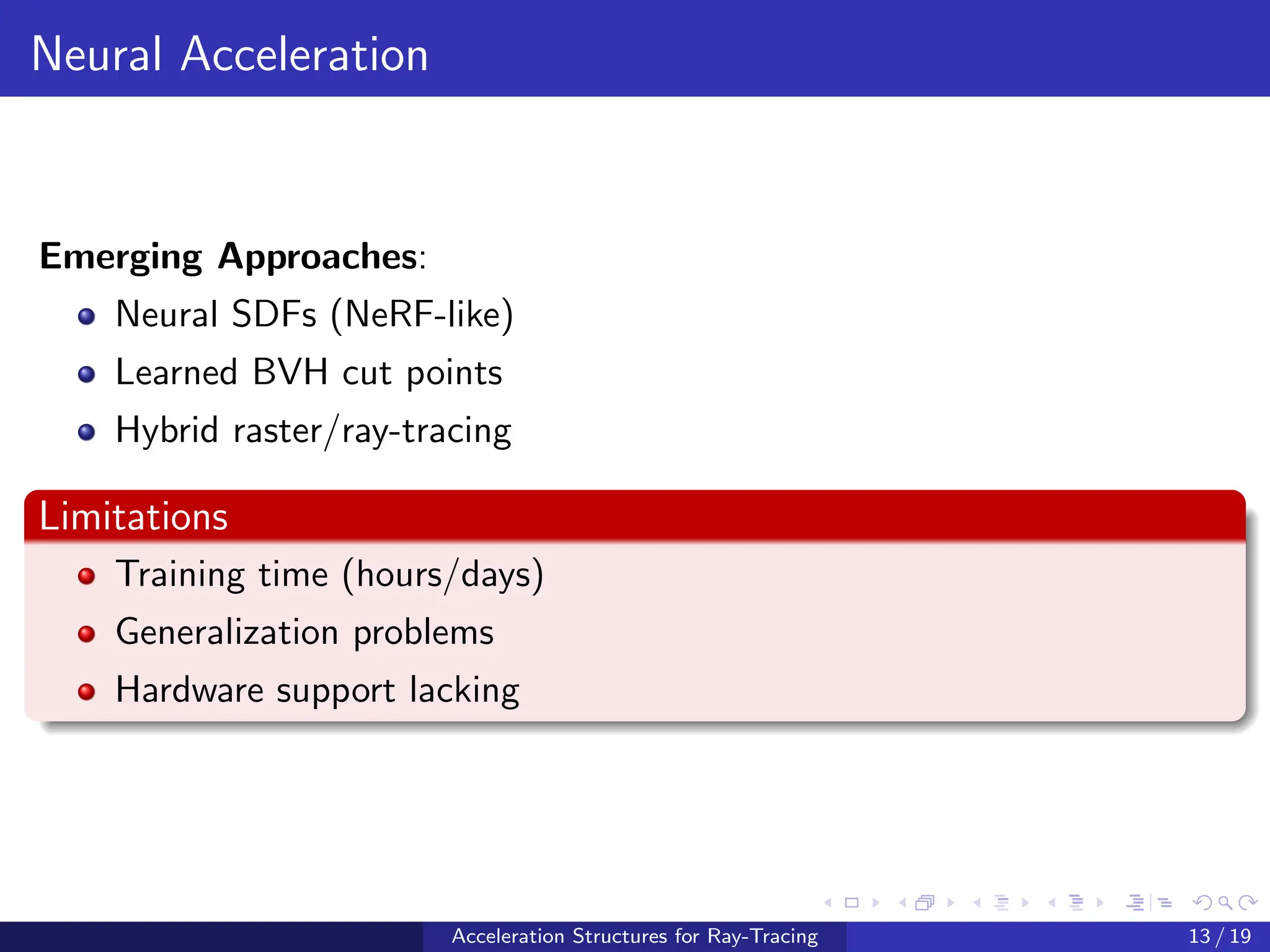
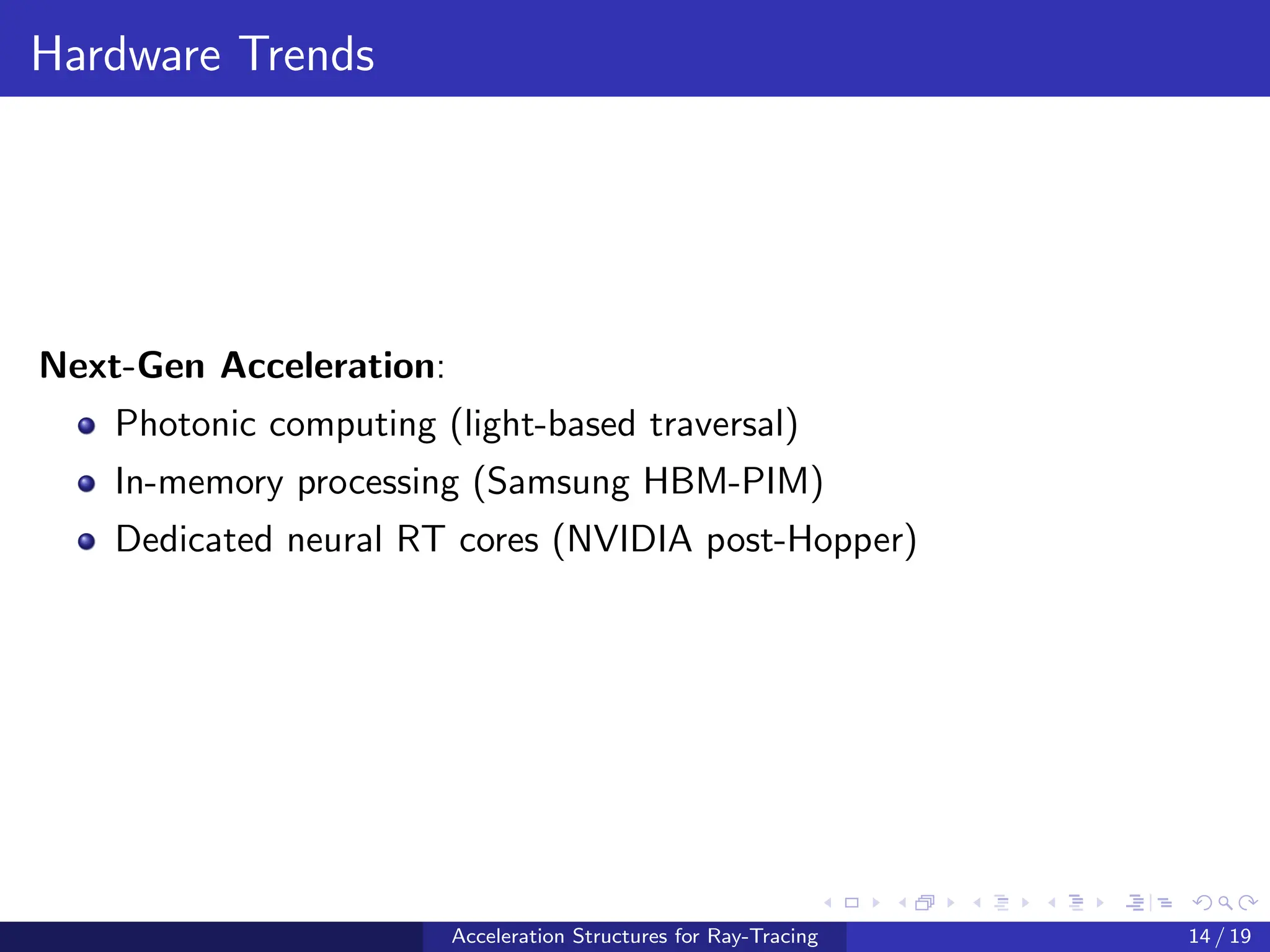
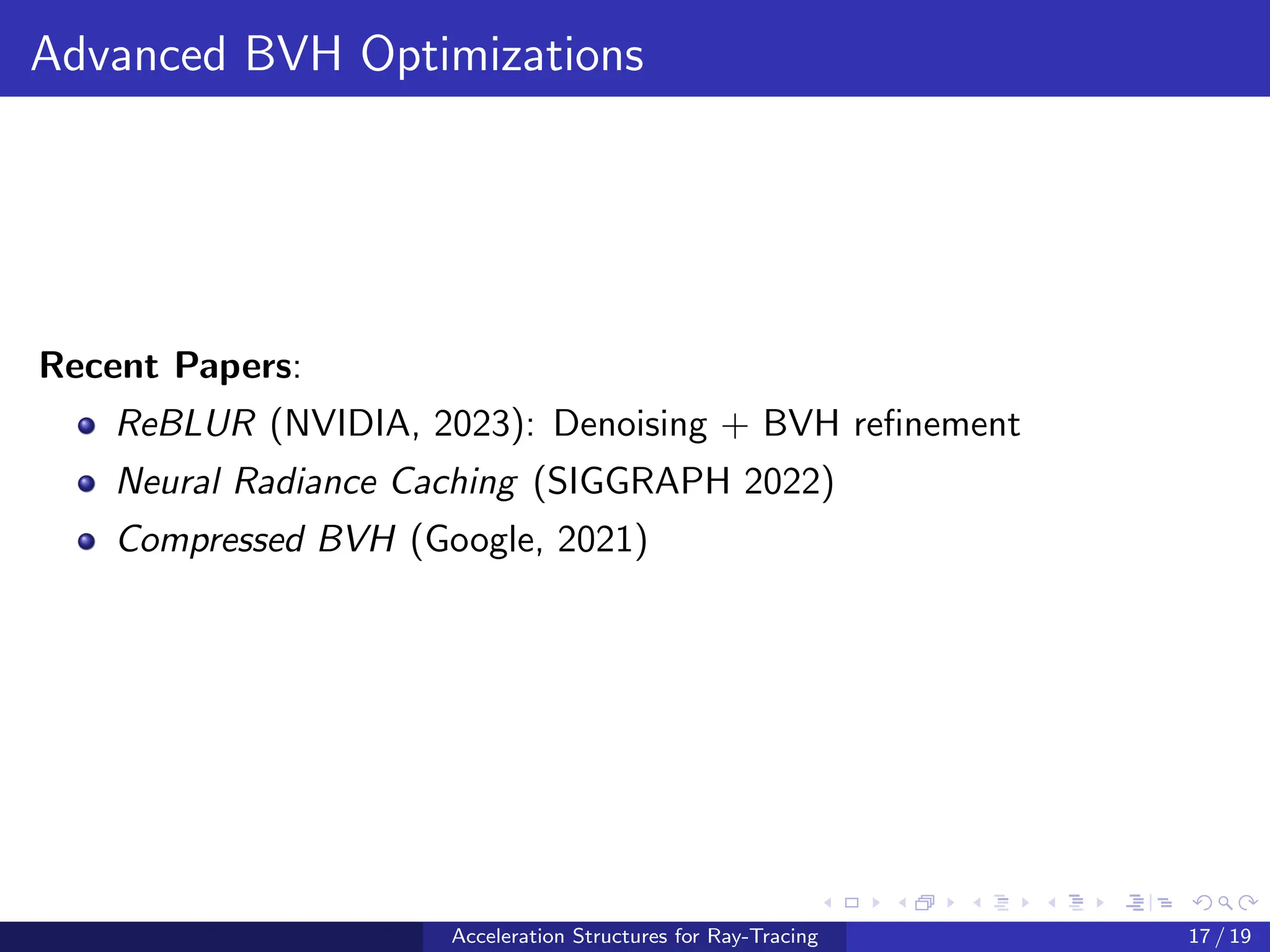
Looking to the future, the presentation will analyze emerging neural acceleration techniques that promise to complement or potentially replace traditional structures. Recent research from SIGGRAPH 2023 demonstrates how machine learning can predict optimal traversal paths or even bypass explicit geometry representation entirely through neural signed distance functions. However, these approaches currently face limitations in training time and generalization capability. The presentation will conclude with an examination of next-generation hardware solutions, from photonic computing to processing-in-memory architectures, that may overcome current bottlenecks and unlock new possibilities in real-time ray-tracing.


![[2018 GDC] Real-Time Ray-Tracing Techniques for Integration into Existing Ren...](https://cdn.slidesharecdn.com/ss_thumbnails/gdc2018takahiroharada-180330041526-thumbnail.jpg?width=640&height=640&fit=bounds)


