PHYSICS PROJECT
ON
RADIOACTIVITY
INDEX
 INTRODUCTION
 THREE TYPES OF RADIOACTIVE DECAY
alpha decay
beta decay
gamma decay
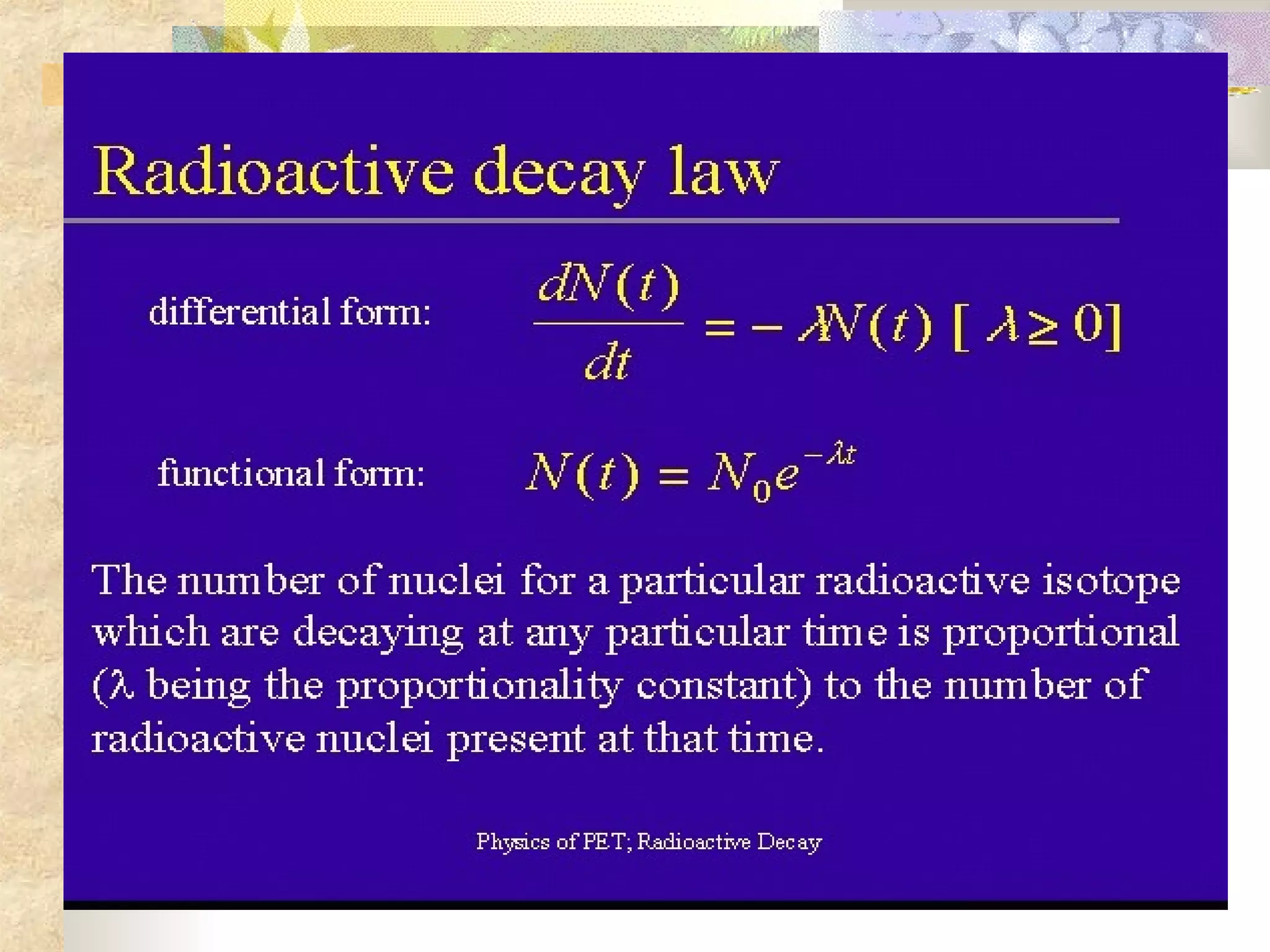
 LAW OF RADIOACTIVE DECAY
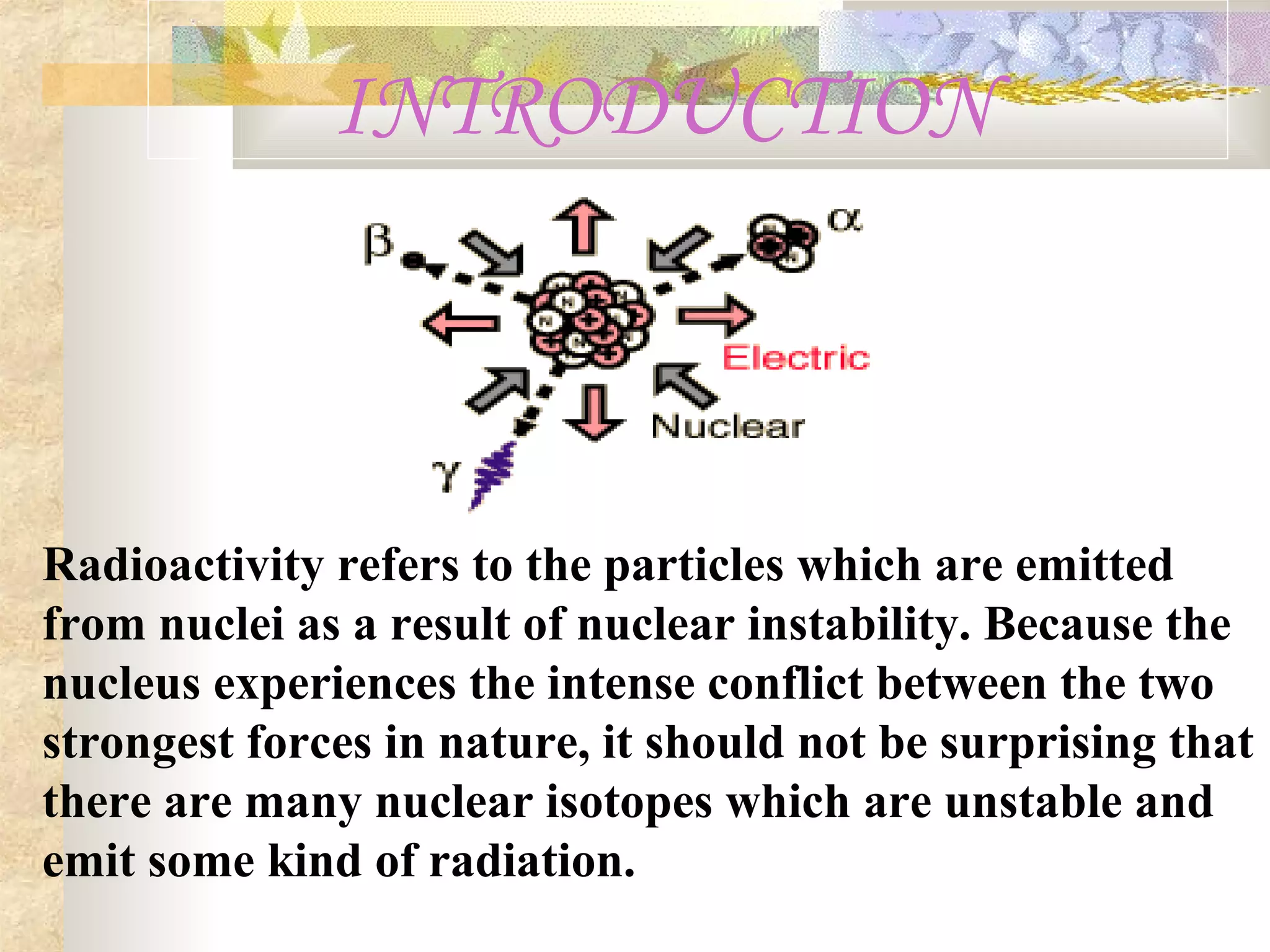
Radioactivity refers to the particles which are emitted
from nuclei as a result of nuclear instability. Because the
nucleus experiences the intense conflict between the two
strongest forces in nature, it should not be surprising that
there are many nuclear isotopes which are unstable and
emit some kind of radiation.
INTRODUCTION
 There are three main types of radiation:
 Alpha radiation
 Beta radiation
 Gamma radiation
Three Types of
Radioactive Decay
ALPHA DECAY
The reason alpha decay occurs is because the nucleus has too
many protons which cause excessive repulsion. In an attempt to
reduce the repulsion, a Helium nucleus is emitted. The way it
works is that the Helium nuclei are in constant collision with the
walls of the nucleus and because of its energy and mass, there
exists a nonzero probability of transmission. That is, an alpha
particle (Helium nucleus) will tunnel out of the nucleus.
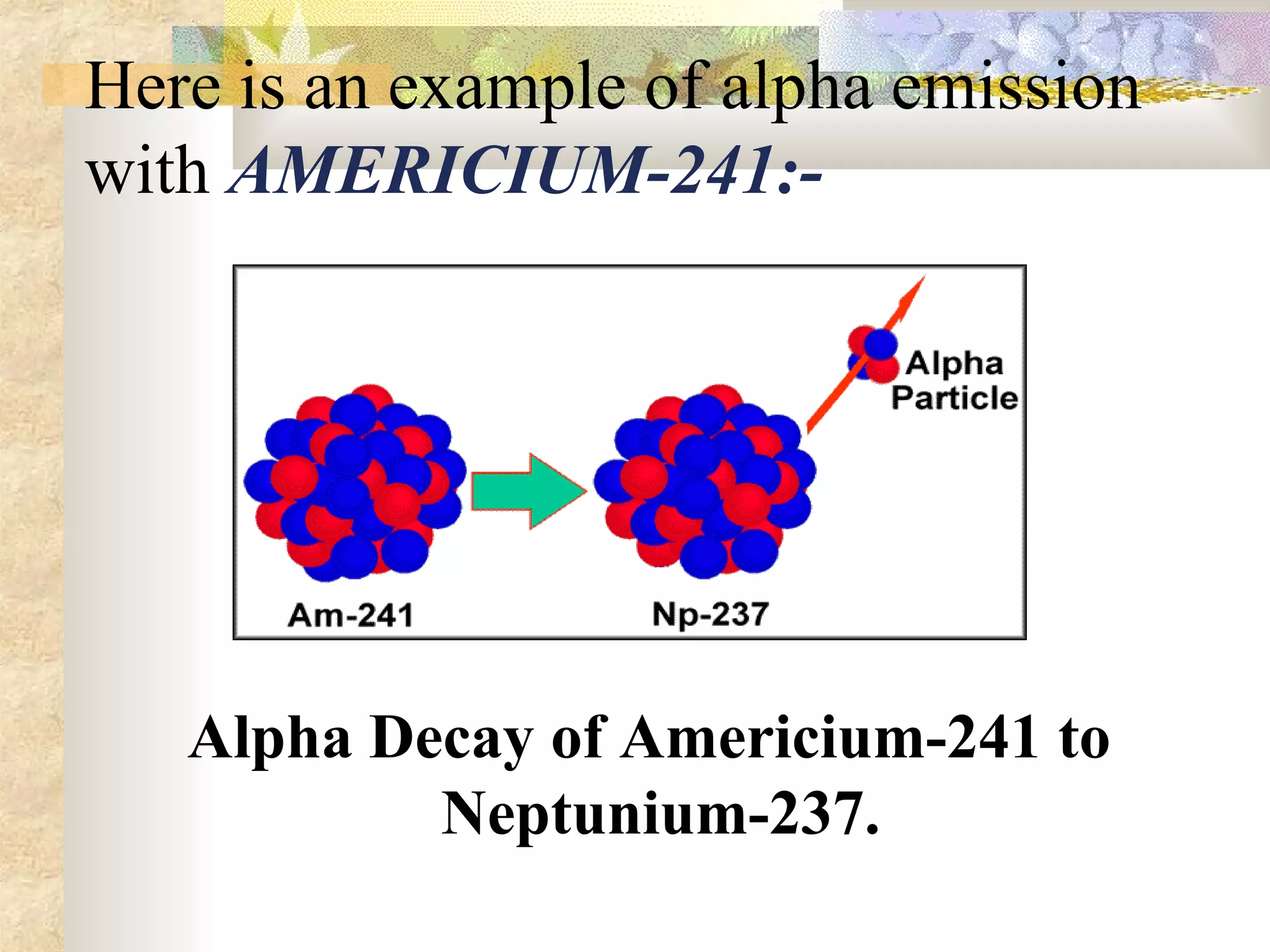
Here is an example of alpha emission
with AMERICIUM-241:-
Alpha Decay of Americium-241 to
Neptunium-237.
BETA DECAY
BETA DECAY is one process that unstable atoms can use
to become more stable. There are two types of beta decay,
beta-minus and beta-plus.
During beta-minus decay, a neutron in an atom's nucleus turns into a
proton, an electron and an antineutrino. The electron and antineutrino
fly away from the nucleus, which now has one more proton than it
started with. Since an atom gains a proton during beta-minus decay, it
changes from one element to another. For example, after undergoing
beta-minus decay, an atom of carbon(with 6 protons) becomes an atom
of nitrogen (with 7 protons).
During beta-plus decay, a proton in an atom's nucleus turns into a
neutron, a positron and a neutrino. The positron and neutrino fly away
from the nucleus, which now has one less proton than it started with.
Since an atom loses a proton during beta-plus decay, it changes from
one element to another. For example, after undergoing beta-plus decay,
an atom of carbon (with 6 protons) becomes an atom of boron (with 5
protons).
Although the numbers of protons and neutrons in an atom's nucleus
change during beta decay, the same.
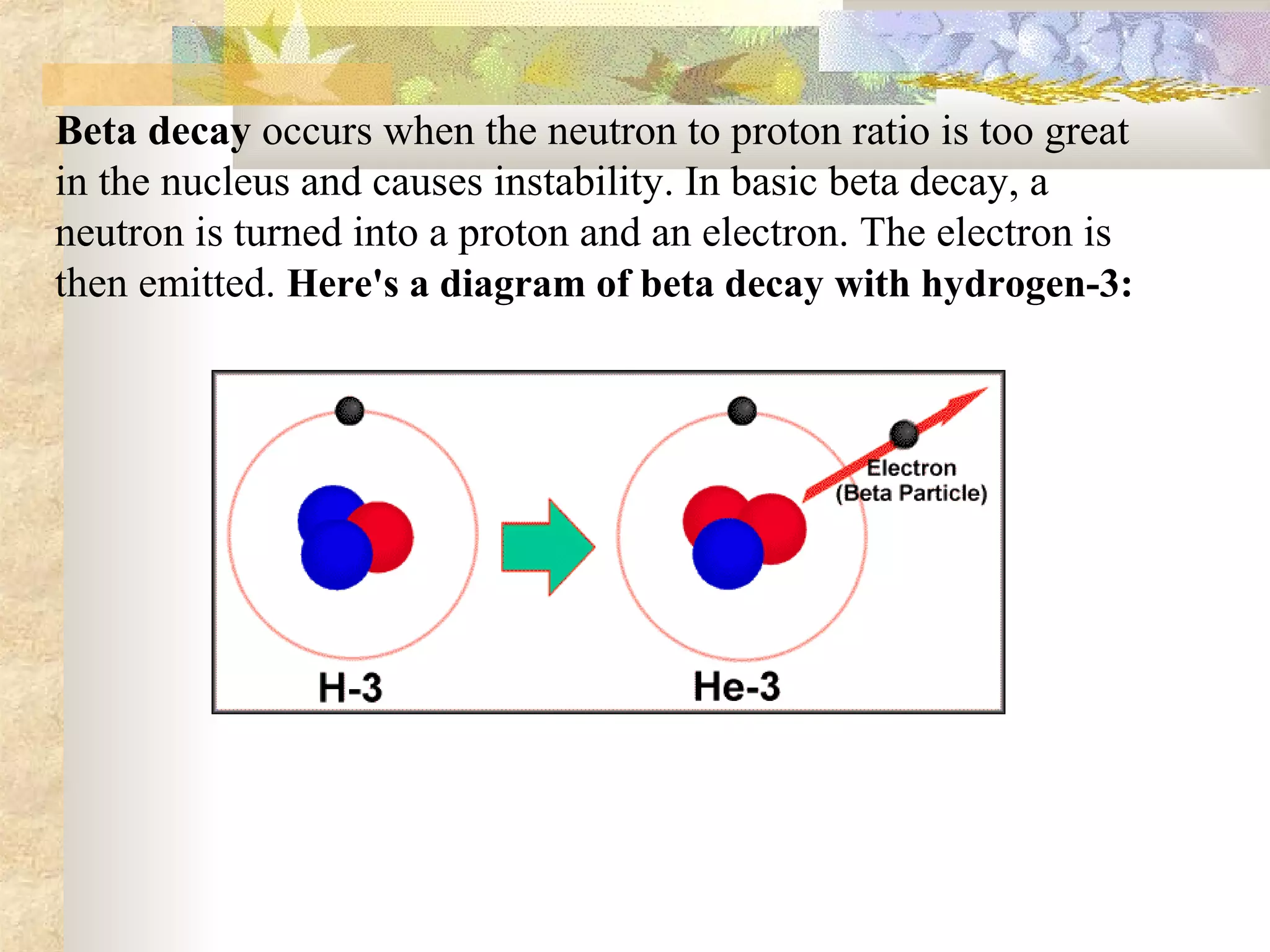
Beta decay occurs when the neutron to proton ratio is too great
in the nucleus and causes instability. In basic beta decay, a
neutron is turned into a proton and an electron. The electron is
then emitted. Here's a diagram of beta decay with hydrogen-3:
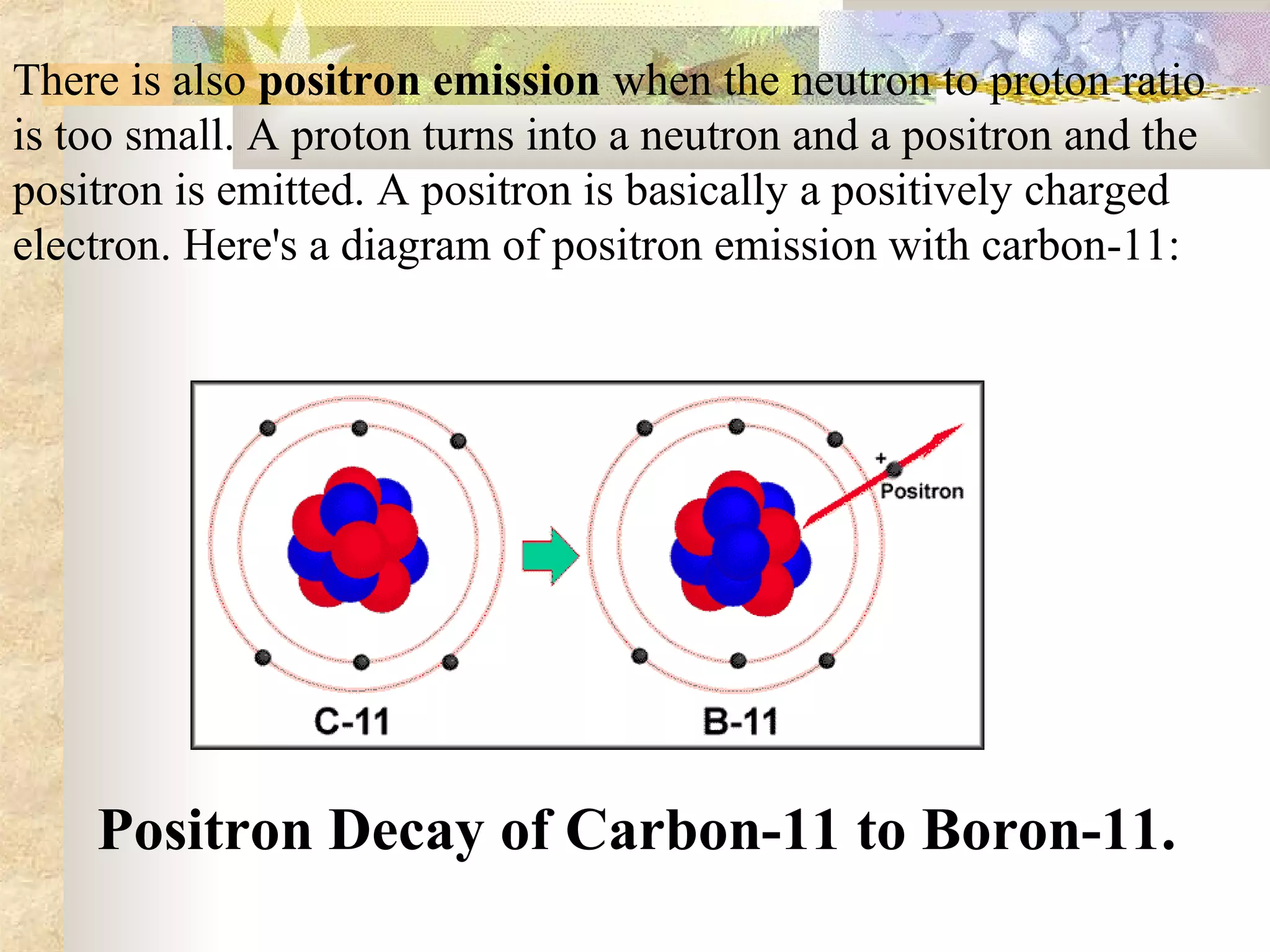
There is also positron emission when the neutron to proton ratio
is too small. A proton turns into a neutron and a positron and the
positron is emitted. A positron is basically a positively charged
electron. Here's a diagram of positron emission with carbon-11:
Positron Decay of Carbon-11 to Boron-11.
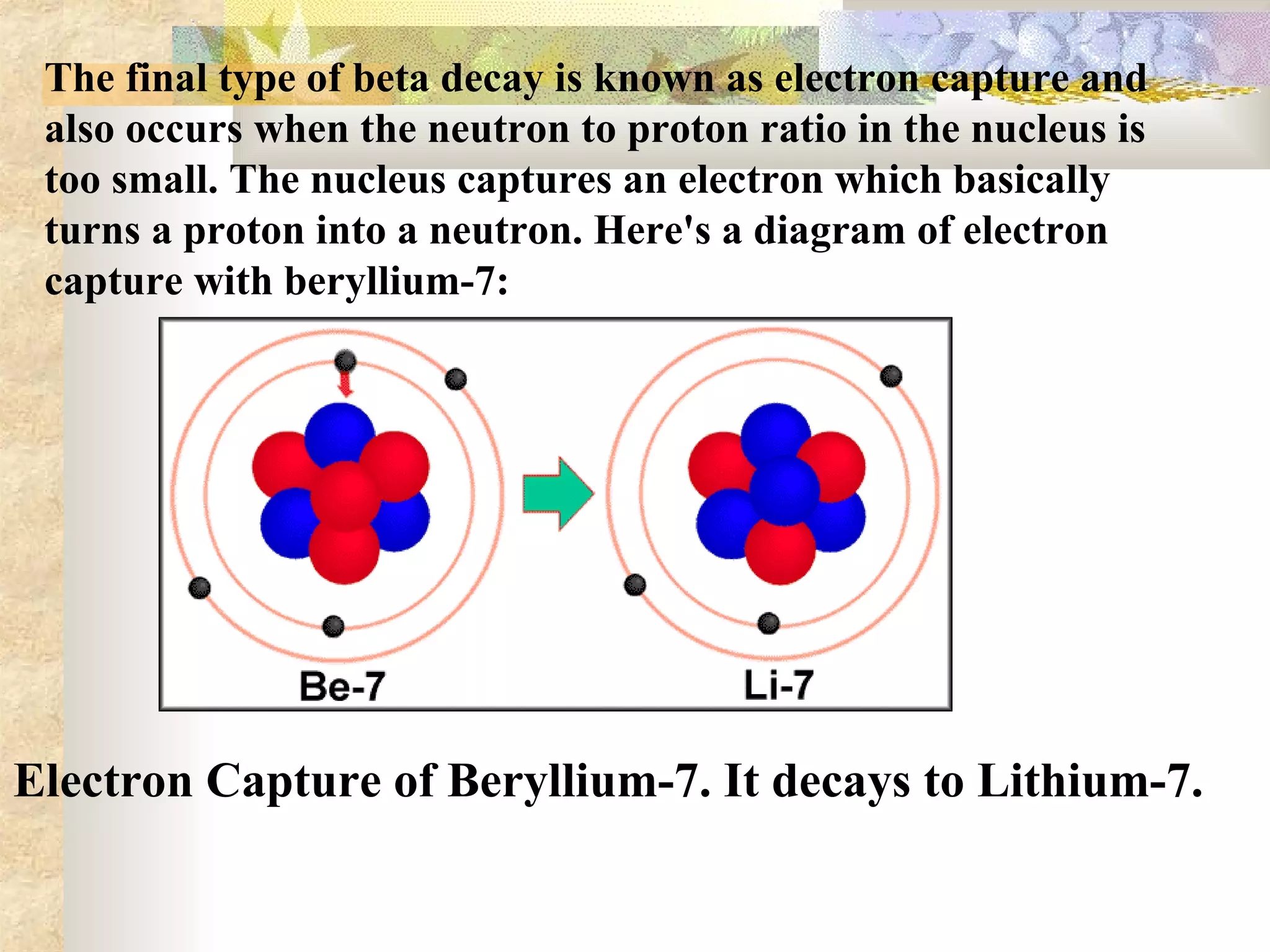
The final type of beta decay is known as electron capture and
also occurs when the neutron to proton ratio in the nucleus is
too small. The nucleus captures an electron which basically
turns a proton into a neutron. Here's a diagram of electron
capture with beryllium-7:
Electron Capture of Beryllium-7. It decays to Lithium-7.
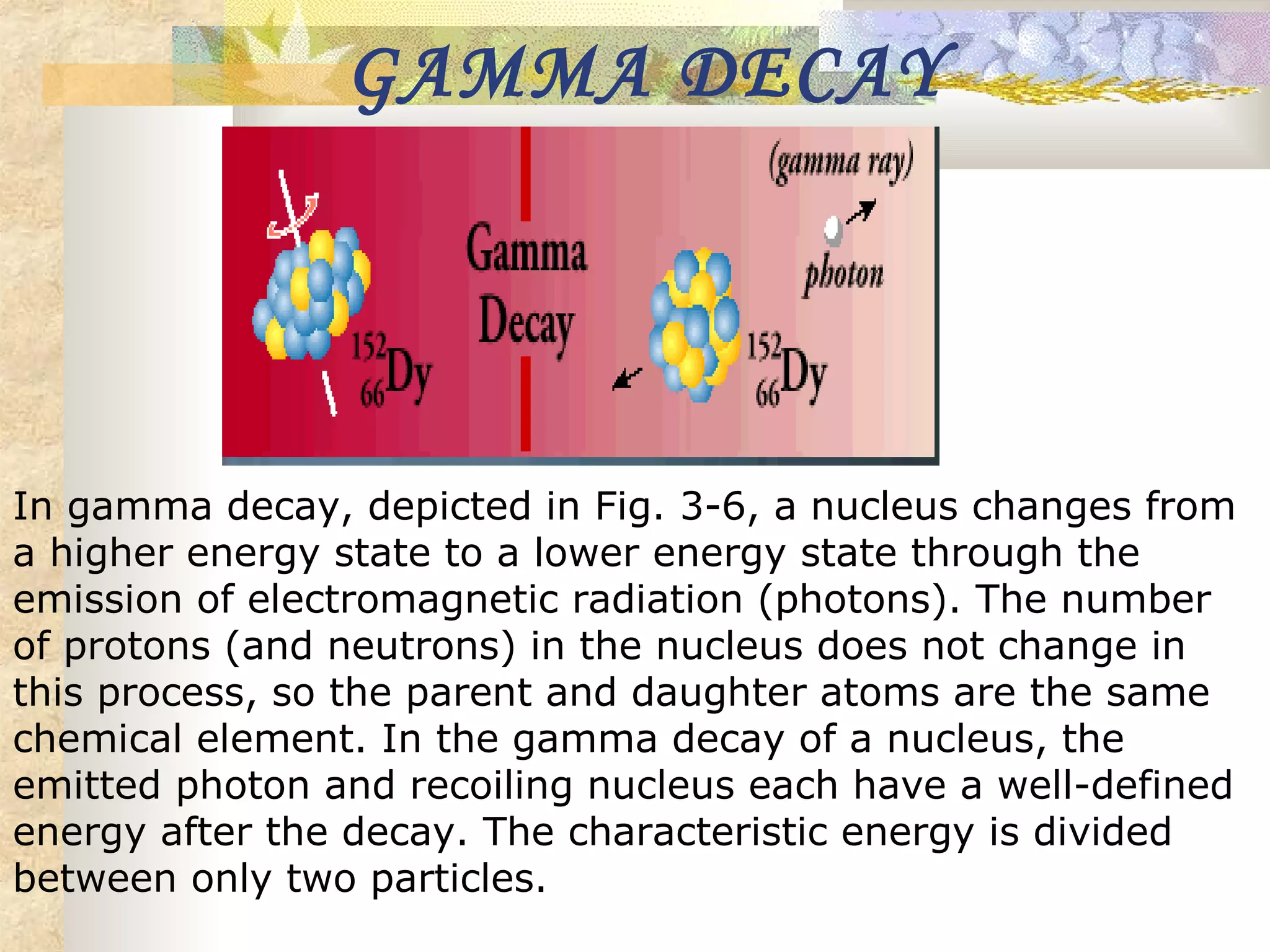
GAMMA DECAY
In gamma decay, depicted in Fig. 3-6, a nucleus changes from
a higher energy state to a lower energy state through the
emission of electromagnetic radiation (photons). The number
of protons (and neutrons) in the nucleus does not change in
this process, so the parent and daughter atoms are the same
chemical element. In the gamma decay of a nucleus, the
emitted photon and recoiling nucleus each have a well-defined
energy after the decay. The characteristic energy is divided
between only two particles.
Here's a diagram of gamma decay with helium-3:
Gamma Decay of Helium-3
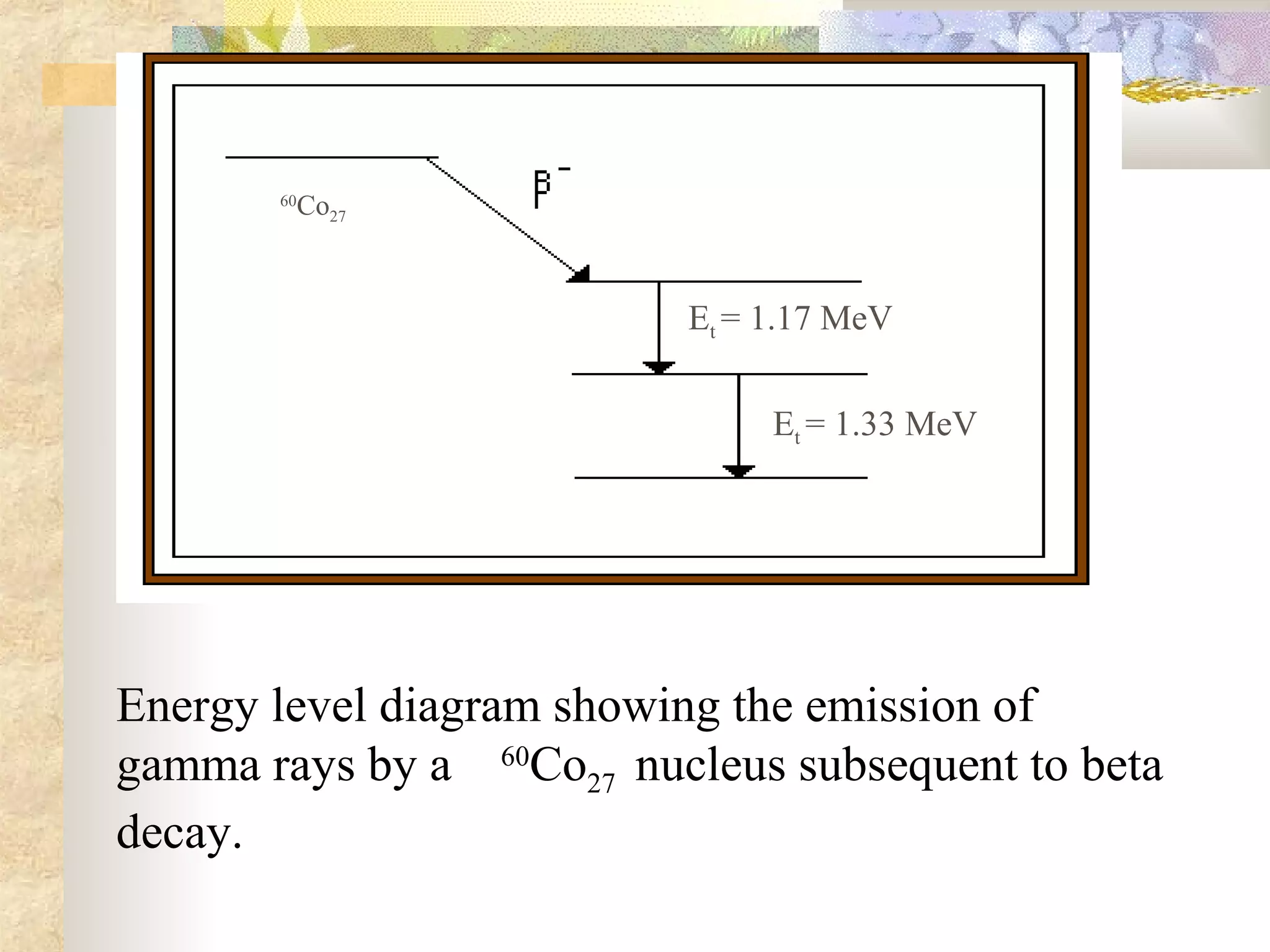
Energy level diagram showing the emission of
gamma rays by a 60
Co27 nucleus subsequent to beta
decay.
60
Co27
Et = 1.17 MeV
Et = 1.33 MeV
The HALF - LIFE describes the amount of time
needed for half of a sample of unstable atoms or
particles to undergo decay. Thallium-208, for
example, decays into lead-208 with a half-life of
3.05 minutes.
MEAN LIFE
In radioactivity, average lifetime or mean life of
all the nuclei may be thought of as the sum of
the lifetimes of all the individual unstable nuclei
in a sample, divided by the total number of
unstable nuclei present. The mean life of a
particular species of unstable nucleus is always
1.443 times longer than its half-life .
WE ARE THANKFUL TO :-
 PHYSICS N.C.E.R.T.
 GOOGLE.COM
 PRADEEP’S
POWERPOINT PRESENTATION
Made by:-
Garima Nahar
Swati Aggarwal
Nidhi Sharma

Radioactivity

  • 1.
  • 2.
    INDEX  INTRODUCTION  THREETYPES OF RADIOACTIVE DECAY alpha decay beta decay gamma decay  LAW OF RADIOACTIVE DECAY
  • 3.
    Radioactivity refers tothe particles which are emitted from nuclei as a result of nuclear instability. Because the nucleus experiences the intense conflict between the two strongest forces in nature, it should not be surprising that there are many nuclear isotopes which are unstable and emit some kind of radiation. INTRODUCTION
  • 4.
     There arethree main types of radiation:  Alpha radiation  Beta radiation  Gamma radiation Three Types of Radioactive Decay
  • 5.
    ALPHA DECAY The reasonalpha decay occurs is because the nucleus has too many protons which cause excessive repulsion. In an attempt to reduce the repulsion, a Helium nucleus is emitted. The way it works is that the Helium nuclei are in constant collision with the walls of the nucleus and because of its energy and mass, there exists a nonzero probability of transmission. That is, an alpha particle (Helium nucleus) will tunnel out of the nucleus.
  • 6.
    Here is anexample of alpha emission with AMERICIUM-241:- Alpha Decay of Americium-241 to Neptunium-237.
  • 7.
  • 8.
    BETA DECAY isone process that unstable atoms can use to become more stable. There are two types of beta decay, beta-minus and beta-plus. During beta-minus decay, a neutron in an atom's nucleus turns into a proton, an electron and an antineutrino. The electron and antineutrino fly away from the nucleus, which now has one more proton than it started with. Since an atom gains a proton during beta-minus decay, it changes from one element to another. For example, after undergoing beta-minus decay, an atom of carbon(with 6 protons) becomes an atom of nitrogen (with 7 protons). During beta-plus decay, a proton in an atom's nucleus turns into a neutron, a positron and a neutrino. The positron and neutrino fly away from the nucleus, which now has one less proton than it started with. Since an atom loses a proton during beta-plus decay, it changes from one element to another. For example, after undergoing beta-plus decay, an atom of carbon (with 6 protons) becomes an atom of boron (with 5 protons). Although the numbers of protons and neutrons in an atom's nucleus change during beta decay, the same.
  • 9.
    Beta decay occurswhen the neutron to proton ratio is too great in the nucleus and causes instability. In basic beta decay, a neutron is turned into a proton and an electron. The electron is then emitted. Here's a diagram of beta decay with hydrogen-3:
  • 10.
    There is alsopositron emission when the neutron to proton ratio is too small. A proton turns into a neutron and a positron and the positron is emitted. A positron is basically a positively charged electron. Here's a diagram of positron emission with carbon-11: Positron Decay of Carbon-11 to Boron-11.
  • 11.
    The final typeof beta decay is known as electron capture and also occurs when the neutron to proton ratio in the nucleus is too small. The nucleus captures an electron which basically turns a proton into a neutron. Here's a diagram of electron capture with beryllium-7: Electron Capture of Beryllium-7. It decays to Lithium-7.
  • 12.
    GAMMA DECAY In gammadecay, depicted in Fig. 3-6, a nucleus changes from a higher energy state to a lower energy state through the emission of electromagnetic radiation (photons). The number of protons (and neutrons) in the nucleus does not change in this process, so the parent and daughter atoms are the same chemical element. In the gamma decay of a nucleus, the emitted photon and recoiling nucleus each have a well-defined energy after the decay. The characteristic energy is divided between only two particles.
  • 13.
    Here's a diagramof gamma decay with helium-3: Gamma Decay of Helium-3
  • 14.
    Energy level diagramshowing the emission of gamma rays by a 60 Co27 nucleus subsequent to beta decay. 60 Co27 Et = 1.17 MeV Et = 1.33 MeV
  • 16.
    The HALF -LIFE describes the amount of time needed for half of a sample of unstable atoms or particles to undergo decay. Thallium-208, for example, decays into lead-208 with a half-life of 3.05 minutes.
  • 17.
    MEAN LIFE In radioactivity,average lifetime or mean life of all the nuclei may be thought of as the sum of the lifetimes of all the individual unstable nuclei in a sample, divided by the total number of unstable nuclei present. The mean life of a particular species of unstable nucleus is always 1.443 times longer than its half-life .
  • 18.
    WE ARE THANKFULTO :-  PHYSICS N.C.E.R.T.  GOOGLE.COM  PRADEEP’S
  • 19.
    POWERPOINT PRESENTATION Made by:- GarimaNahar Swati Aggarwal Nidhi Sharma