Radically	
  increase	
  your	
  process	
  and	
  project	
  
throughput	
  with	
  the	
  Theory	
  of	
  Constraints	
  	
  
In	
  a	
  dynamic	
  environment	
  where	
  the	
  product	
  mix	
  and	
  customer	
  requirements	
  are	
  
continuously	
  changing,	
  it	
  is	
  critical	
  to	
  quickly	
  identify	
  what	
  is	
  constraining	
  the	
  
enterprise	
  from	
  being	
  responsive	
  and	
  from	
  delivering	
  ever	
  increasing	
  value	
  at	
  a	
  
reasonable	
  cost	
  to	
  customers.	


The	
  Theory	
  of	
  Constraints	
  (TOC)	
  is	
  a	
  commonsense	
  way	
  to	
  understand	
  a	
  system	
  
(in	
  this	
  case,	
  a	
  business	
  process	
  or	
  a	
  project).	
  TOC	
  maintains	
  that	
  the	
  throughput	
  of	
  
every	
  system	
  is	
  limited	
  by	
  at	
  least	
  one	
  constraint.	
  A	
  constraint	
  is	
  anything	
  that	
  
prevents	
  the	
  system	
  from	
  achieving	
  more	
  of	
  its	
  goal.	
  Only	
  by	
  increasing	
  flow	
  
through	
  the	
  constraint	
  can	
  overall	
  throughput	
  be	
  increased.	
  These	
  constraints	
  are	
  
the	
  leverage	
  points	
  in	
  the	
  system.	


  The	
  primary	
  goal	
  of	
  the	
  Theory	
  of	
  Constraints	
  is	
  to	
  guide	
  management	
  
toward	
  where	
  and	
  how	
  they	
  should	
  focus	
  their	
  resources	
  to	
  leverage	
  the	
  best	
  
return	
  on	
  investment.	


The	
  primary	
  principle	
  of	
  TOC	
  is	
  to	
  focus	
  on	
  the	
  weakest	
  point	
  of	
  the	
  process,	
  
the	
  constraint	
  limiting	
  throughput,	
  and	
  leverage	
  all	
  improvement	
  efforts	
  on	
  
the	
  constraint.	


In	
  typical	
  business	
  processes	
  and	
  projects,	
  the	
  weakest	
  link	
  is	
  a	
  constrained	
  
resource	
  that	
  limits	
  the	
  throughput	
  of	
  an	
  organization.	


Finding	
  and	
  strengthening	
  the	
  
constrained	
  resource	
  gives	
  the	
  
greatest	
  opportunity	
  for	
  
measurable	
  improvement,	
  
both	
  within	
  individual	
  
processes	
  and	
  projects	
  and	
  
across	
  the	
  entire	
  collection	
  of	
  
an	
  organization’s	
  processes	
  
and	
  projects.	


Focusing on the constraint
	
  
TOC	
  identifies	
  the	
  few	
  things	
  that	
  make	
  a	
  difference	
  in	
  the	
  system.	
  It’s	
  much	
  easier	
  
to	
  manage	
  a	
  system	
  when	
  you	
  only	
  need	
  to	
  pay	
  close	
  attention	
  to	
  those	
  few	
  things.	
  
Decisions	
  become	
  easier	
  because	
  the	
  health	
  of	
  the	
  constraint	
  indicates	
  how	
  well	
  the	
  
system	
  is	
  performing.	
  If	
  the	
  constraint	
  is	
  limping,	
  the	
  system	
  is	
  limping.	
  If	
  it’s	
  well,	
  
all	
  is	
  well.	


A	
  constraint	
  is	
  a	
  positive,	
  not	
  a	
  negative.	
  It	
  is	
  an	
  opportunity	
  for	
  
management	
  to	
  focus	
  on	
  what	
  matters,	
  instead	
  of	
  wasting	
  their	
  time	
  
focusing	
  on	
  everything.	
  
This	
  releases	
  management	
  from	
  the	
  natural	
  tendency	
  to	
  try	
  and	
  address	
  everything	
  
(in	
  effect,	
  focus	
  on	
  nothing)	
  resulting	
  in	
  a	
  failure	
  to	
  improve.	


Focusing steps
TOC’s	
  five	
  focusing	
  steps	
  to	
  analyze	
  and	
  improve	
  any	
  organization	
  holistically	
  
include:	


1. Identify	
  the	
  system	
  constraint	


2. Decide	
  how	
  to	
  exploit	
  (not	
  waste)	
  the	
  system	
  constraint	
  
3. Subordinate	
  everything	
  to	
  the	
  above	
  decision	
  
4. Elevate	
  the	
  system	
  constraint	
  
5. If	
  in	
  a	
  previous	
  step	
  a	
  constraint	
  was	
  broken,	
  don't	
  let	
  inertia	
  become	
  the	
  
system	
  constraint,	
  return	
  to	
  step	
  1.	
  
Identify the constraint
There	
  are	
  a	
  number	
  of	
  ways	
  to	
  identify	
  the	
  constraint	
  (other	
  than	
  by	
  manager	
  
intuition):	


• Where	
  is	
  there	
  a	
  work	
  backlog?	
  
• Where	
  do	
  most	
  problems	
  occur?	
  
• Which	
  resources	
  or	
  tasks	
  require	
  the	
  most	
  management	
  attention?	
  
• Which	
  resources	
  are	
  heavily	
  utilized?	
  
• Which	
  resource	
  is	
  strategic	
  and	
  whose	
  capacity	
  cannot	
  easily	
  be	
  augmented,	
  
is	
  expensive,	
  difficult	
  to	
  get,	
  or	
  cannot	
  be	
  easily	
  outsourced?	
  
• Which	
  resources	
  are	
  used	
  by	
  the	
  majority	
  of	
  the	
  projects?	


Maximize the constraint
To	
  maximize	
  the	
  constraint:	


1. Make	
  certain	
  it	
  is	
  doing	
  what	
  it	
  should	
  be	
  doing.	
  
2. Make	
  certain	
  it	
  stops	
  doing	
  what	
  it	
  should	
  not	
  be	
  doing.	
  
3. Make	
  certain	
  it	
  has	
  the	
  right	
  amount	
  of	
  work	
  to	
  be	
  effective.	
  
4. Make	
  certain	
  it	
  has	
  what	
  is	
  needed	
  to	
  do	
  the	
  job	
  (may	
  include	
  
skills/information/data/knowledge,	
  or	
  reliability	
  of	
  partners/vendors).	
  
5. Make	
  certain	
  it	
  is	
  protected	
  from	
  delays	
  in	
  other	
  parts	
  of	
  the	
  system.	
  
6. Make	
  certain	
  there	
  aren’t	
  rules	
  or	
  business	
  practices	
  that	
  inhibit	
  the	
  
maximization	
  of	
  the	
  constraint.	


Radically increase your process and project throughput with the theory of constraints

  • 1.
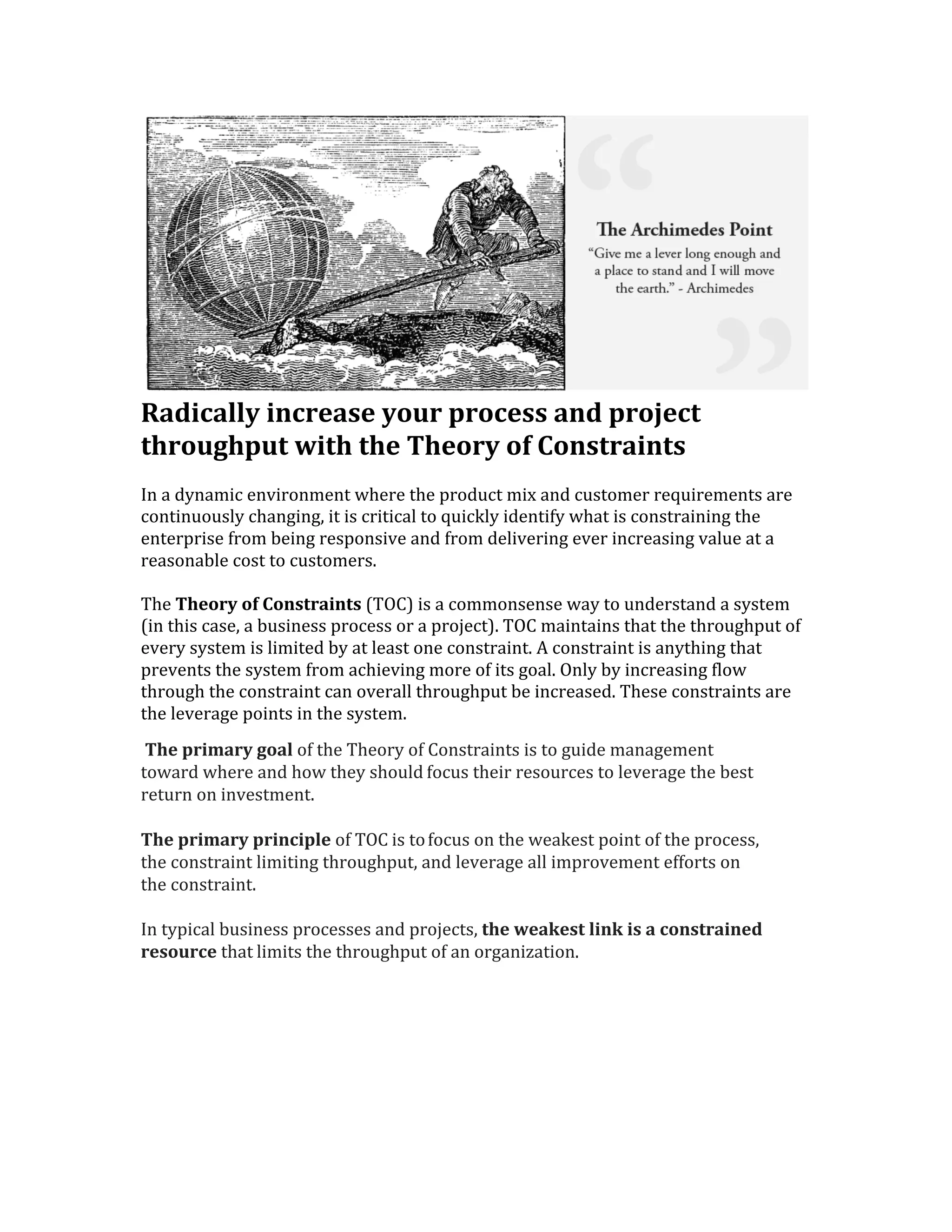
      Radically  increase  your  process  and  project   throughput  with  the  Theory  of  Constraints     In  a  dynamic  environment  where  the  product  mix  and  customer  requirements  are   continuously  changing,  it  is  critical  to  quickly  identify  what  is  constraining  the   enterprise  from  being  responsive  and  from  delivering  ever  increasing  value  at  a   reasonable  cost  to  customers.         The  Theory  of  Constraints  (TOC)  is  a  commonsense  way  to  understand  a  system   (in  this  case,  a  business  process  or  a  project).  TOC  maintains  that  the  throughput  of   every  system  is  limited  by  at  least  one  constraint.  A  constraint  is  anything  that   prevents  the  system  from  achieving  more  of  its  goal.  Only  by  increasing  flow   through  the  constraint  can  overall  throughput  be  increased.  These  constraints  are   the  leverage  points  in  the  system.      The  primary  goal  of  the  Theory  of  Constraints  is  to  guide  management   toward  where  and  how  they  should  focus  their  resources  to  leverage  the  best   return  on  investment.     The  primary  principle  of  TOC  is  to  focus  on  the  weakest  point  of  the  process,   the  constraint  limiting  throughput,  and  leverage  all  improvement  efforts  on   the  constraint.     In  typical  business  processes  and  projects,  the  weakest  link  is  a  constrained   resource  that  limits  the  throughput  of  an  organization.        
  • 2.
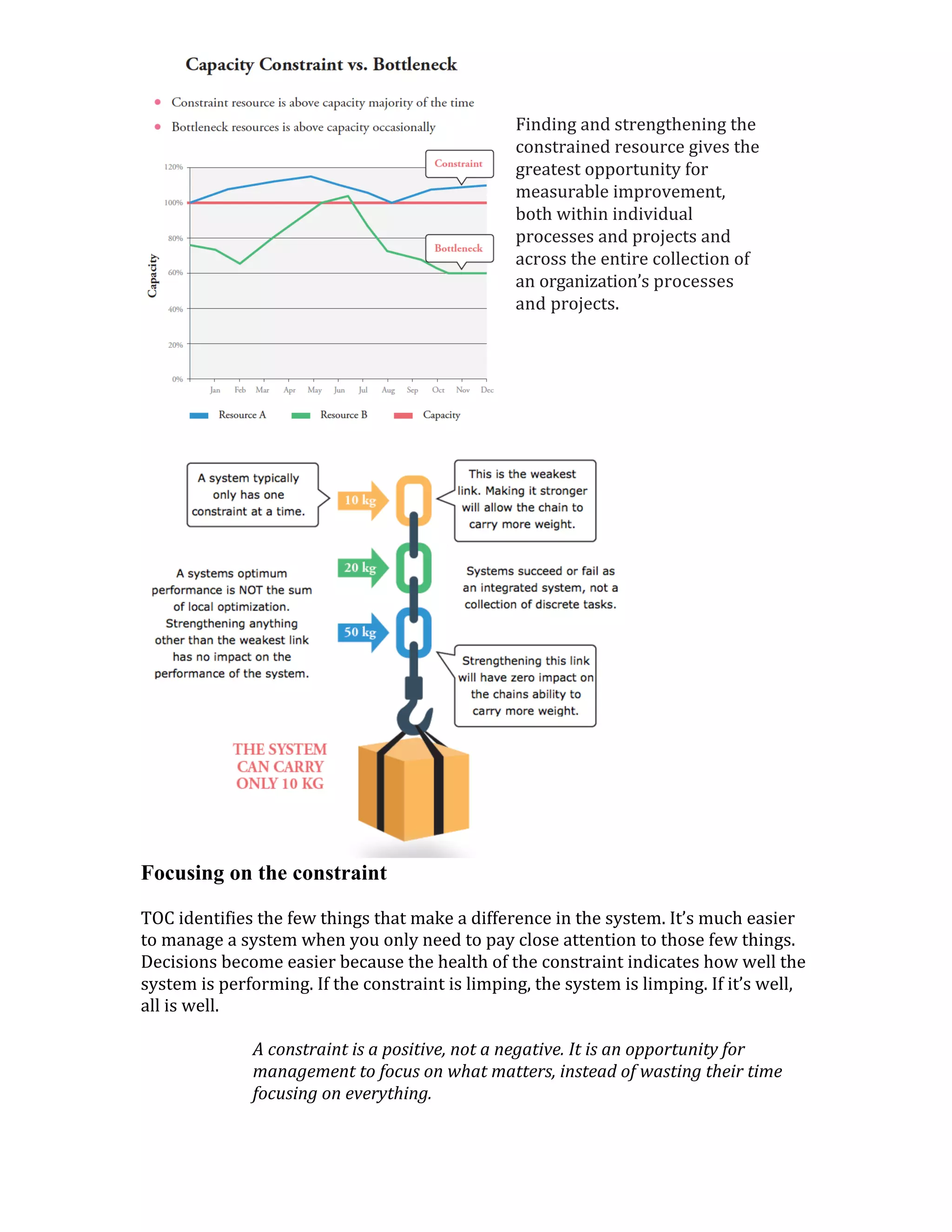
    Finding  and  strengthening  the   constrained  resource  gives  the   greatest  opportunity  for   measurable  improvement,   both  within  individual   processes  and  projects  and   across  the  entire  collection  of   an  organization’s  processes   and  projects.                 Focusing on the constraint   TOC  identifies  the  few  things  that  make  a  difference  in  the  system.  It’s  much  easier   to  manage  a  system  when  you  only  need  to  pay  close  attention  to  those  few  things.   Decisions  become  easier  because  the  health  of  the  constraint  indicates  how  well  the   system  is  performing.  If  the  constraint  is  limping,  the  system  is  limping.  If  it’s  well,   all  is  well.     A  constraint  is  a  positive,  not  a  negative.  It  is  an  opportunity  for   management  to  focus  on  what  matters,  instead  of  wasting  their  time   focusing  on  everything.  
  • 3.
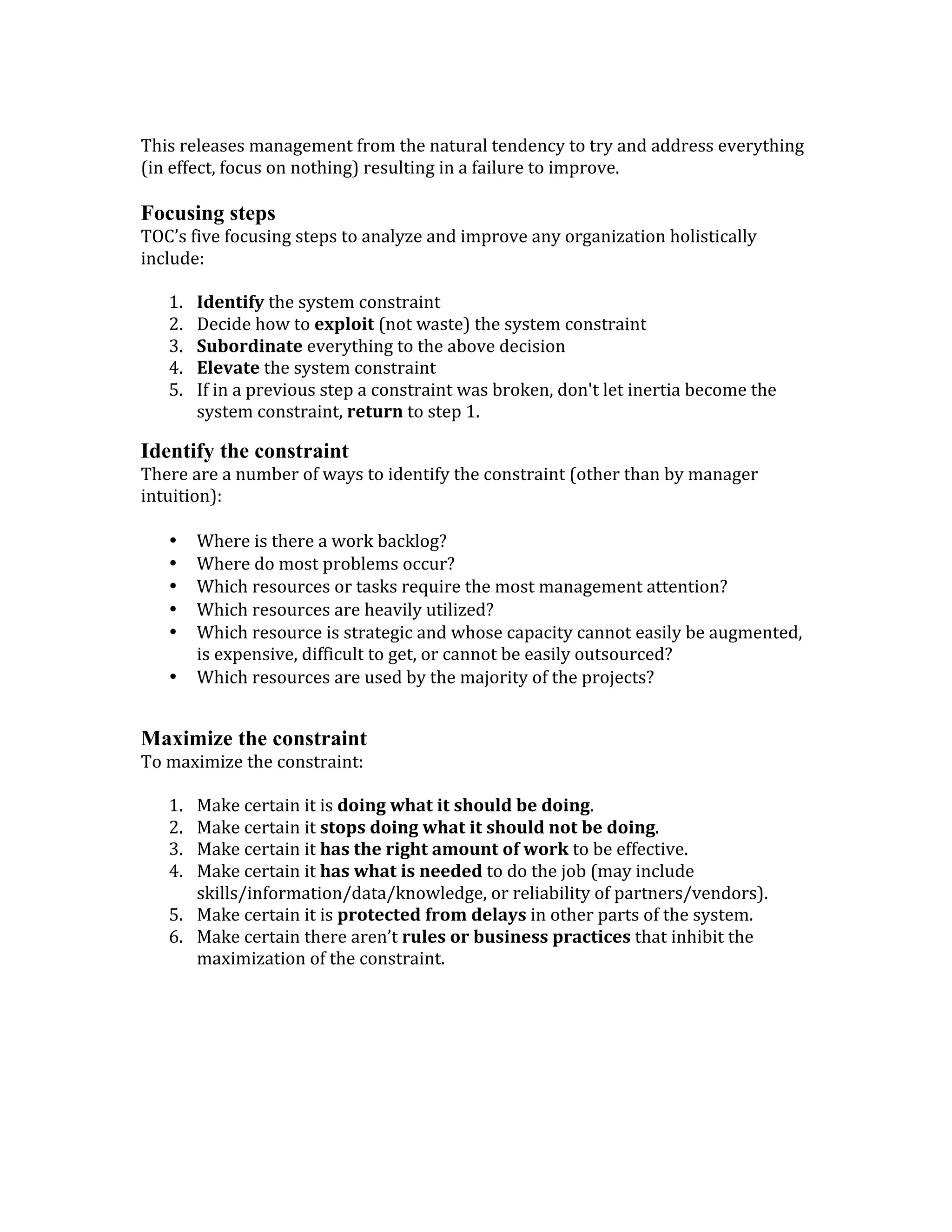
    This  releases  management  from  the  natural  tendency  to  try  and  address  everything   (in  effect,  focus  on  nothing)  resulting  in  a  failure  to  improve.       Focusing steps TOC’s  five  focusing  steps  to  analyze  and  improve  any  organization  holistically   include:     1. Identify  the  system  constraint       2. Decide  how  to  exploit  (not  waste)  the  system  constraint   3. Subordinate  everything  to  the  above  decision   4. Elevate  the  system  constraint   5. If  in  a  previous  step  a  constraint  was  broken,  don't  let  inertia  become  the   system  constraint,  return  to  step  1.   Identify the constraint There  are  a  number  of  ways  to  identify  the  constraint  (other  than  by  manager   intuition):     • Where  is  there  a  work  backlog?   • Where  do  most  problems  occur?   • Which  resources  or  tasks  require  the  most  management  attention?   • Which  resources  are  heavily  utilized?   • Which  resource  is  strategic  and  whose  capacity  cannot  easily  be  augmented,   is  expensive,  difficult  to  get,  or  cannot  be  easily  outsourced?   • Which  resources  are  used  by  the  majority  of  the  projects?     Maximize the constraint To  maximize  the  constraint:     1. Make  certain  it  is  doing  what  it  should  be  doing.   2. Make  certain  it  stops  doing  what  it  should  not  be  doing.   3. Make  certain  it  has  the  right  amount  of  work  to  be  effective.   4. Make  certain  it  has  what  is  needed  to  do  the  job  (may  include   skills/information/data/knowledge,  or  reliability  of  partners/vendors).   5. Make  certain  it  is  protected  from  delays  in  other  parts  of  the  system.   6. Make  certain  there  aren’t  rules  or  business  practices  that  inhibit  the   maximization  of  the  constraint.    
  • 4.