International Journal of Artificial Intelligence and Applications (IJAIA), Vol.15, No.5, September 2024
DOI:10.5121/ijaia.2024.15506 83
QUANTUM COMPUTING AND THE IMPLICATIONS
ON ONLINE SECURITY
Nishant Gadde1
, Avaneesh Mohapatra2
, Navnit Vijay3
, Siddhardh Manukonda1
,
Daiwik Shashikanth5
1
Jordan High School, Fulshear, Texas, USA
2West Forsyth High School, Cumming, Georgia, USA
3
Acellus Private Academy, Atlanta, Georgia, USA
4
South Forsyth High School, Cumming, Georgia, USA
ABSTRACT
Over the past year, quantum computing has seen many advancements due to contributions from UC
Berkeley in collaboration with IBM’s laboratories. Although these breakthroughs seem promising, they
introduce new security concerns regarding the potential for quantum attacks to become a major threat in
future data breaches. This research investigates the efficiency of many quantum cryptographic techniques.
These algorithms include Quantum Key Distribution (QKD), Lattice-Based Cryptography, and
Multivariate Cryptography. Utilizing IBM’s Qiskit Python extensions, we were able to test these methods
against quantum attack algorithms, including Shor's Algorithm, Grover's Algorithm, and the BB84
protocol. Our results indicate that, although current cryptographic methods provide some level of defense
against quantum attacks, there needs to be advancements to protect our digital infrastructure for the
future. This study puts emphasis on the need for more development in cryptographic algorithms to ensure
proper security in the era of quantum computing.
KEYWORDS
Quantum computing advancements, Quantum cryptography, Cryptographic security, Quantum attacks,
Quantum data breaches, & Quantum Key Distribution (QKD)
1. INTRODUCTION
The COVID-19 crisis has seen our dependence on technology jump after increasing rapidly from
the late 20th century. In the pandemic, users started using more technology and cyber-attacks
increased which affected millions of people around the world. Quantum computers are a
revolutionary breakthrough, and pose an unprecedented security threat. These computers are
based on the principles of quantum mechanics and provide staggering speed compared with
minimal energy consumption. The new Eagle processor from IBM highlights that potential, while
also pointing towards the cybersecurity upgrades needed to mitigate quantum risks [5].
Quantum Key Distribution (QKD) provides a secure communication link based on quantum
physics. Random key exchange between two parties that share a secret in the field of quantum
security discourages most attacks to be accounted for as successful. The operation of this method
employs the BB84 protocol that uses quantum uncertainty to guarantee information transfer
securely [4].
Another encryption method is lattice-based cryptography, which constructs cryptographic
primitives using lattices in their structures or security proofs. This involves solving difficult
International Journal of Artificial Intelligence and Applications (IJAIA), Vol.15, No.5, September 2024
84
mathematical challenges, such as the Shortest Vector Problem (SVP) and Learning with Errors
(LWE), to ensure safe data transfer [7].
In fact, multivariate cryptography offers a viable solution, based on asymmetric cryptoprimitives
extracted from systems of multivariate polynomials over finite fields. The data that it secures is
resistant to quantum attacks as the polynomials themselves are inherently complex. This,
however, assumes that today's kinds of multivariate cryptography are secure against future
quantum computers [1].
In this paper, we discuss the promise of these cryptographic technologies to safeguard our digital
futures from an exploding variety of quantum risks. We then propose to investigate these
methods by means of rigorous testing with IBM’s Qiskit simulator, in order to pinpoint what each
of the approaches do well and where they lag behind.
2. LITERATURE REVIEW
Concern about the possibility that quantum will be used for all subsequent attacks is high, not
only in light of our increasing use of the internet and the power weak links to infrastructure [2].
With a growing quantum computing power, it brings about the need for us to explore what
different types of security threats can one help mitigate by implementing the various quantum
cryptography techniques. This unprecedented state of affairs serves as the motivation for our
work, which focuses on three leading cryptographic approaches: Quantum Key Distribution
(QKD), Lattice-Based Cryptography, and Multivariate Cryptography. These methods were
chosen for their sophisticated behavior and original countermeasures against cyber attacks [3].
QKD exploits quantum mechanical properties to make communication absolutely secure. This
allows both parties to detect any eavesdropping attempt and therefore delivers a secure solution
against quantum attacks. The foundational BB84 protocol of QKD is underpinned by the
impossibility to determine which specific quantum resources were employed to transmit
information securely between parties [4].
The second type, Lattice-Based Cryptography, utilizes mathematical lattices to build
cryptographic primitives. This relies on solving computationally difficult mathematical problems,
such as the Shortest Vector Problem (SVP) and Learning with Errors (LWE), which are
infeasible for quantum computers to solve efficiently. Such complexity guarantees the secure
transmission of data and renders lattice-based cryptosystem as one possible candidate for future
cryptographic standards [7].
Multivariate Cryptography uses asymmetric cryptographic primitives which are based on
multivariate polynomials over a finite field. Since the solution of these polynomials in general is
such a complex task, data secured this way cannot be simply solved by quantum attacks.
Quantum-computing Based Multivariate Cryptanalysis: The authors are asked to acknowledge
this since multivariate cryptography turns out to be notably vulnerable in view of due
advancements on quantum computing (for instance, [1]), outlining that further improve research
is required.
There are so many cryptographic algorithms and their complexities play a huge role in terms of
what people can attempt to do with them, that it would be impossible for this study to encompass
all possible scenarios. Hence the scope of this study is limited to Quantum key distribution,
Lattice-Based Cryptography, and Multivariate Cryptography as they have unique properties and
provide full protection from quantum attacks. While we provide no security proof against full-
International Journal of Artificial Intelligence and Applications (IJAIA), Vol.15, No.5, September 2024
85
fledged quantum attacks, the methods introduced in this paper should inspire cryptographic
researchers to design more robust cryptographic algorithms for a potential post-industrial era.
That is why knowledge of the existing strengths and weaknesses of these cryptographic
techniques now will be key in defense against future potential quantum threats. This work
demonstrates the performance comparisons of these techniques, in aid to contribute pushing
further into better cybersecurity solutions for the post-quantum era. In conclusion, the results of
this research will reveal exactly where improvement is required and hence assist in generating a
more positive online future.
3. METHODOLOGY
This study systematically tests the efficiency of three quantum cryptographic algorithms—
Quantum Key Distribution, Lattice-Based Cryptography, and Multivariate Cryptography—by
running them against three leading quantum attack methods: BB84 Protocol, Shor's Algorithm,
and Grover's Algorithm. The simulations were done with the help of IBM's Qiskit platform,
enabling it to be one of the most accurate and controlled tests to date on a wide variety of data
sets. All testing was done in a repeatable and uniform environment ranging from simple strings to
very complex data structures.
We measured several critical variables for the robust measurement of the performance of these
cryptographic methods: data ID, the method of encryption, type of quantum attack, data size,
number of attacks that were successful, time taken by the attack, and memory used. The choice of
such variables is a just one in order to present the big picture regarding how successfully each
cryptographic method can prevent quantum attacks under various conditions.
The experimental trials began with the implementation of each cryptographic algorithm: QKD,
Lattice-Based Cryptography, and Multivariate Cryptography. Each of the algorithms was tested
thoroughly for its capability in securing data from cyber as well as quantum attacks. Datasets in
these trials ranged from very simple strings up to very huge lists with thousands of entries. This
heterogeneity of data had strong bases for the analysis of strengths and weaknesses of each
algorithm.
Apart from cryptographic testing, Grover's Algorithm was applied to test the level of security of
those techniques. Grover's Algorithm is a quantum search algorithm to run searches over
databases efficiently to amplify the probability of finding a marked entry. The present algorithm
has been used in various other research, for example, power grid performance evaluation work by
[8] and squiggle quantum gate analysis by [9]. Within the realm of this dissertation, the role
played by Grover's Algorithm was of assessing the susceptibility of the cryptographic technique
by simulating potential quantum attacks capable of disclosing secret keys within an allowable
time window.
The key thing to be noticed in Grover's Algorithm is the number of iterations it takes to find, with
success or failure, breaking of the encryption. Given the complexity of running multiple quantum
attacks, the study was well-designed to make sure clarity and comprehensibility were well
expressed. This hybrid method gave an insight into the success rates of attacking cryptographic
methods and performance of different cryptographic techniques.
All these experiments were implemented in Qiskit using ten different data structures of various
sizes and complexities for each of the three cryptographic algorithms. These attack methods,
Shor's Algorithm, Grover's Algorithm, and the BB84 Protocol, are applied to each set of
International Journal of Artificial Intelligence and Applications (IJAIA), Vol.15, No.5, September 2024
86
encrypted data. The data sets being tested include simple strings like "Hello Quantum" and more
structured lists including binary conversions, and factorization problems.
In each of the simulations, a record was taken of data ID, the used encryption method, quantum
attack type, data size, whether the attack was successful or not, time taken for the attack in
seconds, and the amount of environment memory used in megabytes. From the 30 simulations,
the results were then extracted and presented in a systematic manner whereby they were relayed
in graphical form. All these graphs show the relationship between these variables, one by one and
finally, how effective the cryptographic algorithms would be.
For example, one of such key findings is illustrated in Figure 1, where elapsed time when data
size increases for the different cryptographic methods is placed against quantum attacks. This
current work, through a systematic testing and analysis of these methods to find their capabilities
and limitations, sets a basis upon which future work can be accomplished.
4. RESULTS & DISCUSSION
The results of the study provide a basis for understanding the performance of several quantum
cryptographic methods and their effectiveness against the considered quantum attacks. The
dataset analyzed contains information, such as data ID, encryption method, type of attack, data
size, time taken for attacking, success in attack, and memory usage. From this analysis, some
conclusions emerge.
Figure 1. Data Size vs Time Taken Of The Simulation
One major finding during the experiment is that QKD remains very effective in resisting
successful breaches. More so, against Shor's Algorithm, a classical remarkable challenge and
threat to classical cryptographic systems, QKD is consistently resistant. This is captured in Figure
1, where QKD shows consistent low and flat response times as data scales in complexity. This
stability is a critical factor in the assurances that can be provided for QKD technologies when
securing data in extreme domains, especially those with severe constraints on efficiency [4]. The
robustness of QKD in these simulations underlines its promising potential to be considered a
leading cryptographic method in the era of quantum computing, where information security is of
paramount importance.
International Journal of Artificial Intelligence and Applications (IJAIA), Vol.15, No.5, September 2024
87
Figure 2. The Number of Success/Failures Attacks Had On Different Algorithms
Lattice-Based Cryptography, while showing promise, exhibited a more variable performance.
The method could avert breaches in some cases but proved much less effective with larger and
more complex data sets. For instance, as shown in Figure 2, lattice-encrypted data is very weak
against Grover's Algorithm, which effectively defeated the lattice-based defense
disproportionately more often. This variance in performance shows that lattice-based
cryptography is a better point of departure but requires improvements to ensure consistent
protection against both vectors of attacks and complexities in the data [7]. The highlighted
challenges of lattice-based cryptography in this research call for more research and development
to increase the resilience against advanced quantum attacks.
Multivariate cryptography proved to be less successful than the other two. Data, especially as
presented in Fig. 2, shows a higher rate of success with multivariate encryption as compared to
Shor's Algorithm and Grover's Algorithm. This enhanced vulnerability is indeed worrisome, for it
forebodes that multivariate cryptographic techniques, in their current state, might not be strong
enough to withstand the expected types of quantum attack. Further detail on this aspect is shown
by Figure 3, depicting how response times differ with data size and complexity for multivariate
methods. These inconsistencies pointed to the potential inefficiencies of the current multivariate
cryptographic design and hence the necessity for big improvements so that security and
efficiency can be enhanced.
International Journal of Artificial Intelligence and Applications (IJAIA), Vol.15, No.5, September 2024
88
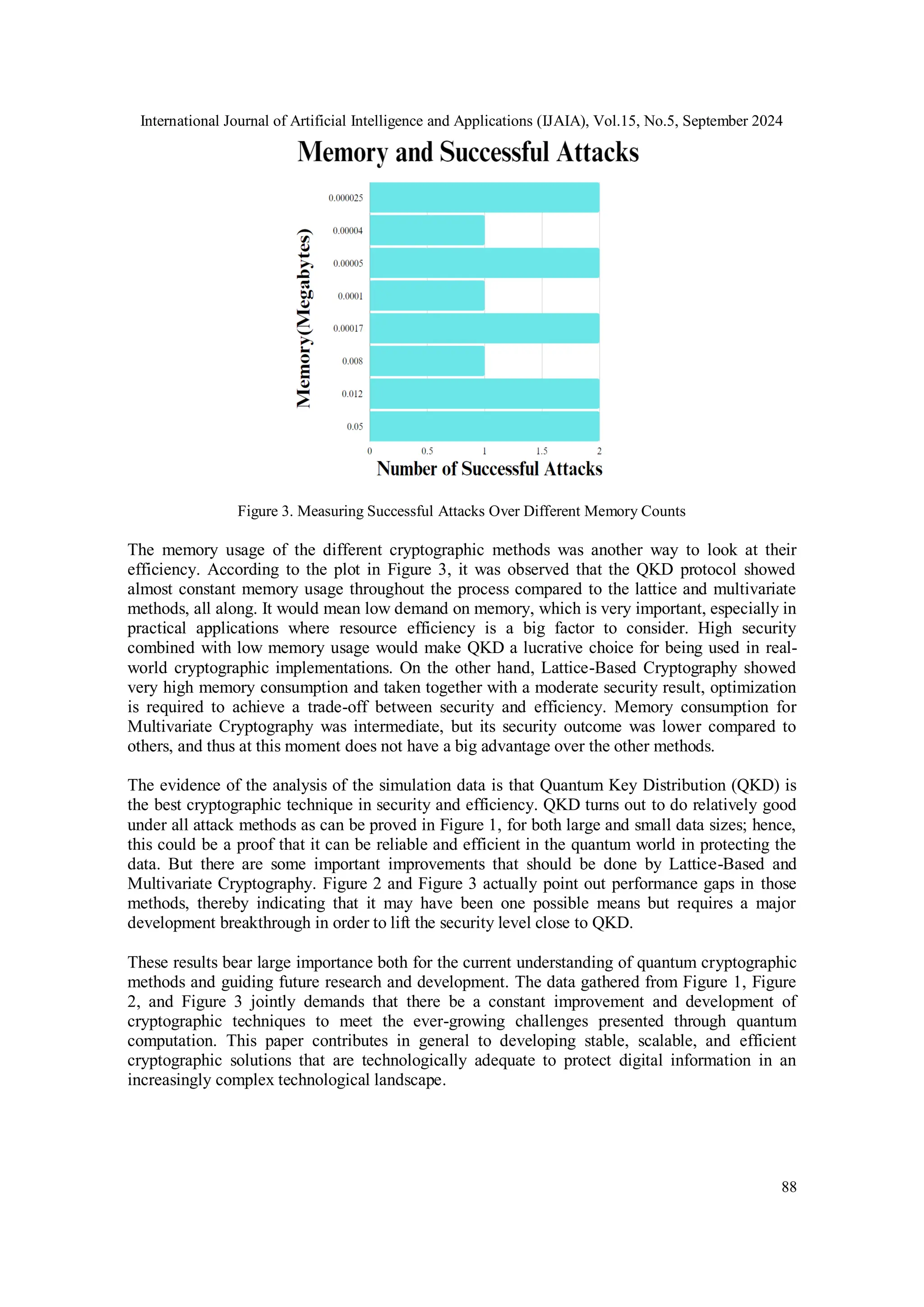
Figure 3. Measuring Successful Attacks Over Different Memory Counts
The memory usage of the different cryptographic methods was another way to look at their
efficiency. According to the plot in Figure 3, it was observed that the QKD protocol showed
almost constant memory usage throughout the process compared to the lattice and multivariate
methods, all along. It would mean low demand on memory, which is very important, especially in
practical applications where resource efficiency is a big factor to consider. High security
combined with low memory usage would make QKD a lucrative choice for being used in real-
world cryptographic implementations. On the other hand, Lattice-Based Cryptography showed
very high memory consumption and taken together with a moderate security result, optimization
is required to achieve a trade-off between security and efficiency. Memory consumption for
Multivariate Cryptography was intermediate, but its security outcome was lower compared to
others, and thus at this moment does not have a big advantage over the other methods.
The evidence of the analysis of the simulation data is that Quantum Key Distribution (QKD) is
the best cryptographic technique in security and efficiency. QKD turns out to do relatively good
under all attack methods as can be proved in Figure 1, for both large and small data sizes; hence,
this could be a proof that it can be reliable and efficient in the quantum world in protecting the
data. But there are some important improvements that should be done by Lattice-Based and
Multivariate Cryptography. Figure 2 and Figure 3 actually point out performance gaps in those
methods, thereby indicating that it may have been one possible means but requires a major
development breakthrough in order to lift the security level close to QKD.
These results bear large importance both for the current understanding of quantum cryptographic
methods and guiding future research and development. The data gathered from Figure 1, Figure
2, and Figure 3 jointly demands that there be a constant improvement and development of
cryptographic techniques to meet the ever-growing challenges presented through quantum
computation. This paper contributes in general to developing stable, scalable, and efficient
cryptographic solutions that are technologically adequate to protect digital information in an
increasingly complex technological landscape.
International Journal of Artificial Intelligence and Applications (IJAIA), Vol.15, No.5, September 2024
89
4.1. Evaluation
The superiority of Quantum Key Distribution (QKD) is unmistakable when considering its
consistent ability to thwart various quantum attacks across all tested scenarios. As shown in
Figure 1, QKD maintained a stable performance with minimal fluctuations in response time,
regardless of the data size or complexity. This robustness is primarily due to the inherent
principles of quantum mechanics that QKD exploits, particularly through the BB84 protocol. The
BB84 protocol ensures that any attempt at eavesdropping is immediately detectable, allowing
QKD to effectively neutralize potential breaches before they can compromise sensitive data. This
inherent reliability positions QKD as a leading candidate for securing digital information in the
quantum era, where the stakes for data protection are higher than ever [4].
The performance of Lattice-Based Cryptography, while promising, highlights the need for further
refinement. Figure 2 illustrates the variability in its effectiveness, particularly against different
attack methods such as Grover's Algorithm. While Lattice-Based Cryptography was able to
prevent breaches in some instances, its inconsistency, especially with larger data sets, suggests
that it may not yet be as reliable as QKD. This inconsistency can be attributed to the
mathematical complexity underpinning lattice-based methods, such as the Shortest Vector
Problem (SVP) and Learning with Errors (LWE). While theoretically sound, these methods
require practical enhancements to ensure consistent security across diverse scenarios [7].
Moreover, Figure 3 reveals that Lattice-Based Cryptography's higher memory usage further
complicates its practicality, indicating a need for optimization to balance its security benefits with
operational efficiency.
Multivariate Cryptography's performance, as depicted in Figure 2, was the least effective among
the methods tested. The higher success rate of attacks against multivariate-encrypted data,
particularly when subjected to Shor's Algorithm and Grover's Algorithm, exposes significant
vulnerabilities in this method. The data suggest that multivariate cryptographic techniques are not
yet robust enough to withstand the sophisticated quantum attacks that are likely to emerge in the
near future. This finding is critical, as it underscores the urgent need for ongoing research and
development to enhance the security features of multivariate cryptography. The inefficiencies
highlighted in Figure 3, including its intermediate memory usage paired with lower security
outcomes, indicate that substantial advancements are required before multivariate cryptography
can be considered a viable option for quantum-secure encryption [1].
The analysis of memory usage further solidifies the findings of this study. Figure 3 demonstrates
that QKD's lower memory requirements, combined with its high level of security, make it not
only a theoretically superior method but also a practical and efficient choice for real-world
applications. On the other hand, Lattice-Based Cryptography's higher memory consumption,
when considered alongside its moderate security performance, suggests that this method needs
significant optimization to achieve a more favorable balance between security and efficiency.
Multivariate Cryptography, with its intermediate memory usage, does not currently offer a
compelling advantage, especially given its lower security performance. These findings indicate
that while QKD is ready for practical deployment, Lattice-Based and Multivariate Cryptography
require considerable refinement to meet the demands of quantum-secure encryption [6].
5. CONCLUSION
The findings of this research showed that Quantum Key Distribution (QKD) can be a critical
strong and reliable countermeasure against quantum attacks. From the broad-spectrum range of
scenarios, QKD was able to prove quite strong in offering protection across different data sizes
International Journal of Artificial Intelligence and Applications (IJAIA), Vol.15, No.5, September 2024
90
and complexities in the entire research. This underlines the potential of the QKD as a robust
underpinning in the future when quantum computing matures and presents new challenges. The
consistent performance of the QKD, as evidenced by this study, puts it as a very basic tool that
can be used to secure sensitive information in the quantum era.
In contrast, lattice-based cryptography has shown some promise but needs fine-tuning in several
areas. The variance of its efficiency on different attack methods and data sizes suggests that it
would be promising but is still not ready to give the same reliability as QKD. In this perspective,
the SVP and LWE mathematical structure used method is considered to be complex, and this
needs more research and development to ensure security across a diversified application
environment. The results indicate that the Lattice-Based Cryptography can turn into an alternative
technique with the right optimizations, though it does need huge improvements to be used for that
purpose [7].
Multivariate Cryptography has fallen out as the least effective method among those tested within
this study; it has thrown very considerable vulnerabilities that must be fixed. The better success
in attacking data that has been encrypted using multivariate techniques, especially when it is
exposed to quantum algorithms like Shor's and Grover's, means that fast improvements are
needed in these methods. Currently, multivariate cryptography is not at a satisfactory level of
robustness to answer the needs of quantum-secure encryption and thus stands as less feasible in
its present form. Serious improvements are in order in its security features to stand strong against
the formidable quantum attacks in the offing.
The IBM Qiskit simulation has provided a wide and deep view of how these cryptographic
methods fare in conditions of conflict. This research has not only directed towards the positive
points of QKD but also unveiled the underbelly of lattice-based and multivariate cryptography,
thereby setting good directions for future efforts toward quantum cryptographic research. The
results establish the need for the development of adaptive and scalable cryptographic
methodologies that can stand parallel to this fast-growing sector of quantum computing. As
quantum computing technology has been and will be constantly improved, the need for proper,
strong quantum cryptographic schemes is becoming more and more apparent. From the very
nature of this research, one can say that there is a need for continuous monitoring, updating, and
improvement on the methods developed so that they remain effective against the emerging
quantum threat. By staying proactive and anticipating new vectors of attack, researchers and
industry professionals can help ensure that cryptographic techniques provide the highest level of
security possible in the quantum era [2].
Most importantly, going forward, the future of cybersecurity in a world driven by quantum
physics is set to ensure that state-of-the-art, leading-edge cryptographic techniques can be applied
to this entirely new challenge of computing. This research has been able to set the base for
understanding the status quo of quantum cryptographic techniques and, by pointing out the
critical areas that need improvements and enhancements to forge forward, while quantum
technology advances, continuous cross-discipline research with industry practitioners and policy
experts critical to enhancements and implementation of resilient cybersecurity solutions that can
effectively protect data against the evolutionary threats getting into the quantum age [3].
6. DISCUSSION OF FUTURE DIRECTIONS
The above findings point out a number of areas where further future research needs to be carried
out in this field of quantum cryptography. Limitations are to be taken care of and new horizons to
be opened, which is highly required if a stiffer and stronger cybersecurity solution is to be found
developed in the quantum era.
International Journal of Artificial Intelligence and Applications (IJAIA), Vol.15, No.5, September 2024
91
One of the very high limitations of the present study is that the virtual simulations were used,
rather than the actual ones related to the quantum computers. While Qiskit provides a highly
precise and controlled simulation environment, there are inherent differences between these and
real-world conditions. Future studies should be oriented toward testing on actual quantum
hardware as it evolves and becomes more accessible. Such an effort will make sure that the
cryptographic methods under study are not only theoretically sound but also practically
applicable in real-world scenarios; thereby, it will produce more reliable and actionable results
[5].
In this manner, it can be ensured that, while discussing Quantum Key Distribution (QKD),
Lattice-Based Cryptography, and Multivariate Cryptography here in this treatise, many of the
fastest-developing techniques within the scope of quantum cryptography deserve an extensive
discussion of their own. The next research should focus on these new methods and analyze the
possibility of whether it ensures the safety of the data against the quantum menace. In addition,
the overall amalgamation of the newly found techniques with the amalgamation of the available
cryptographic mechanisms could lead to ensuring the promotion of new and secure cybersecurity
frameworks altogether that could cope with advanced, next-generations attacks in the future times
[7].
The rapidly advancing field of Quantum Computing is most likely to bring about the
development of the methodologies of malicious attackers. Crucial in these aims is that, while the
future research agenda in quantum security should not only involve defense against existing
attacks but also development targeting next-generation threats, it includes generic cryptographic
methods that stay flexible and strong against all vectors of attack. Staying ahead of the game in
cybersecurity will ensure the cryptographic solutions built today can withstand tomorrow's
problems [2].
A focus of future research will be the practical applications of these cryptographic methods in
different real-world environments. Sectors such as finance, health, and government have their
own unique security needs and limits. Knowing just how quantum cryptographic methods work
in such specified contexts could provide useful insights into what they can really do. Here,
collaborations among the research community, industry professionals, and policymakers will be
called upon so that these measures can be integrated effectively into infrastructure systems
related to cybersecurity in order to extend their potential of protection to the maximum possible
level.
Quantum cryptographic techniques have to be monitored for effectiveness and adjusted as
quantum computing develops rapidly. This dynamic approach will make a chance for
cryptographic techniques to be held against changing quantum threats. This research for routine
changes and improvements in line with the most recent technological up-gradations will be
needed to maintain a high level of security in such an environment that is ever-changing over
time [6].
Some other hybrid cryptographic solutions are worth considering as they offer better security and
flexibility in using different methods to combine either the various quantum methods or they
integrate the two classics with the quantum ones. A hybrid approach may cover a broader class of
quantum attacks by simply mitigating the shortcomings that exist in individual methods.
Research should, therefore, analyze the potential of these hybrid solutions and their practicability
in real-world applications in relation to their efficiency. Future research will want to consider the
scope of hybrid solutions and their practicability with regard to actual use, relative to efficacy.
The development of standardized quantum cryptographic methods and protocols will thus grow
in tandem, assuring users of consistency and interoperability between different systems. An
International Journal of Artificial Intelligence and Applications (IJAIA), Vol.15, No.5, September 2024
92
important act for researchers, as well as industry stakeholders, would be to take part in the
international standardization work that forms these protocols. Such standardization would further
aid the increased quantum cryptographic method adopted among users and ensure that they
effectively protect in the diversified environment.
As time moves, the quantum era will demand more experts in cybersecurity with specialized
knowledge of quantum cryptography. A very important part would be taken by educational
initiatives devoted to developing complex training programs and academic curricula in the field
of quantum cryptography and quantum computing. It is the purpose of these programs to train a
new breed of practitioners equipped with appropriate knowledge and skills to tackle emerging
quantum threats. The investment needs to be in education with industry collaborations creating
innovation for a cyber-resilient and robust cybersecurity ecosystem for the quantum era [3].
Put differently, as cryptographic methods continue to be developed and tested under real-world
conditions, researchers are keeping a pace ahead with future threats, thus molding a workforce
that is well placed to handle the complexity of the quantum age. All these are pivotal for a
guaranteed digital secure future with progress made by quantum computing technology.
GitHub Link: https://github.com/Nishant27-2006/QCAttacks
REFERENCES
[1] Ö. Aslan, S. S. Aktuğ, M. Ozkan-Okay, A. A. Yilmaz, and E. Akin, “A comprehensive review of
cyber security vulnerabilities, threats, attacks, and solutions,” Electronics, vol. 12, no. 6, p. 1333,
Mar. 2023.
[2] P. Ball, “First quantum computer to pack 100 qubits enters crowded race,” Nature, vol. 599, no.
7886, p. 542, Nov. 2021.
[3] Y. Kanamori and S.-M. Yoo, “Quantum Computing: Principles and Applications.,” Document -
Gale Academic OneFile, 01-Apr-2020. [Online]. Available:
https://go.gale.com/ps/i.do?p=AONE&u=j101914014&id=GALE%7CA676189025&v=2.1&it=r&s
id=bookmark-AONE&asid=5bda0f60.
[4] L.-C. Kwek, L. Cao, W. Luo, Y. Wang, S. Sun, X. Wang, and A. Q. Liu, “Chip-based quantum key
distribution,” AAPPS Bulletin, vol. 31, no. 1, Jun. 2021.
[5] “New IBM, UC Berkeley paper shows path toward useful quantum | IBM Quantum Computing
Blog.” [Online]. Available: https://www.ibm.com/quantum/blog/utility-toward-useful-quantum.
[6] E. Rieffel and W. Polak, “An Introduction to Quantum Computing for Non-Physicists.,” Document
- Gale Academic OneFile, 01-Sep-2000. [Online]. Available:
https://go.gale.com/ps/i.do?p=AONE&u=j101914014&id=GALE%7CA74089509&v=2.1&it=r&si
d=bookmark-AONE&asid=42029893.
[7] M. E. Sabani, I. K. Savvas, D. Poulakis, G. Garani, and G. C. Makris, “Evaluation and comparison
of Lattice-Based Cryptosystems for a secure Quantum Computing Era,” Electronics, vol. 12, no. 12,
p. 2643, Jun. 2023.
[8] M. R. Habibi, S. Golestan, A. Soltanmanesh, J. M. Guerrero, and J. C. Vasquez, “Power and energy
applications based on Quantum Computing: The possible potentials of Grover’s algorithm,”
Electronics, vol. 11, no. 18, p. 2919, Sep. 2022.
[9] N. Nagy, M. Stuart-Edwards, M. Nagy, L. Mitchell, and A. Zovoilis, “Quantum analysis of squiggle
data,” BioData Mining, vol. 16, no. 1, Oct. 2023.

QUANTUM COMPUTING AND THE IMPLICATIONS ON ONLINE SECURITY

  • 1.
    International Journal ofArtificial Intelligence and Applications (IJAIA), Vol.15, No.5, September 2024 DOI:10.5121/ijaia.2024.15506 83 QUANTUM COMPUTING AND THE IMPLICATIONS ON ONLINE SECURITY Nishant Gadde1 , Avaneesh Mohapatra2 , Navnit Vijay3 , Siddhardh Manukonda1 , Daiwik Shashikanth5 1 Jordan High School, Fulshear, Texas, USA 2West Forsyth High School, Cumming, Georgia, USA 3 Acellus Private Academy, Atlanta, Georgia, USA 4 South Forsyth High School, Cumming, Georgia, USA ABSTRACT Over the past year, quantum computing has seen many advancements due to contributions from UC Berkeley in collaboration with IBM’s laboratories. Although these breakthroughs seem promising, they introduce new security concerns regarding the potential for quantum attacks to become a major threat in future data breaches. This research investigates the efficiency of many quantum cryptographic techniques. These algorithms include Quantum Key Distribution (QKD), Lattice-Based Cryptography, and Multivariate Cryptography. Utilizing IBM’s Qiskit Python extensions, we were able to test these methods against quantum attack algorithms, including Shor's Algorithm, Grover's Algorithm, and the BB84 protocol. Our results indicate that, although current cryptographic methods provide some level of defense against quantum attacks, there needs to be advancements to protect our digital infrastructure for the future. This study puts emphasis on the need for more development in cryptographic algorithms to ensure proper security in the era of quantum computing. KEYWORDS Quantum computing advancements, Quantum cryptography, Cryptographic security, Quantum attacks, Quantum data breaches, & Quantum Key Distribution (QKD) 1. INTRODUCTION The COVID-19 crisis has seen our dependence on technology jump after increasing rapidly from the late 20th century. In the pandemic, users started using more technology and cyber-attacks increased which affected millions of people around the world. Quantum computers are a revolutionary breakthrough, and pose an unprecedented security threat. These computers are based on the principles of quantum mechanics and provide staggering speed compared with minimal energy consumption. The new Eagle processor from IBM highlights that potential, while also pointing towards the cybersecurity upgrades needed to mitigate quantum risks [5]. Quantum Key Distribution (QKD) provides a secure communication link based on quantum physics. Random key exchange between two parties that share a secret in the field of quantum security discourages most attacks to be accounted for as successful. The operation of this method employs the BB84 protocol that uses quantum uncertainty to guarantee information transfer securely [4]. Another encryption method is lattice-based cryptography, which constructs cryptographic primitives using lattices in their structures or security proofs. This involves solving difficult
  • 2.
    International Journal ofArtificial Intelligence and Applications (IJAIA), Vol.15, No.5, September 2024 84 mathematical challenges, such as the Shortest Vector Problem (SVP) and Learning with Errors (LWE), to ensure safe data transfer [7]. In fact, multivariate cryptography offers a viable solution, based on asymmetric cryptoprimitives extracted from systems of multivariate polynomials over finite fields. The data that it secures is resistant to quantum attacks as the polynomials themselves are inherently complex. This, however, assumes that today's kinds of multivariate cryptography are secure against future quantum computers [1]. In this paper, we discuss the promise of these cryptographic technologies to safeguard our digital futures from an exploding variety of quantum risks. We then propose to investigate these methods by means of rigorous testing with IBM’s Qiskit simulator, in order to pinpoint what each of the approaches do well and where they lag behind. 2. LITERATURE REVIEW Concern about the possibility that quantum will be used for all subsequent attacks is high, not only in light of our increasing use of the internet and the power weak links to infrastructure [2]. With a growing quantum computing power, it brings about the need for us to explore what different types of security threats can one help mitigate by implementing the various quantum cryptography techniques. This unprecedented state of affairs serves as the motivation for our work, which focuses on three leading cryptographic approaches: Quantum Key Distribution (QKD), Lattice-Based Cryptography, and Multivariate Cryptography. These methods were chosen for their sophisticated behavior and original countermeasures against cyber attacks [3]. QKD exploits quantum mechanical properties to make communication absolutely secure. This allows both parties to detect any eavesdropping attempt and therefore delivers a secure solution against quantum attacks. The foundational BB84 protocol of QKD is underpinned by the impossibility to determine which specific quantum resources were employed to transmit information securely between parties [4]. The second type, Lattice-Based Cryptography, utilizes mathematical lattices to build cryptographic primitives. This relies on solving computationally difficult mathematical problems, such as the Shortest Vector Problem (SVP) and Learning with Errors (LWE), which are infeasible for quantum computers to solve efficiently. Such complexity guarantees the secure transmission of data and renders lattice-based cryptosystem as one possible candidate for future cryptographic standards [7]. Multivariate Cryptography uses asymmetric cryptographic primitives which are based on multivariate polynomials over a finite field. Since the solution of these polynomials in general is such a complex task, data secured this way cannot be simply solved by quantum attacks. Quantum-computing Based Multivariate Cryptanalysis: The authors are asked to acknowledge this since multivariate cryptography turns out to be notably vulnerable in view of due advancements on quantum computing (for instance, [1]), outlining that further improve research is required. There are so many cryptographic algorithms and their complexities play a huge role in terms of what people can attempt to do with them, that it would be impossible for this study to encompass all possible scenarios. Hence the scope of this study is limited to Quantum key distribution, Lattice-Based Cryptography, and Multivariate Cryptography as they have unique properties and provide full protection from quantum attacks. While we provide no security proof against full-
  • 3.
    International Journal ofArtificial Intelligence and Applications (IJAIA), Vol.15, No.5, September 2024 85 fledged quantum attacks, the methods introduced in this paper should inspire cryptographic researchers to design more robust cryptographic algorithms for a potential post-industrial era. That is why knowledge of the existing strengths and weaknesses of these cryptographic techniques now will be key in defense against future potential quantum threats. This work demonstrates the performance comparisons of these techniques, in aid to contribute pushing further into better cybersecurity solutions for the post-quantum era. In conclusion, the results of this research will reveal exactly where improvement is required and hence assist in generating a more positive online future. 3. METHODOLOGY This study systematically tests the efficiency of three quantum cryptographic algorithms— Quantum Key Distribution, Lattice-Based Cryptography, and Multivariate Cryptography—by running them against three leading quantum attack methods: BB84 Protocol, Shor's Algorithm, and Grover's Algorithm. The simulations were done with the help of IBM's Qiskit platform, enabling it to be one of the most accurate and controlled tests to date on a wide variety of data sets. All testing was done in a repeatable and uniform environment ranging from simple strings to very complex data structures. We measured several critical variables for the robust measurement of the performance of these cryptographic methods: data ID, the method of encryption, type of quantum attack, data size, number of attacks that were successful, time taken by the attack, and memory used. The choice of such variables is a just one in order to present the big picture regarding how successfully each cryptographic method can prevent quantum attacks under various conditions. The experimental trials began with the implementation of each cryptographic algorithm: QKD, Lattice-Based Cryptography, and Multivariate Cryptography. Each of the algorithms was tested thoroughly for its capability in securing data from cyber as well as quantum attacks. Datasets in these trials ranged from very simple strings up to very huge lists with thousands of entries. This heterogeneity of data had strong bases for the analysis of strengths and weaknesses of each algorithm. Apart from cryptographic testing, Grover's Algorithm was applied to test the level of security of those techniques. Grover's Algorithm is a quantum search algorithm to run searches over databases efficiently to amplify the probability of finding a marked entry. The present algorithm has been used in various other research, for example, power grid performance evaluation work by [8] and squiggle quantum gate analysis by [9]. Within the realm of this dissertation, the role played by Grover's Algorithm was of assessing the susceptibility of the cryptographic technique by simulating potential quantum attacks capable of disclosing secret keys within an allowable time window. The key thing to be noticed in Grover's Algorithm is the number of iterations it takes to find, with success or failure, breaking of the encryption. Given the complexity of running multiple quantum attacks, the study was well-designed to make sure clarity and comprehensibility were well expressed. This hybrid method gave an insight into the success rates of attacking cryptographic methods and performance of different cryptographic techniques. All these experiments were implemented in Qiskit using ten different data structures of various sizes and complexities for each of the three cryptographic algorithms. These attack methods, Shor's Algorithm, Grover's Algorithm, and the BB84 Protocol, are applied to each set of
  • 4.
    International Journal ofArtificial Intelligence and Applications (IJAIA), Vol.15, No.5, September 2024 86 encrypted data. The data sets being tested include simple strings like "Hello Quantum" and more structured lists including binary conversions, and factorization problems. In each of the simulations, a record was taken of data ID, the used encryption method, quantum attack type, data size, whether the attack was successful or not, time taken for the attack in seconds, and the amount of environment memory used in megabytes. From the 30 simulations, the results were then extracted and presented in a systematic manner whereby they were relayed in graphical form. All these graphs show the relationship between these variables, one by one and finally, how effective the cryptographic algorithms would be. For example, one of such key findings is illustrated in Figure 1, where elapsed time when data size increases for the different cryptographic methods is placed against quantum attacks. This current work, through a systematic testing and analysis of these methods to find their capabilities and limitations, sets a basis upon which future work can be accomplished. 4. RESULTS & DISCUSSION The results of the study provide a basis for understanding the performance of several quantum cryptographic methods and their effectiveness against the considered quantum attacks. The dataset analyzed contains information, such as data ID, encryption method, type of attack, data size, time taken for attacking, success in attack, and memory usage. From this analysis, some conclusions emerge. Figure 1. Data Size vs Time Taken Of The Simulation One major finding during the experiment is that QKD remains very effective in resisting successful breaches. More so, against Shor's Algorithm, a classical remarkable challenge and threat to classical cryptographic systems, QKD is consistently resistant. This is captured in Figure 1, where QKD shows consistent low and flat response times as data scales in complexity. This stability is a critical factor in the assurances that can be provided for QKD technologies when securing data in extreme domains, especially those with severe constraints on efficiency [4]. The robustness of QKD in these simulations underlines its promising potential to be considered a leading cryptographic method in the era of quantum computing, where information security is of paramount importance.
  • 5.
    International Journal ofArtificial Intelligence and Applications (IJAIA), Vol.15, No.5, September 2024 87 Figure 2. The Number of Success/Failures Attacks Had On Different Algorithms Lattice-Based Cryptography, while showing promise, exhibited a more variable performance. The method could avert breaches in some cases but proved much less effective with larger and more complex data sets. For instance, as shown in Figure 2, lattice-encrypted data is very weak against Grover's Algorithm, which effectively defeated the lattice-based defense disproportionately more often. This variance in performance shows that lattice-based cryptography is a better point of departure but requires improvements to ensure consistent protection against both vectors of attacks and complexities in the data [7]. The highlighted challenges of lattice-based cryptography in this research call for more research and development to increase the resilience against advanced quantum attacks. Multivariate cryptography proved to be less successful than the other two. Data, especially as presented in Fig. 2, shows a higher rate of success with multivariate encryption as compared to Shor's Algorithm and Grover's Algorithm. This enhanced vulnerability is indeed worrisome, for it forebodes that multivariate cryptographic techniques, in their current state, might not be strong enough to withstand the expected types of quantum attack. Further detail on this aspect is shown by Figure 3, depicting how response times differ with data size and complexity for multivariate methods. These inconsistencies pointed to the potential inefficiencies of the current multivariate cryptographic design and hence the necessity for big improvements so that security and efficiency can be enhanced.
  • 6.
    International Journal ofArtificial Intelligence and Applications (IJAIA), Vol.15, No.5, September 2024 88 Figure 3. Measuring Successful Attacks Over Different Memory Counts The memory usage of the different cryptographic methods was another way to look at their efficiency. According to the plot in Figure 3, it was observed that the QKD protocol showed almost constant memory usage throughout the process compared to the lattice and multivariate methods, all along. It would mean low demand on memory, which is very important, especially in practical applications where resource efficiency is a big factor to consider. High security combined with low memory usage would make QKD a lucrative choice for being used in real- world cryptographic implementations. On the other hand, Lattice-Based Cryptography showed very high memory consumption and taken together with a moderate security result, optimization is required to achieve a trade-off between security and efficiency. Memory consumption for Multivariate Cryptography was intermediate, but its security outcome was lower compared to others, and thus at this moment does not have a big advantage over the other methods. The evidence of the analysis of the simulation data is that Quantum Key Distribution (QKD) is the best cryptographic technique in security and efficiency. QKD turns out to do relatively good under all attack methods as can be proved in Figure 1, for both large and small data sizes; hence, this could be a proof that it can be reliable and efficient in the quantum world in protecting the data. But there are some important improvements that should be done by Lattice-Based and Multivariate Cryptography. Figure 2 and Figure 3 actually point out performance gaps in those methods, thereby indicating that it may have been one possible means but requires a major development breakthrough in order to lift the security level close to QKD. These results bear large importance both for the current understanding of quantum cryptographic methods and guiding future research and development. The data gathered from Figure 1, Figure 2, and Figure 3 jointly demands that there be a constant improvement and development of cryptographic techniques to meet the ever-growing challenges presented through quantum computation. This paper contributes in general to developing stable, scalable, and efficient cryptographic solutions that are technologically adequate to protect digital information in an increasingly complex technological landscape.
  • 7.
    International Journal ofArtificial Intelligence and Applications (IJAIA), Vol.15, No.5, September 2024 89 4.1. Evaluation The superiority of Quantum Key Distribution (QKD) is unmistakable when considering its consistent ability to thwart various quantum attacks across all tested scenarios. As shown in Figure 1, QKD maintained a stable performance with minimal fluctuations in response time, regardless of the data size or complexity. This robustness is primarily due to the inherent principles of quantum mechanics that QKD exploits, particularly through the BB84 protocol. The BB84 protocol ensures that any attempt at eavesdropping is immediately detectable, allowing QKD to effectively neutralize potential breaches before they can compromise sensitive data. This inherent reliability positions QKD as a leading candidate for securing digital information in the quantum era, where the stakes for data protection are higher than ever [4]. The performance of Lattice-Based Cryptography, while promising, highlights the need for further refinement. Figure 2 illustrates the variability in its effectiveness, particularly against different attack methods such as Grover's Algorithm. While Lattice-Based Cryptography was able to prevent breaches in some instances, its inconsistency, especially with larger data sets, suggests that it may not yet be as reliable as QKD. This inconsistency can be attributed to the mathematical complexity underpinning lattice-based methods, such as the Shortest Vector Problem (SVP) and Learning with Errors (LWE). While theoretically sound, these methods require practical enhancements to ensure consistent security across diverse scenarios [7]. Moreover, Figure 3 reveals that Lattice-Based Cryptography's higher memory usage further complicates its practicality, indicating a need for optimization to balance its security benefits with operational efficiency. Multivariate Cryptography's performance, as depicted in Figure 2, was the least effective among the methods tested. The higher success rate of attacks against multivariate-encrypted data, particularly when subjected to Shor's Algorithm and Grover's Algorithm, exposes significant vulnerabilities in this method. The data suggest that multivariate cryptographic techniques are not yet robust enough to withstand the sophisticated quantum attacks that are likely to emerge in the near future. This finding is critical, as it underscores the urgent need for ongoing research and development to enhance the security features of multivariate cryptography. The inefficiencies highlighted in Figure 3, including its intermediate memory usage paired with lower security outcomes, indicate that substantial advancements are required before multivariate cryptography can be considered a viable option for quantum-secure encryption [1]. The analysis of memory usage further solidifies the findings of this study. Figure 3 demonstrates that QKD's lower memory requirements, combined with its high level of security, make it not only a theoretically superior method but also a practical and efficient choice for real-world applications. On the other hand, Lattice-Based Cryptography's higher memory consumption, when considered alongside its moderate security performance, suggests that this method needs significant optimization to achieve a more favorable balance between security and efficiency. Multivariate Cryptography, with its intermediate memory usage, does not currently offer a compelling advantage, especially given its lower security performance. These findings indicate that while QKD is ready for practical deployment, Lattice-Based and Multivariate Cryptography require considerable refinement to meet the demands of quantum-secure encryption [6]. 5. CONCLUSION The findings of this research showed that Quantum Key Distribution (QKD) can be a critical strong and reliable countermeasure against quantum attacks. From the broad-spectrum range of scenarios, QKD was able to prove quite strong in offering protection across different data sizes
  • 8.
    International Journal ofArtificial Intelligence and Applications (IJAIA), Vol.15, No.5, September 2024 90 and complexities in the entire research. This underlines the potential of the QKD as a robust underpinning in the future when quantum computing matures and presents new challenges. The consistent performance of the QKD, as evidenced by this study, puts it as a very basic tool that can be used to secure sensitive information in the quantum era. In contrast, lattice-based cryptography has shown some promise but needs fine-tuning in several areas. The variance of its efficiency on different attack methods and data sizes suggests that it would be promising but is still not ready to give the same reliability as QKD. In this perspective, the SVP and LWE mathematical structure used method is considered to be complex, and this needs more research and development to ensure security across a diversified application environment. The results indicate that the Lattice-Based Cryptography can turn into an alternative technique with the right optimizations, though it does need huge improvements to be used for that purpose [7]. Multivariate Cryptography has fallen out as the least effective method among those tested within this study; it has thrown very considerable vulnerabilities that must be fixed. The better success in attacking data that has been encrypted using multivariate techniques, especially when it is exposed to quantum algorithms like Shor's and Grover's, means that fast improvements are needed in these methods. Currently, multivariate cryptography is not at a satisfactory level of robustness to answer the needs of quantum-secure encryption and thus stands as less feasible in its present form. Serious improvements are in order in its security features to stand strong against the formidable quantum attacks in the offing. The IBM Qiskit simulation has provided a wide and deep view of how these cryptographic methods fare in conditions of conflict. This research has not only directed towards the positive points of QKD but also unveiled the underbelly of lattice-based and multivariate cryptography, thereby setting good directions for future efforts toward quantum cryptographic research. The results establish the need for the development of adaptive and scalable cryptographic methodologies that can stand parallel to this fast-growing sector of quantum computing. As quantum computing technology has been and will be constantly improved, the need for proper, strong quantum cryptographic schemes is becoming more and more apparent. From the very nature of this research, one can say that there is a need for continuous monitoring, updating, and improvement on the methods developed so that they remain effective against the emerging quantum threat. By staying proactive and anticipating new vectors of attack, researchers and industry professionals can help ensure that cryptographic techniques provide the highest level of security possible in the quantum era [2]. Most importantly, going forward, the future of cybersecurity in a world driven by quantum physics is set to ensure that state-of-the-art, leading-edge cryptographic techniques can be applied to this entirely new challenge of computing. This research has been able to set the base for understanding the status quo of quantum cryptographic techniques and, by pointing out the critical areas that need improvements and enhancements to forge forward, while quantum technology advances, continuous cross-discipline research with industry practitioners and policy experts critical to enhancements and implementation of resilient cybersecurity solutions that can effectively protect data against the evolutionary threats getting into the quantum age [3]. 6. DISCUSSION OF FUTURE DIRECTIONS The above findings point out a number of areas where further future research needs to be carried out in this field of quantum cryptography. Limitations are to be taken care of and new horizons to be opened, which is highly required if a stiffer and stronger cybersecurity solution is to be found developed in the quantum era.
  • 9.
    International Journal ofArtificial Intelligence and Applications (IJAIA), Vol.15, No.5, September 2024 91 One of the very high limitations of the present study is that the virtual simulations were used, rather than the actual ones related to the quantum computers. While Qiskit provides a highly precise and controlled simulation environment, there are inherent differences between these and real-world conditions. Future studies should be oriented toward testing on actual quantum hardware as it evolves and becomes more accessible. Such an effort will make sure that the cryptographic methods under study are not only theoretically sound but also practically applicable in real-world scenarios; thereby, it will produce more reliable and actionable results [5]. In this manner, it can be ensured that, while discussing Quantum Key Distribution (QKD), Lattice-Based Cryptography, and Multivariate Cryptography here in this treatise, many of the fastest-developing techniques within the scope of quantum cryptography deserve an extensive discussion of their own. The next research should focus on these new methods and analyze the possibility of whether it ensures the safety of the data against the quantum menace. In addition, the overall amalgamation of the newly found techniques with the amalgamation of the available cryptographic mechanisms could lead to ensuring the promotion of new and secure cybersecurity frameworks altogether that could cope with advanced, next-generations attacks in the future times [7]. The rapidly advancing field of Quantum Computing is most likely to bring about the development of the methodologies of malicious attackers. Crucial in these aims is that, while the future research agenda in quantum security should not only involve defense against existing attacks but also development targeting next-generation threats, it includes generic cryptographic methods that stay flexible and strong against all vectors of attack. Staying ahead of the game in cybersecurity will ensure the cryptographic solutions built today can withstand tomorrow's problems [2]. A focus of future research will be the practical applications of these cryptographic methods in different real-world environments. Sectors such as finance, health, and government have their own unique security needs and limits. Knowing just how quantum cryptographic methods work in such specified contexts could provide useful insights into what they can really do. Here, collaborations among the research community, industry professionals, and policymakers will be called upon so that these measures can be integrated effectively into infrastructure systems related to cybersecurity in order to extend their potential of protection to the maximum possible level. Quantum cryptographic techniques have to be monitored for effectiveness and adjusted as quantum computing develops rapidly. This dynamic approach will make a chance for cryptographic techniques to be held against changing quantum threats. This research for routine changes and improvements in line with the most recent technological up-gradations will be needed to maintain a high level of security in such an environment that is ever-changing over time [6]. Some other hybrid cryptographic solutions are worth considering as they offer better security and flexibility in using different methods to combine either the various quantum methods or they integrate the two classics with the quantum ones. A hybrid approach may cover a broader class of quantum attacks by simply mitigating the shortcomings that exist in individual methods. Research should, therefore, analyze the potential of these hybrid solutions and their practicability in real-world applications in relation to their efficiency. Future research will want to consider the scope of hybrid solutions and their practicability with regard to actual use, relative to efficacy. The development of standardized quantum cryptographic methods and protocols will thus grow in tandem, assuring users of consistency and interoperability between different systems. An
  • 10.
    International Journal ofArtificial Intelligence and Applications (IJAIA), Vol.15, No.5, September 2024 92 important act for researchers, as well as industry stakeholders, would be to take part in the international standardization work that forms these protocols. Such standardization would further aid the increased quantum cryptographic method adopted among users and ensure that they effectively protect in the diversified environment. As time moves, the quantum era will demand more experts in cybersecurity with specialized knowledge of quantum cryptography. A very important part would be taken by educational initiatives devoted to developing complex training programs and academic curricula in the field of quantum cryptography and quantum computing. It is the purpose of these programs to train a new breed of practitioners equipped with appropriate knowledge and skills to tackle emerging quantum threats. The investment needs to be in education with industry collaborations creating innovation for a cyber-resilient and robust cybersecurity ecosystem for the quantum era [3]. Put differently, as cryptographic methods continue to be developed and tested under real-world conditions, researchers are keeping a pace ahead with future threats, thus molding a workforce that is well placed to handle the complexity of the quantum age. All these are pivotal for a guaranteed digital secure future with progress made by quantum computing technology. GitHub Link: https://github.com/Nishant27-2006/QCAttacks REFERENCES [1] Ö. Aslan, S. S. Aktuğ, M. Ozkan-Okay, A. A. Yilmaz, and E. Akin, “A comprehensive review of cyber security vulnerabilities, threats, attacks, and solutions,” Electronics, vol. 12, no. 6, p. 1333, Mar. 2023. [2] P. Ball, “First quantum computer to pack 100 qubits enters crowded race,” Nature, vol. 599, no. 7886, p. 542, Nov. 2021. [3] Y. Kanamori and S.-M. Yoo, “Quantum Computing: Principles and Applications.,” Document - Gale Academic OneFile, 01-Apr-2020. [Online]. Available: https://go.gale.com/ps/i.do?p=AONE&u=j101914014&id=GALE%7CA676189025&v=2.1&it=r&s id=bookmark-AONE&asid=5bda0f60. [4] L.-C. Kwek, L. Cao, W. Luo, Y. Wang, S. Sun, X. Wang, and A. Q. Liu, “Chip-based quantum key distribution,” AAPPS Bulletin, vol. 31, no. 1, Jun. 2021. [5] “New IBM, UC Berkeley paper shows path toward useful quantum | IBM Quantum Computing Blog.” [Online]. Available: https://www.ibm.com/quantum/blog/utility-toward-useful-quantum. [6] E. Rieffel and W. Polak, “An Introduction to Quantum Computing for Non-Physicists.,” Document - Gale Academic OneFile, 01-Sep-2000. [Online]. Available: https://go.gale.com/ps/i.do?p=AONE&u=j101914014&id=GALE%7CA74089509&v=2.1&it=r&si d=bookmark-AONE&asid=42029893. [7] M. E. Sabani, I. K. Savvas, D. Poulakis, G. Garani, and G. C. Makris, “Evaluation and comparison of Lattice-Based Cryptosystems for a secure Quantum Computing Era,” Electronics, vol. 12, no. 12, p. 2643, Jun. 2023. [8] M. R. Habibi, S. Golestan, A. Soltanmanesh, J. M. Guerrero, and J. C. Vasquez, “Power and energy applications based on Quantum Computing: The possible potentials of Grover’s algorithm,” Electronics, vol. 11, no. 18, p. 2919, Sep. 2022. [9] N. Nagy, M. Stuart-Edwards, M. Nagy, L. Mitchell, and A. Zovoilis, “Quantum analysis of squiggle data,” BioData Mining, vol. 16, no. 1, Oct. 2023.