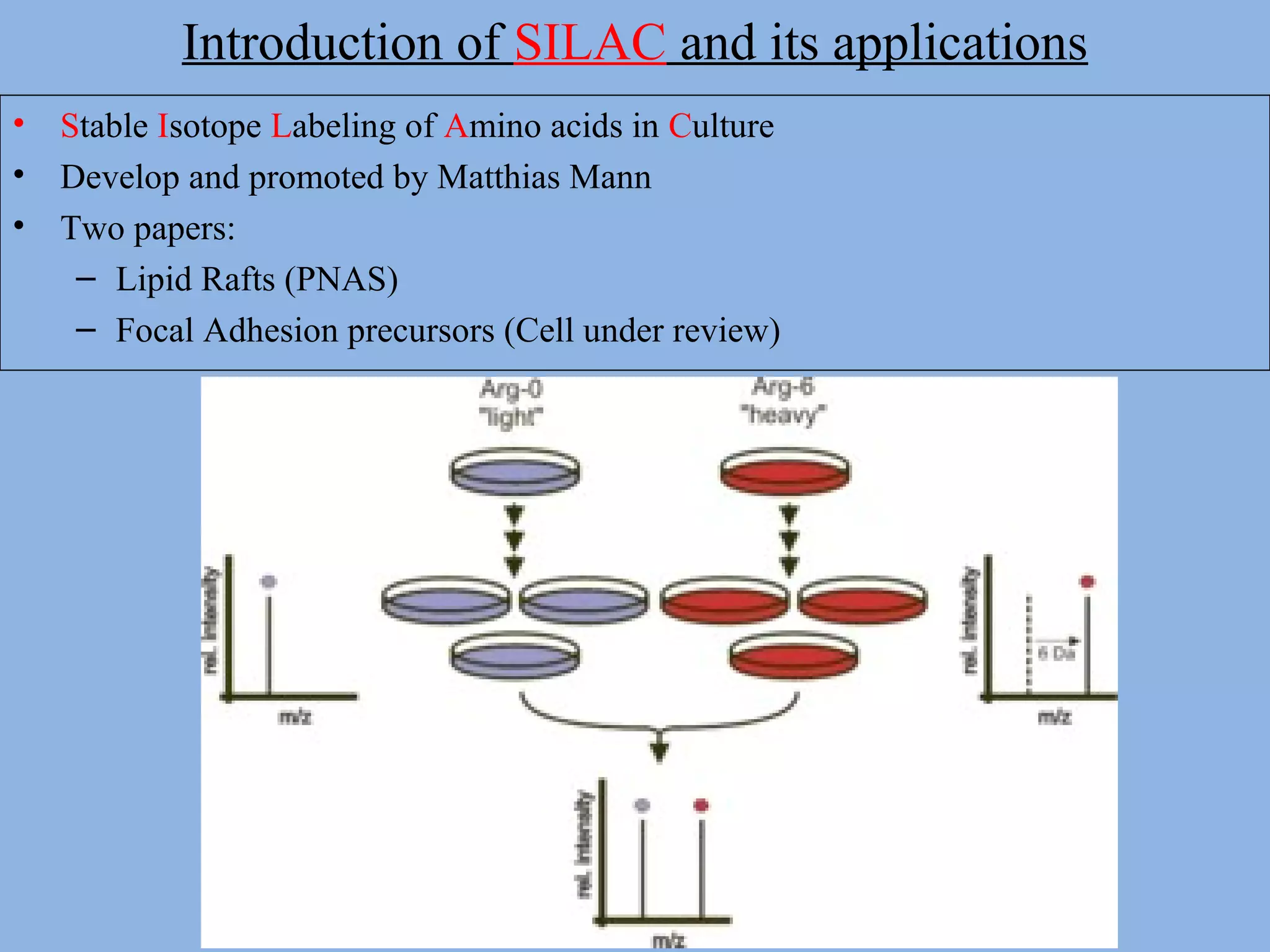
This document provides an introduction to quantitative proteomics using stable isotope labeling of amino acids in culture (SILAC). SILAC involves growing cells in media containing "light" or "heavy" isotopic forms of amino acids, which get incorporated into proteins and allow distinction and quantitation of proteins from different samples after mixing and mass spectrometry analysis. The document discusses applications of SILAC, how mass spectrometers identify isotopic species, and complementary labeling strategies like ICAT and iTRAQ.
Introduction of SILACand its applications
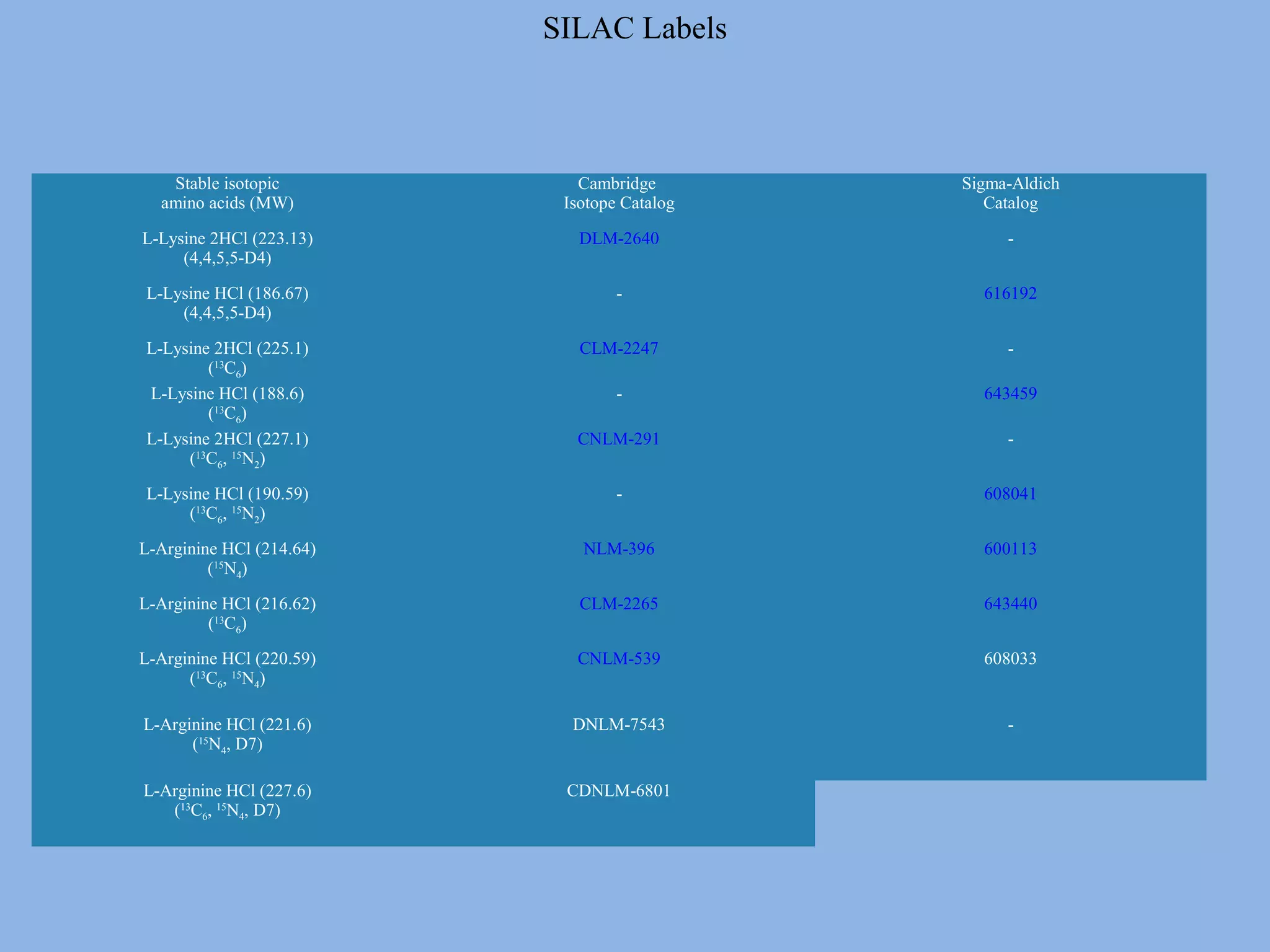
• Stable Isotope Labeling of Amino acids in Culture
• Develop and promoted by Matthias Mann
• Two papers:
– Lipid Rafts (PNAS)
– Focal Adhesion precursors (Cell under review)
3.
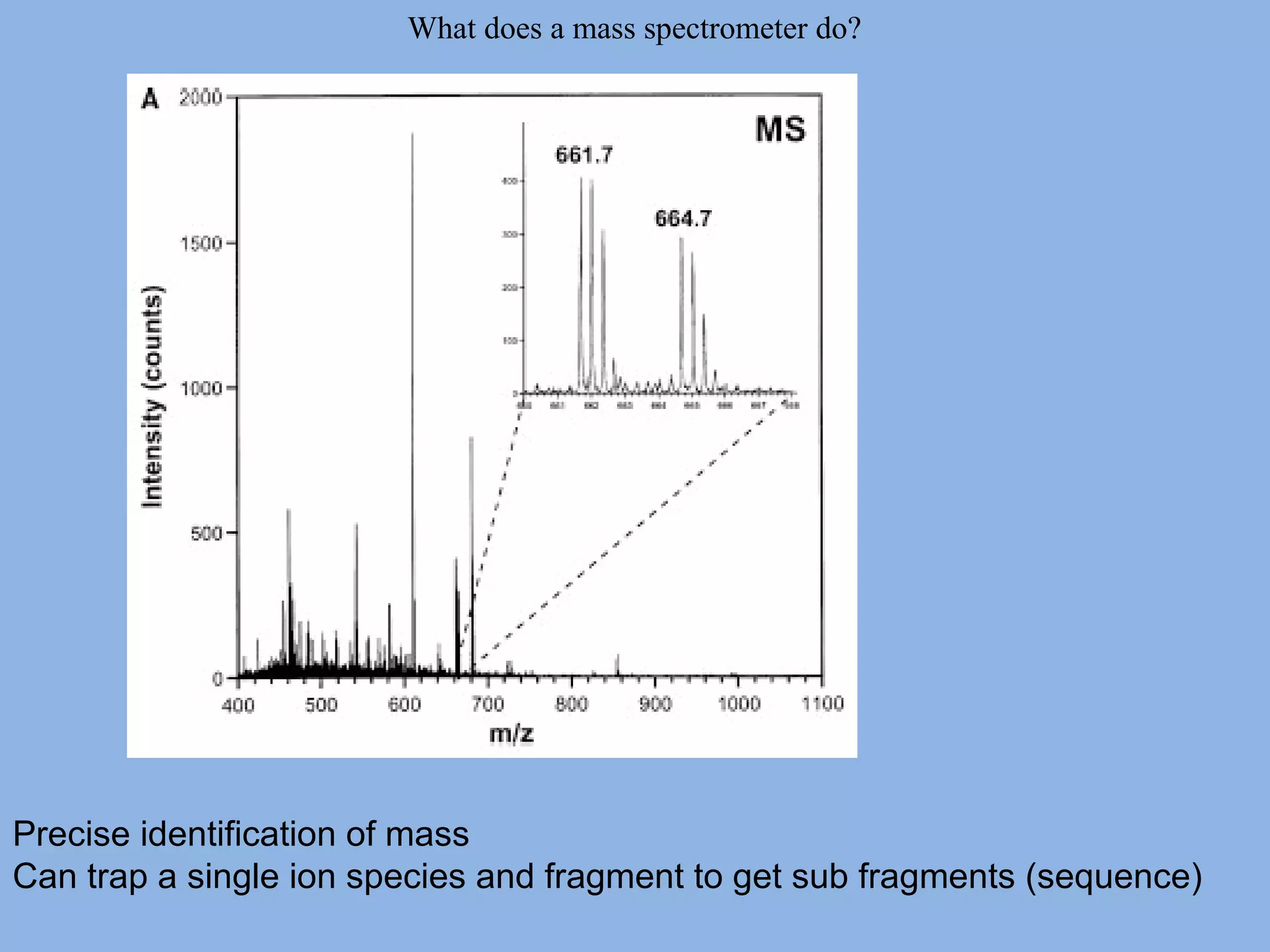
What does amass spectrometer do?
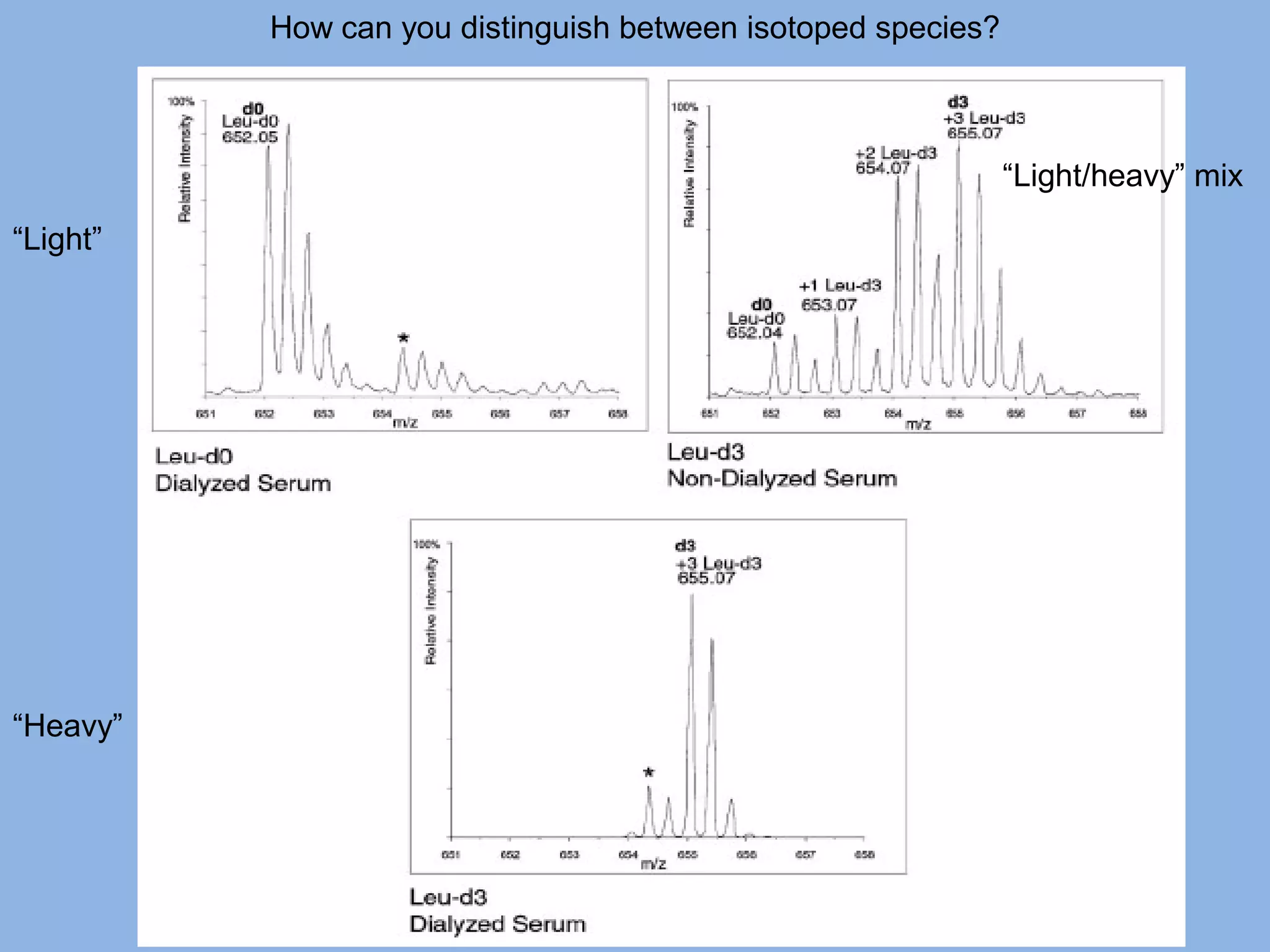
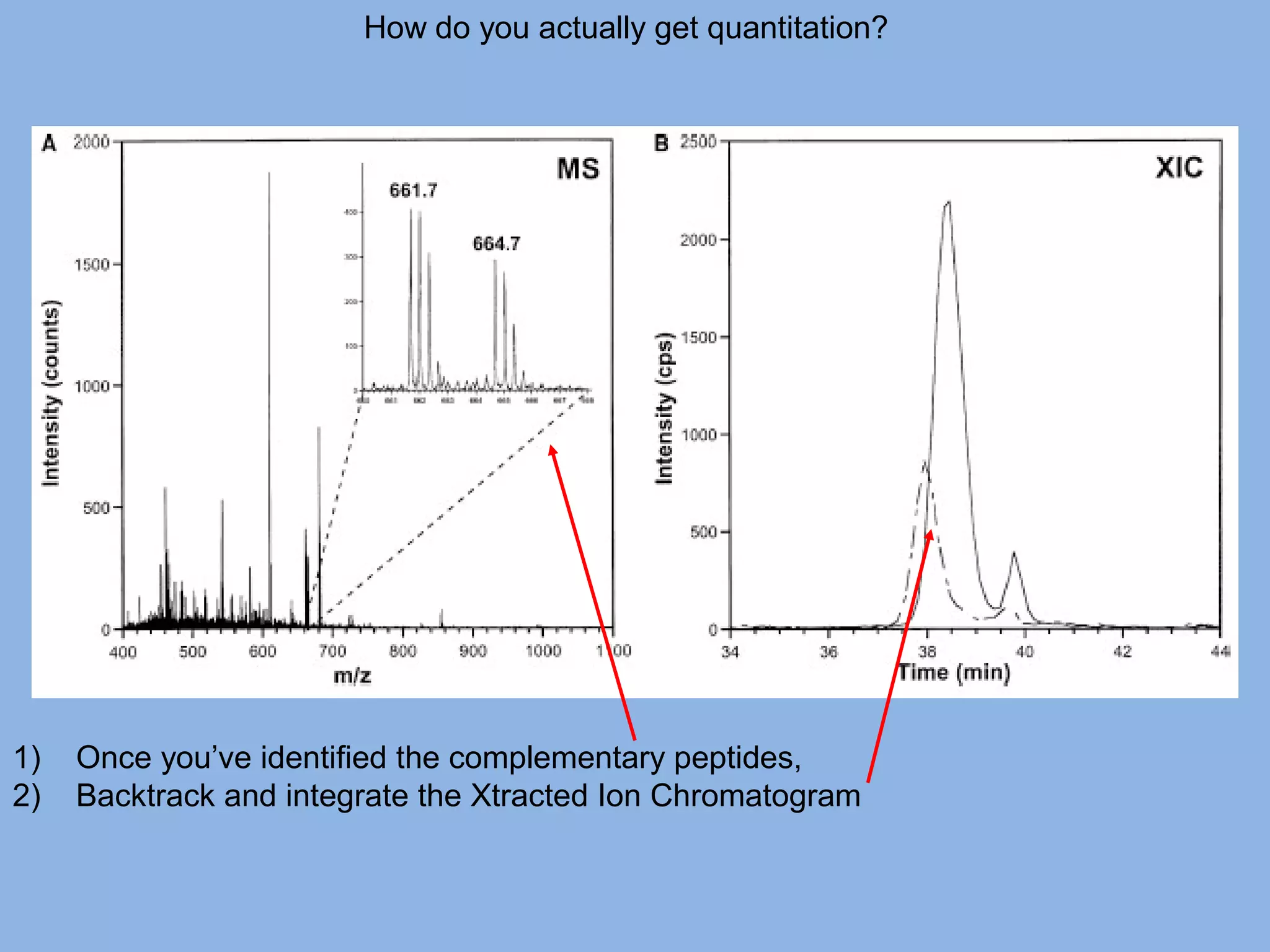
Precise identification of mass
Can trap a single ion species and fragment to get sub fragments (sequence)
4.
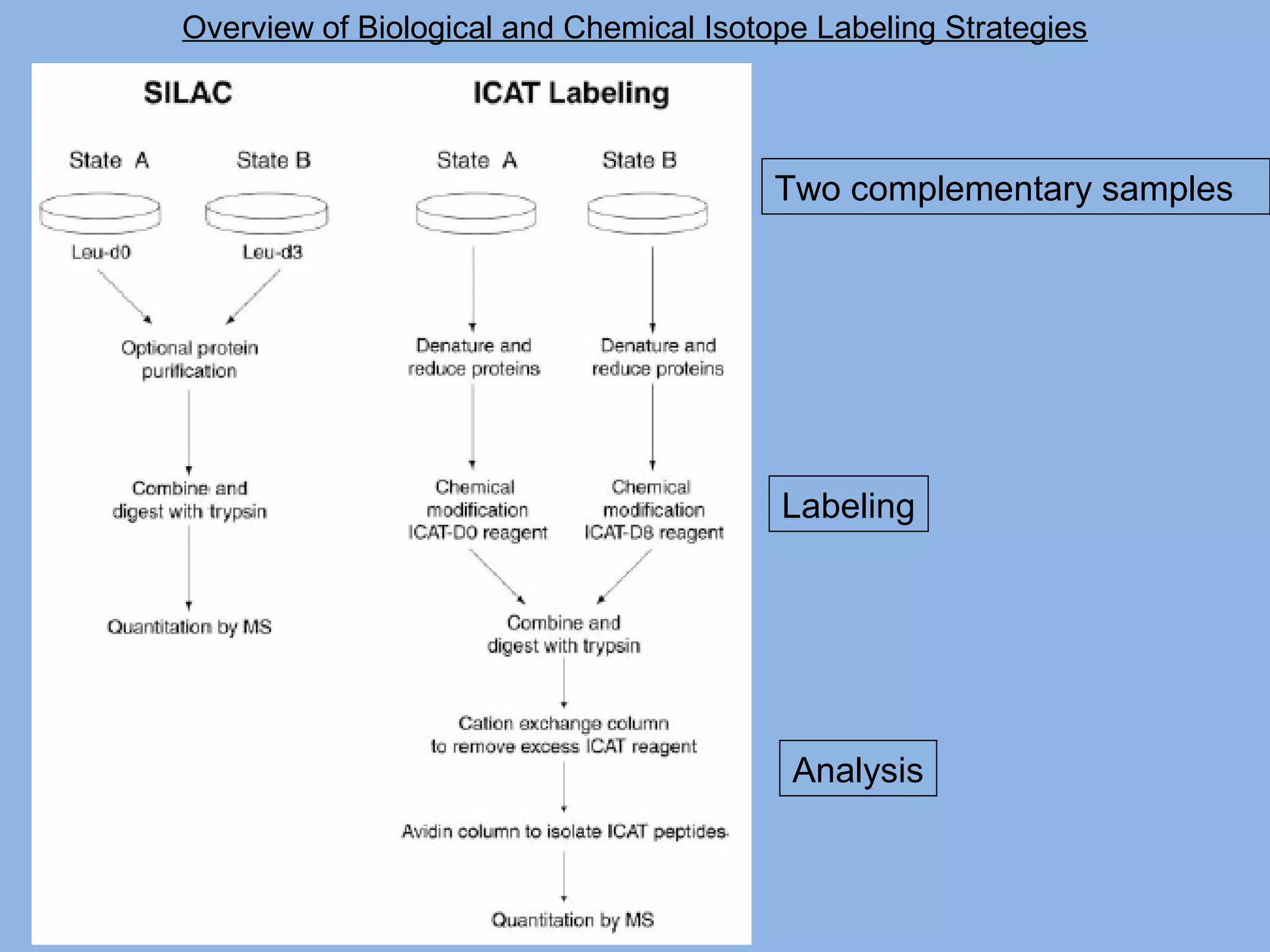
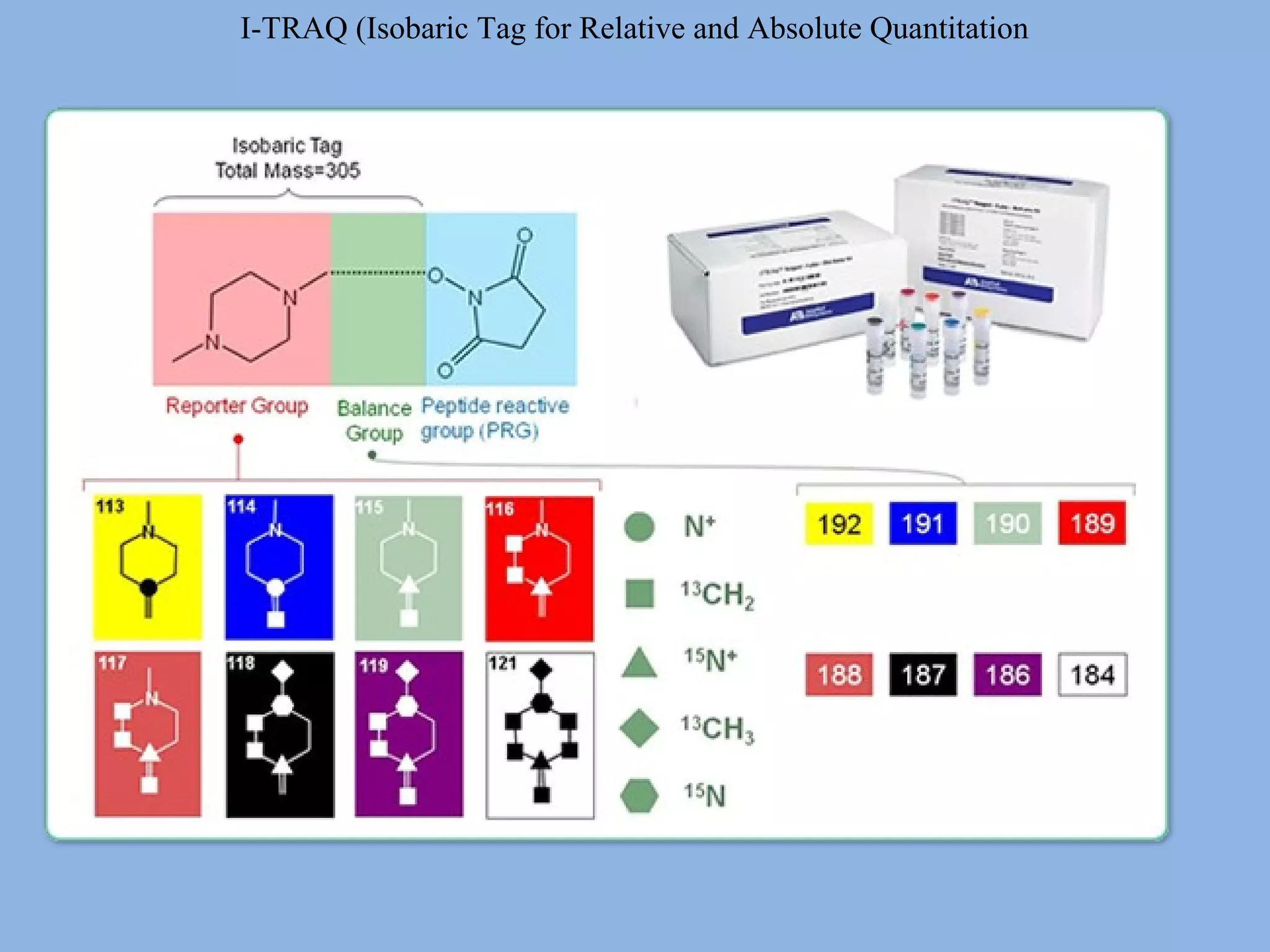
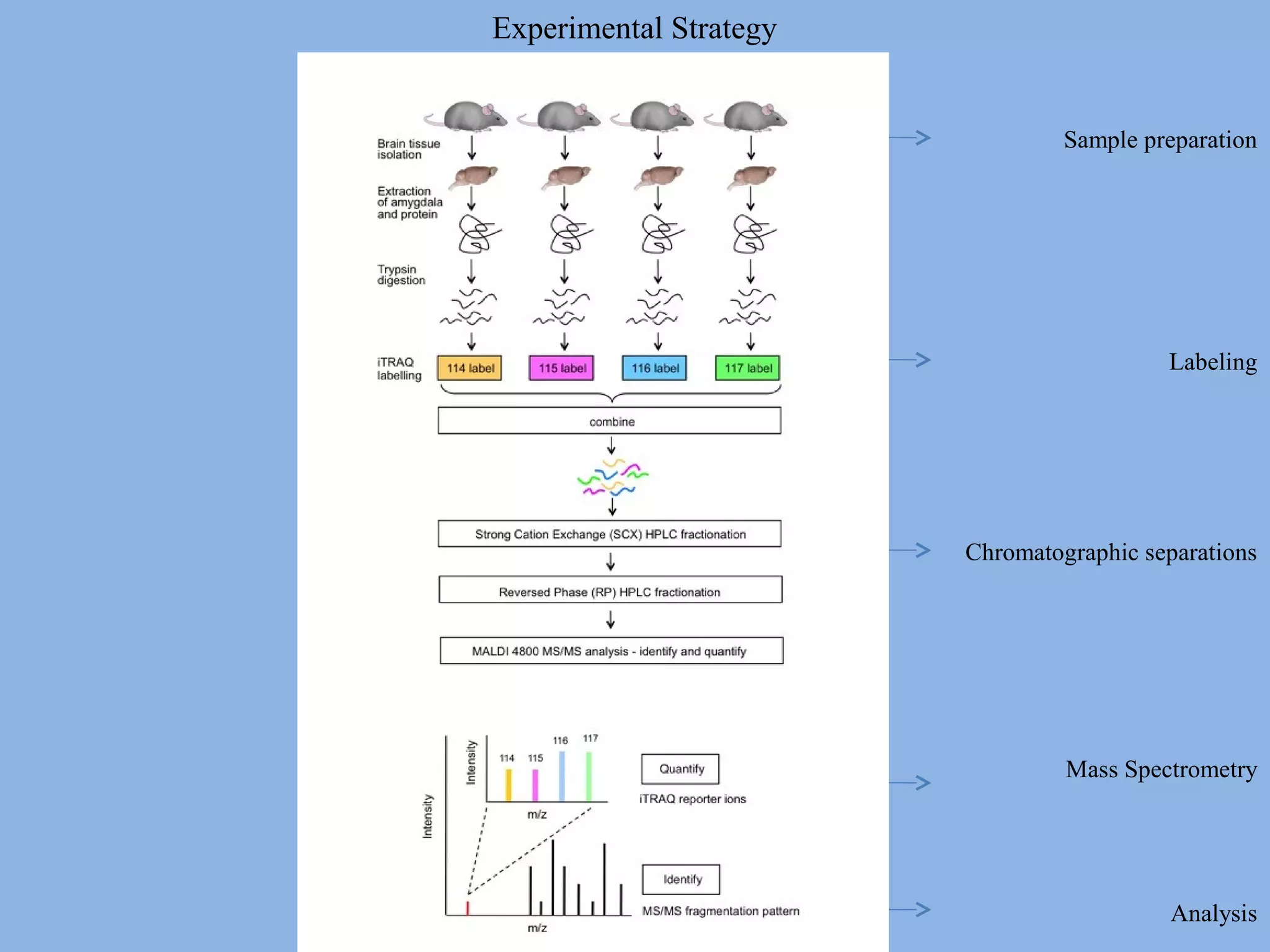
Overview of Biologicaland Chemical Isotope Labeling Strategies
Two complementary samples
Labeling
Analysis
5.
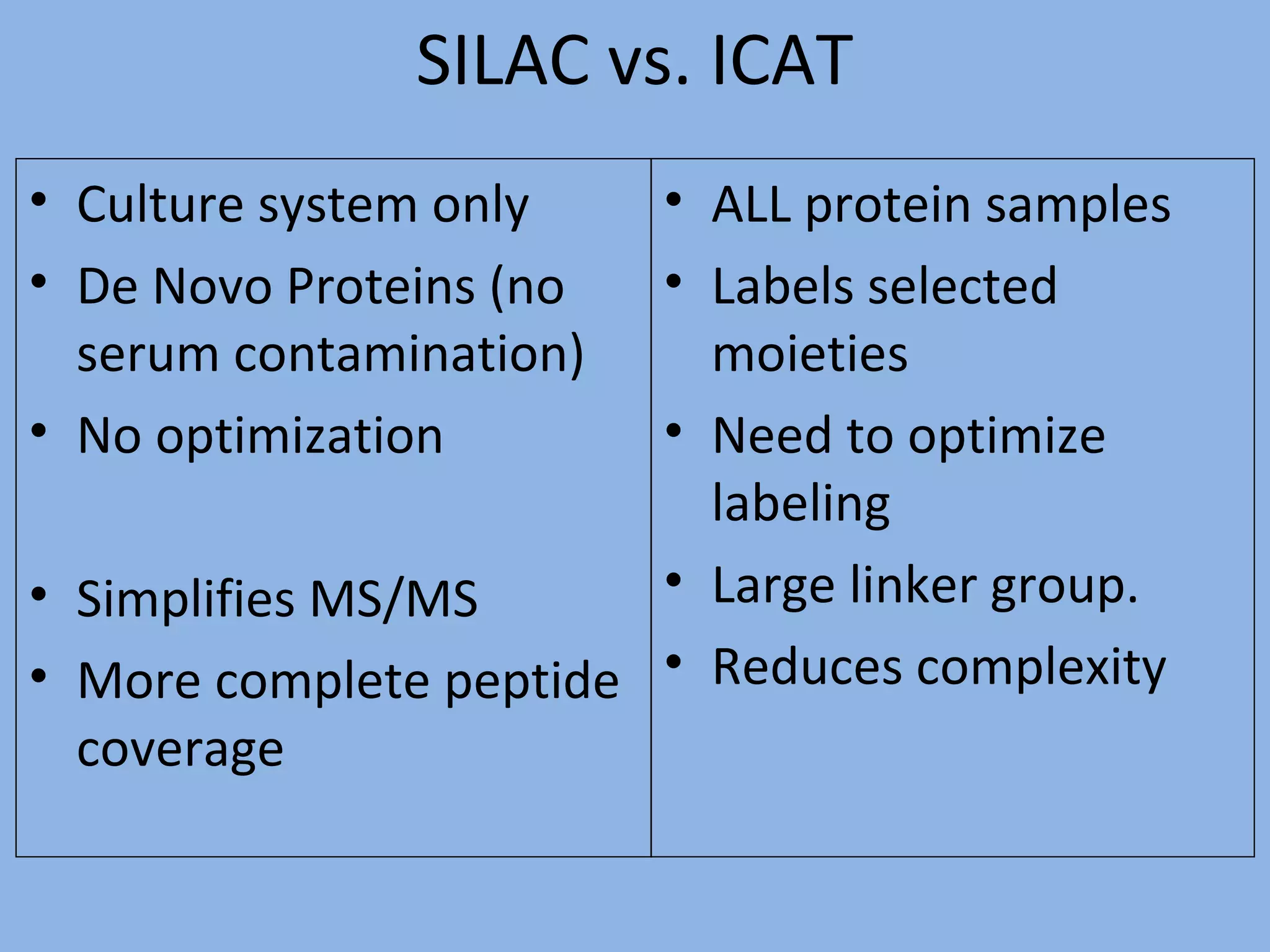
SILAC vs. ICAT
•Culture system only
• De Novo Proteins (no
serum contamination)
• No optimization
• Simplifies MS/MS
• More complete peptide
coverage
• ALL protein samples
• Labels selected
moieties
• Need to optimize
labeling
• Large linker group.
• Reduces complexity



![Vibe Coding vs. Spec-Driven Development [Free Meetup]](https://cdn.slidesharecdn.com/ss_thumbnails/vibecodingvsspecdrivendevelopment-251209105622-43f455e7-thumbnail.jpg?width=640&height=640&fit=bounds)


