1
Management in BPO


              By
              Ayudh
              Venkatesh
              Srikanth
              Harini
The Road Ahead……
•   Definition of quality
•   Need for quality in BPO
•   Quality Dimensions
•   Differentiating factor of Indian BPO
•   Efforts of Indian Vendors
•   Benefits of BPO
•   Tools for achieving quality


                                           3
Definition
• Quality is the on-going process of building and
  sustaining     relationships     by   assessing,
  anticipating, and fulfilling stated and implied
  needs.
• Quality is the customers' perception of the
  value of the suppliers' work output.


                                                 4
Need for quality

• Increase in competition

• Rise in customer expectation

• To build and sustain relationships


                                       5
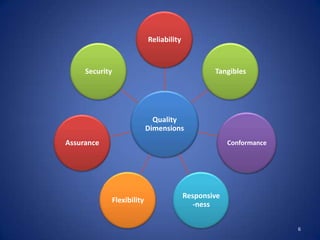
Reliability


     Security                                   Tangibles


                            Quality
                          Dimensions
Assurance                                            Conformance


                                        Responsive
            Flexibility
                                           -ness

                                                                   6
Reliability
• Ability to perform the promised service
  dependably and accurately.
• Sub-measures:
  – On-time delivery
  – Accuracy of results
  – Accessibility
  – Correct historical data
  – Disaster recovery

                                            7
Tangibles
• Physical facilities, equipment, and application;
  appearance of personnel.
• Sub-measures:
  – Advanced technology
  – Global expertise
  – Application’s user friendly interface
  – Ease of data reporting and extracting


                                                 8
Conformance
• The degree to which a service’s design and
  operating characteristics meet established
  standards.
• Sub-measures:
  – Systematic process design
  – Consistent process delivery and management
  – Efficiency and Effectiveness
  – Added value

                                                 9
Responsiveness
• The timeliness of service
• Sub-measures:
  – Speed
  – Competence
  – Correction of errors
  – Customer relationship


                              10
Flexibility
• The process ability to deal with changes.
• Sub-measures:
  – Rescalability
  – Availability of Upgrades
  – Innovation
  – Transition


                                              11
Security
• The freedom from danger, risk, or doubt.
• Sub-measures:
  – Confidentiality
  – Physical safety
  – Financial safety


                                             12
Assurance
• Client focused process development and
  management
• Sub-measures:
  – Shared approach to problem solving
  – Helping customers in improving their entire
    operations
  – Quality assurance systems or tools
  – Expertise availability and know how
  – Fit of work practices with that of customers, etc

                                                        13
Tools for achieving quality
• ISO 9000
• Total Quality Management(TQM)
• Six Sigma
• CMMI - Capability Maturity Model Integration
  (CMMI)
• eSCM - eSourcing Capability Model for Service
  Providers and clients
• People-CMM - People Capability Maturity Model


                                                  14
The Differentiating factor of Indian BPO
• The predominant factor that gives Indian BPO an edge over
  the rest is Quality Assurance.
• QA ensured at various levels :
    Hiring of only experienced quality assurance personnel who are either
     CSQA or CSTE certified by the international Quality Assurance Institute

    Incorporation and adherence to international standards of quality
     assurance

    Over 70% of Indian vendors have implement varied levels of ISO

    Over 65% of Indian vendors follow Six Sigma standards and CMMI

    COPC certified and ensure that quality is maintained even in verbal
     communication skills, such as accent, grammar and fluency in English.

                                                                          15
On going efforts by Indian Vendors

• BPOs quality certification programme introduced by NASSCOM
• Implementation of the concept of Benchmarking.
• NASSCOM taking initiatives to control Copyright infringement
  and ensuring that data privacy and information security are
  maintained.
• Constant upgradation in various QA procedures and holistic
  training in QA tools and COPC certification courses.
• NASSCOM has developed an E-SCM and E-Services Capability
  Model, which serves as a common yardstick for quality among
  Indian BPO companies.


                                                           16
Benefits of a good QM
• Helps reduce operational costs
• Improves Business relations
• Improves operational efficiency
• Improves competitive strength


                                    17
Eg: Mahindra Satyam BPO
• Quality comes first
• Focus mainly on customer expectations
• Aim at best in class deliverables through
  competent and disciplined professionals
• Focus on RFT(Right First Time) to attain near
  Zero defects


                                              18
Their approach:-
• Mandatory awareness sessions on Quality Management
  System – QMS and various Quality training opportunities for
  all associates within a month of hiring.

• Structured Green Belt training using ISTRIVE technique –
  Identify, Set, Track, Review, Improve, Validate and Ensure to all
  process owners and key stakeholders in all relevant
  engagements.

• Deploy qualified and experienced Black Belts into all
  engagements of the organization to drive continuous
  improvements

                                                                 19
Thank You!!

Quality management in bpo

  • 1.
  • 2.
    Management in BPO By Ayudh Venkatesh Srikanth Harini
  • 3.
    The Road Ahead…… • Definition of quality • Need for quality in BPO • Quality Dimensions • Differentiating factor of Indian BPO • Efforts of Indian Vendors • Benefits of BPO • Tools for achieving quality 3
  • 4.
    Definition • Quality isthe on-going process of building and sustaining relationships by assessing, anticipating, and fulfilling stated and implied needs. • Quality is the customers' perception of the value of the suppliers' work output. 4
  • 5.
    Need for quality •Increase in competition • Rise in customer expectation • To build and sustain relationships 5
  • 6.
    Reliability Security Tangibles Quality Dimensions Assurance Conformance Responsive Flexibility -ness 6
  • 7.
    Reliability • Ability toperform the promised service dependably and accurately. • Sub-measures: – On-time delivery – Accuracy of results – Accessibility – Correct historical data – Disaster recovery 7
  • 8.
    Tangibles • Physical facilities,equipment, and application; appearance of personnel. • Sub-measures: – Advanced technology – Global expertise – Application’s user friendly interface – Ease of data reporting and extracting 8
  • 9.
    Conformance • The degreeto which a service’s design and operating characteristics meet established standards. • Sub-measures: – Systematic process design – Consistent process delivery and management – Efficiency and Effectiveness – Added value 9
  • 10.
    Responsiveness • The timelinessof service • Sub-measures: – Speed – Competence – Correction of errors – Customer relationship 10
  • 11.
    Flexibility • The processability to deal with changes. • Sub-measures: – Rescalability – Availability of Upgrades – Innovation – Transition 11
  • 12.
    Security • The freedomfrom danger, risk, or doubt. • Sub-measures: – Confidentiality – Physical safety – Financial safety 12
  • 13.
    Assurance • Client focusedprocess development and management • Sub-measures: – Shared approach to problem solving – Helping customers in improving their entire operations – Quality assurance systems or tools – Expertise availability and know how – Fit of work practices with that of customers, etc 13
  • 14.
    Tools for achievingquality • ISO 9000 • Total Quality Management(TQM) • Six Sigma • CMMI - Capability Maturity Model Integration (CMMI) • eSCM - eSourcing Capability Model for Service Providers and clients • People-CMM - People Capability Maturity Model 14
  • 15.
    The Differentiating factorof Indian BPO • The predominant factor that gives Indian BPO an edge over the rest is Quality Assurance. • QA ensured at various levels :  Hiring of only experienced quality assurance personnel who are either CSQA or CSTE certified by the international Quality Assurance Institute  Incorporation and adherence to international standards of quality assurance  Over 70% of Indian vendors have implement varied levels of ISO  Over 65% of Indian vendors follow Six Sigma standards and CMMI  COPC certified and ensure that quality is maintained even in verbal communication skills, such as accent, grammar and fluency in English. 15
  • 16.
    On going effortsby Indian Vendors • BPOs quality certification programme introduced by NASSCOM • Implementation of the concept of Benchmarking. • NASSCOM taking initiatives to control Copyright infringement and ensuring that data privacy and information security are maintained. • Constant upgradation in various QA procedures and holistic training in QA tools and COPC certification courses. • NASSCOM has developed an E-SCM and E-Services Capability Model, which serves as a common yardstick for quality among Indian BPO companies. 16
  • 17.
    Benefits of agood QM • Helps reduce operational costs • Improves Business relations • Improves operational efficiency • Improves competitive strength 17
  • 18.
    Eg: Mahindra SatyamBPO • Quality comes first • Focus mainly on customer expectations • Aim at best in class deliverables through competent and disciplined professionals • Focus on RFT(Right First Time) to attain near Zero defects 18
  • 19.
    Their approach:- • Mandatoryawareness sessions on Quality Management System – QMS and various Quality training opportunities for all associates within a month of hiring. • Structured Green Belt training using ISTRIVE technique – Identify, Set, Track, Review, Improve, Validate and Ensure to all process owners and key stakeholders in all relevant engagements. • Deploy qualified and experienced Black Belts into all engagements of the organization to drive continuous improvements 19
  • 20.

Editor's Notes

  • #16 CSQA (Certified Software Quality Analyst) CSTE (Certified Software Test Engineer) COPC customer operating performance centre