Pyrolysis is the breaking apart of chemical bonds by thermal energy, with
the production of smaller, more volatile components. Analytical pyrolysis
is used to introduce certain sample types to a gas chromatograph, which
can only handle compounds in the semi-volatile range. These sample
types include solids and high molecular-weight compounds. Pyrolysis is
also used to minimize sample preparation, or when analysis of a whole
sample is desired. Applications for pyrolysis include forensics, paints, ink,
art materials, polymers, adhesives, surfactants, and even microorganisms.
One of the benefits of pyrolysis is that sample preparation is usually
minimal, consisting of trimming and weighing solid samples into a quartz
tube or micro vial. Or, liquid samples can be delivered onto a probe or
micro vial using a microliter syringe. In both cases, the sample capacity is
in the microgram or low milligram range.
Introduction
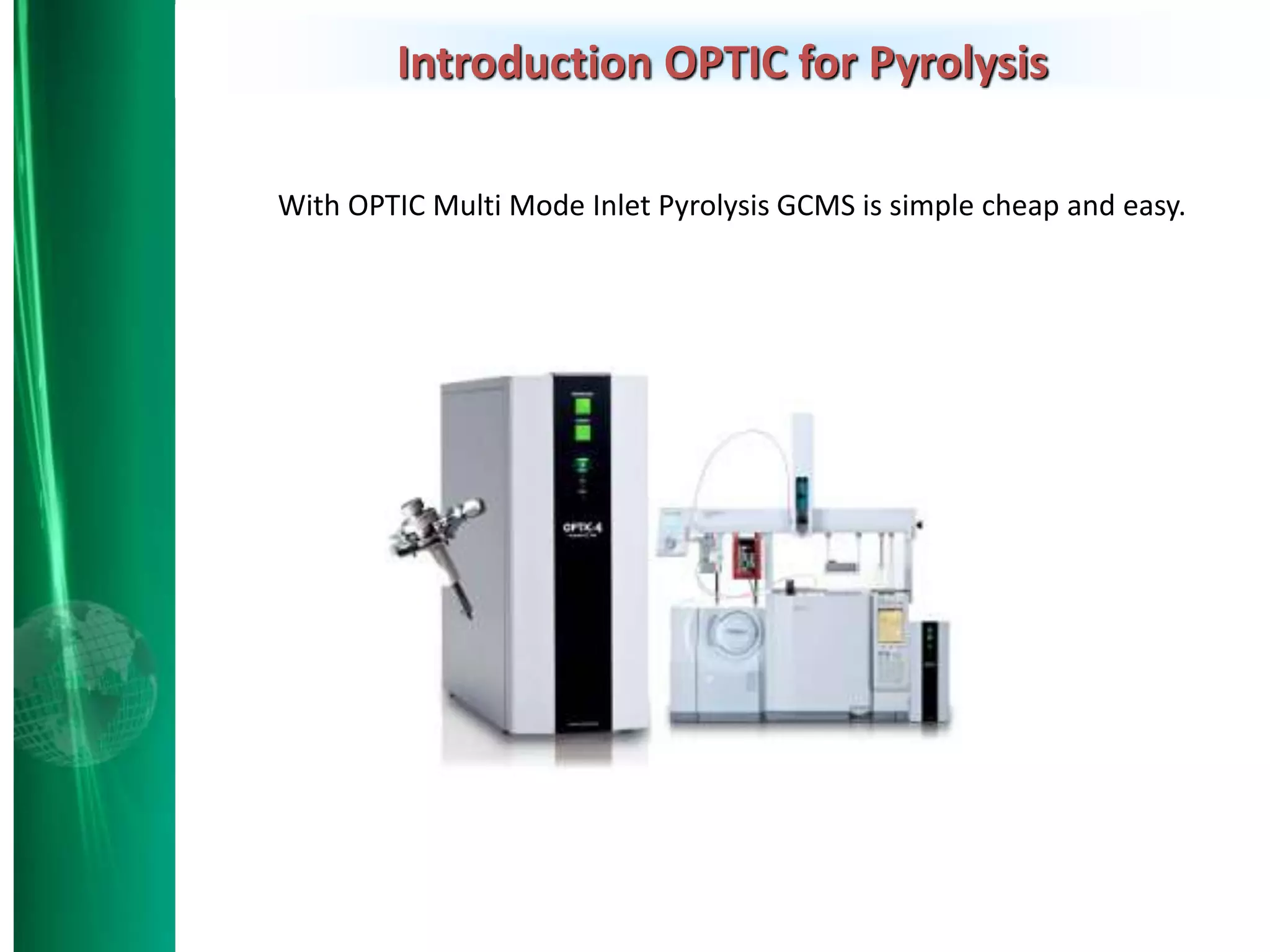
With OPTIC Multi Mode Inlet Pyrolysis GCMS is simple cheap and easy.
Introduction OPTIC for Pyrolysis
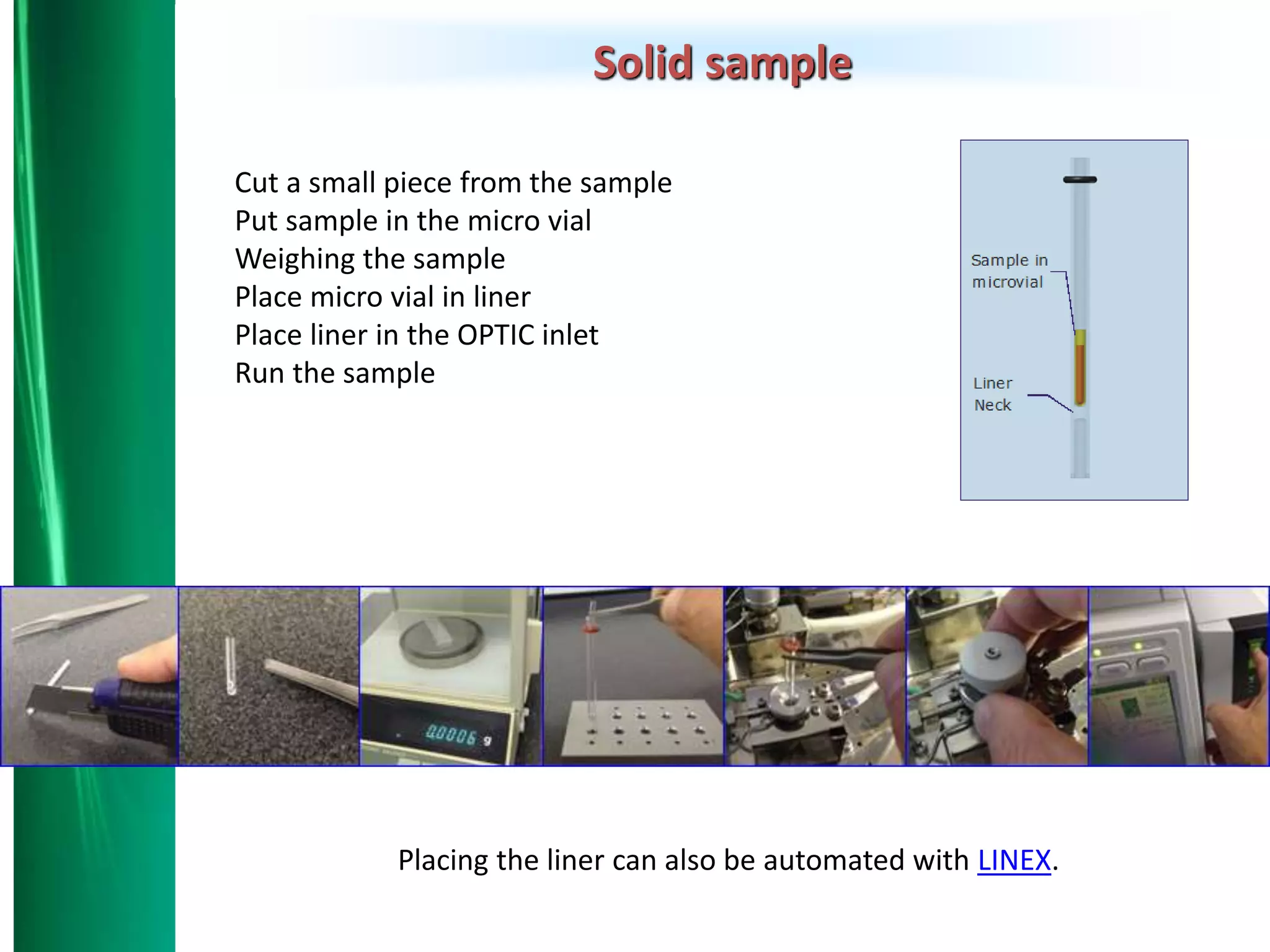
Cut a small piece from the sample
Put sample in the micro vial
Weighing the sample
Place micro vial in liner
Place liner in the OPTIC inlet
Run the sample
Solid sample
Placing the liner can also be automated with LINEX.
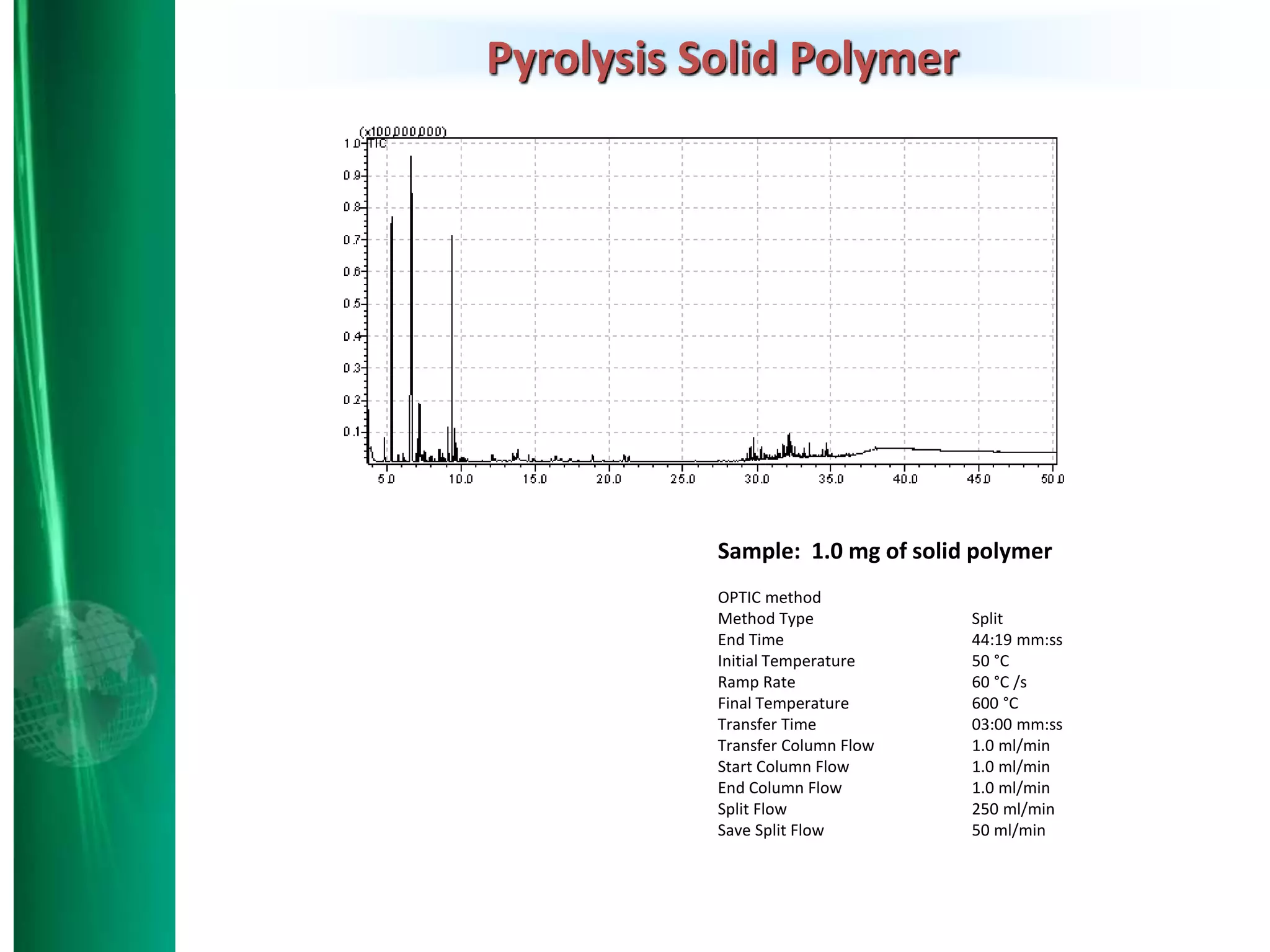
Sample: 1.0 mg of solid polymer
OPTIC method
Method Type Split
End Time 44:19 mm:ss
Initial Temperature 50 °C
Ramp Rate 60 °C /s
Final Temperature 600 °C
Transfer Time 03:00 mm:ss
Transfer Column Flow 1.0 ml/min
Start Column Flow 1.0 ml/min
End Column Flow 1.0 ml/min
Split Flow 250 ml/min
Save Split Flow 50 ml/min
Pyrolysis Solid Polymer
Liquid sample
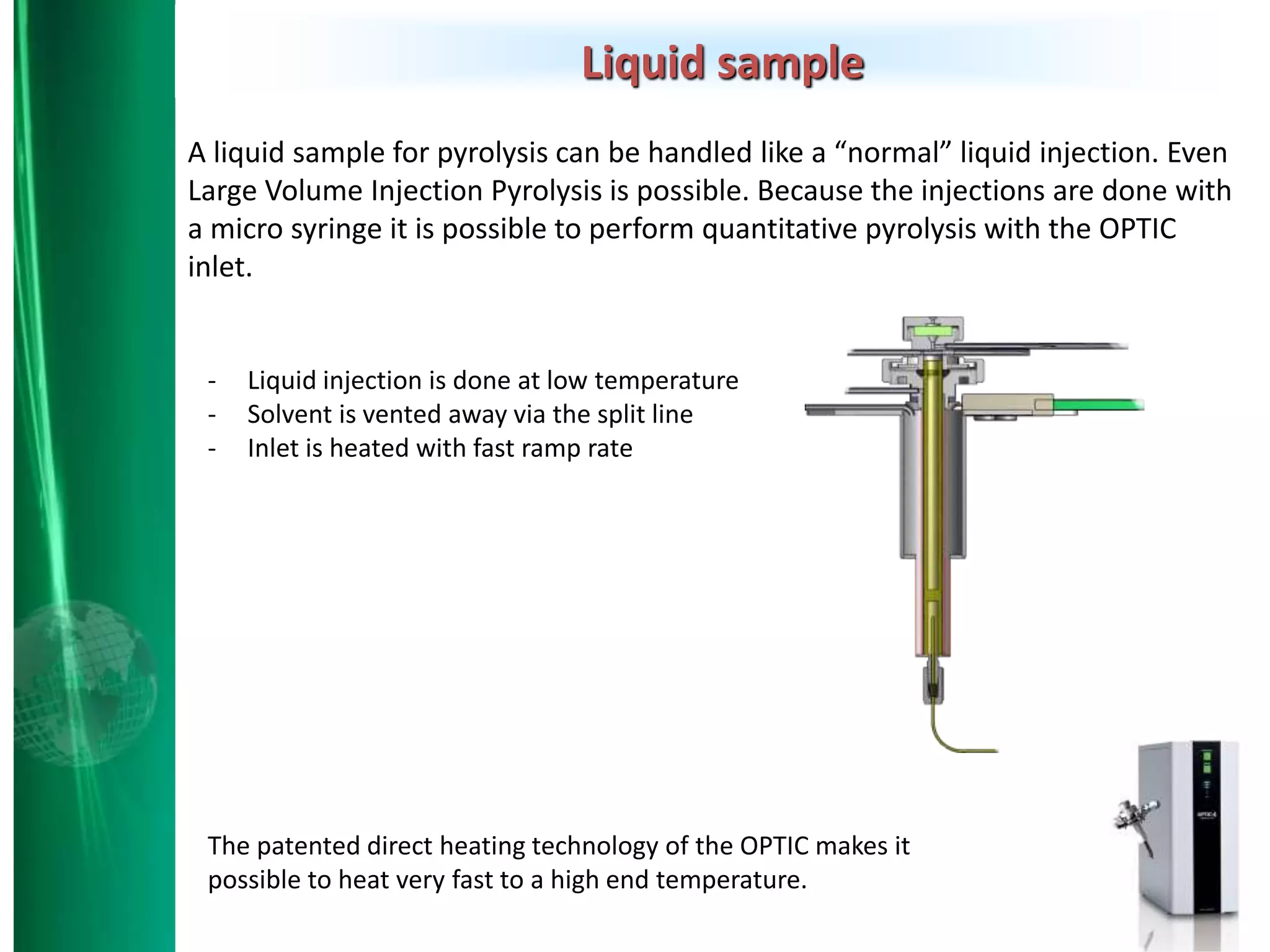
A liquid sample for pyrolysis can be handled like a “normal” liquid injection. Even
Large Volume Injection Pyrolysis is possible. Because the injections are done with
a micro syringe it is possible to perform quantitative pyrolysis with the OPTIC
inlet.
The patented direct heating technology of the OPTIC makes it
possible to heat very fast to a high end temperature.
- Liquid injection is done at low temperature
- Solvent is vented away via the split line
- Inlet is heated with fast ramp rate
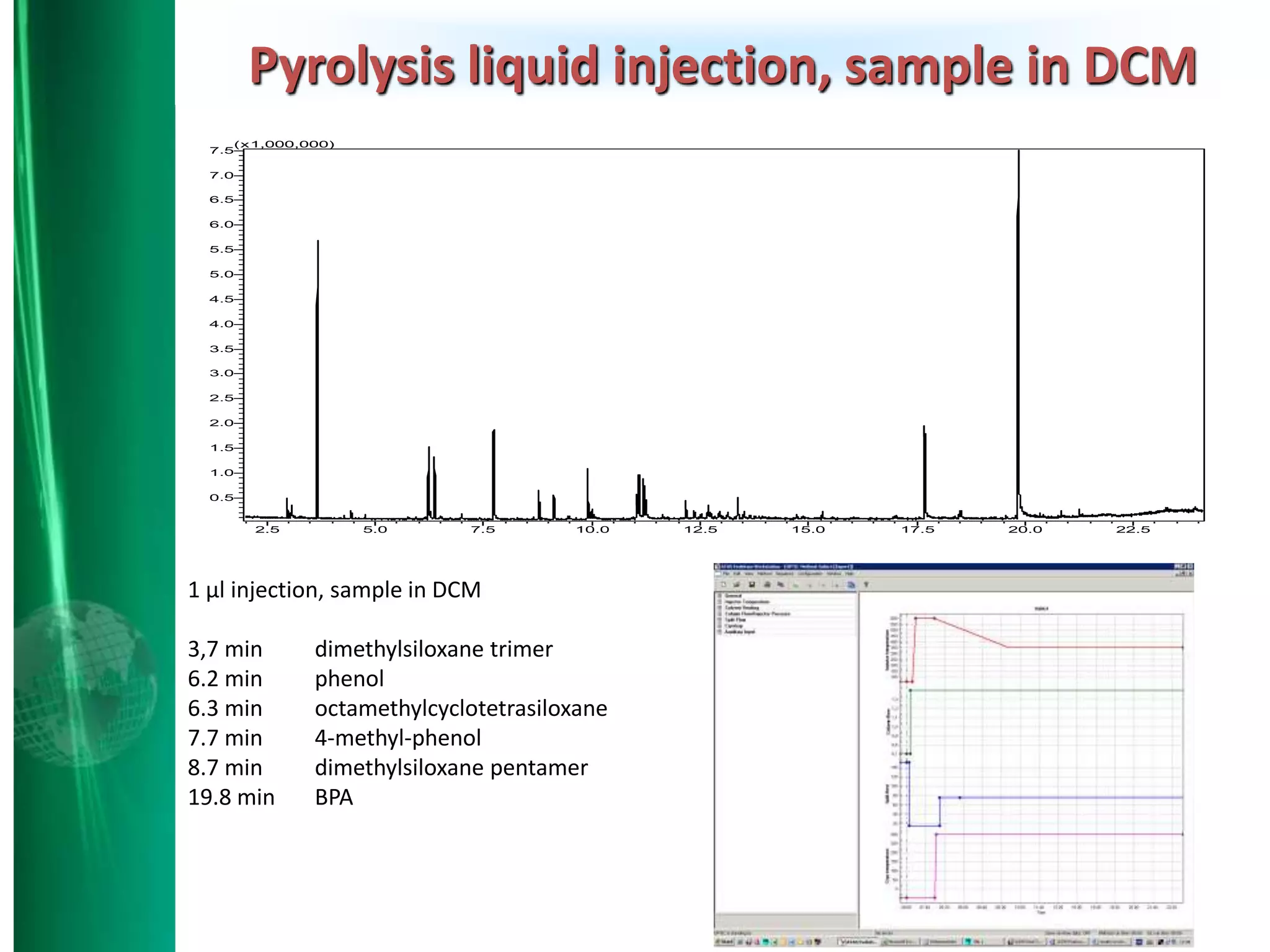
Pyrolysis liquid injection, sample in DCM
2.5 5.0 7.5 10.0 12.5 15.0 17.5 20.0 22.5
0.5
1.0
1.5
2.0
2.5
3.0
3.5
4.0
4.5
5.0
5.5
6.0
6.5
7.0
7.5
(x1,000,000)
1 µl injection, sample in DCM
3,7 min dimethylsiloxane trimer
6.2 min phenol
6.3 min octamethylcyclotetrasiloxane
7.7 min 4-methyl-phenol
8.7 min dimethylsiloxane pentamer
19.8 min BPA
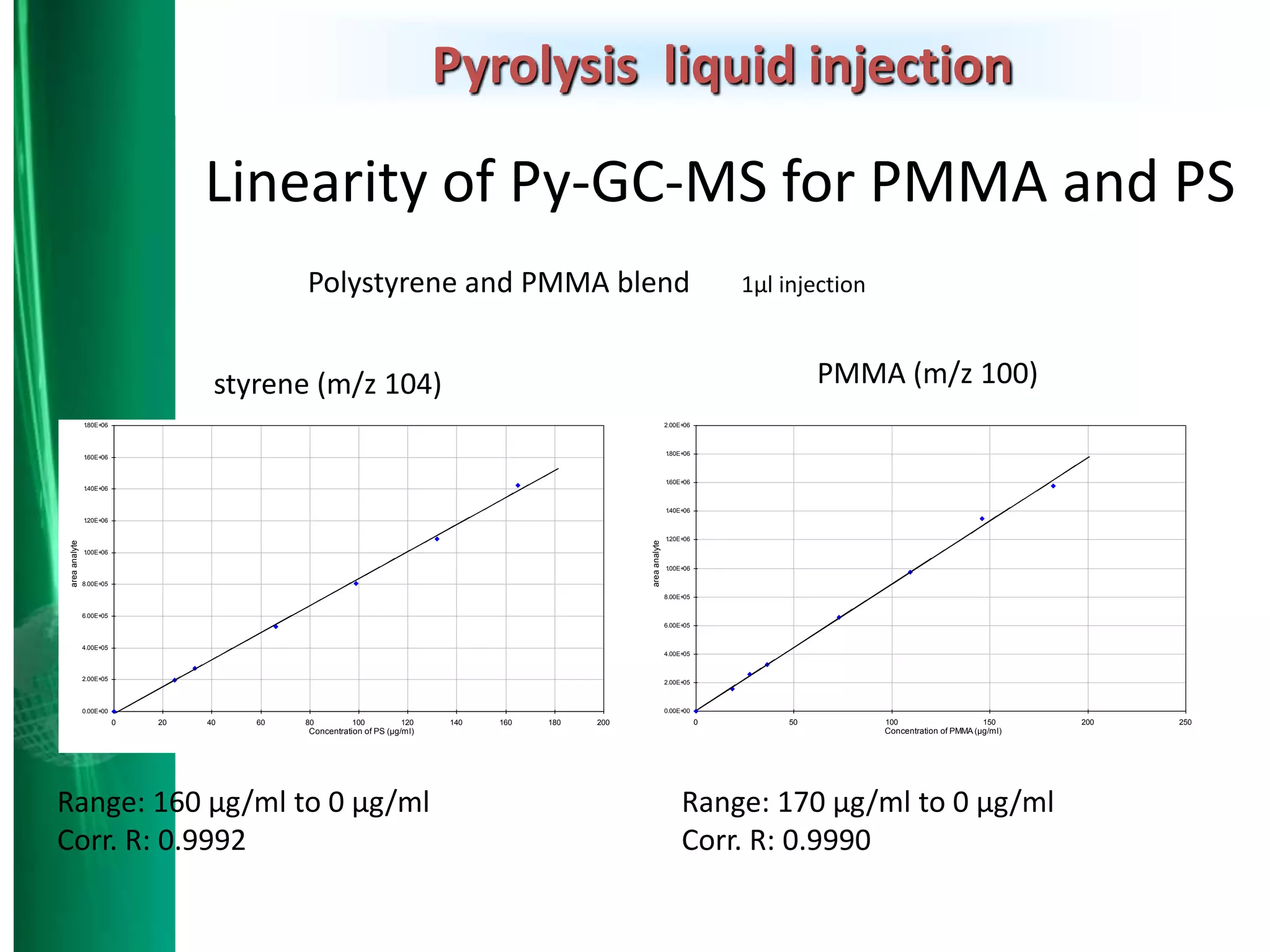
Linearity of Py-GC-MS for PMMA and PS
Range: 160 µg/ml to 0 µg/ml
Corr. R: 0.9992
Polystyrene and PMMA blend 1µl injection
Range: 170 µg/ml to 0 µg/ml
Corr. R: 0.9990
styrene (m/z 104) PMMA (m/z 100)
0.00E+00
2.00E+05
4.00E+05
6.00E+05
8.00E+05
1.00E+06
1.20E+06
1.40E+06
1.60E+06
1.80E+06
0 20 40 60 80 100 120 140 160 180 200
Concentration of PS (µg/ml)
areaanalyte
0.00E+00
2.00E+05
4.00E+05
6.00E+05
8.00E+05
1.00E+06
1.20E+06
1.40E+06
1.60E+06
1.80E+06
2.00E+06
0 50 100 150 200 250
Concentration of PMMA (µg/ml)
areaanalyte
Pyrolysis liquid injection
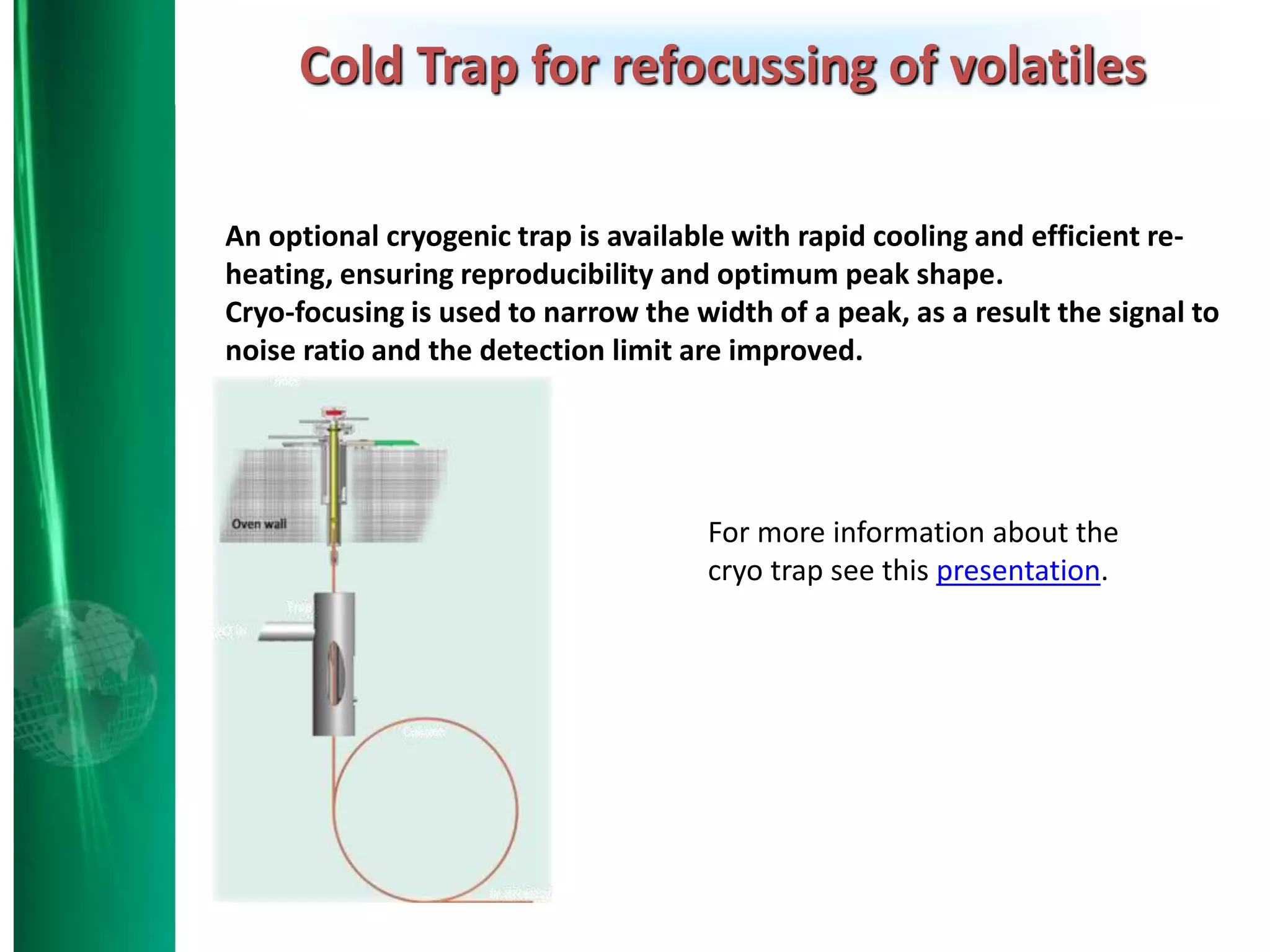
An optional cryogenic trap is available with rapid cooling and efficient re-
heating, ensuring reproducibility and optimum peak shape.
Cryo-focusing is used to narrow the width of a peak, as a result the signal to
noise ratio and the detection limit are improved.
Cold Trap for refocussing of volatiles
For more information about the
cryo trap see this presentation.
www.atasgl.com
Visit www.glsciences.eu for more information.

Pyrolysis Gas Chromatography. PY-GCMS

  • 2.
    Pyrolysis is thebreaking apart of chemical bonds by thermal energy, with the production of smaller, more volatile components. Analytical pyrolysis is used to introduce certain sample types to a gas chromatograph, which can only handle compounds in the semi-volatile range. These sample types include solids and high molecular-weight compounds. Pyrolysis is also used to minimize sample preparation, or when analysis of a whole sample is desired. Applications for pyrolysis include forensics, paints, ink, art materials, polymers, adhesives, surfactants, and even microorganisms. One of the benefits of pyrolysis is that sample preparation is usually minimal, consisting of trimming and weighing solid samples into a quartz tube or micro vial. Or, liquid samples can be delivered onto a probe or micro vial using a microliter syringe. In both cases, the sample capacity is in the microgram or low milligram range. Introduction
  • 3.
    With OPTIC MultiMode Inlet Pyrolysis GCMS is simple cheap and easy. Introduction OPTIC for Pyrolysis
  • 4.
    Cut a smallpiece from the sample Put sample in the micro vial Weighing the sample Place micro vial in liner Place liner in the OPTIC inlet Run the sample Solid sample Placing the liner can also be automated with LINEX.
  • 5.
    Sample: 1.0 mgof solid polymer OPTIC method Method Type Split End Time 44:19 mm:ss Initial Temperature 50 °C Ramp Rate 60 °C /s Final Temperature 600 °C Transfer Time 03:00 mm:ss Transfer Column Flow 1.0 ml/min Start Column Flow 1.0 ml/min End Column Flow 1.0 ml/min Split Flow 250 ml/min Save Split Flow 50 ml/min Pyrolysis Solid Polymer
  • 6.
    Liquid sample A liquidsample for pyrolysis can be handled like a “normal” liquid injection. Even Large Volume Injection Pyrolysis is possible. Because the injections are done with a micro syringe it is possible to perform quantitative pyrolysis with the OPTIC inlet. The patented direct heating technology of the OPTIC makes it possible to heat very fast to a high end temperature. - Liquid injection is done at low temperature - Solvent is vented away via the split line - Inlet is heated with fast ramp rate
  • 7.
    Pyrolysis liquid injection,sample in DCM 2.5 5.0 7.5 10.0 12.5 15.0 17.5 20.0 22.5 0.5 1.0 1.5 2.0 2.5 3.0 3.5 4.0 4.5 5.0 5.5 6.0 6.5 7.0 7.5 (x1,000,000) 1 µl injection, sample in DCM 3,7 min dimethylsiloxane trimer 6.2 min phenol 6.3 min octamethylcyclotetrasiloxane 7.7 min 4-methyl-phenol 8.7 min dimethylsiloxane pentamer 19.8 min BPA
  • 8.
    Linearity of Py-GC-MSfor PMMA and PS Range: 160 µg/ml to 0 µg/ml Corr. R: 0.9992 Polystyrene and PMMA blend 1µl injection Range: 170 µg/ml to 0 µg/ml Corr. R: 0.9990 styrene (m/z 104) PMMA (m/z 100) 0.00E+00 2.00E+05 4.00E+05 6.00E+05 8.00E+05 1.00E+06 1.20E+06 1.40E+06 1.60E+06 1.80E+06 0 20 40 60 80 100 120 140 160 180 200 Concentration of PS (µg/ml) areaanalyte 0.00E+00 2.00E+05 4.00E+05 6.00E+05 8.00E+05 1.00E+06 1.20E+06 1.40E+06 1.60E+06 1.80E+06 2.00E+06 0 50 100 150 200 250 Concentration of PMMA (µg/ml) areaanalyte Pyrolysis liquid injection
  • 9.
    An optional cryogenictrap is available with rapid cooling and efficient re- heating, ensuring reproducibility and optimum peak shape. Cryo-focusing is used to narrow the width of a peak, as a result the signal to noise ratio and the detection limit are improved. Cold Trap for refocussing of volatiles For more information about the cryo trap see this presentation.
  • 10.