Lesson Plan Format 
MTE/534 Version 4 
1 
University of Phoenix Material Rachel Premer 
Lesson Plan Format 
Create an authentic, standards-based production lesson plan for visual or performing arts. The lesson 
plan must result in the creation of an art work or a performance. Attach any handouts or other original 
materials for the lesson 
Component Details 
Lesson title Life Cycle of a Pumpkin 
Grade level 1st grade 
Time or days for completion 2 days 30 minutes each day 
State standards and arts 
components 
Art State Standard 
1.0 ARTISTIC PERCEPTION 
Develop Perceptual Skills and Visual Arts Vocabulary 
1.1 Describe and replicate repeated patterns in nature, in the 
environment, and in works of art. 
Science State Standards: 
Investigation and Experimentation 
4. a. Draw pictures that portray some features of the thing 
being described. 
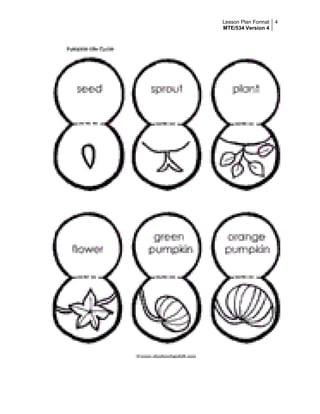
Objectives Students will be able to recognize the life cycle of a pumpkin 
while painting a replica of a pumpkin and its stages. 
Areas of curriculum 
integration 
Science will be integrated in this visual arts lesson. 
Previous knowledge required 
from students to participate 
Students must know the safety rules about paint. 
Required materials, including 
equipment and technology 
Note. Permission must be 
obtained for copyrighted 
materials; websites must be 
cited for any downloaded 
materials. 
· One and a half paper plates 
· Orange paint 
· Paint brushes 
· Water 
· Newspaper 
· One green yarn about 2” long 
· Life cycle printout 
· Brown construction paper (small rectangle) 
· Staples 
· Crayons 
· Scissors 
Sequence of lesson, such as 
hook, input, modeling, guided 
practice, and closure guided 
practice, where applicable 
Day 1 
· Have the students clear off their desks 
· Explain to the students that they will be learning about 
the life cycle of a pumpkin 
· Ask the students if they know how many stages there 
are. (5 stages) 
· Discuss the 5 stages and why they are in that order
Lesson Plan Format 
MTE/534 Version 4 
2 
· Explain to the students that they will be painting a 
replica of a pumpkin and its stages for display 
· Have the student place a large piece of newspaper on 
their desk 
· Pass out one and a half paper plates 
· Have the students write their names on the back on 
the plates 
· Arrange paint and paintbrushes for students 
(this step could either be done outside or have 
students wear aprons) 
· Remind the students that pumpkins have texture and 
that they don’t all look the same. 
· Have the students paint the plates orange 
· Set the plates to the side to dry 
· Clean up paint and materials 
Day 2 
· Pass out life cycle printout and crayons 
· Discuss the life cycle of a pumpkin again 
· Have the students color in the printout 
· Have the student cut out the different stages 
· Group up the students 
· Pass out their dried painted pumpkins 
· Pass out one string of yarn for each student 
· Pass out small rectangle of brown construction paper 
· In their group have the students staple the pieces all 
together 
· Give the students an example of what it should look 
like: 
Small rectangle on top 
One end of yarn stapled to pumpkin 
Half plate stapled to bottom of full plate opened 
Stages stapled to yarn in correct order 
· Clean up 
· Display pumpkin life cycle for everyone to see 
Assessments that align to 
objectives 
· Indicate if the 
assessment is formative 
or summative 
· Include all necessary 
rubrics, tests, and 
checklists, as 
appropriate. 
This lesson will be assessed in a formative way. Students will 
be graded for participation and listening skills. Final project will 
be graded on accuracy. Students will also be graded on 
working together. 
Plan for diverse learners 
Include the following: 
· Accommodations for 
students with learning or 
physical disabilities 
· Accommodation for 
Physical disabilities: 
· Depending on the disability the student could be 
paired up with another student while they are painting. 
· Student could use markers instead of paint 
· Student could use their hands instead of a paintbrush 
· Teacher could schedule an adult assistant for this 
lesson
Lesson Plan Format 
MTE/534 Version 4 
3 
English Language 
Learner students 
· Accommodation for gifted 
students 
· An explanation of how 
this lesson will appeal to 
different learning styles 
ELL: 
· There is not writing during this lesson so 
accommodations are not needed 
Gifted students: 
· The teacher could give these students more than just 
one color to paint pumpkins to create textures and 
shades for a more realistic look 
This lesson appeals to all learning styles because there is 
individual and group work. This lesson is hands on and also 
has discussions as a class. The lesson is also divided into two 
days in order to keep the students attention. 
Classroom management and 
safety plan If at all possible the teacher could benefit from an extra set of 
adult hands during the painting process. If not then the teacher 
could do this lesson in stages at stations. By splitting the 
students into groups the teacher can manage each group 
instead of individual. Students will be reminded of the 
importance of staying safe and clean during this lesson. When 
passing out scissors and putting them back the teacher should 
have one student in charge in order to deplete any dangers. 
Opportunities for display or 
public performance This project can be displayed on the walls of the classroom. 
This would be a great project to display during open house or 
even in the office of the school.
Lesson Plan Format 
MTE/534 Version 4 
4

Pumpkin lesson plan

  • 1.
    Lesson Plan Format MTE/534 Version 4 1 University of Phoenix Material Rachel Premer Lesson Plan Format Create an authentic, standards-based production lesson plan for visual or performing arts. The lesson plan must result in the creation of an art work or a performance. Attach any handouts or other original materials for the lesson Component Details Lesson title Life Cycle of a Pumpkin Grade level 1st grade Time or days for completion 2 days 30 minutes each day State standards and arts components Art State Standard 1.0 ARTISTIC PERCEPTION Develop Perceptual Skills and Visual Arts Vocabulary 1.1 Describe and replicate repeated patterns in nature, in the environment, and in works of art. Science State Standards: Investigation and Experimentation 4. a. Draw pictures that portray some features of the thing being described. Objectives Students will be able to recognize the life cycle of a pumpkin while painting a replica of a pumpkin and its stages. Areas of curriculum integration Science will be integrated in this visual arts lesson. Previous knowledge required from students to participate Students must know the safety rules about paint. Required materials, including equipment and technology Note. Permission must be obtained for copyrighted materials; websites must be cited for any downloaded materials. · One and a half paper plates · Orange paint · Paint brushes · Water · Newspaper · One green yarn about 2” long · Life cycle printout · Brown construction paper (small rectangle) · Staples · Crayons · Scissors Sequence of lesson, such as hook, input, modeling, guided practice, and closure guided practice, where applicable Day 1 · Have the students clear off their desks · Explain to the students that they will be learning about the life cycle of a pumpkin · Ask the students if they know how many stages there are. (5 stages) · Discuss the 5 stages and why they are in that order
  • 2.
    Lesson Plan Format MTE/534 Version 4 2 · Explain to the students that they will be painting a replica of a pumpkin and its stages for display · Have the student place a large piece of newspaper on their desk · Pass out one and a half paper plates · Have the students write their names on the back on the plates · Arrange paint and paintbrushes for students (this step could either be done outside or have students wear aprons) · Remind the students that pumpkins have texture and that they don’t all look the same. · Have the students paint the plates orange · Set the plates to the side to dry · Clean up paint and materials Day 2 · Pass out life cycle printout and crayons · Discuss the life cycle of a pumpkin again · Have the students color in the printout · Have the student cut out the different stages · Group up the students · Pass out their dried painted pumpkins · Pass out one string of yarn for each student · Pass out small rectangle of brown construction paper · In their group have the students staple the pieces all together · Give the students an example of what it should look like: Small rectangle on top One end of yarn stapled to pumpkin Half plate stapled to bottom of full plate opened Stages stapled to yarn in correct order · Clean up · Display pumpkin life cycle for everyone to see Assessments that align to objectives · Indicate if the assessment is formative or summative · Include all necessary rubrics, tests, and checklists, as appropriate. This lesson will be assessed in a formative way. Students will be graded for participation and listening skills. Final project will be graded on accuracy. Students will also be graded on working together. Plan for diverse learners Include the following: · Accommodations for students with learning or physical disabilities · Accommodation for Physical disabilities: · Depending on the disability the student could be paired up with another student while they are painting. · Student could use markers instead of paint · Student could use their hands instead of a paintbrush · Teacher could schedule an adult assistant for this lesson
  • 3.
    Lesson Plan Format MTE/534 Version 4 3 English Language Learner students · Accommodation for gifted students · An explanation of how this lesson will appeal to different learning styles ELL: · There is not writing during this lesson so accommodations are not needed Gifted students: · The teacher could give these students more than just one color to paint pumpkins to create textures and shades for a more realistic look This lesson appeals to all learning styles because there is individual and group work. This lesson is hands on and also has discussions as a class. The lesson is also divided into two days in order to keep the students attention. Classroom management and safety plan If at all possible the teacher could benefit from an extra set of adult hands during the painting process. If not then the teacher could do this lesson in stages at stations. By splitting the students into groups the teacher can manage each group instead of individual. Students will be reminded of the importance of staying safe and clean during this lesson. When passing out scissors and putting them back the teacher should have one student in charge in order to deplete any dangers. Opportunities for display or public performance This project can be displayed on the walls of the classroom. This would be a great project to display during open house or even in the office of the school.
  • 4.
    Lesson Plan Format MTE/534 Version 4 4