Mr. Binu Babu
MBA, M.Sc.(N)
Asst. Professor
Mrs. Jincy Ealias
M.Sc. (N)
Lecturer
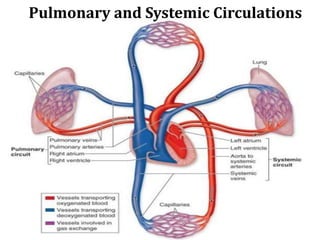
Pulmonary and Systemic Circulations
Pulmonary circulation
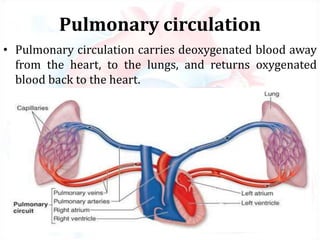
โ€ข Pulmonary circulation carries deoxygenated blood away
from the heart, to the lungs, and returns oxygenated
blood back to the heart.
Pathway of Pulmonary Circulation
โ€ข From the right atrium, the Deoxygenated blood is
pumped through the tricuspid valve into the right
ventricle.
โ€ข Then this blood pumped from the right ventricle
through the pulmonary valve and into the
pulmonary trunk of the pulmonary artery and
travels through the lungs.
โ€ข Where carbon dioxide is released and oxygen is
picked up during respiration. Arteries are further
divided into very fine capillaries which are
extremely thin-walled.
โ€ข Then the pulmonary vein returns oxygenated blood
to the left atrium of the heart.
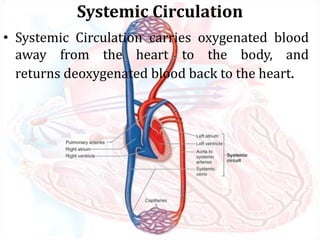
Systemic Circulation
โ€ข Systemic Circulation carries oxygenated blood
away from the heart to the body, and
returns deoxygenated blood back to the heart.
Pathway of Systemic Circulation
โ€ข Oxygen-rich blood from the lungs leaves the pulmonary
circulation when it enters the left atrium through the
pulmonary veins.
โ€ข The blood is then pumped through the mitral valve into the
left ventricle.
โ€ข From the left ventricle, blood is pumped through the aortic
valve and into the aorta.
โ€ข The aorta arches and branches into major arteries to the
upper body before passing through the diaphragm, where
it branches further into arteries which supply the lower
parts of the body.
โ€ข The arteries branch into smaller arteries, arterioles, and
finally capillaries
โ€ข The deoxygenated blood continues through the
capillaries which merge into venules, then
veins, and superior and inferior venae cavae.
โ€ข Which drain into the right atrium of the heart.
โ€ข From the right atrium, the blood will travel
through the pulmonary circulation.
pulmonaryandsystemiccirculation-160826090029.pdf

pulmonaryandsystemiccirculation-160826090029.pdf

  • 1.
    Mr. Binu Babu MBA,M.Sc.(N) Asst. Professor Mrs. Jincy Ealias M.Sc. (N) Lecturer
  • 2.
  • 3.
    Pulmonary circulation โ€ข Pulmonarycirculation carries deoxygenated blood away from the heart, to the lungs, and returns oxygenated blood back to the heart.
  • 4.
    Pathway of PulmonaryCirculation โ€ข From the right atrium, the Deoxygenated blood is pumped through the tricuspid valve into the right ventricle. โ€ข Then this blood pumped from the right ventricle through the pulmonary valve and into the pulmonary trunk of the pulmonary artery and travels through the lungs. โ€ข Where carbon dioxide is released and oxygen is picked up during respiration. Arteries are further divided into very fine capillaries which are extremely thin-walled. โ€ข Then the pulmonary vein returns oxygenated blood to the left atrium of the heart.
  • 5.
    Systemic Circulation โ€ข SystemicCirculation carries oxygenated blood away from the heart to the body, and returns deoxygenated blood back to the heart.
  • 6.
    Pathway of SystemicCirculation โ€ข Oxygen-rich blood from the lungs leaves the pulmonary circulation when it enters the left atrium through the pulmonary veins. โ€ข The blood is then pumped through the mitral valve into the left ventricle. โ€ข From the left ventricle, blood is pumped through the aortic valve and into the aorta. โ€ข The aorta arches and branches into major arteries to the upper body before passing through the diaphragm, where it branches further into arteries which supply the lower parts of the body. โ€ข The arteries branch into smaller arteries, arterioles, and finally capillaries
  • 7.
    โ€ข The deoxygenatedblood continues through the capillaries which merge into venules, then veins, and superior and inferior venae cavae. โ€ข Which drain into the right atrium of the heart. โ€ข From the right atrium, the blood will travel through the pulmonary circulation.