Br identity:
 and
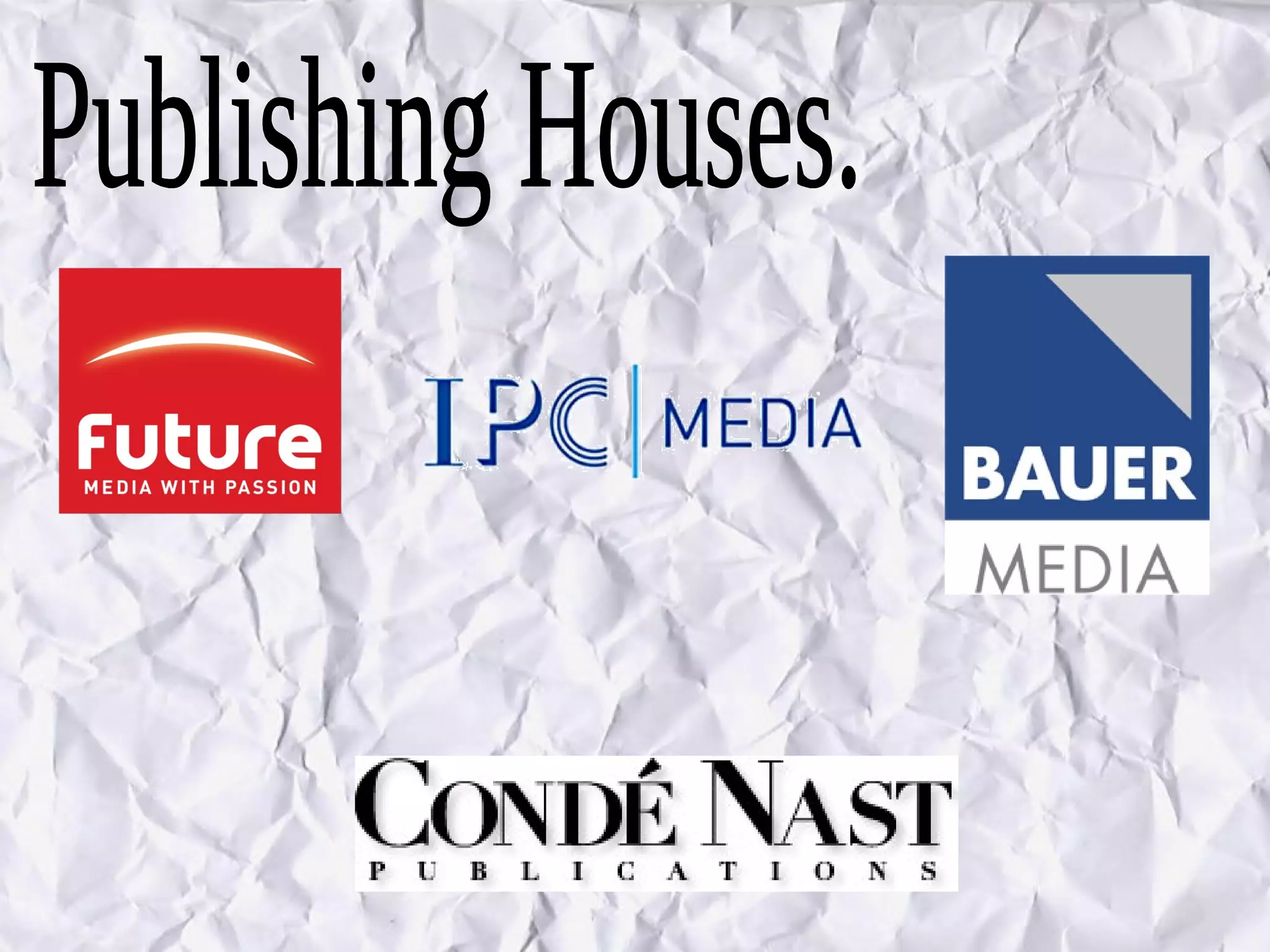
Conde Nast has a distinct brand identity as they specialise mostly in fashion and
lifestyle magazines. Their most famous magazines are probably glamour, vogue
and vanity fair. Overall they have 11 different magazines with this genre and
they stay manage to current by always using the most popular celebrities and
models at that time.


Pr
 ofit:                                                    Conde Nast has said
that its revenue has rose by 5.2% last year to £117.8m. Whilst Conde Nast
international, which is the Europe branch, saw profits increase by 25% to
£43.5m. Overall revenues were up 7.7% at £460.2m.


W detail
 eb s:                                               From the website I know
that conde nast publish 26 different magazines and they also have a wide
range of awards such as the national magazine awards and the webby
awards. Also, all of their magazines have their own website. Conde nast also
has a twitter account to keep their buyers updated.
Company size:


   Th h y:
     eir istor                                        Condé Montrose Nast
   launched his famous magazine and publishing empire in 1909 with the
   magazine Vogue. Condé Nast has always being know for its high
   standards, which has never faltered, even during the Great Depression,
   when Condé Nast introduced the new typography, design and colour.
   Vogue had the first full colour photograph on the cover in 1932, this was
   the year vogue stopped using design sketches for their front cover. 1939
   was the last magazine to be introduced by Condé Nast himself before his
   death in 1942, and that was glamour magazine. Since then Condé Nast
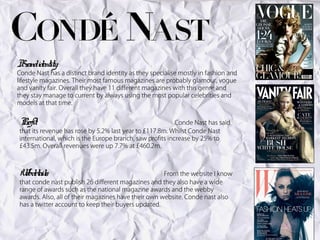
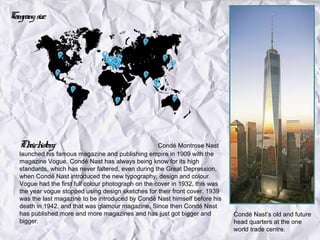
   has published more and more magazines and has just got bigger and           Condé Nast’s old and future
   bigger.                                                                     head quarters at the one
                                                                               world trade centre.
Br identity:
 and                                                                   Future
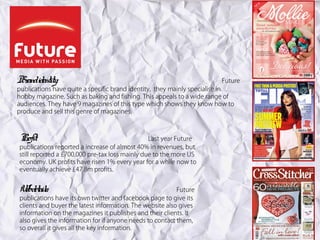
publications have quite a specific brand identity, they mainly specialise in
hobby magazine. Such as baking and fishing. This appeals to a wide range of
audiences. They have 9 magazines of this type which shows they know how to
produce and sell this genre of magazines.


Pr
 ofit:                                          Last year Future
publications reported a increase of almost 40% in revenues, but
still reported a £700,000 pre-tax loss mainly due to the more US
economy. UK profits have risen 1% every year for a while now to
eventually achieve £47.8m profits.


W detail
 eb s:                                                    Future
publications have its own twitter and facebook page to give its
clients and buyer the latest information. The website also gives
information on the magazines it publishes and their clients. It
also gives the information for if anyone needs to contact them,
so overall it gives all the key information.
Company size:
          The future website attracts over 38 million viewers every
week looking for information on their favourite magazine; they also
deliver over 100 digital editions of e-magazines for kindles etc.. Every
month they sell 2.2 million magazines and export or to 89 countries,
this makes them the UK’s largest and most successful magazine
publishers.


 Th h y:
   eir istor                                          Future
 publications was founded in Somerset in 1985 by Chris Anderson with
 the magazine Amstrad Action. Which is still one of their best selling
 magazines. Chris Anderson went on to sell Future to Pearson PLC for
 £52.7m in 1994, but decided to buy it back in 1998 for £142m. In 1999
 Future published Planet PC, a PC gaming magazines. In 2001 Chris
 Anderson left Future. In March 2010 Future announced that it was
 looking into the possibility of bringing back its GamesMaster brand on
 television. The video games show had run from 1991 until 1998; the
 spin-off magazine continues to be published.


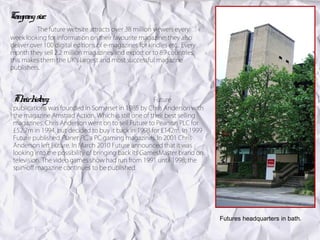
                                                                           Futures headquarters in bath.
Br identity:
 and                                                                        Bauer
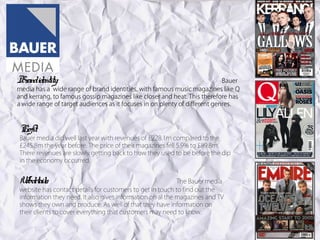
media has a wide range of brand identities, with famous music magazines like Q
and kerrang, to famous gossip magazines like closer and heat. This therefore has
a wide range of target audiences as it focuses in on plenty of different genres.


Pr
 ofit:
Bauer media did well last year with revenues of £228.1m compared to the
£245.8m the year before. The price of their magazines fell 5.9% to £89.8m.
There revenues are slowly getting back to how they used to be before the dip
in the economy occurred.
.


W detail
 eb s:                                                     The Bauer media
website has contact details for customers to get in touch to find out the
information they need. It also gives information on al the magazines and TV
shows they own and produce. As well of that they have information on
their clients to cover everything that customers may need to know.
Company size:
     Bauer media have headquarters in 15 different countries
including the UK, Germany and America. They also sell 38
million magazines a year making them one of the leading
magazine publishers in the world. They are known for
publishing probably the most famous magazine sin the
industry. They own 282 magazines and publish them in 15
different countries worldwide.

Th h y:
  eir istor                                      Bauer media
has been managed by four generations of the Bauer family, it
was originally a small printing house. Over the years Bauer
media has grown and grown to becomes one of the leading
publishers in the world. Bauer started in the UK with the
magazine Bella in 1987 and eventually H Bauer Publishing
became Britain's third largest publisher. Bauer went on
purchase f Emap Consumer Media and Emap Radio in 2008 to
become the UK's biggest publishing group. Bauer then
bought out Australia's leading publishers, Australian
Consolidated Press in 2010 to increase there incomes by
$2million.


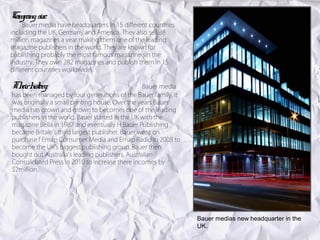
                                                               Bauer medias new headquarter in the
                                                               UK.
Br identity:
 and                                                                         IPC
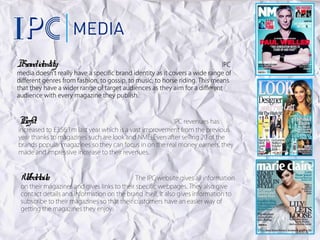
media doesn’t really have a specific brand identity as it covers a wide range of
different genres from fashion, to gossip, to music, to horse riding. This means
that they have a wider range of target audiences as they aim for a different
audience with every magazine they publish.


Pr
 ofit:                                                  IPC revenues has
increased to £356.1m last year which is a vast improvement from the previous
year thanks to magazines such are look and NME. Even after selling 20 of the
brands popular magazines so they can focus in on the real money earners, they
made and impressive increase to their revenues.


 W detail
  eb s:                                      The IPC website gives all information
 on their magazines and gives links to their specific webpages. They also give
 contact details and information on the brand itself. It also gives information to
 subscribe to their magazines so that their customers have an easier way of
 getting the magazines they enjoy.
Th h y:
  eir istor
In 1958 Cecil Harmsworth King, chairman of a newspaper
group which included the Daily Mirror and the Sunday mirror,
made an offer for Amalgamated Press, The original IPC. The
offer was accepted, and in January 1959 he was appointed its
chairman. He then went on to change its name to Fleet way
Publications, Ltd. after the name of its headquarters, Fleet way
House in London's Farringdon Street. King controlled
publishing interests which included two national daily and
two national Sunday newspapers. Over the years he went on
to introduce magazines, this gained him a lot more profit and
eventually, IPC became known as a leading magazine
publisher.


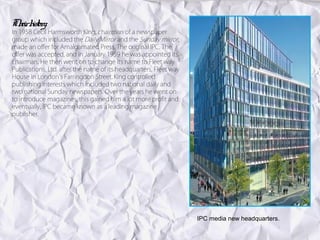
                                                                   IPC media new headquarters.

Publishing houses

  • 2.
    Br identity: and CondeNast has a distinct brand identity as they specialise mostly in fashion and lifestyle magazines. Their most famous magazines are probably glamour, vogue and vanity fair. Overall they have 11 different magazines with this genre and they stay manage to current by always using the most popular celebrities and models at that time. Pr ofit: Conde Nast has said that its revenue has rose by 5.2% last year to £117.8m. Whilst Conde Nast international, which is the Europe branch, saw profits increase by 25% to £43.5m. Overall revenues were up 7.7% at £460.2m. W detail eb s: From the website I know that conde nast publish 26 different magazines and they also have a wide range of awards such as the national magazine awards and the webby awards. Also, all of their magazines have their own website. Conde nast also has a twitter account to keep their buyers updated.
  • 3.
    Company size: Th h y: eir istor Condé Montrose Nast launched his famous magazine and publishing empire in 1909 with the magazine Vogue. Condé Nast has always being know for its high standards, which has never faltered, even during the Great Depression, when Condé Nast introduced the new typography, design and colour. Vogue had the first full colour photograph on the cover in 1932, this was the year vogue stopped using design sketches for their front cover. 1939 was the last magazine to be introduced by Condé Nast himself before his death in 1942, and that was glamour magazine. Since then Condé Nast has published more and more magazines and has just got bigger and Condé Nast’s old and future bigger. head quarters at the one world trade centre.
  • 4.
    Br identity: and Future publications have quite a specific brand identity, they mainly specialise in hobby magazine. Such as baking and fishing. This appeals to a wide range of audiences. They have 9 magazines of this type which shows they know how to produce and sell this genre of magazines. Pr ofit: Last year Future publications reported a increase of almost 40% in revenues, but still reported a £700,000 pre-tax loss mainly due to the more US economy. UK profits have risen 1% every year for a while now to eventually achieve £47.8m profits. W detail eb s: Future publications have its own twitter and facebook page to give its clients and buyer the latest information. The website also gives information on the magazines it publishes and their clients. It also gives the information for if anyone needs to contact them, so overall it gives all the key information.
  • 5.
    Company size: The future website attracts over 38 million viewers every week looking for information on their favourite magazine; they also deliver over 100 digital editions of e-magazines for kindles etc.. Every month they sell 2.2 million magazines and export or to 89 countries, this makes them the UK’s largest and most successful magazine publishers. Th h y: eir istor Future publications was founded in Somerset in 1985 by Chris Anderson with the magazine Amstrad Action. Which is still one of their best selling magazines. Chris Anderson went on to sell Future to Pearson PLC for £52.7m in 1994, but decided to buy it back in 1998 for £142m. In 1999 Future published Planet PC, a PC gaming magazines. In 2001 Chris Anderson left Future. In March 2010 Future announced that it was looking into the possibility of bringing back its GamesMaster brand on television. The video games show had run from 1991 until 1998; the spin-off magazine continues to be published. Futures headquarters in bath.
  • 6.
    Br identity: and Bauer media has a wide range of brand identities, with famous music magazines like Q and kerrang, to famous gossip magazines like closer and heat. This therefore has a wide range of target audiences as it focuses in on plenty of different genres. Pr ofit: Bauer media did well last year with revenues of £228.1m compared to the £245.8m the year before. The price of their magazines fell 5.9% to £89.8m. There revenues are slowly getting back to how they used to be before the dip in the economy occurred. . W detail eb s: The Bauer media website has contact details for customers to get in touch to find out the information they need. It also gives information on al the magazines and TV shows they own and produce. As well of that they have information on their clients to cover everything that customers may need to know.
  • 7.
    Company size: Bauer media have headquarters in 15 different countries including the UK, Germany and America. They also sell 38 million magazines a year making them one of the leading magazine publishers in the world. They are known for publishing probably the most famous magazine sin the industry. They own 282 magazines and publish them in 15 different countries worldwide. Th h y: eir istor Bauer media has been managed by four generations of the Bauer family, it was originally a small printing house. Over the years Bauer media has grown and grown to becomes one of the leading publishers in the world. Bauer started in the UK with the magazine Bella in 1987 and eventually H Bauer Publishing became Britain's third largest publisher. Bauer went on purchase f Emap Consumer Media and Emap Radio in 2008 to become the UK's biggest publishing group. Bauer then bought out Australia's leading publishers, Australian Consolidated Press in 2010 to increase there incomes by $2million. Bauer medias new headquarter in the UK.
  • 8.
    Br identity: and IPC media doesn’t really have a specific brand identity as it covers a wide range of different genres from fashion, to gossip, to music, to horse riding. This means that they have a wider range of target audiences as they aim for a different audience with every magazine they publish. Pr ofit: IPC revenues has increased to £356.1m last year which is a vast improvement from the previous year thanks to magazines such are look and NME. Even after selling 20 of the brands popular magazines so they can focus in on the real money earners, they made and impressive increase to their revenues. W detail eb s: The IPC website gives all information on their magazines and gives links to their specific webpages. They also give contact details and information on the brand itself. It also gives information to subscribe to their magazines so that their customers have an easier way of getting the magazines they enjoy.
  • 9.
    Th h y: eir istor In 1958 Cecil Harmsworth King, chairman of a newspaper group which included the Daily Mirror and the Sunday mirror, made an offer for Amalgamated Press, The original IPC. The offer was accepted, and in January 1959 he was appointed its chairman. He then went on to change its name to Fleet way Publications, Ltd. after the name of its headquarters, Fleet way House in London's Farringdon Street. King controlled publishing interests which included two national daily and two national Sunday newspapers. Over the years he went on to introduce magazines, this gained him a lot more profit and eventually, IPC became known as a leading magazine publisher. IPC media new headquarters.