Government needs to perform various in
the field of political ,social and economic
activities to maximize social and economic
welfare . In order to perform these duties
and functions government require large
amount of resources . This resources are
called Public Revenues .
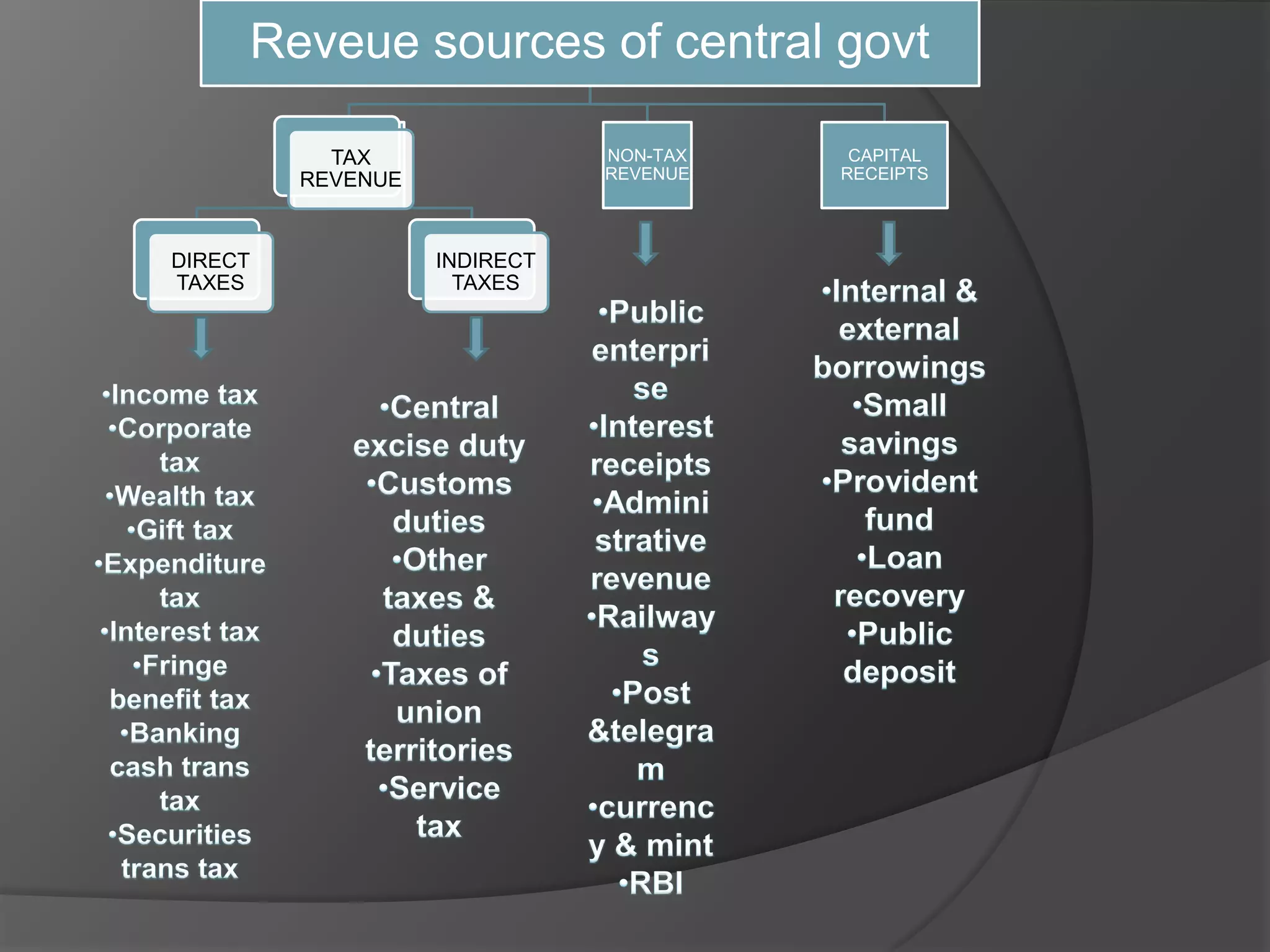
Reveue sources of central govt

           TAX
           TAX                NON-TAX    CAPITAL
         REVENUE
         REVENUE              REVENUE   RECEIPTS


DIRECT             INDIRECT
TAXES                TAXES
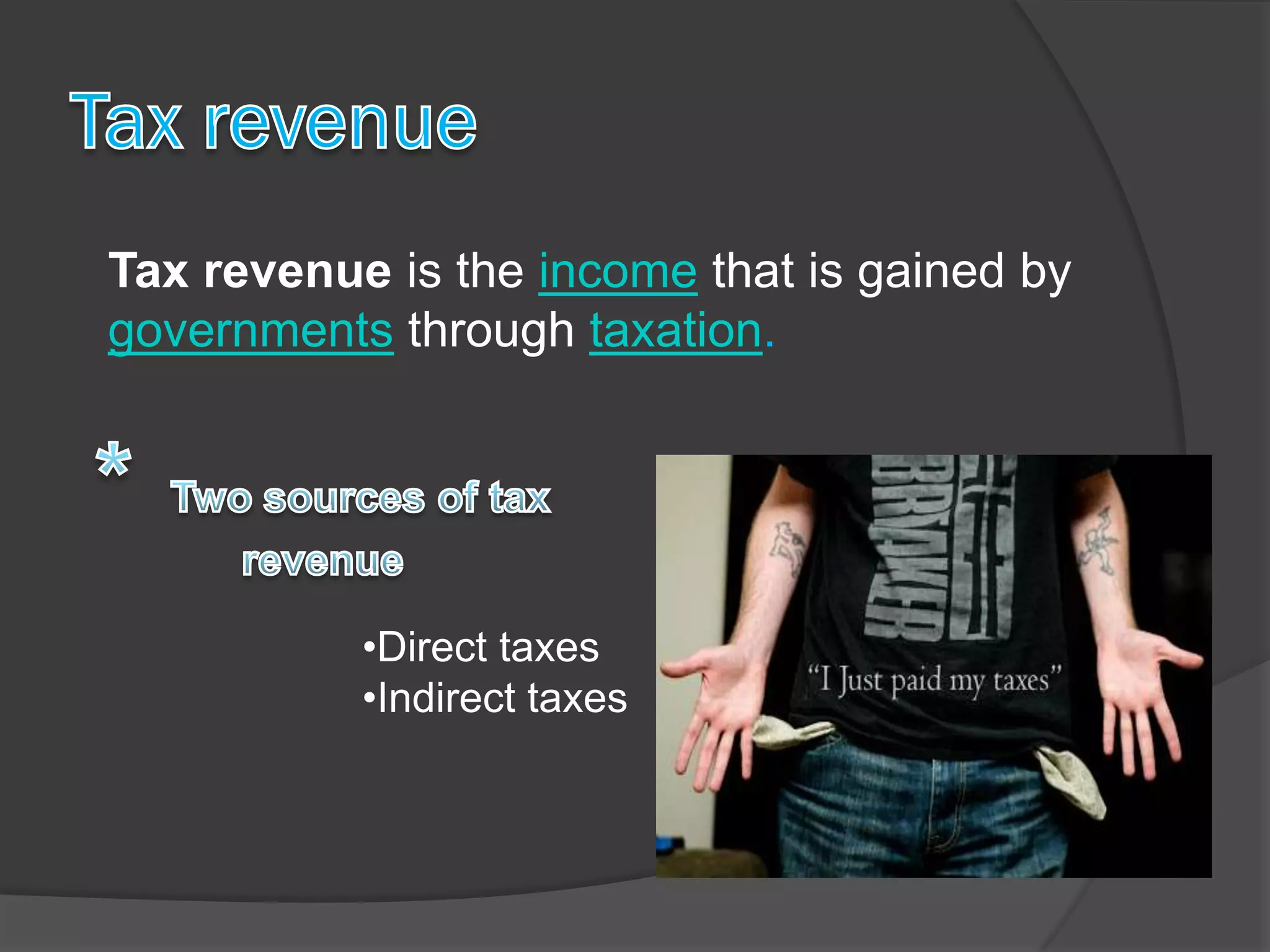
Tax revenue is the income that is gained by
governments through taxation.


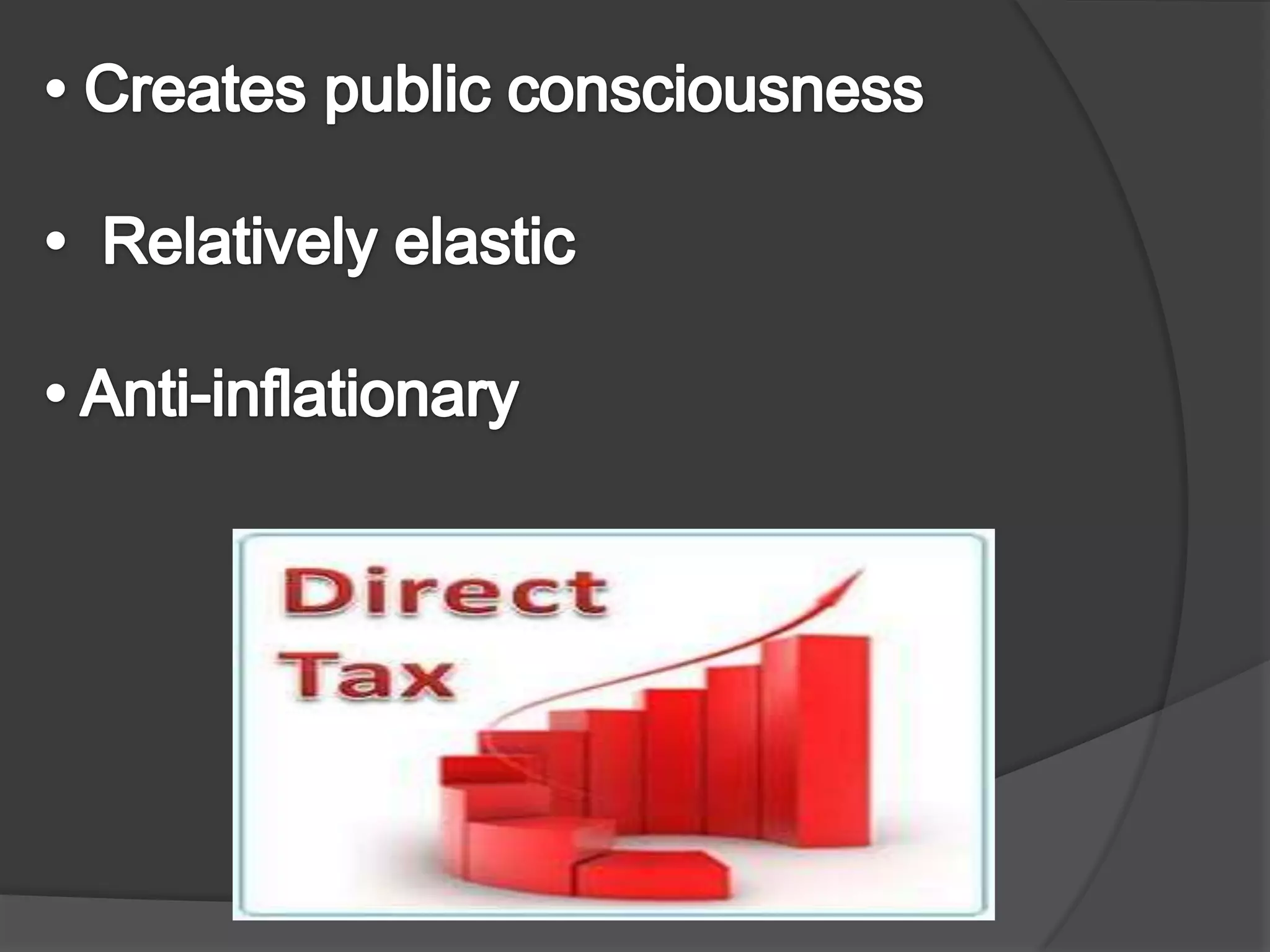
           •Direct taxes
           •Indirect taxes
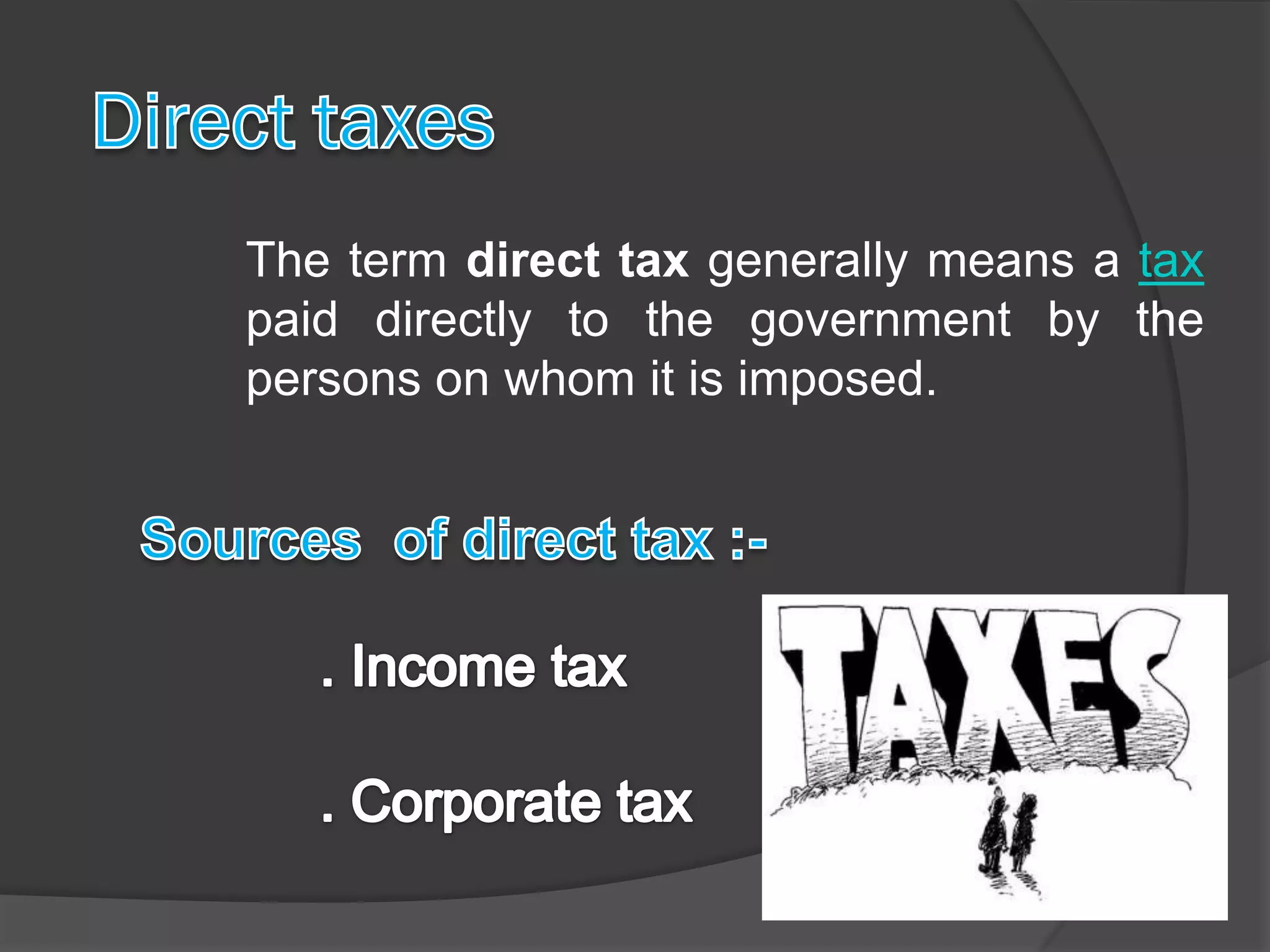
The term direct tax generally means a tax
paid directly to the government by the
persons on whom it is imposed.
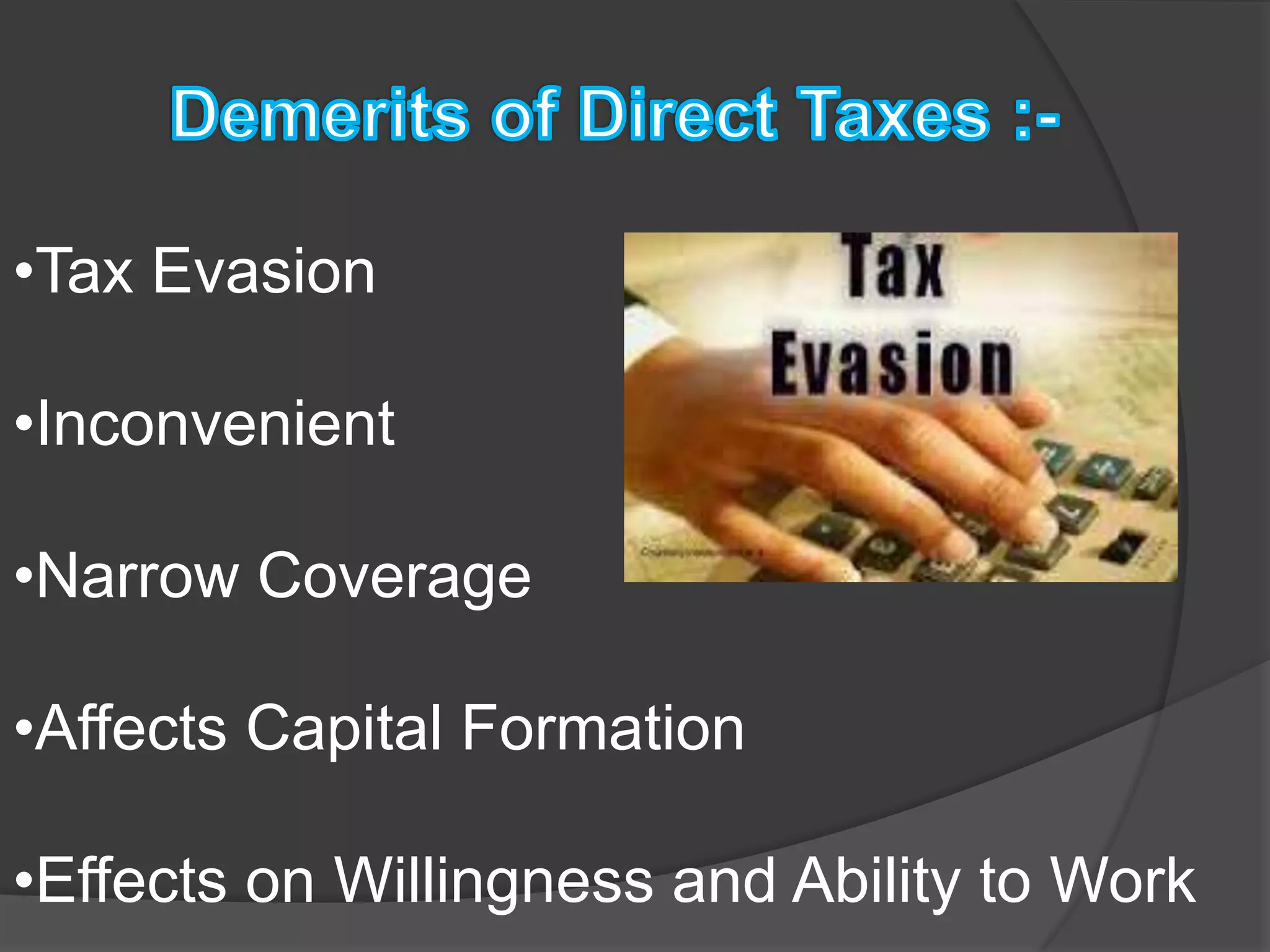
•Tax Evasion

•Inconvenient

•Narrow Coverage

•Affects Capital Formation

•Effects on Willingness and Ability to Work
* An Indirect Tax is one in which the burden
can be shifted to others. The tax payers is not
the tax bearer. The impact and incidence of
indirect taxes are on different persons. An
indirect tax is levied on and collected from a
persons who manages to pass it on to some
other person or persons on whom the real
burden of tax falls. For eg. commodity taxes
or sales tax etc are Indirect Taxes.
*Central Excise Duties

•Customs Duties

•Service Tax

•Other Taxes and Duties

•Taxes of Union Territories
•Universality

•Influence on Pattern of Production

•Wide Coverage

•May not affect Motivation to Work and Save

•Social Welfare
• High cost of Collection

•Increase Income Inequalities

•Lack of Social Consciousness

•Affects Consumption

•Inflationary
Non-tax revenue:
The union government gets revenue from other sources as well. They are collectively
called
as non-tax revenues. Thus, revenues mobilized from sources other than taxes are called
non-
tax revenue. Central Government mobilized Rs. 1,02,378 crore from this source during
2007-
08 (BE). The sources of non –tax revenue are explained below. Non-tax revenue has 12
percent
share in the total revenue of central government. The expected revenue from his source
in
2010-11 is 11 percent.


1. Public enterprises:

The central government owns a large number of commercial and industrial
establishments. When the earn profits, it will become the revenue of the central
government. In 1950-51 it accounted for Rs.23 crore and it went up to Rs.
18,969
crore.
4. Railways, post and telegraphs:

   Railways, post and telegraphs are owned by the central government. The profits
  earned by these undertakings constitute the sources of revenue to the government.


                          5. Reserve bank of India :

The profits earned by the RBI of India from its operations becomes one of the important
                     sources of revenue to the central government
6. Income from currency and mint :

Non tax revenue has been steadily increasing. For instance , in 1950-51, it accounted
for Rs, 49 crore and in 1990-91 it was Rs,12,650 crore. It has further increased to Rs, 1,
02,203 crore by 2007-08 and it was expected to go up to Rs 96,203 crore by 2008-09 .
The share of non tax revenue in the total revenue of the central government is 12 per

cent (2009-10). The revenue mobilized from tax and non tax sources is called revenue
receipts and it constitutes the most important part of central budget.
Public revenue . presentation

Public revenue . presentation

  • 2.
    Government needs toperform various in the field of political ,social and economic activities to maximize social and economic welfare . In order to perform these duties and functions government require large amount of resources . This resources are called Public Revenues .
  • 3.
    Reveue sources ofcentral govt TAX TAX NON-TAX CAPITAL REVENUE REVENUE REVENUE RECEIPTS DIRECT INDIRECT TAXES TAXES
  • 4.
    Tax revenue isthe income that is gained by governments through taxation. •Direct taxes •Indirect taxes
  • 5.
    The term directtax generally means a tax paid directly to the government by the persons on whom it is imposed.
  • 8.
    •Tax Evasion •Inconvenient •Narrow Coverage •AffectsCapital Formation •Effects on Willingness and Ability to Work
  • 9.
    * An IndirectTax is one in which the burden can be shifted to others. The tax payers is not the tax bearer. The impact and incidence of indirect taxes are on different persons. An indirect tax is levied on and collected from a persons who manages to pass it on to some other person or persons on whom the real burden of tax falls. For eg. commodity taxes or sales tax etc are Indirect Taxes.
  • 10.
    *Central Excise Duties •CustomsDuties •Service Tax •Other Taxes and Duties •Taxes of Union Territories
  • 11.
    •Universality •Influence on Patternof Production •Wide Coverage •May not affect Motivation to Work and Save •Social Welfare
  • 12.
    • High costof Collection •Increase Income Inequalities •Lack of Social Consciousness •Affects Consumption •Inflationary
  • 13.
    Non-tax revenue: The uniongovernment gets revenue from other sources as well. They are collectively called as non-tax revenues. Thus, revenues mobilized from sources other than taxes are called non- tax revenue. Central Government mobilized Rs. 1,02,378 crore from this source during 2007- 08 (BE). The sources of non –tax revenue are explained below. Non-tax revenue has 12 percent share in the total revenue of central government. The expected revenue from his source in 2010-11 is 11 percent. 1. Public enterprises: The central government owns a large number of commercial and industrial establishments. When the earn profits, it will become the revenue of the central government. In 1950-51 it accounted for Rs.23 crore and it went up to Rs. 18,969 crore.
  • 14.
    4. Railways, postand telegraphs: Railways, post and telegraphs are owned by the central government. The profits earned by these undertakings constitute the sources of revenue to the government. 5. Reserve bank of India : The profits earned by the RBI of India from its operations becomes one of the important sources of revenue to the central government
  • 15.
    6. Income fromcurrency and mint : Non tax revenue has been steadily increasing. For instance , in 1950-51, it accounted for Rs, 49 crore and in 1990-91 it was Rs,12,650 crore. It has further increased to Rs, 1, 02,203 crore by 2007-08 and it was expected to go up to Rs 96,203 crore by 2008-09 . The share of non tax revenue in the total revenue of the central government is 12 per cent (2009-10). The revenue mobilized from tax and non tax sources is called revenue receipts and it constitutes the most important part of central budget.