Welcome To Our
Presentation
“Indicators of public-private
partnership effectiveness”
Content
• Introduction &definition
• Effectiveness and public-private effectiveness
• Importance of ppp
• Toward an effective ppp model
• Indicators of ppp effectiveness
• The way of measuring effectiveness of ppp
• Problems &solutions of ppp
• Conclusion
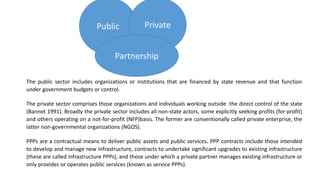
Public Private
Partnership
The public sector includes organizations or institutions that are financed by state revenue and that function
under government budgets or control.
The private sector comprises those organizations and individuals working outside the direct control of the state
(Bannet 1991). Broadly the private sector includes all non-state actors, some explicitly seeking profits (for-profit)
and others operating on a not-for-profit (NFP)basis. The former are conventionally called private enterprise, the
latter non-governmental organizations (NGOS).
PPPs are a contractual means to deliver public assets and public services. PPP contracts include those intended
to develop and manage new infrastructure, contracts to undertake significant upgrades to existing infrastructure
(these are called infrastructure PPPs), and those under which a private partner manages existing infrastructure or
only provides or operates public services (known as service PPPs).
Definition
• The Organization for Economic Co-operation and Development (OECD) defines a
Public-Private Partnership (PPP) as an agreement between the government and
one or more private partners (which may include the operators and the
financers). Within the agreement, the private partners deliver the service so that
the service delivery objectives of the government are aligned with the profit
objectives of the private partners. Furthermore, the effectiveness of the
alignment depends on a sufficient transfer of risk to the private partners.
• According to the International Monetary Fund, PPPs refer to arrangements in
which the private sector supplies infrastructure assets and services that
traditionally have been provided by the government. In addition to private
execution and financing of public investment, PPPs have two other important
characteristics: an emphasis on service provision and investment by the private
sector. In this way, significant risk is transferred from the government to the
private sector.
The measure of success for a PPP is the right
people coming together to do the right
things in the right way.
• To implement a new PPP, 5 key questions need to be considered: Why
is it needed, who will it involve, how will it be governed, what services
and incentives will be offered and when will action be taken to start it
and make it effective
Effectiveness and public-private partnership
• Exploring PPPs as a way of introducing private sector technology and
innovation in providing better public services through improved
operational efficiency
• Incentivizing the private sector to deliver projects on time and within
budget
• Imposing budgetary certainty by setting present and the future costs of
infrastructure projects over time
• Supplementing limited public sector capacities to meet the growing
demand for infrastructure development
• Extracting long-term value-for-money through appropriate risk transfer to
the private sector over the life of the project – from design/ construction to
operations/ maintenance.
Importance of public-private
partnership
1.Because ppp projects are often politicaaly
sensitive, we need to manage political risks.
Toward an effective ppp business model
2.Off-budget or on-budget , ppp(s) still need robust and
long-term public sector backing.
3.The credibility of the underlining sources of funding of ppps
is crucial, both user charges and direct government payments
contain inherent challenges.
4.The private sector prices in risk and uncertainty, and ,as a resut , the
private sector will factor these into its own rates of return targets for
projects.
5.No single formula fits all requirements: different types of ppp
structures are appropriate at different times and for different sectors.
6.Local private sector capacity in ppp transactions needs to be built
7. The ppp industry in emerging markets needs to further develop
financial products to enhance ppp’s creditworthiness.
8.Sharing the great collective body of knowledge on ppps gathered
through hundreds of projects in all regions of the world is critical.
Principles for public-private partnerships
(ppps) effectiveness in developing countries
Economic fundamentals –investments designated for ppp
arrangements need to:
 Fit with a country’s growth and development strategy
 Meet essential economic requirements(such as demand for services)
 Enjoy political buy-in and
 Comply with sound fiscal management and public finance practices.
Country’s growth and development strategy
depends on
• Legal & Regulatory Fundamentals
• Political Commitment and Institutional Framework
• Project Selection and Structuring
• Competition and Transparency
• Government Financial Support
• Contract monitoring
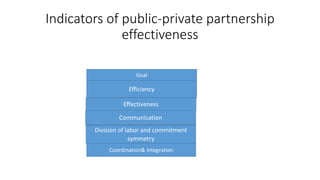
Indicators of public-private partnership
effectiveness
Efficiency
Effectiveness
Communication
Division of labor and commitment
symmetry
Goal
Coordination& integration
• An observable and measurable end result having one or more
objectives to be achieved within a more or less fixed .
• The United Ntions Agenda 2030 for Sustainable
Development encourages countries to build PPPs. This is stated
explicitly in Sustainable Development Goal..
• "encourage and promote effective public, public-private and civil
society partnerships, building on the experience and resourcing
strategies of partnerships"
Goal
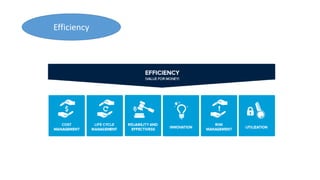
Efficiency
 Considering benefits
 Better utilization of the asset
Effectiveness
• The division of labor is the separation of tasks in any system so that
participants may specialize. Individuals, organizations, and nations are
endowed with or acquire specialized capabilities and either form
combinations or trade to take advantage of the capabilities of others
in addition to their own.
Division of labor
•  As a coordination mechanism, a PPP serves as a forum or medium to
coordinate on-going activities between multiple parties to overcome
market failures which no single actor could deal with alone.
•  Through this mechanism, public and private sector actors, which are
loosely defined as governments and international organizations on the
public side and businesses and civil society on the private side, work
together towards a common goal.
•  This common goal is to accelerate the transition to a green economy, in
part by increasing the growth rate of markets for new products which have
an advantage due to their higher natural resource efficiency or lower
negative environmental externalities, but which may be constrained by
factors such as transaction costs, lack of externality pricing and/or
immaturity of the new, greener technologies.
Coordination &
integration
• The identification of all the interest groups to which communication should
be directed;
• An explanation of the main concepts to be communicated, drawing from
the basic elements of the project such is its outcomes, the need it tries to
meet, and the people it tries to serve;
• The identification of the media used to reach the groups identified;
• The main characteristics of the communication pieces, preferably specific
to each group identified;
• The identification of the people inside the project team who should be
considered as the prime source of information for the general public; and
• The description of a basic strategy for maintaining good relationships with
the press.
Communication
strategy
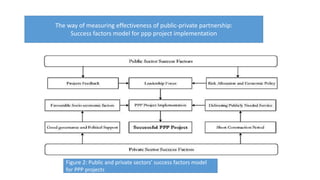
The way of measuring effectiveness of public-private partnership:
Success factors model for ppp project implementation
Figure 2: Public and private sectors’ success factors model
for PPP projects
Problems
 Flexibility
 Timeline
 Focus of the project
 Funding priorities
 Communication or understanding
 Autonomy within the partnership
 Conflicts
Problems & solution of ppp
• Creating an ongoing narrative.
• Creating a formal control mechanism.
Solutions

Public Private partnership

  • 1.
  • 2.
  • 3.
    Content • Introduction &definition •Effectiveness and public-private effectiveness • Importance of ppp • Toward an effective ppp model • Indicators of ppp effectiveness • The way of measuring effectiveness of ppp • Problems &solutions of ppp • Conclusion
  • 4.
    Public Private Partnership The publicsector includes organizations or institutions that are financed by state revenue and that function under government budgets or control. The private sector comprises those organizations and individuals working outside the direct control of the state (Bannet 1991). Broadly the private sector includes all non-state actors, some explicitly seeking profits (for-profit) and others operating on a not-for-profit (NFP)basis. The former are conventionally called private enterprise, the latter non-governmental organizations (NGOS). PPPs are a contractual means to deliver public assets and public services. PPP contracts include those intended to develop and manage new infrastructure, contracts to undertake significant upgrades to existing infrastructure (these are called infrastructure PPPs), and those under which a private partner manages existing infrastructure or only provides or operates public services (known as service PPPs).
  • 5.
    Definition • The Organizationfor Economic Co-operation and Development (OECD) defines a Public-Private Partnership (PPP) as an agreement between the government and one or more private partners (which may include the operators and the financers). Within the agreement, the private partners deliver the service so that the service delivery objectives of the government are aligned with the profit objectives of the private partners. Furthermore, the effectiveness of the alignment depends on a sufficient transfer of risk to the private partners. • According to the International Monetary Fund, PPPs refer to arrangements in which the private sector supplies infrastructure assets and services that traditionally have been provided by the government. In addition to private execution and financing of public investment, PPPs have two other important characteristics: an emphasis on service provision and investment by the private sector. In this way, significant risk is transferred from the government to the private sector.
  • 6.
    The measure ofsuccess for a PPP is the right people coming together to do the right things in the right way. • To implement a new PPP, 5 key questions need to be considered: Why is it needed, who will it involve, how will it be governed, what services and incentives will be offered and when will action be taken to start it and make it effective Effectiveness and public-private partnership
  • 7.
    • Exploring PPPsas a way of introducing private sector technology and innovation in providing better public services through improved operational efficiency • Incentivizing the private sector to deliver projects on time and within budget • Imposing budgetary certainty by setting present and the future costs of infrastructure projects over time • Supplementing limited public sector capacities to meet the growing demand for infrastructure development • Extracting long-term value-for-money through appropriate risk transfer to the private sector over the life of the project – from design/ construction to operations/ maintenance. Importance of public-private partnership
  • 8.
    1.Because ppp projectsare often politicaaly sensitive, we need to manage political risks. Toward an effective ppp business model
  • 9.
    2.Off-budget or on-budget, ppp(s) still need robust and long-term public sector backing.
  • 10.
    3.The credibility ofthe underlining sources of funding of ppps is crucial, both user charges and direct government payments contain inherent challenges.
  • 11.
    4.The private sectorprices in risk and uncertainty, and ,as a resut , the private sector will factor these into its own rates of return targets for projects.
  • 12.
    5.No single formulafits all requirements: different types of ppp structures are appropriate at different times and for different sectors.
  • 13.
    6.Local private sectorcapacity in ppp transactions needs to be built
  • 14.
    7. The pppindustry in emerging markets needs to further develop financial products to enhance ppp’s creditworthiness.
  • 15.
    8.Sharing the greatcollective body of knowledge on ppps gathered through hundreds of projects in all regions of the world is critical.
  • 16.
    Principles for public-privatepartnerships (ppps) effectiveness in developing countries Economic fundamentals –investments designated for ppp arrangements need to:  Fit with a country’s growth and development strategy  Meet essential economic requirements(such as demand for services)  Enjoy political buy-in and  Comply with sound fiscal management and public finance practices.
  • 17.
    Country’s growth anddevelopment strategy depends on • Legal & Regulatory Fundamentals • Political Commitment and Institutional Framework • Project Selection and Structuring • Competition and Transparency • Government Financial Support • Contract monitoring
  • 18.
    Indicators of public-privatepartnership effectiveness Efficiency Effectiveness Communication Division of labor and commitment symmetry Goal Coordination& integration
  • 19.
    • An observableand measurable end result having one or more objectives to be achieved within a more or less fixed . • The United Ntions Agenda 2030 for Sustainable Development encourages countries to build PPPs. This is stated explicitly in Sustainable Development Goal.. • "encourage and promote effective public, public-private and civil society partnerships, building on the experience and resourcing strategies of partnerships" Goal
  • 20.
  • 21.
     Considering benefits Better utilization of the asset Effectiveness
  • 22.
    • The divisionof labor is the separation of tasks in any system so that participants may specialize. Individuals, organizations, and nations are endowed with or acquire specialized capabilities and either form combinations or trade to take advantage of the capabilities of others in addition to their own. Division of labor
  • 23.
    •  Asa coordination mechanism, a PPP serves as a forum or medium to coordinate on-going activities between multiple parties to overcome market failures which no single actor could deal with alone. •  Through this mechanism, public and private sector actors, which are loosely defined as governments and international organizations on the public side and businesses and civil society on the private side, work together towards a common goal. •  This common goal is to accelerate the transition to a green economy, in part by increasing the growth rate of markets for new products which have an advantage due to their higher natural resource efficiency or lower negative environmental externalities, but which may be constrained by factors such as transaction costs, lack of externality pricing and/or immaturity of the new, greener technologies. Coordination & integration
  • 24.
    • The identificationof all the interest groups to which communication should be directed; • An explanation of the main concepts to be communicated, drawing from the basic elements of the project such is its outcomes, the need it tries to meet, and the people it tries to serve; • The identification of the media used to reach the groups identified; • The main characteristics of the communication pieces, preferably specific to each group identified; • The identification of the people inside the project team who should be considered as the prime source of information for the general public; and • The description of a basic strategy for maintaining good relationships with the press. Communication strategy
  • 25.
    The way ofmeasuring effectiveness of public-private partnership: Success factors model for ppp project implementation Figure 2: Public and private sectors’ success factors model for PPP projects
  • 26.
    Problems  Flexibility  Timeline Focus of the project  Funding priorities  Communication or understanding  Autonomy within the partnership  Conflicts Problems & solution of ppp
  • 27.
    • Creating anongoing narrative. • Creating a formal control mechanism. Solutions