Public Library Statistics Collecting, reporting, and using stats in New Hampshire
Why collect statistics? Because it's the law:     "All public libraries in NH must (see  RSA 202-A:12 ) make an annual report to the State Library." *   Other states have similar laws.    * http://www.nh.gov/nhsl/lds/public_library_stats_instructions.htm
Okay, but why else? Often, eligibility for library funding is linked to participation in State Library Statistics Surveys: "Your library is ineligible for a grant for 2009 if: it failed to complete and return the Public Library Statistics Report for 2008. . ."*   Other states have similar restrictions.   * "Kids, Books and the Arts 2009 Grant Application," available at  http://www.nh.gov/nhsl/services/librarians/documents/KBA09librarygrantapplication.pdf
Collecting stats and filling out the report is time-consuming. But it is important to be accurate.  "It is not only important to you, but also to someone else in another library who may someday use your library's data" (p. 91-92).* * Smith, M. (1996).  Collecting and using public library statistics: a how-to-do-it manual for librarians.  New York: Neal-Schuman.
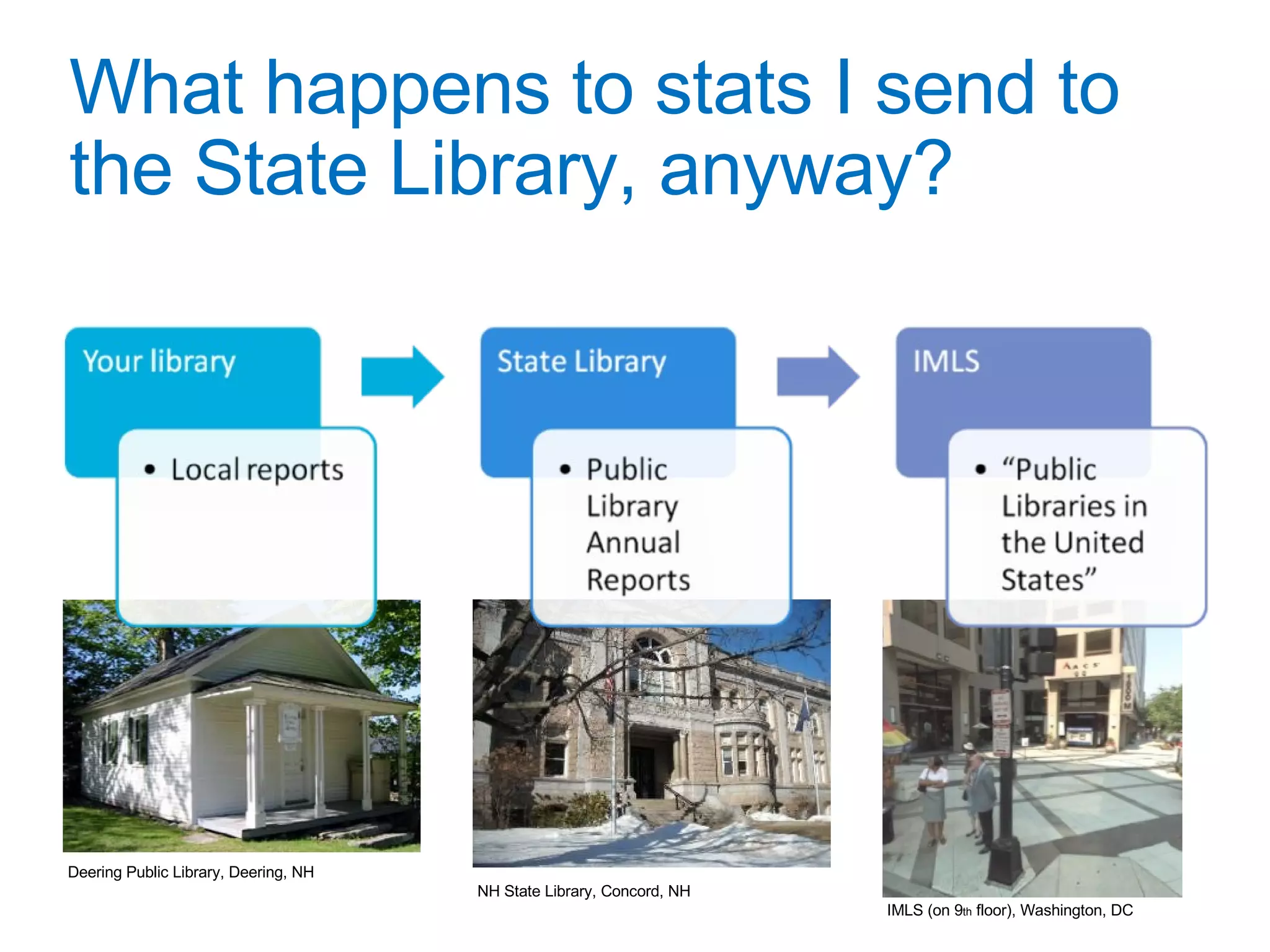
What happens to stats I send to the State Library, anyway? Deering Public Library, Deering, NH NH State Library, Concord, NH IMLS (on 9 th  floor), Washington, DC
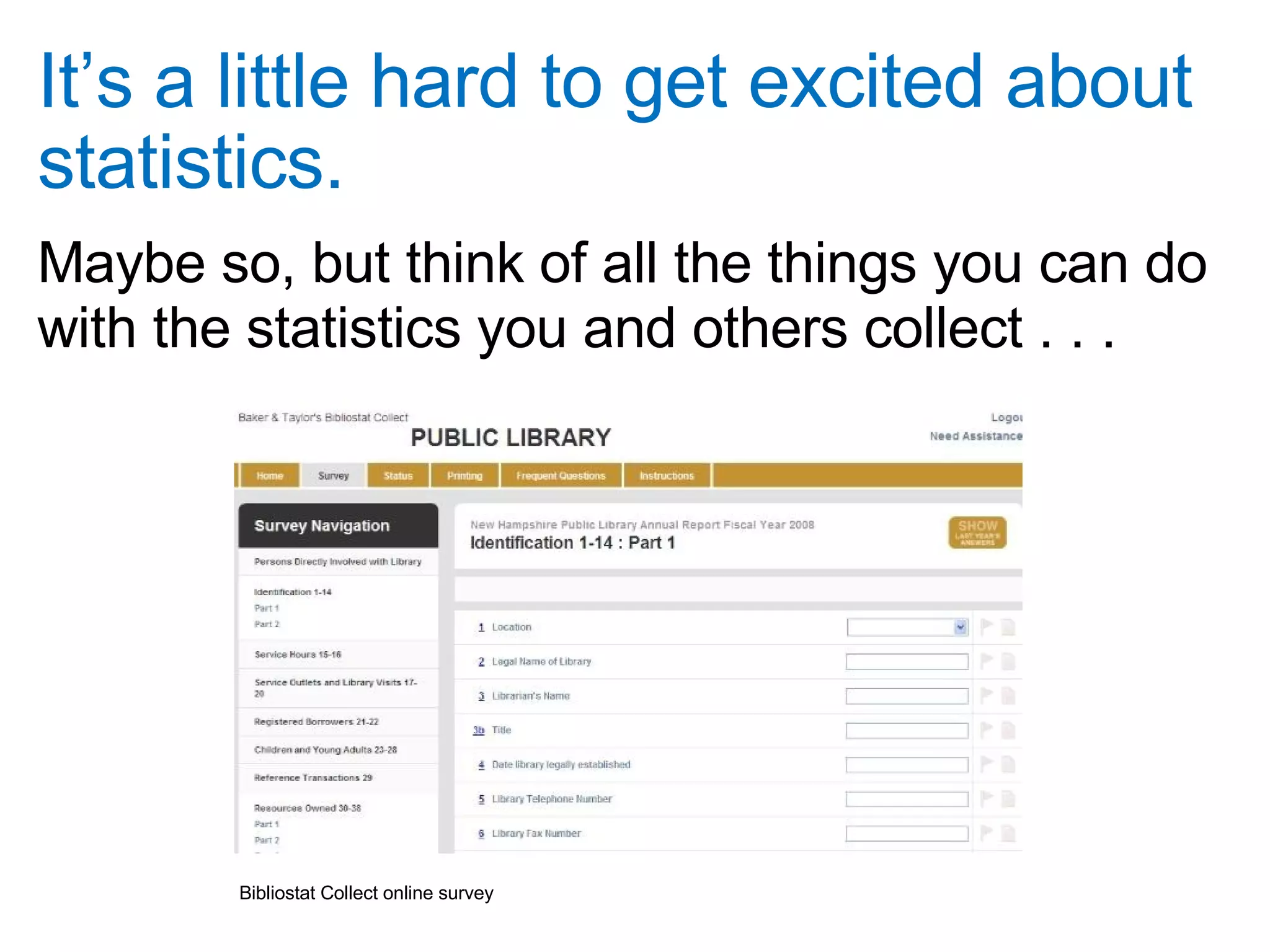
It’s a little hard to get excited about statistics.  Maybe so, but think of all the things you can do with the statistics you and others collect . . . Bibliostat Collect online survey
FUN  with  library statistics!
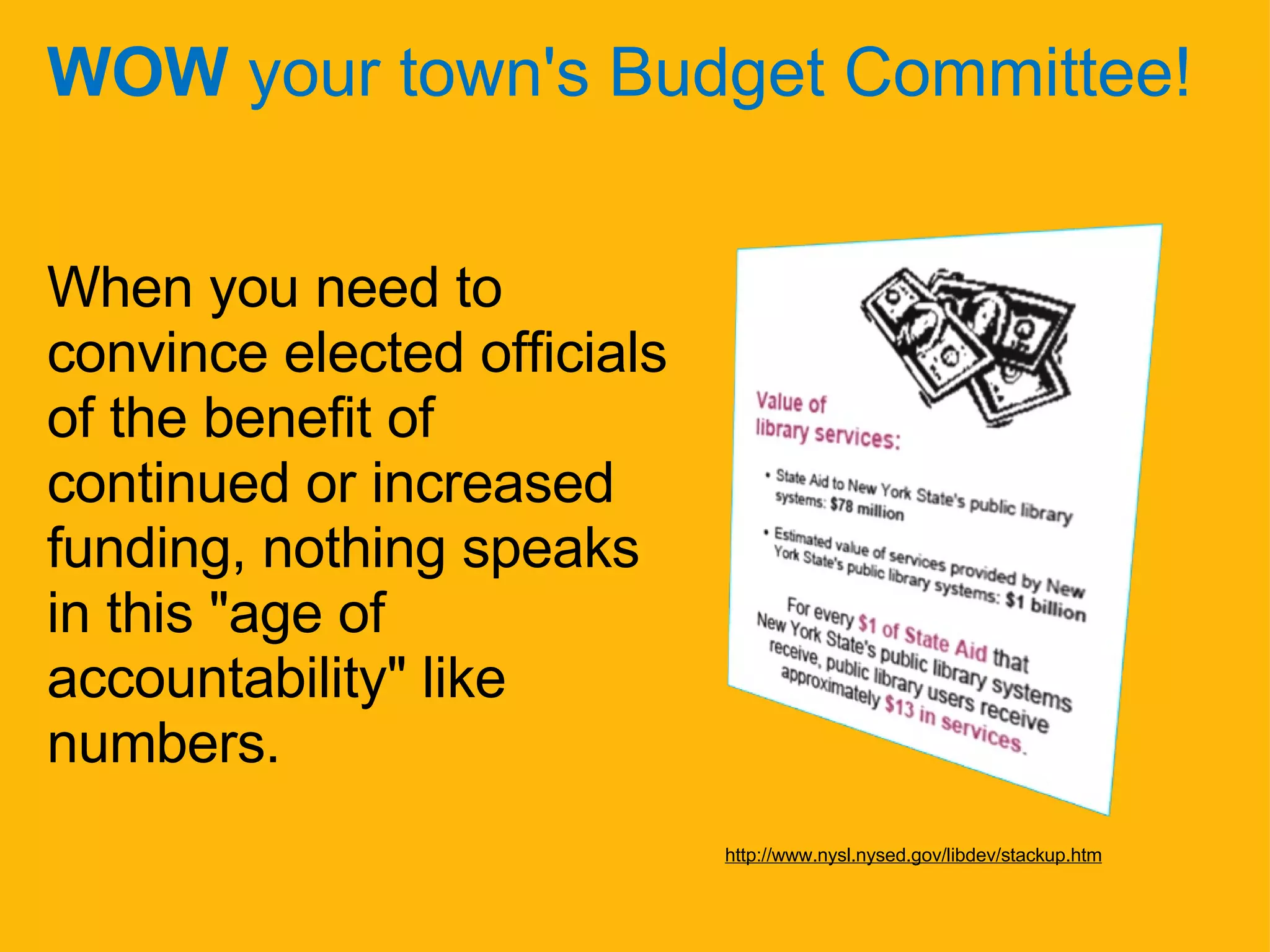
WOW  your town's Budget Committee! When you need to convince elected officials of the benefit of continued or increased funding, nothing speaks in this "age of accountability" like numbers. http://www.nysl.nysed.gov/libdev/stackup.htm
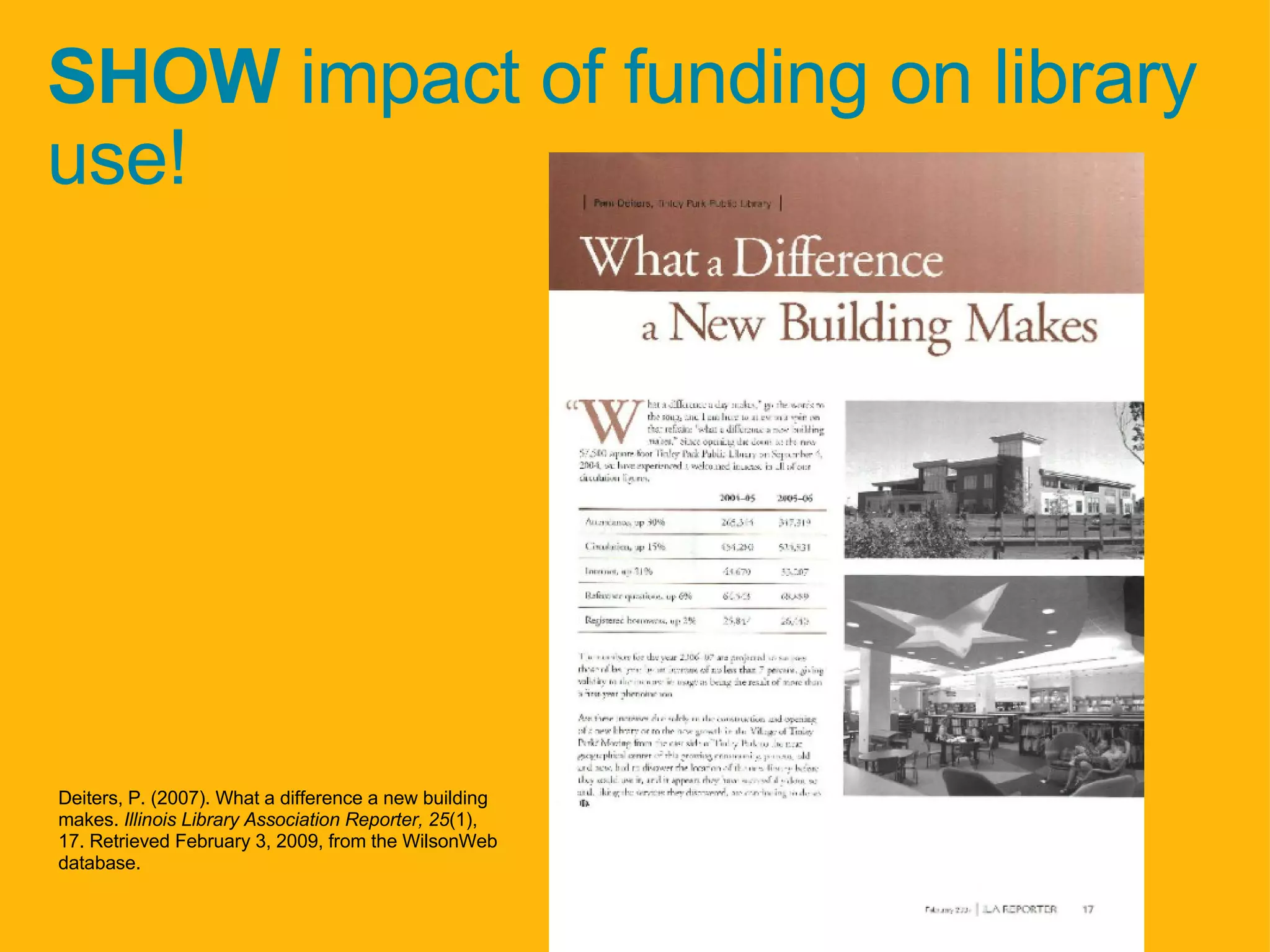
SHOW  impact of funding on library use!   Deiters, P. (2007). What a difference a new building makes.  Illinois Library Association Reporter, 25 (1), 17. Retrieved February 3, 2009, from the WilsonWeb database.
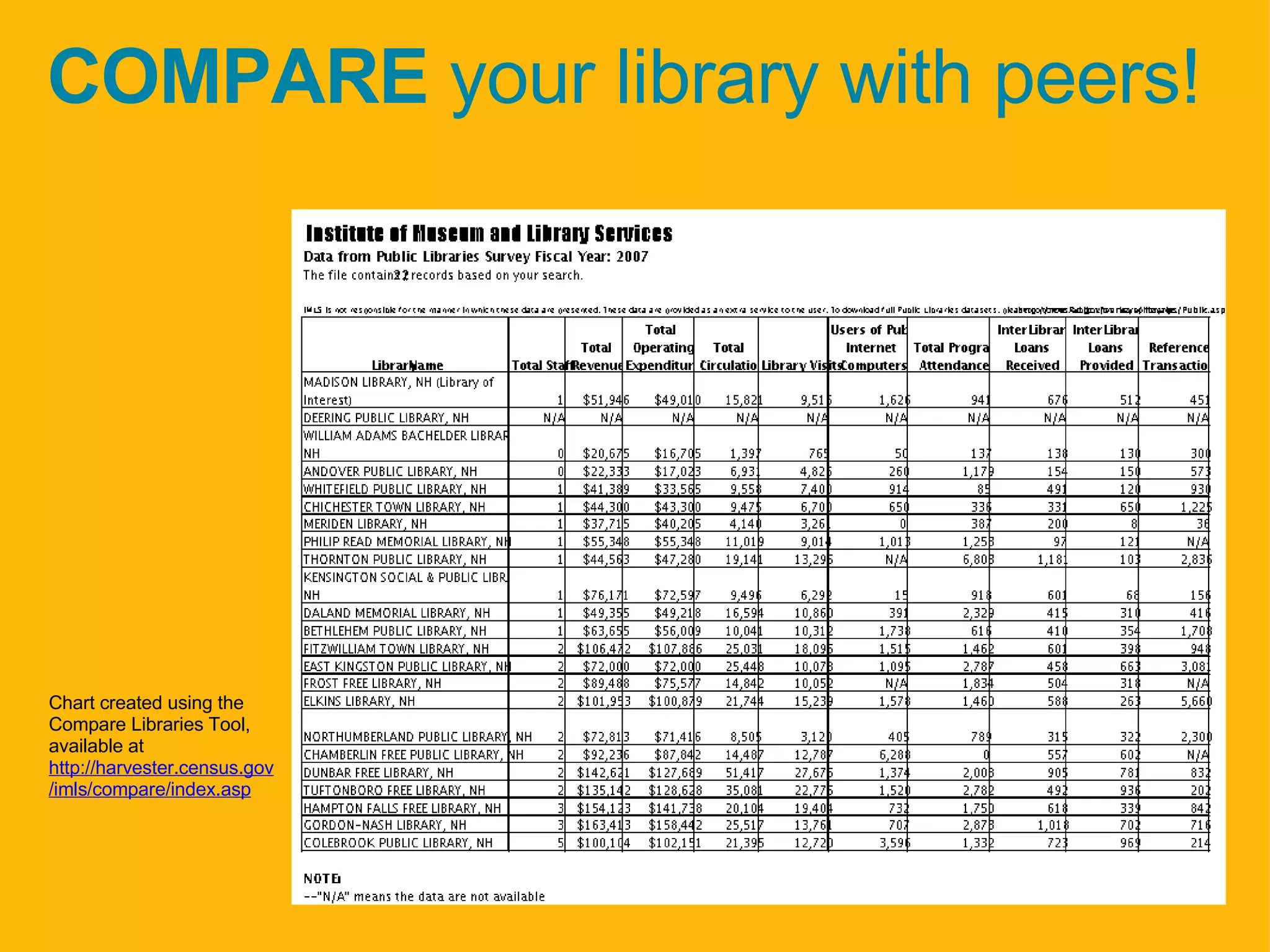
COMPARE  your library with peers!   Chart created using the Compare Libraries Tool, available at  http://harvester.census.gov/imls/compare/index.asp
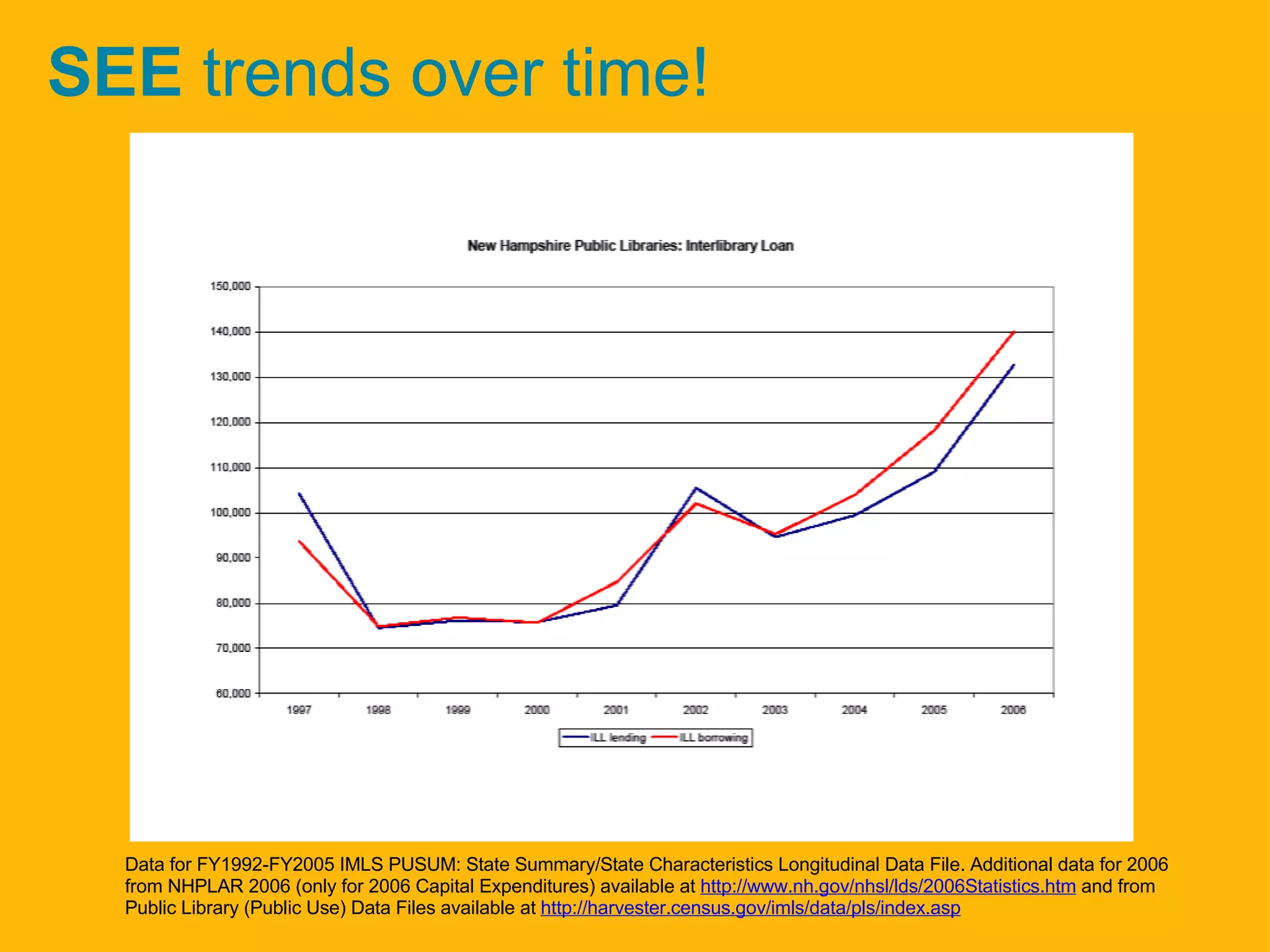
SEE  trends over time! Data for FY1992-FY2005 IMLS PUSUM: State Summary/State Characteristics Longitudinal Data File. Additional data for 2006 from NHPLAR 2006 (only for 2006 Capital Expenditures) available at  http://www.nh.gov/nhsl/lds/2006Statistics.htm  and from Public Library (Public Use) Data Files available at  http://harvester.census.gov/imls/data/pls/index.asp
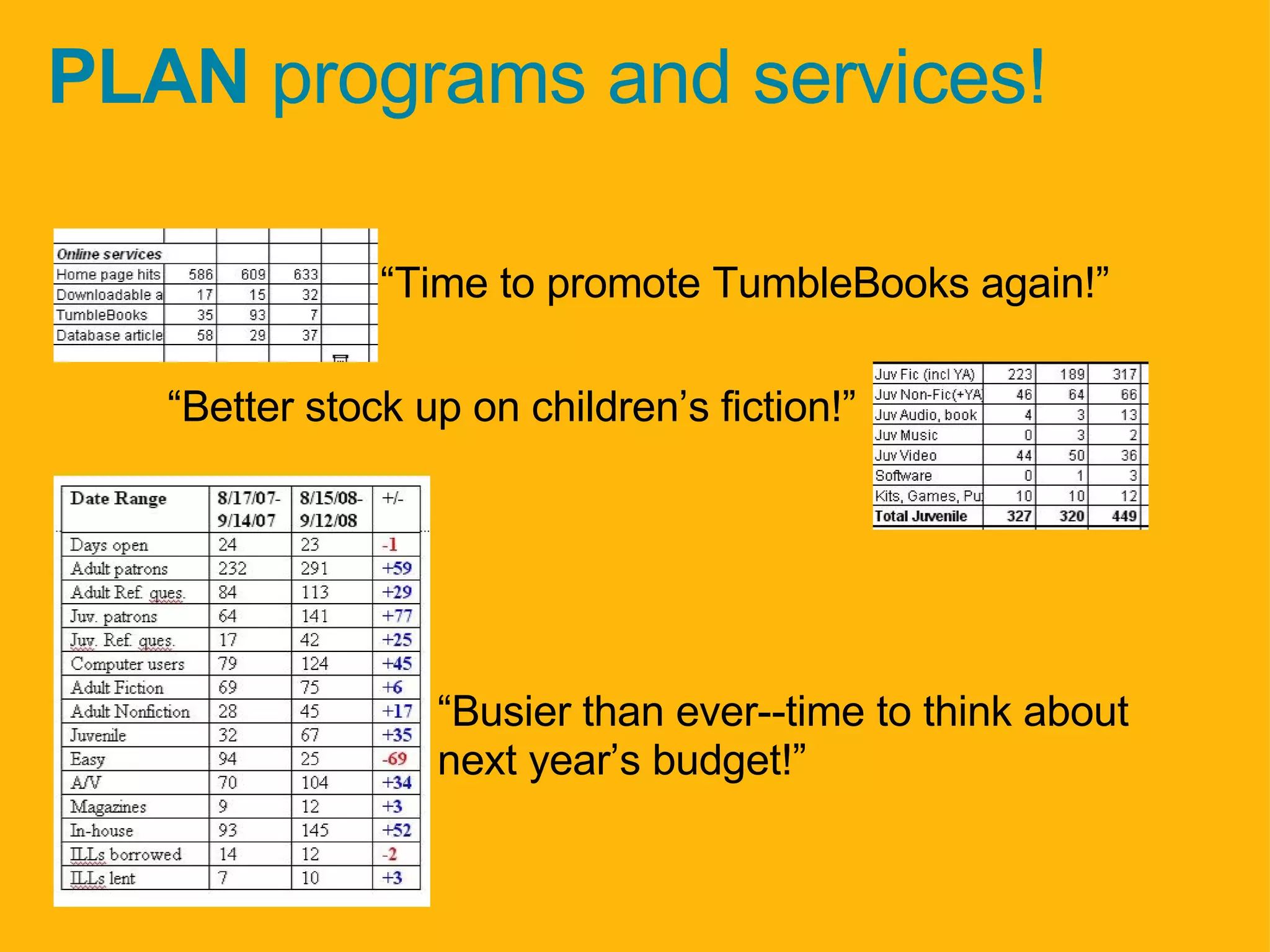
PLAN  programs and services! “ Time to promote TumbleBooks again!” “ Better stock up on children’s fiction!” “ Busier than ever--time to think about next year’s budget!”
ADD  your idea here!
Public Library Statistics An internship project, spring 2009 Mary Cronin, URI GSLIS student Dr. Gale Eaton, LSC 595 course instructor Supervisor: Thomas Ladd, New Hampshire State Library, State Data Coordinator Thanks to  Tom Ladd, for the opportunity to learn to appreciate statistics; Bobbi Slossar, New Hampshire State Library, for website suggestions and loan of laptop; and  Susan Weaver, Harrisville Public Library, Lori Fisher, Baker Free Library, Andrea Masters, North Conway Public Library, for sharing statistics stories and forms

Public Library Statistics

  • 1.
    Public Library StatisticsCollecting, reporting, and using stats in New Hampshire
  • 2.
    Why collect statistics?Because it's the law:     "All public libraries in NH must (see RSA 202-A:12 ) make an annual report to the State Library." *   Other states have similar laws.   * http://www.nh.gov/nhsl/lds/public_library_stats_instructions.htm
  • 3.
    Okay, but whyelse? Often, eligibility for library funding is linked to participation in State Library Statistics Surveys: "Your library is ineligible for a grant for 2009 if: it failed to complete and return the Public Library Statistics Report for 2008. . ."*   Other states have similar restrictions.   * "Kids, Books and the Arts 2009 Grant Application," available at http://www.nh.gov/nhsl/services/librarians/documents/KBA09librarygrantapplication.pdf
  • 4.
    Collecting stats andfilling out the report is time-consuming. But it is important to be accurate. "It is not only important to you, but also to someone else in another library who may someday use your library's data" (p. 91-92).* * Smith, M. (1996). Collecting and using public library statistics: a how-to-do-it manual for librarians. New York: Neal-Schuman.
  • 5.
    What happens tostats I send to the State Library, anyway? Deering Public Library, Deering, NH NH State Library, Concord, NH IMLS (on 9 th floor), Washington, DC
  • 6.
    It’s a littlehard to get excited about statistics. Maybe so, but think of all the things you can do with the statistics you and others collect . . . Bibliostat Collect online survey
  • 7.
    FUN with library statistics!
  • 8.
    WOW yourtown's Budget Committee! When you need to convince elected officials of the benefit of continued or increased funding, nothing speaks in this "age of accountability" like numbers. http://www.nysl.nysed.gov/libdev/stackup.htm
  • 9.
    SHOW impactof funding on library use!   Deiters, P. (2007). What a difference a new building makes. Illinois Library Association Reporter, 25 (1), 17. Retrieved February 3, 2009, from the WilsonWeb database.
  • 10.
    COMPARE yourlibrary with peers!   Chart created using the Compare Libraries Tool, available at http://harvester.census.gov/imls/compare/index.asp
  • 11.
    SEE trendsover time! Data for FY1992-FY2005 IMLS PUSUM: State Summary/State Characteristics Longitudinal Data File. Additional data for 2006 from NHPLAR 2006 (only for 2006 Capital Expenditures) available at http://www.nh.gov/nhsl/lds/2006Statistics.htm and from Public Library (Public Use) Data Files available at http://harvester.census.gov/imls/data/pls/index.asp
  • 12.
    PLAN programsand services! “ Time to promote TumbleBooks again!” “ Better stock up on children’s fiction!” “ Busier than ever--time to think about next year’s budget!”
  • 13.
    ADD youridea here!
  • 14.
    Public Library StatisticsAn internship project, spring 2009 Mary Cronin, URI GSLIS student Dr. Gale Eaton, LSC 595 course instructor Supervisor: Thomas Ladd, New Hampshire State Library, State Data Coordinator Thanks to Tom Ladd, for the opportunity to learn to appreciate statistics; Bobbi Slossar, New Hampshire State Library, for website suggestions and loan of laptop; and Susan Weaver, Harrisville Public Library, Lori Fisher, Baker Free Library, Andrea Masters, North Conway Public Library, for sharing statistics stories and forms