

Psychology on Second Life? Learning, Support and Research in 3D Online Multi-user Virtual Environments . Simon Bignell Lecturer in Psychology University of Derby, UK Email: s.bignell@derby.ac.uk Twitter: ‘MiltonBroome’
Disclosure No conflict of interest to declare
Acknowledgements
The Rise of the Net As of March 2007, worldwide there are 1.114 billion people using the Internet.  (http://www.internetworldstats.com). The speed at which this technology has been adopted into society has been described as revolutionary, with particularly significant saturation into schools, work and family environments   (Stanley, 2001). Educators, Researchers and Support Groups have all embraced the potential.
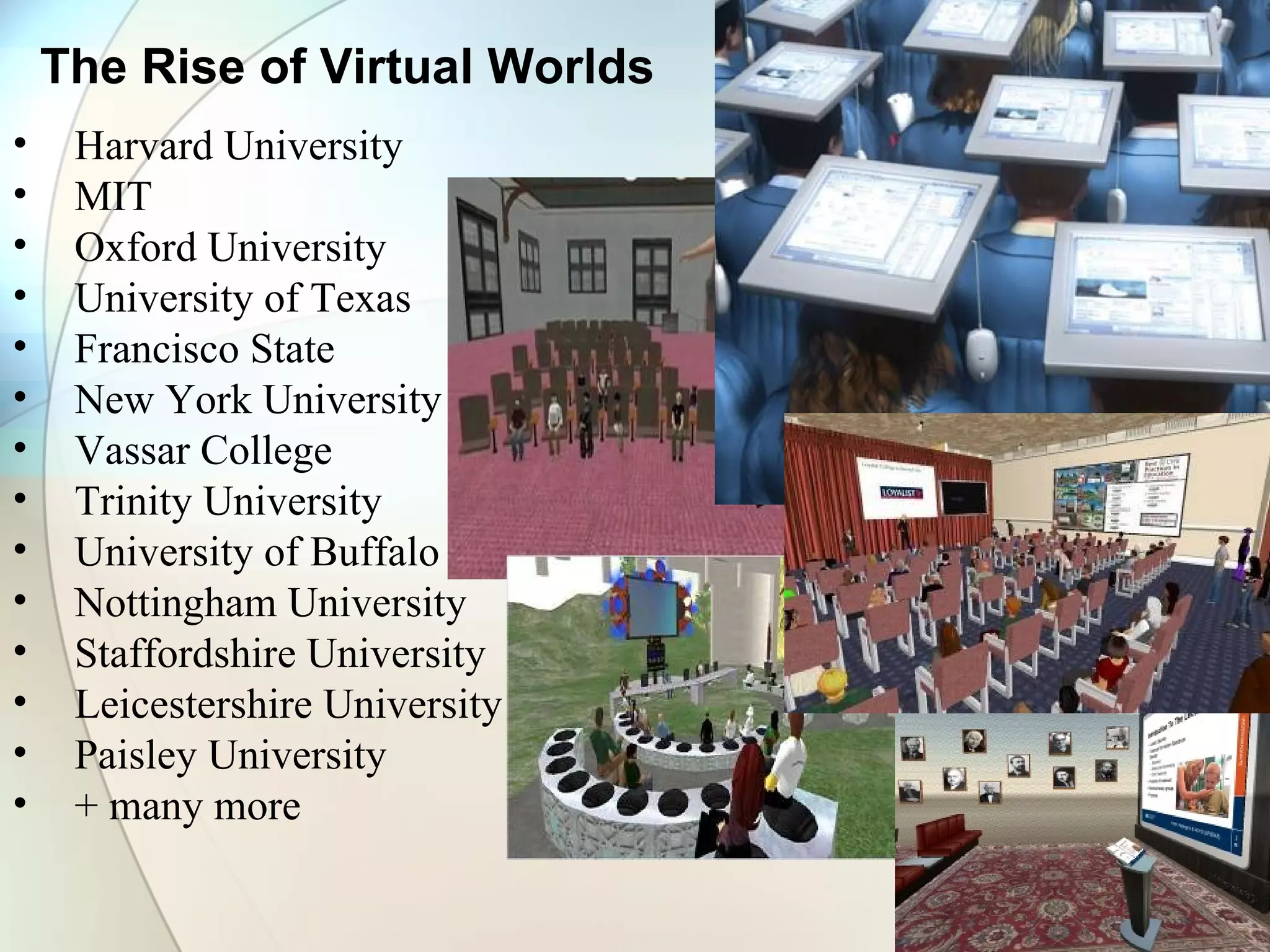
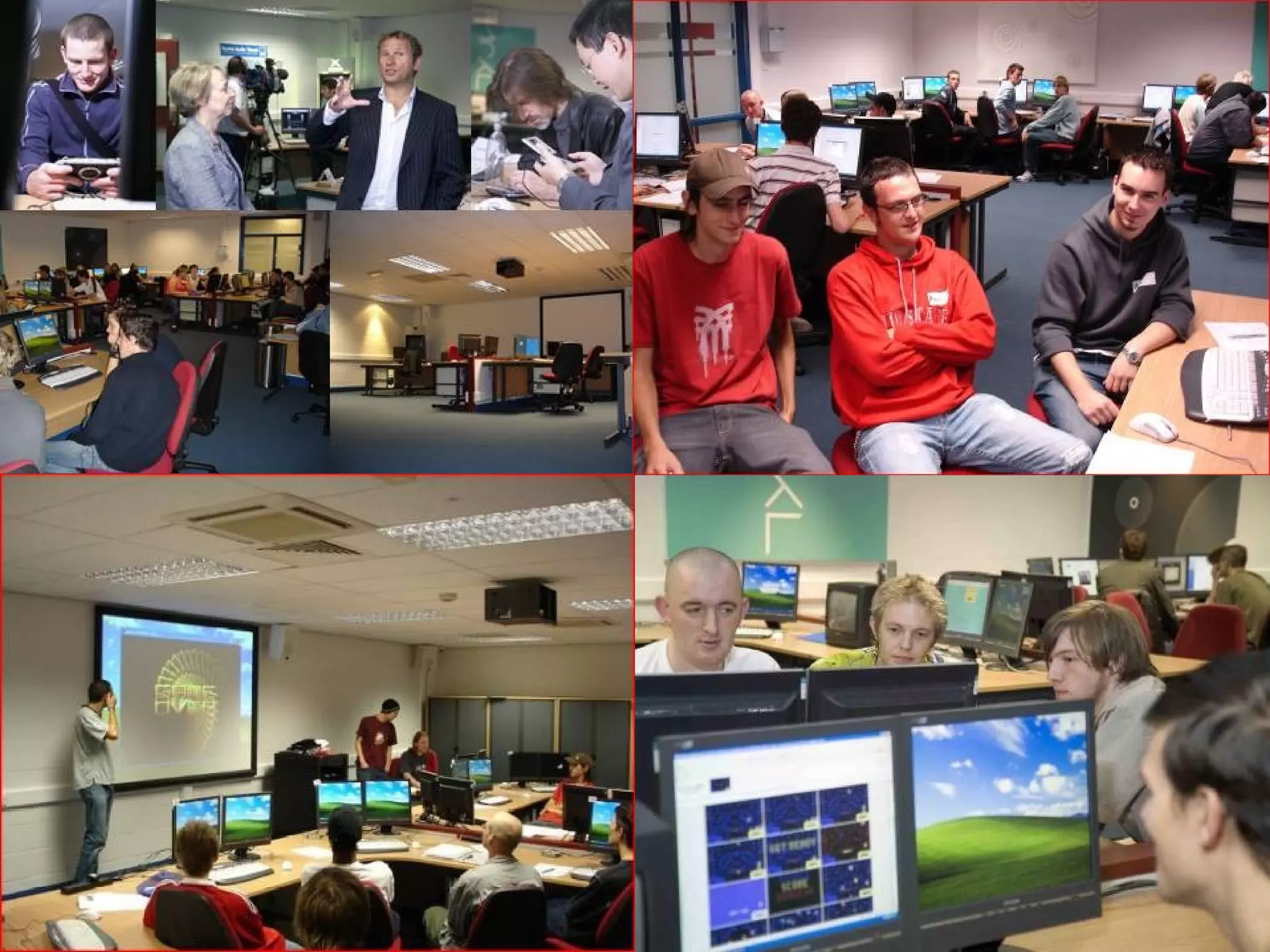
Harvard University  MIT Oxford University University of Texas Francisco State  New York University Vassar College Trinity University University of Buffalo Nottingham University Staffordshire University Leicestershire University Paisley University + many more The Rise of Virtual Worlds
 
Why Virtual Worlds? They allow users to be able to carry out tasks that could be difficult in the real world Cost  Scheduling Location Ethics Virtual worlds have the capability to adapt and grow to different user needs.
Why Virtual Worlds? Persistence allows for continuing and growing social interactions, which themselves can serve as a basis for collaborative education. Virtual worlds represent a powerful new media for instruction and education.  The use of virtual worlds can give practitioners/educators the opportunity to have a greater level of client/student participation.
 
 
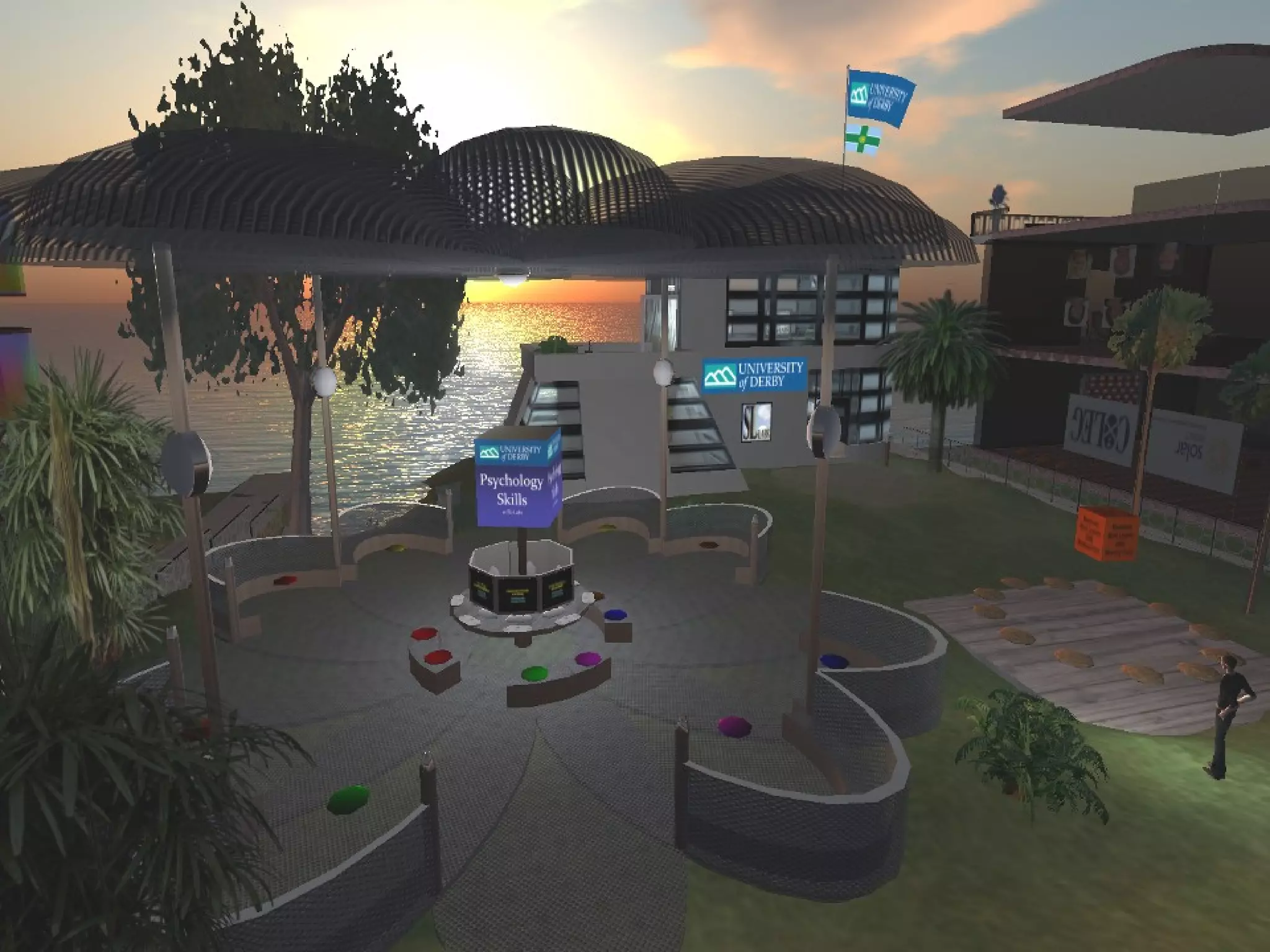
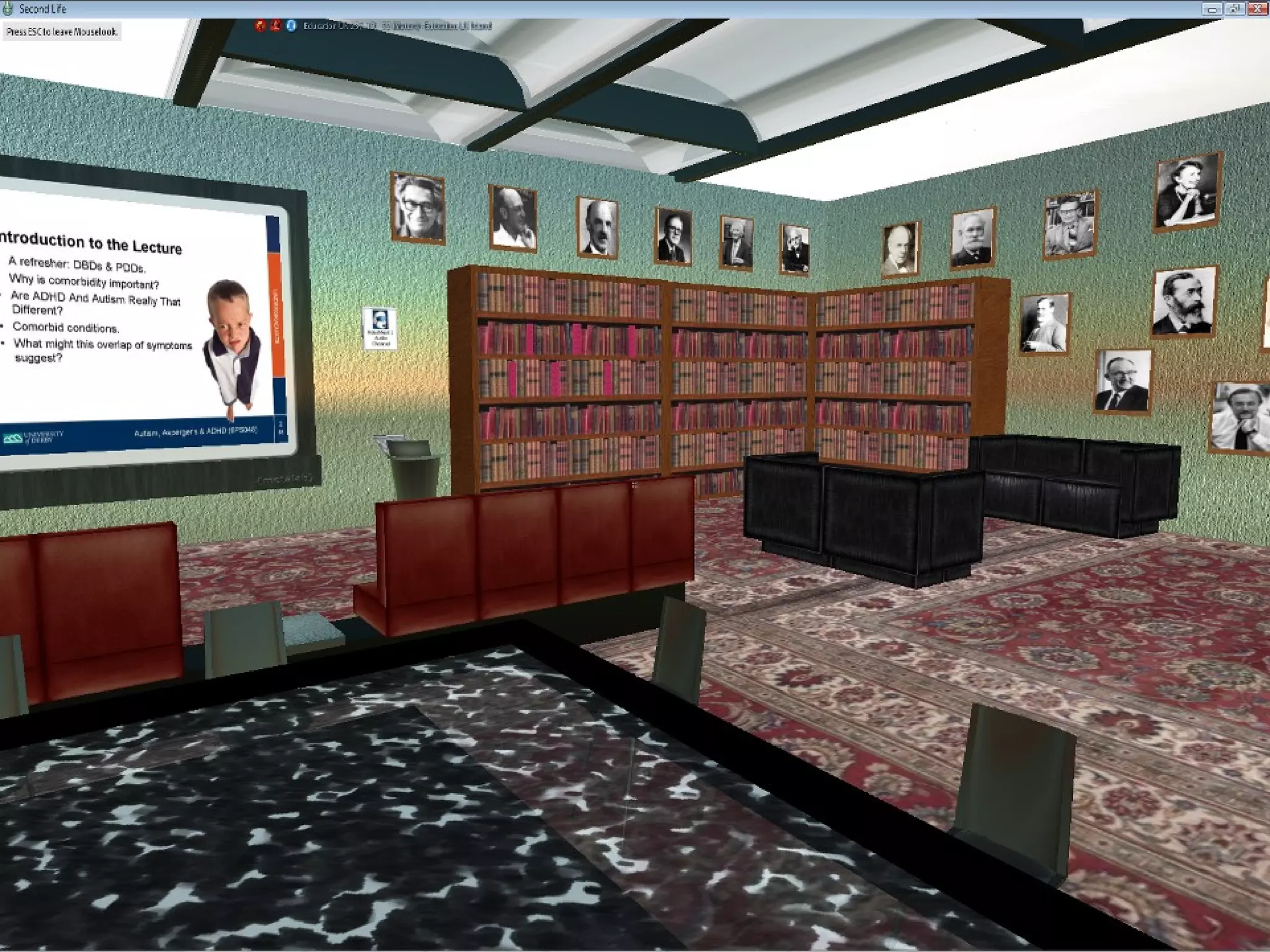
Problem-based Learning in Virtual Interactive Educational Worlds for Psychology (PREVIEW-Psych) The project implemented a user-focused approach to develop immersive collaborative tutorials and materials in 3D a multi-user virtual world (Second Life).  Used problem-based learning scenarios dealing with  Depression ,  Schizophrenia ,  Alcoholism  and  Anorexia .  Used automated ‘intelligent’ avatars to role-play scenarios in a simulation of a family home.
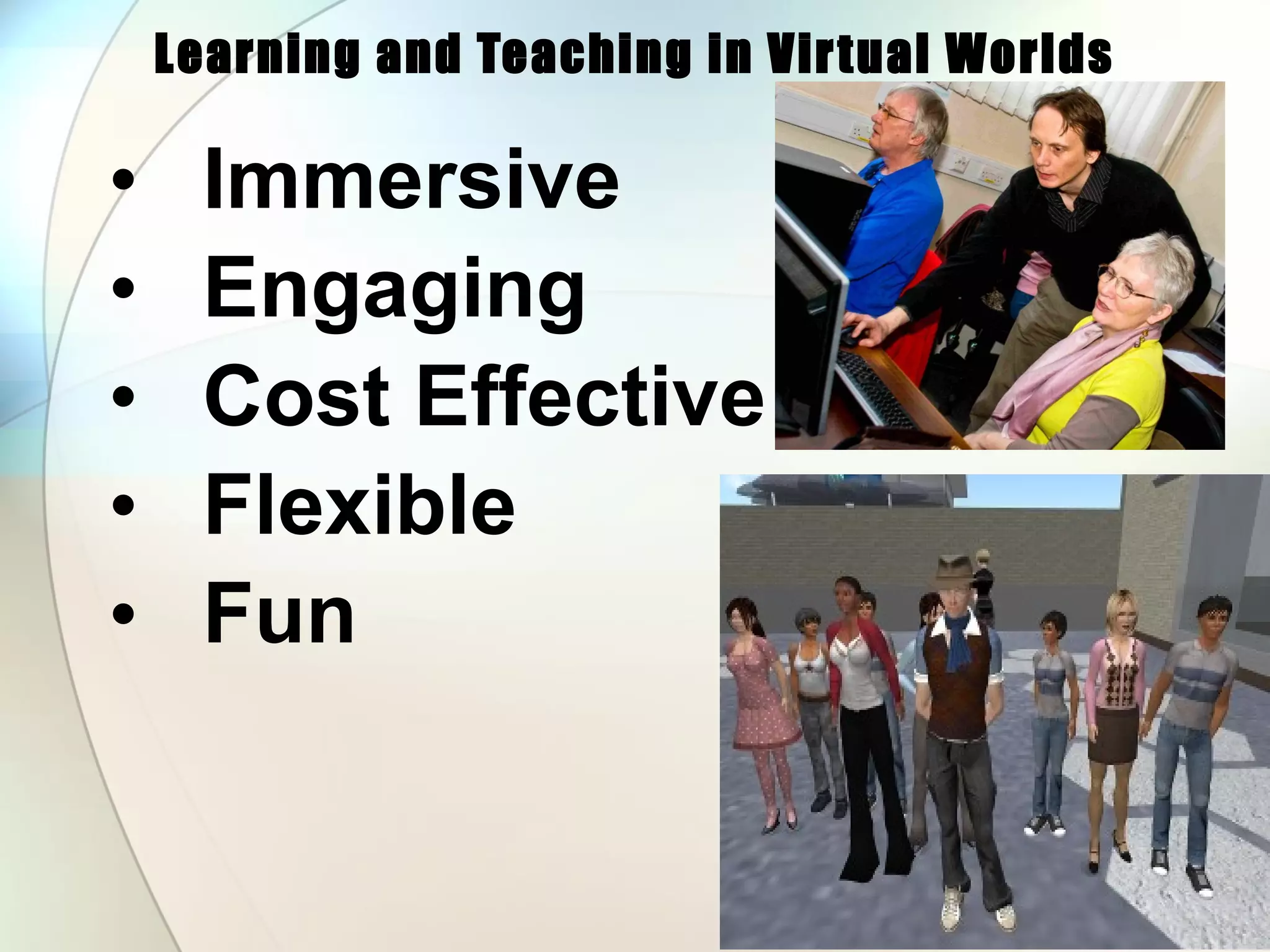
Learning and Teaching in Virtual Worlds Immersive Engaging Cost Effective  Flexible  Fun
Supporting People Hundreds of support groups in Second Life. Like-minded people form SL groups and have regular meetings. Examples: Autism Society of America  Virtual Ability Appeal is immersive social qualities and 'community building'.
Research in Virtual Worlds Virtual worlds can be used for qualitative and quantitative data collection. Can be used as a virtual laboratory to run participants across a number of paradigms. Social Psychology experiments. Groups and  individuals under different social settings. Modified and customised environments and avatars. Identity and Personality experiments. Gender swap, facial disfigurement. Cognitive Experiments. Face perception, error and latency data. Unlimited supply of (cheap) participants 24hrs a day
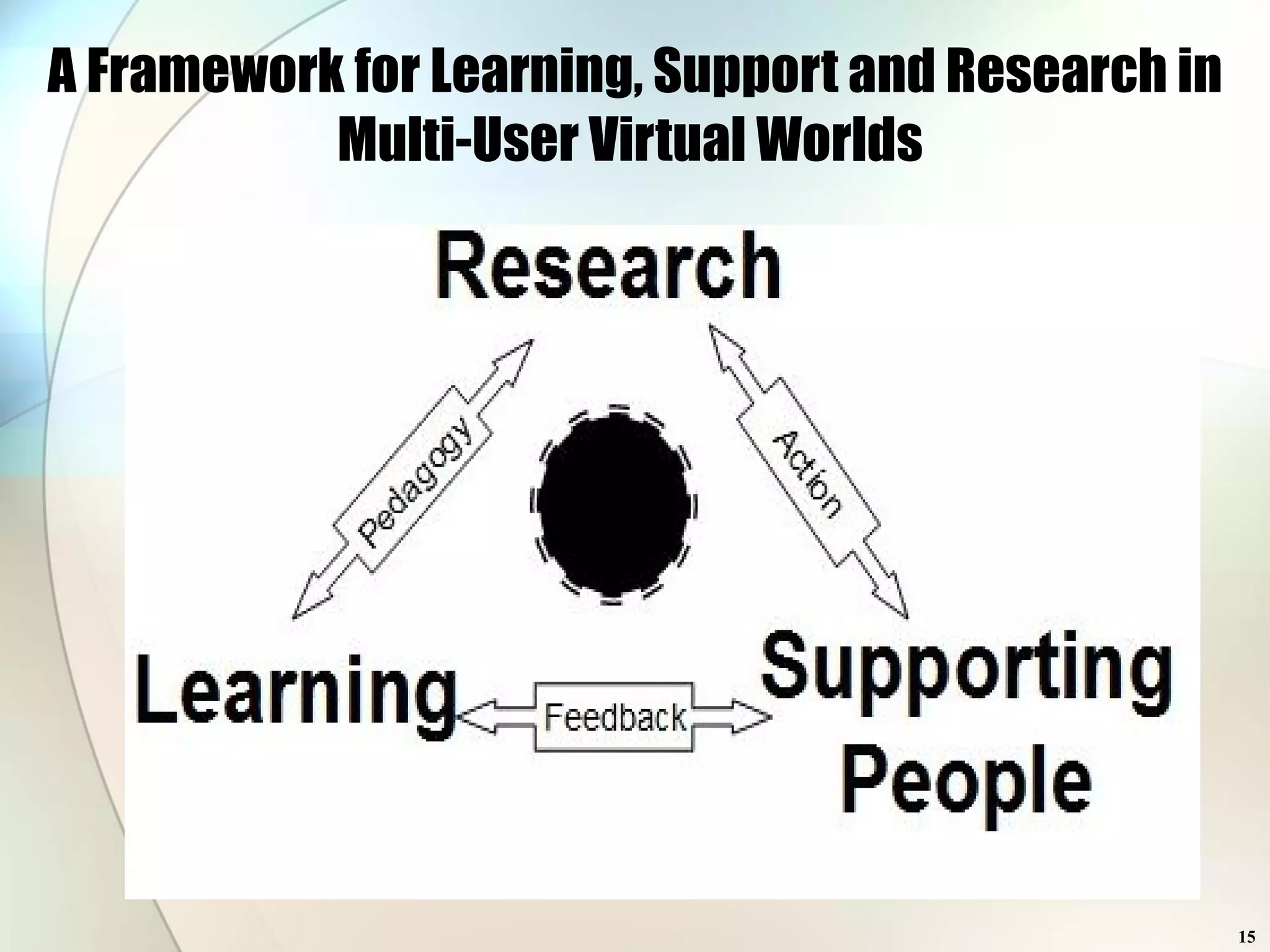
A Framework for Learning, Support and Research in Multi-User Virtual Worlds
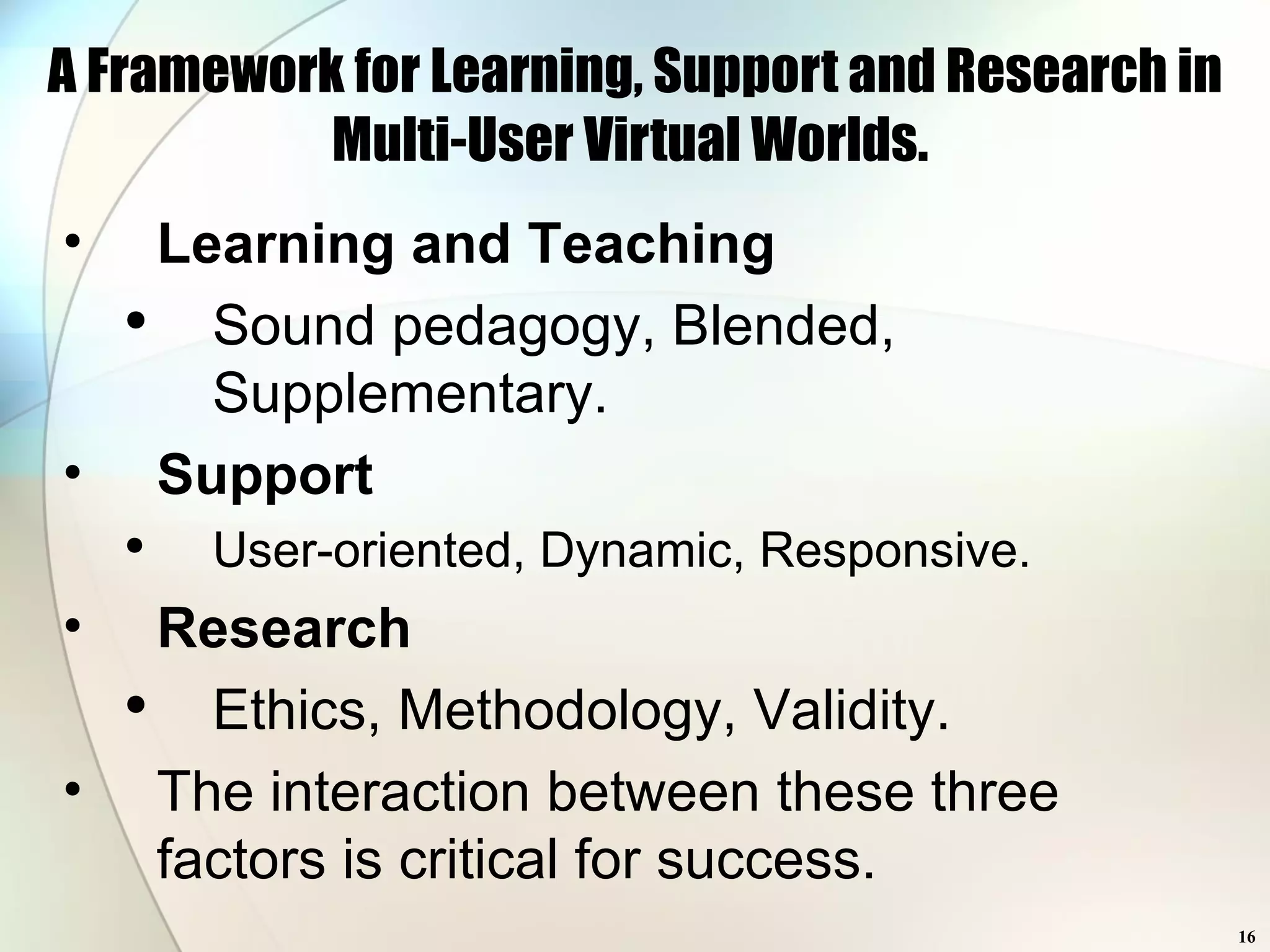
A Framework for Learning, Support and Research in Multi-User Virtual Worlds.  Learning and Teaching Sound pedagogy, Blended, Supplementary. Support User-oriented, Dynamic, Responsive. Research Ethics, Methodology, Validity. The interaction between these three factors is critical for success.
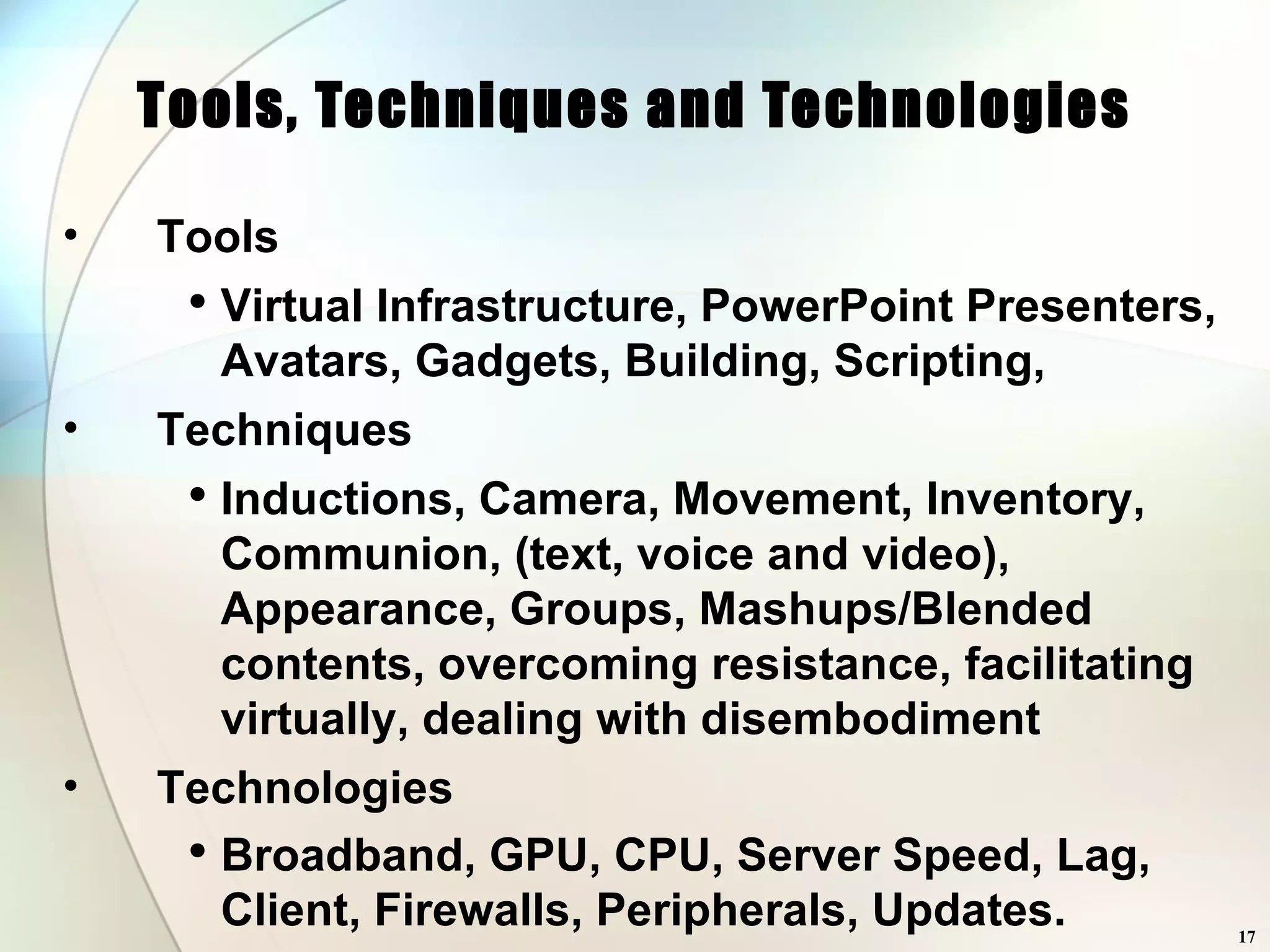
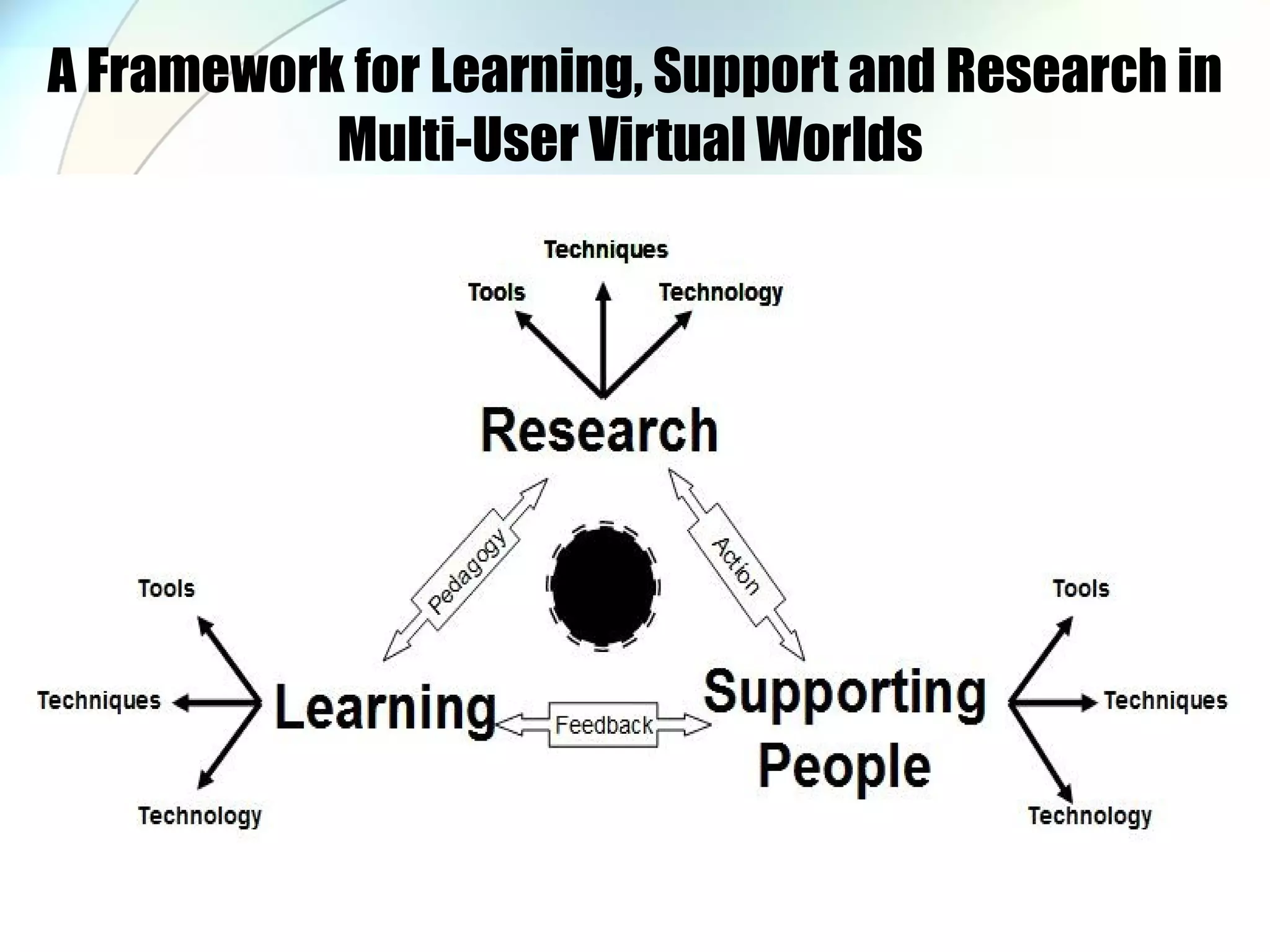
Tools, Techniques and Technologies Tools Virtual Infrastructure, PowerPoint Presenters, Avatars, Gadgets, Building, Scripting,  Techniques Inductions, Camera, Movement, Inventory, Communion, (text, voice and video), Appearance, Groups, Mashups/Blended contents, overcoming resistance, facilitating virtually, dealing with disembodiment Technologies Broadband, GPU, CPU, Server Speed, Lag, Client, Firewalls, Peripherals, Updates.
A Framework for Learning, Support and Research in Multi-User Virtual Worlds
Psychology in well placed to engage with many aspects of Virtual Worlds: A platform for your ideas. Collaboration and interactivity. Support and community. Research and scholarship. Activity-based learning. Leveraging a game-based culture for training. Need work within a framework: Learning, Support and Research. Tools, techniques and technology. Summary
Thank you
Simon Bignell Centre for Psychological Research   University of Derby, UK   [email_address] +44 (0)1332 593043 (ext: 3043) www.MiltonBroome.com www.PREVIEW-Psych.org Twitter:  ‘MiltonBroome’

Psychology on Second Life?: Learning, Support and Research in 3D Online Multi-user Virtual Environments.

  • 1.
    Psychology on SecondLife? Learning, Support and Research in 3D Online Multi-user Virtual Environments . Simon Bignell Lecturer in Psychology University of Derby, UK Email: s.bignell@derby.ac.uk Twitter: ‘MiltonBroome’
  • 2.
    Disclosure No conflictof interest to declare
  • 3.
  • 4.
    The Rise ofthe Net As of March 2007, worldwide there are 1.114 billion people using the Internet. (http://www.internetworldstats.com). The speed at which this technology has been adopted into society has been described as revolutionary, with particularly significant saturation into schools, work and family environments (Stanley, 2001). Educators, Researchers and Support Groups have all embraced the potential.
  • 5.
    Harvard University MIT Oxford University University of Texas Francisco State New York University Vassar College Trinity University University of Buffalo Nottingham University Staffordshire University Leicestershire University Paisley University + many more The Rise of Virtual Worlds
  • 6.
  • 7.
    Why Virtual Worlds?They allow users to be able to carry out tasks that could be difficult in the real world Cost Scheduling Location Ethics Virtual worlds have the capability to adapt and grow to different user needs.
  • 8.
    Why Virtual Worlds?Persistence allows for continuing and growing social interactions, which themselves can serve as a basis for collaborative education. Virtual worlds represent a powerful new media for instruction and education. The use of virtual worlds can give practitioners/educators the opportunity to have a greater level of client/student participation.
  • 9.
  • 10.
  • 11.
    Problem-based Learning inVirtual Interactive Educational Worlds for Psychology (PREVIEW-Psych) The project implemented a user-focused approach to develop immersive collaborative tutorials and materials in 3D a multi-user virtual world (Second Life). Used problem-based learning scenarios dealing with Depression , Schizophrenia , Alcoholism and Anorexia . Used automated ‘intelligent’ avatars to role-play scenarios in a simulation of a family home.
  • 12.
    Learning and Teachingin Virtual Worlds Immersive Engaging Cost Effective Flexible Fun
  • 13.
    Supporting People Hundredsof support groups in Second Life. Like-minded people form SL groups and have regular meetings. Examples: Autism Society of America Virtual Ability Appeal is immersive social qualities and 'community building'.
  • 14.
    Research in VirtualWorlds Virtual worlds can be used for qualitative and quantitative data collection. Can be used as a virtual laboratory to run participants across a number of paradigms. Social Psychology experiments. Groups and individuals under different social settings. Modified and customised environments and avatars. Identity and Personality experiments. Gender swap, facial disfigurement. Cognitive Experiments. Face perception, error and latency data. Unlimited supply of (cheap) participants 24hrs a day
  • 15.
    A Framework forLearning, Support and Research in Multi-User Virtual Worlds
  • 16.
    A Framework forLearning, Support and Research in Multi-User Virtual Worlds. Learning and Teaching Sound pedagogy, Blended, Supplementary. Support User-oriented, Dynamic, Responsive. Research Ethics, Methodology, Validity. The interaction between these three factors is critical for success.
  • 17.
    Tools, Techniques andTechnologies Tools Virtual Infrastructure, PowerPoint Presenters, Avatars, Gadgets, Building, Scripting, Techniques Inductions, Camera, Movement, Inventory, Communion, (text, voice and video), Appearance, Groups, Mashups/Blended contents, overcoming resistance, facilitating virtually, dealing with disembodiment Technologies Broadband, GPU, CPU, Server Speed, Lag, Client, Firewalls, Peripherals, Updates.
  • 18.
    A Framework forLearning, Support and Research in Multi-User Virtual Worlds
  • 19.
    Psychology in wellplaced to engage with many aspects of Virtual Worlds: A platform for your ideas. Collaboration and interactivity. Support and community. Research and scholarship. Activity-based learning. Leveraging a game-based culture for training. Need work within a framework: Learning, Support and Research. Tools, techniques and technology. Summary
  • 20.
  • 21.
    Simon Bignell Centrefor Psychological Research University of Derby, UK [email_address] +44 (0)1332 593043 (ext: 3043) www.MiltonBroome.com www.PREVIEW-Psych.org Twitter: ‘MiltonBroome’