Applying Social Cognitive Theory to Online Learning EDF 7232 Wael Yosif and Vicki Rath
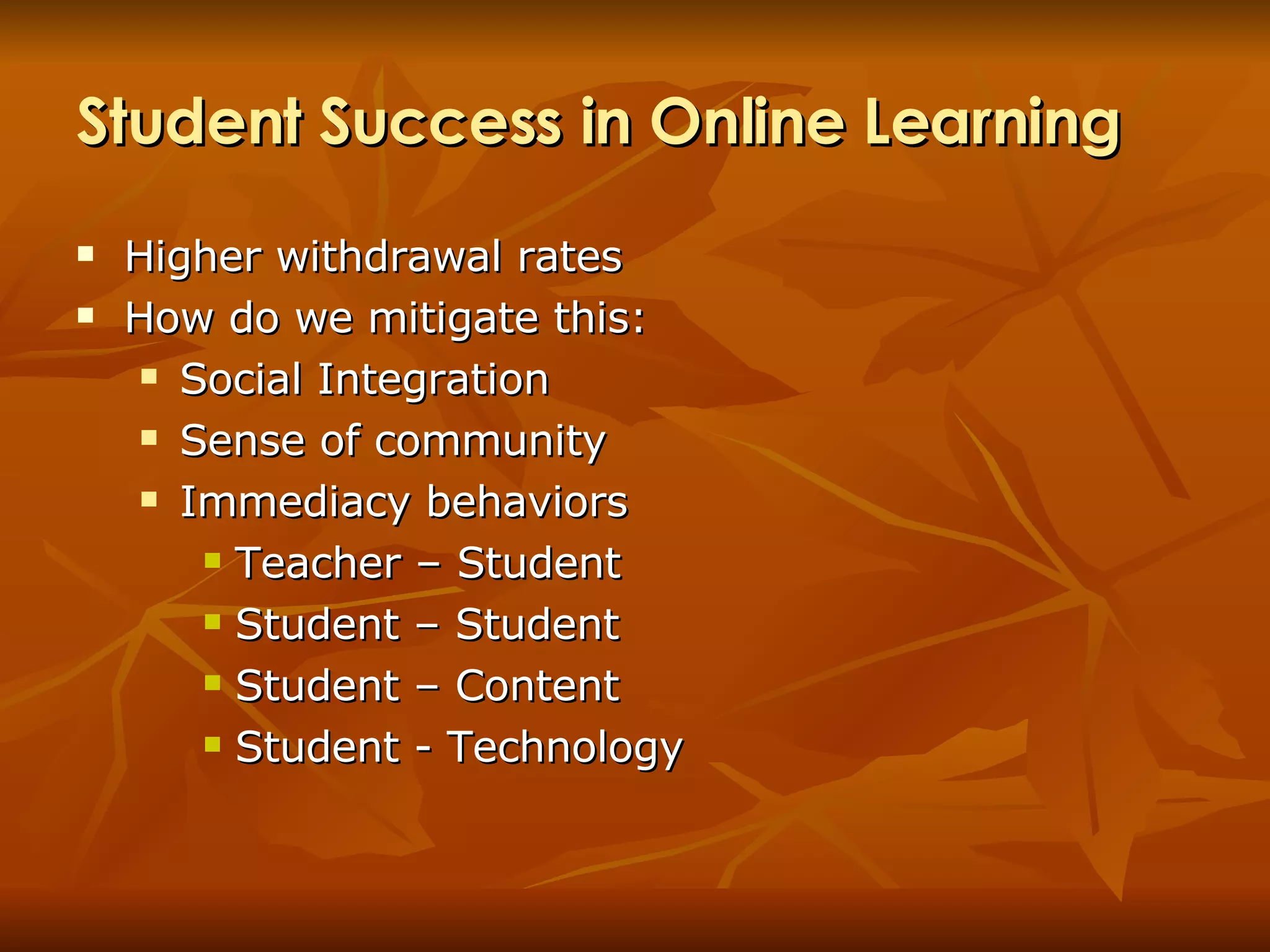
Student Success in Online Learning Higher withdrawal rates How do we mitigate this: Social Integration Sense of community Immediacy behaviors Teacher – Student Student – Student Student – Content Student - Technology
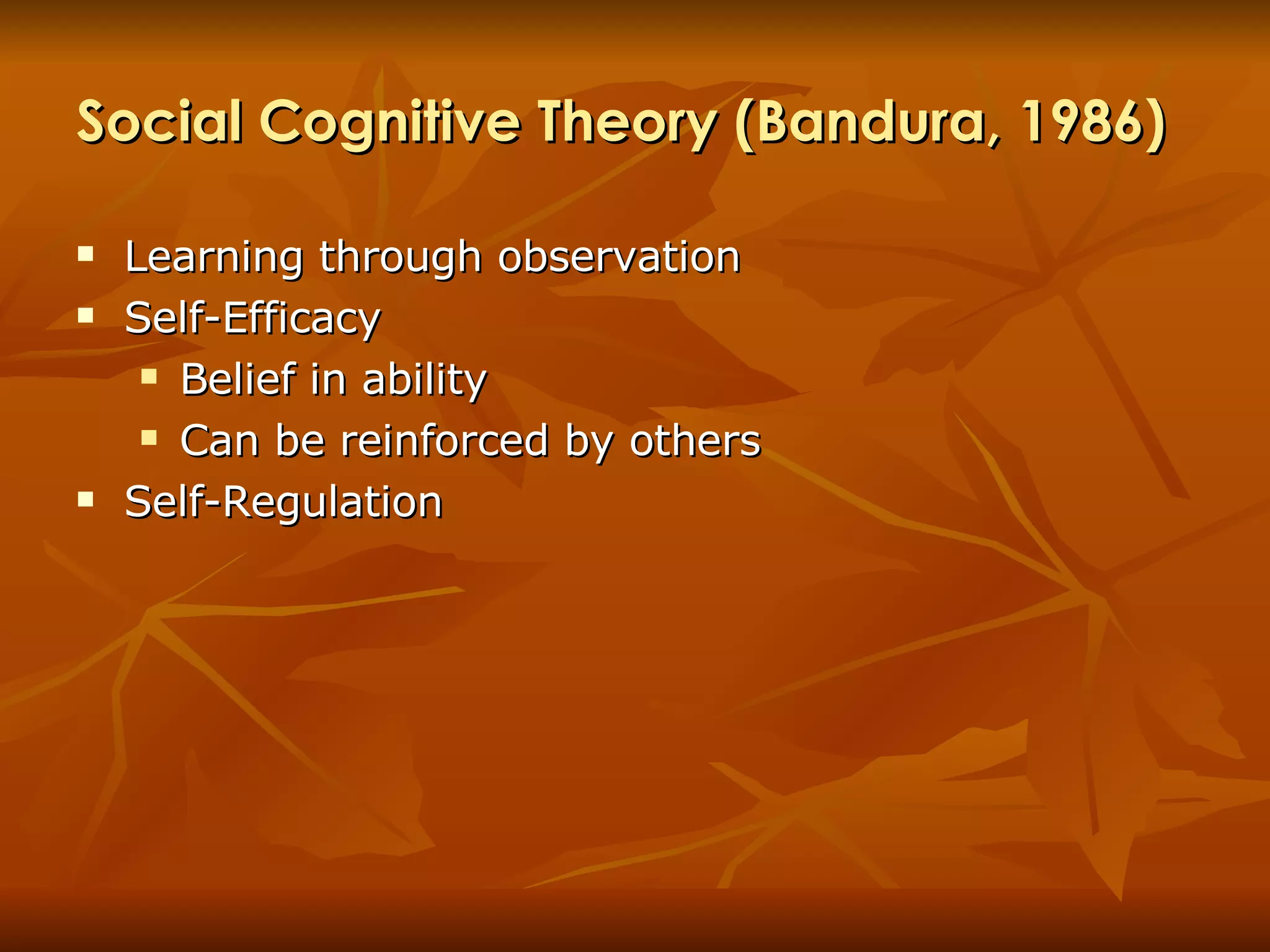
Social Cognitive Theory (Bandura, 1986) Learning through observation Self-Efficacy Belief in ability Can be reinforced by others Self-Regulation
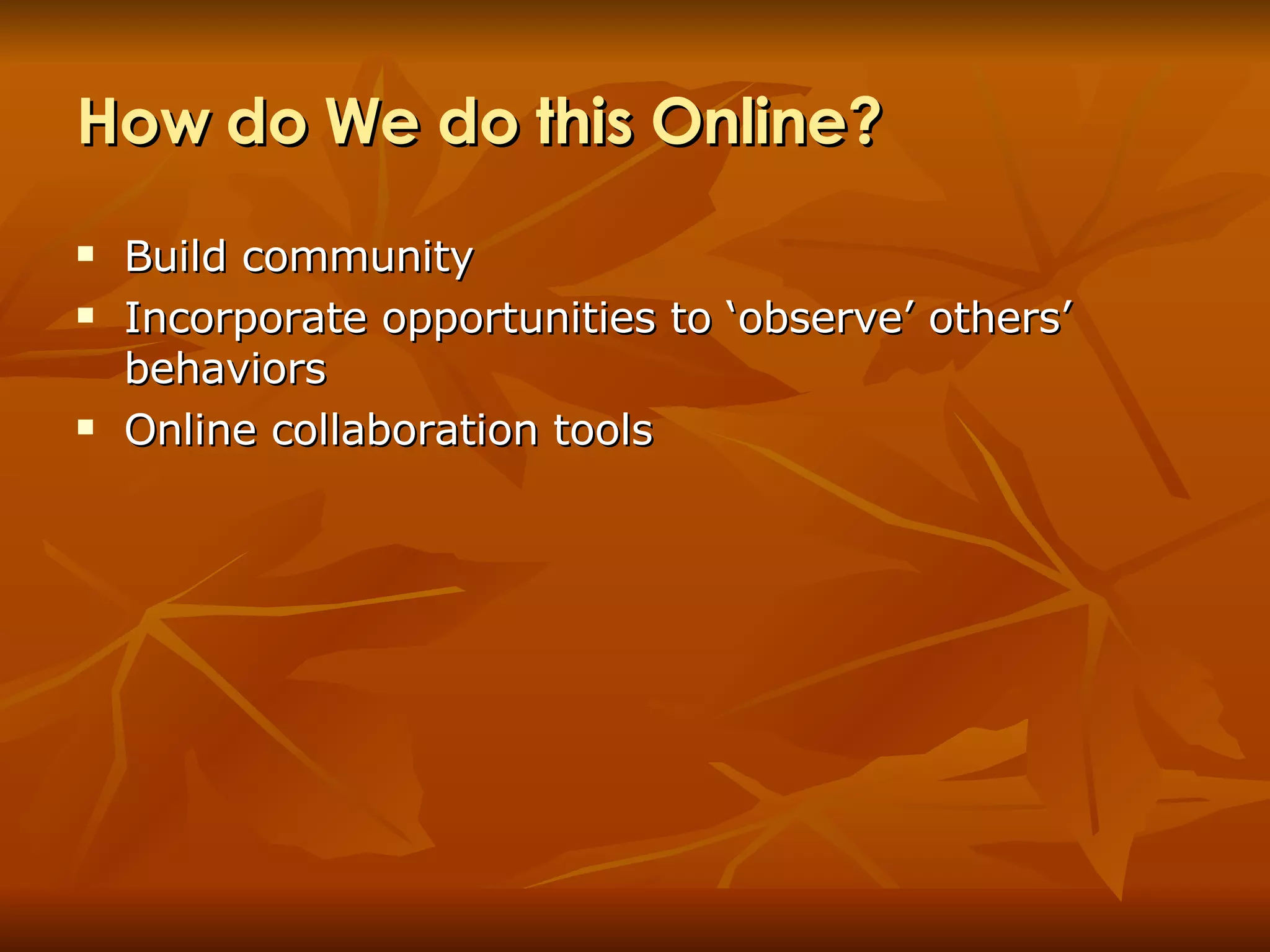
How do We do this Online? Build community Incorporate opportunities to ‘observe’ others’ behaviors Online collaboration tools
Free Online Tools Google Docs Slideshare Yahoo! Messenger with IP Telephony
Your Turn!
References Bandura, A. (1986).  Social foundations of thought and action: A social cognitive theory . Englewood Cliffs, NJ: Prentice-Hall. Kember, D. (1989). A longitudinal-process model of drop-out from distance education.  Journal of Higher Education, 60 (3), 278-301. LaRose, R. & Whitten, P. (2000). Re-thinking instructional immediacy for web courses: A social cognitive exploration.  Communication Education, 49 (4),  320-338. Retrieved January 27, 2007 from EBSCOHost. Moskal, P. D., & Dziuban, C. D. (2001). Present and future directions for assessing cybereducation: The changing research paradigm. In L. R. Vandervert, L. V. Shavinina, & R. A. Cornell (eds.),  Cybereducation: The future of long-distance learning  (pp. 157-184). New York: Mary Ann Liebert Stodel, E. J., Thompson, T. L., & MacDonald, C. J. (2006). Learners’ perspectives on what is missing from online learning: Interpretations through the community of inquiry framework.  International Review of Research in Open and Distance Learning 7 (3), 1-24.

Sct Cip

  • 1.
    Applying Social CognitiveTheory to Online Learning EDF 7232 Wael Yosif and Vicki Rath
  • 2.
    Student Success inOnline Learning Higher withdrawal rates How do we mitigate this: Social Integration Sense of community Immediacy behaviors Teacher – Student Student – Student Student – Content Student - Technology
  • 3.
    Social Cognitive Theory(Bandura, 1986) Learning through observation Self-Efficacy Belief in ability Can be reinforced by others Self-Regulation
  • 4.
    How do Wedo this Online? Build community Incorporate opportunities to ‘observe’ others’ behaviors Online collaboration tools
  • 5.
    Free Online ToolsGoogle Docs Slideshare Yahoo! Messenger with IP Telephony
  • 6.
  • 7.
    References Bandura, A.(1986). Social foundations of thought and action: A social cognitive theory . Englewood Cliffs, NJ: Prentice-Hall. Kember, D. (1989). A longitudinal-process model of drop-out from distance education. Journal of Higher Education, 60 (3), 278-301. LaRose, R. & Whitten, P. (2000). Re-thinking instructional immediacy for web courses: A social cognitive exploration. Communication Education, 49 (4), 320-338. Retrieved January 27, 2007 from EBSCOHost. Moskal, P. D., & Dziuban, C. D. (2001). Present and future directions for assessing cybereducation: The changing research paradigm. In L. R. Vandervert, L. V. Shavinina, & R. A. Cornell (eds.), Cybereducation: The future of long-distance learning (pp. 157-184). New York: Mary Ann Liebert Stodel, E. J., Thompson, T. L., & MacDonald, C. J. (2006). Learners’ perspectives on what is missing from online learning: Interpretations through the community of inquiry framework. International Review of Research in Open and Distance Learning 7 (3), 1-24.