History Taking – Psychiatric aspects
Dr Bhakti Murkey
Consulting Psychiatrist (MD)
Psychiatry – branch of Medicine
 Biological basis:
 Neuro-anatomy
 Neuro-physiology
 Genetics
 Neuro-chemical messenger (monoamide) hypothesis
 Medical Model:
 Traditional way of thinking about ‘disease’
 Extended to diseases of the mind (thoughts, feelings and behaviors)
 Dramatic response to Rx modalities
Psychiatric History-taking
 Medical process
 Systematic record of data received during interview
 An account of significant events
 Compilation and analysis of patient experience
 Goal: to achieve a succinct summary of relevant information
 Standardized format: facilitates communication with other
professionals
 Most important diagnostic tool in mental health
 Elements of subjectivity
Qualities of a therapist
 Non-judgemental attitude
 Warmth and Empathy
 Communication skills
 Interpersonal soft skills
 Patient and active listening
 Honesty
 Flexibility
 Optimism
 Building trust
 Allowing patient participation
 Sensitive (language, culture,
sexuality)
 Scientific approach
 Ability to say no/ draw
boundaries
 Adequate subject knowledge
Goals of history taking
 Establish Rapport
 Communicating about confidentiality and professional ethics
 Collect accurate information about patient’s problems
 Meaningful interpretations of patient’s version
 Rule out presence of physical symptoms distinctly from
psychological
 Holistic assessment of person’s psyche and health
 Being able to formulate a treatment plan
 Comprehensive documentation and record keeping of the history for
future reference or external communication
Informant
 Assess Reliability:
 Age
 Education
 Relationship
 Living with?
 Intent for the patient
 Any personal gains?
 Consistency over time/ multiple interviews
Outline
 Demography
 Identification
 Presenting complaints
 Onset and course of illness
 Negative History
 Medical/Surgical History
 Functioning
 Treatment History
 Past History
 Family History
 Childhood History
 Perinatal
 Schooling
 Socio-economic History
 Occupational History
 Religious beliefs
 Psychosexual History
 Premorbid Personality
Demographic Details
 Name
 Age
 Sex
 Address
 Occupation
 Marital status
 Identification marks
 Type of admission (if IPD)
 Significance:
 Medico-legal cases
 Avoid inter-change of information
in similar cases
 Communicating on community
level
 Making Rx plan based on
background/ practical aspects
 Research purpose
Presenting complaints
 Total duration of illness
 Chronological order of symptoms
 Duration of each symptom
 When too many?
 Pick top 5
 Make symptom clusters
 Elaborate each symptom: onset, severity and course
 Story of illness progression
 Patient’s narration vs clinical interpretation
Axis 1 disorders
 Multi-axial clinical diagnosis: ICD vs DSM
 How to rule out major Psychiatric diagnoses:
 Depression
 Mood Disorder
 Psychosis
 SUD
 OCD
 Anxiety spectrum
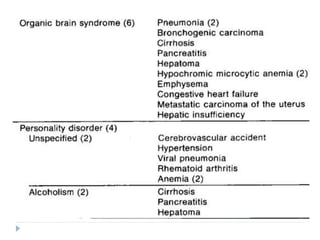
Medical co-morbidity
 Organicity
 Major medical illness:
 Hypertension
 Diabetes
 Tuberculosis
 Asthma
 Thyroid Disorders
 B12 deficiency
 Any surgical illness/ intervention
Family History
 Pedigree
 Birth order
 Nuclear vs Joint
 F/H Psychiatric illness
 F/H Medical illness/ complications
 Home environment and relations
 Support system
 H/O active stressors
Childhood Psychiatric Disorders
 Axial Classification:
 Axis I – Clinical Diagnosis
 Axis II – Specific Learning
Disability
 Axis III – General Learning
Difficulties
 Axis IV – Medical Diagnosis
 Axis V – Psychosocial &
Environmental stressors
 Assess Parenting style
 Rule out:
 Autism
 ADHD
 Temper tantrums
 Eating or Feeding problems
 Emotional issues
 CSA
 Academic/ learning problems
(SpLD)
Pre-morbid Personality
 Axis II presentation
 Reflection on Axis I
 Proportion of symptoms
expected to respond
 Managing psycho-social impact
and interpersonal relations
 Prognostic implications
(recurrence)
 Assessment of:
 Temperament
 Lifestyle
 Impulsivity
 Social interaction
 Significant others
 Friendships
 Emotional communication
 Habits/ Hobbies
 Anger management
 Coping skills
 Perception of patient’s personality
by family/ friends
Diagnostic Case Formulation
 Diagnosis alone tells us little about causation of disorder
 Formulation:
 Understanding etiological factors
 Identifying key difficulties in order to guide intervention accordingly
 Anticipating challenges that may occur during the course of treatment
 5 P approach:
 Presenting problem
 Predisposing Factor
 Precipitating Factor
 Perpetuating Factor
 Protective Factor
Diagnostic Case Formulation
 Summary: Concise description of
important aspects
 Formulation: Comprehensive
assessment of the case rather than
mere restatement of facts
 Case formulation:
 Integrative process
 Synthesizes how one
understands the complex,
interacting factors implicated in
development of a patient’s
presenting problems
 Discussion on etiology,
differentials, prognosis
 Takes into account the person’s
strengths and capacities
 Helps to identify potentially
effective treatment approaches
 Types:
 Clinical
 Diagnostic
 Psychodynamic
 Psychotherapeutic
 Bio-psycho-social
Diagnostic Classification
 Normal
 Abnormal:
 Organic
 Functional:
 Neurosis:
 Anxiety/ Depression/ Phobia/ OCD
 Psychosis:
 Schizophrenia/ Bipolar Disorder/ Delusional Disorder
 Mixed:
 Substance Use/ Personality Disorder
Treatment plan
 Medical management:
 Axis I and IV
 Intensity, frequency and
duration of symptoms
 Functional impairment
 Poor sleep/ appetite/ quality
of life
 Psychotherapy:
 Axis II and III
 Supportive/ Interventional
 Make Rx response
sustainable
 Psychosocial management:
 Axis III
 Correction of social aspects
 Vocational aspects
 Skills building
 Enhanced self-efficacy
 Involving significant others
Take away points
 Medical model of Psychiatry
 Significance of History taking
 Reference to Physical health parameters
 Assessment of Personality
 Case Formulation
 Therapeutic Interventions
 Holistic health care
Questions
Psychiatric History-taking

Psychiatric History-taking

  • 1.
    History Taking –Psychiatric aspects Dr Bhakti Murkey Consulting Psychiatrist (MD)
  • 2.
    Psychiatry – branchof Medicine  Biological basis:  Neuro-anatomy  Neuro-physiology  Genetics  Neuro-chemical messenger (monoamide) hypothesis  Medical Model:  Traditional way of thinking about ‘disease’  Extended to diseases of the mind (thoughts, feelings and behaviors)  Dramatic response to Rx modalities
  • 3.
    Psychiatric History-taking  Medicalprocess  Systematic record of data received during interview  An account of significant events  Compilation and analysis of patient experience  Goal: to achieve a succinct summary of relevant information  Standardized format: facilitates communication with other professionals  Most important diagnostic tool in mental health  Elements of subjectivity
  • 4.
    Qualities of atherapist  Non-judgemental attitude  Warmth and Empathy  Communication skills  Interpersonal soft skills  Patient and active listening  Honesty  Flexibility  Optimism  Building trust  Allowing patient participation  Sensitive (language, culture, sexuality)  Scientific approach  Ability to say no/ draw boundaries  Adequate subject knowledge
  • 5.
    Goals of historytaking  Establish Rapport  Communicating about confidentiality and professional ethics  Collect accurate information about patient’s problems  Meaningful interpretations of patient’s version  Rule out presence of physical symptoms distinctly from psychological  Holistic assessment of person’s psyche and health  Being able to formulate a treatment plan  Comprehensive documentation and record keeping of the history for future reference or external communication
  • 6.
    Informant  Assess Reliability: Age  Education  Relationship  Living with?  Intent for the patient  Any personal gains?  Consistency over time/ multiple interviews
  • 7.
    Outline  Demography  Identification Presenting complaints  Onset and course of illness  Negative History  Medical/Surgical History  Functioning  Treatment History  Past History  Family History  Childhood History  Perinatal  Schooling  Socio-economic History  Occupational History  Religious beliefs  Psychosexual History  Premorbid Personality
  • 8.
    Demographic Details  Name Age  Sex  Address  Occupation  Marital status  Identification marks  Type of admission (if IPD)  Significance:  Medico-legal cases  Avoid inter-change of information in similar cases  Communicating on community level  Making Rx plan based on background/ practical aspects  Research purpose
  • 9.
    Presenting complaints  Totalduration of illness  Chronological order of symptoms  Duration of each symptom  When too many?  Pick top 5  Make symptom clusters  Elaborate each symptom: onset, severity and course  Story of illness progression  Patient’s narration vs clinical interpretation
  • 10.
    Axis 1 disorders Multi-axial clinical diagnosis: ICD vs DSM  How to rule out major Psychiatric diagnoses:  Depression  Mood Disorder  Psychosis  SUD  OCD  Anxiety spectrum
  • 11.
    Medical co-morbidity  Organicity Major medical illness:  Hypertension  Diabetes  Tuberculosis  Asthma  Thyroid Disorders  B12 deficiency  Any surgical illness/ intervention
  • 16.
    Family History  Pedigree Birth order  Nuclear vs Joint  F/H Psychiatric illness  F/H Medical illness/ complications  Home environment and relations  Support system  H/O active stressors
  • 17.
    Childhood Psychiatric Disorders Axial Classification:  Axis I – Clinical Diagnosis  Axis II – Specific Learning Disability  Axis III – General Learning Difficulties  Axis IV – Medical Diagnosis  Axis V – Psychosocial & Environmental stressors  Assess Parenting style  Rule out:  Autism  ADHD  Temper tantrums  Eating or Feeding problems  Emotional issues  CSA  Academic/ learning problems (SpLD)
  • 18.
    Pre-morbid Personality  AxisII presentation  Reflection on Axis I  Proportion of symptoms expected to respond  Managing psycho-social impact and interpersonal relations  Prognostic implications (recurrence)  Assessment of:  Temperament  Lifestyle  Impulsivity  Social interaction  Significant others  Friendships  Emotional communication  Habits/ Hobbies  Anger management  Coping skills  Perception of patient’s personality by family/ friends
  • 19.
    Diagnostic Case Formulation Diagnosis alone tells us little about causation of disorder  Formulation:  Understanding etiological factors  Identifying key difficulties in order to guide intervention accordingly  Anticipating challenges that may occur during the course of treatment  5 P approach:  Presenting problem  Predisposing Factor  Precipitating Factor  Perpetuating Factor  Protective Factor
  • 20.
    Diagnostic Case Formulation Summary: Concise description of important aspects  Formulation: Comprehensive assessment of the case rather than mere restatement of facts  Case formulation:  Integrative process  Synthesizes how one understands the complex, interacting factors implicated in development of a patient’s presenting problems  Discussion on etiology, differentials, prognosis  Takes into account the person’s strengths and capacities  Helps to identify potentially effective treatment approaches  Types:  Clinical  Diagnostic  Psychodynamic  Psychotherapeutic  Bio-psycho-social
  • 21.
    Diagnostic Classification  Normal Abnormal:  Organic  Functional:  Neurosis:  Anxiety/ Depression/ Phobia/ OCD  Psychosis:  Schizophrenia/ Bipolar Disorder/ Delusional Disorder  Mixed:  Substance Use/ Personality Disorder
  • 22.
    Treatment plan  Medicalmanagement:  Axis I and IV  Intensity, frequency and duration of symptoms  Functional impairment  Poor sleep/ appetite/ quality of life  Psychotherapy:  Axis II and III  Supportive/ Interventional  Make Rx response sustainable  Psychosocial management:  Axis III  Correction of social aspects  Vocational aspects  Skills building  Enhanced self-efficacy  Involving significant others
  • 23.
    Take away points Medical model of Psychiatry  Significance of History taking  Reference to Physical health parameters  Assessment of Personality  Case Formulation  Therapeutic Interventions  Holistic health care
  • 24.