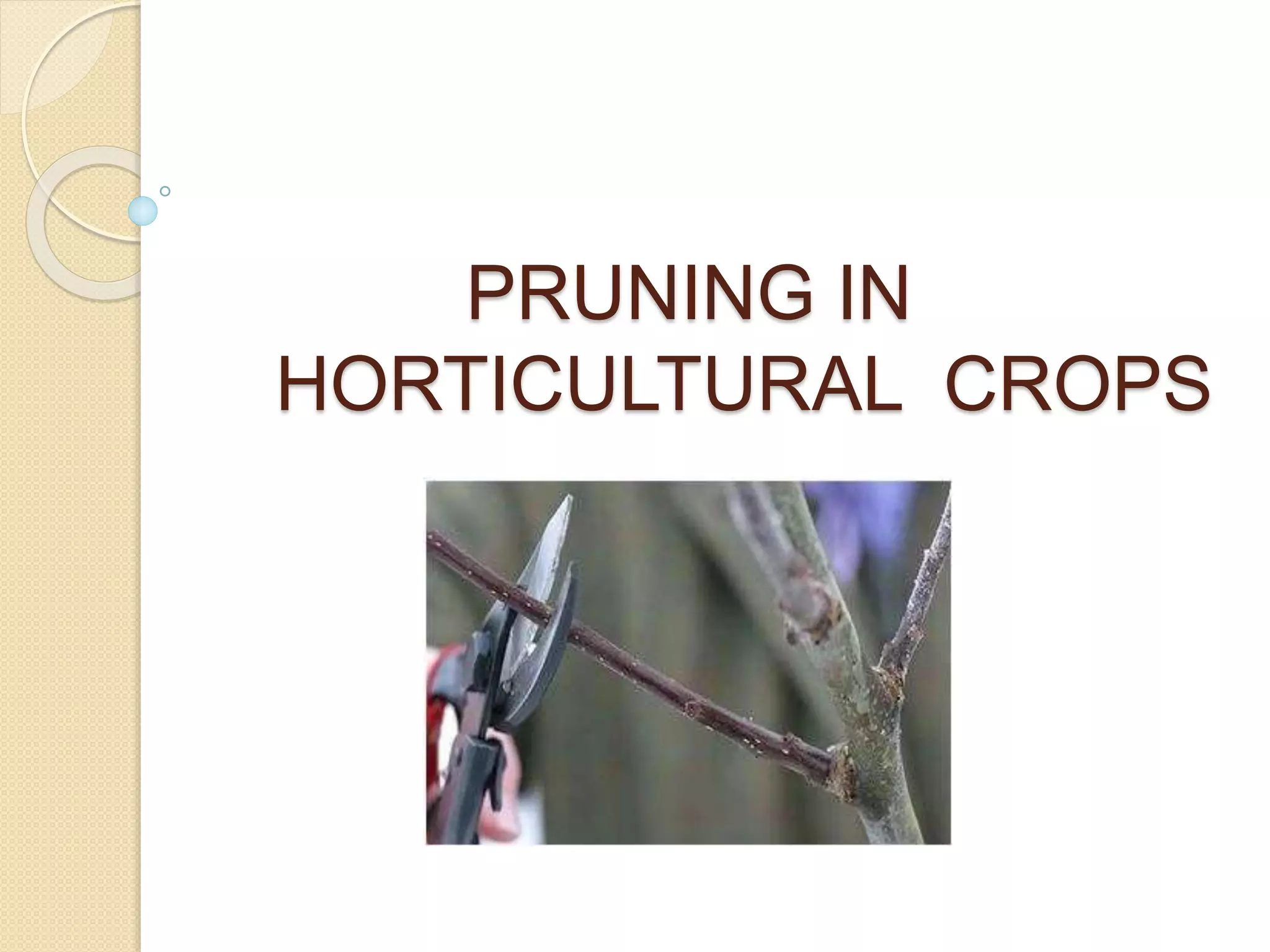
PRUNING IN
HORTICULTURAL CROPS
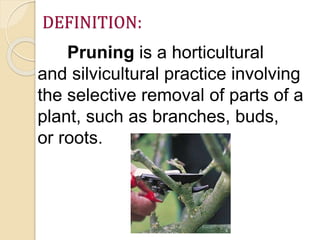
DEFINITION:
Pruning is a horticultural
and silvicultural practice involving
the selective removal of parts of a
plant, such as branches, buds,
or roots.
IMPLEMENTS USED TO PRUNE:
1. Hand pruners,
2.Loopers,
3.Chain saw
REASONS TO PRUNE:
Deadwood removal
Shaping (by controlling or
directing growth)
Improving or maintaining
health
Reducing risk from falling
branches
TYPES OF PRUNING
1.Thinning out cut
2. Heading back cut
Thinning out cut:
Thinning is the removal of the
entire branch or limb at its base.
Heading back cut:
Heading is cutting back a
portion of a branch to just above a
healthy bud or side branch.
Special pruning techniques:
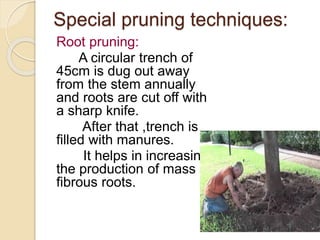
Root pruning:
A circular trench of
45cm is dug out away
from the stem annually
and roots are cut off with
a sharp knife.
After that ,trench is
filled with manures.
It helps in increasing
the production of mass
fibrous roots.
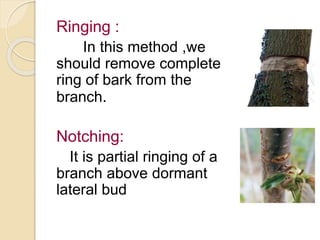
Ringing :
In this method ,we
should remove complete
ring of bark from the
branch.
Notching:
It is partial ringing of a
branch above dormant
lateral bud
Smudging:
It is a practice of smoking the trees
like mango in Philippines.
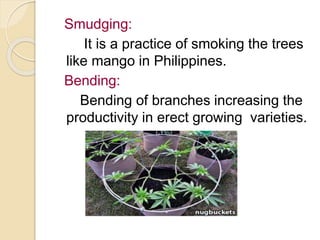
Bending:
Bending of branches increasing the
productivity in erect growing varieties.
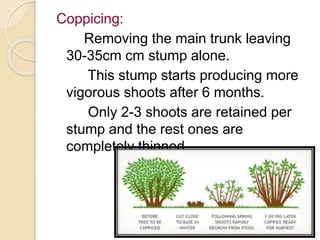
Coppicing:
Removing the main trunk leaving
30-35cm cm stump alone.
This stump starts producing more
vigorous shoots after 6 months.
Only 2-3 shoots are retained per
stump and the rest ones are
completely thinned.
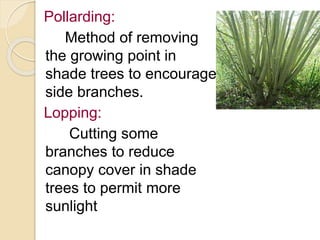
Pollarding:
Method of removing
the growing point in
shade trees to encourage
side branches.
Lopping:
Cutting some
branches to reduce
canopy cover in shade
trees to permit more
sunlight
Time period:
 Pruning small branches can be done at
any time of year.
 Large branches, with more than 5-10%
of the plant's crown, can be pruned
either during dormancy in winter, or, for
species where winter frost can harm a
recently pruned plant, in mid summer
just after flowering.
 Autumn should be avoided, as the
spores of disease and decay fungi are
abundant at this time of year.
Pruning in horticultural crops

Pruning in horticultural crops

  • 1.
  • 2.
    DEFINITION: Pruning is ahorticultural and silvicultural practice involving the selective removal of parts of a plant, such as branches, buds, or roots.
  • 3.
    IMPLEMENTS USED TOPRUNE: 1. Hand pruners, 2.Loopers, 3.Chain saw
  • 4.
    REASONS TO PRUNE: Deadwoodremoval Shaping (by controlling or directing growth) Improving or maintaining health Reducing risk from falling branches
  • 5.
    TYPES OF PRUNING 1.Thinningout cut 2. Heading back cut Thinning out cut: Thinning is the removal of the entire branch or limb at its base. Heading back cut: Heading is cutting back a portion of a branch to just above a healthy bud or side branch.
  • 6.
    Special pruning techniques: Rootpruning: A circular trench of 45cm is dug out away from the stem annually and roots are cut off with a sharp knife. After that ,trench is filled with manures. It helps in increasing the production of mass fibrous roots.
  • 7.
    Ringing : In thismethod ,we should remove complete ring of bark from the branch. Notching: It is partial ringing of a branch above dormant lateral bud
  • 8.
    Smudging: It is apractice of smoking the trees like mango in Philippines. Bending: Bending of branches increasing the productivity in erect growing varieties.
  • 9.
    Coppicing: Removing the maintrunk leaving 30-35cm cm stump alone. This stump starts producing more vigorous shoots after 6 months. Only 2-3 shoots are retained per stump and the rest ones are completely thinned.
  • 10.
    Pollarding: Method of removing thegrowing point in shade trees to encourage side branches. Lopping: Cutting some branches to reduce canopy cover in shade trees to permit more sunlight
  • 11.
    Time period:  Pruningsmall branches can be done at any time of year.  Large branches, with more than 5-10% of the plant's crown, can be pruned either during dormancy in winter, or, for species where winter frost can harm a recently pruned plant, in mid summer just after flowering.  Autumn should be avoided, as the spores of disease and decay fungi are abundant at this time of year.