Sexual Harassment In The WorkplaceSara Surber
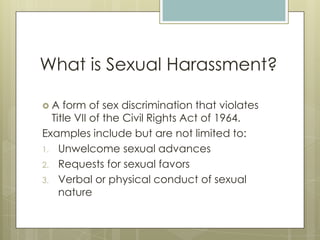
What is Sexual Harassment?A form of sex discrimination that violates Title VII of the Civil Rights Act of 1964.Examples include but are not limited to:Unwelcome sexual advancesRequests for sexual favorsVerbal or physical conduct of sexual nature
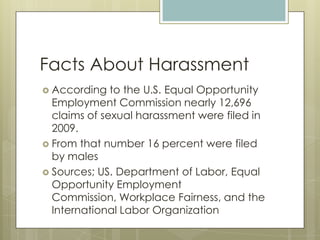
Facts About HarassmentAccording to the U.S. Equal Opportunity Employment Commission nearly 12,696 claims of sexual harassment were filed in 2009.From that number 16 percent were filed by malesSources; US. Department of Labor, Equal Opportunity Employment Commission, Workplace Fairness, and the International Labor Organization
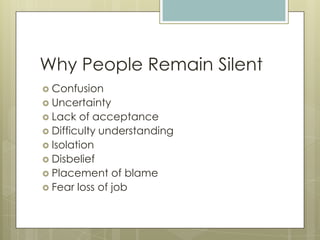
Why People Remain SilentConfusionUncertaintyLack of acceptanceDifficulty understandingIsolationDisbeliefPlacement of blameFear loss of job
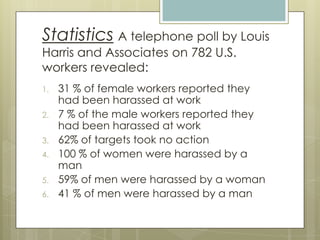
StatisticsA telephone poll by Louis Harris and Associates on 782 U.S. workers revealed:31 % of female workers reported they had been harassed at work7 % of the male workers reported they had been harassed at work62% of targets took no action100 % of women were harassed by a man59% of men were harassed by a woman41 % of men were harassed by a man
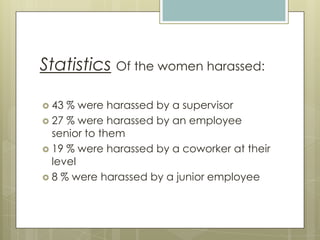
StatisticsOf the women harassed:43 % were harassed by a supervisor27 % were harassed by an employee senior to them19 % were harassed by a coworker at their level8 % were harassed by a junior employee
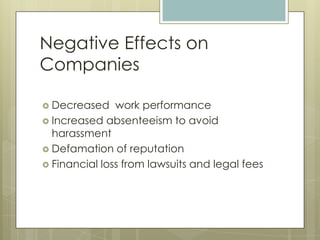
Negative Effects on CompaniesDecreased  work performanceIncreased absenteeism to avoid harassmentDefamation of reputationFinancial loss from lawsuits and legal fees
Negative Effects on IndividualsRetaliation from harasserBeing objectified and humiliatedDefamation of characterLoss of job and incomeLoss of career
AlternativesVictims of harassment can and should:Take back the power ( know your rights and use them)Report incidents Support other victims ( power in numbers)
AlternativesCompanies can and should:Implement sexual harassment prevention training programsEnforce a written sexual harassment policyHandle complaints professionally and promptly
Benefits to CompaniesSaving millions of dollars in lawsuitsProtecting overall reputationIncreasing work productivityMaintaining safe work environment
SummaryVictims who fail to take action encourage further harassment to themselves and others.Employers should take these claims seriously and enforce their own policies.If individuals and institutions address and handle these situations appropriately, I believe the number of sexual harassment claims filed each year would gradually decrease.

Persuasive PowerPoint presentation/Sara Surber

  • 1.
    Sexual Harassment InThe WorkplaceSara Surber
  • 2.
    What is SexualHarassment?A form of sex discrimination that violates Title VII of the Civil Rights Act of 1964.Examples include but are not limited to:Unwelcome sexual advancesRequests for sexual favorsVerbal or physical conduct of sexual nature
  • 3.
    Facts About HarassmentAccordingto the U.S. Equal Opportunity Employment Commission nearly 12,696 claims of sexual harassment were filed in 2009.From that number 16 percent were filed by malesSources; US. Department of Labor, Equal Opportunity Employment Commission, Workplace Fairness, and the International Labor Organization
  • 4.
    Why People RemainSilentConfusionUncertaintyLack of acceptanceDifficulty understandingIsolationDisbeliefPlacement of blameFear loss of job
  • 5.
    StatisticsA telephone pollby Louis Harris and Associates on 782 U.S. workers revealed:31 % of female workers reported they had been harassed at work7 % of the male workers reported they had been harassed at work62% of targets took no action100 % of women were harassed by a man59% of men were harassed by a woman41 % of men were harassed by a man
  • 6.
    StatisticsOf the womenharassed:43 % were harassed by a supervisor27 % were harassed by an employee senior to them19 % were harassed by a coworker at their level8 % were harassed by a junior employee
  • 7.
    Negative Effects onCompaniesDecreased work performanceIncreased absenteeism to avoid harassmentDefamation of reputationFinancial loss from lawsuits and legal fees
  • 8.
    Negative Effects onIndividualsRetaliation from harasserBeing objectified and humiliatedDefamation of characterLoss of job and incomeLoss of career
  • 9.
    AlternativesVictims of harassmentcan and should:Take back the power ( know your rights and use them)Report incidents Support other victims ( power in numbers)
  • 10.
    AlternativesCompanies can andshould:Implement sexual harassment prevention training programsEnforce a written sexual harassment policyHandle complaints professionally and promptly
  • 11.
    Benefits to CompaniesSavingmillions of dollars in lawsuitsProtecting overall reputationIncreasing work productivityMaintaining safe work environment
  • 12.
    SummaryVictims who failto take action encourage further harassment to themselves and others.Employers should take these claims seriously and enforce their own policies.If individuals and institutions address and handle these situations appropriately, I believe the number of sexual harassment claims filed each year would gradually decrease.