Oxazolidinone AnaloguesNovel Antibiotic Small MoleculePrepared on July 2010Please contact LCB for more recent updated version1
Executive SummarySummaryBackgroundCompetitionDevelopmentIn VitroIn vivoPatentsCompanySUMMARYOpportunity Type: Small MoleculeTherapeutic Area : Infectious disease, AntibacterialsTarget : Gram+ (MRSA, VRE, S. pneumoniae)Stage : Pre-clinicalLatest Data : Pre-clinicalObjective : License-out / Co-development2Novel oxazolidinone analogues were developed and they showed substantiallyimproved potency and safety features thanLinezolid. LCB01-0371 possesses overalladvanced potency, safety, and PK/PD data in vitroand in various in vivo and ex vivo experiments.
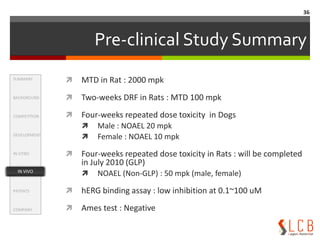
What is LCB01-0371? A novel oxazolidinoneanalogue. Potency in vitro: Superior to Linezolid against  MRSA, VRE, and H. Influenzae.in vivo: 1.5~5 times superior to Linezolid.In vitro ADME/TGood metabolic profile, low drug-drug interaction, and high plasma stability.SafetyMyelosuppression : Comparable or less bone marrow toxicity than Linezolid.MAO inhibition : Significantly better than Linezolid.NOAEL : 10~20 mpk (4 weeks, Dog)hERG assay & Ames test : Proved to be safeSolubilityFreely soluble in salt form (>25%, Linezolid: 0.3 % in water)SummaryBackgroundCompetitionDevelopmentIn VitroIn vivoPatentsCompanySUMMARY3
2004 IDSA ReportMost important resistant bacterial pathogensSummaryBackgroundCompetitionDevelopmentIn VitroIn vivoPatentsCompanyBACKGROUNDCurrent treatmentCurrent treatmentGram-negativeGram-positiveVancomycin,Linezolid, Daptomycin, PristinamycinMRSAMDR-GNBCephalosporins,Carbapenems, Aminoglycosides, TigecyclineP. aeruginosa, Acinetobacter, ESBL-producingEnterobacteriaceaeLinezolid, DaptomycinVRE*IDSA : The Infectious Diseases Society of AmericaDatamonitor commercial insight antibacterials 12/20064
Unmet Needs in Antibiotics1. Most compounds currently in development are derivatives of existing drugs with low potential to overcome resistance in the mid to long term.2. All currently available drugs and late-stage candidates for MRSA treatment are injectables. With MRSA incidence rising in the community, oral drugs have a large commercial potential.3. Carbapenemsand tigecycline are the only available treatment options for severe gram-negative infections. Upon emergence of resistances, novel drugs are a crucial need.SummaryBackgroundCompetitionDevelopmentIn VitroIn vivoPatentsCompany1. Compoundsoutside previous drug classesBACKGROUNDUnmet needs3. Gram-negative resistance2. OralMRSAdrugs5
HA-MRSA and CA-MRSAHospital-associated infectionThe burden of invasive (bloodstream) MRSA disease in the U.S. was evaluated using population-based, active case finding (at 9 sites) for the first time.The authors estimated there were 94,360 invasive MRSA infections in the U.S. in 2005 with 18,650 of them ending in death.Kievens, R. M. et al. JAMA 2007, 298, 1763-1771Community-associated infectionsMRSA was the most common cause of kin and soft-tissue infections in patients presented to emergency department in 11 U.S. cities studies.Incidence of MRSA infections in patients at 33 U.S. children’s hospitals increased ~300% from 2002 to 2007 while incidence of MSSA was stableGerber, J. S. et al. Clin Infect Dis 2009, 49, 65-71SummaryBackgroundCompetitionDevelopmentIn VitroIn vivoPatentsCompanyBACKGROUND6
Market growth of MRSA Drugs 76543Global sales (US$ billion)21020052006200720082009201020112012201320142015Pipeline drugs+VancomycinCubicinTygacilZyvoxDatamonitor forecast* for drugs mainly indicated for treatment of infections caused by MRSAGlobal forecast* until 2015SummaryBackgroundCompetitionDevelopmentIn VitroIn vivoPatentsCompanyBACKGROUNDZyvox(Linezolid)Oxazolidinone marketed by Pfizer
Indications include adult treatment of HAP (MRSA), CAP (S. pneumoniae), complicated and uncomplicated skin infections (MRSA), and VRE infections
Oral and IV formulations enable smooth transition from hospital to home treatment MRSA drugs are a main source of overall antibacterial market growth7
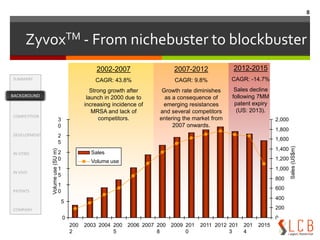
ZyvoxTM - From nichebuster to blockbuster 2012-2015CAGR: -14.7%Sales decline following 7MM patent expiry      (US: 2013).2002-2007CAGR: 43.8%Strong growth after launch in 2000 due to increasing incidence of MRSA and lack of competitors. 2007-2012CAGR: 9.8%Growth rate diminishes as a consequence of emerging resistances and several competitors entering the market from 2007 onwards.302,0001,800251,6001,40020Sales1,200Volume useSales (US$m)151,000Volume use (SU m)8001060040052000020022003200420052006200720082009201020112012201320142015SummaryBackgroundCompetitionDevelopmentIn VitroIn vivoPatentsCompanyBACKGROUND8
ZyvoxTM - Adverse Event Reports I All cases (305) Platelet Count Decreased (44),  Thrombocytopenia (31),  Death (26),  Anaemia (23),  Multi-Organ Failure (14),  Pyrexia (13),  Sepsis (13),  Vomiting (11),  Convulsion (11),  Respiratory Failure (10)Cases resulting in a serious event (296) Platelet Count Decreased (42),  Thrombocytopenia (30),  Death (26),  Anaemia (23),  Multi-Organ Failure (14),  Pyrexia (13),  Sepsis (13),  Vomiting (11),  Convulsion (11),  Respiratory Failure (10)Cases resulting in death (103) Platelet Count Decreased (29),  Multi-Organ Failure (13),  Sepsis (12),  Thrombocytopenia (12),  Respiratory Failure (10),  Pneumonia (8),  Septic Shock (7),  Renal Failure Acute (6),  Disseminated Intravascular Coagulation (5)SummaryBackgroundCompetitionDevelopmentIn VitroIn vivoPatentsCompanyBACKGROUND9
ZyvoxTM - Adverse Event Reports II In one case, Linezolid was successfully restarted at a reduced dose after resolution of myelotoxicity. Thrombocytopenia (platelets less than 100,000/mm3) has been reported in 32% of patients (n=19) receiving Linezolid for more than 10 days.In another study (n=295), thrombocytopenia (platelets less than150 x 10(9)/L) occurred in 6.4% of patients and severe thrombocytopenia (platelets less than 50 x 10(9)/L) occurred in 0.3% receiving Linezolid for more than 5 days. It has been suggested that the mechanism of Linezolid-associated thrombocytopenia is immune-mediated.SummaryBackgroundCompetitionDevelopmentIn VitroIn vivoPatentsCompanyBACKGROUND10
Linezolid : First-in-class Oxazolidinone IEffectiveness and safety in the treatment of G-positive bacteria infection (9studies with a total 2498 patients)Treatment success : No difference was observed between Lzd and VancomycinLinezolid was more effective than Vancomycin in skin and soft-tissue infectionsNo difference in treatment success for patients with bacterimia or pneumoniaMRSA-cSSTI (Complicatedskin and soft-tissue infection) (5studies with a total 2652 patients (Linezolid : 1361, Vancomycin : 1291))Microbiologicaleradication : favored the use of Linezolid over vancomycin.Mortality : No difference was observedHigher proportions of Linezolid Side-effect Diarrhea(119/1361 vs. 52/1291), nausea (102/1361 vs. 46/1291), thrombocytopenia (54/1121 vs. 8/1071)Higher proportions of Vancomycin Side-effect : Renal insufficiency(16/634 vs. 4/703)SummaryBackgroundCompetitionDevelopmentIn VitroIn vivoPatentsCompanyBACKGROUND11
Linezolid : First-in-class Oxazolidinone IILinezolid is as effective as vancomycin in patients with gram-positive infectionLinezolid is more likely to consistently achieve microbiologic eradication in MRSAApparent risks of thrombocytopenia, nausea, diarrhea, and possibly anemia may limit Linezolid use in treating MRSA cSSTISummaryBackgroundCompetitionDevelopmentIn VitroIn vivoPatentsCompanyBACKGROUND12
Linezolid : First-in-class Oxazolidinone IIIFirst member of a new class of antibacterial agents to be approved (2000) in over 35 yearsFDA Approved IndicationsVancomycin-resistant Enterococcusfaecium infections, * including cases with concurrent bacteremiaNosocomial pneumonia caused by:Staphylococcus aureus (MSSA & MRSA*)Streptococcus pneumoniae(penicillin-susceptible & MDRSP)Complicated skin and skin-structure infections, including diabetic foot infections, without concomitant osteomyelitis, caused by:Staphylococcus aureus (MSSA & MRSA*)Streptococcus pyogenesStreptococcus agalactiaeUncomplicated skin and skin-structure infectionsCommunity-acquired pneumoniaSummaryBackgroundCompetitionDevelopmentIn VitroIn vivoPatentsCompanyBACKGROUND* Only oral medicine approved by FDA for treatment  of infections due to these organisms 13
Linezolid : Mechanism of Action SummaryBackgroundCompetitionDevelopmentIn VitroIn vivoPatentsCompanyInhibition of Mitochondrial Protein Synthesis BACKGROUNDLeach et al. Molecular Cell 2007, 26, 393-40214
Clinical Stage: TOREZOLIDTMSummaryBackgroundCompetitionDevelopmentIn VitroIn vivoPatentsCompanyTrius TherapeuticsLicensed from Dong-A pharmaceutical in KoreaTrial data and PK/PD support 200mg QD as lowest effective dose for selection in Phase III pivotal cSSSI studiesCOMPETITION15
Clinical Stage: RADEZOLIDTMSummaryBackgroundCompetitionDevelopmentIn VitroIn vivoPatentsCompanyRadezolid is significantly more potent than LZD against S. pneumoniae, the enterococci, and respiratory tract pathogens (including H. influenzae)Radezolid is comparable or better than LZD in animal infection modelsRadezolid was well tolerated in Phase I studiesPhase II trial of Radezolid in CAP recently concludedRDZ at 300mg QD was comparable to 450mg QD or BID (Rib-X press release, Aug 4, 2009)COMPETITION16
Clinical Stage: PNU-100480SummaryBackgroundCompetitionDevelopmentIn VitroIn vivoPatentsCompanyPNU-100480 is Pfizer’s early oxazolidione with efficacy superior to LZD in murine TB modelsDespite similar MICs, LZD is static while PNU-100480 is cidal at human-equivalent dosesSulfoxide metabolite comprises 84% of the composite AUC (in mice)In mice, PNU-100480 conferred an additional 2-log reduction in lung CFU counts when added to RIF-INH-PZAPhase I trial to assess safety, tolerability, and PK began in May 2009COMPETITION17
Pre-Clinical Stage CandidatesNovel ‘reverse amide’ C-5 side chain analogExcellent PK profile in rats and dogs.Reduced potential for MAO-A inhibition (Ki=546uM vs. 56uM for Linezolid)NOAEL of 200mg/kg/day in 2 week rat studyVicuron-Pfizer collaborationSummaryBackgroundCompetitionDevelopmentIn VitroIn vivoPatentsCompanyCOMPETITION18
Discontinued OxazolidinonesSummaryBackgroundCompetitionDevelopmentIn VitroIn vivoPatentsCompanyCOMPETITION19
Next-Generation OpportunitiesImproved potency to enable lower dose; Once-daily dosingBetter water solubility to reduce volume for IV administrationExpanded spectrum to encompass more indicationsE.g. coverage of H. influenzae& M. catarrhalisCoverage of Linezolid-resistant organismsReduced or eliminate reversible myelosuppressive effectsFor use in the community and for longer-term therapy (e.g., osteomyelitis, etc.)Need a better understanding of binding vs. mitichondrialribosomesImproved MAOi profile desirable for broad community use20SummaryBackgroundCompetitionDevelopmentIn VitroIn vivoPatentsCompanyCOMPETITION
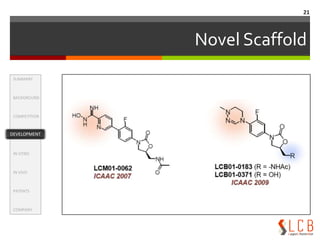
Novel ScaffoldSummaryBackgroundCompetitionDevelopmentIn VitroIn vivoPatentsCompanyDEVELOPMENT21
Chemical properties Among oxazolidinone analogs, LCB01-0371 has the lowest Molecular Weight of (C14H17FN4O3) 308.3  (Linezolid : 337)Chemical Stability (stressed condition) : Stable up to 3 months in 60℃, 75% humidity condition (>98% remaining) Aqueous Solubility : HCl salt form is freely soluble in waterHygroscopicity of LCB01-0371 : Weight change was < 0.3% for a weekpKa estimation of LCB01-0371-HCl salt : Estimated pKa ~ 4.3 (Calculated value : pKa = 5.0).   Acetic acid: pKa = 4.76Synthesis : 7 steps overall yield was 39% (without column chromatography)SummaryBackgroundCompetitionDevelopmentIn VitroIn vivoPatentsCompanyDEVELOPMENT22
Synthetic Scheme ProcessSummaryBackgroundCompetitionDevelopmentIn VitroIn vivoPatentsCompanyDEVELOPMENT23
In vitro ADME-T and PK profiles SummaryBackgroundCompetitionDevelopmentIn VitroIn vivoPatentsCompanyMouse PPB is relatively higher than human PPBIN VITROClinical efficacy will be improved than mouse model efficacy24
MICs of Clinical IsolateslSummaryBackgroundCompetitionDevelopmentIn VitroIn vivoPatentsCompanyIN VITRO25
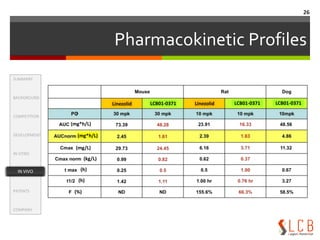
Pharmacokinetic ProfilesSummaryBackgroundCompetitionDevelopmentIn VitroIn vivoPatentsCompany26LCB01-0371LCB01-0371LCB01-0371LinezolidLinezolid(mg*h/L)(mg*h/L)(mg/L)(kg/L)(h)IN VIVO(h)(%)
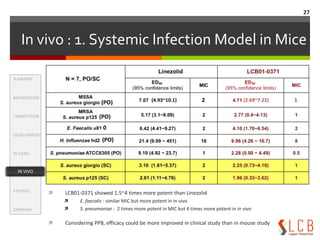
In vivo : 1. Systemic Infection Model in MiceSummaryBackgroundCompetitionDevelopmentIn VitroIn vivoPatentsCompany2721(2.69~7.22)(4.93~10.1)(PO)(PO)0(PO)IN VIVO LCB01-0371 showed 1.5~4 times more potent than LinezolidE. faecalis : similar MIC but more potent in in vivoS. pneumoniae :  2 times more potent in MIC but 4 times more potent in in vivo  Considering PPB, efficacy could be more improved in clinical study than in mouse study
In Vivo : 2. Soft Tissue Infection Model (air pouch) Infection : S. aureusgiorgio (MSSA)
Oral treatment(once) and then CFU counted after 1 daySummaryBackgroundCompetitionDevelopmentIn VitroIn vivoPatentsCompanyIN VIVOLCB01-0371 showed 3 times (25 mpk) ~ 20 times (50 mpk) reduction in CFU thanLinezolid28
In Vivo : 3. Lung Infection Model Infection pathogen: S. pneumoniae ATCC6305 (1X10⁷)
 Treatment : PO, 4 times (1 hr, 4 hr, 24 hr, 48 hr)SummaryBackgroundCompetitionDevelopmentIn VitroIn vivoPatentsCompanyIN VIVO29
In Vivo : 4. Thigh Infection ModelInfection : S. aureusgiorgio (MSSA)
 Treatment : PO, 3 times (1 hr, 4 hr, 24 hr)SummaryBackgroundCompetitionDevelopmentIn VitroIn vivoPatentsCompanyLinezolid(12.5 mpk)Linezolid(25 mpk)LCB01-0371 (12.5 mpk, 25 mpk)Treatment: 1, 4, 24 hr post infectionIN VIVOLCB01-0371 showed significant reduction in CFU thanLinezolid30
Toxicology: 1. Mice (4-days)SummaryBackgroundCompetitionDevelopmentIn VitroIn vivoPatentsCompanyIN VIVOLinezolidTR-700LCB01-0371TR-701Compounds were orally administered for 4 days (QD) to female C3H mice.
Blood samples weredrawn at day 5 and analyzed.
% reticulocyte was determined.
Reference - Therapy, 2006, 3(4), 521-52631
Toxicology: 2. Rats (7-days)Compounds were orally administered for 7 days to male SD rats.
Blood samples weredrawn at day 8 and analyzed.
% reticulocyte was determined.SummaryBackgroundCompetitionDevelopmentIn VitroIn vivoPatentsCompanyIN VIVOLinezolid(bid)TR-701 (qd)LCB01-0371 (bid)32

Project ppt antibiotic

  • 1.
    Oxazolidinone AnaloguesNovel AntibioticSmall MoleculePrepared on July 2010Please contact LCB for more recent updated version1
  • 2.
    Executive SummarySummaryBackgroundCompetitionDevelopmentIn VitroInvivoPatentsCompanySUMMARYOpportunity Type: Small MoleculeTherapeutic Area : Infectious disease, AntibacterialsTarget : Gram+ (MRSA, VRE, S. pneumoniae)Stage : Pre-clinicalLatest Data : Pre-clinicalObjective : License-out / Co-development2Novel oxazolidinone analogues were developed and they showed substantiallyimproved potency and safety features thanLinezolid. LCB01-0371 possesses overalladvanced potency, safety, and PK/PD data in vitroand in various in vivo and ex vivo experiments.
  • 3.
    What is LCB01-0371?A novel oxazolidinoneanalogue. Potency in vitro: Superior to Linezolid against MRSA, VRE, and H. Influenzae.in vivo: 1.5~5 times superior to Linezolid.In vitro ADME/TGood metabolic profile, low drug-drug interaction, and high plasma stability.SafetyMyelosuppression : Comparable or less bone marrow toxicity than Linezolid.MAO inhibition : Significantly better than Linezolid.NOAEL : 10~20 mpk (4 weeks, Dog)hERG assay & Ames test : Proved to be safeSolubilityFreely soluble in salt form (>25%, Linezolid: 0.3 % in water)SummaryBackgroundCompetitionDevelopmentIn VitroIn vivoPatentsCompanySUMMARY3
  • 4.
    2004 IDSA ReportMostimportant resistant bacterial pathogensSummaryBackgroundCompetitionDevelopmentIn VitroIn vivoPatentsCompanyBACKGROUNDCurrent treatmentCurrent treatmentGram-negativeGram-positiveVancomycin,Linezolid, Daptomycin, PristinamycinMRSAMDR-GNBCephalosporins,Carbapenems, Aminoglycosides, TigecyclineP. aeruginosa, Acinetobacter, ESBL-producingEnterobacteriaceaeLinezolid, DaptomycinVRE*IDSA : The Infectious Diseases Society of AmericaDatamonitor commercial insight antibacterials 12/20064
  • 5.
    Unmet Needs inAntibiotics1. Most compounds currently in development are derivatives of existing drugs with low potential to overcome resistance in the mid to long term.2. All currently available drugs and late-stage candidates for MRSA treatment are injectables. With MRSA incidence rising in the community, oral drugs have a large commercial potential.3. Carbapenemsand tigecycline are the only available treatment options for severe gram-negative infections. Upon emergence of resistances, novel drugs are a crucial need.SummaryBackgroundCompetitionDevelopmentIn VitroIn vivoPatentsCompany1. Compoundsoutside previous drug classesBACKGROUNDUnmet needs3. Gram-negative resistance2. OralMRSAdrugs5
  • 6.
    HA-MRSA and CA-MRSAHospital-associatedinfectionThe burden of invasive (bloodstream) MRSA disease in the U.S. was evaluated using population-based, active case finding (at 9 sites) for the first time.The authors estimated there were 94,360 invasive MRSA infections in the U.S. in 2005 with 18,650 of them ending in death.Kievens, R. M. et al. JAMA 2007, 298, 1763-1771Community-associated infectionsMRSA was the most common cause of kin and soft-tissue infections in patients presented to emergency department in 11 U.S. cities studies.Incidence of MRSA infections in patients at 33 U.S. children’s hospitals increased ~300% from 2002 to 2007 while incidence of MSSA was stableGerber, J. S. et al. Clin Infect Dis 2009, 49, 65-71SummaryBackgroundCompetitionDevelopmentIn VitroIn vivoPatentsCompanyBACKGROUND6
  • 7.
    Market growth ofMRSA Drugs 76543Global sales (US$ billion)21020052006200720082009201020112012201320142015Pipeline drugs+VancomycinCubicinTygacilZyvoxDatamonitor forecast* for drugs mainly indicated for treatment of infections caused by MRSAGlobal forecast* until 2015SummaryBackgroundCompetitionDevelopmentIn VitroIn vivoPatentsCompanyBACKGROUNDZyvox(Linezolid)Oxazolidinone marketed by Pfizer
  • 8.
    Indications include adulttreatment of HAP (MRSA), CAP (S. pneumoniae), complicated and uncomplicated skin infections (MRSA), and VRE infections
  • 9.
    Oral and IVformulations enable smooth transition from hospital to home treatment MRSA drugs are a main source of overall antibacterial market growth7
  • 10.
    ZyvoxTM - Fromnichebuster to blockbuster 2012-2015CAGR: -14.7%Sales decline following 7MM patent expiry (US: 2013).2002-2007CAGR: 43.8%Strong growth after launch in 2000 due to increasing incidence of MRSA and lack of competitors. 2007-2012CAGR: 9.8%Growth rate diminishes as a consequence of emerging resistances and several competitors entering the market from 2007 onwards.302,0001,800251,6001,40020Sales1,200Volume useSales (US$m)151,000Volume use (SU m)8001060040052000020022003200420052006200720082009201020112012201320142015SummaryBackgroundCompetitionDevelopmentIn VitroIn vivoPatentsCompanyBACKGROUND8
  • 11.
    ZyvoxTM - AdverseEvent Reports I All cases (305) Platelet Count Decreased (44),  Thrombocytopenia (31),  Death (26),  Anaemia (23),  Multi-Organ Failure (14),  Pyrexia (13),  Sepsis (13),  Vomiting (11),  Convulsion (11),  Respiratory Failure (10)Cases resulting in a serious event (296) Platelet Count Decreased (42),  Thrombocytopenia (30),  Death (26),  Anaemia (23),  Multi-Organ Failure (14),  Pyrexia (13),  Sepsis (13),  Vomiting (11),  Convulsion (11),  Respiratory Failure (10)Cases resulting in death (103) Platelet Count Decreased (29),  Multi-Organ Failure (13),  Sepsis (12),  Thrombocytopenia (12),  Respiratory Failure (10),  Pneumonia (8),  Septic Shock (7),  Renal Failure Acute (6),  Disseminated Intravascular Coagulation (5)SummaryBackgroundCompetitionDevelopmentIn VitroIn vivoPatentsCompanyBACKGROUND9
  • 12.
    ZyvoxTM - AdverseEvent Reports II In one case, Linezolid was successfully restarted at a reduced dose after resolution of myelotoxicity. Thrombocytopenia (platelets less than 100,000/mm3) has been reported in 32% of patients (n=19) receiving Linezolid for more than 10 days.In another study (n=295), thrombocytopenia (platelets less than150 x 10(9)/L) occurred in 6.4% of patients and severe thrombocytopenia (platelets less than 50 x 10(9)/L) occurred in 0.3% receiving Linezolid for more than 5 days. It has been suggested that the mechanism of Linezolid-associated thrombocytopenia is immune-mediated.SummaryBackgroundCompetitionDevelopmentIn VitroIn vivoPatentsCompanyBACKGROUND10
  • 13.
    Linezolid : First-in-classOxazolidinone IEffectiveness and safety in the treatment of G-positive bacteria infection (9studies with a total 2498 patients)Treatment success : No difference was observed between Lzd and VancomycinLinezolid was more effective than Vancomycin in skin and soft-tissue infectionsNo difference in treatment success for patients with bacterimia or pneumoniaMRSA-cSSTI (Complicatedskin and soft-tissue infection) (5studies with a total 2652 patients (Linezolid : 1361, Vancomycin : 1291))Microbiologicaleradication : favored the use of Linezolid over vancomycin.Mortality : No difference was observedHigher proportions of Linezolid Side-effect Diarrhea(119/1361 vs. 52/1291), nausea (102/1361 vs. 46/1291), thrombocytopenia (54/1121 vs. 8/1071)Higher proportions of Vancomycin Side-effect : Renal insufficiency(16/634 vs. 4/703)SummaryBackgroundCompetitionDevelopmentIn VitroIn vivoPatentsCompanyBACKGROUND11
  • 14.
    Linezolid : First-in-classOxazolidinone IILinezolid is as effective as vancomycin in patients with gram-positive infectionLinezolid is more likely to consistently achieve microbiologic eradication in MRSAApparent risks of thrombocytopenia, nausea, diarrhea, and possibly anemia may limit Linezolid use in treating MRSA cSSTISummaryBackgroundCompetitionDevelopmentIn VitroIn vivoPatentsCompanyBACKGROUND12
  • 15.
    Linezolid : First-in-classOxazolidinone IIIFirst member of a new class of antibacterial agents to be approved (2000) in over 35 yearsFDA Approved IndicationsVancomycin-resistant Enterococcusfaecium infections, * including cases with concurrent bacteremiaNosocomial pneumonia caused by:Staphylococcus aureus (MSSA & MRSA*)Streptococcus pneumoniae(penicillin-susceptible & MDRSP)Complicated skin and skin-structure infections, including diabetic foot infections, without concomitant osteomyelitis, caused by:Staphylococcus aureus (MSSA & MRSA*)Streptococcus pyogenesStreptococcus agalactiaeUncomplicated skin and skin-structure infectionsCommunity-acquired pneumoniaSummaryBackgroundCompetitionDevelopmentIn VitroIn vivoPatentsCompanyBACKGROUND* Only oral medicine approved by FDA for treatment of infections due to these organisms 13
  • 16.
    Linezolid : Mechanismof Action SummaryBackgroundCompetitionDevelopmentIn VitroIn vivoPatentsCompanyInhibition of Mitochondrial Protein Synthesis BACKGROUNDLeach et al. Molecular Cell 2007, 26, 393-40214
  • 17.
    Clinical Stage: TOREZOLIDTMSummaryBackgroundCompetitionDevelopmentInVitroIn vivoPatentsCompanyTrius TherapeuticsLicensed from Dong-A pharmaceutical in KoreaTrial data and PK/PD support 200mg QD as lowest effective dose for selection in Phase III pivotal cSSSI studiesCOMPETITION15
  • 18.
    Clinical Stage: RADEZOLIDTMSummaryBackgroundCompetitionDevelopmentInVitroIn vivoPatentsCompanyRadezolid is significantly more potent than LZD against S. pneumoniae, the enterococci, and respiratory tract pathogens (including H. influenzae)Radezolid is comparable or better than LZD in animal infection modelsRadezolid was well tolerated in Phase I studiesPhase II trial of Radezolid in CAP recently concludedRDZ at 300mg QD was comparable to 450mg QD or BID (Rib-X press release, Aug 4, 2009)COMPETITION16
  • 19.
    Clinical Stage: PNU-100480SummaryBackgroundCompetitionDevelopmentInVitroIn vivoPatentsCompanyPNU-100480 is Pfizer’s early oxazolidione with efficacy superior to LZD in murine TB modelsDespite similar MICs, LZD is static while PNU-100480 is cidal at human-equivalent dosesSulfoxide metabolite comprises 84% of the composite AUC (in mice)In mice, PNU-100480 conferred an additional 2-log reduction in lung CFU counts when added to RIF-INH-PZAPhase I trial to assess safety, tolerability, and PK began in May 2009COMPETITION17
  • 20.
    Pre-Clinical Stage CandidatesNovel‘reverse amide’ C-5 side chain analogExcellent PK profile in rats and dogs.Reduced potential for MAO-A inhibition (Ki=546uM vs. 56uM for Linezolid)NOAEL of 200mg/kg/day in 2 week rat studyVicuron-Pfizer collaborationSummaryBackgroundCompetitionDevelopmentIn VitroIn vivoPatentsCompanyCOMPETITION18
  • 21.
  • 22.
    Next-Generation OpportunitiesImproved potencyto enable lower dose; Once-daily dosingBetter water solubility to reduce volume for IV administrationExpanded spectrum to encompass more indicationsE.g. coverage of H. influenzae& M. catarrhalisCoverage of Linezolid-resistant organismsReduced or eliminate reversible myelosuppressive effectsFor use in the community and for longer-term therapy (e.g., osteomyelitis, etc.)Need a better understanding of binding vs. mitichondrialribosomesImproved MAOi profile desirable for broad community use20SummaryBackgroundCompetitionDevelopmentIn VitroIn vivoPatentsCompanyCOMPETITION
  • 23.
  • 24.
    Chemical properties Amongoxazolidinone analogs, LCB01-0371 has the lowest Molecular Weight of (C14H17FN4O3) 308.3 (Linezolid : 337)Chemical Stability (stressed condition) : Stable up to 3 months in 60℃, 75% humidity condition (>98% remaining) Aqueous Solubility : HCl salt form is freely soluble in waterHygroscopicity of LCB01-0371 : Weight change was < 0.3% for a weekpKa estimation of LCB01-0371-HCl salt : Estimated pKa ~ 4.3 (Calculated value : pKa = 5.0). Acetic acid: pKa = 4.76Synthesis : 7 steps overall yield was 39% (without column chromatography)SummaryBackgroundCompetitionDevelopmentIn VitroIn vivoPatentsCompanyDEVELOPMENT22
  • 25.
  • 26.
    In vitro ADME-Tand PK profiles SummaryBackgroundCompetitionDevelopmentIn VitroIn vivoPatentsCompanyMouse PPB is relatively higher than human PPBIN VITROClinical efficacy will be improved than mouse model efficacy24
  • 27.
    MICs of ClinicalIsolateslSummaryBackgroundCompetitionDevelopmentIn VitroIn vivoPatentsCompanyIN VITRO25
  • 28.
    Pharmacokinetic ProfilesSummaryBackgroundCompetitionDevelopmentIn VitroInvivoPatentsCompany26LCB01-0371LCB01-0371LCB01-0371LinezolidLinezolid(mg*h/L)(mg*h/L)(mg/L)(kg/L)(h)IN VIVO(h)(%)
  • 29.
    In vivo :1. Systemic Infection Model in MiceSummaryBackgroundCompetitionDevelopmentIn VitroIn vivoPatentsCompany2721(2.69~7.22)(4.93~10.1)(PO)(PO)0(PO)IN VIVO LCB01-0371 showed 1.5~4 times more potent than LinezolidE. faecalis : similar MIC but more potent in in vivoS. pneumoniae : 2 times more potent in MIC but 4 times more potent in in vivo Considering PPB, efficacy could be more improved in clinical study than in mouse study
  • 30.
    In Vivo :2. Soft Tissue Infection Model (air pouch) Infection : S. aureusgiorgio (MSSA)
  • 31.
    Oral treatment(once) andthen CFU counted after 1 daySummaryBackgroundCompetitionDevelopmentIn VitroIn vivoPatentsCompanyIN VIVOLCB01-0371 showed 3 times (25 mpk) ~ 20 times (50 mpk) reduction in CFU thanLinezolid28
  • 32.
    In Vivo :3. Lung Infection Model Infection pathogen: S. pneumoniae ATCC6305 (1X10⁷)
  • 33.
    Treatment :PO, 4 times (1 hr, 4 hr, 24 hr, 48 hr)SummaryBackgroundCompetitionDevelopmentIn VitroIn vivoPatentsCompanyIN VIVO29
  • 34.
    In Vivo :4. Thigh Infection ModelInfection : S. aureusgiorgio (MSSA)
  • 35.
    Treatment :PO, 3 times (1 hr, 4 hr, 24 hr)SummaryBackgroundCompetitionDevelopmentIn VitroIn vivoPatentsCompanyLinezolid(12.5 mpk)Linezolid(25 mpk)LCB01-0371 (12.5 mpk, 25 mpk)Treatment: 1, 4, 24 hr post infectionIN VIVOLCB01-0371 showed significant reduction in CFU thanLinezolid30
  • 36.
    Toxicology: 1. Mice(4-days)SummaryBackgroundCompetitionDevelopmentIn VitroIn vivoPatentsCompanyIN VIVOLinezolidTR-700LCB01-0371TR-701Compounds were orally administered for 4 days (QD) to female C3H mice.
  • 37.
    Blood samples weredrawnat day 5 and analyzed.
  • 38.
  • 39.
    Reference - Therapy,2006, 3(4), 521-52631
  • 40.
    Toxicology: 2. Rats(7-days)Compounds were orally administered for 7 days to male SD rats.
  • 41.
    Blood samples weredrawnat day 8 and analyzed.
  • 42.
    % reticulocyte wasdetermined.SummaryBackgroundCompetitionDevelopmentIn VitroIn vivoPatentsCompanyIN VIVOLinezolid(bid)TR-701 (qd)LCB01-0371 (bid)32

Editor's Notes

  • #20 In summary,Our candidate is Superior-to-Linezolid against MRSA, VRE, and H. Influenzae, in In vitro and in vivo. Additionally,safety profile was significantly improved than Linezolid.
  • #21 The infectious Diseases Society of America proposed solutions in its 2004 policy report, “ Bad bugs no drugs : as antibiotic R&amp;D stagnates, a public health crisis brews”The infectious Diseases Society of America identified a “hit list” of important pathogens based on two criteria :1. 1 current public health concern due to a high incidence of infection, substantial morbidity, high mortality, unique virvulence or resistance factors, or a combination of two or more of these characteristics.Second, few or no new antimicrobial candidate in the late-stage development pipeline The most important resistant pathogens are MRSA, VRE, PA, A. Baumannii, KP, E species. Treatment option in MRSA and VRE are Linezolid and daptomycin and in GNB sone beta lactam class antibioticsActually MRSA is the most important superbug so its drug is highly important and several pipeline is in clinical development. But in GNB pathogens, there’s no drug at all until now
  • #22 Most compounds currently in development are derivatives of existing drugs with low potential to overcome resistances in the mid- to long term.All currently available drugs and late-stage candidates for MRSA treatment are injectables. With MRSA incidence rising in the community, oral drugs have a large commercial potential.Carbapenems and tigecycline are the only available treatment options for severe gram-negative infections. Upon emergence of resistances, novel drugs are a crucial need.
  • #23 There are two kind of MRSA infections. The one is hospital associated and the other is community associated. Actually hospital associated infection is more important and 100,000 patients are infected and the motality is about 20%. Now it’s number of patients are more than AIDS infection patients.Until now, community associated infection is not so popular but the rate is highly increaed. So in the near future it will be serious problem in worldwide.
  • #28 The adult dose of Linezolid is 600mg twice daily orally or intravenously for a maximum of 14 days.Thrombocytopenia is uncommon in patients who receive Linezolid for 14 days or less (the manufacturer&apos;s recommendation), but in patients who receive longer courses, or who have renal failure, the rate is much higher
  • #31 mechanism of action of Linezolid is Inhibition of Mitochondrial Protein Synthesis .It is binding with 50S subunit of ribosome specially peptidyltransferase center. So protein synthesis was inhibited.Until 2007, it was unclear how to act the Linezolid. But now most of mechanism and some resistance mechanism were solved by X-ray crystallography.
  • #32 Currently, only 3 oxazolidinones are in clinic stage. And the only one, torezolid is for MRSA target.This compound was developed by Dong-A pharmaceutical in Korea, but now they licence out to Triuspharmacetical. Torezolid is prodrug of TR-700.This compound showed good potency. Owing to it’s great potency, it can be once-a-day dosing is possible and reducing dose to 200 mg and shortened the treating days to only 5~7 day therapy. (usually Linezolid takes 2 weeks therapy) . According to shortened dosing quantity and period, it could be overcome the toxicity problems.
  • #36 Pharmacia &amp;Upjohn (now part of Pfizer) started its own oxazolidinone research program in the 1990. and most of big pharma has their own antibiotics program and lots compounds were tested in clinical stage but Until now only a few candidates have progressed beyond phase 1.These candidates were all discontinued now.
  • #37 As mentioned before, The only oral MRSA drug is Linezolid, so next generation is urgently needed.The next generation drugs have to solve these problems.The first, improved potency. Linezolid is BID dosing, twice-a-day dosing is needed for it’s low potency, so next generation drug need high potency to enough to once-a-day dosing.The next is solubility, Linezolid is slightly soluble in water about 5 mg/mL, so only IV infusion is possible. If solubility is increased, it has some adventages.The next is expended spectrum. Linezolid acts only in gram-positive pathogen. If some gram negative pathogens such as H. influenzae &amp; M. catarrhalis can be treated, it can be used much more indications. Actually it is very important in next generation drug.The next is covering Linezolid-resistant pathogens. But until now Linezolid resistance is not so serious and only a rare case were reported.The next is, myelosuppressive effects. It’s Bone marrow suppression, characterized particularly by thrombocytopenia (low platelet count ), It’s the most important toxicity in Linezolid. If we reduce the toxicity it can be used in the community.The last point MAO-I. Linezolid is a weak monoamine oxidase inhibitor (MAOI), and should not be used concomitantly with other MAOIs, large amounts of tyramine-rich foods (such as pork, aged cheeses, alcoholic beverages, or smoked and pickled foods), or serotonergic drugs. So it’s use in community is very limited.All these properties have to improved, so it’s really difficult to find a good next generation agent.
  • #38 The last one is our company compound. It’s the only compound in pre-clinic stage except Pfizer compounds as promising candidate.We presented this at ICAAC meeting last year.Our initial lead was LCB01-0062, it showed great potency but showed bad PK profile and MAO-I profiles.So we cyclized the amidoxime to increase bioavailability.And this cyclic amidrazone moiety retain proper basicity, so it can make a salt and freely soluble in water.So we chose the LCB01-371 as preclinical candidate and it is currently under preclinical evaluations.
  • #40 We improved synthetic scheme like this for process. In this scheme, only 7 steps and No column chromatography is needed and reasonable yields.
  • #41 ADMET profiles are like this.The LCB-0371 showed comparable ADMET profiles with Linezolid. It showed no cytotoxicity, low protein binding, good metabolic stability, and improved MAO inhibition profiles.Plasma protein binding of LCB-0371 is relatively higher in mouse than human, so we expect the clinical efficacy will be improved than in mouse model efficacy.
  • #43 The LCB-0371 showed comparable AUC and bioavailability.
  • #44 The in vivo efficacies are tested four kind of animal model with mice.First animal model is systemic infection model.In systemic infection model, the LCB01-0371 showed 1.5~4 times more potent than Linezolid.Interestingly, it showed similarMIC but more potent in in vivo efficacy against E. faecalisand 2 times more potent in MIC but 4 times more potent inin vivo efficacy against S. pneumoniae.
  • #45 LCB01-0371 was tested in another animal model, soft tissue infection model using air pouch.In this model, colony forming unit (CFU) was recorded after treatment with oral gavage.After 1 day, LCB01-0371 showed 3 times (25 mpk) ~ 20 times (50 mpk) reduction in CFU than Linezolid.
  • #46 The 3rd animal model is lung infection model.After infection, treated 4 times oral gavage and recorded survival rates.LCB01-0371 showed higher survival rates than Linezolid.
  • #47 The last animal model is thigh infection model.After infection, treated 3 times oral gavage and recorded the CFU.After 2 day, LCB01-0371 showed significantly reduced in CFU than Linezolid at all doses.
  • #48 In Linezolid, one of the most serious side effect is bone marrow tox (thrombocytopenia). To evaluate the bone marrow tox, reduction % of reticulocyte was counted.In mice, LCB01-0371 showed less reduction % of reticulocyte, which means more safe than Linezolid and TR-701(Torezolid) compounds.
  • #49 In rats, LCB01-0371 showed less reduction of reticulocytes than Linezolid and TR compound for 7 day study.
  • #51 In TK study, 371 showed dose dependency and no accumulation.
  • #52 Pre-clinical study of 4 weeks repeated tox in dogs, LCB01-0371 showed no accumulations.
  • #53 Pre-clinical study is in progress at MPI (MI, USA) and will be finished within 1 month.
  • #54 The LCB-0371 showed comparable AUC and bioavailability.
  • #55 Currently we are preparing the Phase 1 study.