PROJET MANAGEMENT BASICSDr.S.Shajahan MBA PhDDEAN, IIM Shillongdrss@iimshillong.in
Project ManagementManaging Project ComponentsScope: Clearly define what’s in scope and what is out of scope – critical to project success Budget: Costs and funding
Deliverables: Work accomplished,  acceptance criteria and approval Schedule: Tasks, duration, dependencies, resources, and critical path Resources:Project management
Availability, utilization, task assignment and status Communication: Status meetings, status reporting, stakeholder management Issues and risk: Track, manage, escalate, contingency planningProject management
Project Title and Description What is the project? Address “who-what-when-where-why”. Project Sponsorship, Stakeholders, and Staffing Who is sponsoring the project? Identify the primary stakeholders (those impacted by the project). Project Charter
Identify the Project Manager and key staffing requirements. Project Objectives What are the objectives of the project? Address time and budget constraints What will be used to measure project success?Project Charter
Ensure that the project scope is clearly defined and approved Verify that project is staffed appropriately Establish leadership and project structure Define roles and responsibilities Develop project org chart & contact list Communicate with project team, functional managers and other stakeholders Plan the Project Project Planning
Develop project communication plan Develop other plans (quality, change, acceptance) Identify high level risks and cross functional impacts With your team, develop estimates and build a project plan Ensure that the project plan is realistic and approved Conduct Project Kick-Off Meeting Project Planning
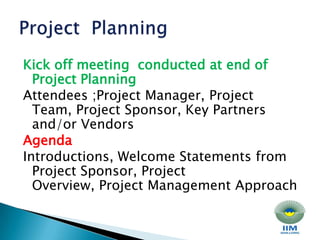
Kick off meeting  conducted at end of Project Planning Attendees ;Project Manager, Project Team, Project Sponsor, Key Partners and/or Vendors Agenda Introductions, Welcome Statements from Project Sponsor, Project Overview, Project Management ApproachProject  Planning
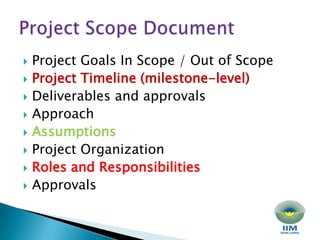
Project Goals In Scope / Out of Scope Project Timeline (milestone-level) Deliverables and approvals Approach Assumptions Project Organization Roles and Responsibilities Approvals Project Scope Document
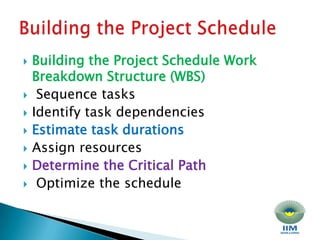
Building the Project Schedule Work Breakdown Structure (WBS) Sequence tasks Identify task dependencies Estimate task durations Assign resources Determine the Critical PathOptimize the schedule Building the Project Schedule
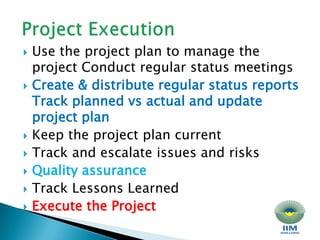
Project Execution Use the project plan to manage the project Conduct regular status meetings Create & distribute regular status reports Track planned vs actual and update project plan Keep the project plan current Track and escalate issues and risks Quality assurance Track Lessons Learned Execute the Project
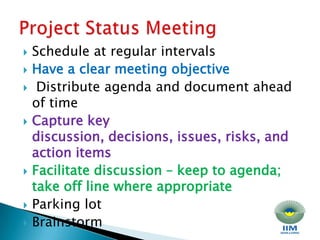
Schedule at regular intervals Have a clear meeting objectiveDistribute agenda and document ahead of time Capture key discussion, decisions, issues, risks, and action items Facilitate discussion – keep to agenda; take off line where appropriate Parking lot Brainstorm Project Status Meeting
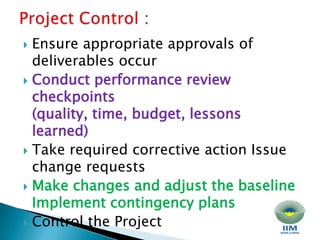
Ensure appropriate approvals of deliverables occur Conduct performance review checkpoints (quality, time, budget, lessons learned) Take required corrective action Issue change requests Make changes and adjust the baseline Implement contingency plans Control the Project Project Control :
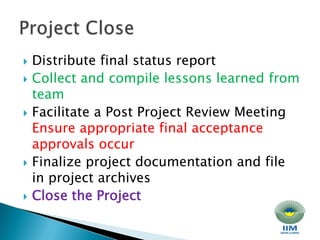
Distribute final status report Collect and compile lessons learned from team Facilitate a Post Project Review Meeting Ensure appropriate final acceptance approvals occur Finalize project documentation and file in project archives Close the Project Project Close

Project Mgt Sibpm

  • 1.
    PROJET MANAGEMENT BASICSDr.S.ShajahanMBA PhDDEAN, IIM Shillongdrss@iimshillong.in
  • 2.
    Project ManagementManaging ProjectComponentsScope: Clearly define what’s in scope and what is out of scope – critical to project success Budget: Costs and funding
  • 3.
    Deliverables: Work accomplished, acceptance criteria and approval Schedule: Tasks, duration, dependencies, resources, and critical path Resources:Project management
  • 4.
    Availability, utilization, taskassignment and status Communication: Status meetings, status reporting, stakeholder management Issues and risk: Track, manage, escalate, contingency planningProject management
  • 5.
    Project Title andDescription What is the project? Address “who-what-when-where-why”. Project Sponsorship, Stakeholders, and Staffing Who is sponsoring the project? Identify the primary stakeholders (those impacted by the project). Project Charter
  • 6.
    Identify the ProjectManager and key staffing requirements. Project Objectives What are the objectives of the project? Address time and budget constraints What will be used to measure project success?Project Charter
  • 7.
    Ensure that theproject scope is clearly defined and approved Verify that project is staffed appropriately Establish leadership and project structure Define roles and responsibilities Develop project org chart & contact list Communicate with project team, functional managers and other stakeholders Plan the Project Project Planning
  • 8.
    Develop project communicationplan Develop other plans (quality, change, acceptance) Identify high level risks and cross functional impacts With your team, develop estimates and build a project plan Ensure that the project plan is realistic and approved Conduct Project Kick-Off Meeting Project Planning
  • 9.
    Kick off meeting conducted at end of Project Planning Attendees ;Project Manager, Project Team, Project Sponsor, Key Partners and/or Vendors Agenda Introductions, Welcome Statements from Project Sponsor, Project Overview, Project Management ApproachProject Planning
  • 10.
    Project Goals InScope / Out of Scope Project Timeline (milestone-level) Deliverables and approvals Approach Assumptions Project Organization Roles and Responsibilities Approvals Project Scope Document
  • 11.
    Building the ProjectSchedule Work Breakdown Structure (WBS) Sequence tasks Identify task dependencies Estimate task durations Assign resources Determine the Critical PathOptimize the schedule Building the Project Schedule
  • 12.
    Project Execution Usethe project plan to manage the project Conduct regular status meetings Create & distribute regular status reports Track planned vs actual and update project plan Keep the project plan current Track and escalate issues and risks Quality assurance Track Lessons Learned Execute the Project
  • 13.
    Schedule at regularintervals Have a clear meeting objectiveDistribute agenda and document ahead of time Capture key discussion, decisions, issues, risks, and action items Facilitate discussion – keep to agenda; take off line where appropriate Parking lot Brainstorm Project Status Meeting
  • 14.
    Ensure appropriate approvalsof deliverables occur Conduct performance review checkpoints (quality, time, budget, lessons learned) Take required corrective action Issue change requests Make changes and adjust the baseline Implement contingency plans Control the Project Project Control :
  • 15.
    Distribute final statusreport Collect and compile lessons learned from team Facilitate a Post Project Review Meeting Ensure appropriate final acceptance approvals occur Finalize project documentation and file in project archives Close the Project Project Close