Introduction to Project Management
Group Members:
What is a Project? A project is a temporary endeavor undertaken to produce a unique product or service What are the differences between projects and operations? Characteristics of Operations Ongoing – Continuous cycle Repetitive – Expected inputs and outputs Characteristics of Projects Temporary – Definitive beginning and end Unique – New undertaking, unfamiliar ground
What is a successful project? Customer Requirements satisfied/exceeded Completed within allocated time frame Completed within allocated budget Acceptance by the customer
Why do projects fail? Scope creep Poor requirements gathering  No Functional input in planning Lack of sponsorship Unrealistic planning and scheduling/Impossible schedule commitments Lack of resources
What is Project Management? Project Management is the application of skills, knowledge, tools and techniques to meet the needs and expectations of stakeholders for a project The purpose of project management is prediction and prevention, NOT recognition and reaction Effective Management of the Triple Constraints Requirements – Needs Identified or Unidentified Expectations Cost/Resources – People, Money, Tools Schedule/Time
Key areas of Project Management Scope Management Issue Management Cost Management Quality Management Communications Management Risk Management Change Control Management
Scope Management: Primarily it is the definition and control of what  IS  and  IS NOT   included in the project. Issue Management: Issues are restraints to accomplishing the deliverables of the project.  Typically identified throughout the project and logged and tracked through resolution. Cost Management: This process is required to ensure the project is completed within the approved budget and includes resources, people, equipment, materials, quantities and budget. Quality Management : Quality Management is the process that insure the project will meet the needs
Communications Management : This process is necessary to ensure timely and appropriate generation, collection, dissemination, and storage of project information Risk Management : Risk identification and mitigation strategy Risk update and tracking Change Control Management : Define how changes to the project scope will be executed
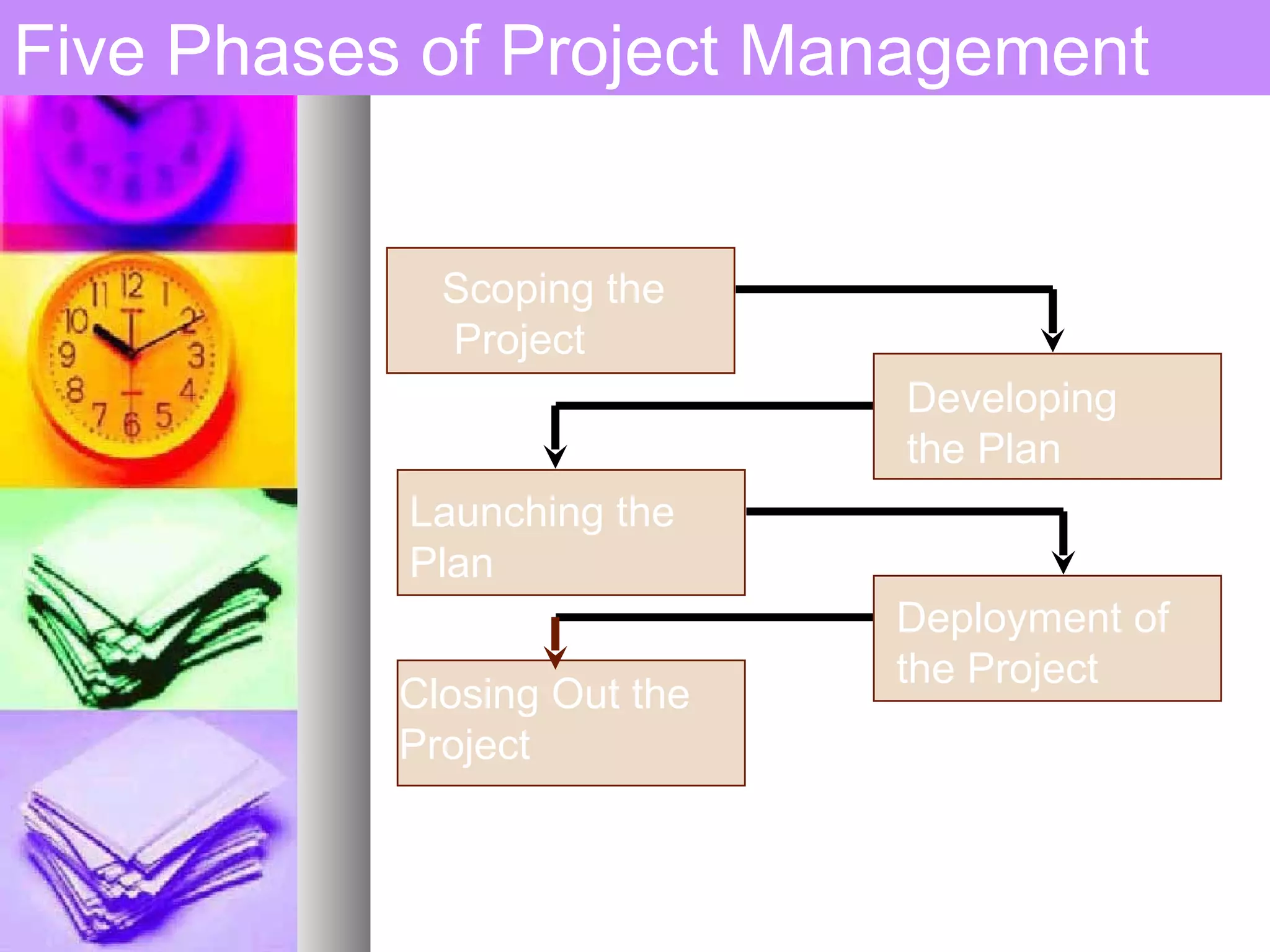
Five Phases of Project Management Scoping the  Project Developing the Plan Scoping the Project Launching the Plan Deployment of the Project Closing Out the  Project
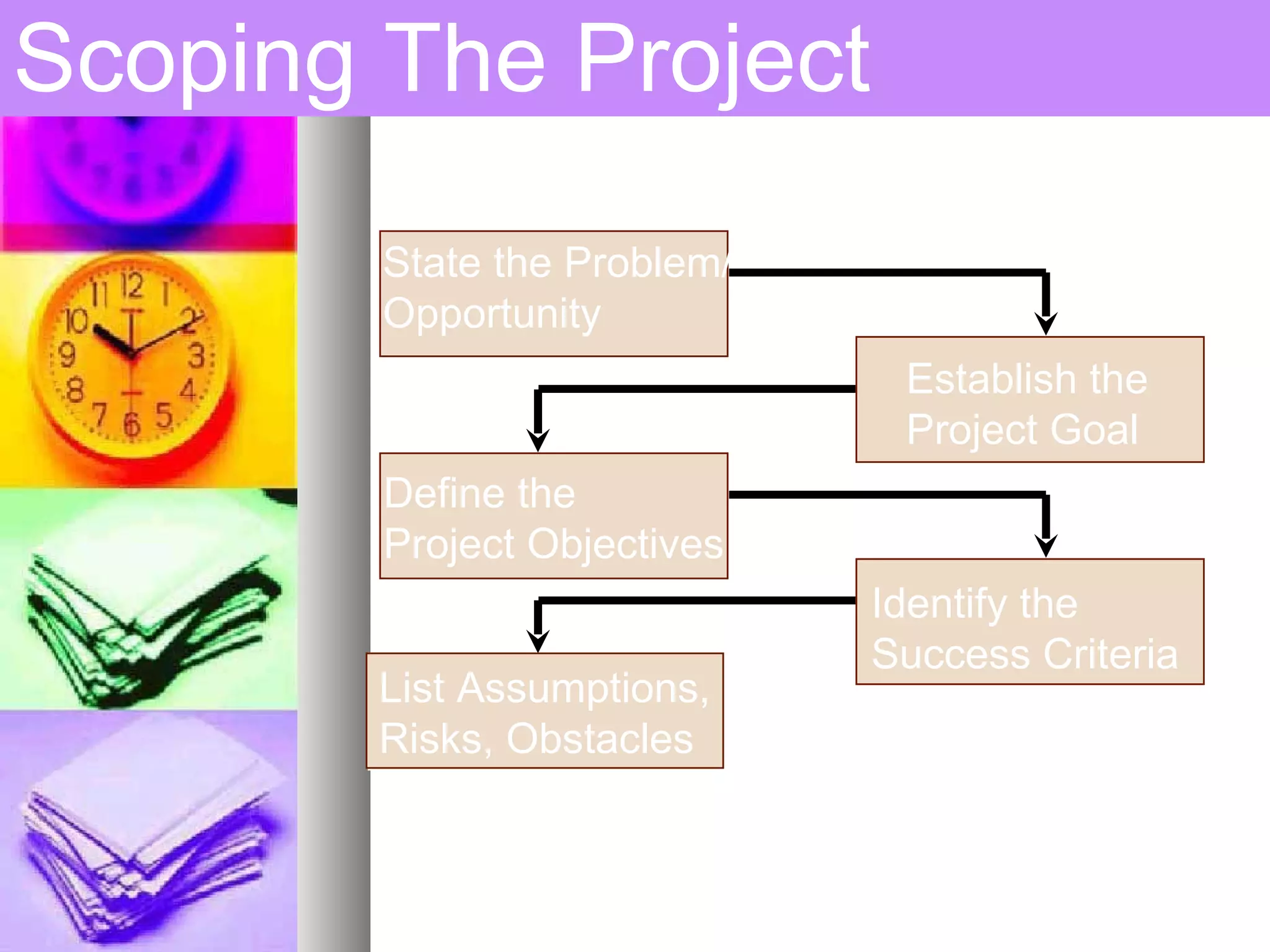
Scoping The Project Define the  Project Objectives State the Problem/ Opportunity Establish the  Project Goal Identify the Success Criteria List Assumptions, Risks, Obstacles
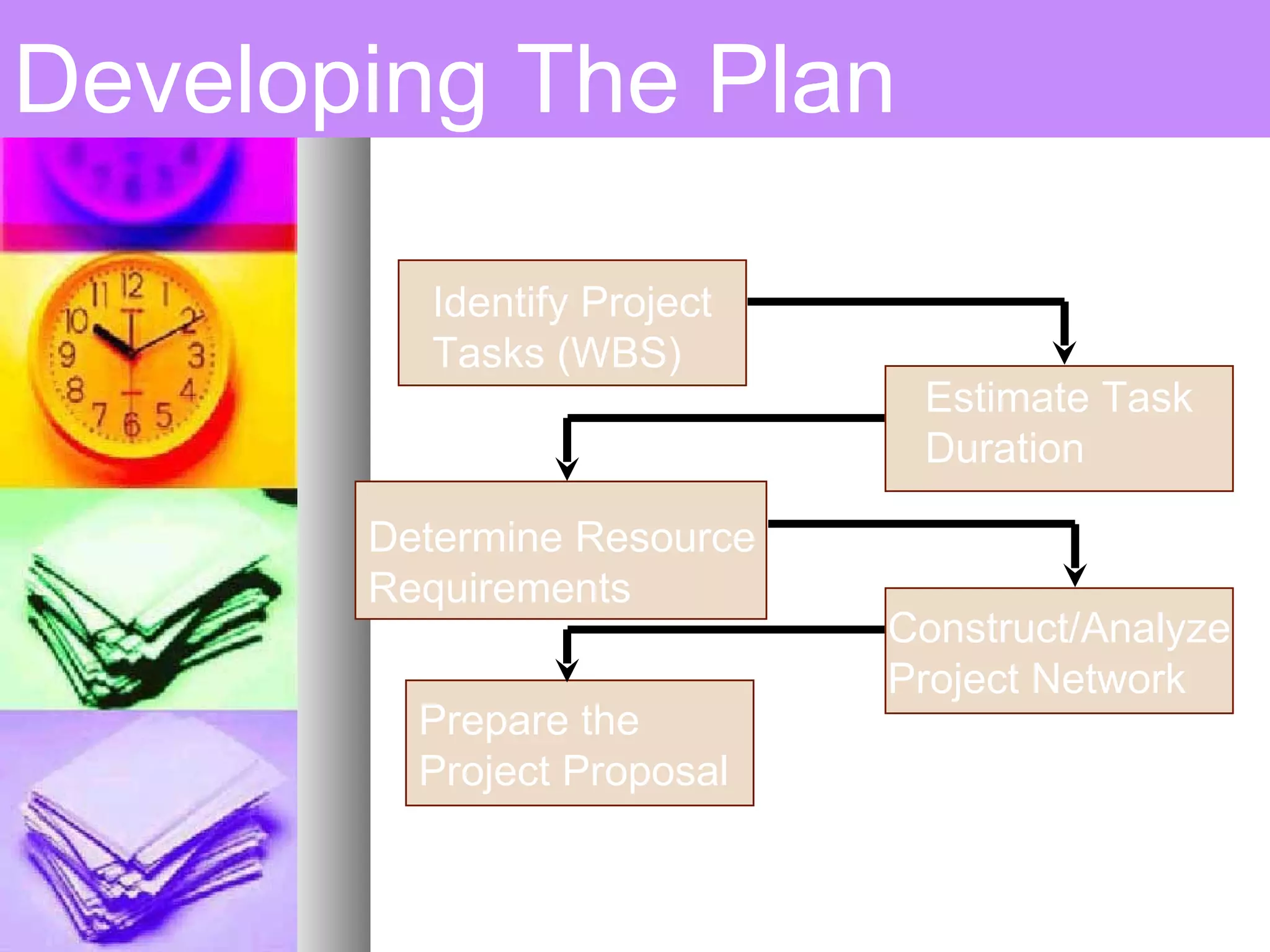
Developing The Plan Construct/Analyze Project Network Prepare the Project Proposal Identify Project Tasks (WBS) Estimate Task  Duration Determine Resource  Requirements
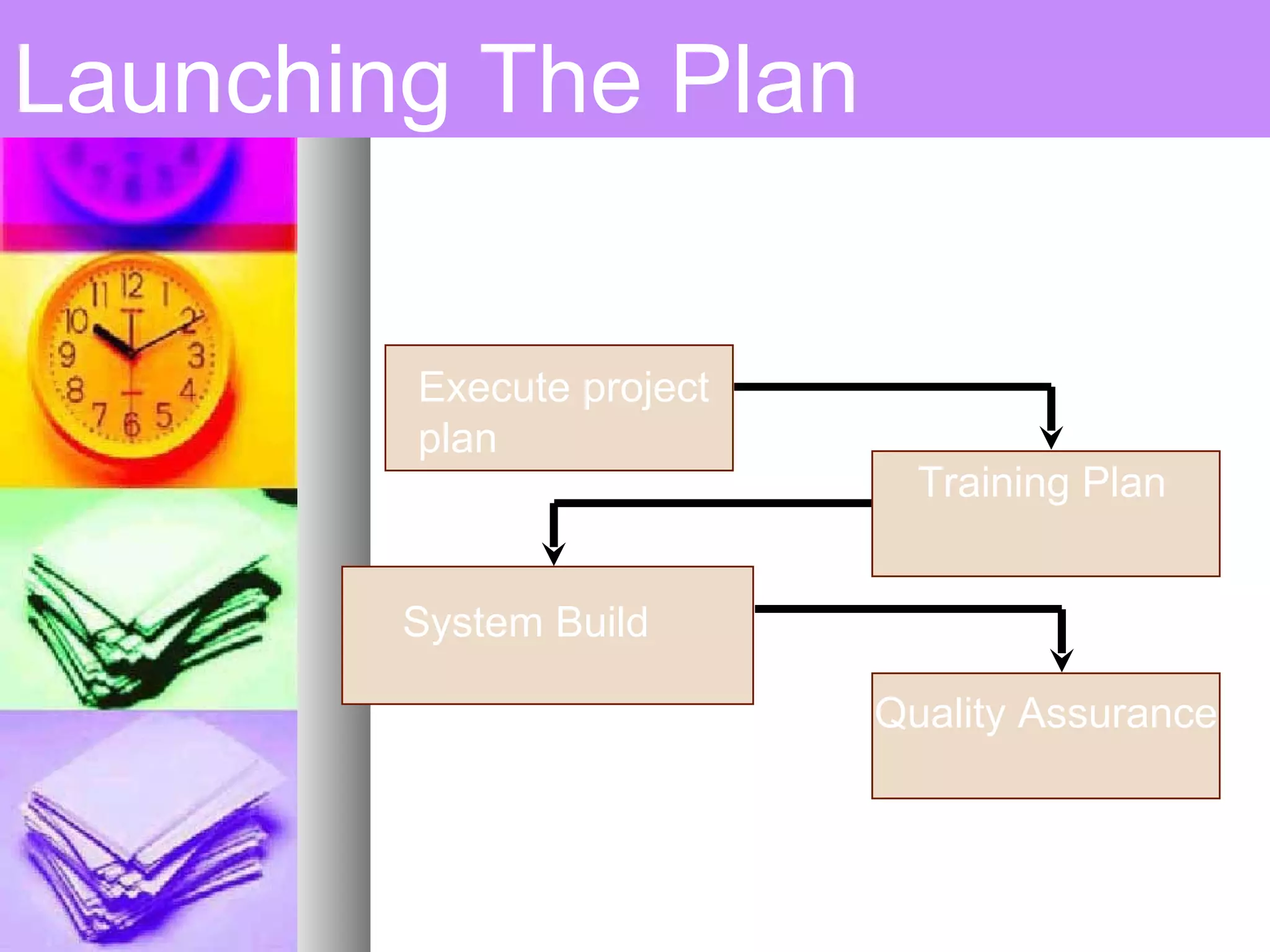
Launching The Plan Quality Assurance Execute project plan Training Plan System Build
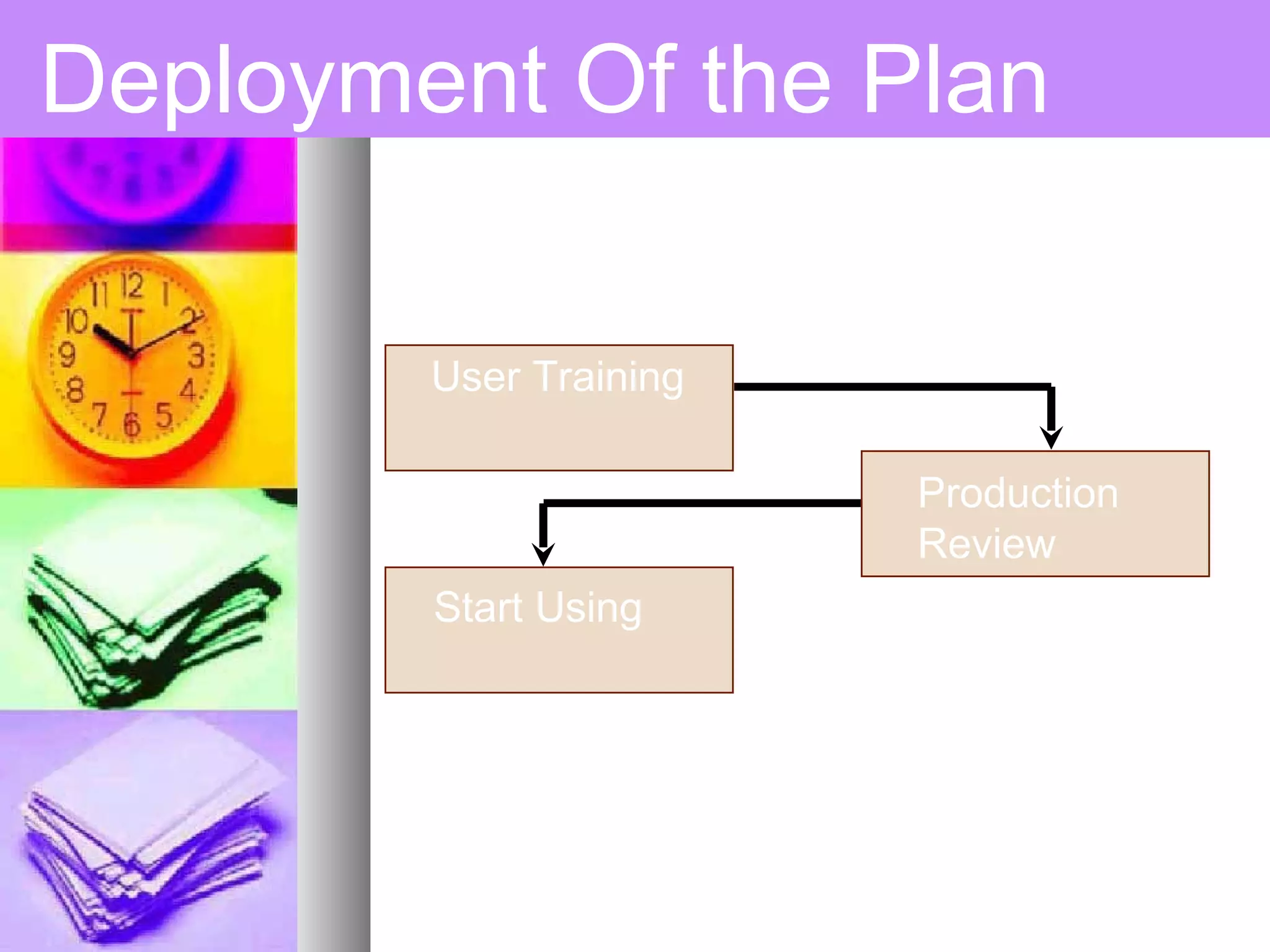
Deployment Of the Plan Start Using User Training Production  Review Identify the Success Criteria
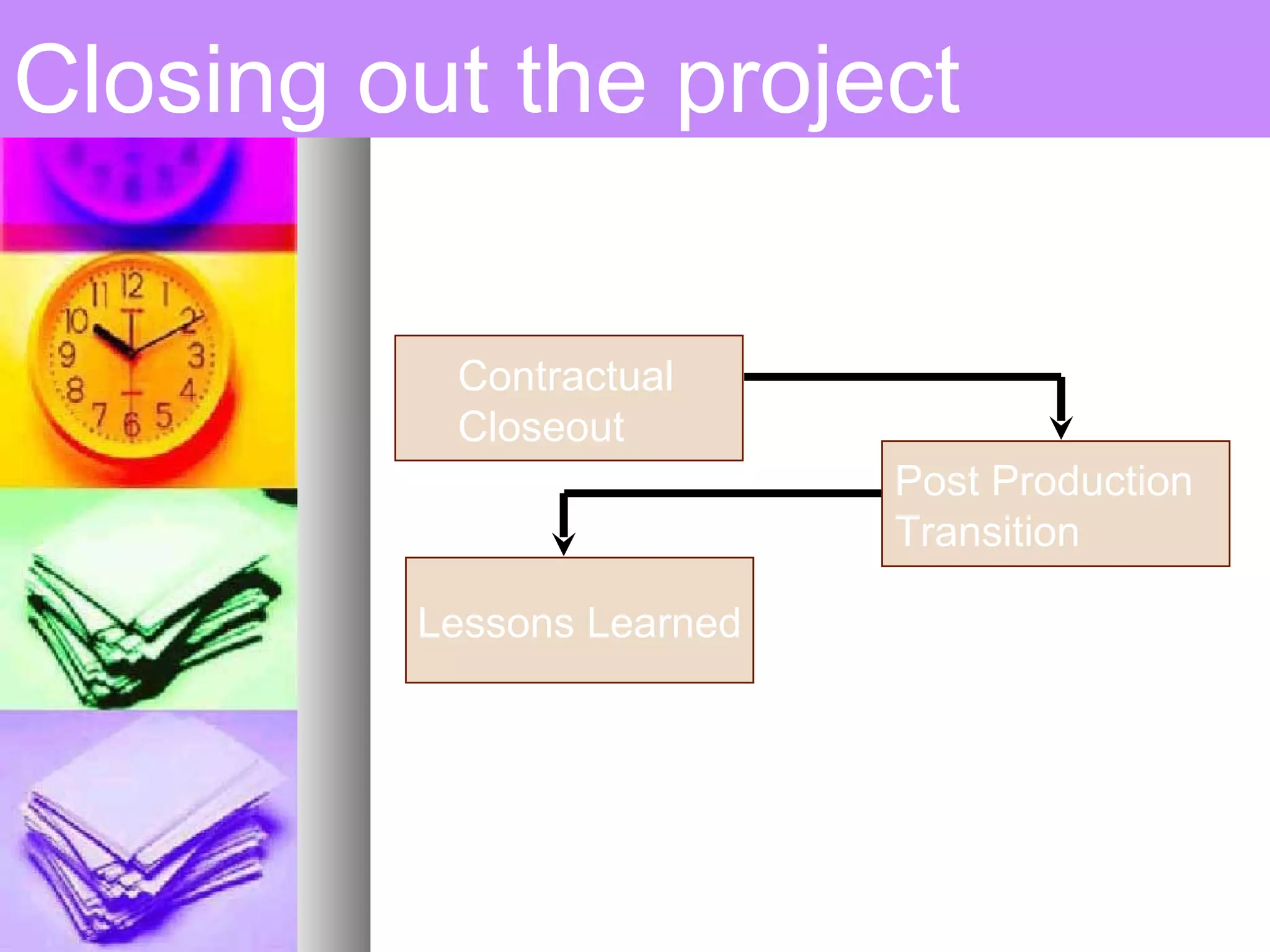
Closing out the project Scoping the  Project Post Production  Transition Lessons Learned Contractual  Closeout Monitoring & Controlling
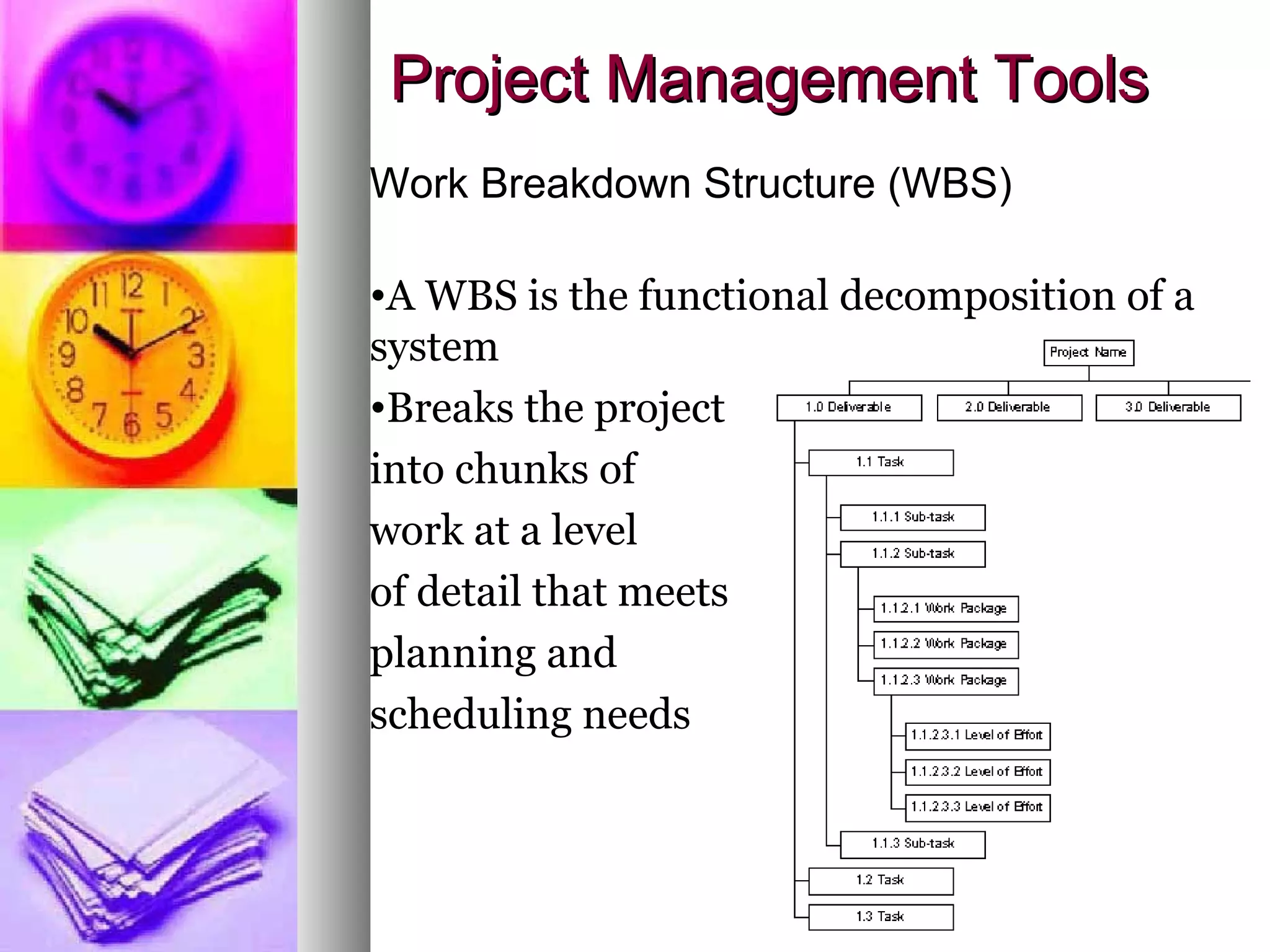
Project Management Tools Work Breakdown Structure (WBS) A WBS is the functional decomposition of a system Breaks the project  into chunks of  work at a level of detail that meets planning and  scheduling needs
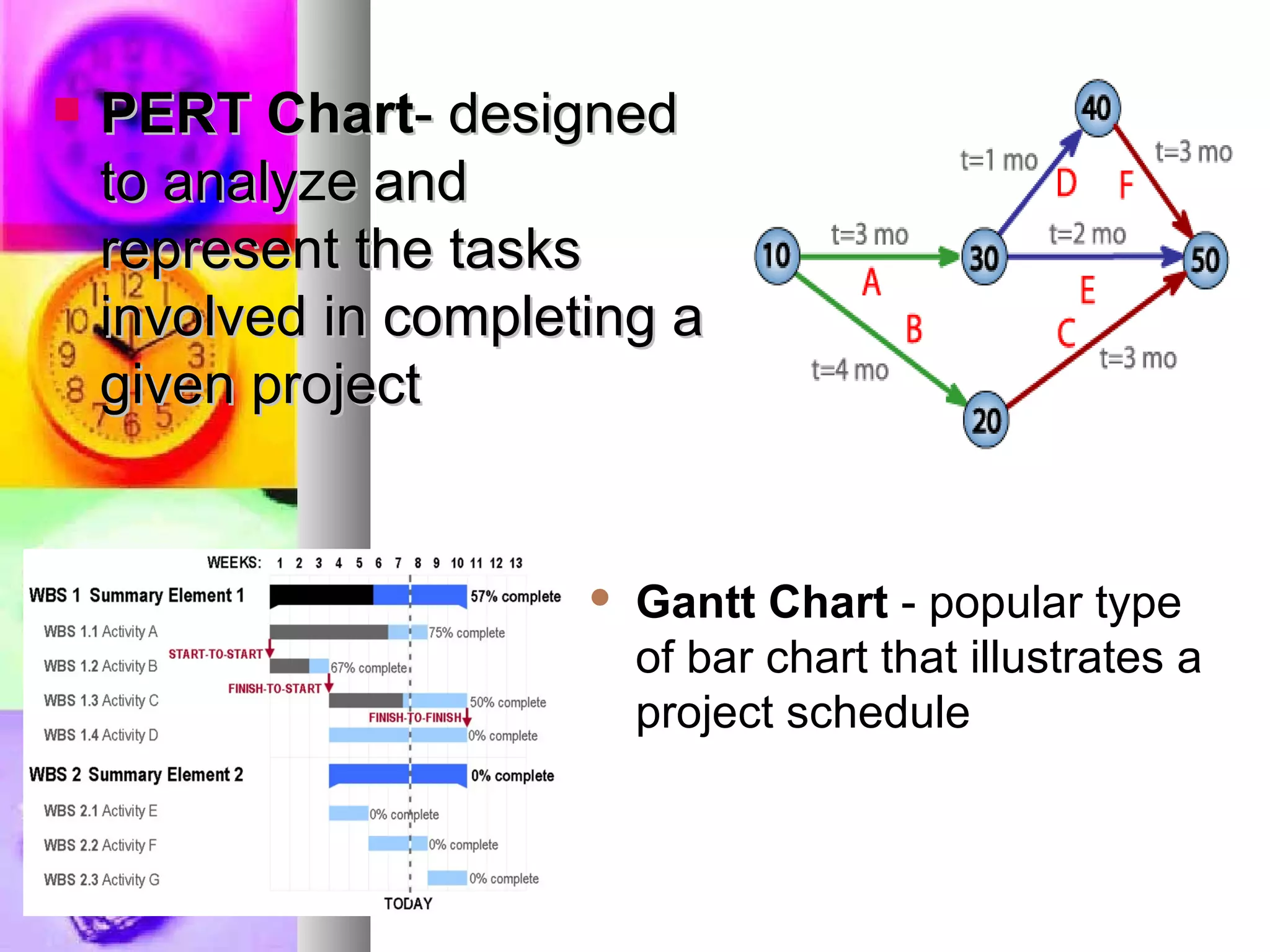
PERT Chart - designed to analyze and represent the tasks involved in completing a given project Gantt Chart  - popular type of bar chart that illustrates a project schedule
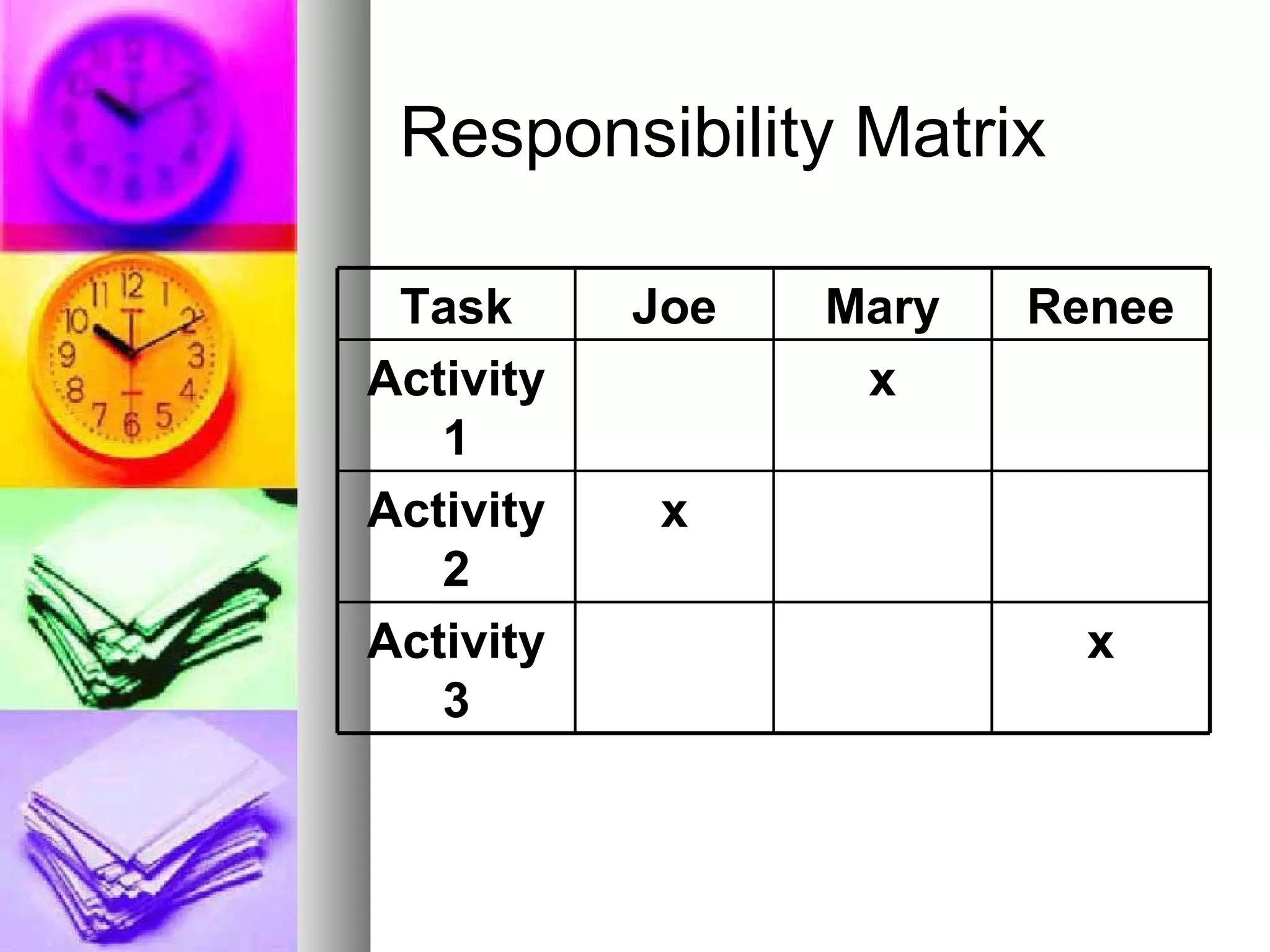
Responsibility Matrix Task Joe Mary Renee Activity 1 x Activity 2 x Activity 3 x
Application in Project Execution and Controlling A project schedule empowers a Project Manager to:  Manage the time, cost, and resources of the project Assess the progress of the project against the baseline Assess and communicate the impact of issues and change management Forecast and what-If scenarios Issue Management
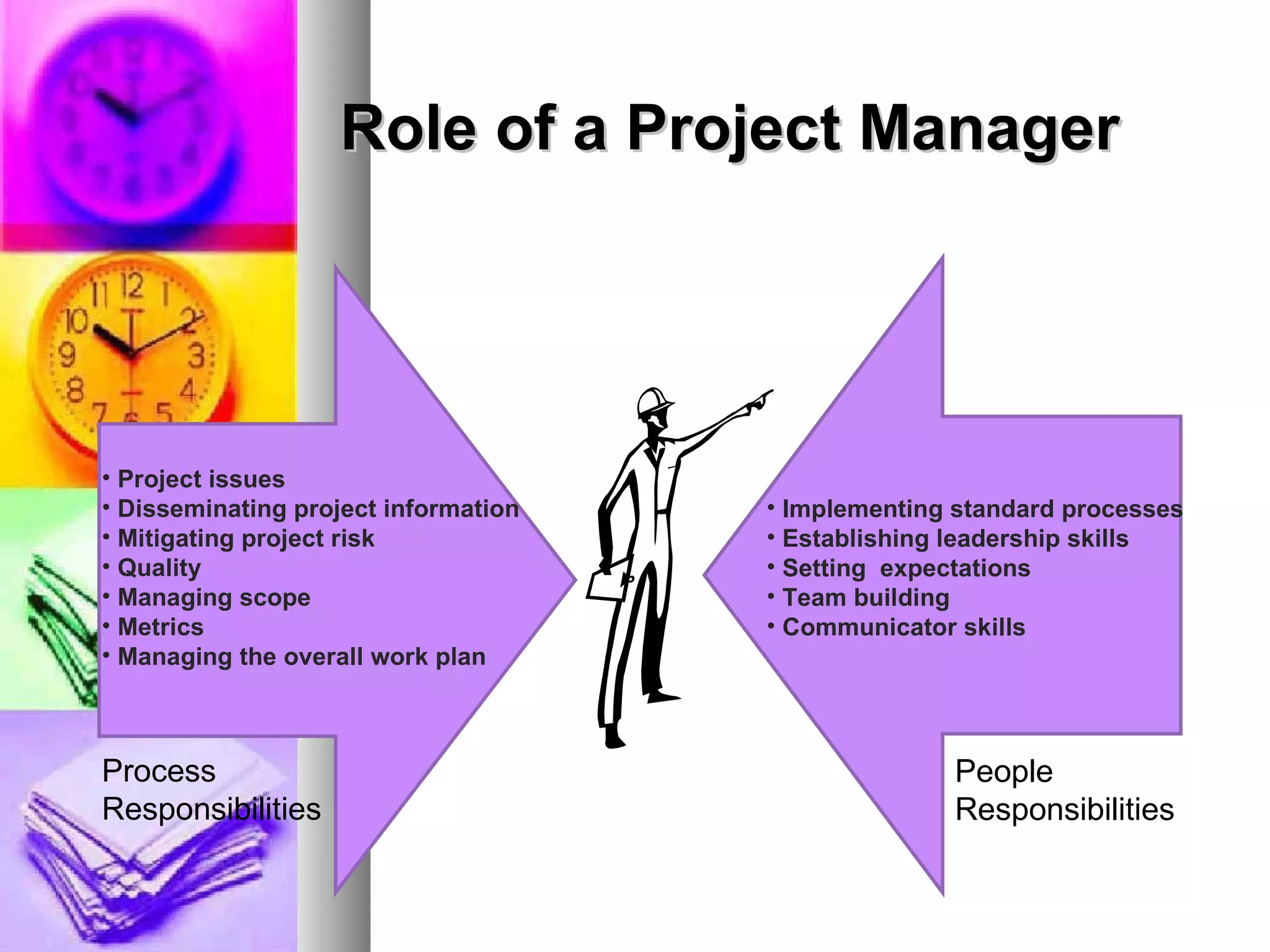
Role of a Project Manager Process Responsibilities People Responsibilities Project issues  Disseminating project information Mitigating project risk  Quality  Managing scope  Metrics  Managing the overall work plan Implementing standard processes Establishing leadership skills Setting  expectations Team building Communicator skills
Conclusion Successful project management is achieved by Clear brief Identification of stakeholders Managing the milestones Communication  Avoiding scope creep

Project management

  • 1.
  • 2.
  • 3.
    What is aProject? A project is a temporary endeavor undertaken to produce a unique product or service What are the differences between projects and operations? Characteristics of Operations Ongoing – Continuous cycle Repetitive – Expected inputs and outputs Characteristics of Projects Temporary – Definitive beginning and end Unique – New undertaking, unfamiliar ground
  • 4.
    What is asuccessful project? Customer Requirements satisfied/exceeded Completed within allocated time frame Completed within allocated budget Acceptance by the customer
  • 5.
    Why do projectsfail? Scope creep Poor requirements gathering No Functional input in planning Lack of sponsorship Unrealistic planning and scheduling/Impossible schedule commitments Lack of resources
  • 6.
    What is ProjectManagement? Project Management is the application of skills, knowledge, tools and techniques to meet the needs and expectations of stakeholders for a project The purpose of project management is prediction and prevention, NOT recognition and reaction Effective Management of the Triple Constraints Requirements – Needs Identified or Unidentified Expectations Cost/Resources – People, Money, Tools Schedule/Time
  • 7.
    Key areas ofProject Management Scope Management Issue Management Cost Management Quality Management Communications Management Risk Management Change Control Management
  • 8.
    Scope Management: Primarilyit is the definition and control of what IS and IS NOT included in the project. Issue Management: Issues are restraints to accomplishing the deliverables of the project. Typically identified throughout the project and logged and tracked through resolution. Cost Management: This process is required to ensure the project is completed within the approved budget and includes resources, people, equipment, materials, quantities and budget. Quality Management : Quality Management is the process that insure the project will meet the needs
  • 9.
    Communications Management :This process is necessary to ensure timely and appropriate generation, collection, dissemination, and storage of project information Risk Management : Risk identification and mitigation strategy Risk update and tracking Change Control Management : Define how changes to the project scope will be executed
  • 10.
    Five Phases ofProject Management Scoping the Project Developing the Plan Scoping the Project Launching the Plan Deployment of the Project Closing Out the Project
  • 11.
    Scoping The ProjectDefine the Project Objectives State the Problem/ Opportunity Establish the Project Goal Identify the Success Criteria List Assumptions, Risks, Obstacles
  • 12.
    Developing The PlanConstruct/Analyze Project Network Prepare the Project Proposal Identify Project Tasks (WBS) Estimate Task Duration Determine Resource Requirements
  • 13.
    Launching The PlanQuality Assurance Execute project plan Training Plan System Build
  • 14.
    Deployment Of thePlan Start Using User Training Production Review Identify the Success Criteria
  • 15.
    Closing out theproject Scoping the Project Post Production Transition Lessons Learned Contractual Closeout Monitoring & Controlling
  • 16.
    Project Management ToolsWork Breakdown Structure (WBS) A WBS is the functional decomposition of a system Breaks the project into chunks of work at a level of detail that meets planning and scheduling needs
  • 17.
    PERT Chart -designed to analyze and represent the tasks involved in completing a given project Gantt Chart - popular type of bar chart that illustrates a project schedule
  • 18.
    Responsibility Matrix TaskJoe Mary Renee Activity 1 x Activity 2 x Activity 3 x
  • 19.
    Application in ProjectExecution and Controlling A project schedule empowers a Project Manager to: Manage the time, cost, and resources of the project Assess the progress of the project against the baseline Assess and communicate the impact of issues and change management Forecast and what-If scenarios Issue Management
  • 20.
    Role of aProject Manager Process Responsibilities People Responsibilities Project issues Disseminating project information Mitigating project risk Quality Managing scope Metrics Managing the overall work plan Implementing standard processes Establishing leadership skills Setting expectations Team building Communicator skills
  • 21.
    Conclusion Successful projectmanagement is achieved by Clear brief Identification of stakeholders Managing the milestones Communication Avoiding scope creep