A Collaborative Learning
       Curriculum
 How the masters fits in with CLD and
       the CLAHRC curriculum
(and what might you be asked to do?)
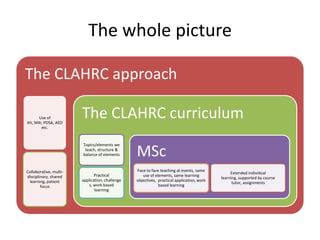
The whole picture

The CLAHRC approach

       Use of
IHI, M4I, PDSA, AED
                        The CLAHRC curriculum
        etc.


                        Topics/elements we
                         teach, structure &
                        balance of elements      MSc
Collaborative, multi-                            Face to face teaching at events, same
                                                                                                Extended individual
disciplinary, shared           Practical            use of elements, same learning
                                                                                           learning, supported by course
 learning, patient      application, challenge   objectives, practical application, work
                                                                                                 tutor, assignments
        focus              s, work based                     based learning
                               learning
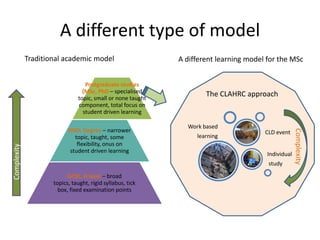
A different type of model
             Traditional academic model                      A different learning model for the MSc


                                  Postgraduate studies
                                 (MSc, PhD – specialised             The CLAHRC approach
                               topic, small or none taught
                               component, total focus on
                                 student driven learning

                                                               Work based
                           HND, Degree – narrower


                                                                                                     Complexity
                                                                                       CLD event
                              topic, taught, some                 learning
                               flexibility, onus on
Complexity


                            student driven learning
                                                                                        Individual
                                                                                        study

                          GCSE, A level – broad
                     topics, taught, rigid syllabus, tick
                       box, fixed examination points
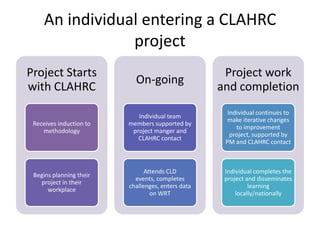
An individual entering a CLAHRC
                 project
Project Starts                                      Project work
                           On-going
with CLAHRC                                        and completion
                                                     Individual continues to
                            Individual team
                                                    make iterative changes
 Receives induction to   members supported by
                                                        to improvement
    methodology           project manger and
                                                      project, supported by
                            CLAHRC contact
                                                    PM and CLAHRC contact


                               Attends CLD          Individual completes the
 Begins planning their
                           events, completes        project and disseminates
   project in their
                         challenges, enters data             learning
      workplace
                                 on WRT                 locally/nationally
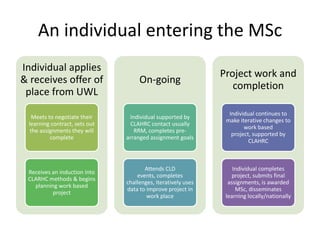
An individual entering the MSc
Individual applies
                                                              Project work and
& receives offer of                 On-going
                                                                 completion
 place from UWL
                                                                Individual continues to
   Meets to negotiate their     Individual supported by
                                                               make iterative changes to
 learning contract, sets out    CLAHRC contact usually
                                                                      work based
  the assignments they will       RRM, completes pre-
                                                                 project, supported by
          complete             arranged assignment goals
                                                                        CLAHRC


                                      Attends CLD                 Individual completes
 Receives an induction into
                                   events, completes             project, submits final
 CLARHC methods & begins
                               challenges, iteratively uses     assignments, is awarded
   planning work based
                               data to improve project in          MSc, disseminates
          project
                                       work place              learning locally/nationally
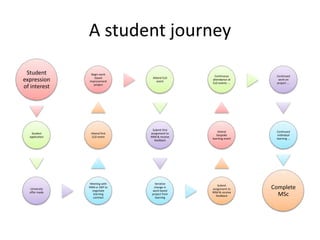
A student journey
 Student         Begin work
                                                 Continuous       Continued
                   based         Attend CLD
expression      improvement         event
                                                attendance at
                                                CLD events ….
                                                                   work on
                                                                  project ….
                   project
of interest


                                 Submit first
                                                    Attend        Continued
   Student       Attend first   assignment to
                                                   bespoke         individual
  application    CLD event      RRM & receive
                                                learning event    learning …
                                  feedback


                 Meeting with      Iterative
                                                    Submit
  University
                RRM or DKP to
                  negotiate
                                  change in
                                 work based
                                                assignment to    Complete
  offer made                                    RRM & receive
                   learning
                  contract
                                 project from
                                   learning
                                                  feedback         MSc
Team contribution?
• Giving a CLD workshop?
  – Same learning objectives for all
  – Same level of complexity for all
  – MSc students may do further individual work
    based on the workshop afterwards
     • Students may approach at CLD with further questions
  – MSc students, like fellows, may be working alone
    or in a ‘looser’ team
     • Same consideration as offered to fellows to take into
       account their lack of their team present
Team contribution?
• Specialist area support:
  – You may be invited to support an MSc student
  – This will be within your area of expertise
  – This will be something like a ‘second supervisor’
    relationship
  – You may be invited to attend meetings where they
    negotiate their learning contract
  – You may be invited to second mark assignments
    where they fall in your area of expertise
Expected workload
• First cohort expected to be 8-10 students
   – RRM & Deirdre Kelley-Patterson will take the lions share of
     load in supporting the first cohort of students
• Students will be entering the MSc at different time
  points
• Assignments will be negotiated and individually
  tailored as appropriate for the student and setting, and
  will be due at different points
• No expectation of team marking assignments, unless
  within specialist area and requested in advance
• Contributions to CLD will remain the same

A collaborative learning curriculum

  • 1.
    A Collaborative Learning Curriculum How the masters fits in with CLD and the CLAHRC curriculum (and what might you be asked to do?)
  • 2.
    The whole picture TheCLAHRC approach Use of IHI, M4I, PDSA, AED The CLAHRC curriculum etc. Topics/elements we teach, structure & balance of elements MSc Collaborative, multi- Face to face teaching at events, same Extended individual disciplinary, shared Practical use of elements, same learning learning, supported by course learning, patient application, challenge objectives, practical application, work tutor, assignments focus s, work based based learning learning
  • 3.
    A different typeof model Traditional academic model A different learning model for the MSc Postgraduate studies (MSc, PhD – specialised The CLAHRC approach topic, small or none taught component, total focus on student driven learning Work based HND, Degree – narrower Complexity CLD event topic, taught, some learning flexibility, onus on Complexity student driven learning Individual study GCSE, A level – broad topics, taught, rigid syllabus, tick box, fixed examination points
  • 4.
    An individual enteringa CLAHRC project Project Starts Project work On-going with CLAHRC and completion Individual continues to Individual team make iterative changes Receives induction to members supported by to improvement methodology project manger and project, supported by CLAHRC contact PM and CLAHRC contact Attends CLD Individual completes the Begins planning their events, completes project and disseminates project in their challenges, enters data learning workplace on WRT locally/nationally
  • 5.
    An individual enteringthe MSc Individual applies Project work and & receives offer of On-going completion place from UWL Individual continues to Meets to negotiate their Individual supported by make iterative changes to learning contract, sets out CLAHRC contact usually work based the assignments they will RRM, completes pre- project, supported by complete arranged assignment goals CLAHRC Attends CLD Individual completes Receives an induction into events, completes project, submits final CLARHC methods & begins challenges, iteratively uses assignments, is awarded planning work based data to improve project in MSc, disseminates project work place learning locally/nationally
  • 6.
    A student journey Student Begin work Continuous Continued based Attend CLD expression improvement event attendance at CLD events …. work on project …. project of interest Submit first Attend Continued Student Attend first assignment to bespoke individual application CLD event RRM & receive learning event learning … feedback Meeting with Iterative Submit University RRM or DKP to negotiate change in work based assignment to Complete offer made RRM & receive learning contract project from learning feedback MSc
  • 7.
    Team contribution? • Givinga CLD workshop? – Same learning objectives for all – Same level of complexity for all – MSc students may do further individual work based on the workshop afterwards • Students may approach at CLD with further questions – MSc students, like fellows, may be working alone or in a ‘looser’ team • Same consideration as offered to fellows to take into account their lack of their team present
  • 8.
    Team contribution? • Specialistarea support: – You may be invited to support an MSc student – This will be within your area of expertise – This will be something like a ‘second supervisor’ relationship – You may be invited to attend meetings where they negotiate their learning contract – You may be invited to second mark assignments where they fall in your area of expertise
  • 9.
    Expected workload • Firstcohort expected to be 8-10 students – RRM & Deirdre Kelley-Patterson will take the lions share of load in supporting the first cohort of students • Students will be entering the MSc at different time points • Assignments will be negotiated and individually tailored as appropriate for the student and setting, and will be due at different points • No expectation of team marking assignments, unless within specialist area and requested in advance • Contributions to CLD will remain the same

Editor's Notes