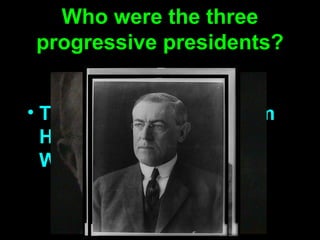
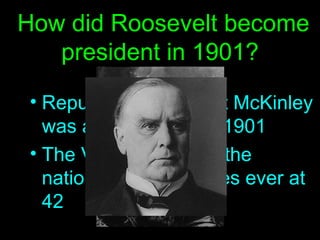
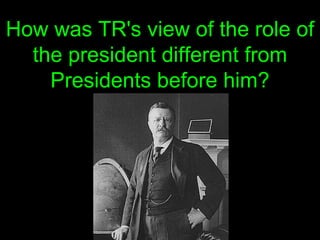
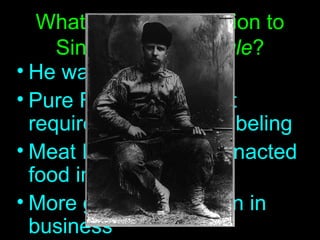
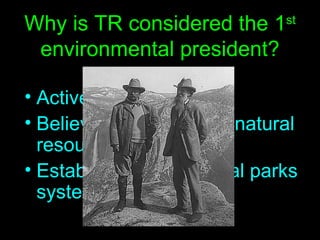
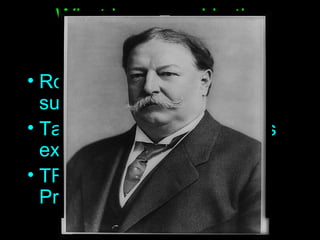
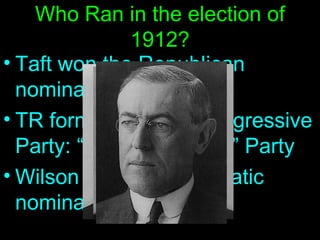
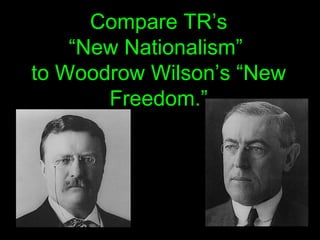
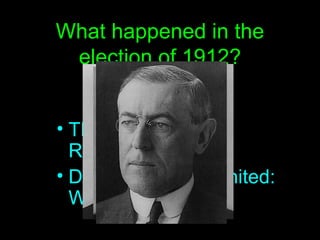
The passage discusses three progressive US presidents from the early 20th century: Theodore Roosevelt, William Howard Taft, and Woodrow Wilson. It outlines some of their key policies and beliefs. Theodore Roosevelt became president in 1901 after McKinley's assassination. He believed in a strong and active federal government to protect people from big business. He took actions like trust-busting and establishing national parks. Woodrow Wilson defeated both Roosevelt and Taft in the 1912 election by advocating for restoring competition through trust-busting.