


INSPIRING EDUCATORS  to  INSPIRE CHILDREN
 
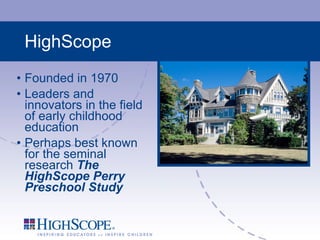
HighScope Founded in 1970 Leaders and innovators in the field of early childhood education Perhaps best known for the seminal research  The HighScope Perry Preschool Study
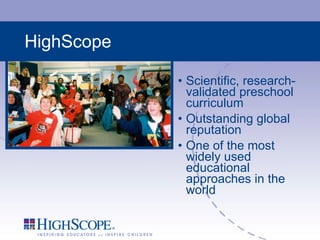
HighScope Scientific, research- validated preschool  curriculum Outstanding global  reputation One of the most widely used educational approaches in the world
Trained Teachers Globally Including: Kuwait Jordan Egypt South Africa Nigeria Chile Peru Mexico Finland The Netherlands The United Kingdom Ireland Canada Singapore Indonesia Eastern Caribbean Portugal Turkey Iceland Switzerland Venezuela Brazil Australia Hong Kong China
 
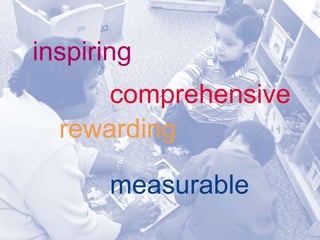
inspiring rewarding comprehensive measurable
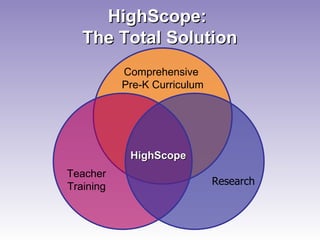
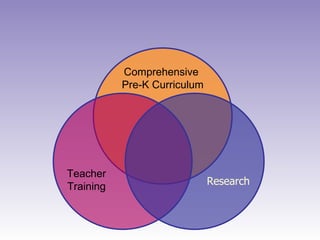
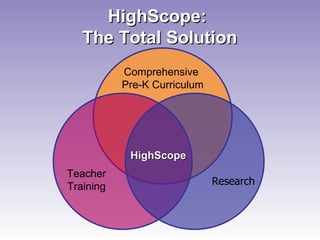
HighScope:  The Total Solution Comprehensive  Pre-K Curriculum   Research HighScope Teacher Training
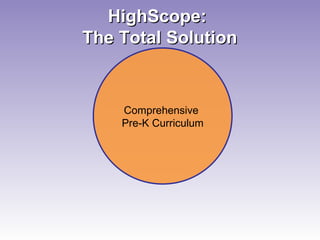
HighScope:  The Total Solution Comprehensive  Pre-K Curriculum
Comprehensive  Preschool Curriculum Providing support and guidance in all aspects of the classroom.
What are some of the components that make this curriculum unique? Why HighScope?
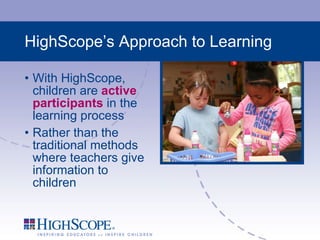
HighScope’s Approach to Learning With HighScope, children are  active participants  in the learning process Rather than the traditional methods where teachers give information to children
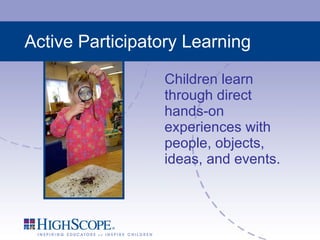
Active Participatory Learning Children learn through direct hands-on experiences with people, objects, ideas, and events.
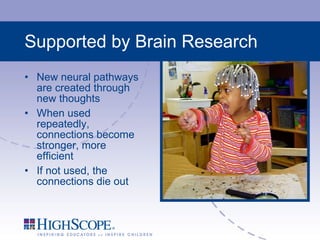
Supported by Brain Research New neural pathways are created through new thoughts When used repeatedly, connections become stronger, more efficient If not used, the connections die out
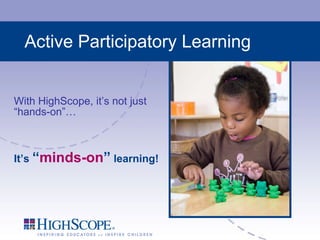
Active Participatory Learning With HighScope, it’s not just “hands-on”… It’s  “ minds-on ”  learning!
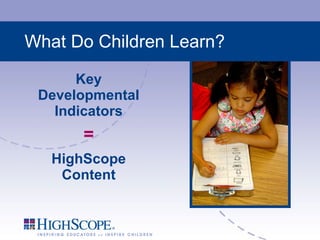
What Do Children Learn? Key Developmental Indicators = HighScope Content
Why Key Developmental Indicators? Key  – These are meaningful ideas children should learn and experience Developmental  – Recognizes that learning is gradual and cumulative Indicators  – Emphasize that educators need evidence that children are developing knowledge, skills and understanding considered important for school and life readiness
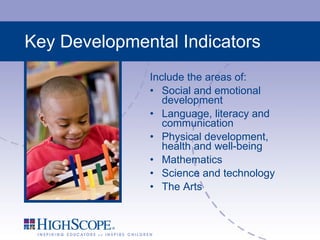
Key Developmental Indicators Include the areas of: Social and emotional development Language, literacy and communication Physical development, health and well-being Mathematics Science and technology The Arts
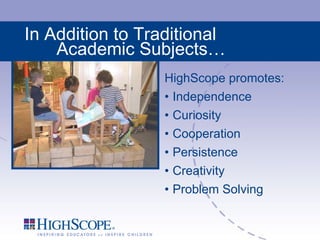
In Addition to Traditional Academic Subjects… HighScope promotes: Independence Curiosity Cooperation Persistence Creativity  Problem Solving
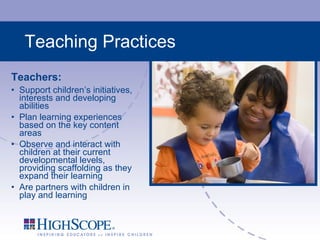
Teaching Practices Teachers: Support children’s initiatives, interests and developing abilities Plan learning experiences based on the key content areas Observe and interact with children at their current developmental levels, providing scaffolding as they expand their learning Are partners with children in play and learning
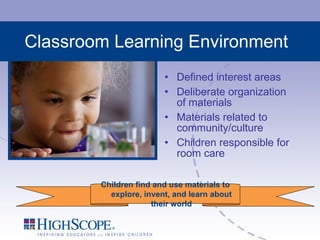
Classroom Learning Environment Defined interest areas  Deliberate organization of materials Materials related to community/culture Children responsible for room care Children find and use materials to explore, invent, and learn about their world
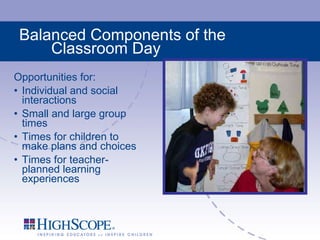
Balanced Components of the Classroom Day Opportunities for: Individual and social interactions Small and large group times Times for children to make plans and choices Times for teacher-planned learning experiences
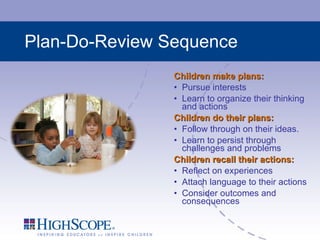
Plan-Do-Review Sequence Children make plans: Pursue interests Learn to organize their thinking and actions Children do their plans: Follow through on their ideas.  Learn to persist through challenges and problems Children recall their actions: Reflect on experiences  Attach language to their actions Consider outcomes and consequences
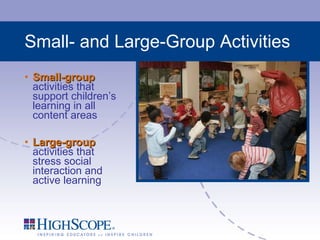
Small- and Large-Group Activities Small-group  activities that support children’s learning in all content areas Large-group  activities that stress social interaction and active learning
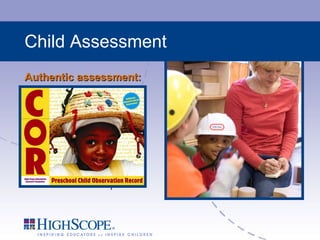
Child Assessment Authentic assessment: Uses observational anecdotes to determine children’s development Is a reliable and valid measure Utilizes cutting edge web-based computer technology to analyze results and share information with parents Benefits: Helps teachers understand and scaffold children’s learning Used as a basis for planning and individualized instruction Strengthens the relationship between home and school
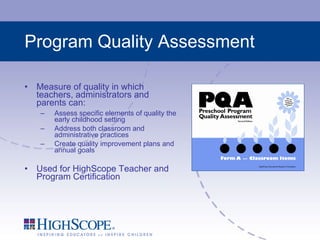
Program Quality Assessment Measure of quality in which teachers, administrators and parents can: Assess specific elements of quality the early childhood setting Address both classroom and administrative practices Create quality improvement plans and annual goals Used for HighScope Teacher and Program Certification
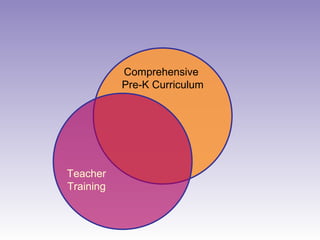
Comprehensive  Pre-K Curriculum Teacher Training
Teacher Training Transforming caring adults into gifted teachers.
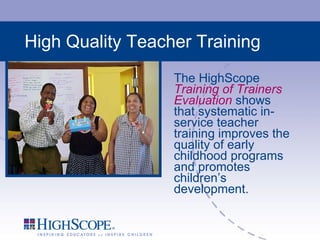
High Quality Teacher Training The HighScope  Training of Trainers Evaluation  shows that systematic in-service teacher training improves the quality of early childhood programs and promotes children’s development.
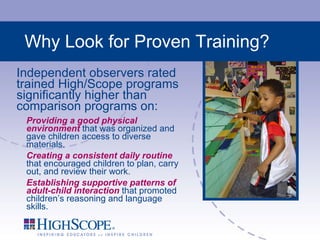
Why Look for Proven Training? Independent observers rated trained High/Scope programs significantly higher than comparison programs on: Providing a good physical environment  that was organized and gave children access to diverse materials. Creating a consistent daily routine  that encouraged children to plan, carry out, and review their work. Establishing supportive patterns of adult-child interaction  that promoted children’s reasoning and language skills.
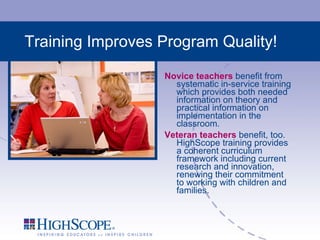
Training Improves Program Quality! Novice teachers  benefit from systematic in-service training which provides both needed information on theory and practical information on implementation in the classroom. Veteran teachers  benefit, too. HighScope training provides a coherent curriculum framework including current research and innovation, renewing their commitment to working with children and families.
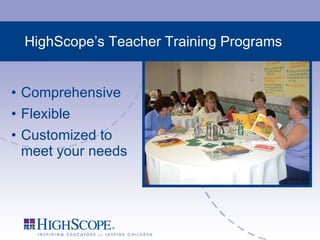
HighScope’s Teacher Training Programs Comprehensive Flexible Customized to meet your needs
Comprehensive  Pre-K Curriculum   Research Teacher Training
Education Research Showing the effectiveness of both implementation and investment.
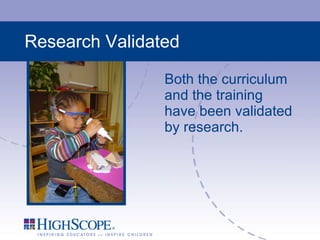
Research Validated Both the curriculum and the training have been validated by research.
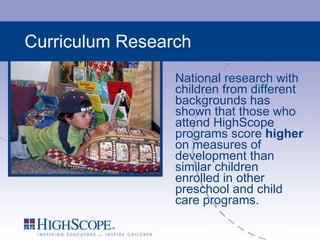
Curriculum Research National research with children from different backgrounds has shown that those who attend HighScope programs score  higher  on measures of development than similar children enrolled in other preschool and child care programs.
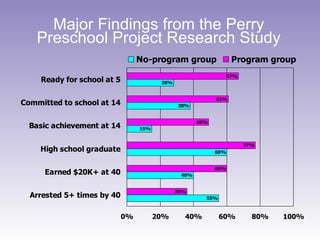
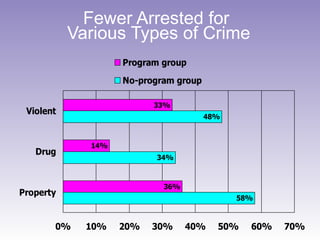
Major Findings from the Perry Preschool Project Research Study
Fewer Arrested for  Various Types of Crime
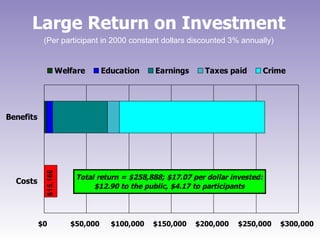
Large Return on Investment   (Per participant in 2000 constant dollars discounted 3% annually)
HighScope Perry Preschool Study: Large Return on Investment Recent analysis by a Nobel Prize-winning economist confirms a  $17 return on every dollar spent on high quality early childhood programs, attracting the attention of the greater business world
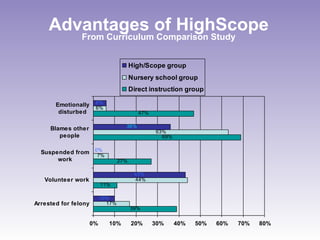
Advantages of HighScope From Curriculum Comparison Study
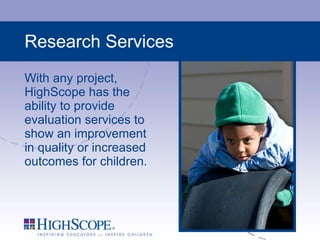
Research Services With any project, HighScope has the ability to provide evaluation services to show an improvement in quality or increased outcomes for children.
HighScope:  The Total Solution Comprehensive  Pre-K Curriculum   Research HighScope Teacher Training
HighScope

Programas Educativos para Niños y Niñas

  • 1.
    INSPIRING EDUCATORS to INSPIRE CHILDREN
  • 2.
  • 3.
    HighScope Founded in1970 Leaders and innovators in the field of early childhood education Perhaps best known for the seminal research The HighScope Perry Preschool Study
  • 4.
    HighScope Scientific, research-validated preschool curriculum Outstanding global reputation One of the most widely used educational approaches in the world
  • 5.
    Trained Teachers GloballyIncluding: Kuwait Jordan Egypt South Africa Nigeria Chile Peru Mexico Finland The Netherlands The United Kingdom Ireland Canada Singapore Indonesia Eastern Caribbean Portugal Turkey Iceland Switzerland Venezuela Brazil Australia Hong Kong China
  • 6.
  • 7.
  • 8.
    HighScope: TheTotal Solution Comprehensive Pre-K Curriculum Research HighScope Teacher Training
  • 9.
    HighScope: TheTotal Solution Comprehensive Pre-K Curriculum
  • 10.
    Comprehensive PreschoolCurriculum Providing support and guidance in all aspects of the classroom.
  • 11.
    What are someof the components that make this curriculum unique? Why HighScope?
  • 12.
    HighScope’s Approach toLearning With HighScope, children are active participants in the learning process Rather than the traditional methods where teachers give information to children
  • 13.
    Active Participatory LearningChildren learn through direct hands-on experiences with people, objects, ideas, and events.
  • 14.
    Supported by BrainResearch New neural pathways are created through new thoughts When used repeatedly, connections become stronger, more efficient If not used, the connections die out
  • 15.
    Active Participatory LearningWith HighScope, it’s not just “hands-on”… It’s “ minds-on ” learning!
  • 16.
    What Do ChildrenLearn? Key Developmental Indicators = HighScope Content
  • 17.
    Why Key DevelopmentalIndicators? Key – These are meaningful ideas children should learn and experience Developmental – Recognizes that learning is gradual and cumulative Indicators – Emphasize that educators need evidence that children are developing knowledge, skills and understanding considered important for school and life readiness
  • 18.
    Key Developmental IndicatorsInclude the areas of: Social and emotional development Language, literacy and communication Physical development, health and well-being Mathematics Science and technology The Arts
  • 19.
    In Addition toTraditional Academic Subjects… HighScope promotes: Independence Curiosity Cooperation Persistence Creativity Problem Solving
  • 20.
    Teaching Practices Teachers:Support children’s initiatives, interests and developing abilities Plan learning experiences based on the key content areas Observe and interact with children at their current developmental levels, providing scaffolding as they expand their learning Are partners with children in play and learning
  • 21.
    Classroom Learning EnvironmentDefined interest areas Deliberate organization of materials Materials related to community/culture Children responsible for room care Children find and use materials to explore, invent, and learn about their world
  • 22.
    Balanced Components ofthe Classroom Day Opportunities for: Individual and social interactions Small and large group times Times for children to make plans and choices Times for teacher-planned learning experiences
  • 23.
    Plan-Do-Review Sequence Childrenmake plans: Pursue interests Learn to organize their thinking and actions Children do their plans: Follow through on their ideas. Learn to persist through challenges and problems Children recall their actions: Reflect on experiences Attach language to their actions Consider outcomes and consequences
  • 24.
    Small- and Large-GroupActivities Small-group activities that support children’s learning in all content areas Large-group activities that stress social interaction and active learning
  • 25.
    Child Assessment Authenticassessment: Uses observational anecdotes to determine children’s development Is a reliable and valid measure Utilizes cutting edge web-based computer technology to analyze results and share information with parents Benefits: Helps teachers understand and scaffold children’s learning Used as a basis for planning and individualized instruction Strengthens the relationship between home and school
  • 26.
    Program Quality AssessmentMeasure of quality in which teachers, administrators and parents can: Assess specific elements of quality the early childhood setting Address both classroom and administrative practices Create quality improvement plans and annual goals Used for HighScope Teacher and Program Certification
  • 27.
    Comprehensive Pre-KCurriculum Teacher Training
  • 28.
    Teacher Training Transformingcaring adults into gifted teachers.
  • 29.
    High Quality TeacherTraining The HighScope Training of Trainers Evaluation shows that systematic in-service teacher training improves the quality of early childhood programs and promotes children’s development.
  • 30.
    Why Look forProven Training? Independent observers rated trained High/Scope programs significantly higher than comparison programs on: Providing a good physical environment that was organized and gave children access to diverse materials. Creating a consistent daily routine that encouraged children to plan, carry out, and review their work. Establishing supportive patterns of adult-child interaction that promoted children’s reasoning and language skills.
  • 31.
    Training Improves ProgramQuality! Novice teachers benefit from systematic in-service training which provides both needed information on theory and practical information on implementation in the classroom. Veteran teachers benefit, too. HighScope training provides a coherent curriculum framework including current research and innovation, renewing their commitment to working with children and families.
  • 32.
    HighScope’s Teacher TrainingPrograms Comprehensive Flexible Customized to meet your needs
  • 33.
    Comprehensive Pre-KCurriculum Research Teacher Training
  • 34.
    Education Research Showingthe effectiveness of both implementation and investment.
  • 35.
    Research Validated Boththe curriculum and the training have been validated by research.
  • 36.
    Curriculum Research Nationalresearch with children from different backgrounds has shown that those who attend HighScope programs score higher on measures of development than similar children enrolled in other preschool and child care programs.
  • 37.
    Major Findings fromthe Perry Preschool Project Research Study
  • 38.
    Fewer Arrested for Various Types of Crime
  • 39.
    Large Return onInvestment (Per participant in 2000 constant dollars discounted 3% annually)
  • 40.
    HighScope Perry PreschoolStudy: Large Return on Investment Recent analysis by a Nobel Prize-winning economist confirms a $17 return on every dollar spent on high quality early childhood programs, attracting the attention of the greater business world
  • 41.
    Advantages of HighScopeFrom Curriculum Comparison Study
  • 42.
    Research Services Withany project, HighScope has the ability to provide evaluation services to show an improvement in quality or increased outcomes for children.
  • 43.
    HighScope: TheTotal Solution Comprehensive Pre-K Curriculum Research HighScope Teacher Training
  • 44.