


Program Evaluation George Vukotich, Ph.D.   Copyright © 2004 Intergovernmental Executive Development Program
Program Evaluation Measuring Success It all begins with setting goals and  knowing where you are going.
SMART GOALS Specific Measurable Agreed On Realistic Timed
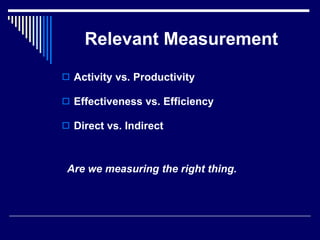
Relevant Measurement Activity vs. Productivity Effectiveness vs. Efficiency Direct vs. Indirect  Are we measuring the right thing.
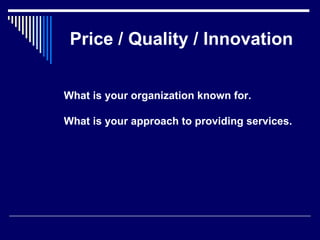
Price / Quality / Innovation What is your organization known for. What is your approach to providing services.
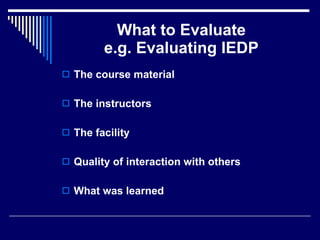
What to Evaluate e.g. Evaluating IEDP The course material The instructors The facility Quality of interaction with others What was learned
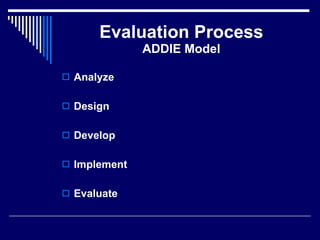
Evaluation Process ADDIE Model Analyze Design Develop Implement Evaluate
Evaluate to What Standard Benchmarking Based on pre-set goals Compare to other similar projects Similar industries, organizations, products Past / Historical standards
How to evaluate Forms Interviews Focus Groups Self Analysis Grades Supervisors Review  Work Productivity
Degree of Success To what extent does something  need to be effective to.
Formative vs. Summative Conducting the evaluation during the  process and making adjustment along the way. Waiting until the process is complete and evaluating the results.
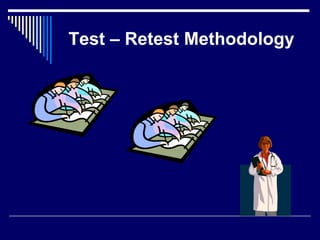
Test – Retest Methodology
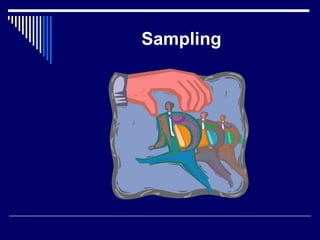
Sampling
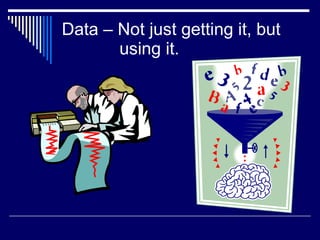
Data – Not just getting it, but    using it.
Reliability and Validity VALIDITY:  Is what we are evaluating the right thing to evaluate to help us be successful. RELIABILITY: Will we get consistent measures over time.
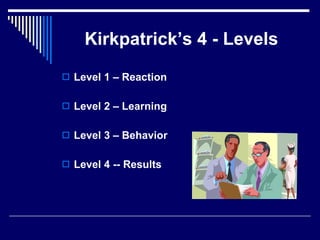
Kirkpatrick’s 4 - Levels Level 1 – Reaction  Level 2 – Learning Level 3 – Behavior  Level 4 -- Results
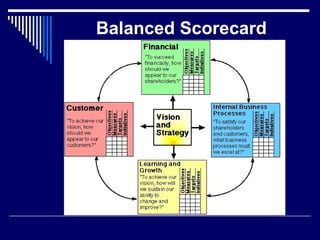
Balanced Scorecard
Cost / Benefit Analysis Employee job satisfaction Students completing a program Reduction in processing errors Customer service ratings
Unintended Consequences What is  the cost of making an error in our evaluation. Risk Analysis
♦  Turnover ♦  Time to Hire, Cost to Hire ♦  Reduced Processing Costs ♦  Improved Safety ♦  Reduced Insurance Costs  C O R R E L A T I O N S Return on Investment (ROI)
Theory into practice How can your team use “program evaluation”  to help you be more successful.


Program Evaluation Handouts

  • 1.
    Program Evaluation GeorgeVukotich, Ph.D. Copyright © 2004 Intergovernmental Executive Development Program
  • 2.
    Program Evaluation MeasuringSuccess It all begins with setting goals and knowing where you are going.
  • 3.
    SMART GOALS SpecificMeasurable Agreed On Realistic Timed
  • 4.
    Relevant Measurement Activityvs. Productivity Effectiveness vs. Efficiency Direct vs. Indirect Are we measuring the right thing.
  • 5.
    Price / Quality/ Innovation What is your organization known for. What is your approach to providing services.
  • 6.
    What to Evaluatee.g. Evaluating IEDP The course material The instructors The facility Quality of interaction with others What was learned
  • 7.
    Evaluation Process ADDIEModel Analyze Design Develop Implement Evaluate
  • 8.
    Evaluate to WhatStandard Benchmarking Based on pre-set goals Compare to other similar projects Similar industries, organizations, products Past / Historical standards
  • 9.
    How to evaluateForms Interviews Focus Groups Self Analysis Grades Supervisors Review Work Productivity
  • 10.
    Degree of SuccessTo what extent does something need to be effective to.
  • 11.
    Formative vs. SummativeConducting the evaluation during the process and making adjustment along the way. Waiting until the process is complete and evaluating the results.
  • 12.
    Test – RetestMethodology
  • 13.
  • 14.
    Data – Notjust getting it, but using it.
  • 15.
    Reliability and ValidityVALIDITY: Is what we are evaluating the right thing to evaluate to help us be successful. RELIABILITY: Will we get consistent measures over time.
  • 16.
    Kirkpatrick’s 4 -Levels Level 1 – Reaction Level 2 – Learning Level 3 – Behavior Level 4 -- Results
  • 17.
  • 18.
    Cost / BenefitAnalysis Employee job satisfaction Students completing a program Reduction in processing errors Customer service ratings
  • 19.
    Unintended Consequences Whatis the cost of making an error in our evaluation. Risk Analysis
  • 20.
    ♦ Turnover♦ Time to Hire, Cost to Hire ♦ Reduced Processing Costs ♦ Improved Safety ♦ Reduced Insurance Costs C O R R E L A T I O N S Return on Investment (ROI)
  • 21.
    Theory into practiceHow can your team use “program evaluation” to help you be more successful.
  • 22.
  • 23.