welcome
andrew.downes@watershedlrs.com
Andrew Downes
Learning and Interoperability Consultant
Learning Evaluation:
Beyond Surveys
key
takeaways
Good learning evaluation is more complex
than simple surveys
A seven step model (with worksheets) that
you can implement.
Practical advice and case studies you can
follow to get started.
More than surveys
Evaluation in
Learning and
Development
“Oh! You’re a survey tool?”
Evaluation in other
industries
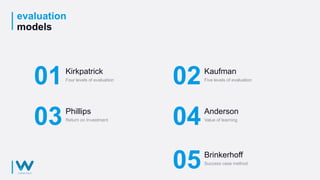
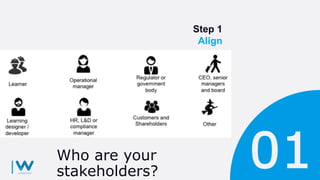
evaluation
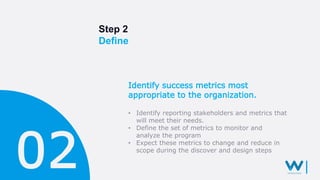
models
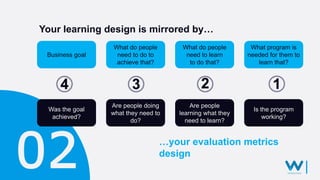
01Kirkpatrick
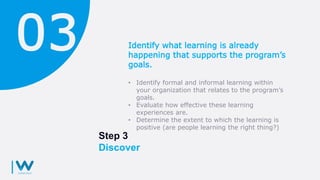
Four levels of evaluation
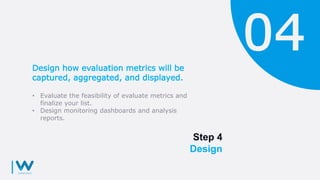
03Phillips
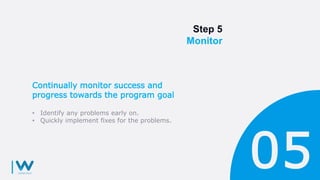
Return on Investment
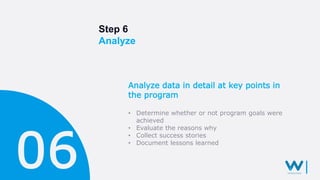
02Kaufman
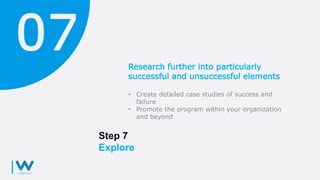
Five levels of evaluation
04Anderson
Value of learning
05Brinkerhoff
Success case method
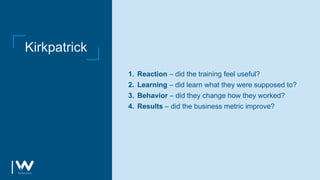
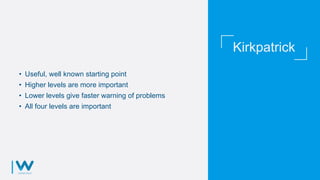
Kirkpatrick
1. Reaction – did the training feel useful?
2. Learning – did learn what they were supposed to?
3. Behavior – did they change how they worked?
4. Results – did the business metric improve?
Kirkpatrick
• Useful, well known starting point
• Higher levels are more important
• Lower levels give faster warning of problems
• All four levels are important
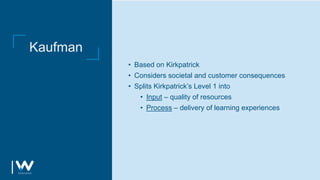
Kaufman
• Based on Kirkpatrick
• Considers societal and customer consequences
• Splits Kirkpatrick’s Level 1 into
• Input – quality of resources
• Process – delivery of learning experiences
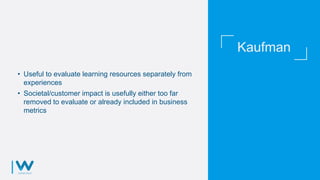
Kaufman
• Useful to evaluate learning resources separately from
experiences
• Societal/customer impact is usefully either too far
removed to evaluate or already included in business
metrics
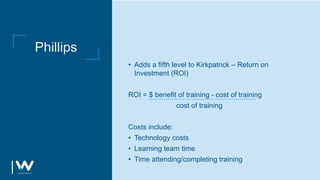
Phillips
• Adds a fifth level to Kirkpatrick – Return on
Investment (ROI)
ROI = $ benefit of training - cost of training
cost of training
Costs include:
• Technology costs
• Learning team time
• Time attending/completing training
Phillips
• ROI should underpin the level 4, business goal.
• Figure out ROI at the start of the project.
• If the ROI is not going to be acceptable, either the
project budget is too high or your business goal is
wrong.
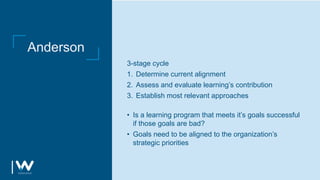
Anderson
3-stage cycle
1. Determine current alignment
2. Assess and evaluate learning’s contribution
3. Establish most relevant approaches
• Is a learning program that meets it’s goals successful
if those goals are bad?
• Goals need to be aligned to the organization’s
strategic priorities
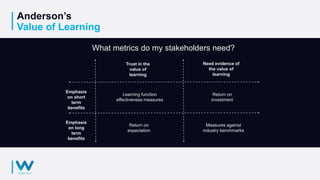
Anderson’s
Value of Learning
What metrics do my stakeholders need?
Emphasis
on short
term
benefits
Emphasis
on long
term
benefits
Trust in the
value of
learning
Need evidence of
the value of
learning
Learning function
effectiveness measures
Return on
expectation
Return on
investment
Measures against
industry benchmarks
Anderson
• It’s very important that Learning’s goals support
organizational priorities
• Use the model alongside other methods that evaluate
specific learning programs and experiences.
Brinkerhoff
Any learning program, no matter how good or bad will
have good and bad elements
1. Identify the very best successes and very worst
failures of the program
2. Conduct interviews and other research around those
successes and failures to learn lessons
3. Promote success stories to market the program
Brinkerhoff
• Best to use alongside, not in place of, previous
evaluation models
• Use success case model to dig deeper, learn lessons
and shout about successes
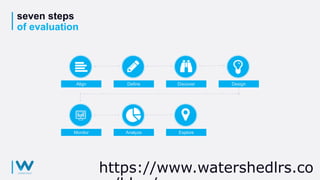
seven steps
of evaluation
Align Define Discover Design

Monitor Analyze Explore
https://www.watershedlrs.co
Step 1
Align
Identify program goals and evaluate
alignment with strategic priorities.
• Define program goals
• Evaluate how closely goals align with strategic
priorities
• Decide whether or not to proceed as planned
Step 1
Align
Who are your
stakeholders?
Step 2
Define
Identify success metrics most
appropriate to the organization.
• Identify reporting stakeholders and metrics that
will meet their needs.
• Define the set of metrics to monitor and
analyze the program
• Expect these metrics to change and reduce in
scope during the discover and design steps
Business goal
What do people
need to do to
achieve that?
What do people
need to learn
to do that?
What program is
needed for them to
learn that?
Was the goal
achieved?
Are people doing
what they need to
do?
Are people
learning what they
need to learn?
Is the program
working?
4 3 2 1
…your evaluation metrics
design
Your learning design is mirrored by…
Step 3
Discover
Identify what learning is already
happening that supports the program’s
goals.
• Identify formal and informal learning within
your organization that relates to the program’s
goals.
• Evaluate how effective these learning
experiences are.
• Determine the extent to which the learning is
positive (are people learning the right thing?)
Step 4
Design
Design how evaluation metrics will be
captured, aggregated, and displayed.
• Evaluate the feasibility of evaluate metrics and
finalize your list.
• Design monitoring dashboards and analysis
reports.
Step 5
Monitor
Continually monitor success and
progress towards the program goal
• Identify any problems early on.
• Quickly implement fixes for the problems.
Step 6
Analyze
Analyze data in detail at key points in
the program
• Determine whether or not program goals were
achieved
• Evaluate the reasons why
• Collect success stories
• Document lessons learned
Step 7
Explore
Research further into particularly
successful and unsuccessful elements
• Create detailed case studies of success and
failure
• Promote the program within your organization
and beyond
Getting started
With xAPI and an LRS
“You can’t eat an elephant all at once”
Start with one or two ‘easy’ data sources to prove the
concept.
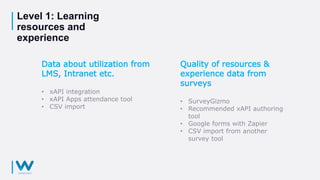
Level 1: Learning
resources and
experience
Data about utilization from
LMS, Intranet etc.
• xAPI integration
• xAPI Apps attendance tool
• CSV import
Quality of resources &
experience data from
surveys
• SurveyGizmo
• Recommended xAPI authoring
tool
• Google forms with Zapier
• CSV import from another
survey tool
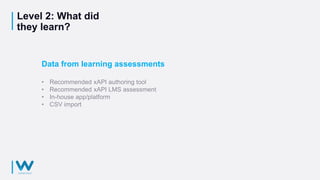
Level 2: What did
they learn?
Data from learning assessments
• Recommended xAPI authoring tool
• Recommended xAPI LMS assessment
• In-house app/platform
• CSV import
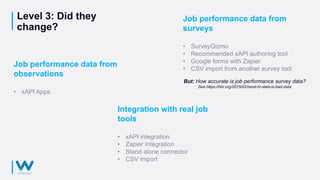
Level 3: Did they
change?
Job performance data from
surveys
• SurveyGizmo
• Recommended xAPI authoring tool
• Google forms with Zapier
• CSV import from another survey tool
But: How accurate is job performance survey data?
See https://hbr.org/2015/02/most-hr-data-is-bad-data
Job performance data from
observations
• xAPI Apps
Integration with real job
tools
• xAPI integration
• Zapier integration
• Stand alone connector
• CSV import
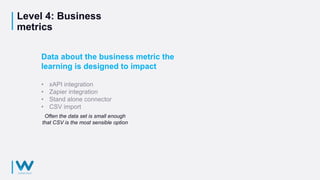
Level 4: Business
metrics
Data about the business metric the
learning is designed to impact
• xAPI integration
• Zapier integration
• Stand alone connector
• CSV import
Often the data set is small enough
that CSV is the most sensible option
Case studies
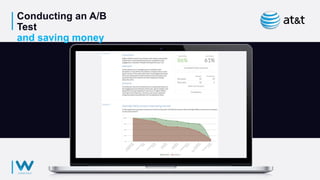
Conducting an A/B Test
Conducting an A/B
Test
and saving money
Content utilization
what’s working and who’s
engaged?
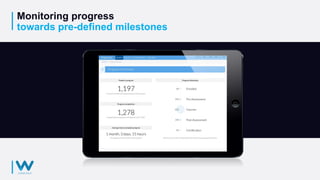
Monitoring progress
towards pre-defined milestones
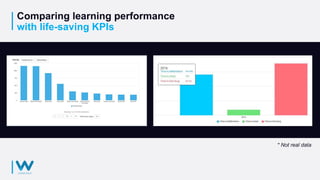
Comparing learning performance
with life-saving KPIs
* Not real data
thank you.
Seven steps
Read the blog & download the
worksheet
• https://www.watershedlrs.com/blog/watersheds-seven-steps-of-learning-evaluation
• https://www.watershedlrs.com/blog/define-metrics-for-learning-evaluation
• https://www.watershedlrs.com/blog/learning-evaluation-whats-happening
• https://www.watershedlrs.com/blog/design-evaluation-metrics-learning-evaluation
• https://www.watershedlrs.com/blog/monitoring-success-learning-evaluation
• https://www.watershedlrs.com/blog/analyze-outcomes-learning-evaluation
• https://www.watershedlrs.com/blog/the-final-step-of-learning-evaluation-explore-the-outcomes
https://www.watershedlrs.com/blog/

Beyond surveys

  • 1.
  • 2.
  • 3.
    key takeaways Good learning evaluationis more complex than simple surveys A seven step model (with worksheets) that you can implement. Practical advice and case studies you can follow to get started.
  • 4.
  • 5.
  • 6.
  • 7.
    evaluation models 01Kirkpatrick Four levels ofevaluation 03Phillips Return on Investment 02Kaufman Five levels of evaluation 04Anderson Value of learning 05Brinkerhoff Success case method
  • 8.
    Kirkpatrick 1. Reaction –did the training feel useful? 2. Learning – did learn what they were supposed to? 3. Behavior – did they change how they worked? 4. Results – did the business metric improve?
  • 9.
    Kirkpatrick • Useful, wellknown starting point • Higher levels are more important • Lower levels give faster warning of problems • All four levels are important
  • 10.
    Kaufman • Based onKirkpatrick • Considers societal and customer consequences • Splits Kirkpatrick’s Level 1 into • Input – quality of resources • Process – delivery of learning experiences
  • 11.
    Kaufman • Useful toevaluate learning resources separately from experiences • Societal/customer impact is usefully either too far removed to evaluate or already included in business metrics
  • 12.
    Phillips • Adds afifth level to Kirkpatrick – Return on Investment (ROI) ROI = $ benefit of training - cost of training cost of training Costs include: • Technology costs • Learning team time • Time attending/completing training
  • 13.
    Phillips • ROI shouldunderpin the level 4, business goal. • Figure out ROI at the start of the project. • If the ROI is not going to be acceptable, either the project budget is too high or your business goal is wrong.
  • 14.
    Anderson 3-stage cycle 1. Determinecurrent alignment 2. Assess and evaluate learning’s contribution 3. Establish most relevant approaches • Is a learning program that meets it’s goals successful if those goals are bad? • Goals need to be aligned to the organization’s strategic priorities
  • 15.
    Anderson’s Value of Learning Whatmetrics do my stakeholders need? Emphasis on short term benefits Emphasis on long term benefits Trust in the value of learning Need evidence of the value of learning Learning function effectiveness measures Return on expectation Return on investment Measures against industry benchmarks
  • 16.
    Anderson • It’s veryimportant that Learning’s goals support organizational priorities • Use the model alongside other methods that evaluate specific learning programs and experiences.
  • 17.
    Brinkerhoff Any learning program,no matter how good or bad will have good and bad elements 1. Identify the very best successes and very worst failures of the program 2. Conduct interviews and other research around those successes and failures to learn lessons 3. Promote success stories to market the program
  • 18.
    Brinkerhoff • Best touse alongside, not in place of, previous evaluation models • Use success case model to dig deeper, learn lessons and shout about successes
  • 19.
    seven steps of evaluation AlignDefine Discover Design Monitor Analyze Explore https://www.watershedlrs.co
  • 20.
    Step 1 Align Identify programgoals and evaluate alignment with strategic priorities. • Define program goals • Evaluate how closely goals align with strategic priorities • Decide whether or not to proceed as planned
  • 21.
    Step 1 Align Who areyour stakeholders?
  • 22.
    Step 2 Define Identify successmetrics most appropriate to the organization. • Identify reporting stakeholders and metrics that will meet their needs. • Define the set of metrics to monitor and analyze the program • Expect these metrics to change and reduce in scope during the discover and design steps
  • 23.
    Business goal What dopeople need to do to achieve that? What do people need to learn to do that? What program is needed for them to learn that? Was the goal achieved? Are people doing what they need to do? Are people learning what they need to learn? Is the program working? 4 3 2 1 …your evaluation metrics design Your learning design is mirrored by…
  • 24.
    Step 3 Discover Identify whatlearning is already happening that supports the program’s goals. • Identify formal and informal learning within your organization that relates to the program’s goals. • Evaluate how effective these learning experiences are. • Determine the extent to which the learning is positive (are people learning the right thing?)
  • 25.
    Step 4 Design Design howevaluation metrics will be captured, aggregated, and displayed. • Evaluate the feasibility of evaluate metrics and finalize your list. • Design monitoring dashboards and analysis reports.
  • 26.
    Step 5 Monitor Continually monitorsuccess and progress towards the program goal • Identify any problems early on. • Quickly implement fixes for the problems.
  • 27.
    Step 6 Analyze Analyze datain detail at key points in the program • Determine whether or not program goals were achieved • Evaluate the reasons why • Collect success stories • Document lessons learned
  • 28.
    Step 7 Explore Research furtherinto particularly successful and unsuccessful elements • Create detailed case studies of success and failure • Promote the program within your organization and beyond
  • 29.
  • 30.
    “You can’t eatan elephant all at once” Start with one or two ‘easy’ data sources to prove the concept.
  • 31.
    Level 1: Learning resourcesand experience Data about utilization from LMS, Intranet etc. • xAPI integration • xAPI Apps attendance tool • CSV import Quality of resources & experience data from surveys • SurveyGizmo • Recommended xAPI authoring tool • Google forms with Zapier • CSV import from another survey tool
  • 32.
    Level 2: Whatdid they learn? Data from learning assessments • Recommended xAPI authoring tool • Recommended xAPI LMS assessment • In-house app/platform • CSV import
  • 33.
    Level 3: Didthey change? Job performance data from surveys • SurveyGizmo • Recommended xAPI authoring tool • Google forms with Zapier • CSV import from another survey tool But: How accurate is job performance survey data? See https://hbr.org/2015/02/most-hr-data-is-bad-data Job performance data from observations • xAPI Apps Integration with real job tools • xAPI integration • Zapier integration • Stand alone connector • CSV import
  • 34.
    Level 4: Business metrics Dataabout the business metric the learning is designed to impact • xAPI integration • Zapier integration • Stand alone connector • CSV import Often the data set is small enough that CSV is the most sensible option
  • 35.
  • 36.
    Conducting an A/BTest Conducting an A/B Test and saving money
  • 37.
  • 38.
  • 39.
    Comparing learning performance withlife-saving KPIs * Not real data
  • 40.
  • 41.
    Seven steps Read theblog & download the worksheet • https://www.watershedlrs.com/blog/watersheds-seven-steps-of-learning-evaluation • https://www.watershedlrs.com/blog/define-metrics-for-learning-evaluation • https://www.watershedlrs.com/blog/learning-evaluation-whats-happening • https://www.watershedlrs.com/blog/design-evaluation-metrics-learning-evaluation • https://www.watershedlrs.com/blog/monitoring-success-learning-evaluation • https://www.watershedlrs.com/blog/analyze-outcomes-learning-evaluation • https://www.watershedlrs.com/blog/the-final-step-of-learning-evaluation-explore-the-outcomes https://www.watershedlrs.com/blog/

Editor's Notes

  • #19 Correlation does not imply causation BUT…using Brinkerhoff, identifying correlations can provide insight into where to focus research and build case studies.
  • #21 Ensure your goals align with strategic priorities Involve all appropriate stakeholders Reassess the program if goals do not align
  • #22 Ensure your goals align with strategic priorities Involve all appropriate stakeholders Reassess the program if goals do not align
  • #23 Your metrics should cover: Usage and quality of content. Delivery and discoverability of learning experiences. Improvements in knowledge and competency. Improvements in job performance. Overall achievement of the project goals.
  • #25 You should: Ask learners to report their own informal learning experiences. Look at peer and manager observations. Explore the reasons for changes in performance metrics or variations in the performance of different groups.
  • #26 You should: Design your evaluation alongside the design of the program. Weigh up the cost/benefit of each metric to be captured. Prune the nice-to-haves from the essentials. Consider both ongoing monitoring and analysis at specific points in time.
  • #27 You should: Be able to spot problems quickly from your dashboard. Launch the program with a small pilot group. Make changes to the program in response to data. Keep stakeholders updated.
  • #28 You should: Be able to tell the whole story from your reports. Celebrate and share evidence of success. Explore and learn from problems and failures.
  • #29 Implement Brinkerhoff’s Success Case Method to: Identify particularly successful and unsuccessful cases. Interview those involved and document their stories. Promote and market the successes.
  • #37 Business Problem   AT&T needed to provide effective and engaging compliance training for 243,000 employees across 3,934 job titles. They wanted to identify which training investment produces the most effective outcomes on retention and behavior because: Compliance training occupied significant employee time. Improved training programs were costly, and senior management needed proof that the continued investment significantly impacted retention and performance. Solution   AT&T engaged in a proof-of-concept to test a new approach to compliance and ethics training. They leveraged Watershed LRS and xAPI  to examine which training investment produced effective outcomes on retention and behavior. This involved two levels of situational simulations that were randomly assigned to learners who chose to participate. Watershed aggregated data from the simulation, assessment, and training path systems into the LRS. Interaction-level training data was collected and immediately available through a statement viewer. These statements powered top-level dashboards in Watershed that displayed real-time reports of learner engagement and retention. Outcome Time Saved: The ability to monitor learner interaction through Watershed provided insights for real-time course improvements. By updating the Employee Code Course to support mobile deployment and streamlining the experience, they saved 160,380 employee course hours.   Knowledge Improvement: High fidelity content resulted in more frequent correct answers during follow up surveys. Additionally, high-fidelity content kept engagement 25% longer than previous low-fidelity content.   Behavior improvement: AT&T was able to track individual responses to questions, and realized when a user responded incorrectly it was overwhelmingly in favor of the more conservative response. This indicated that the improved interactive simulation encouraged better employee ethics, not just compliance.
  • #38 How can you leverage technology to identify what’s already happening in your learning program? An organization that provides training to Credit Unions (Community Banks in the U.S.) already had training and learning in place, but with no knowledge of utilization or how users were interacting with it. Everything was hosted on a custom built portal instead of using an LMS. Using xAPI enabled technology, they were able to: Automatically track learning activities without need for self-reporting Allows self-reporting for learning activities outside of custom learning portal For the individuals: Shows your hr department or regulators what you’ve learned For admins: Helps you track recertification needs without the need for manual record keeping Immediately transforms your information into meaningful data, pinpointing what your people are doing and where there are gaps