#ThinkHand
Why the 9 Hole Peg Test?
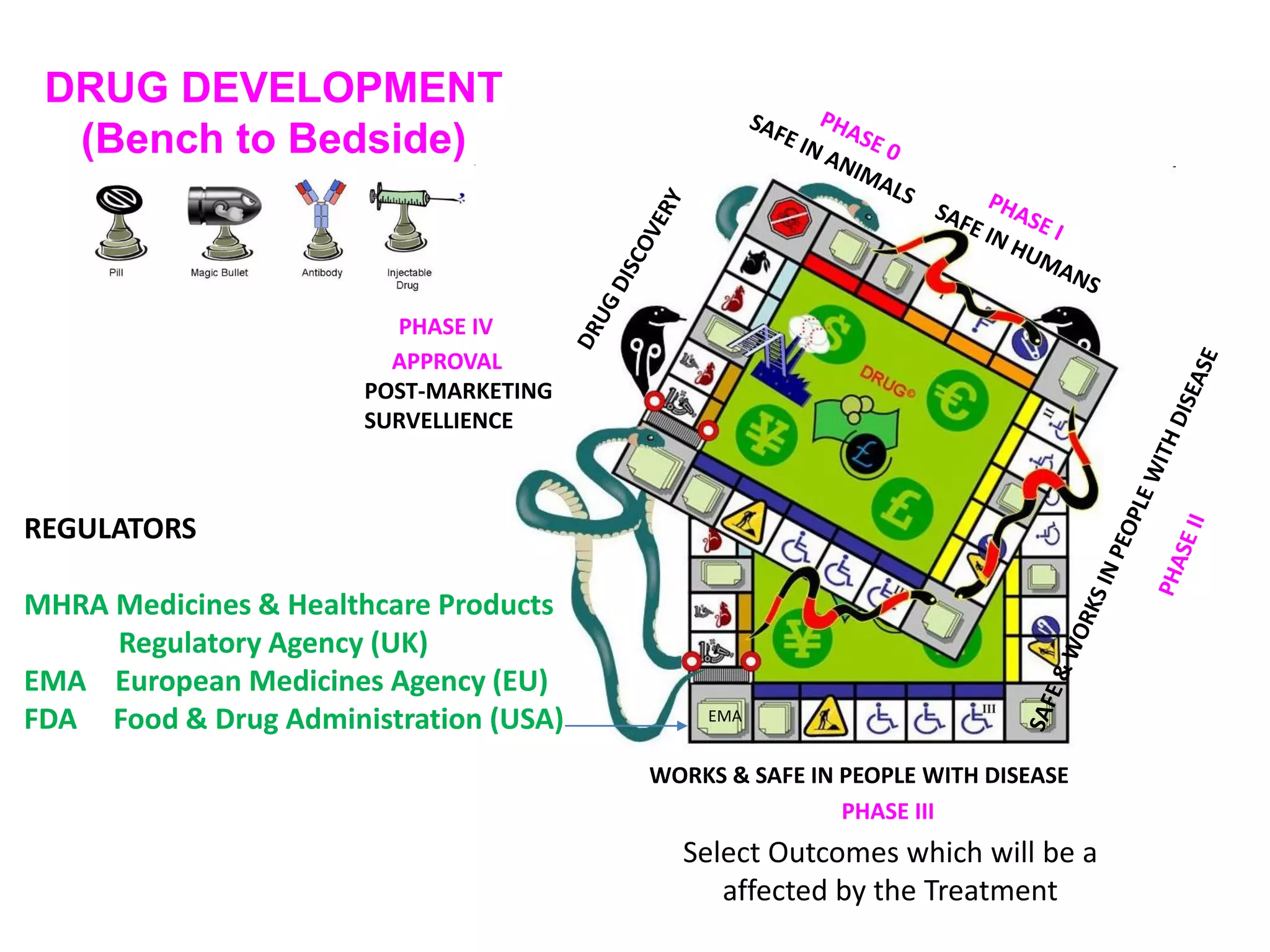
DRUG DEVELOPMENT
(Bench to Bedside)
WORKS & SAFE IN PEOPLE WITH DISEASE
PHASE III
APPROVAL
POST-MARKETING
SURVELLIENCE
PHASE IV
REGULATORS
MHRA Medicines & Healthcare Products
Regulatory Agency (UK)
EMA European Medicines Agency (EU)
FDA Food & Drug Administration (USA)
Select Outcomes which will be a
affected by the Treatment
EMA
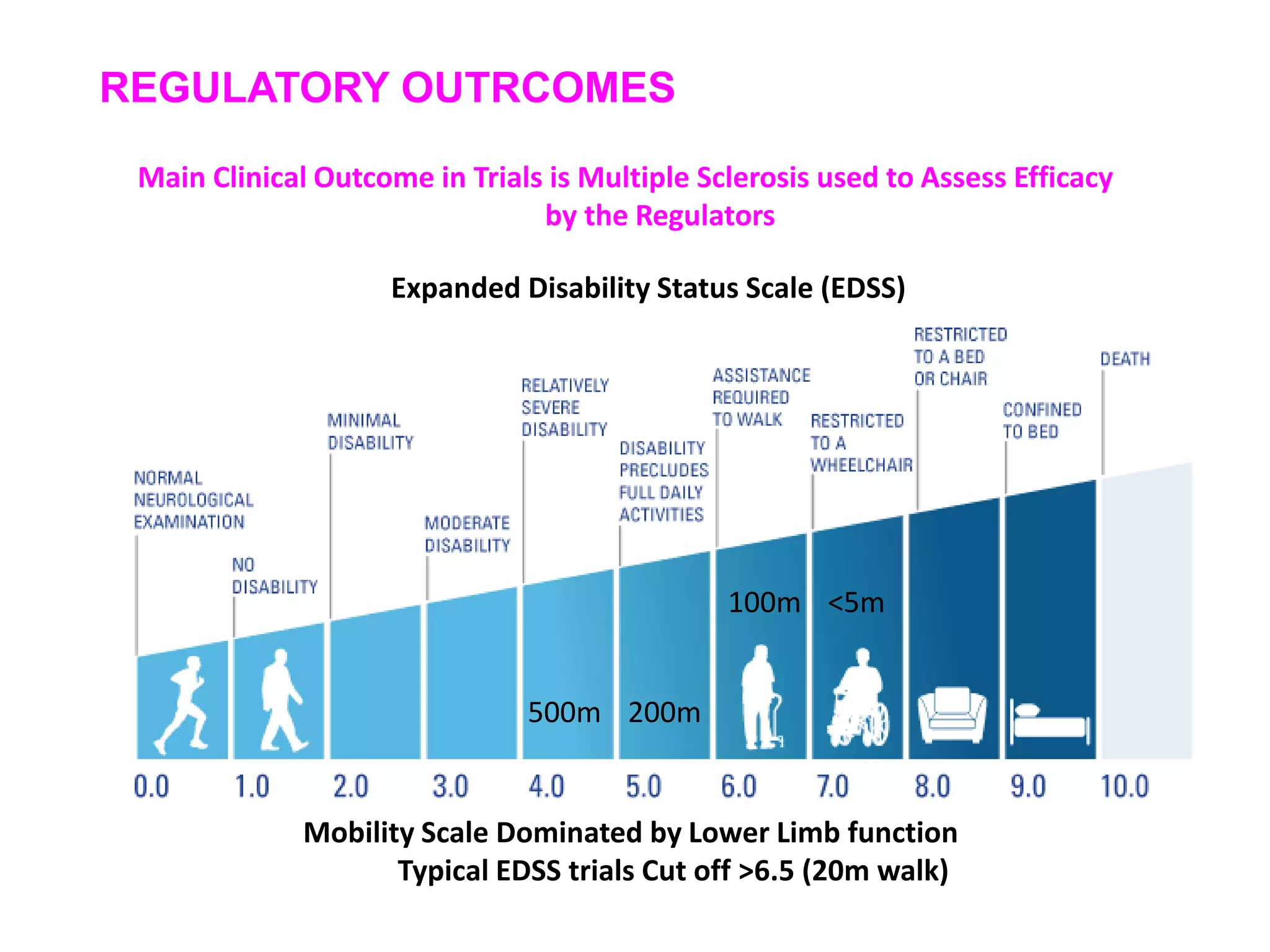
Expanded Disability Status Scale (EDSS)
Main Clinical Outcome in Trials is Multiple Sclerosis used to Assess Efficacy
by the Regulators
Mobility Scale Dominated by Lower Limb function
Typical EDSS trials Cut off >6.5 (20m walk)
REGULATORY OUTRCOMES
500m 200m
100m <5m
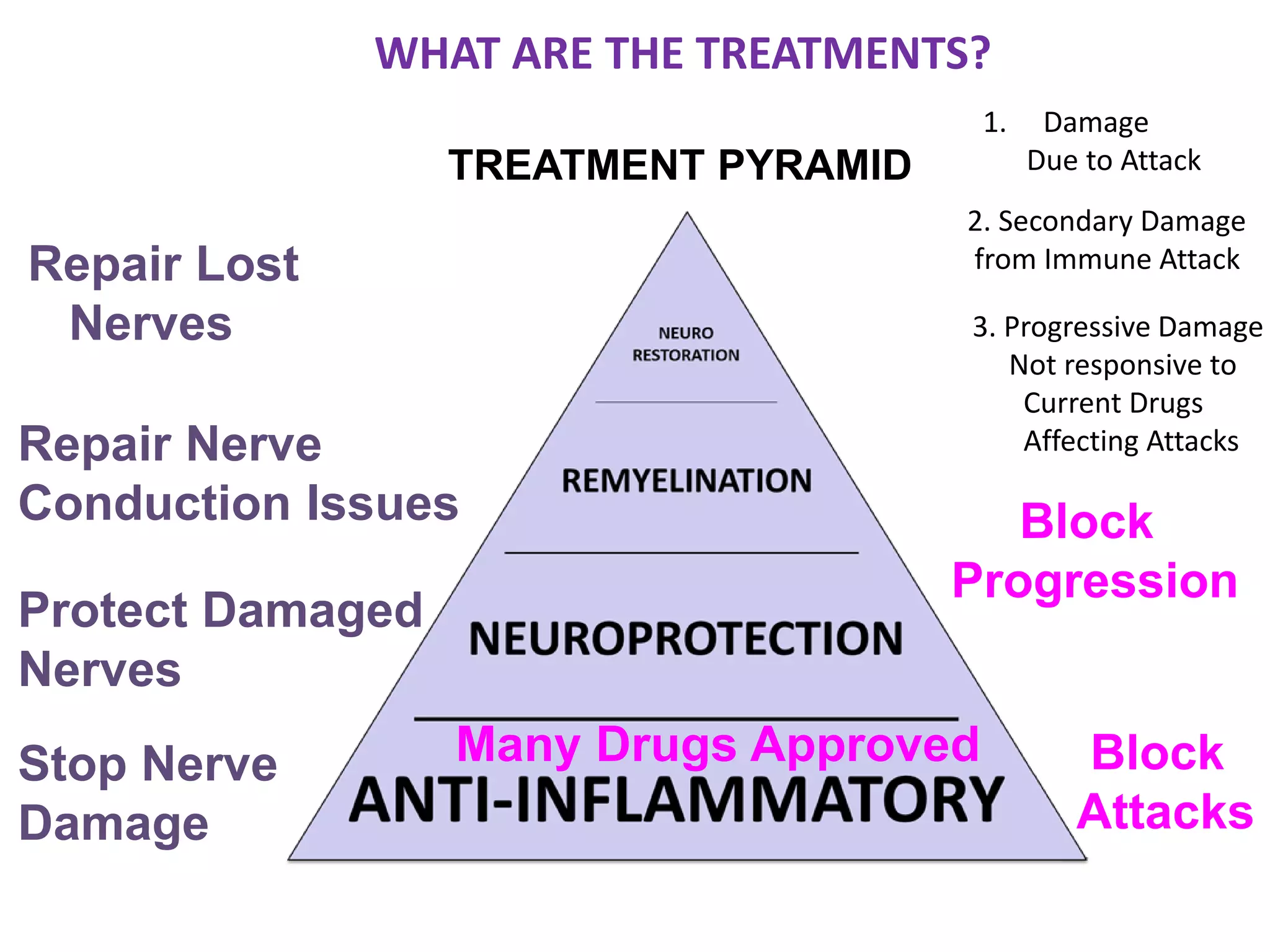
TREATMENT PYRAMID
Stop Nerve
Damage
Protect Damaged
Nerves
WHAT ARE THE TREATMENTS?
Repair Nerve
Conduction Issues
Repair Lost
Nerves
Block
Attacks
Block
Progression
Many Drugs Approved
1. Damage
Due to Attack
2. Secondary Damage
from Immune Attack
3. Progressive Damage
Not responsive to
Current Drugs
Affecting Attacks
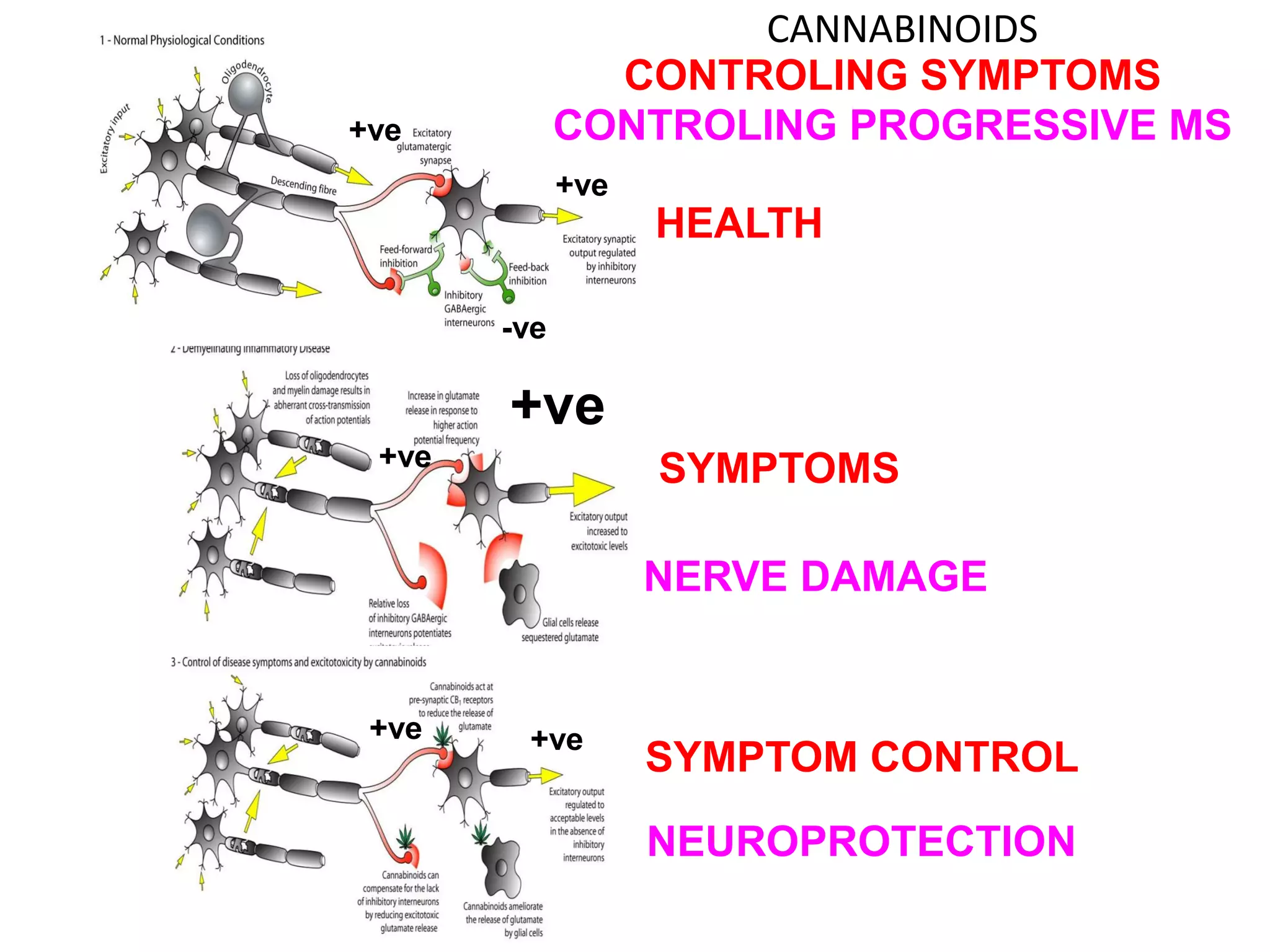
+ve
+ve
SYMPTOMS
NERVE DAMAGE
+ve +ve
SYMPTOM CONTROL
+ve
+ve
-ve
NEUROPROTECTION
HEALTH
CONTROLING SYMPTOMS
CONTROLING PROGRESSIVE MS
CANNABINOIDS
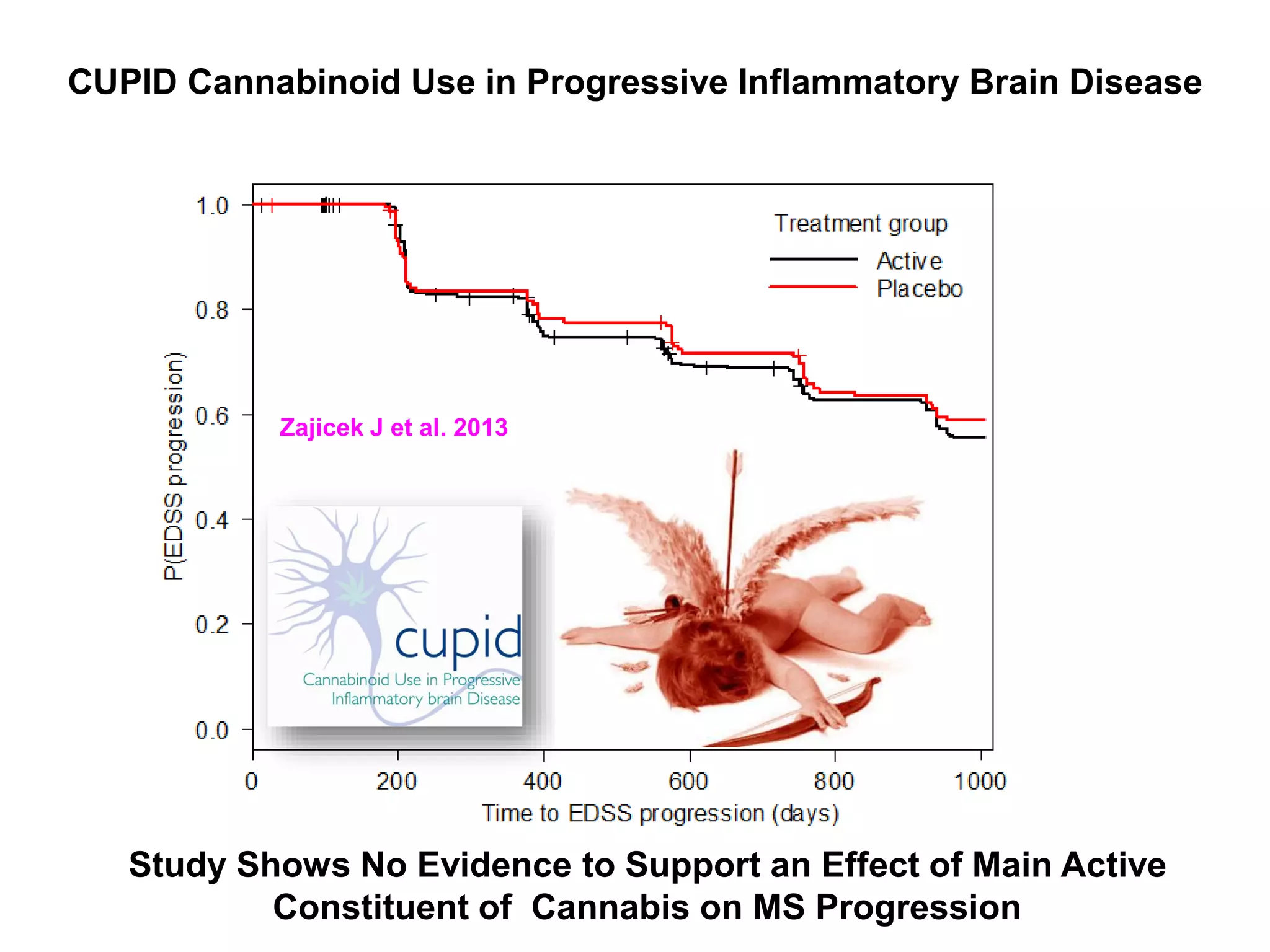
Study Shows No Evidence to Support an Effect of Main Active
Constituent of Cannabis on MS Progression
CUPID Cannabinoid Use in Progressive Inflammatory Brain Disease
Zajicek J et al. 2013
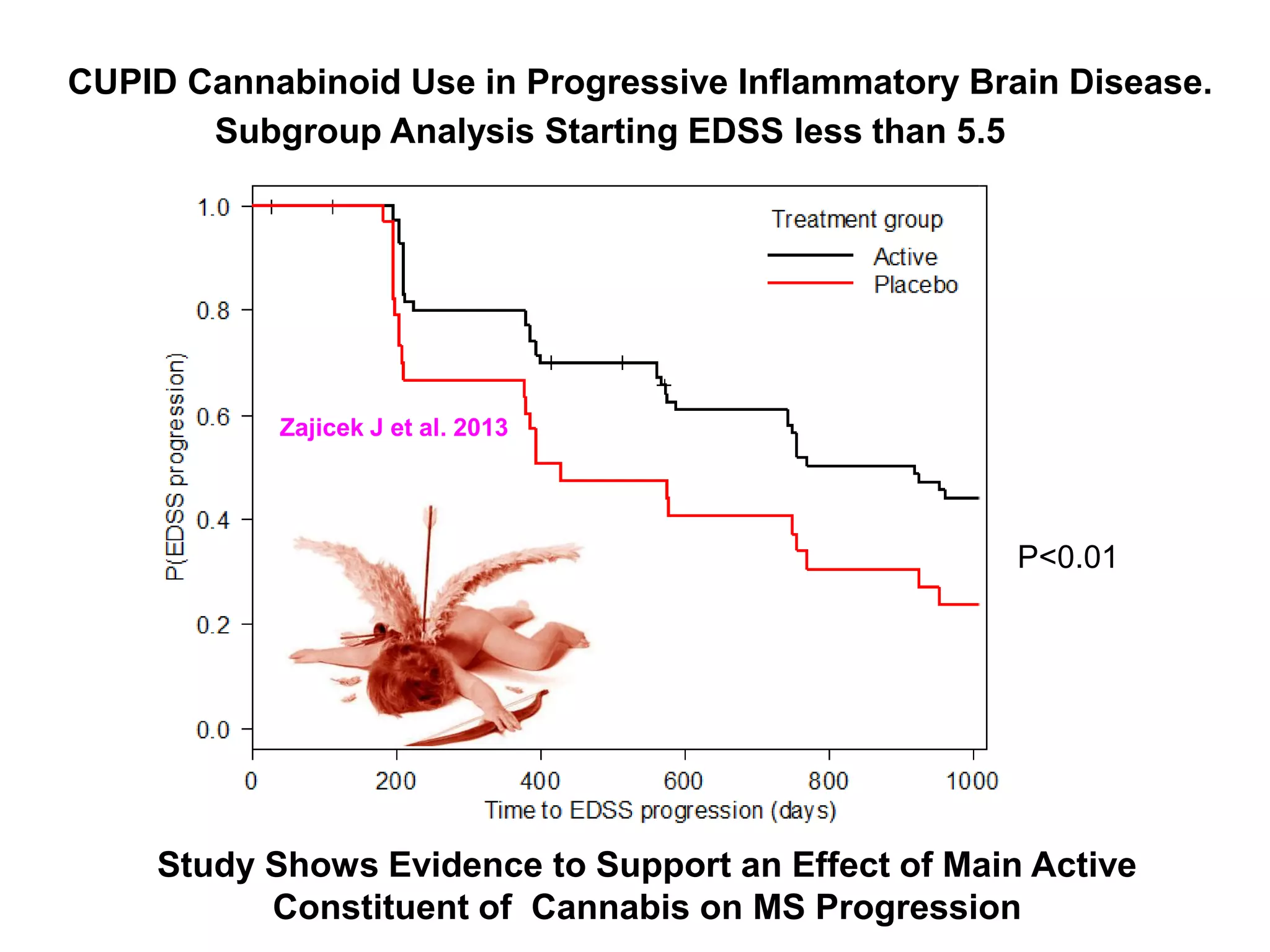
Study Shows Evidence to Support an Effect of Main Active
Constituent of Cannabis on MS Progression
Subgroup Analysis Starting EDSS less than 5.5
P<0.01
Zajicek J et al. 2013
CUPID Cannabinoid Use in Progressive Inflammatory Brain Disease.
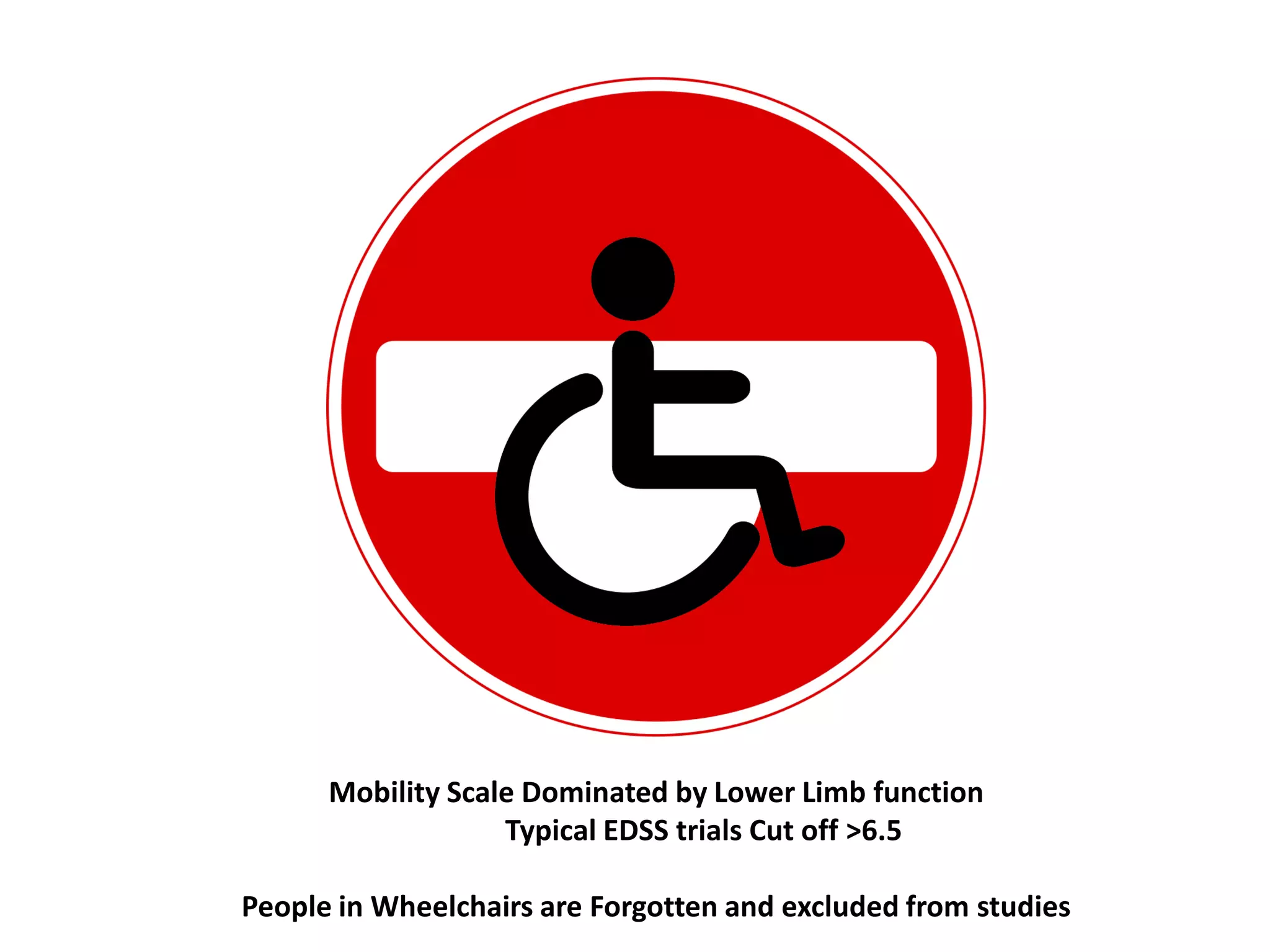
Mobility Scale Dominated by Lower Limb function
Typical EDSS trials Cut off >6.5
People in Wheelchairs are Forgotten and excluded from studies
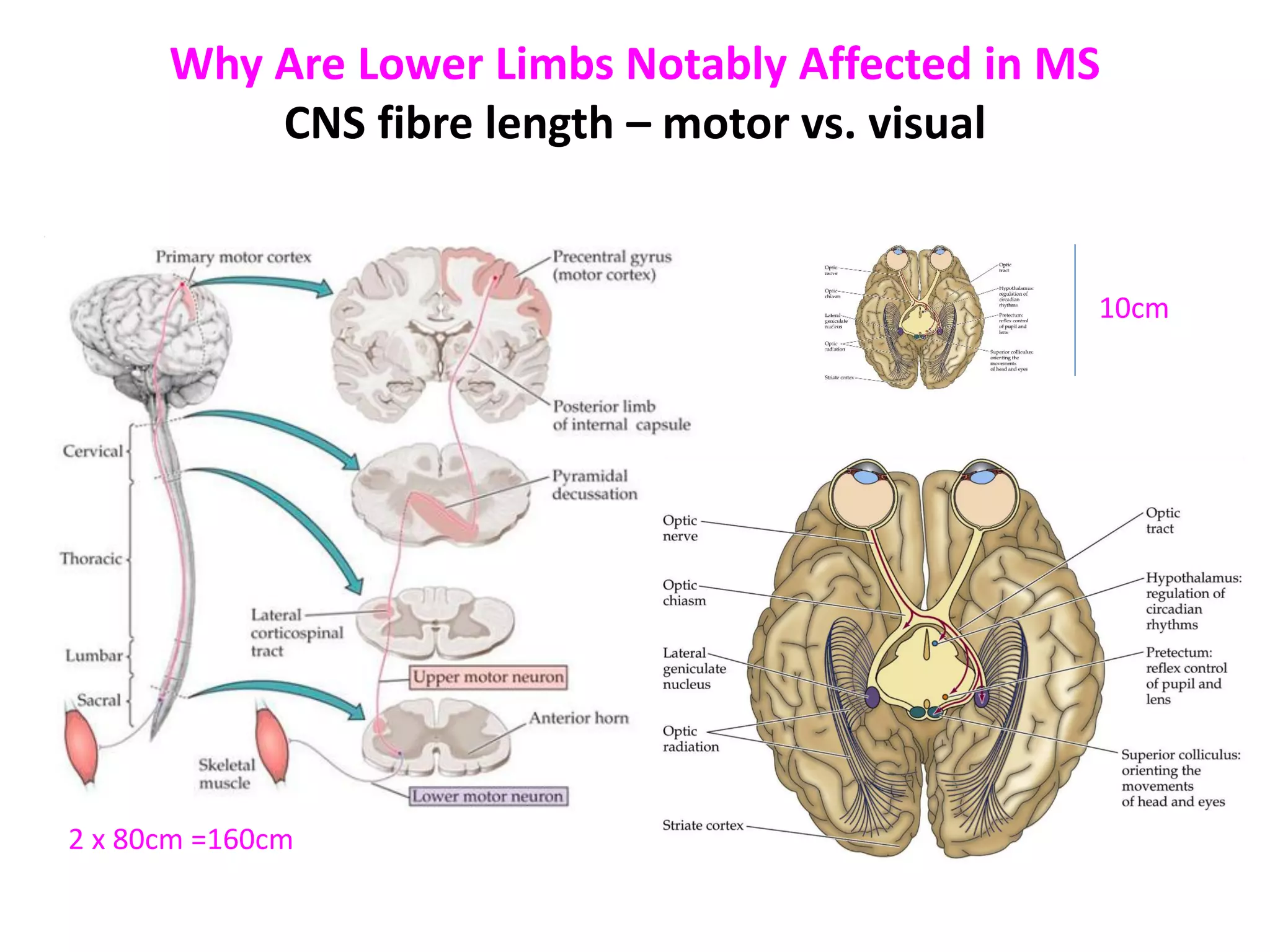
Why Are Lower Limbs Notably Affected in MS
CNS fibre length – motor vs. visual
10cm
2 x 80cm =160cm
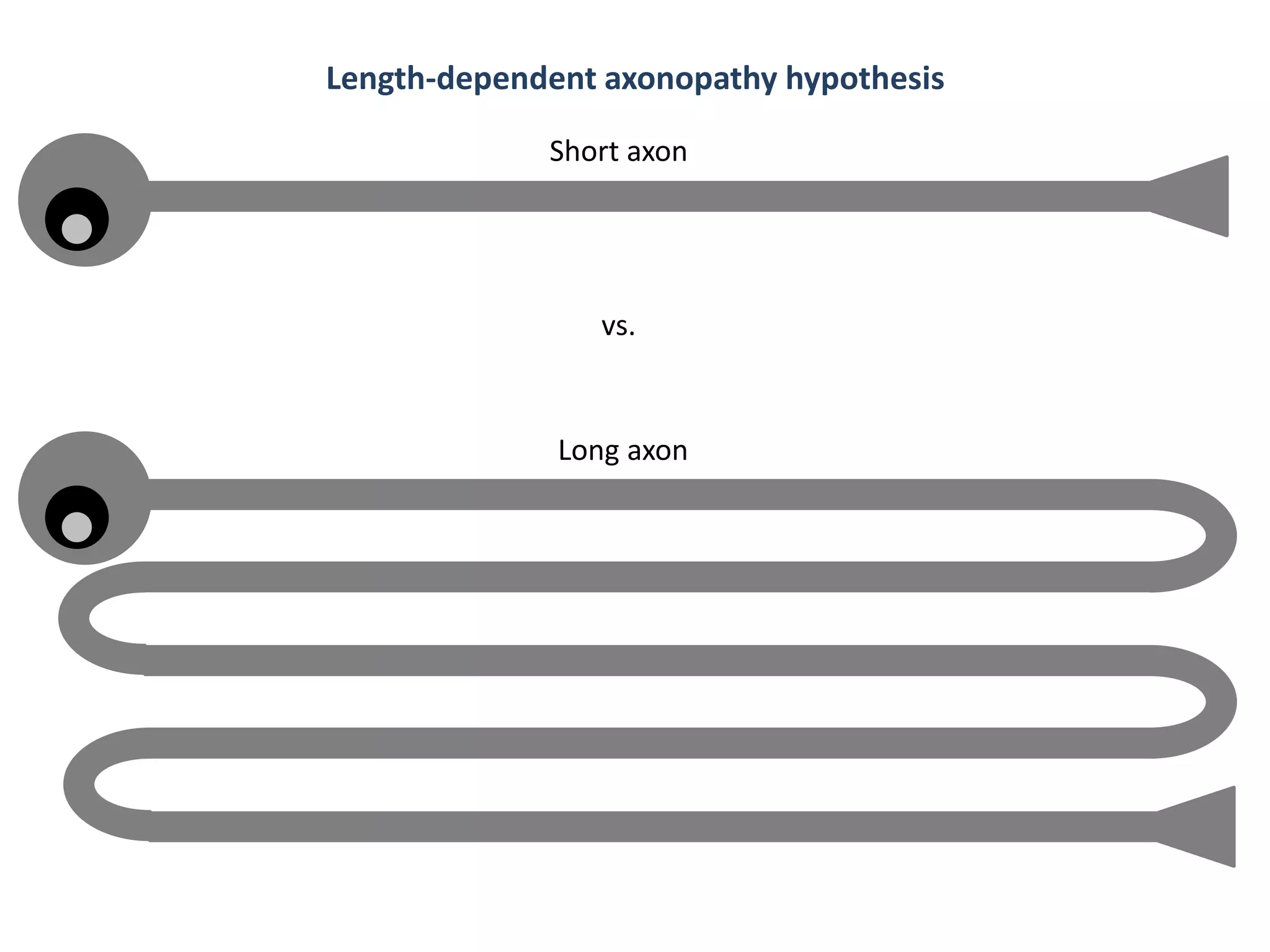
vs.
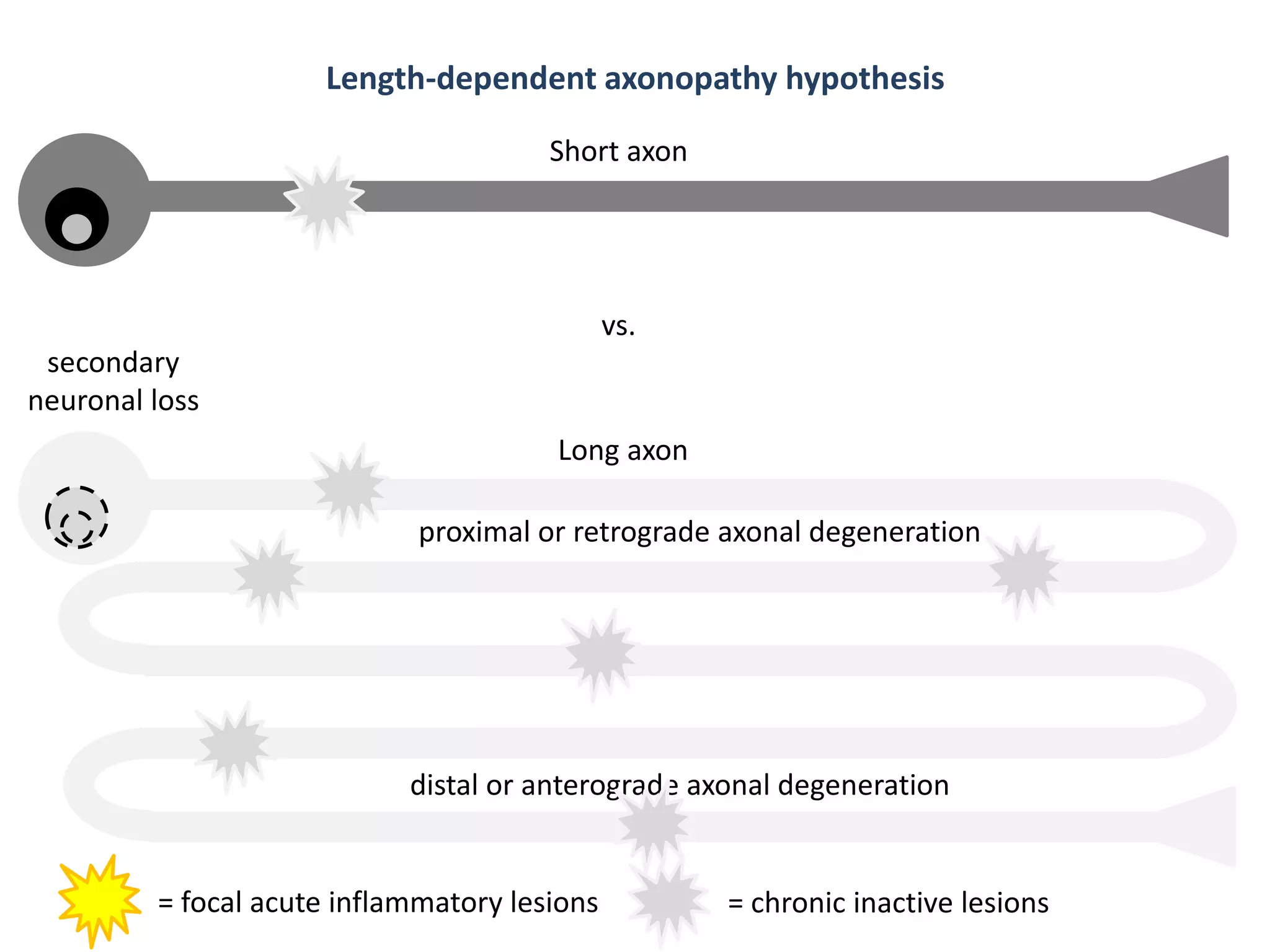
Short axon
Long axon
Length-dependent axonopathy hypothesis
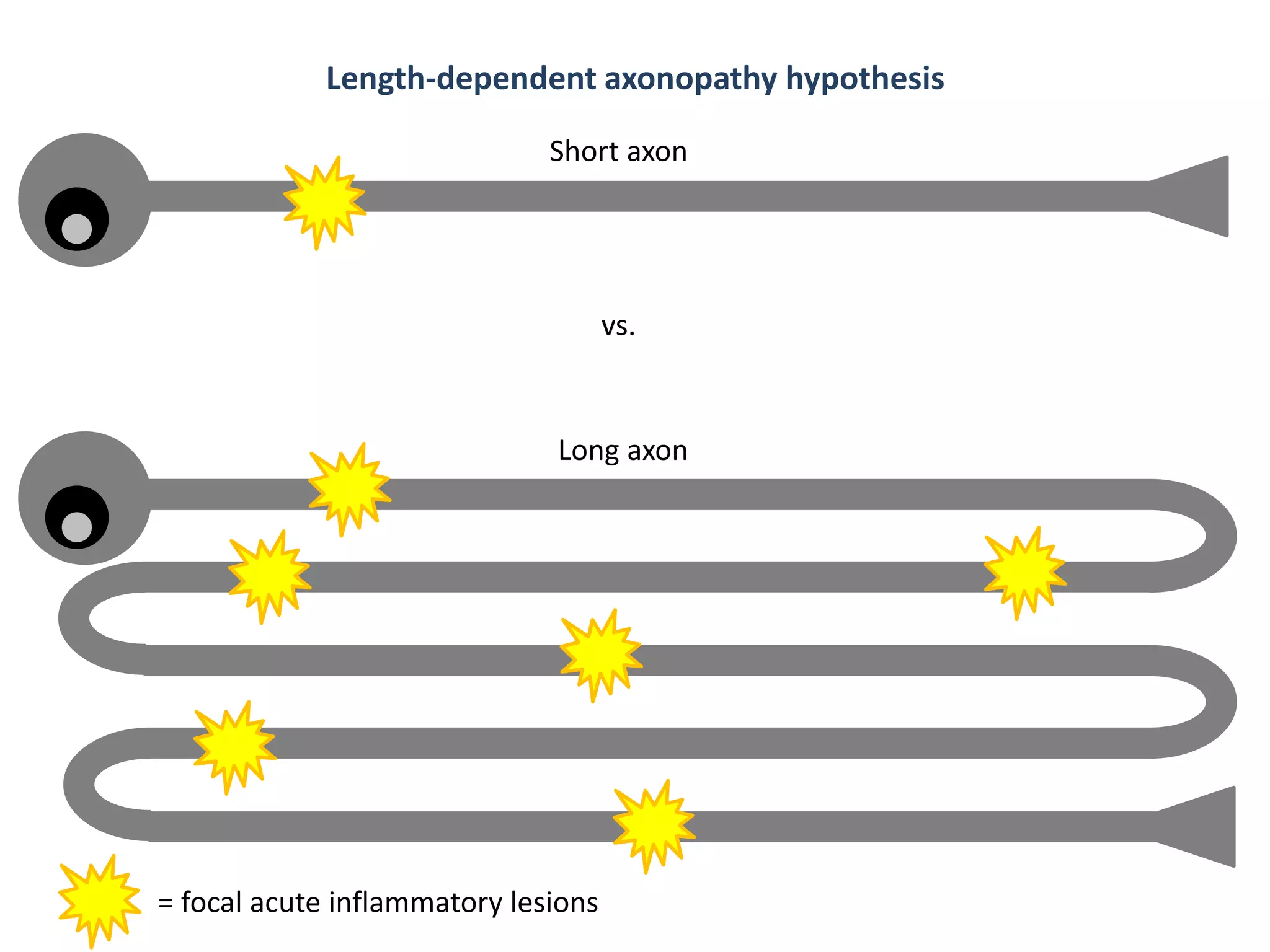
vs.
= focal acute inflammatory lesions
vs.
Short axon
Long axon
Length-dependent axonopathy hypothesis
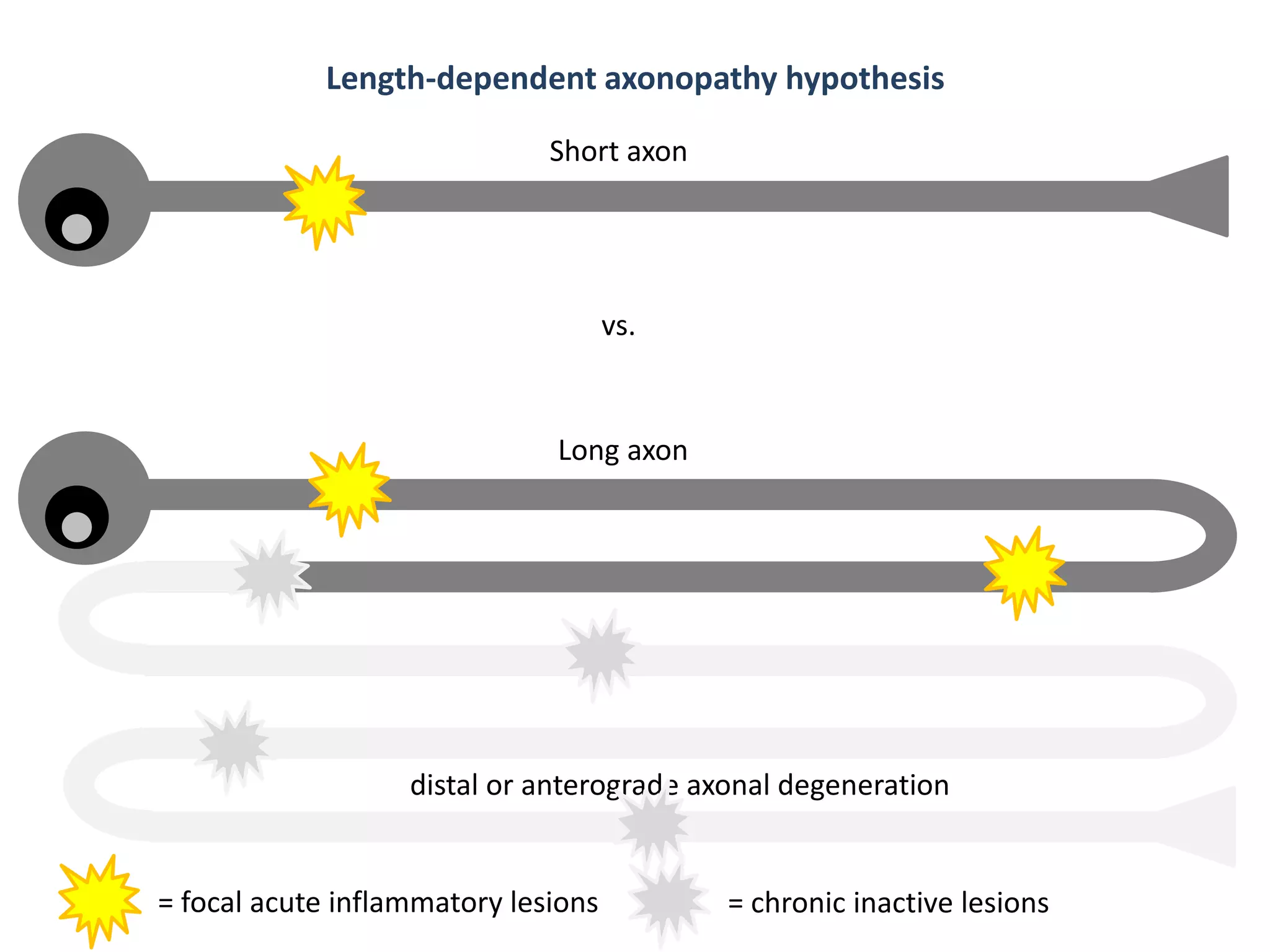
distal or anterograde axonal degeneration
= focal acute inflammatory lesions
vs.
Short axon
Long axon
= chronic inactive lesions
Length-dependent axonopathy hypothesis
proximal or retrograde axonal degeneration
distal or anterograde axonal degeneration
= focal acute inflammatory lesions
vs.
Short axon
Long axon
= chronic inactive lesions
secondary
neuronal loss
Length-dependent axonopathy hypothesis
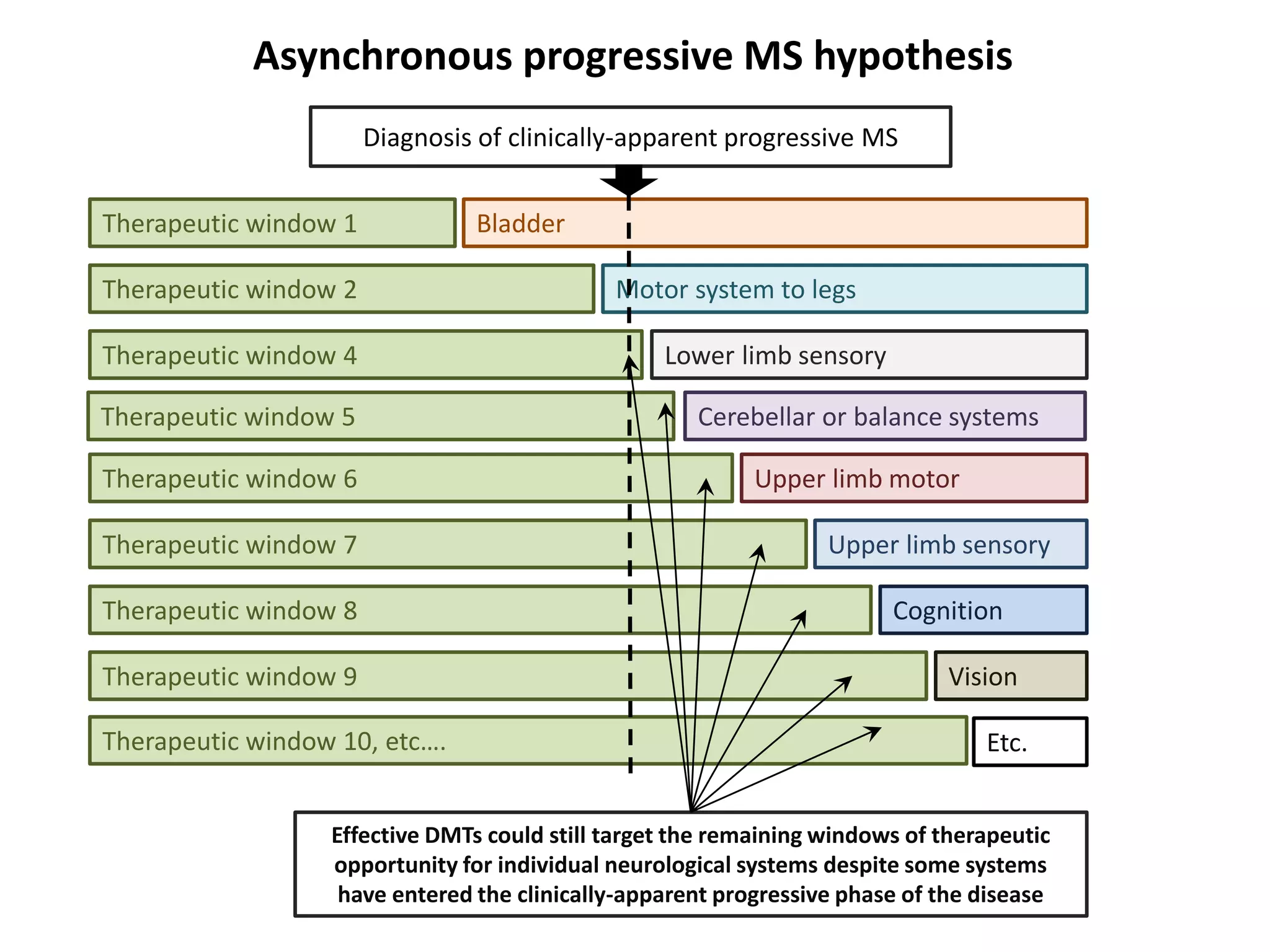
Therapeutic window 5
Asynchronous progressive MS hypothesis
Motor system to legs
Lower limb sensory
BladderTherapeutic window 1
Therapeutic window 2
Therapeutic window 4
Upper limb sensory
Upper limb motor
Cognition
Vision
Etc.
Therapeutic window 6
Therapeutic window 7
Therapeutic window 8
Therapeutic window 9
Therapeutic window 10, etc….
Diagnosis of clinically-apparent progressive MS
Effective DMTs could still target the remaining windows of therapeutic
opportunity for individual neurological systems despite some systems
have entered the clinically-apparent progressive phase of the disease
Cerebellar or balance systems
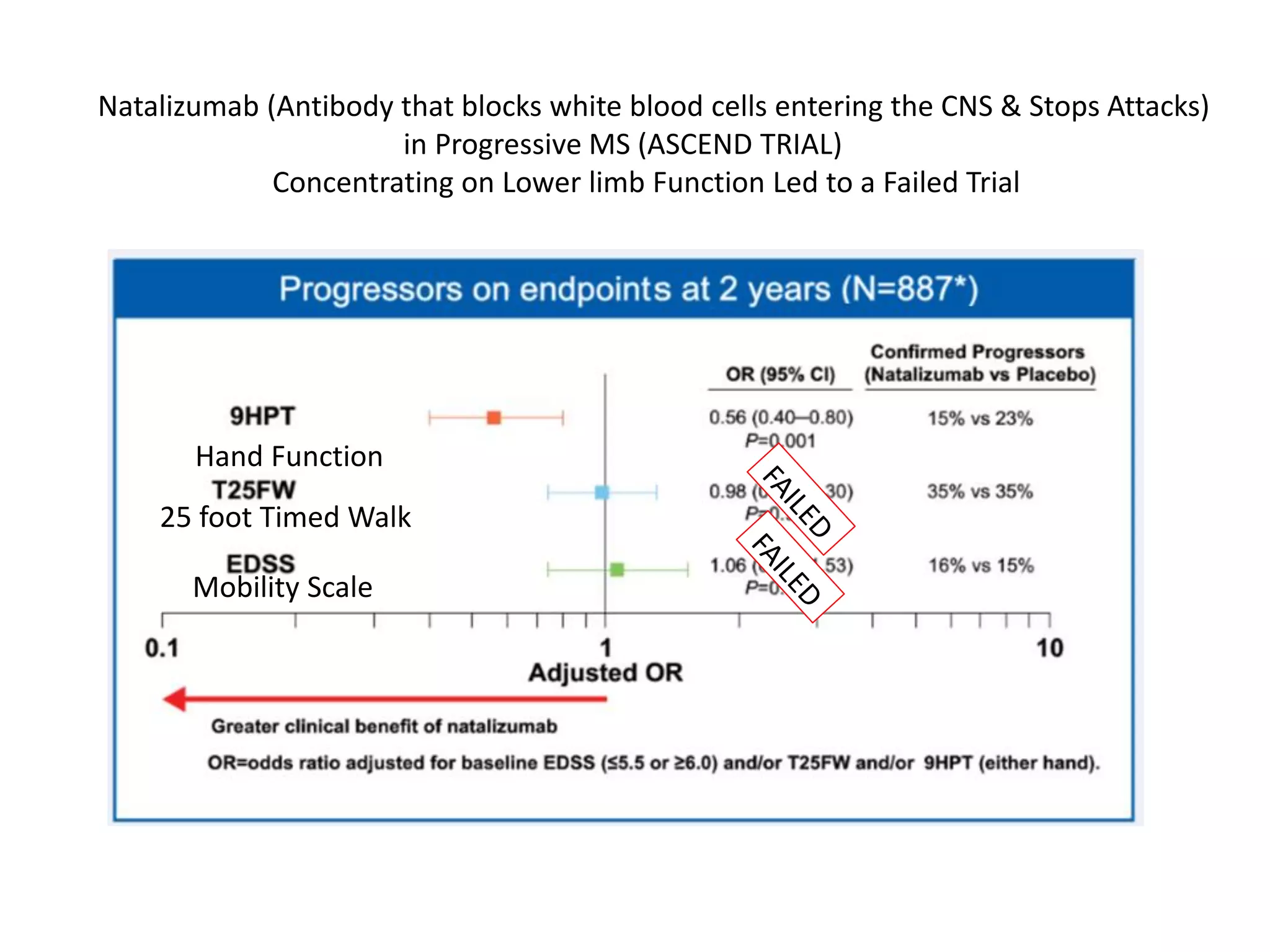
Natalizumab (Antibody that blocks white blood cells entering the CNS & Stops Attacks)
in Progressive MS (ASCEND TRIAL)
Concentrating on Lower limb Function Led to a Failed Trial
25 foot Timed Walk
Mobility Scale
Hand Function
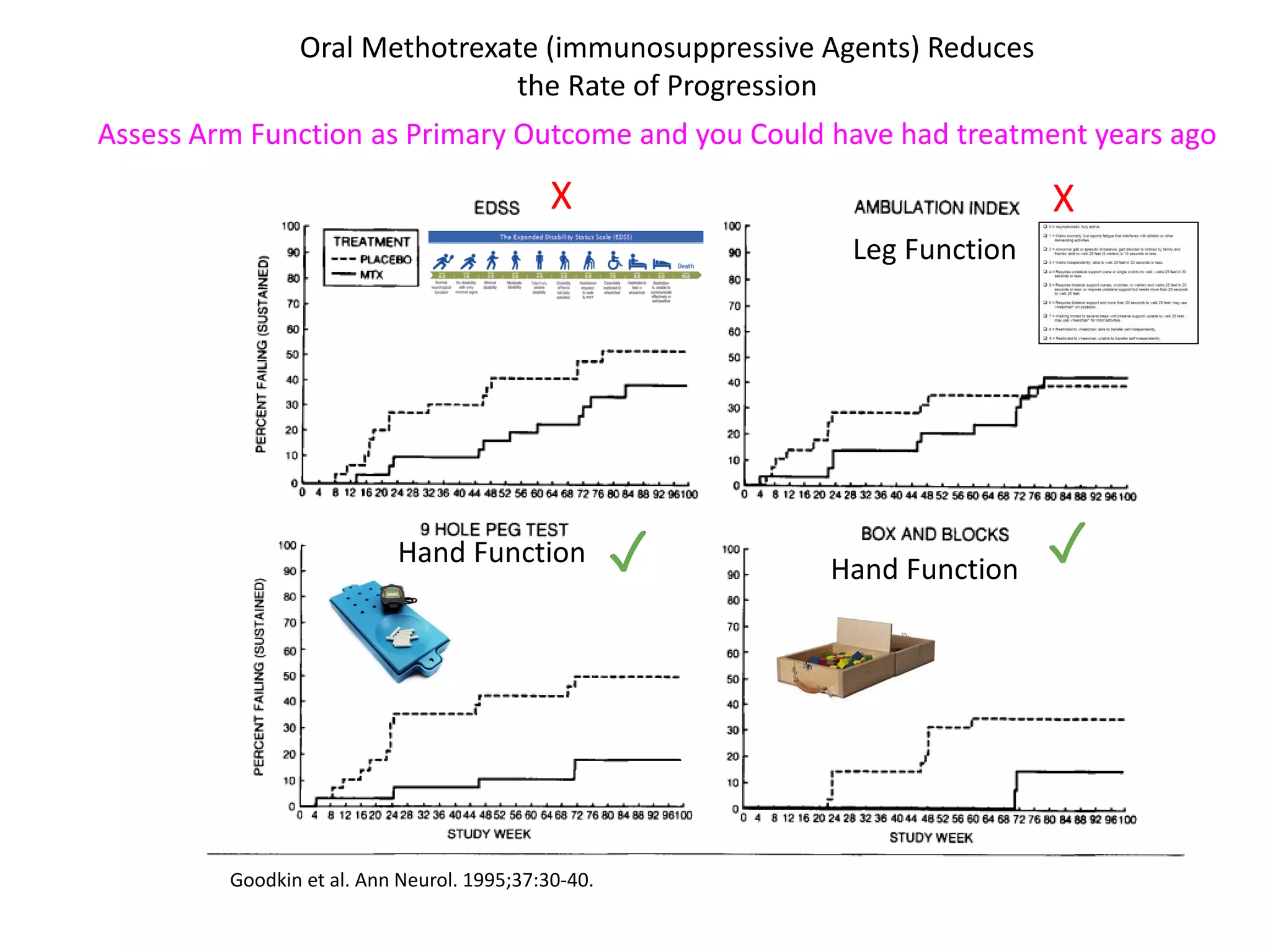
Goodkin et al. Ann Neurol. 1995;37:30-40.
✓✓
Oral Methotrexate (immunosuppressive Agents) Reduces
the Rate of Progression
Assess Arm Function as Primary Outcome and you Could have had treatment years ago
Hand Function
Leg Function
XX
Hand Function
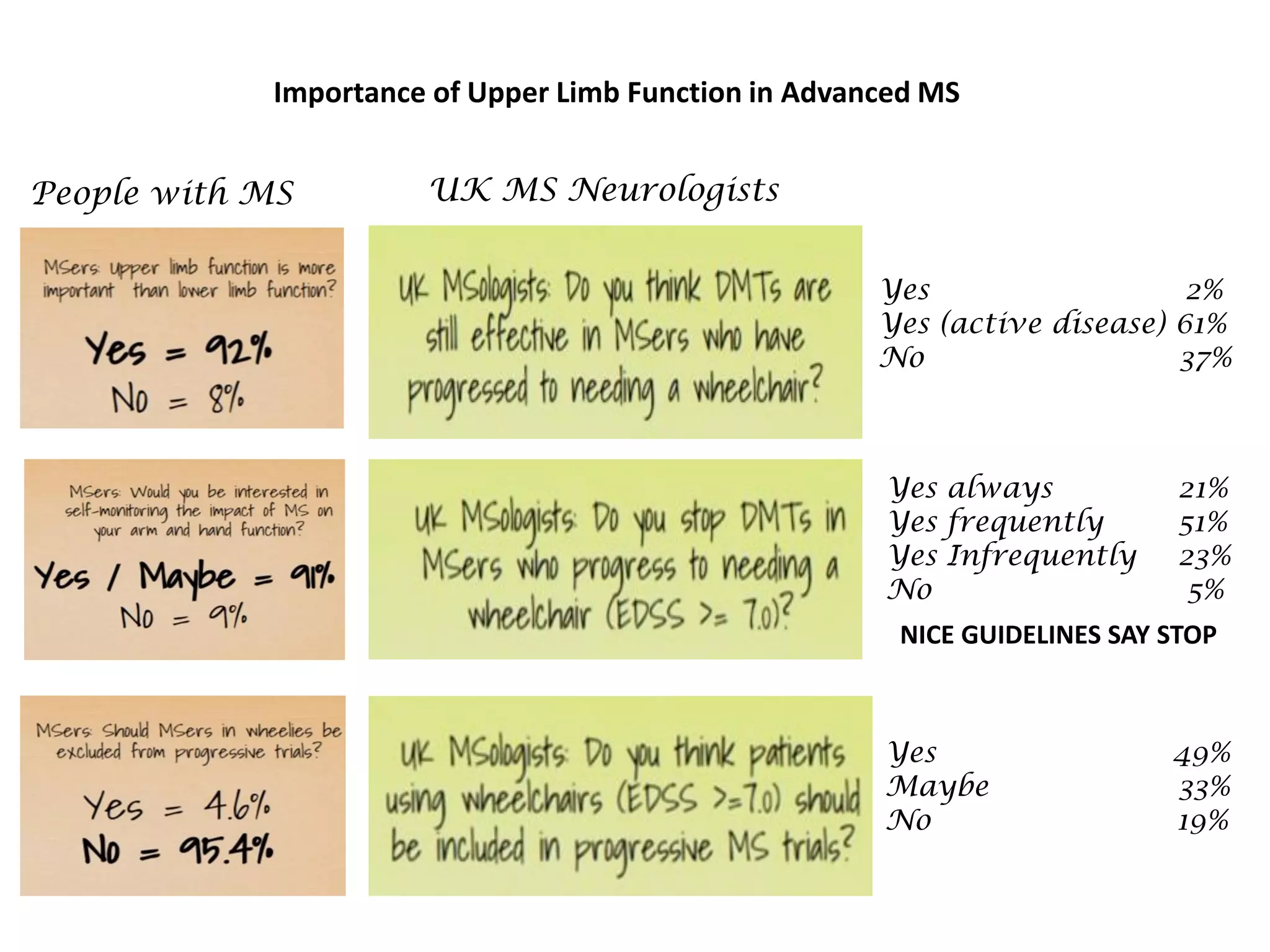
People with MS
Yes always 21%
Yes frequently 51%
Yes Infrequently 23%
No 5%
Yes 2%
Yes (active disease) 61%
No 37%
Yes 49%
Maybe 33%
No 19%
UK MS Neurologists
Importance of Upper Limb Function in Advanced MS
NICE GUIDELINES SAY STOP
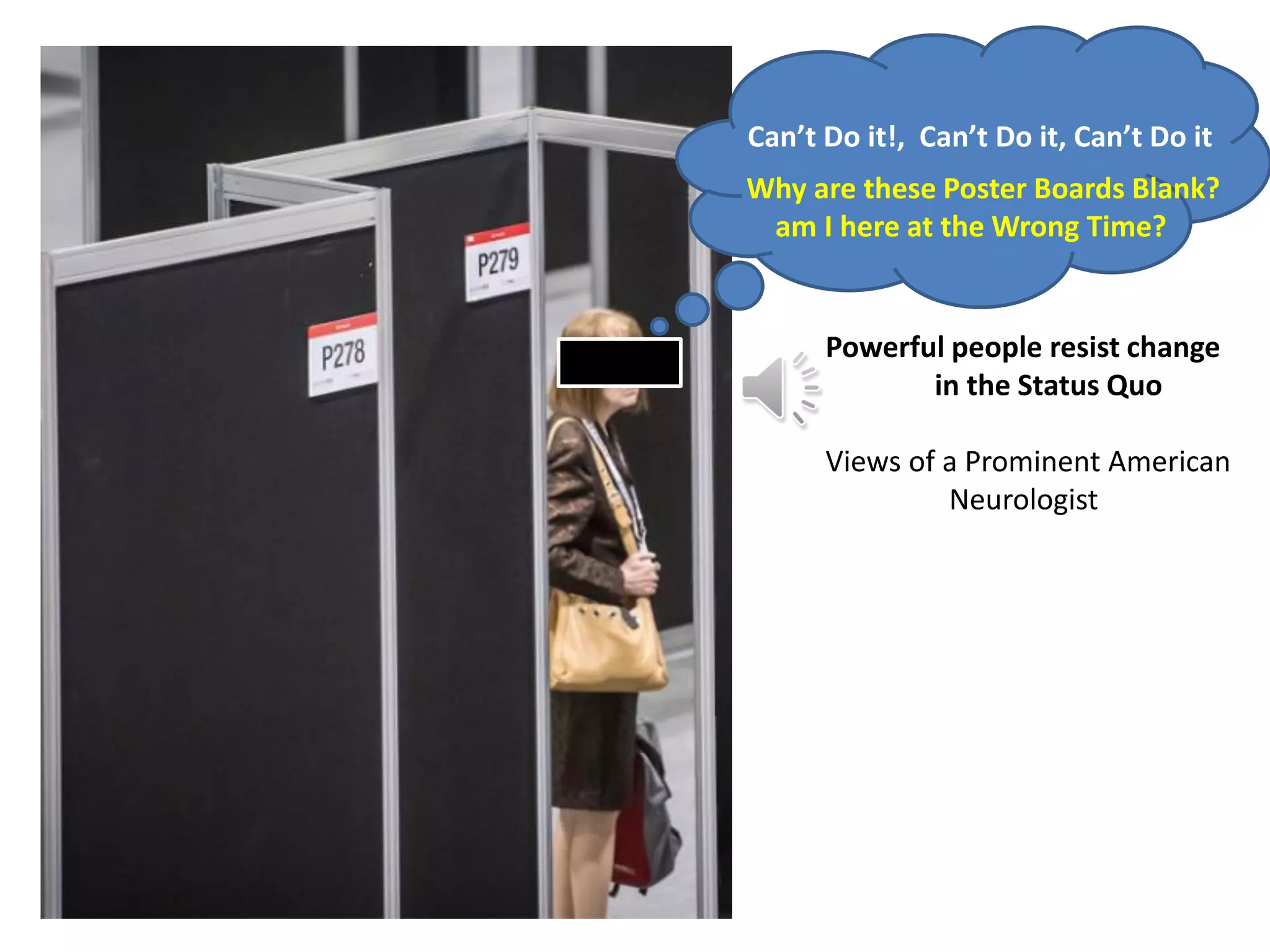
Why are these Poster Boards Blank?
am I here at the Wrong Time?
Can’t Do it!, Can’t Do it, Can’t Do it
Powerful people resist change
in the Status Quo
Views of a Prominent American
Neurologist
No New Lesions
T1 MRI detects Damage (Black Holes)
Gadolinium (white spots) New Lesions
T2 MRI detects lesions (white spots)
New
EXAMPLE OF PERSON IN WHEELCHAIR
RESPONDING TO A DMT (CLAD)
ASSESSED BY MRI
TRIALS (& FUTURE DRUGS) FOR PEOPLE IN WHEELCHAIRS
PHARMACEUTICAL-LED
STUDIES
ACADEMIC-LED
STUDIES
(CHARIOT TRIAL)
YES WE SHOULD
EXAMPLE OF PERSON IN WHEELCHAIR
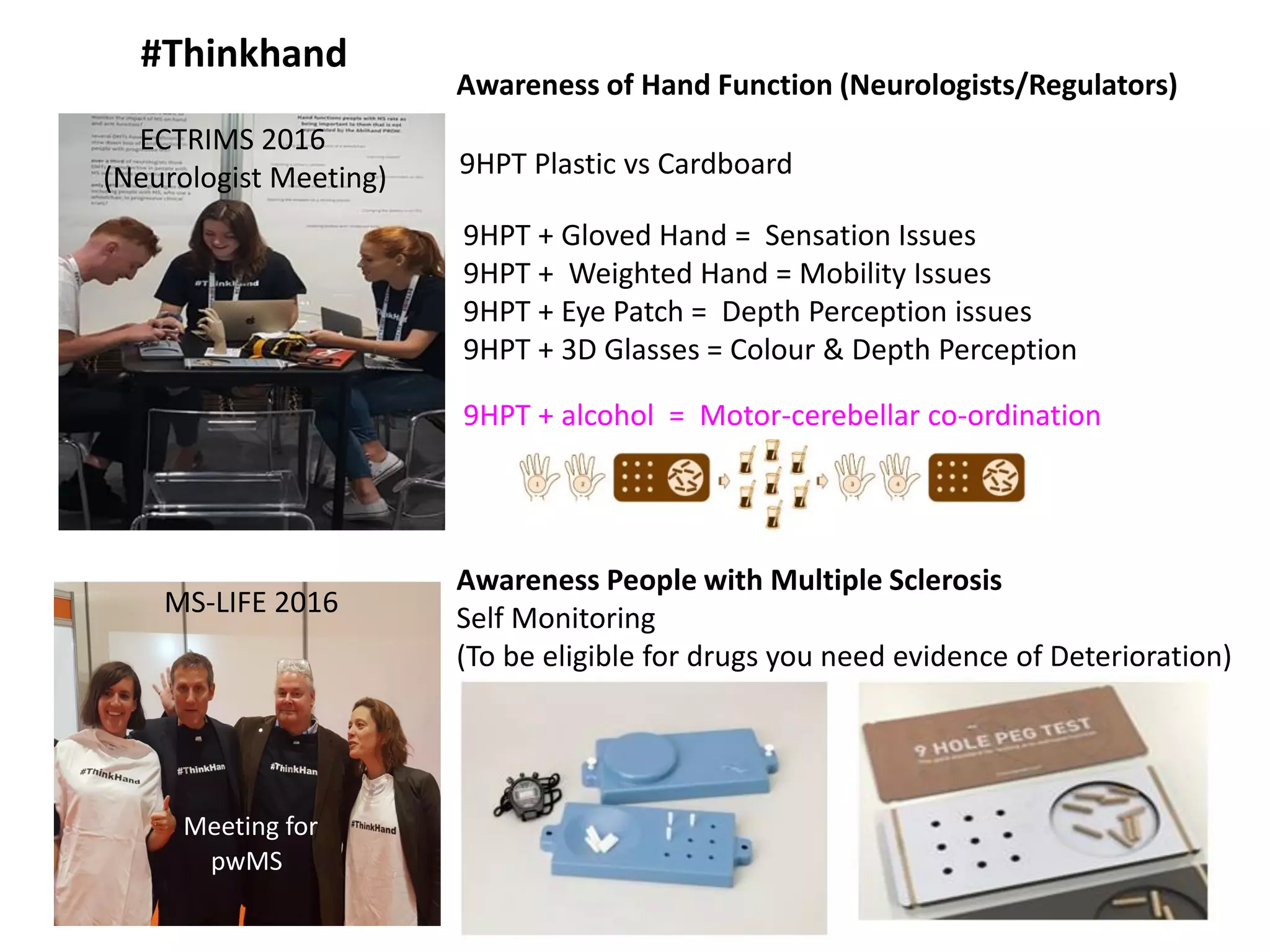
#Thinkhand
Awareness of Hand Function (Neurologists/Regulators)
Awareness People with Multiple Sclerosis
Self Monitoring
(To be eligible for drugs you need evidence of Deterioration)
9HPT + Gloved Hand = Sensation Issues
9HPT + Weighted Hand = Mobility Issues
9HPT + Eye Patch = Depth Perception issues
9HPT + 3D Glasses = Colour & Depth Perception
9HPT + alcohol = Motor-cerebellar co-ordination
ECTRIMS 2016
(Neurologist Meeting)
MS-LIFE 2016
Meeting for
pwMS
9HPT Plastic vs Cardboard
www.ms-res.orgrg
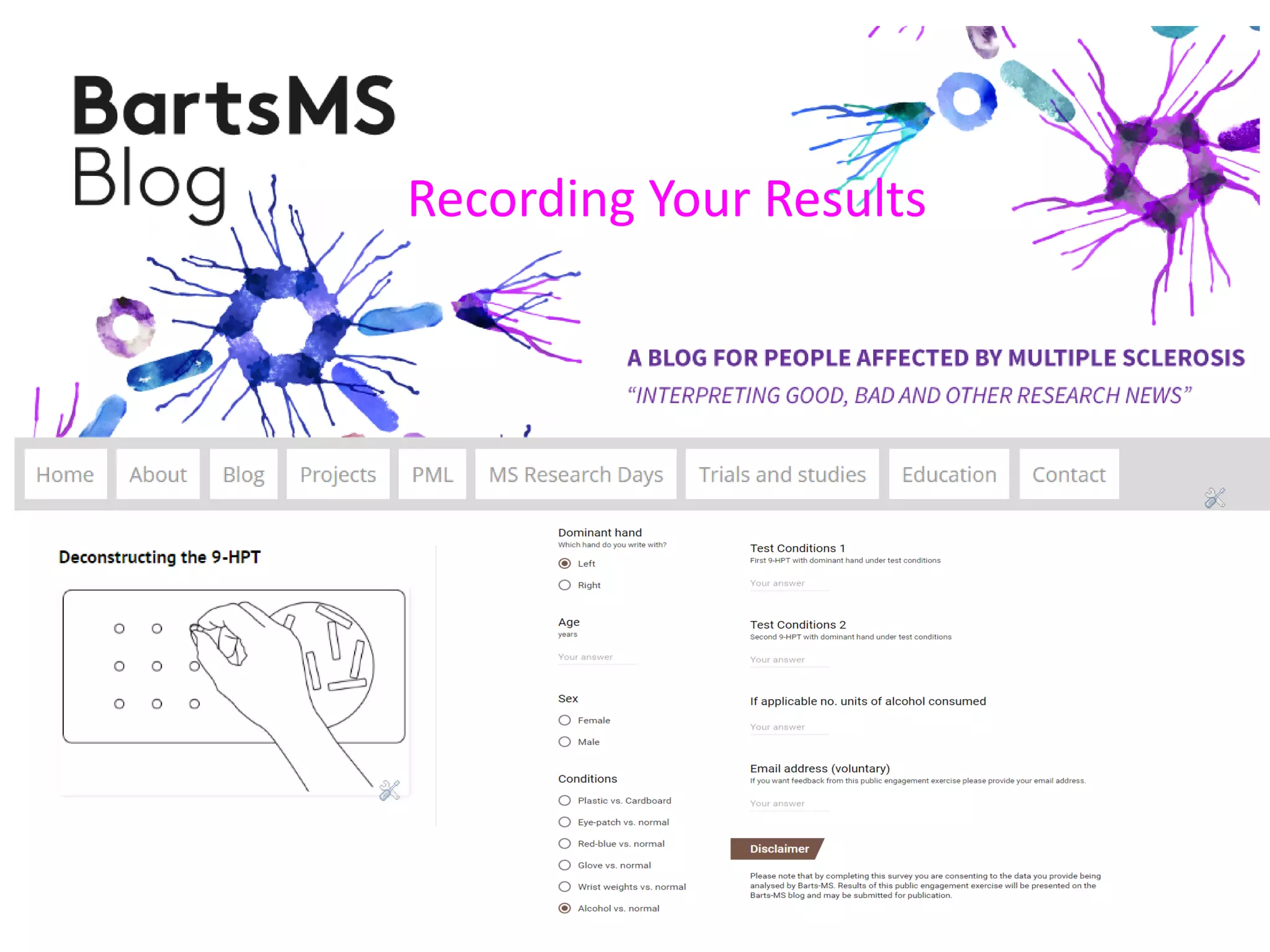
Recording Your Results
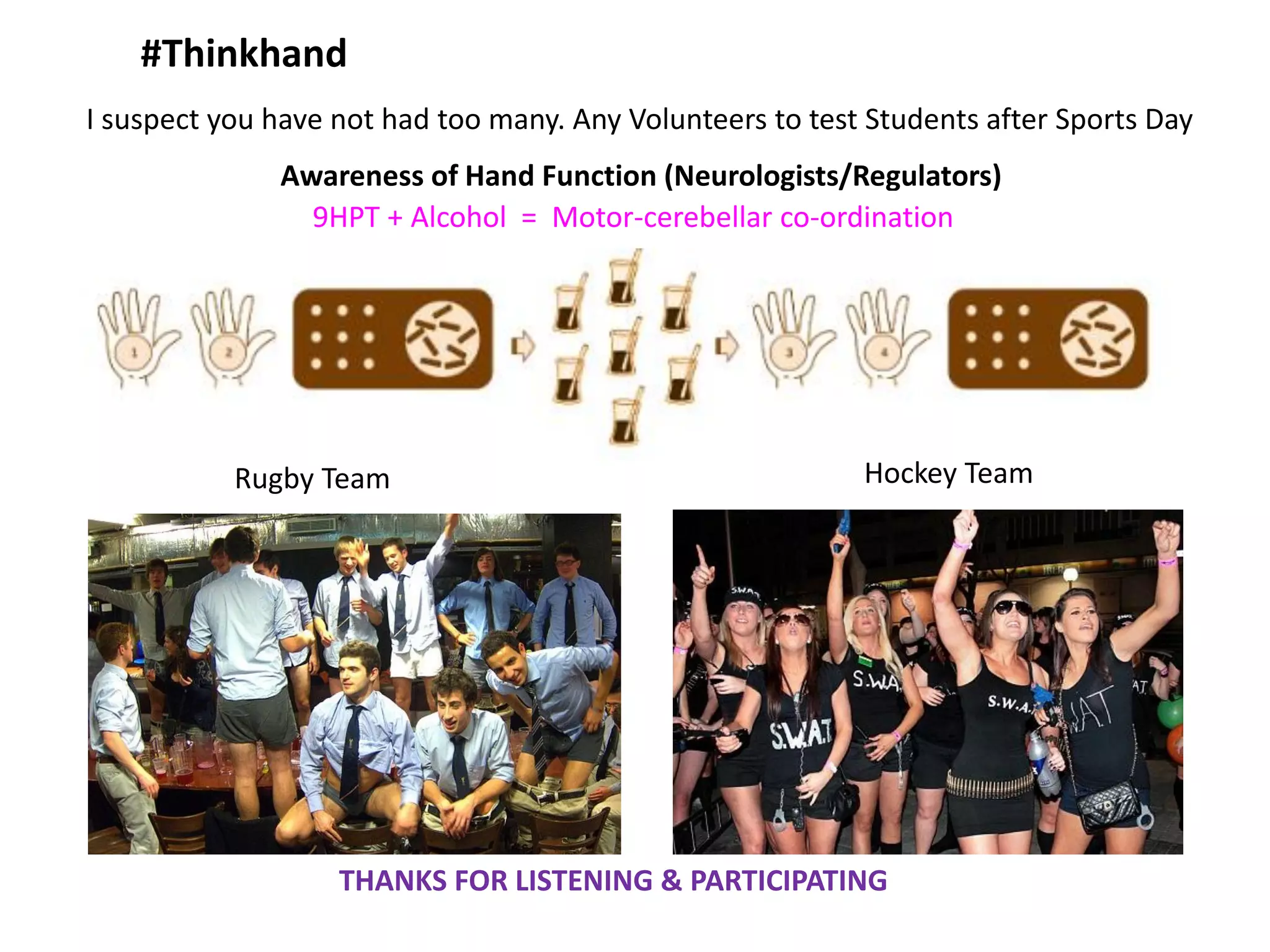
#Thinkhand
Awareness of Hand Function (Neurologists/Regulators)
9HPT + Alcohol = Motor-cerebellar co-ordination
Rugby Team
THANKS FOR LISTENING & PARTICIPATING
I suspect you have not had too many. Any Volunteers to test Students after Sports Day
Hockey Team
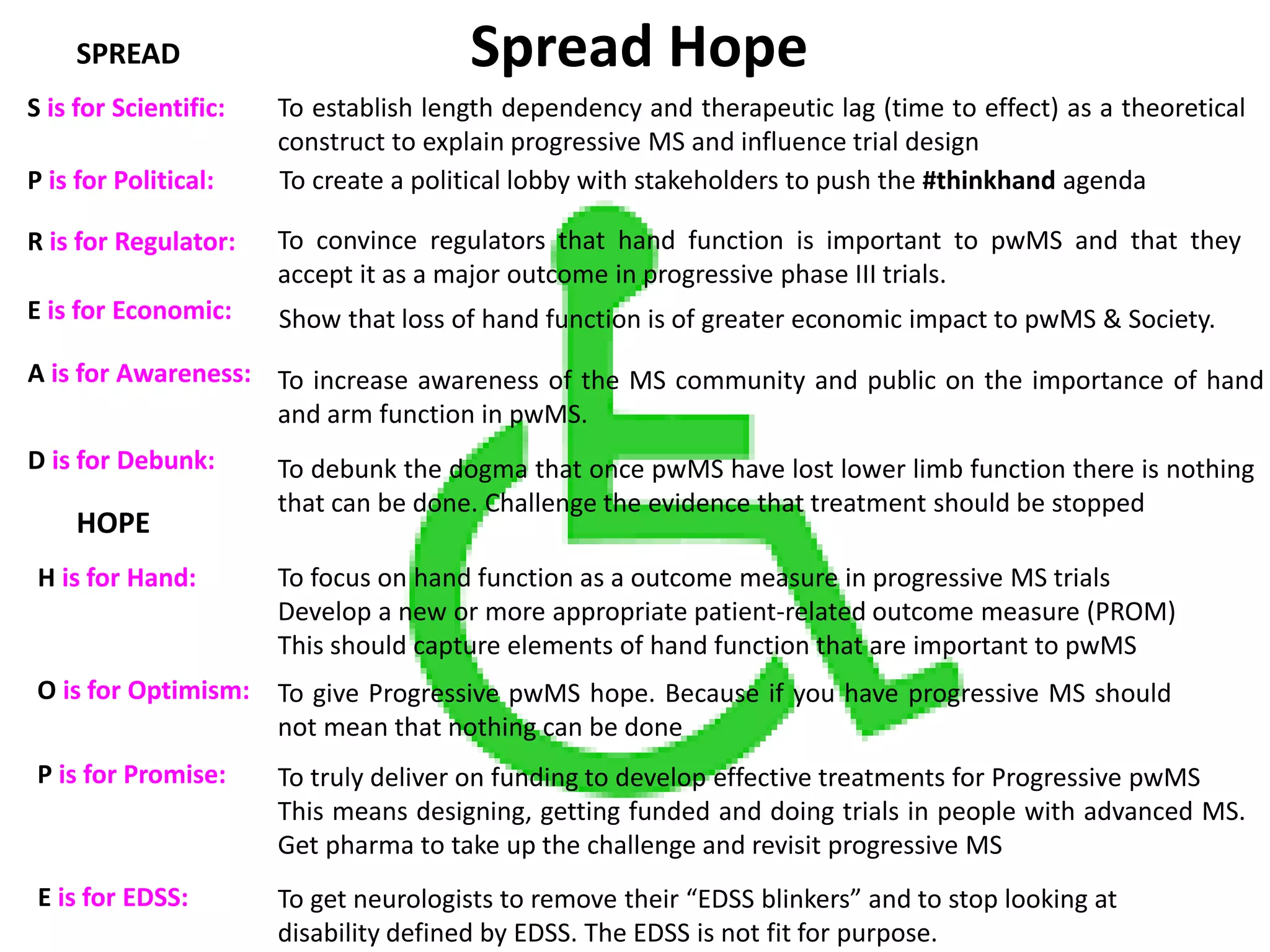
Spread Hope
To establish length dependency and therapeutic lag (time to effect) as a theoretical
construct to explain progressive MS and influence trial design
S is for Scientific:
P is for Political: To create a political lobby with stakeholders to push the #thinkhand agenda
R is for Regulator: To convince regulators that hand function is important to pwMS and that they
accept it as a major outcome in progressive phase III trials.
A is for Awareness: To increase awareness of the MS community and public on the importance of hand
and arm function in pwMS.
HOPE
D is for Debunk: To debunk the dogma that once pwMS have lost lower limb function there is nothing
that can be done. Challenge the evidence that treatment should be stopped
E is for Economic: Show that loss of hand function is of greater economic impact to pwMS & Society.
SPREAD
To focus on hand function as a outcome measure in progressive MS trials
Develop a new or more appropriate patient-related outcome measure (PROM)
This should capture elements of hand function that are important to pwMS
H is for Hand:
O is for Optimism: To give Progressive pwMS hope. Because if you have progressive MS should
not mean that nothing can be done
P is for Promise: To truly deliver on funding to develop effective treatments for Progressive pwMS
This means designing, getting funded and doing trials in people with advanced MS.
Get pharma to take up the challenge and revisit progressive MS
E is for EDSS: To get neurologists to remove their “EDSS blinkers” and to stop looking at
disability defined by EDSS. The EDSS is not fit for purpose.
Thanks for Listening
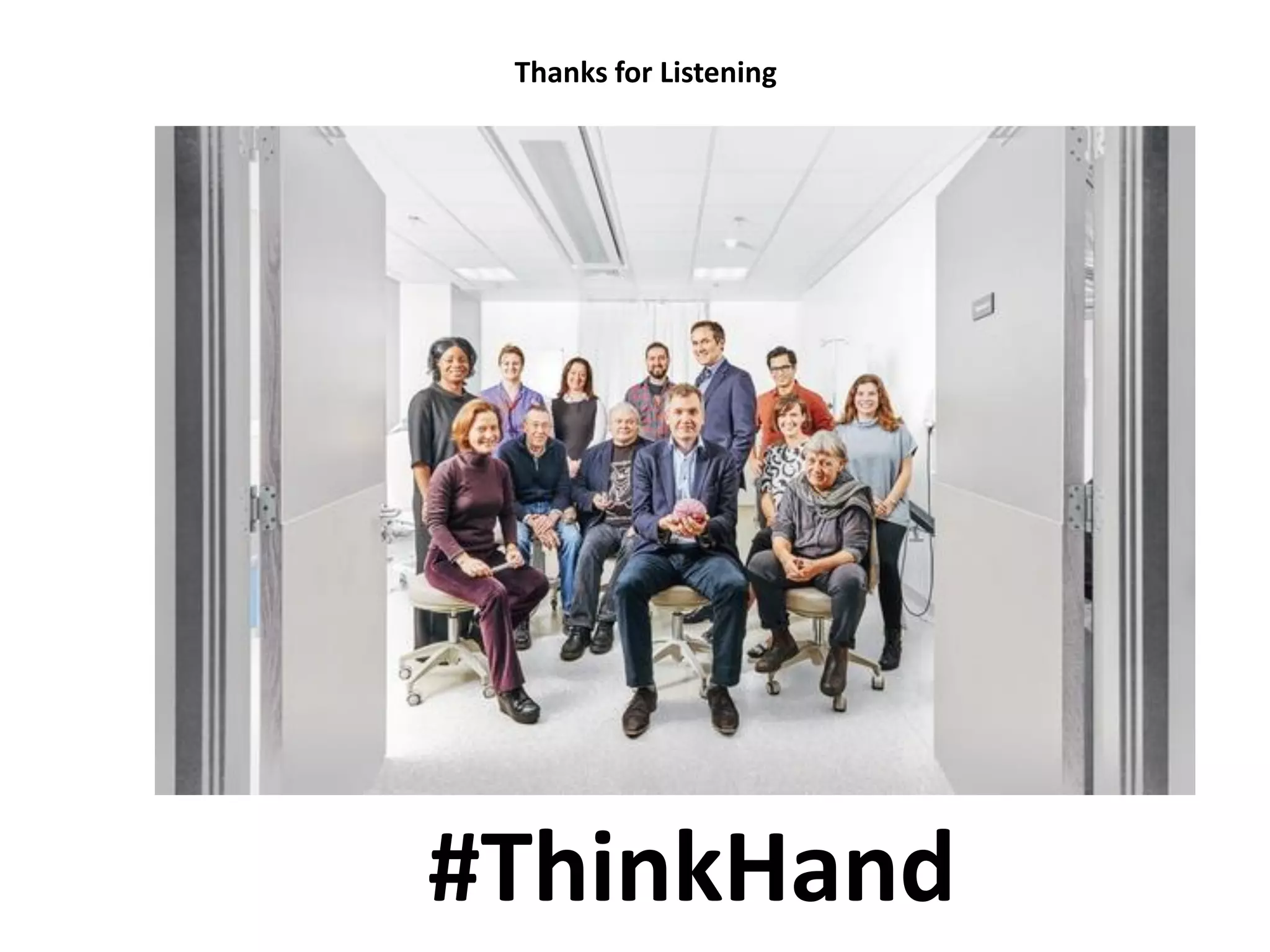
#ThinkHand

Prof mouse pint of neuroscience part ii

  • 1.
    #ThinkHand Why the 9Hole Peg Test?
  • 2.
    DRUG DEVELOPMENT (Bench toBedside) WORKS & SAFE IN PEOPLE WITH DISEASE PHASE III APPROVAL POST-MARKETING SURVELLIENCE PHASE IV REGULATORS MHRA Medicines & Healthcare Products Regulatory Agency (UK) EMA European Medicines Agency (EU) FDA Food & Drug Administration (USA) Select Outcomes which will be a affected by the Treatment EMA
  • 3.
    Expanded Disability StatusScale (EDSS) Main Clinical Outcome in Trials is Multiple Sclerosis used to Assess Efficacy by the Regulators Mobility Scale Dominated by Lower Limb function Typical EDSS trials Cut off >6.5 (20m walk) REGULATORY OUTRCOMES 500m 200m 100m <5m
  • 4.
    TREATMENT PYRAMID Stop Nerve Damage ProtectDamaged Nerves WHAT ARE THE TREATMENTS? Repair Nerve Conduction Issues Repair Lost Nerves Block Attacks Block Progression Many Drugs Approved 1. Damage Due to Attack 2. Secondary Damage from Immune Attack 3. Progressive Damage Not responsive to Current Drugs Affecting Attacks
  • 5.
    +ve +ve SYMPTOMS NERVE DAMAGE +ve +ve SYMPTOMCONTROL +ve +ve -ve NEUROPROTECTION HEALTH CONTROLING SYMPTOMS CONTROLING PROGRESSIVE MS CANNABINOIDS
  • 6.
    Study Shows NoEvidence to Support an Effect of Main Active Constituent of Cannabis on MS Progression CUPID Cannabinoid Use in Progressive Inflammatory Brain Disease Zajicek J et al. 2013
  • 7.
    Study Shows Evidenceto Support an Effect of Main Active Constituent of Cannabis on MS Progression Subgroup Analysis Starting EDSS less than 5.5 P<0.01 Zajicek J et al. 2013 CUPID Cannabinoid Use in Progressive Inflammatory Brain Disease.
  • 8.
    Mobility Scale Dominatedby Lower Limb function Typical EDSS trials Cut off >6.5 People in Wheelchairs are Forgotten and excluded from studies
  • 9.
    Why Are LowerLimbs Notably Affected in MS CNS fibre length – motor vs. visual 10cm 2 x 80cm =160cm
  • 10.
  • 11.
    vs. = focal acuteinflammatory lesions vs. Short axon Long axon Length-dependent axonopathy hypothesis
  • 12.
    distal or anterogradeaxonal degeneration = focal acute inflammatory lesions vs. Short axon Long axon = chronic inactive lesions Length-dependent axonopathy hypothesis
  • 13.
    proximal or retrogradeaxonal degeneration distal or anterograde axonal degeneration = focal acute inflammatory lesions vs. Short axon Long axon = chronic inactive lesions secondary neuronal loss Length-dependent axonopathy hypothesis
  • 14.
    Therapeutic window 5 Asynchronousprogressive MS hypothesis Motor system to legs Lower limb sensory BladderTherapeutic window 1 Therapeutic window 2 Therapeutic window 4 Upper limb sensory Upper limb motor Cognition Vision Etc. Therapeutic window 6 Therapeutic window 7 Therapeutic window 8 Therapeutic window 9 Therapeutic window 10, etc…. Diagnosis of clinically-apparent progressive MS Effective DMTs could still target the remaining windows of therapeutic opportunity for individual neurological systems despite some systems have entered the clinically-apparent progressive phase of the disease Cerebellar or balance systems
  • 15.
    Natalizumab (Antibody thatblocks white blood cells entering the CNS & Stops Attacks) in Progressive MS (ASCEND TRIAL) Concentrating on Lower limb Function Led to a Failed Trial 25 foot Timed Walk Mobility Scale Hand Function
  • 16.
    Goodkin et al.Ann Neurol. 1995;37:30-40. ✓✓ Oral Methotrexate (immunosuppressive Agents) Reduces the Rate of Progression Assess Arm Function as Primary Outcome and you Could have had treatment years ago Hand Function Leg Function XX Hand Function
  • 17.
    People with MS Yesalways 21% Yes frequently 51% Yes Infrequently 23% No 5% Yes 2% Yes (active disease) 61% No 37% Yes 49% Maybe 33% No 19% UK MS Neurologists Importance of Upper Limb Function in Advanced MS NICE GUIDELINES SAY STOP
  • 18.
    Why are thesePoster Boards Blank? am I here at the Wrong Time? Can’t Do it!, Can’t Do it, Can’t Do it Powerful people resist change in the Status Quo Views of a Prominent American Neurologist
  • 19.
    No New Lesions T1MRI detects Damage (Black Holes) Gadolinium (white spots) New Lesions T2 MRI detects lesions (white spots) New EXAMPLE OF PERSON IN WHEELCHAIR RESPONDING TO A DMT (CLAD) ASSESSED BY MRI
  • 20.
    TRIALS (& FUTUREDRUGS) FOR PEOPLE IN WHEELCHAIRS PHARMACEUTICAL-LED STUDIES ACADEMIC-LED STUDIES (CHARIOT TRIAL) YES WE SHOULD EXAMPLE OF PERSON IN WHEELCHAIR
  • 21.
    #Thinkhand Awareness of HandFunction (Neurologists/Regulators) Awareness People with Multiple Sclerosis Self Monitoring (To be eligible for drugs you need evidence of Deterioration) 9HPT + Gloved Hand = Sensation Issues 9HPT + Weighted Hand = Mobility Issues 9HPT + Eye Patch = Depth Perception issues 9HPT + 3D Glasses = Colour & Depth Perception 9HPT + alcohol = Motor-cerebellar co-ordination ECTRIMS 2016 (Neurologist Meeting) MS-LIFE 2016 Meeting for pwMS 9HPT Plastic vs Cardboard
  • 22.
  • 23.
    #Thinkhand Awareness of HandFunction (Neurologists/Regulators) 9HPT + Alcohol = Motor-cerebellar co-ordination Rugby Team THANKS FOR LISTENING & PARTICIPATING I suspect you have not had too many. Any Volunteers to test Students after Sports Day Hockey Team
  • 24.
    Spread Hope To establishlength dependency and therapeutic lag (time to effect) as a theoretical construct to explain progressive MS and influence trial design S is for Scientific: P is for Political: To create a political lobby with stakeholders to push the #thinkhand agenda R is for Regulator: To convince regulators that hand function is important to pwMS and that they accept it as a major outcome in progressive phase III trials. A is for Awareness: To increase awareness of the MS community and public on the importance of hand and arm function in pwMS. HOPE D is for Debunk: To debunk the dogma that once pwMS have lost lower limb function there is nothing that can be done. Challenge the evidence that treatment should be stopped E is for Economic: Show that loss of hand function is of greater economic impact to pwMS & Society. SPREAD To focus on hand function as a outcome measure in progressive MS trials Develop a new or more appropriate patient-related outcome measure (PROM) This should capture elements of hand function that are important to pwMS H is for Hand: O is for Optimism: To give Progressive pwMS hope. Because if you have progressive MS should not mean that nothing can be done P is for Promise: To truly deliver on funding to develop effective treatments for Progressive pwMS This means designing, getting funded and doing trials in people with advanced MS. Get pharma to take up the challenge and revisit progressive MS E is for EDSS: To get neurologists to remove their “EDSS blinkers” and to stop looking at disability defined by EDSS. The EDSS is not fit for purpose.
  • 25.