



Product Mistakes
Prepared By: Feyza Yüksel&Gökhan Güçlü
Why do products fail?
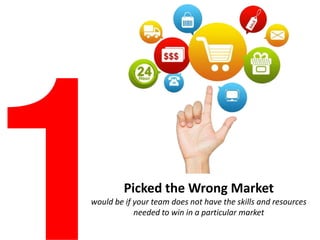
Picked the Wrong Market
would be if your team does not have the skills and resources
needed to win in a particular market
Takes Too Long to Enter Market
Competitors have “out-gunned” you, your
customer’s needs have changed, etc.
Doesn’t Solve the Right Problems
making sure we’re actually solving the
right problems
Product is Not Good Enough
Bad design is an example – both bad user-experience and bad
architecture. Poor execution also lands here – broken
windows, sloppy implementations, poor quality. For this
branch to work, “product” is not just the product that your
development team builds, but also your customer
relationships, distribution, services, etc.
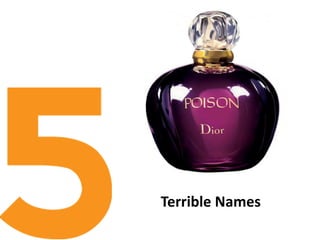
Terrible Names
something went wrong…
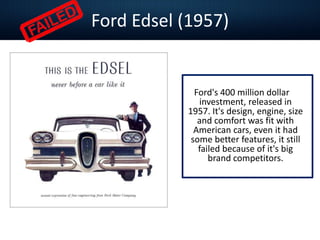
Ford Edsel (1957)
Ford's 400 million dollar
investment, released in
1957. It's design, engine, size
and comfort was fit with
American cars, even it had
some better features, it still
failed because of it's big
brand competitors.
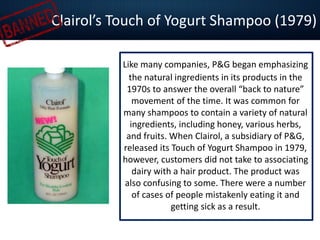
Clairol’s Touch of Yogurt Shampoo (1979)
Like many companies, P&G began emphasizing
the natural ingredients in its products in the
1970s to answer the overall “back to nature”
movement of the time. It was common for
many shampoos to contain a variety of natural
ingredients, including honey, various herbs,
and fruits. When Clairol, a subsidiary of P&G,
released its Touch of Yogurt Shampoo in 1979,
however, customers did not take to associating
dairy with a hair product. The product was
also confusing to some. There were a number
of cases of people mistakenly eating it and
getting sick as a result.
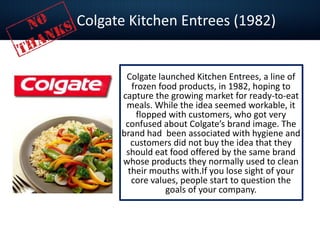
Colgate Kitchen Entrees (1982)
Colgate launched Kitchen Entrees, a line of
frozen food products, in 1982, hoping to
capture the growing market for ready-to-eat
meals. While the idea seemed workable, it
flopped with customers, who got very
confused about Colgate’s brand image. The
brand had been associated with hygiene and
customers did not buy the idea that they
should eat food offered by the same brand
whose products they normally used to clean
their mouths with.If you lose sight of your
core values, people start to question the
goals of your company.
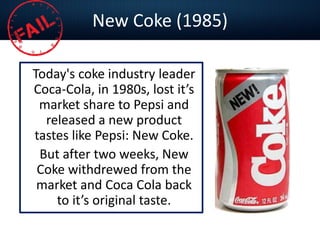
New Coke (1985)
Today's coke industry leader
Coca-Cola, in 1980s, lost it’s
market share to Pepsi and
released a new product
tastes like Pepsi: New Coke.
But after two weeks, New
Coke withdrewed from the
market and Coca Cola back
to it’s original taste.
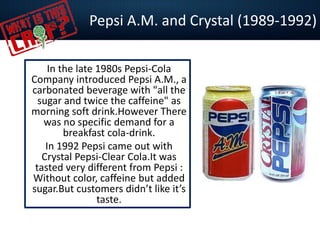
Pepsi A.M. and Crystal (1989-1992)
In the late 1980s Pepsi-Cola
Company introduced Pepsi A.M., a
carbonated beverage with "all the
sugar and twice the caffeine" as
morning soft drink.However There
was no specific demand for a
breakfast cola-drink.
In 1992 Pepsi came out with
Crystal Pepsi-Clear Cola.It was
tasted very different from Pepsi :
Without color, caffeine but added
sugar.But customers didn’t like it’s
taste.
RJ Reynolds Smokeless Cigarettes (1989)
With concern over the dangers
of smoking at fever pitch in the
late 80s, tobacco giant RJ
Reynolds set out to create a
“cleaner” alternative. $325
million later, smokeless
cigarettes were born.But in 4
months health organizations
find out it’s not healthy and
withdrewed from market.
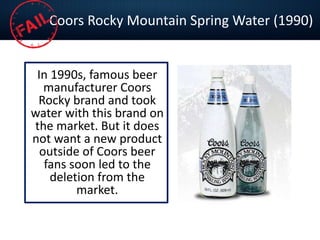
Coors Rocky Mountain Spring Water (1990)
In 1990s, famous beer
manufacturer Coors
Rocky brand and took
water with this brand on
the market. But it does
not want a new product
outside of Coors beer
fans soon led to the
deletion from the
market.
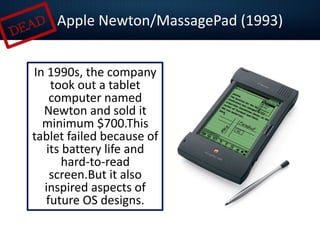
In 1990s, the company
took out a tablet
computer named
Newton and sold it
minimum $700.This
tablet failed because of
its battery life and
hard-to-read
screen.But it also
inspired aspects of
future OS designs.
Apple Newton/MassagePad (1993)
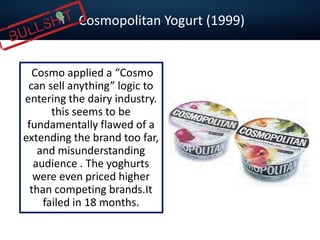
Cosmopolitan Yogurt (1999)
Cosmo applied a “Cosmo
can sell anything” logic to
entering the dairy industry.
this seems to be
fundamentally flawed of a
extending the brand too far,
and misunderstanding
audience . The yoghurts
were even priced higher
than competing brands.It
failed in 18 months.
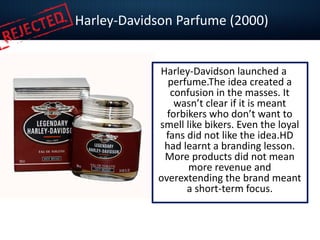
Harley-Davidson Parfume (2000)
Harley-Davidson launched a
perfume.The idea created a
confusion in the masses. It
wasn’t clear if it is meant
forbikers who don’t want to
smell like bikers. Even the loyal
fans did not like the idea.HD
had learnt a branding lesson.
More products did not mean
more revenue and
overextending the brand meant
a short-term focus.
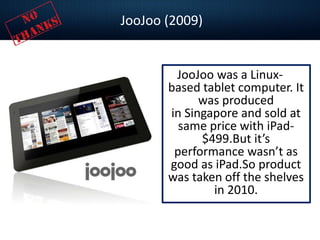
JooJoo (2009)
JooJoo was a Linux-
based tablet computer. It
was produced
in Singapore and sold at
same price with iPad-
$499.But it’s
performance wasn’t as
good as iPad.So product
was taken off the shelves
in 2010.
Kodak
Consumer’s brand
perception prevented
Kodak to attach itself to
changing market-
competitors were caring
much about innovation.
Digital photography, smart
phones etc. were the most
important reasons for it’s
bankruptcy.
MSN Messenger (2013)
Users prefer
Facebook instead
of MSN messenger
since video call
started in
Facebook. It
handed over to
Skype in 2013.
Nokia
Apple and Android
crushed Nokia by their
updates and
improvement-Nokia
couldn’t improve it’s
own OS symbian and
tried Windows
Phone.But still it wasn’t
enough and handed
over it’s shares to
Microsoft.
Production mistakes marketing management

Production mistakes marketing management

  • 1.
    Product Mistakes Prepared By:Feyza Yüksel&Gökhan Güçlü
  • 2.
  • 3.
    Picked the WrongMarket would be if your team does not have the skills and resources needed to win in a particular market
  • 4.
    Takes Too Longto Enter Market Competitors have “out-gunned” you, your customer’s needs have changed, etc.
  • 5.
    Doesn’t Solve theRight Problems making sure we’re actually solving the right problems
  • 6.
    Product is NotGood Enough Bad design is an example – both bad user-experience and bad architecture. Poor execution also lands here – broken windows, sloppy implementations, poor quality. For this branch to work, “product” is not just the product that your development team builds, but also your customer relationships, distribution, services, etc.
  • 7.
  • 8.
  • 9.
    Ford Edsel (1957) Ford's400 million dollar investment, released in 1957. It's design, engine, size and comfort was fit with American cars, even it had some better features, it still failed because of it's big brand competitors.
  • 10.
    Clairol’s Touch ofYogurt Shampoo (1979) Like many companies, P&G began emphasizing the natural ingredients in its products in the 1970s to answer the overall “back to nature” movement of the time. It was common for many shampoos to contain a variety of natural ingredients, including honey, various herbs, and fruits. When Clairol, a subsidiary of P&G, released its Touch of Yogurt Shampoo in 1979, however, customers did not take to associating dairy with a hair product. The product was also confusing to some. There were a number of cases of people mistakenly eating it and getting sick as a result.
  • 11.
    Colgate Kitchen Entrees(1982) Colgate launched Kitchen Entrees, a line of frozen food products, in 1982, hoping to capture the growing market for ready-to-eat meals. While the idea seemed workable, it flopped with customers, who got very confused about Colgate’s brand image. The brand had been associated with hygiene and customers did not buy the idea that they should eat food offered by the same brand whose products they normally used to clean their mouths with.If you lose sight of your core values, people start to question the goals of your company.
  • 12.
    New Coke (1985) Today'scoke industry leader Coca-Cola, in 1980s, lost it’s market share to Pepsi and released a new product tastes like Pepsi: New Coke. But after two weeks, New Coke withdrewed from the market and Coca Cola back to it’s original taste.
  • 13.
    Pepsi A.M. andCrystal (1989-1992) In the late 1980s Pepsi-Cola Company introduced Pepsi A.M., a carbonated beverage with "all the sugar and twice the caffeine" as morning soft drink.However There was no specific demand for a breakfast cola-drink. In 1992 Pepsi came out with Crystal Pepsi-Clear Cola.It was tasted very different from Pepsi : Without color, caffeine but added sugar.But customers didn’t like it’s taste.
  • 14.
    RJ Reynolds SmokelessCigarettes (1989) With concern over the dangers of smoking at fever pitch in the late 80s, tobacco giant RJ Reynolds set out to create a “cleaner” alternative. $325 million later, smokeless cigarettes were born.But in 4 months health organizations find out it’s not healthy and withdrewed from market.
  • 15.
    Coors Rocky MountainSpring Water (1990) In 1990s, famous beer manufacturer Coors Rocky brand and took water with this brand on the market. But it does not want a new product outside of Coors beer fans soon led to the deletion from the market.
  • 16.
    In 1990s, thecompany took out a tablet computer named Newton and sold it minimum $700.This tablet failed because of its battery life and hard-to-read screen.But it also inspired aspects of future OS designs. Apple Newton/MassagePad (1993)
  • 17.
    Cosmopolitan Yogurt (1999) Cosmoapplied a “Cosmo can sell anything” logic to entering the dairy industry. this seems to be fundamentally flawed of a extending the brand too far, and misunderstanding audience . The yoghurts were even priced higher than competing brands.It failed in 18 months.
  • 18.
    Harley-Davidson Parfume (2000) Harley-Davidsonlaunched a perfume.The idea created a confusion in the masses. It wasn’t clear if it is meant forbikers who don’t want to smell like bikers. Even the loyal fans did not like the idea.HD had learnt a branding lesson. More products did not mean more revenue and overextending the brand meant a short-term focus.
  • 19.
    JooJoo (2009) JooJoo wasa Linux- based tablet computer. It was produced in Singapore and sold at same price with iPad- $499.But it’s performance wasn’t as good as iPad.So product was taken off the shelves in 2010.
  • 20.
    Kodak Consumer’s brand perception prevented Kodakto attach itself to changing market- competitors were caring much about innovation. Digital photography, smart phones etc. were the most important reasons for it’s bankruptcy.
  • 21.
    MSN Messenger (2013) Usersprefer Facebook instead of MSN messenger since video call started in Facebook. It handed over to Skype in 2013.
  • 22.
    Nokia Apple and Android crushedNokia by their updates and improvement-Nokia couldn’t improve it’s own OS symbian and tried Windows Phone.But still it wasn’t enough and handed over it’s shares to Microsoft.