Creative Media Projects

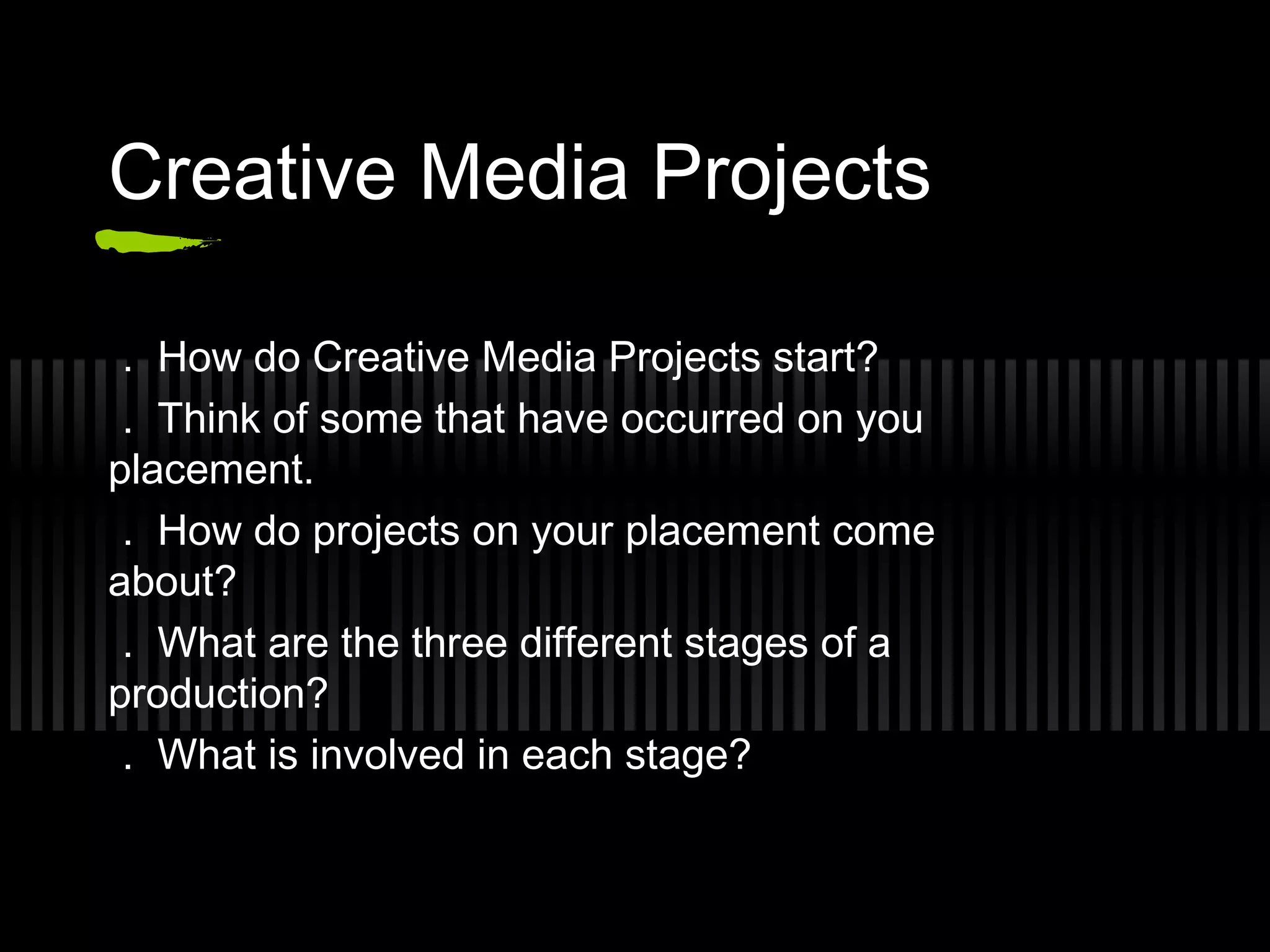
 . How do Creative Media Projects start?
 . Think of some that have occurred on you
placement.
 . How do projects on your placement come
about?
 . What are the three different stages of a
production?
 . What is involved in each stage?
Pre-production

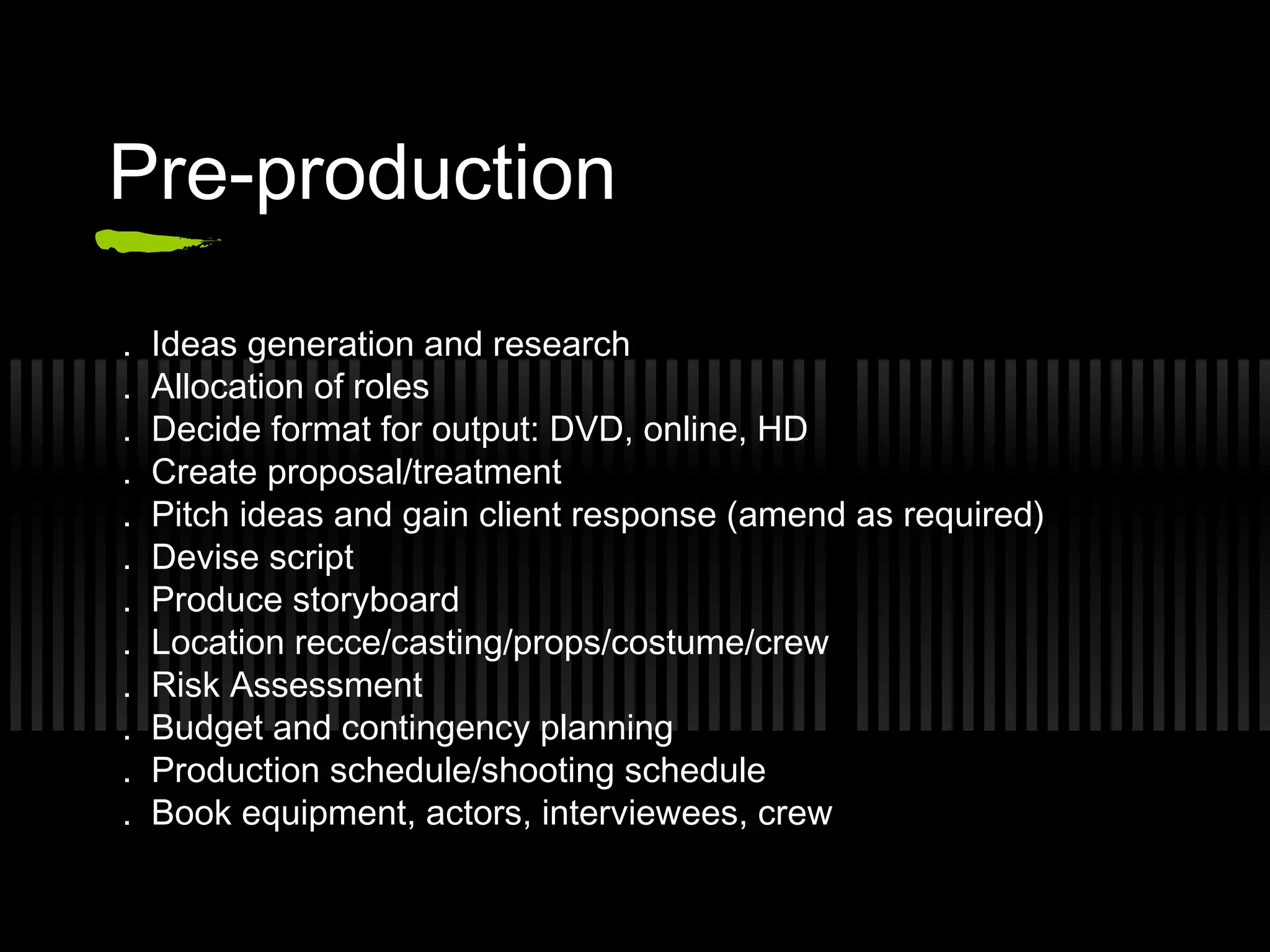
.   Ideas generation and research
.   Allocation of roles
.   Decide format for output: DVD, online, HD
.   Create proposal/treatment
.   Pitch ideas and gain client response (amend as required)
.   Devise script
.   Produce storyboard
.   Location recce/casting/props/costume/crew
.   Risk Assessment
.   Budget and contingency planning
.   Production schedule/shooting schedule
.   Book equipment, actors, interviewees, crew
Production

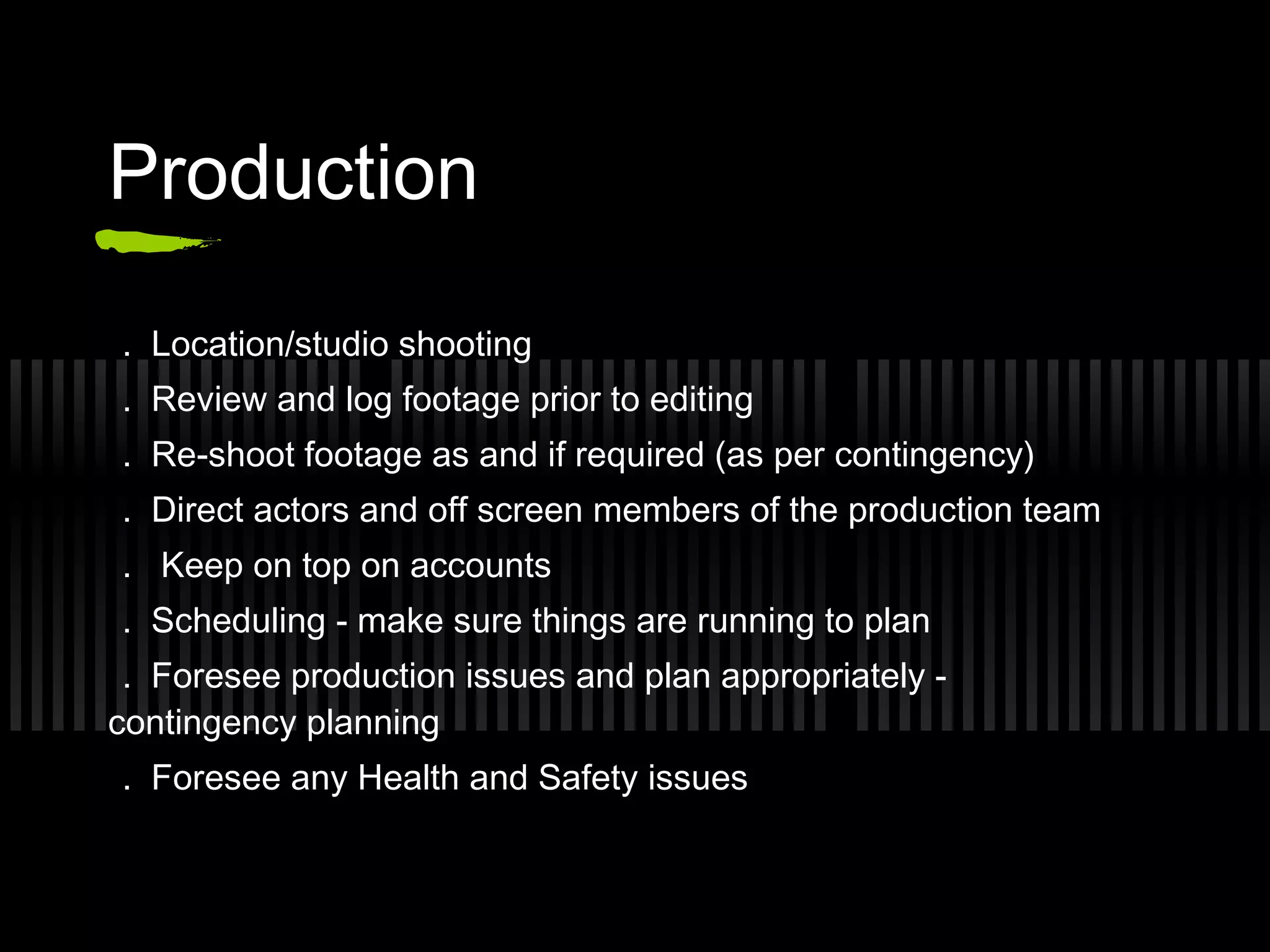
. Location/studio shooting
. Review and log footage prior to editing
. Re-shoot footage as and if required (as per contingency)
. Direct actors and off screen members of the production team
. Keep on top on accounts
. Scheduling - make sure things are running to plan
 . Foresee production issues and plan appropriately -
contingency planning
. Foresee any Health and Safety issues
Post-Production
 . Use the script to make a timeline of the desired scenes with
brief descriptions
 . Consider the themes, audience and look; running time will
determine how much you can include
 . Make an edit decision list; upload selected sequences
 . Edit a rough cut
 . Work on changes agreed with director or client
 . Lay down main audio tracks
 . Rhythm and pace: vary the length of shots to create interest
and match the soundtrack
 . Work on the transitions between shots
 . Audio mixing
 . Graphics and titles
 . Final cut of the film
Resources
 . What are you going to need - lighting, camera, leads, mics,
props…
 . Where are you going to get equipment from?
 . How much is equipment going to cost?
 . Do you need any specialist workforce?
 . How long will each individual task (filming, planning) take?
 . How will the length of each task effect the budget?
 . Do you need any PPE - where will you get this from?
 . Transport?
 . Work permits?
 . Health & Safety documents?
 . On location considerations (WC, food, temporary cabins)
 . Locations
Contingency Planning
.   What might potentially go wrong?
.   How can you rectify potential problems?
.   Budget
.   Equipment
.   Worker force - on screen and off screen
.   Weather
.   Health and Safety
.   Location
Version control / File naming
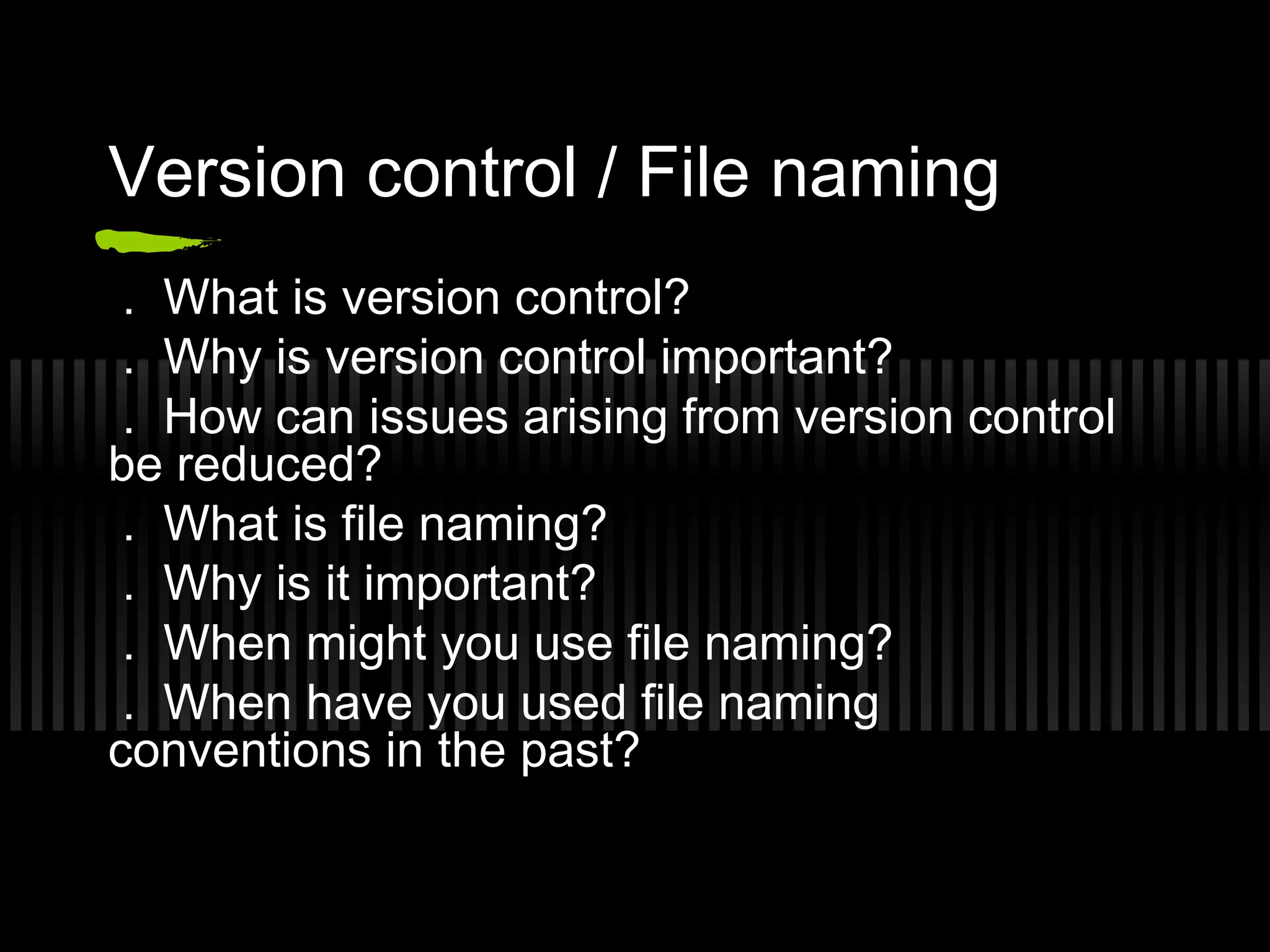
 . What is version control?
 . Why is version control important?
 . How can issues arising from version control
be reduced?
 . What is file naming?
 . Why is it important?
 . When might you use file naming?
 . When have you used file naming
conventions in the past?
Production Task
 . You are creating a short film
 . You are required to provide thorough documentation (spreadsheet,
Gantt chart, diary) which provides the following:
 . What do you need?
 . Who do you need?
 . When do you need equipment / people?
 . How much will each item / worker cost?
 . How long will you need equipment / workers for?
 . What tasks are going to be undertaken each day?
 . How long will each task take?
 . This can be done wither in diary form, Gantt chart form spreadsheet
form?
 . Include a contingency plan

. Gantt Chart aid - http://www.youtube.com/watch?v=CW_wGSFavTc
Sample Documents
Gantt Chart:
Sample Documents
Spreadsheet:
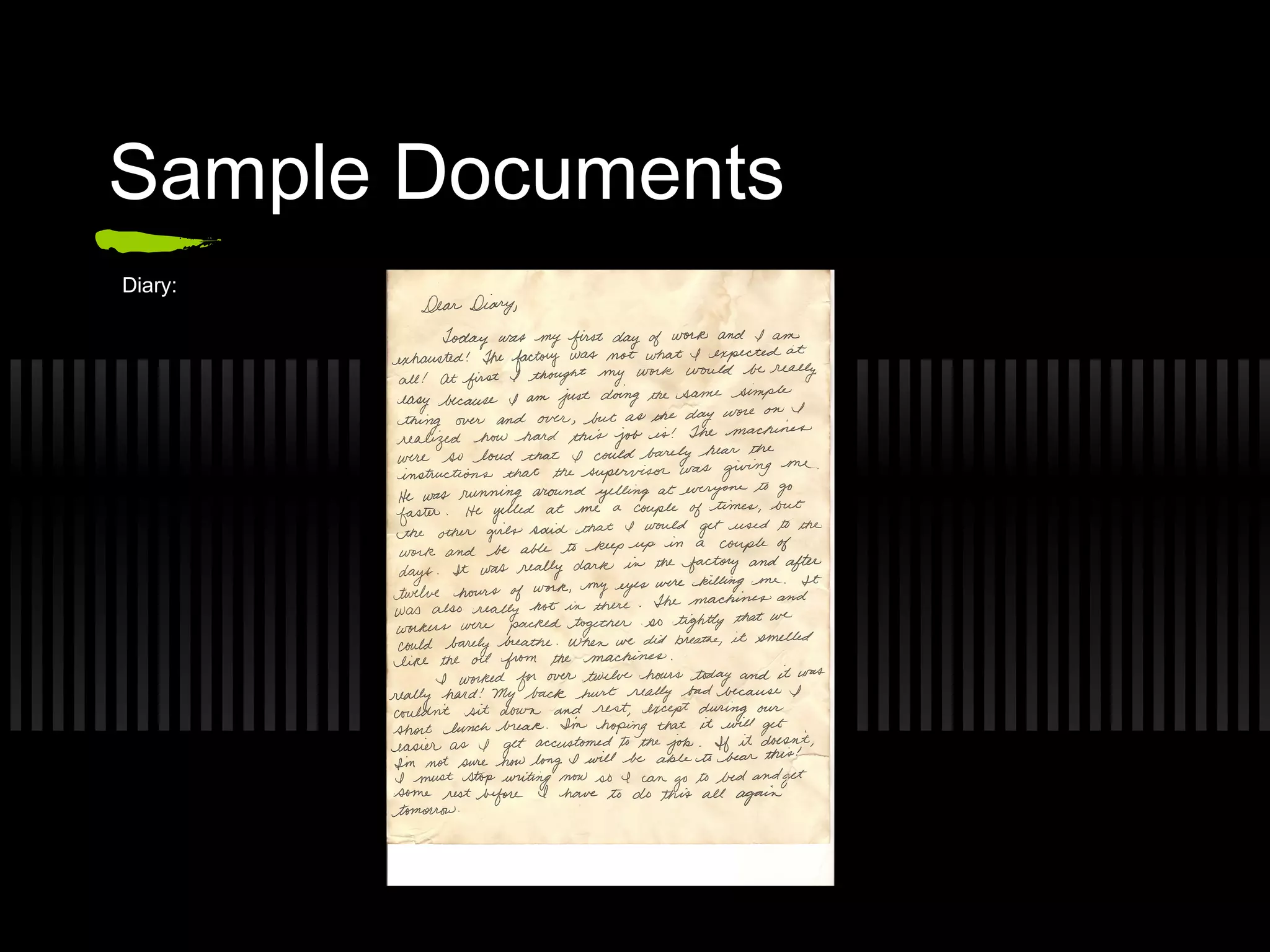
Sample Documents
Diary:

Production Cycle (DAPS 5)

  • 1.
    Creative Media Projects . How do Creative Media Projects start? . Think of some that have occurred on you placement. . How do projects on your placement come about? . What are the three different stages of a production? . What is involved in each stage?
  • 2.
    Pre-production . Ideas generation and research . Allocation of roles . Decide format for output: DVD, online, HD . Create proposal/treatment . Pitch ideas and gain client response (amend as required) . Devise script . Produce storyboard . Location recce/casting/props/costume/crew . Risk Assessment . Budget and contingency planning . Production schedule/shooting schedule . Book equipment, actors, interviewees, crew
  • 3.
    Production . Location/studio shooting .Review and log footage prior to editing . Re-shoot footage as and if required (as per contingency) . Direct actors and off screen members of the production team . Keep on top on accounts . Scheduling - make sure things are running to plan . Foresee production issues and plan appropriately - contingency planning . Foresee any Health and Safety issues
  • 4.
    Post-Production . Usethe script to make a timeline of the desired scenes with brief descriptions . Consider the themes, audience and look; running time will determine how much you can include . Make an edit decision list; upload selected sequences . Edit a rough cut . Work on changes agreed with director or client . Lay down main audio tracks . Rhythm and pace: vary the length of shots to create interest and match the soundtrack . Work on the transitions between shots . Audio mixing . Graphics and titles . Final cut of the film
  • 5.
    Resources . Whatare you going to need - lighting, camera, leads, mics, props… . Where are you going to get equipment from? . How much is equipment going to cost? . Do you need any specialist workforce? . How long will each individual task (filming, planning) take? . How will the length of each task effect the budget? . Do you need any PPE - where will you get this from? . Transport? . Work permits? . Health & Safety documents? . On location considerations (WC, food, temporary cabins) . Locations
  • 6.
    Contingency Planning . What might potentially go wrong? . How can you rectify potential problems? . Budget . Equipment . Worker force - on screen and off screen . Weather . Health and Safety . Location
  • 7.
    Version control /File naming . What is version control? . Why is version control important? . How can issues arising from version control be reduced? . What is file naming? . Why is it important? . When might you use file naming? . When have you used file naming conventions in the past?
  • 8.
    Production Task .You are creating a short film . You are required to provide thorough documentation (spreadsheet, Gantt chart, diary) which provides the following: . What do you need? . Who do you need? . When do you need equipment / people? . How much will each item / worker cost? . How long will you need equipment / workers for? . What tasks are going to be undertaken each day? . How long will each task take? . This can be done wither in diary form, Gantt chart form spreadsheet form? . Include a contingency plan . Gantt Chart aid - http://www.youtube.com/watch?v=CW_wGSFavTc
  • 9.
  • 10.
  • 11.