Strategic Management
Process
University of Cape Coast
Department of Hospitality &
Tourism Management
Emmanuel Gamor
• To be successful business in the hospitality and
tourism industry, there is the need to take
pragmatic step-by-step process to strategically.
• The strategic management process is a series of
activities which are interrelated.
• The activities begin with “Development of
strategic vision and mission/Strategy
formulation”
• In kernel, the strategic plan is a company’s
game plan
• A strategic plan is the function of hard
managerial choices among many other good
alternatives.
• This signals commitment to specific markets,
policies, procedures, and operations.
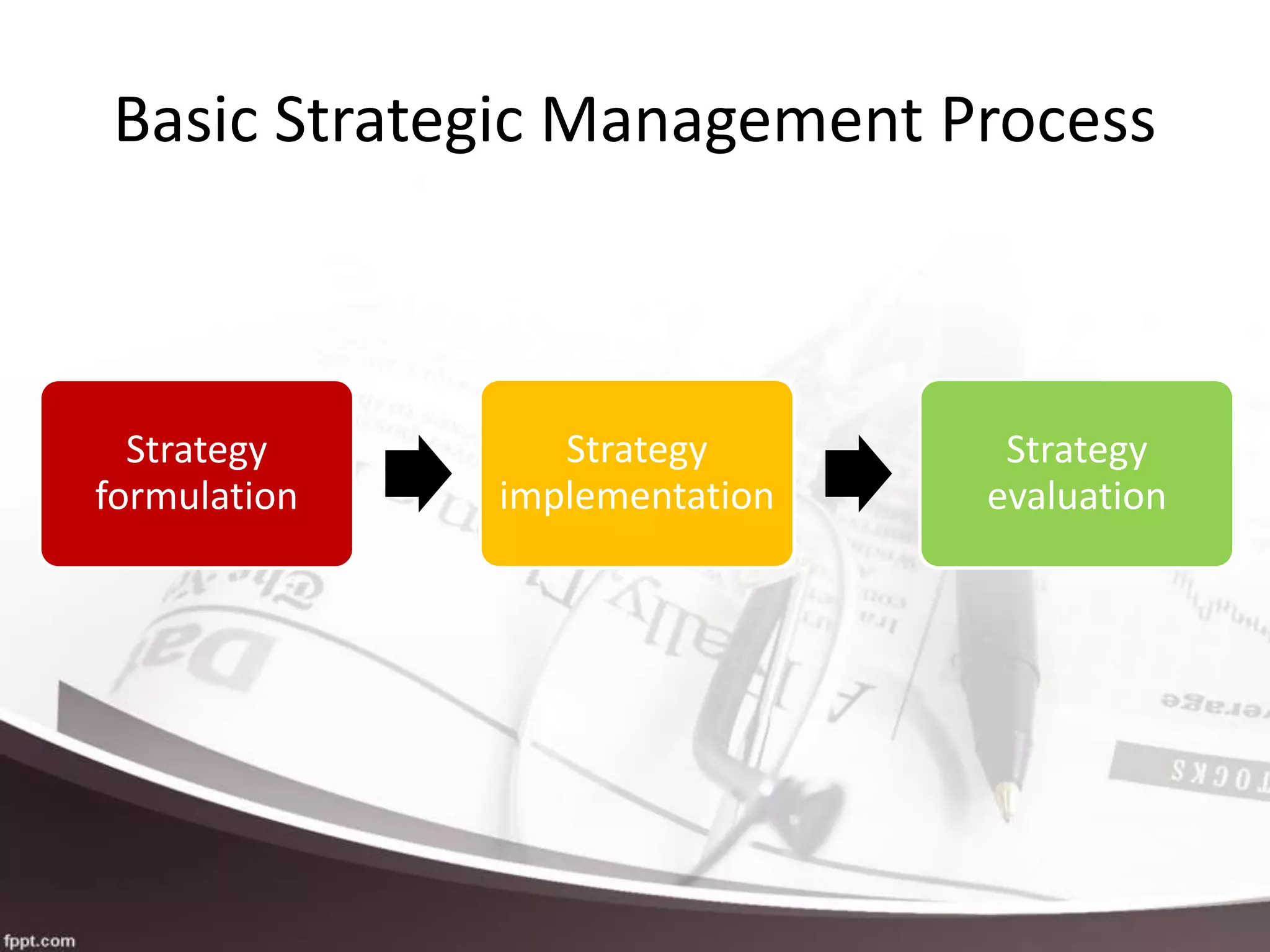
Basic Strategic Management Process
Strategy
formulation
Strategy
implementation
Strategy
evaluation
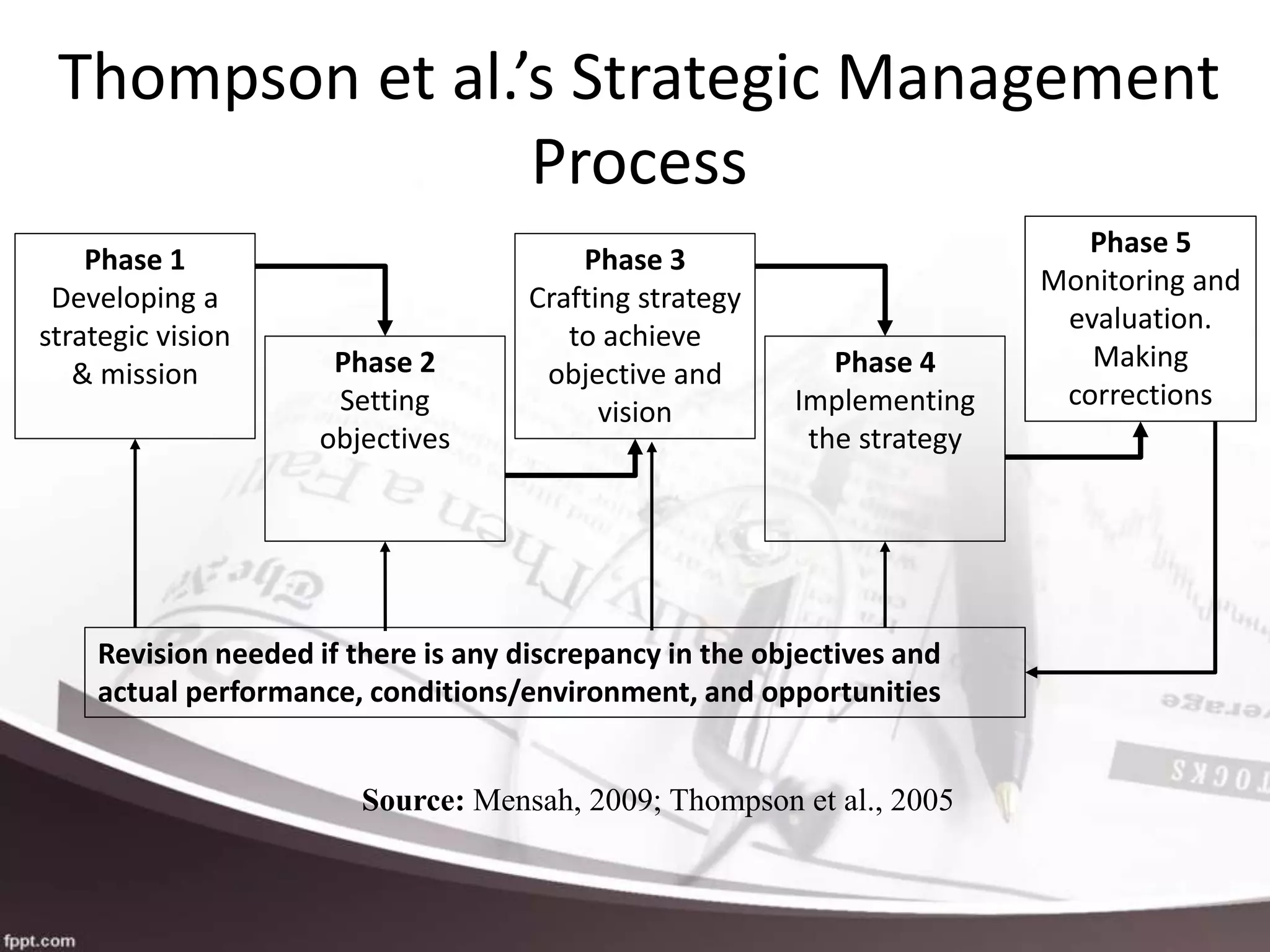
Thompson et al.’s Strategic Management
Process
Phase 1
Developing a
strategic vision
& mission Phase 2
Setting
objectives
Phase 3
Crafting strategy
to achieve
objective and
vision
Phase 4
Implementing
the strategy
Phase 5
Monitoring and
evaluation.
Making
corrections
Revision needed if there is any discrepancy in the objectives and
actual performance, conditions/environment, and opportunities
Source: Mensah, 2009; Thompson et al., 2005
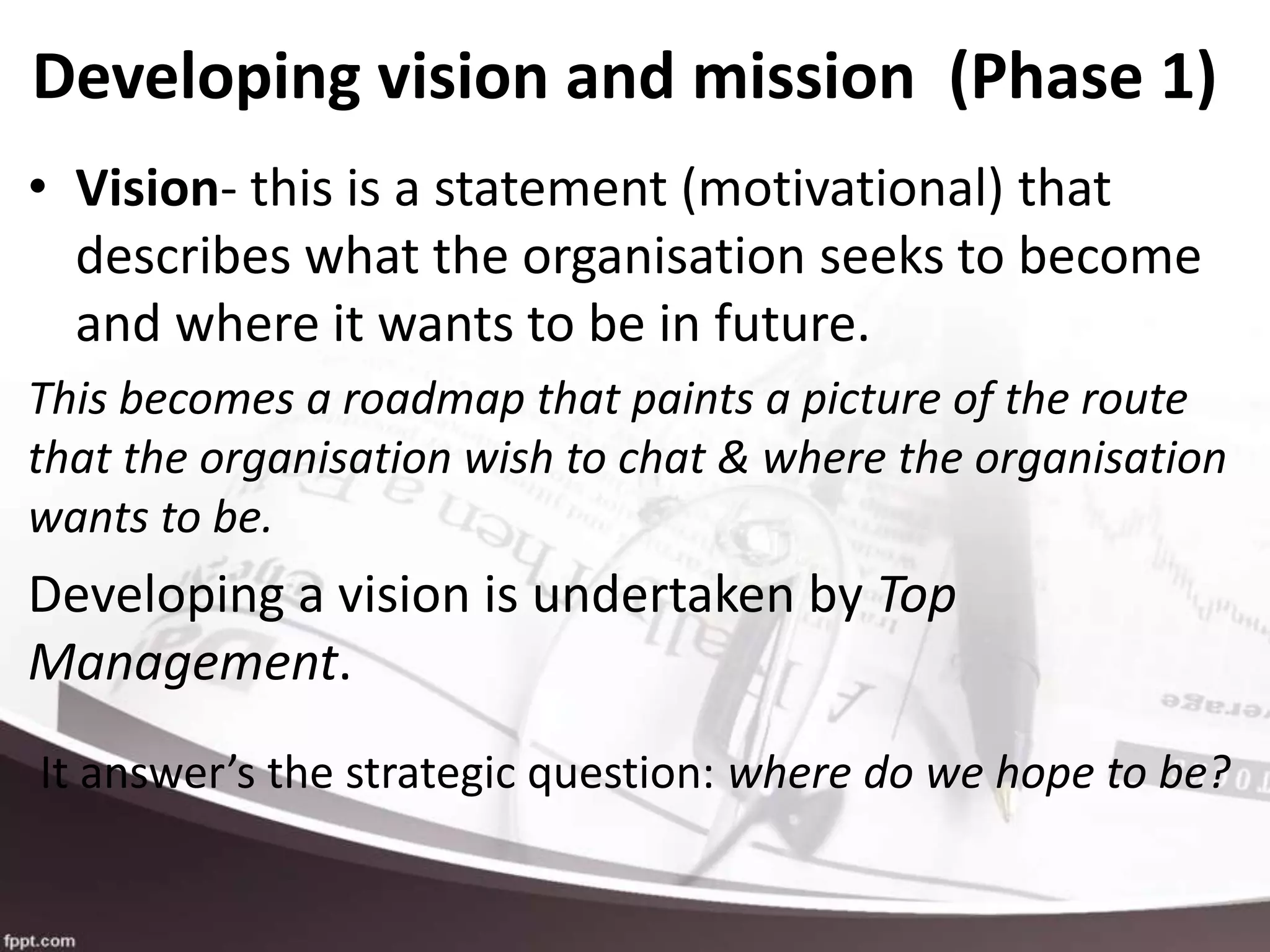
Developing vision and mission (Phase 1)
• Vision- this is a statement (motivational) that
describes what the organisation seeks to become
and where it wants to be in future.
This becomes a roadmap that paints a picture of the route
that the organisation wish to chat & where the organisation
wants to be.
Developing a vision is undertaken by Top
Management.
It answer’s the strategic question: where do we hope to be?
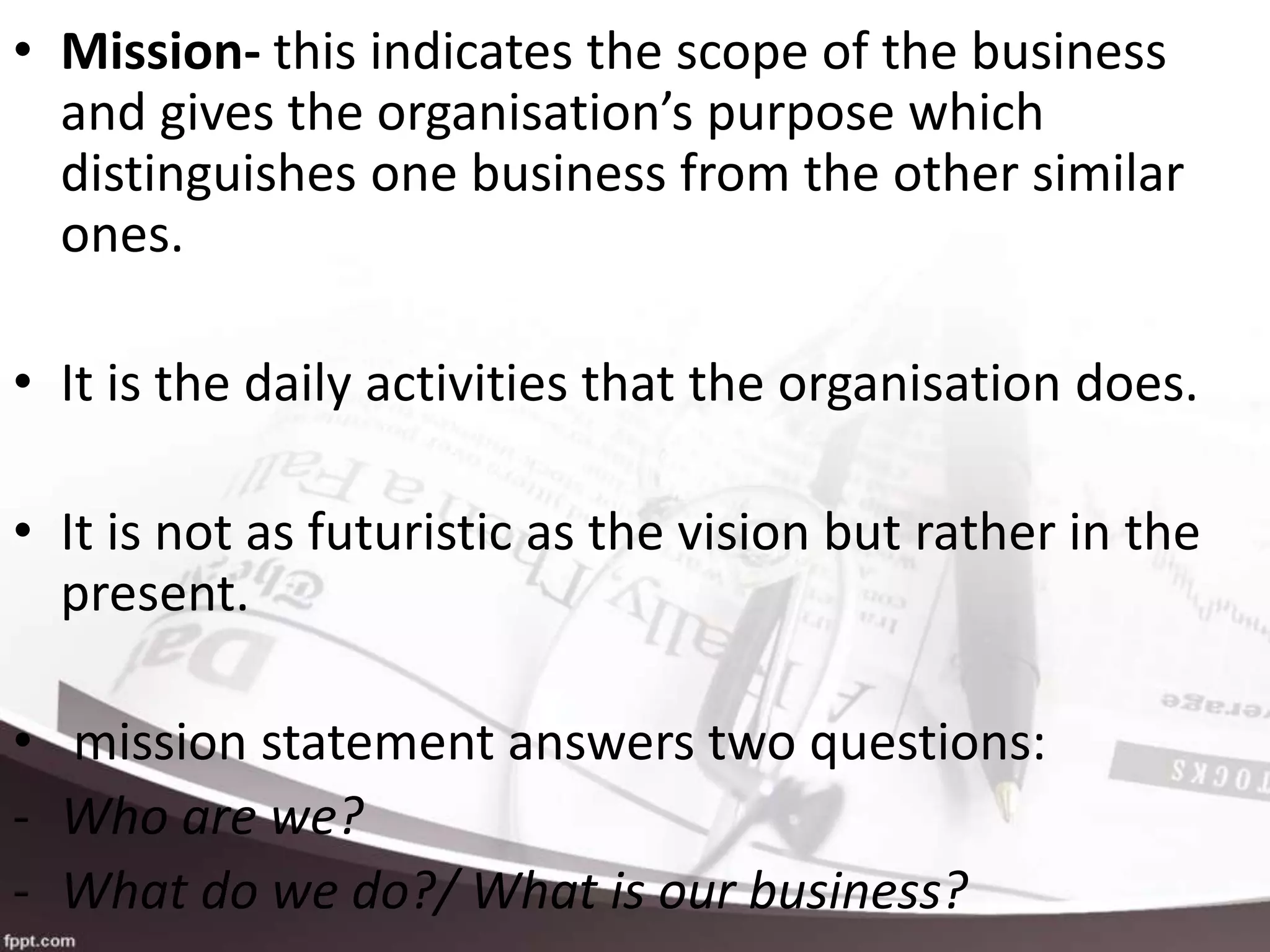
• Mission- this indicates the scope of the business
and gives the organisation’s purpose which
distinguishes one business from the other similar
ones.
• It is the daily activities that the organisation does.
• It is not as futuristic as the vision but rather in the
present.
• mission statement answers two questions:
- Who are we?
- What do we do?/ What is our business?
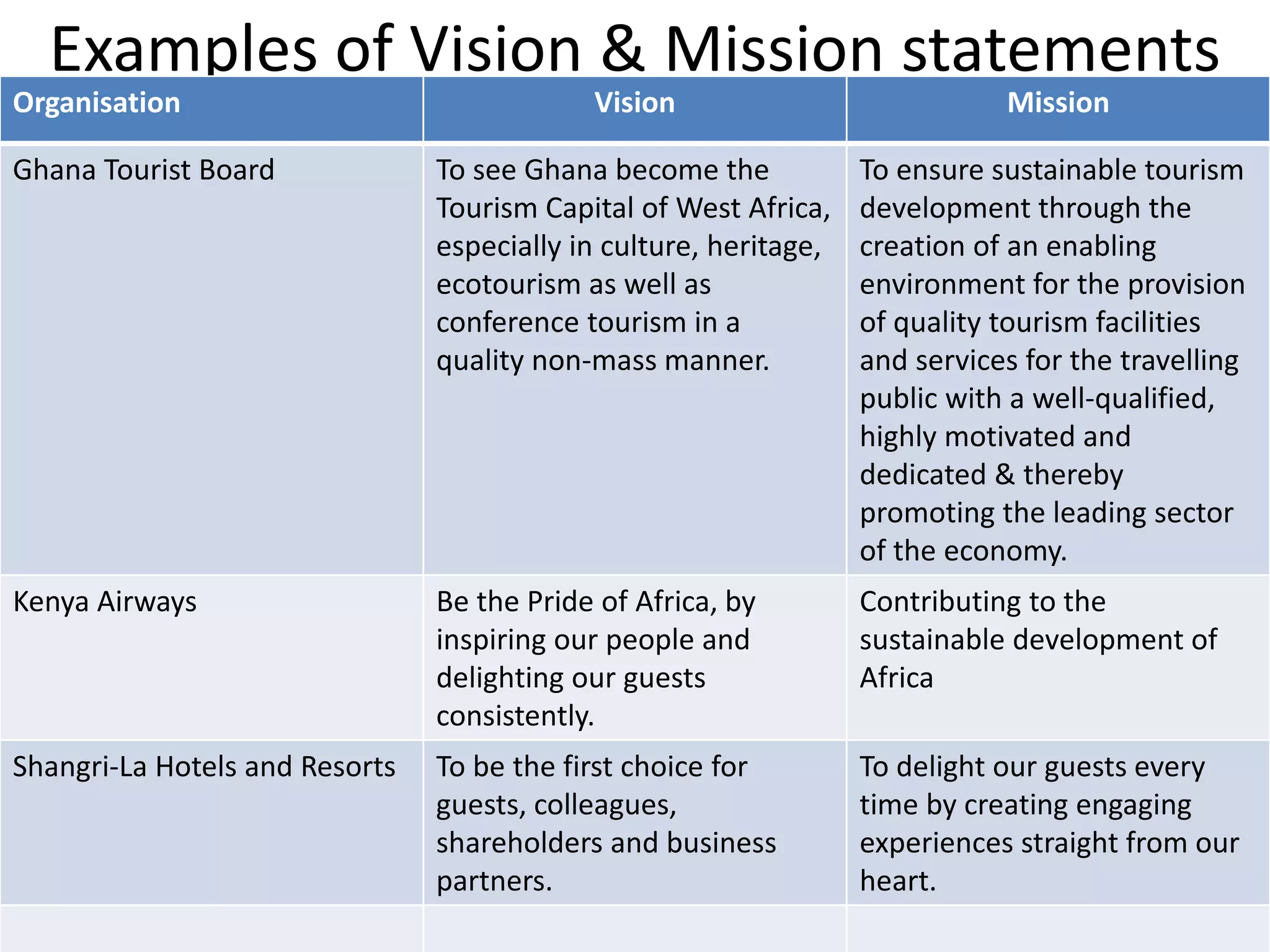
Examples of Vision & Mission statements
Organisation Vision Mission
Ghana Tourist Board To see Ghana become the
Tourism Capital of West Africa,
especially in culture, heritage,
ecotourism as well as
conference tourism in a
quality non-mass manner.
To ensure sustainable tourism
development through the
creation of an enabling
environment for the provision
of quality tourism facilities
and services for the travelling
public with a well-qualified,
highly motivated and
dedicated & thereby
promoting the leading sector
of the economy.
Kenya Airways Be the Pride of Africa, by
inspiring our people and
delighting our guests
consistently.
Contributing to the
sustainable development of
Africa
Shangri-La Hotels and Resorts To be the first choice for
guests, colleagues,
shareholders and business
partners.
To delight our guests every
time by creating engaging
experiences straight from our
heart.
Setting Objectives
Objectives are set so that the progress of the
organisation can be quantified and measured
against the vision and mission.
• They are the benchmarks for monitoring the
progress of the organisation as well as its
performance.
S- Specific
M- Measurable
A- Agreeable
R- Realistic
T- Time-bound
There are typically two (2) kinds of objectives in
business. Especially in the tourism and hospitality
business environment.
• Financial Objective- related to profit, return on
investment…….
• Strategic Objective- related to competitiveness
and market share
Crafting a strategy
• Strategies are crafted to achieve the set objectives
and the vision of the organisation.
• This is the stage where the top management
develop or formulate the GAME PLAN for the
organisation.
• This is not a one time activity but a process that
includes environmental scanning.
• This crafting of a strategy involves the co-operation
of al key managers and influential staff members
• There are 4 levels of strategy available to
organisations.
These strategies are:
- Corporate strategy
- Business strategy
- Functional strategy
- Operating strategy
Strategy Implementation
• This is combining various variables in order to
achieve greater value and the vision of the
organisation.
• Here is more of administrative duty.
• Action plan is used at this stage.
- Capacity and competency building
- Developing budget among others
- Formulating and enforcing policies, procedures etc
Monitoring development, evaluation,
and corrective measures
• Strategic management calls for constant
monitoring on the activities and the performance
of the business.
• The business environment (internal &external) may
change the operations of the tourism and
hospitality businesses.
• The objectives of an organisation could be adjusted
in a particular year or month to take advantage of
an upcoming event.
• Evaluation is done after every strategy has
been executed.
• It is done by matching the strategy outcome to
the long term and short term objectives to
determine if they were met or not.
• If not met then there should be adjustment to
bridge the gap
- Changing the objectives
- Changing strategy etc….
Next lecture
Levels of strategy in an organisation

Process of Strategic Managment

  • 1.
    Strategic Management Process University ofCape Coast Department of Hospitality & Tourism Management Emmanuel Gamor
  • 2.
    • To besuccessful business in the hospitality and tourism industry, there is the need to take pragmatic step-by-step process to strategically. • The strategic management process is a series of activities which are interrelated. • The activities begin with “Development of strategic vision and mission/Strategy formulation”
  • 3.
    • In kernel,the strategic plan is a company’s game plan • A strategic plan is the function of hard managerial choices among many other good alternatives. • This signals commitment to specific markets, policies, procedures, and operations.
  • 4.
    Basic Strategic ManagementProcess Strategy formulation Strategy implementation Strategy evaluation
  • 5.
    Thompson et al.’sStrategic Management Process Phase 1 Developing a strategic vision & mission Phase 2 Setting objectives Phase 3 Crafting strategy to achieve objective and vision Phase 4 Implementing the strategy Phase 5 Monitoring and evaluation. Making corrections Revision needed if there is any discrepancy in the objectives and actual performance, conditions/environment, and opportunities Source: Mensah, 2009; Thompson et al., 2005
  • 6.
    Developing vision andmission (Phase 1) • Vision- this is a statement (motivational) that describes what the organisation seeks to become and where it wants to be in future. This becomes a roadmap that paints a picture of the route that the organisation wish to chat & where the organisation wants to be. Developing a vision is undertaken by Top Management. It answer’s the strategic question: where do we hope to be?
  • 7.
    • Mission- thisindicates the scope of the business and gives the organisation’s purpose which distinguishes one business from the other similar ones. • It is the daily activities that the organisation does. • It is not as futuristic as the vision but rather in the present. • mission statement answers two questions: - Who are we? - What do we do?/ What is our business?
  • 8.
    Examples of Vision& Mission statements Organisation Vision Mission Ghana Tourist Board To see Ghana become the Tourism Capital of West Africa, especially in culture, heritage, ecotourism as well as conference tourism in a quality non-mass manner. To ensure sustainable tourism development through the creation of an enabling environment for the provision of quality tourism facilities and services for the travelling public with a well-qualified, highly motivated and dedicated & thereby promoting the leading sector of the economy. Kenya Airways Be the Pride of Africa, by inspiring our people and delighting our guests consistently. Contributing to the sustainable development of Africa Shangri-La Hotels and Resorts To be the first choice for guests, colleagues, shareholders and business partners. To delight our guests every time by creating engaging experiences straight from our heart.
  • 9.
    Setting Objectives Objectives areset so that the progress of the organisation can be quantified and measured against the vision and mission. • They are the benchmarks for monitoring the progress of the organisation as well as its performance. S- Specific M- Measurable A- Agreeable R- Realistic T- Time-bound
  • 10.
    There are typicallytwo (2) kinds of objectives in business. Especially in the tourism and hospitality business environment. • Financial Objective- related to profit, return on investment……. • Strategic Objective- related to competitiveness and market share
  • 11.
    Crafting a strategy •Strategies are crafted to achieve the set objectives and the vision of the organisation. • This is the stage where the top management develop or formulate the GAME PLAN for the organisation. • This is not a one time activity but a process that includes environmental scanning. • This crafting of a strategy involves the co-operation of al key managers and influential staff members
  • 12.
    • There are4 levels of strategy available to organisations. These strategies are: - Corporate strategy - Business strategy - Functional strategy - Operating strategy
  • 13.
    Strategy Implementation • Thisis combining various variables in order to achieve greater value and the vision of the organisation. • Here is more of administrative duty. • Action plan is used at this stage. - Capacity and competency building - Developing budget among others - Formulating and enforcing policies, procedures etc
  • 14.
    Monitoring development, evaluation, andcorrective measures • Strategic management calls for constant monitoring on the activities and the performance of the business. • The business environment (internal &external) may change the operations of the tourism and hospitality businesses. • The objectives of an organisation could be adjusted in a particular year or month to take advantage of an upcoming event.
  • 15.
    • Evaluation isdone after every strategy has been executed. • It is done by matching the strategy outcome to the long term and short term objectives to determine if they were met or not. • If not met then there should be adjustment to bridge the gap - Changing the objectives - Changing strategy etc….
  • 16.
    Next lecture Levels ofstrategy in an organisation