PRIVATIZATION
“The transfer of public assets, operations or
activities to private enterprise”.
Presented By
MEANING
• Privatization is the process of transferring
ownership of a business, enterprise, agency,
public service or public property from the
public sector to the private sector.
• The business that operates for a profit or non-
profit organization.
WHY PRIVATIZATION?
• To reduce government involvement in
commercially viable activities
• Increase efficiency in the delivery of programs and
services
• Provides competition in market place which
transfers the lower price and greater choice for
the consumers.
Variations in privatization
1. Private sector choice for the production of a
services
Entire responsibility transferred from public to private
2. Public sector choice financing with private
sector operations
joint activity of public & private
3. Deregulation of private firms
Govt. reduces or eliminates the regulatory imposed on
private.
Methods of privatization
Main methods:
• Share issue privatization
» selling shares on the stock market.
• Asset sale privatization
» selling entire organization to a strategic investor by
auction.
• Voucher privatization
» distributing ownership to all for free or at lower cost.
Substitution methods:
• Contracting out:
» Production of service by private firm under a contract.
» Under this scenario, the private sector firm is paid
directly by the government
Example:
collection of disposal waste example A to Z service
Other things include security services, data processing
services
• Franchising:
»Government awarding a rights to
perform services within a specific
geographic area to a private firm
»The private firm generates revenue by
collecting user fees
Example:
Cable television, gas etc..
• Open competition:
» Many private firms are allowed to compete for
customers within a governmental jurisdiction.
» It is not appropriate for some services as it most
likely would not be efficient to have multiple
suppliers of electricity, gas, or water service.
Example:
It typically seen telephone and internet
provider
Some of the examples of privatization
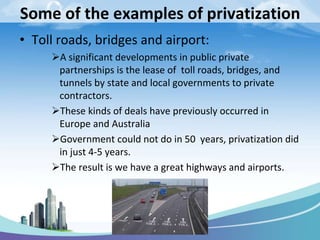
• Toll roads, bridges and airport:
A significant developments in public private
partnerships is the lease of toll roads, bridges, and
tunnels by state and local governments to private
contractors.
These kinds of deals have previously occurred in
Europe and Australia
Government could not do in 50 years, privatization did
in just 4-5 years.
The result is we have a great highways and airports.
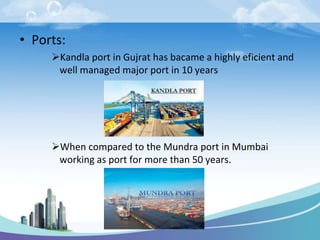
• Ports:
Kandla port in Gujrat has bacame a highly eficient and
well managed major port in 10 years
When compared to the Mundra port in Mumbai
working as port for more than 50 years.
Banking:
ICICI bank is the country’s largest private bank in
second place after the SBI
SBI existing in more than 100 years on the other hand,
ICICI had completed 22 year only.
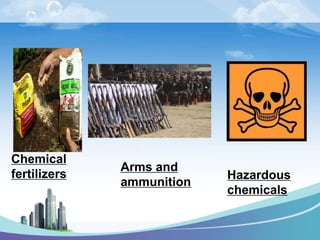
Six industries which are not
reserved for private sector
Cigarette
Atomic
energy
Indian
railways
Chemical
fertilizers
Arms and
ammunition
Hazardous
chemicals
Benefits of privatization
1. Improved efficiency
2. Lack of political interference
3. Short term view
4. Increased competition
5. Government will raise revenue
from the sale
Improved efficiency
• Private company have a profit incentives to
cut costs and be more efficient.
• government run industry, managers do not
usually share in any profits, however, a
private firm is interested in making profit and
so it is more likely to cut costs and be
efficient.
Example:
British airways
Lack of political interference
• Government companies can be motivated by
political pressures rather than sound
economic and business sense.
Example:
a state enterprise may employ surplus
workers which is inefficient.
Short term view
• A government many think only in terms of
next election.
• they may be unwilling to invest in
infrastructure improvements which will
benefit the firm in the long term because they
are more concerned about projects that give a
benefit before the election.
Increased competition
• Policies to allow more firms to enter the
industry and increase the competitiveness of
the market.
• Increase in competition that can be the
greatest spur to improvements in efficiency
• For example, there is now more competition
in telecoms and distribution of gas and
electricity.
Disadvantages of privatization
• Investment in industries of comfort and
luxurious products instead of necessary
products and problem of optimum use of
capacity
Disadvantages of privatization
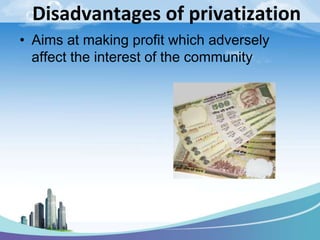
• Aims at making profit which adversely
affect the interest of the community
Disadvantages of privatization
• The private companies don’t like to have their
branches in ruler cities.
• Their services remain confined to cities where
sufficient clients are available.
• Problem of unemployment
CONCLUSION
Now the private sector is the boosting sector
Government is collecting good revenue
Privatization is helping to increase the INDIAN
economy
Privatization is having a wide scope
Mr. NARENDRA MODI (PM) is also promoting
the Public Private Partenership (PPP) model in
the different sector eg. Infrastructure and
railway sector etc.
privatization.--Kartikey

privatization.--Kartikey

  • 1.
    PRIVATIZATION “The transfer ofpublic assets, operations or activities to private enterprise”. Presented By
  • 2.
    MEANING • Privatization isthe process of transferring ownership of a business, enterprise, agency, public service or public property from the public sector to the private sector. • The business that operates for a profit or non- profit organization.
  • 3.
    WHY PRIVATIZATION? • Toreduce government involvement in commercially viable activities • Increase efficiency in the delivery of programs and services • Provides competition in market place which transfers the lower price and greater choice for the consumers.
  • 4.
    Variations in privatization 1.Private sector choice for the production of a services Entire responsibility transferred from public to private 2. Public sector choice financing with private sector operations joint activity of public & private 3. Deregulation of private firms Govt. reduces or eliminates the regulatory imposed on private.
  • 5.
    Methods of privatization Mainmethods: • Share issue privatization » selling shares on the stock market. • Asset sale privatization » selling entire organization to a strategic investor by auction. • Voucher privatization » distributing ownership to all for free or at lower cost.
  • 6.
    Substitution methods: • Contractingout: » Production of service by private firm under a contract. » Under this scenario, the private sector firm is paid directly by the government Example: collection of disposal waste example A to Z service Other things include security services, data processing services
  • 7.
    • Franchising: »Government awardinga rights to perform services within a specific geographic area to a private firm »The private firm generates revenue by collecting user fees Example: Cable television, gas etc..
  • 8.
    • Open competition: »Many private firms are allowed to compete for customers within a governmental jurisdiction. » It is not appropriate for some services as it most likely would not be efficient to have multiple suppliers of electricity, gas, or water service. Example: It typically seen telephone and internet provider
  • 9.
    Some of theexamples of privatization • Toll roads, bridges and airport: A significant developments in public private partnerships is the lease of toll roads, bridges, and tunnels by state and local governments to private contractors. These kinds of deals have previously occurred in Europe and Australia Government could not do in 50 years, privatization did in just 4-5 years. The result is we have a great highways and airports.
  • 10.
    • Ports: Kandla portin Gujrat has bacame a highly eficient and well managed major port in 10 years When compared to the Mundra port in Mumbai working as port for more than 50 years.
  • 11.
    Banking: ICICI bank isthe country’s largest private bank in second place after the SBI SBI existing in more than 100 years on the other hand, ICICI had completed 22 year only.
  • 12.
    Six industries whichare not reserved for private sector Cigarette Atomic energy Indian railways
  • 13.
  • 14.
    Benefits of privatization 1.Improved efficiency 2. Lack of political interference 3. Short term view 4. Increased competition 5. Government will raise revenue from the sale
  • 15.
    Improved efficiency • Privatecompany have a profit incentives to cut costs and be more efficient. • government run industry, managers do not usually share in any profits, however, a private firm is interested in making profit and so it is more likely to cut costs and be efficient. Example: British airways
  • 16.
    Lack of politicalinterference • Government companies can be motivated by political pressures rather than sound economic and business sense. Example: a state enterprise may employ surplus workers which is inefficient.
  • 17.
    Short term view •A government many think only in terms of next election. • they may be unwilling to invest in infrastructure improvements which will benefit the firm in the long term because they are more concerned about projects that give a benefit before the election.
  • 18.
    Increased competition • Policiesto allow more firms to enter the industry and increase the competitiveness of the market. • Increase in competition that can be the greatest spur to improvements in efficiency • For example, there is now more competition in telecoms and distribution of gas and electricity.
  • 19.
    Disadvantages of privatization •Investment in industries of comfort and luxurious products instead of necessary products and problem of optimum use of capacity
  • 20.
    Disadvantages of privatization •Aims at making profit which adversely affect the interest of the community
  • 21.
    Disadvantages of privatization •The private companies don’t like to have their branches in ruler cities. • Their services remain confined to cities where sufficient clients are available. • Problem of unemployment
  • 22.
    CONCLUSION Now the privatesector is the boosting sector Government is collecting good revenue Privatization is helping to increase the INDIAN economy Privatization is having a wide scope Mr. NARENDRA MODI (PM) is also promoting the Public Private Partenership (PPP) model in the different sector eg. Infrastructure and railway sector etc.

Editor's Notes