
Privacy aware analytics at
edge using Federated
Learning
Arindam Banerjee
Data Scientist, Ericsson
1Arindam Banerjee
Shaping the next decade…
• 5G
• Exponential growth of
Smart devices
• Exponential growth of
data
• Stricter data privacy
and protection laws
• Automation and
Analytics
2Arindam Banerjee
5G and IoT: Ushering in
a new era
• Foundation for realizing the full
potential of IoT.
• 550 million 5G subscriptions in
2022 - Ericsson AB’s Mobility
Report.
• A fertile ground for innovations
and customers engagements.
• Network slicing. Segmenting
network:
enhanced Mobile Broadband
(eMBB),
Ultra Reliable Low Latency
Communications (URLLC),
massive Machine Type
3Arindam Banerjee
Exponential growth
of Data
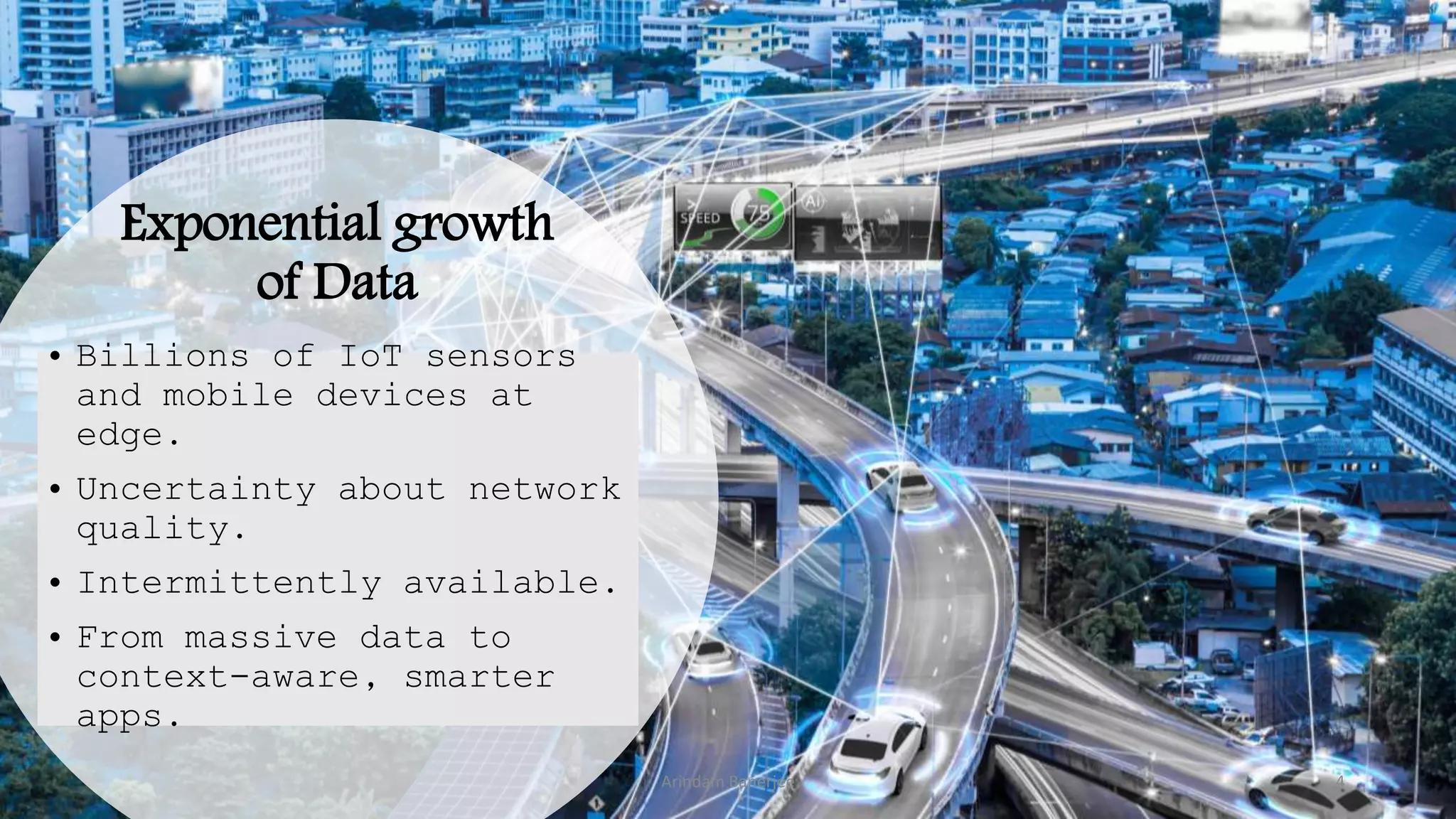
• Billions of IoT sensors
and mobile devices at
edge.
• Uncertainty about network
quality.
• Intermittently available.
• From massive data to
context-aware, smarter
apps.
4Arindam Banerjee
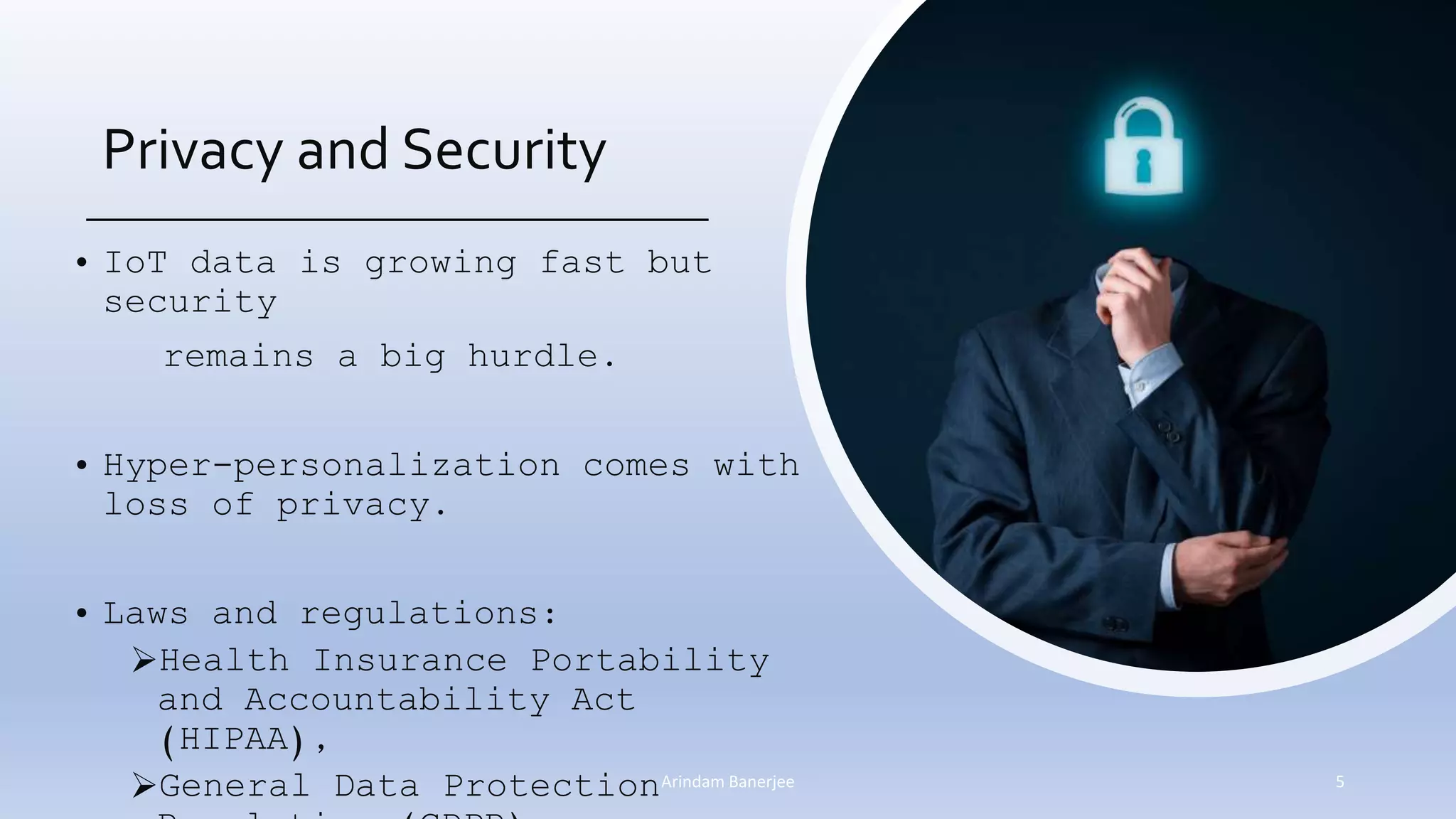
Privacy and Security
• IoT data is growing fast but
security
remains a big hurdle.
• Hyper-personalization comes with
loss of privacy.
• Laws and regulations:
Health Insurance Portability
and Accountability Act
(HIPAA),
General Data Protection 5Arindam Banerjee
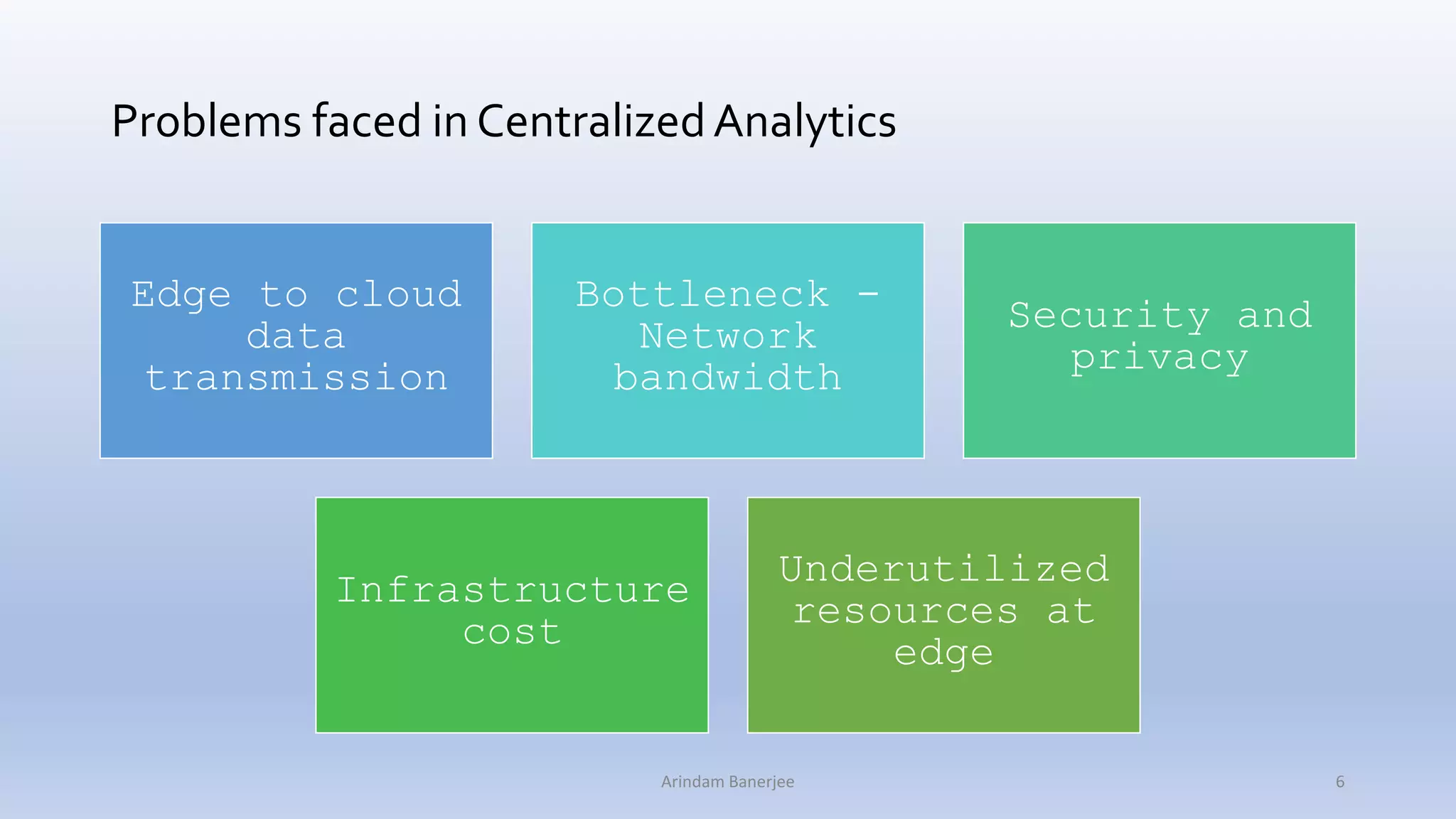
Problems faced in CentralizedAnalytics
Edge to cloud
data
transmission
Bottleneck -
Network
bandwidth
Security and
privacy
Infrastructure
cost
Underutilized
resources at
edge
6Arindam Banerjee
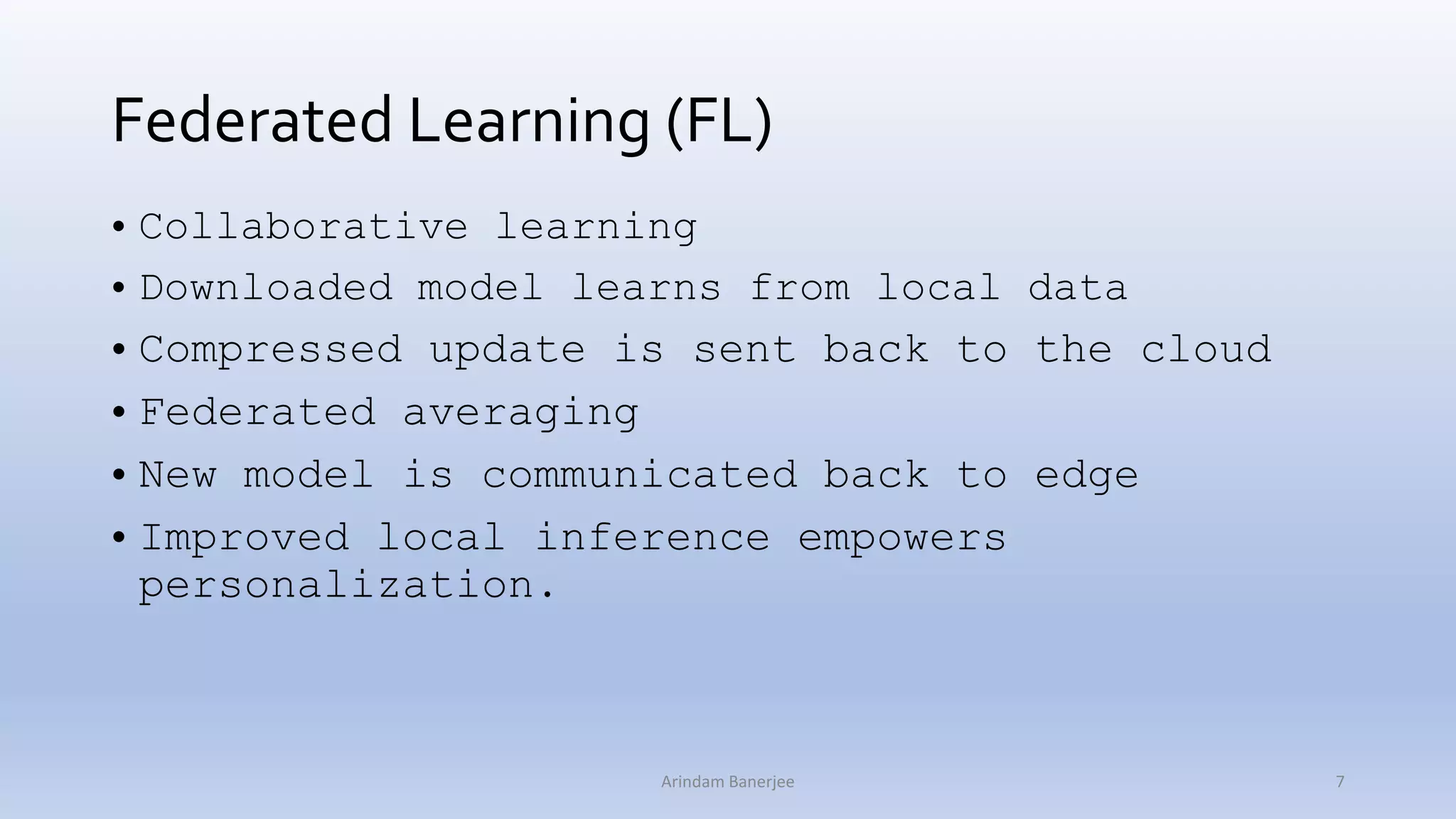
Federated Learning (FL)
• Collaborative learning
• Downloaded model learns from local data
• Compressed update is sent back to the cloud
• Federated averaging
• New model is communicated back to edge
• Improved local inference empowers
personalization.
7Arindam Banerjee
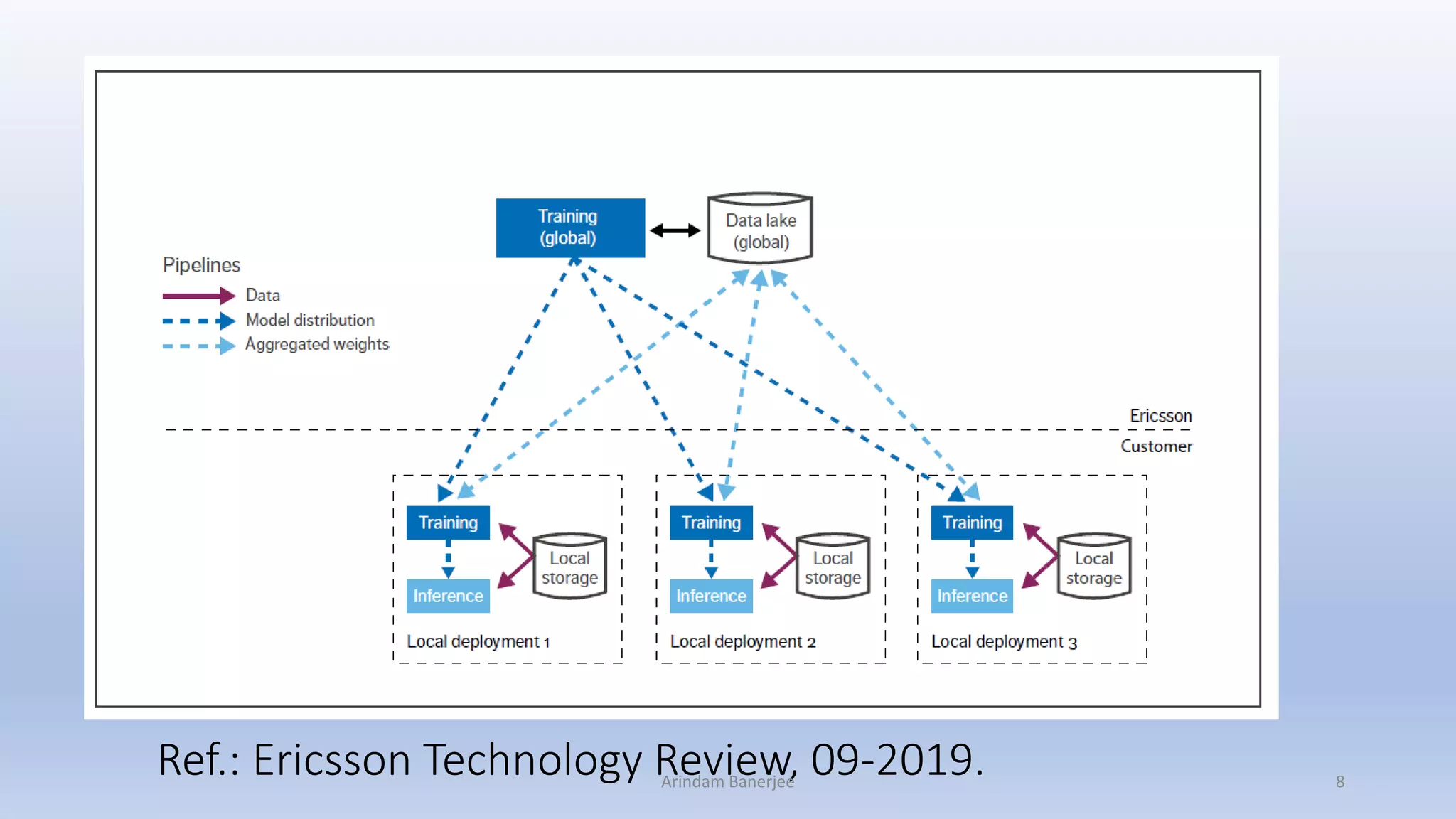
Ref.: Ericsson Technology Review, 09-2019. 8Arindam Banerjee
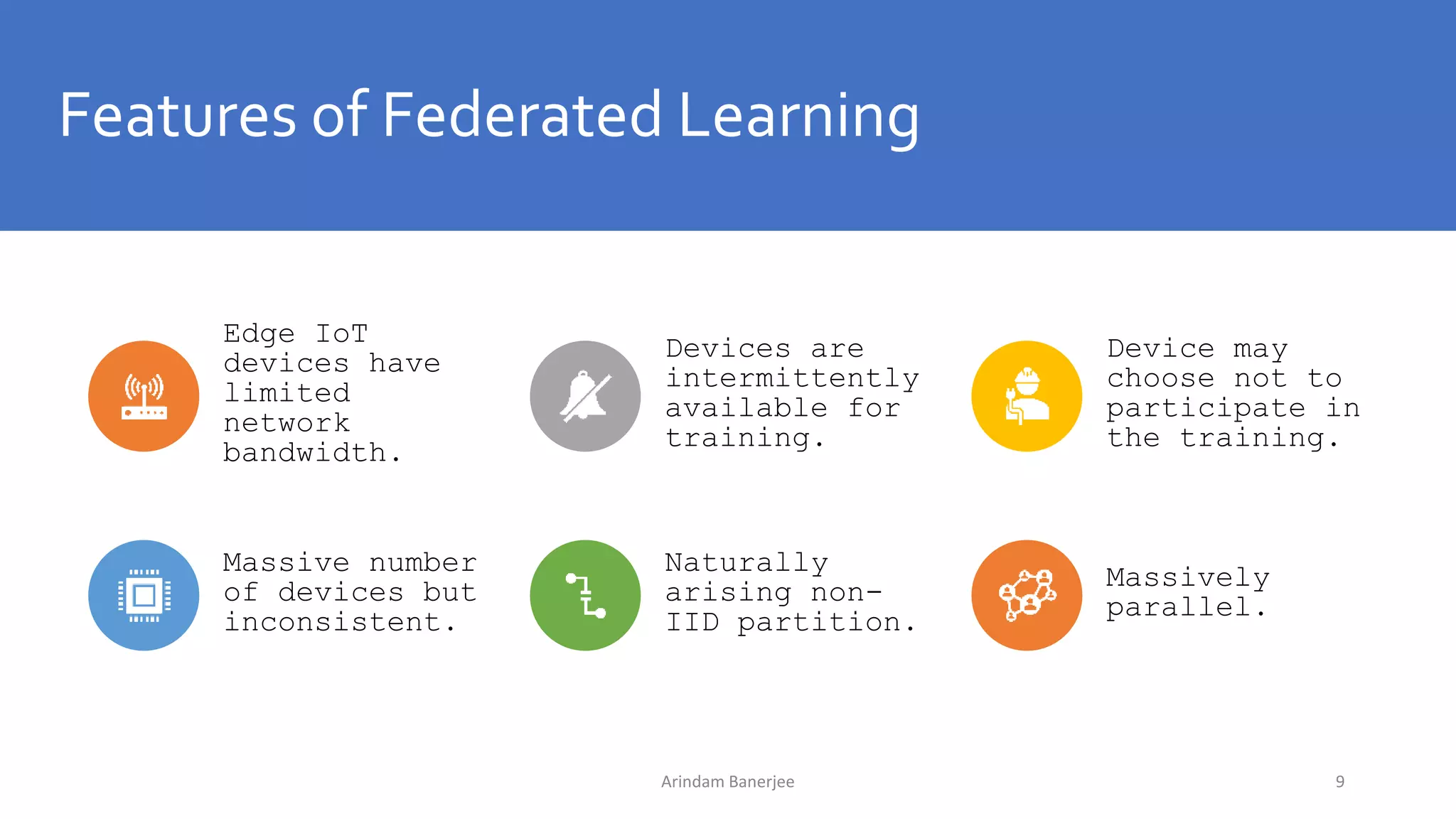
Features of Federated Learning
Edge IoT
devices have
limited
network
bandwidth.
Devices are
intermittently
available for
training.
Device may
choose not to
participate in
the training.
Massive number
of devices but
inconsistent.
Naturally
arising non-
IID partition.
Massively
parallel.
9Arindam Banerjee
Advantages of Federated
Learning
• Privacy:
Data localization
Data retention
• Less data transfer - less Network
Bandwidth
• Better battery life.
• Scalability.
• Less infrastructure cost.
• Low latency for inference.
10Arindam Banerjee
• High convergence time.
• Unavailability of edge
devices.
• Irregular or missed
updates.
11Arindam Banerjee
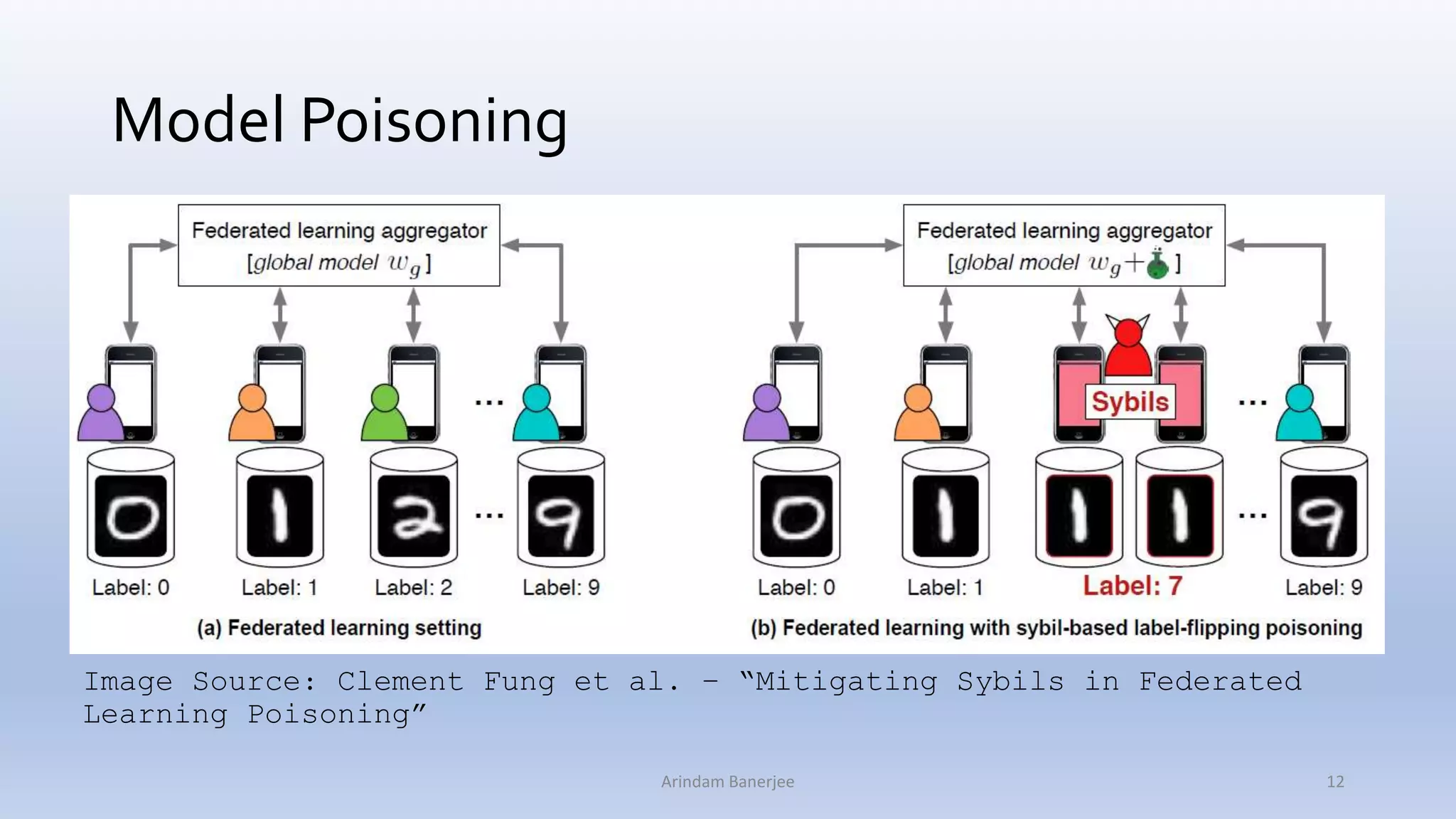
Model Poisoning
Image Source: Clement Fung et al. – “Mitigating Sybils in Federated
Learning Poisoning”
12Arindam Banerjee
How about
existing
distributed
computing
frameworks?
13Arindam Banerjee
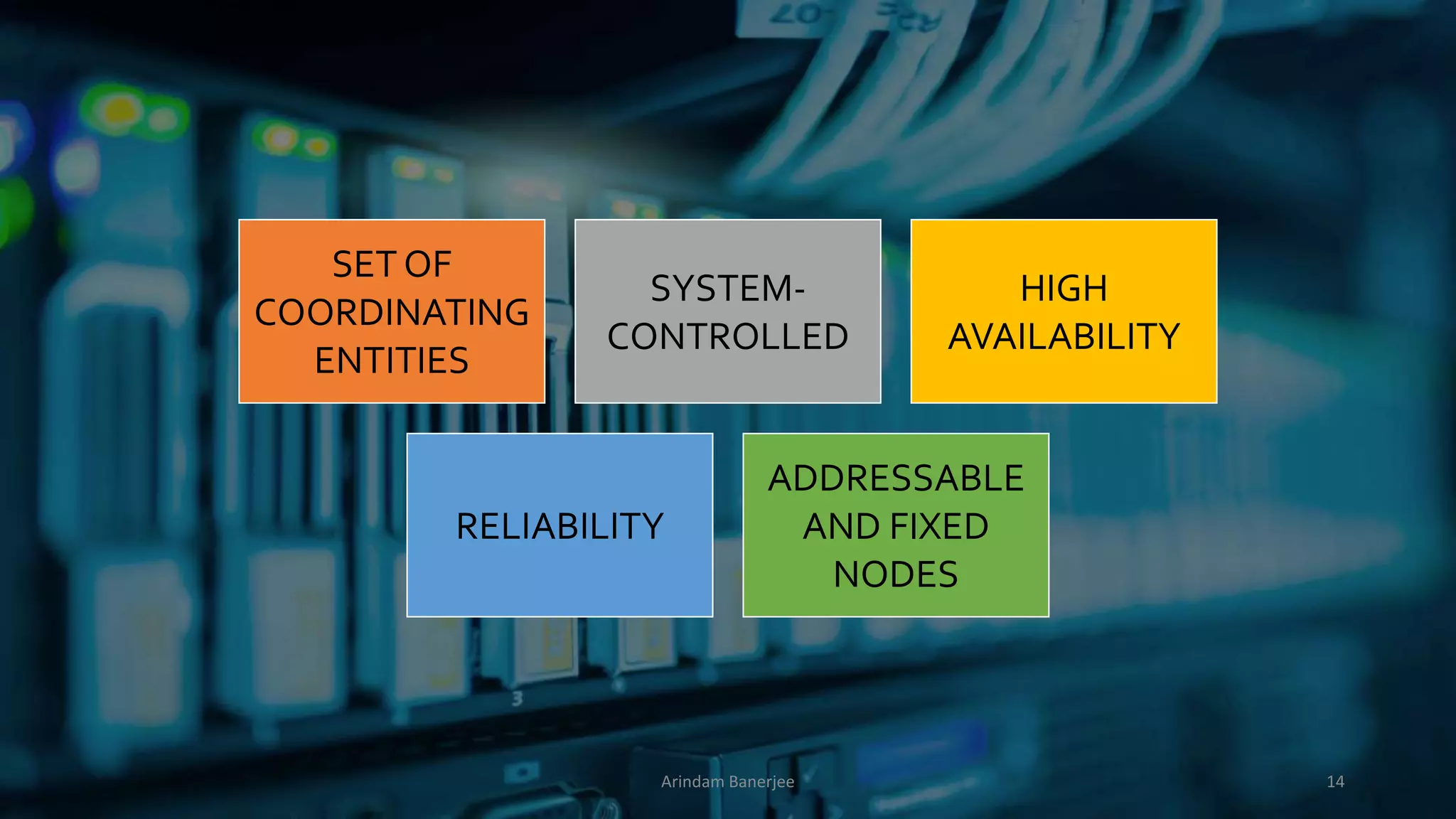
SET OF
COORDINATING
ENTITIES
SYSTEM-
CONTROLLED
HIGH
AVAILABILITY
RELIABILITY
ADDRESSABLE
AND FIXED
NODES
14Arindam Banerjee
Tools
OpenMined
PySyft
Google
TensorFlow
Federated
15Arindam Banerjee
Questions
16Arindam Banerjee

Privacy aware analytics at edge using federated learning

  • 1.
    Privacy aware analyticsat edge using Federated Learning Arindam Banerjee Data Scientist, Ericsson 1Arindam Banerjee
  • 2.
    Shaping the nextdecade… • 5G • Exponential growth of Smart devices • Exponential growth of data • Stricter data privacy and protection laws • Automation and Analytics 2Arindam Banerjee
  • 3.
    5G and IoT:Ushering in a new era • Foundation for realizing the full potential of IoT. • 550 million 5G subscriptions in 2022 - Ericsson AB’s Mobility Report. • A fertile ground for innovations and customers engagements. • Network slicing. Segmenting network: enhanced Mobile Broadband (eMBB), Ultra Reliable Low Latency Communications (URLLC), massive Machine Type 3Arindam Banerjee
  • 4.
    Exponential growth of Data •Billions of IoT sensors and mobile devices at edge. • Uncertainty about network quality. • Intermittently available. • From massive data to context-aware, smarter apps. 4Arindam Banerjee
  • 5.
    Privacy and Security •IoT data is growing fast but security remains a big hurdle. • Hyper-personalization comes with loss of privacy. • Laws and regulations: Health Insurance Portability and Accountability Act (HIPAA), General Data Protection 5Arindam Banerjee
  • 6.
    Problems faced inCentralizedAnalytics Edge to cloud data transmission Bottleneck - Network bandwidth Security and privacy Infrastructure cost Underutilized resources at edge 6Arindam Banerjee
  • 7.
    Federated Learning (FL) •Collaborative learning • Downloaded model learns from local data • Compressed update is sent back to the cloud • Federated averaging • New model is communicated back to edge • Improved local inference empowers personalization. 7Arindam Banerjee
  • 8.
    Ref.: Ericsson TechnologyReview, 09-2019. 8Arindam Banerjee
  • 9.
    Features of FederatedLearning Edge IoT devices have limited network bandwidth. Devices are intermittently available for training. Device may choose not to participate in the training. Massive number of devices but inconsistent. Naturally arising non- IID partition. Massively parallel. 9Arindam Banerjee
  • 10.
    Advantages of Federated Learning •Privacy: Data localization Data retention • Less data transfer - less Network Bandwidth • Better battery life. • Scalability. • Less infrastructure cost. • Low latency for inference. 10Arindam Banerjee
  • 11.
    • High convergencetime. • Unavailability of edge devices. • Irregular or missed updates. 11Arindam Banerjee
  • 12.
    Model Poisoning Image Source:Clement Fung et al. – “Mitigating Sybils in Federated Learning Poisoning” 12Arindam Banerjee
  • 13.
  • 14.
  • 15.
  • 16.