Stu Higgins Head of Smart Cities and IoT
Devolution and Smart Regions CDA Lead
March 2017
Smart County Conference - Kent
Extracting value from Big Data
Video
http://www.sintef.no/en/latest-news/big-data--for-better-or-worse/
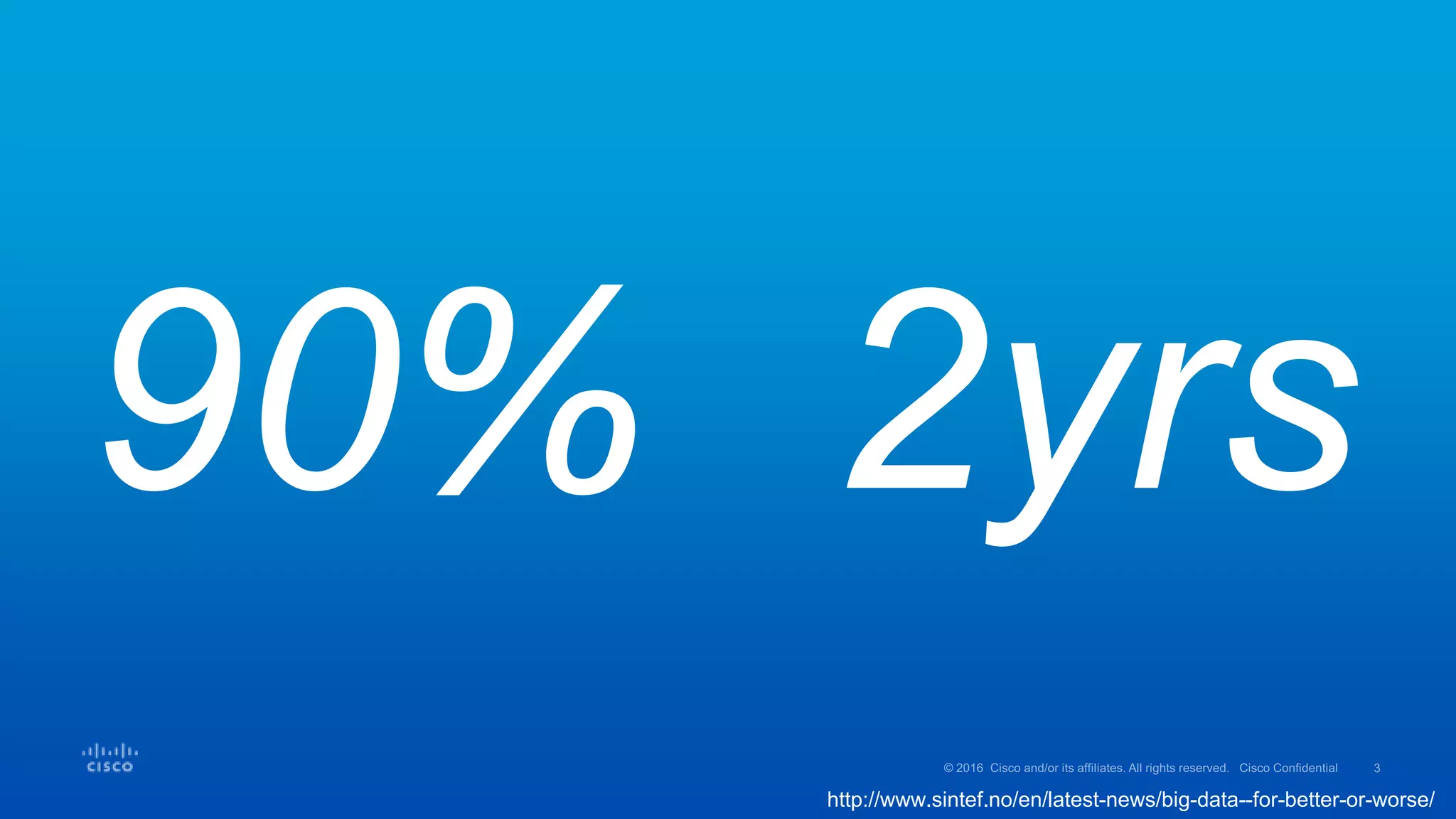
90% 2yrs
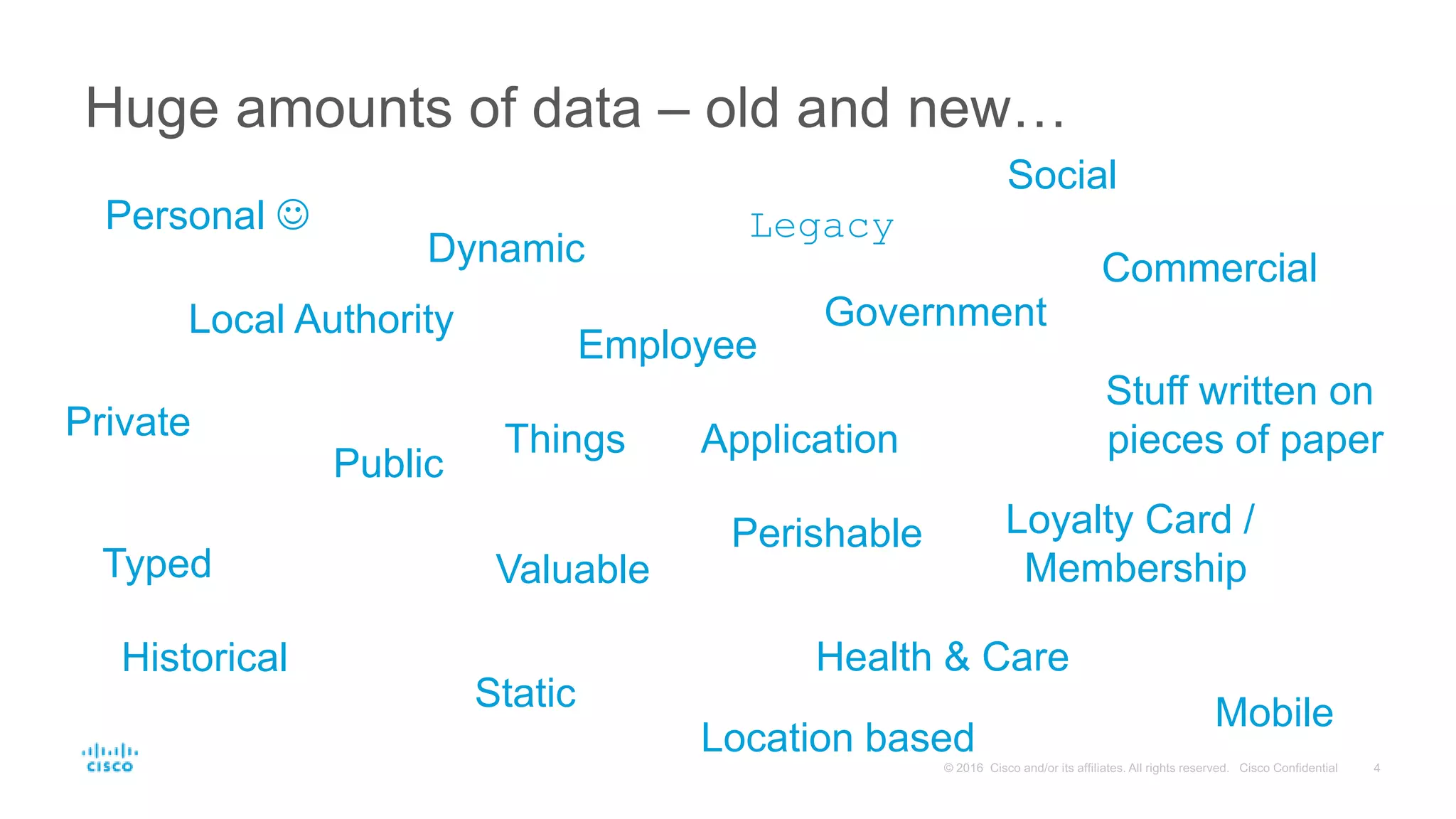
Huge amounts of data – old and new…
Private
LegacyPersonal 
Valuable
Application
Local Authority
Health & Care
Stuff written on
pieces of paper
Loyalty Card /
Membership
Public
Typed
Employee
Historical
Commercial
MobileStatic
Dynamic
Perishable
Location based
Social
Government
Things
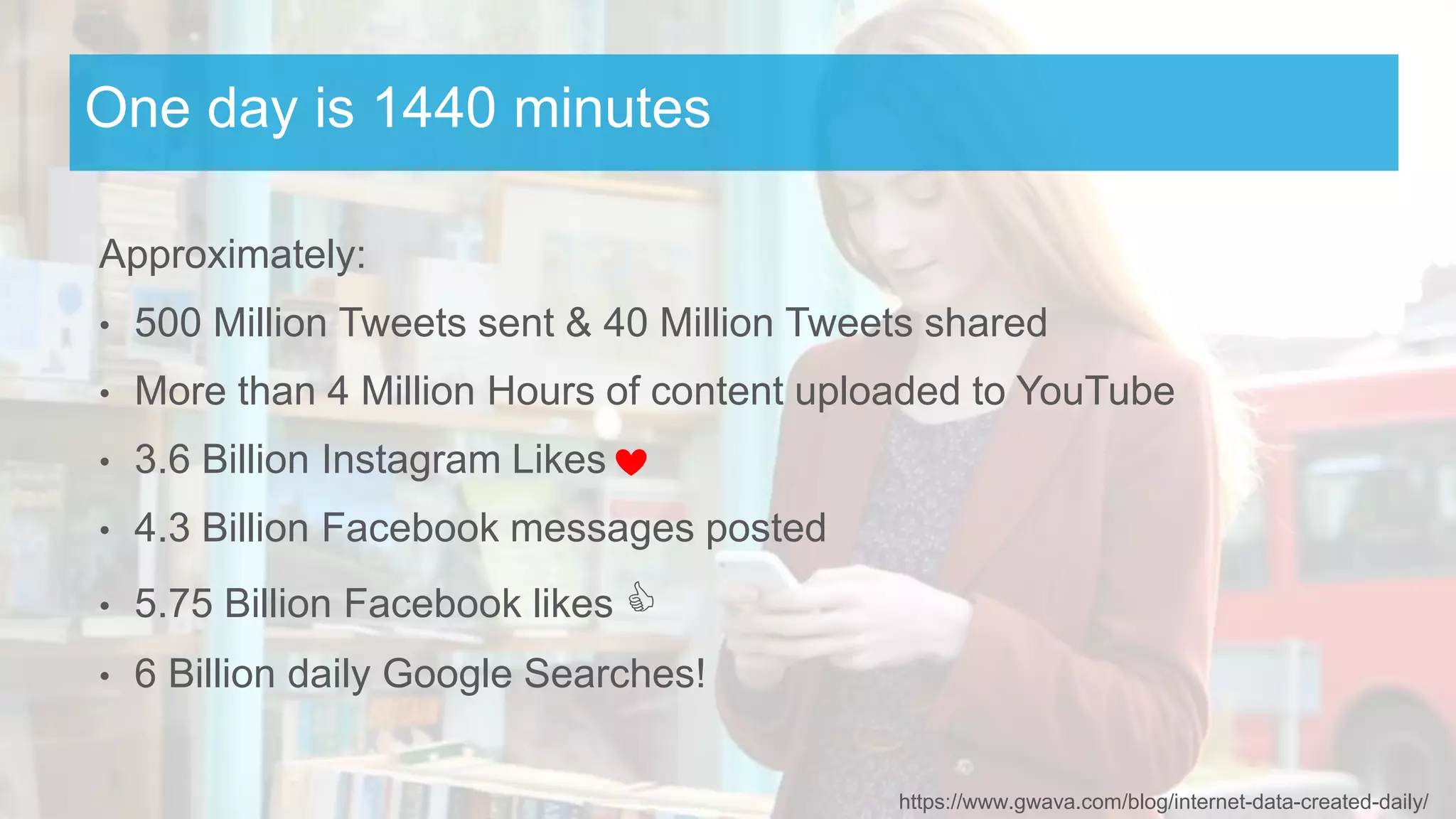
Approximately:
• 500 Million Tweets sent & 40 Million Tweets shared
• More than 4 Million Hours of content uploaded to YouTube
• 3.6 Billion Instagram Likes
• 4.3 Billion Facebook messages posted
• 5.75 Billion Facebook likes C
• 6 Billion daily Google Searches!
One day is 1440 minutes
https://www.gwava.com/blog/internet-data-created-daily/
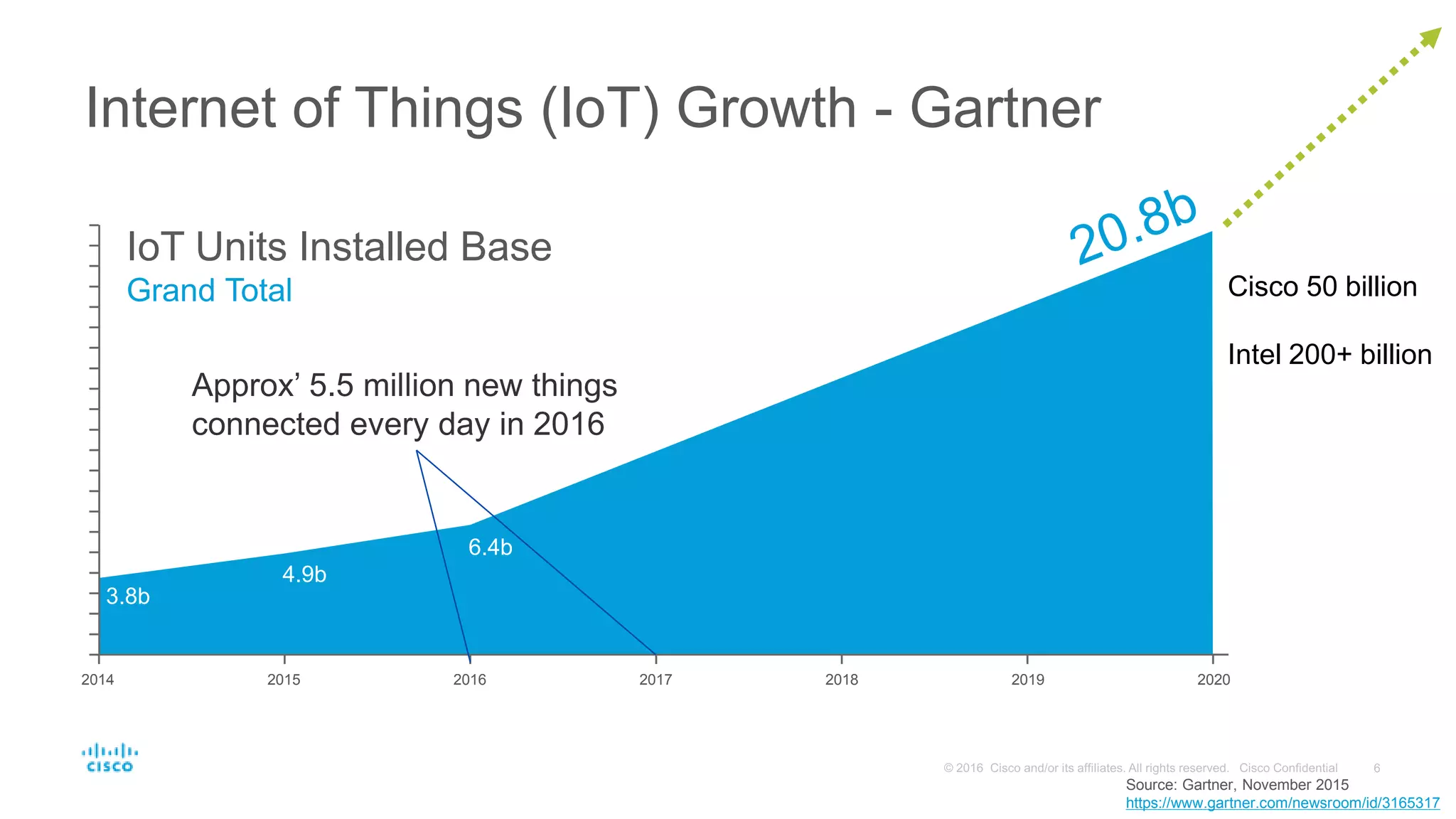
Internet of Things (IoT) Growth - Gartner
2014 2015 2016 2017 2018 2019 2020
3.8b
4.9b
6.4b
Source: Gartner, November 2015
https://www.gartner.com/newsroom/id/3165317
IoT Units Installed Base
Grand Total
Approx’ 5.5 million new things
connected every day in 2016
Cisco 50 billion
Intel 200+ billion
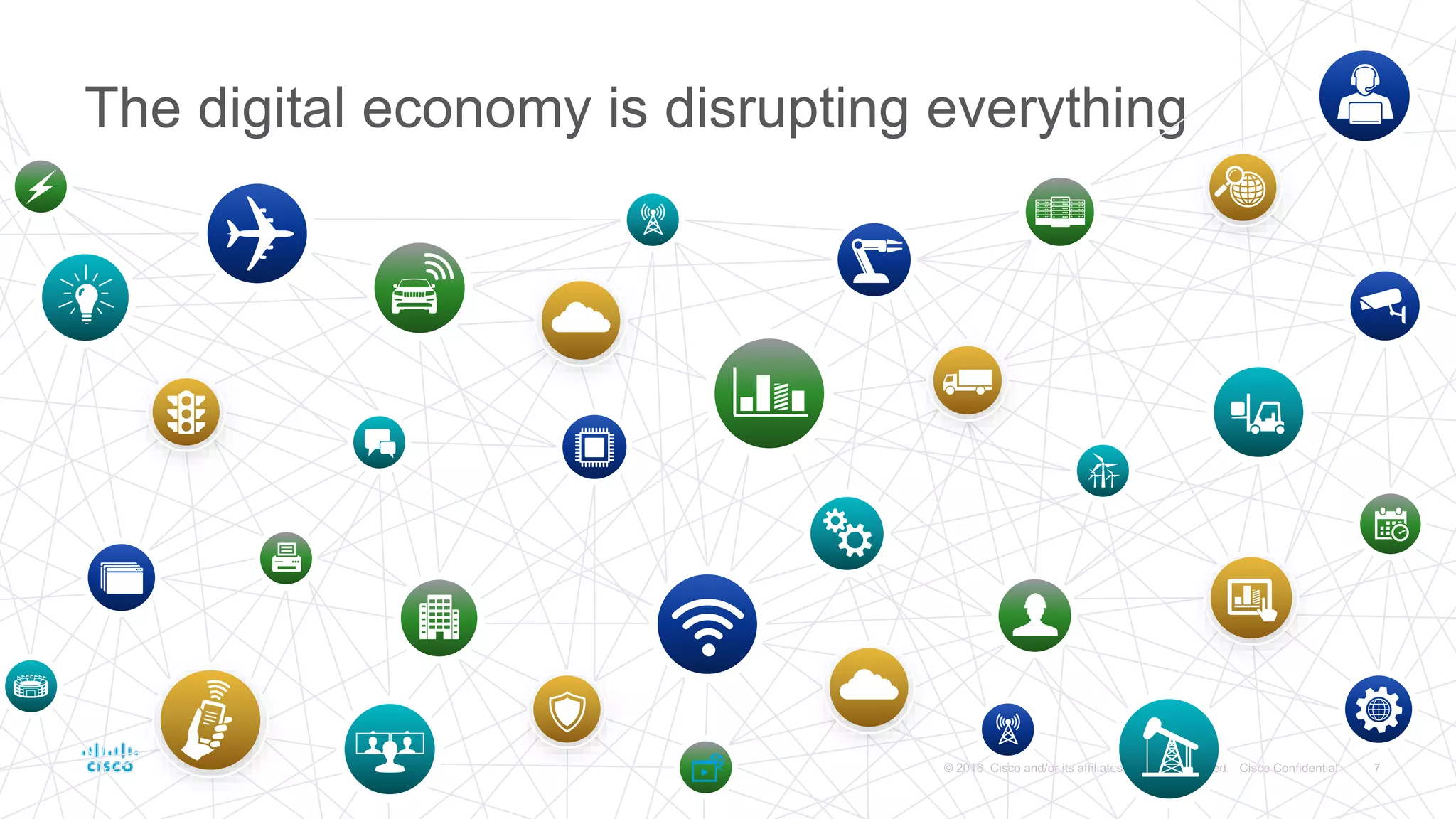
The digital economy is disrupting everything
How much of this is useful?
How do you turn information into insight?
… and insight into action?
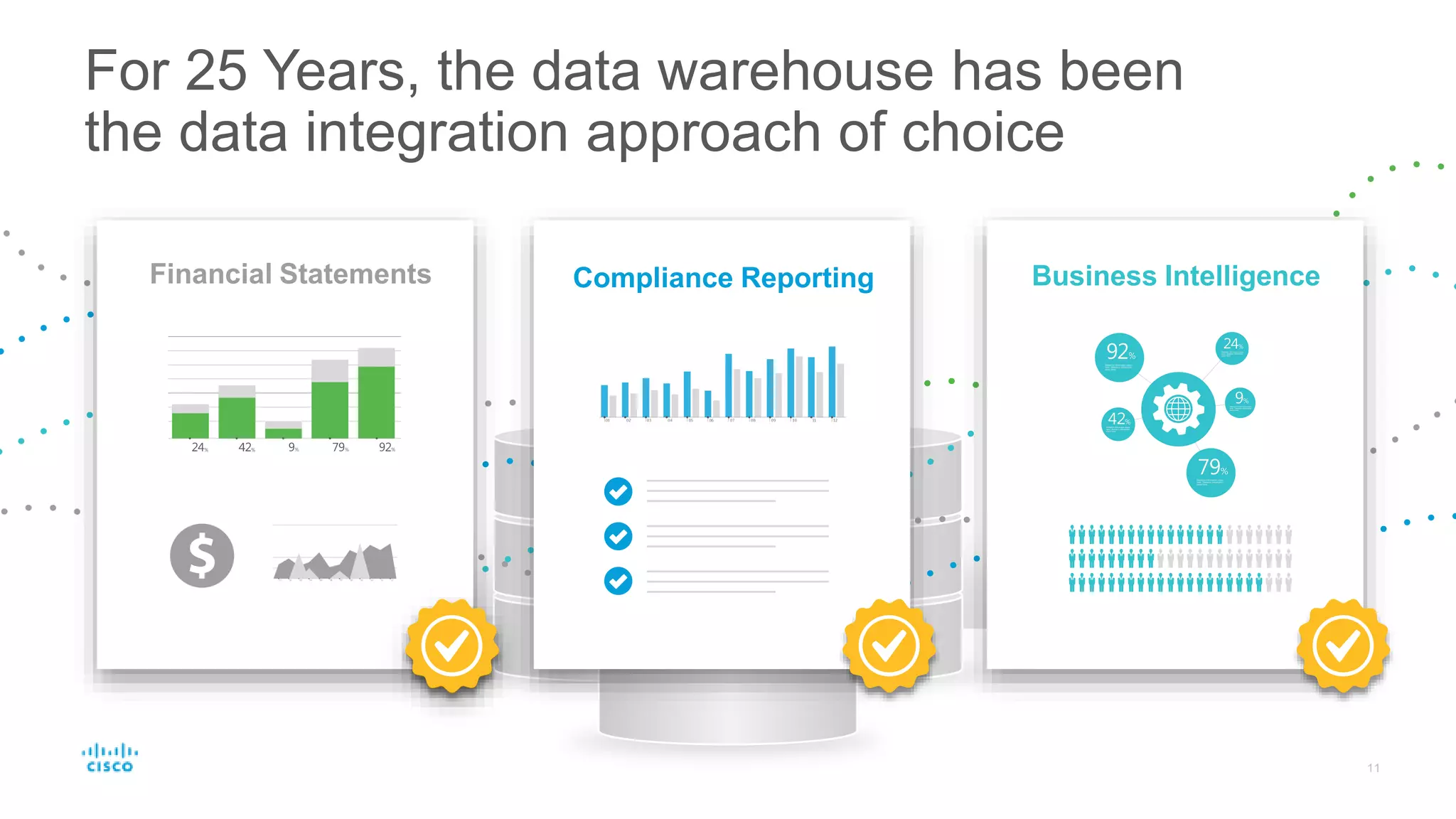
For 25 Years, the data warehouse has been
the data integration approach of choice
Data Warehouse
Financial Statements Business IntelligenceCompliance Reporting
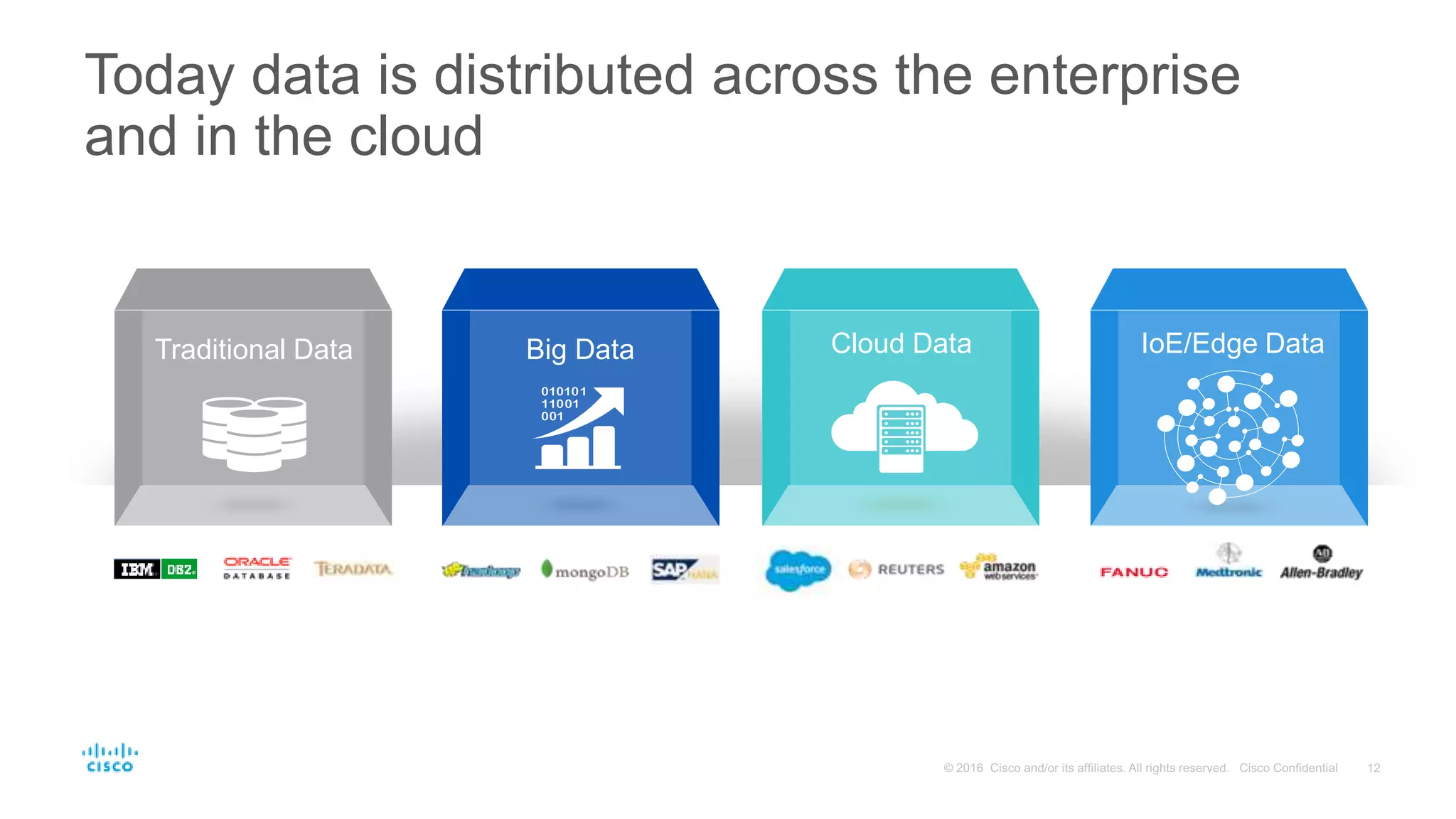
Today data is distributed across the enterprise
and in the cloud
Cloud DataBig DataTraditional Data IoE/Edge Data
Not all data can, or should be loaded into a data
warehouse
But it should be joined-up
• How you join different data-sets together
• Data ownership and governance
• Security
• Making the data platform open
• Portability
• Where do you keep it?
• FOG Computing & Analytics at the edge
• What do you actually want to do with it? (Outcomes)
Wherever it is, you need to consider…
What are others doing?
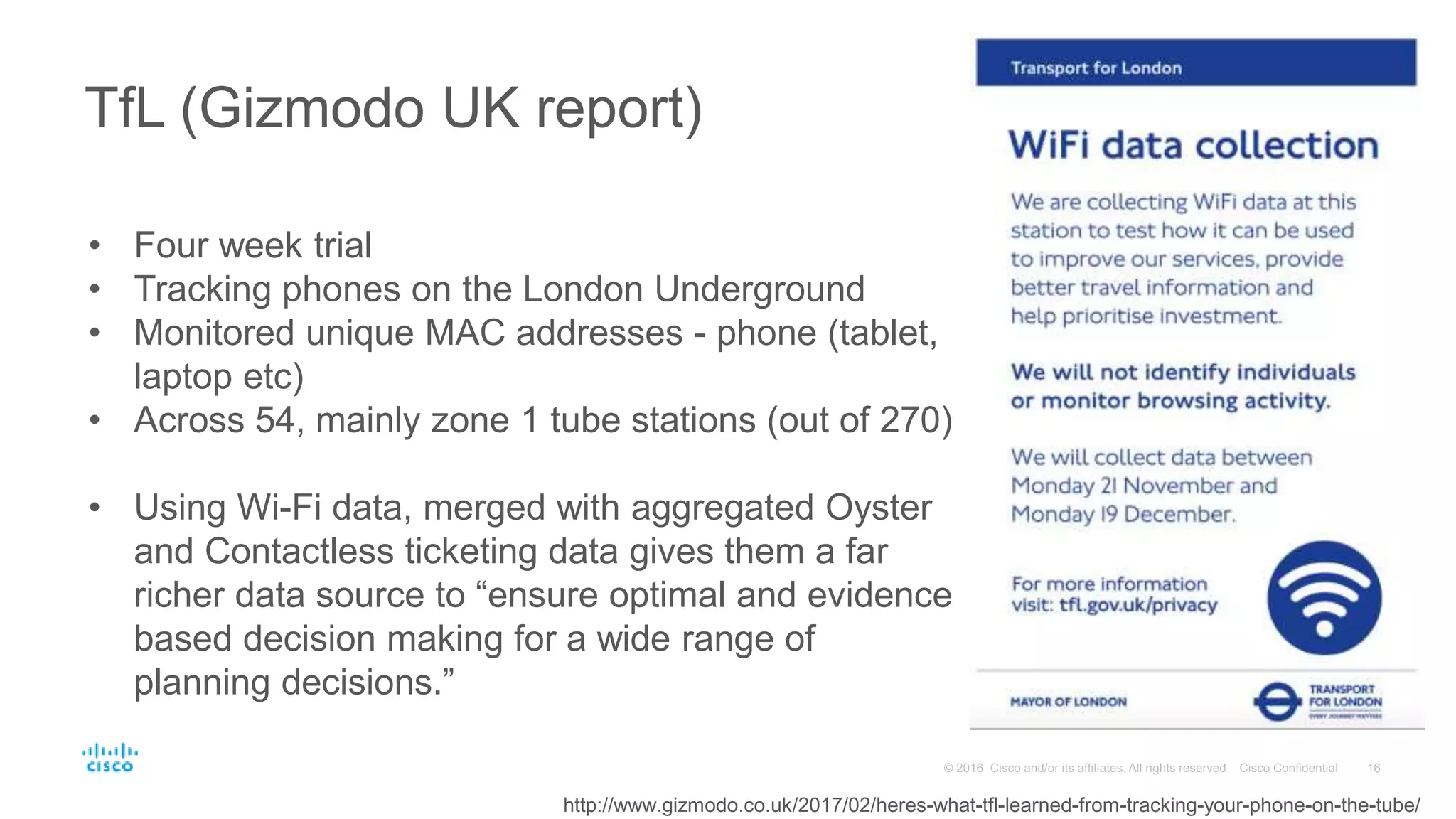
TfL (Gizmodo UK report)
http://www.gizmodo.co.uk/2017/02/heres-what-tfl-learned-from-tracking-your-phone-on-the-tube/
• Four week trial
• Tracking phones on the London Underground
• Monitored unique MAC addresses - phone (tablet,
laptop etc)
• Across 54, mainly zone 1 tube stations (out of 270)
• Using Wi-Fi data, merged with aggregated Oyster
and Contactless ticketing data gives them a far
richer data source to “ensure optimal and evidence
based decision making for a wide range of
planning decisions.”
http://www.gizmodo.co.uk/2017/02/heres-what-tfl-learned-from-tracking-your-phone-on-the-tube/
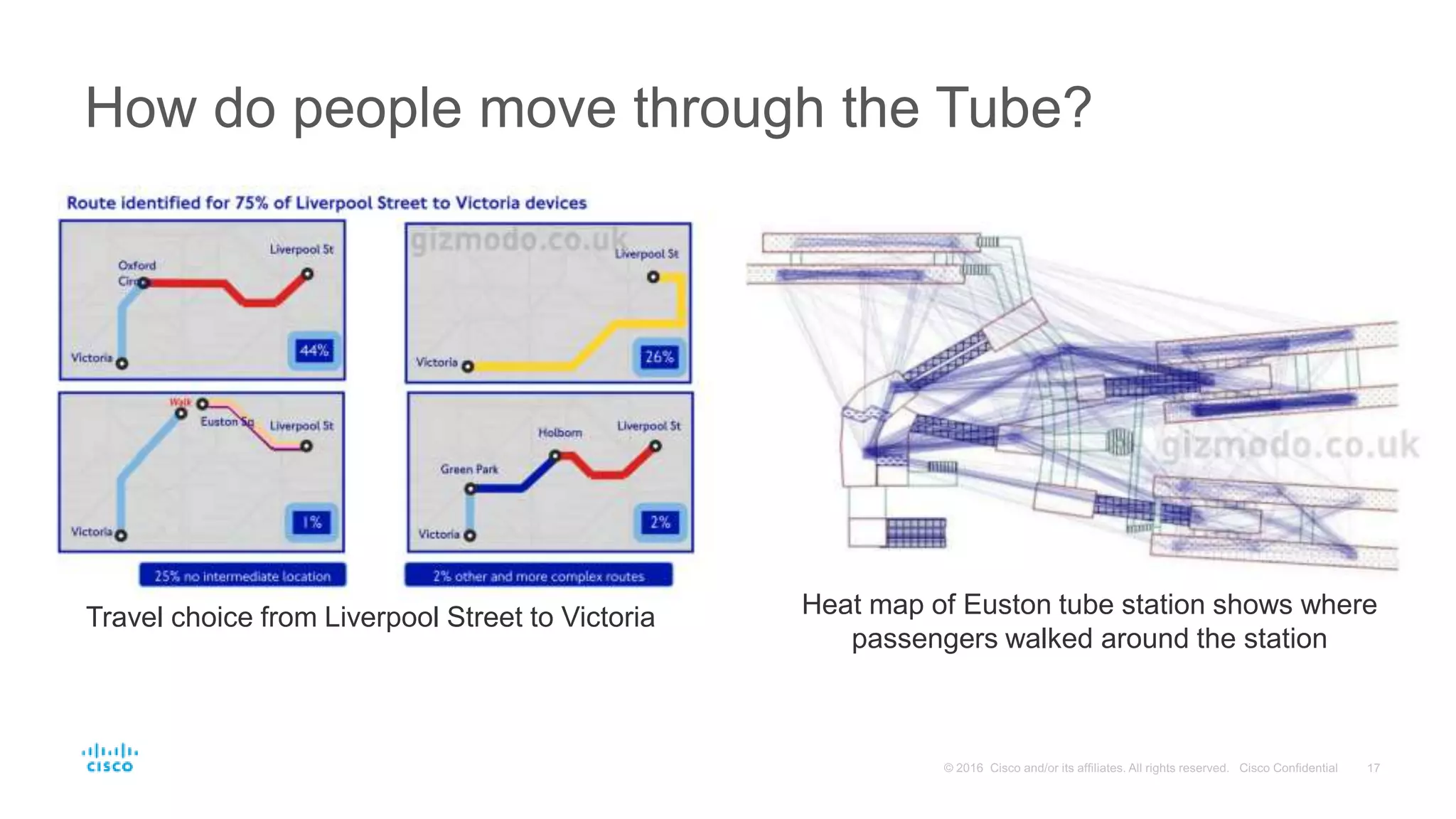
How do people move through the Tube?
Heat map of Euston tube station shows where
passengers walked around the station
Travel choice from Liverpool Street to Victoria
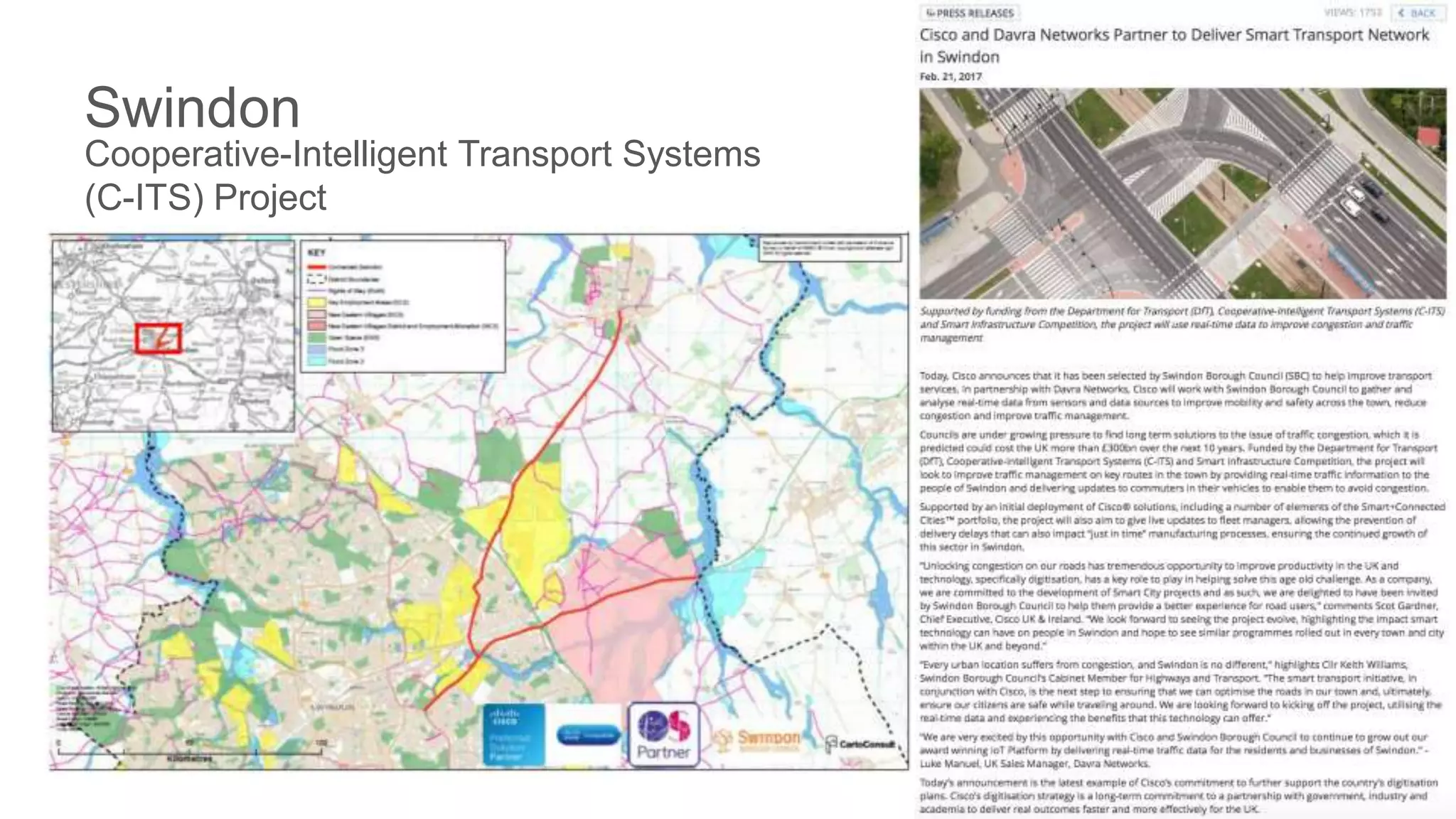
Swindon
Cooperative-Intelligent Transport Systems
(C-ITS) Project
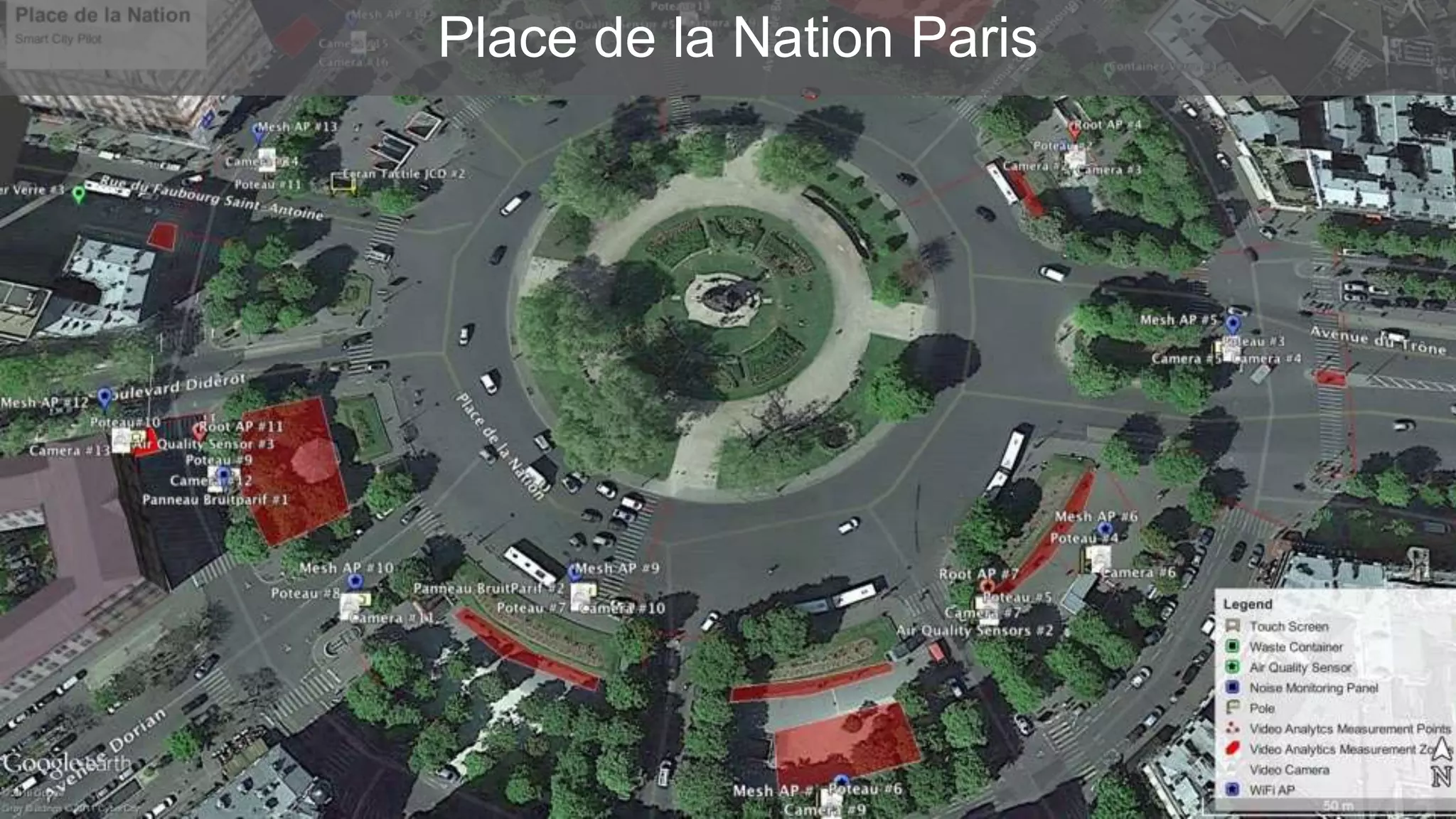
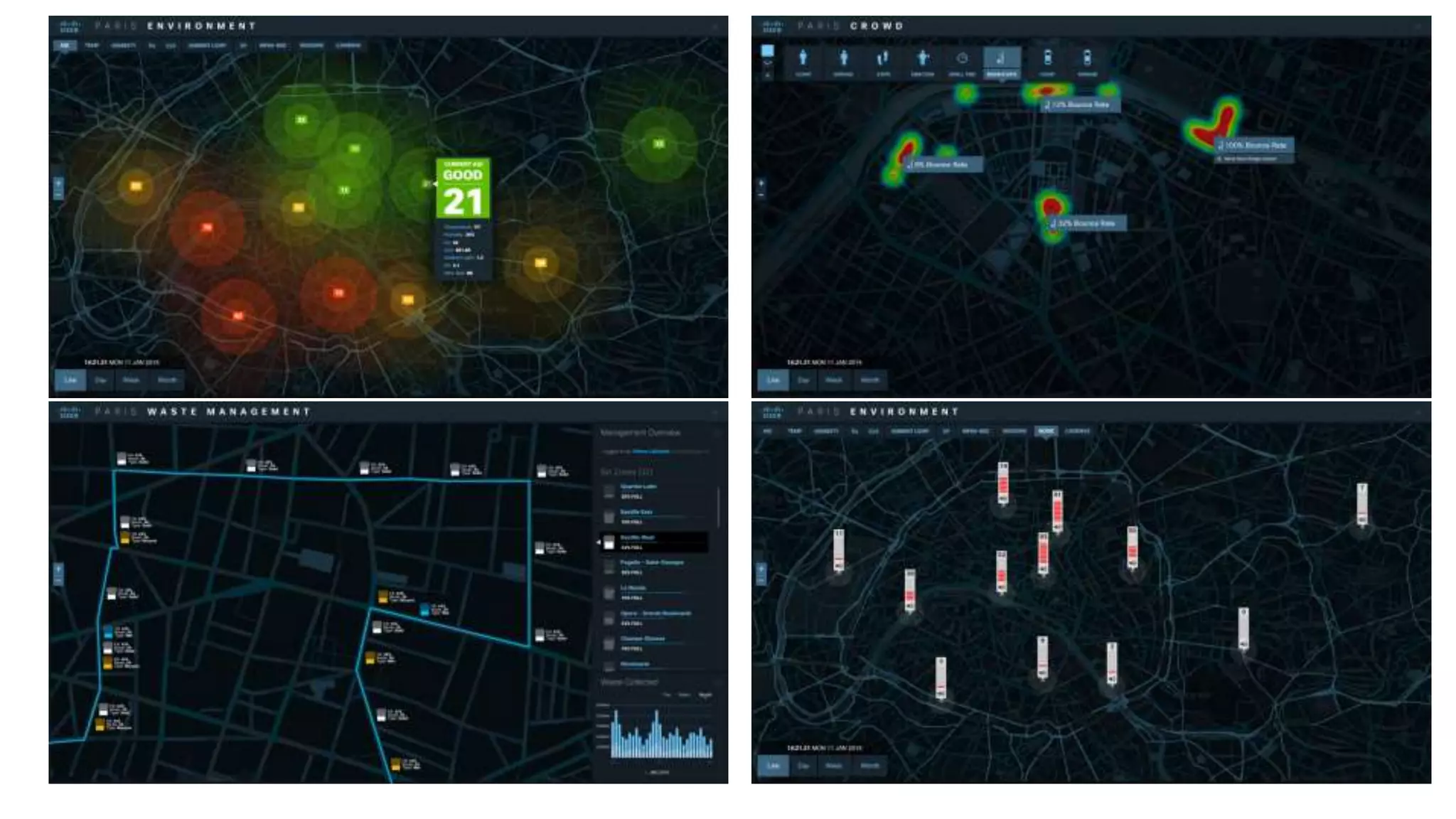
Place de la Nation Paris
Contingency Operations for Strategic
Infrastructure and the Vulnerable
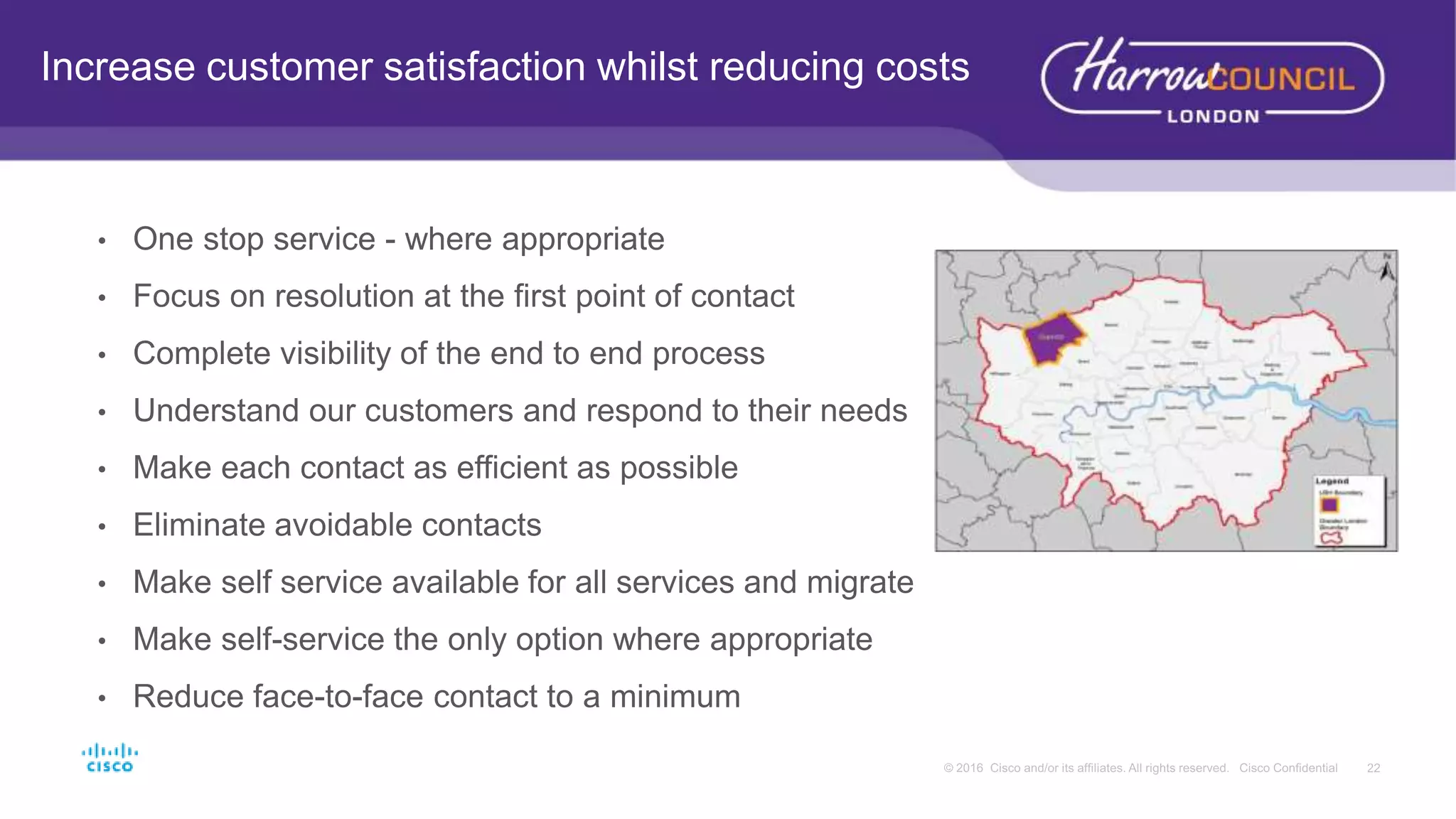
• One stop service - where appropriate
• Focus on resolution at the first point of contact
• Complete visibility of the end to end process
• Understand our customers and respond to their needs
• Make each contact as efficient as possible
• Eliminate avoidable contacts
• Make self service available for all services and migrate
• Make self-service the only option where appropriate
• Reduce face-to-face contact to a minimum
Increase customer satisfaction whilst reducing costs
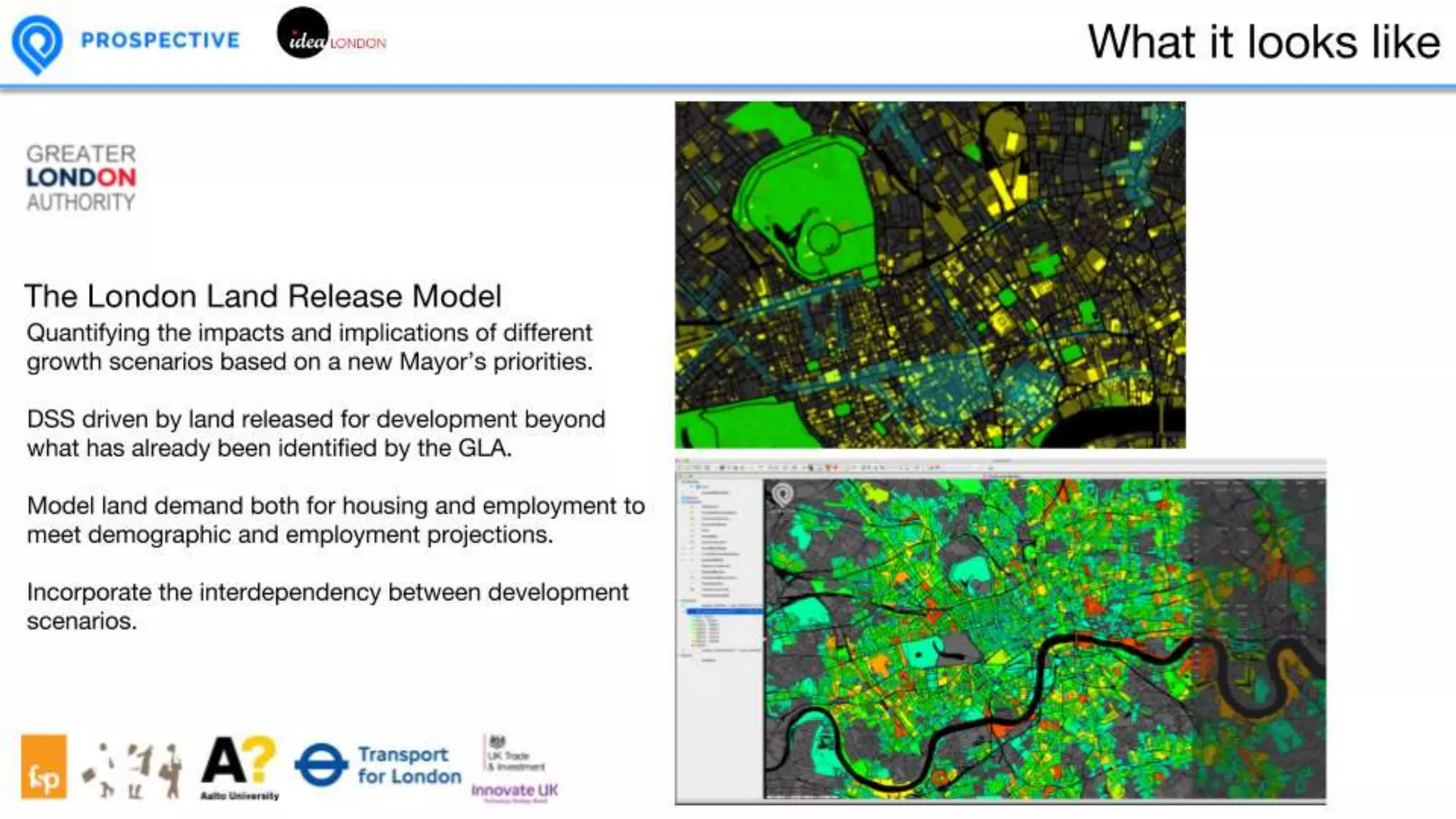
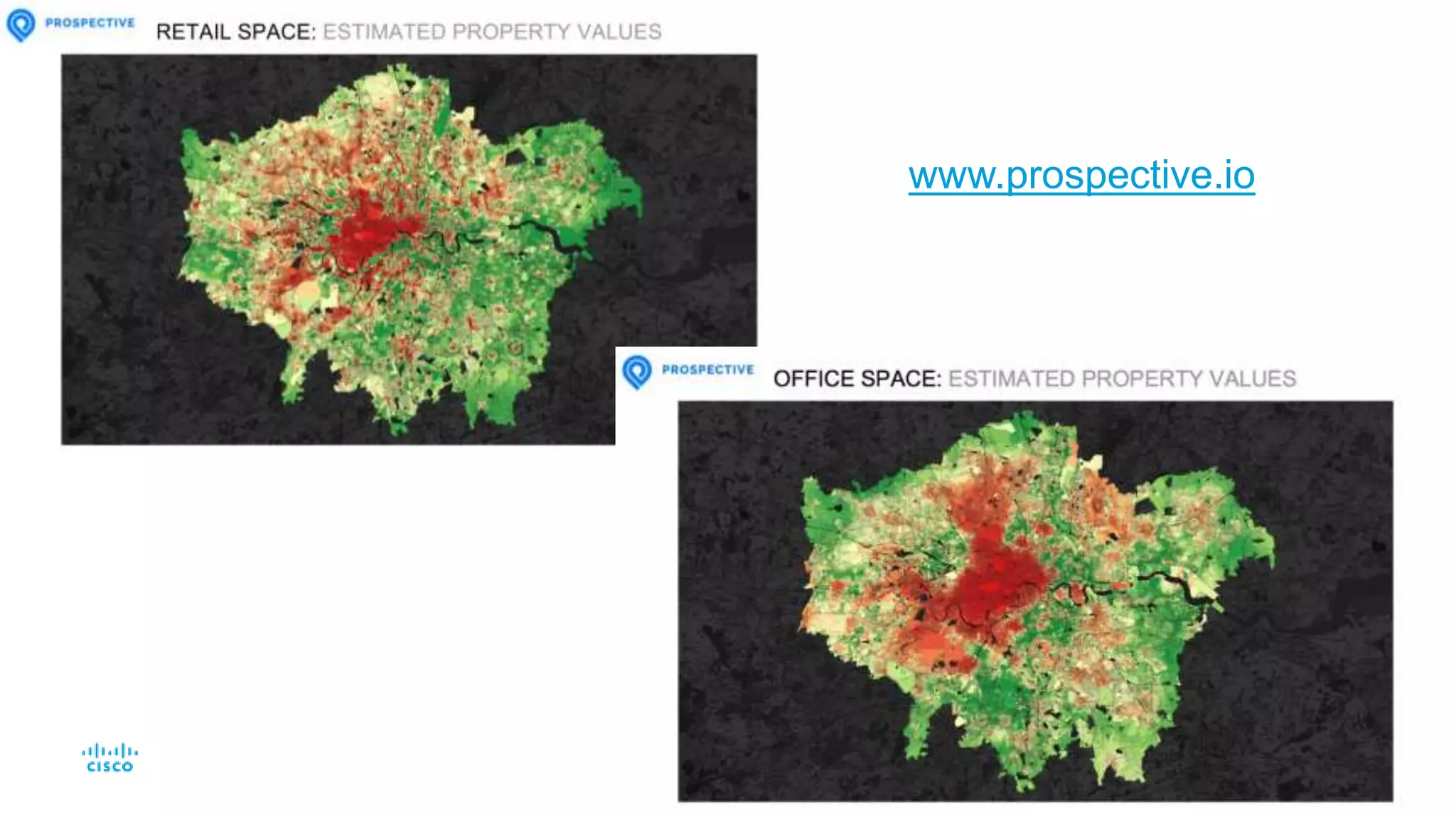
www.prospective.io
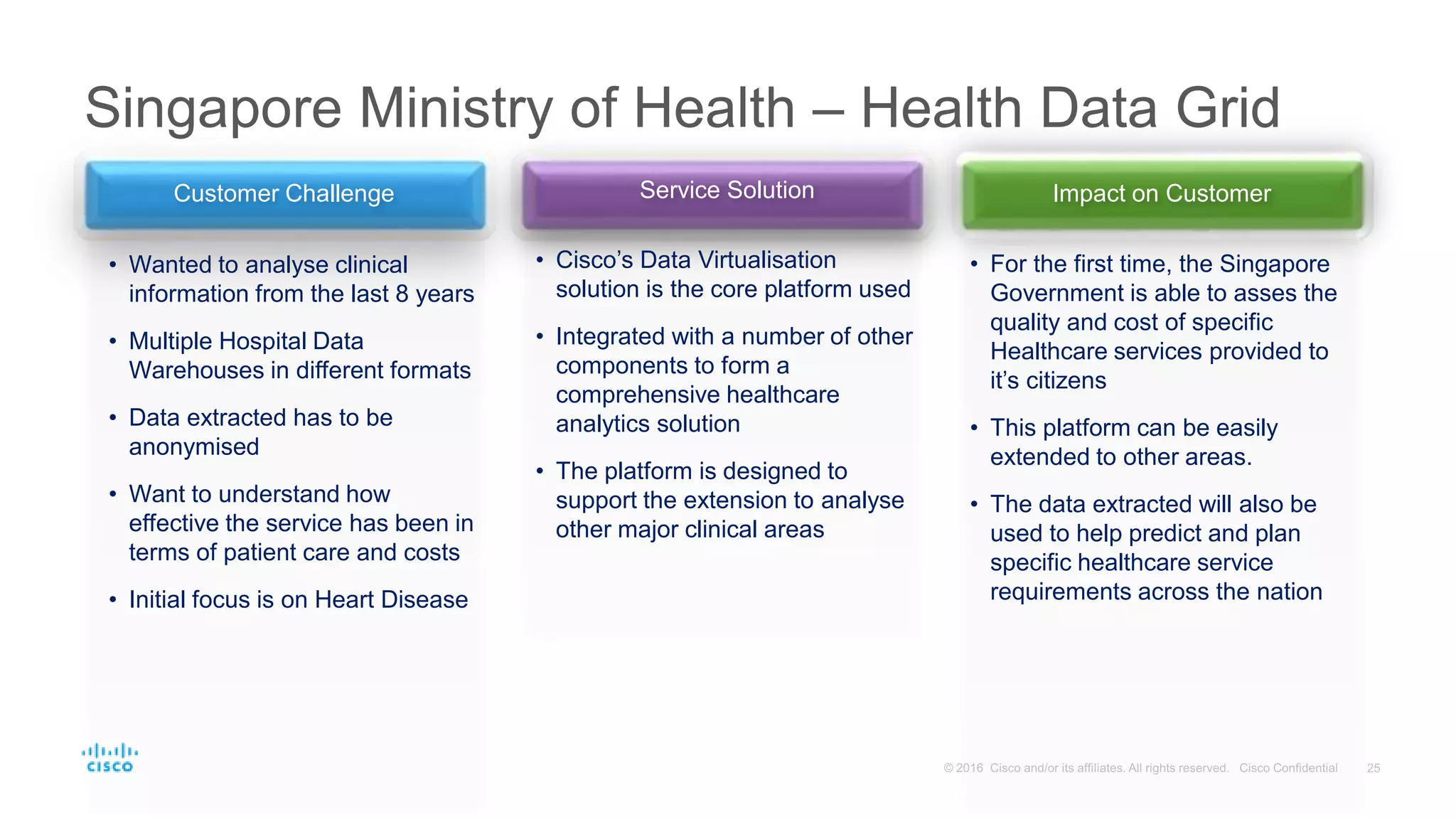
Singapore Ministry of Health – Health Data Grid
• Wanted to analyse clinical
information from the last 8 years
• Multiple Hospital Data
Warehouses in different formats
• Data extracted has to be
anonymised
• Want to understand how
effective the service has been in
terms of patient care and costs
• Initial focus is on Heart Disease
Customer Challenge Service Solution Impact on Customer
• Cisco’s Data Virtualisation
solution is the core platform used
• Integrated with a number of other
components to form a
comprehensive healthcare
analytics solution
• The platform is designed to
support the extension to analyse
other major clinical areas
• For the first time, the Singapore
Government is able to asses the
quality and cost of specific
Healthcare services provided to
it’s citizens
• This platform can be easily
extended to other areas.
• The data extracted will also be
used to help predict and plan
specific healthcare service
requirements across the nation
http://www.sintef.no/en/latest-news/big-data--for-better-or-worse/
• Data inside buildings
• Smart and Connected Communities (towns, cities, regions)
• Machine learning / Artificial Intelligence
• Data as a revenue source
Other things to consider…
Extracting Value from Big Data - Stuart Higgins

Extracting Value from Big Data - Stuart Higgins

  • 1.
    Stu Higgins Headof Smart Cities and IoT Devolution and Smart Regions CDA Lead March 2017 Smart County Conference - Kent Extracting value from Big Data
  • 2.
  • 3.
  • 4.
    Huge amounts ofdata – old and new… Private LegacyPersonal  Valuable Application Local Authority Health & Care Stuff written on pieces of paper Loyalty Card / Membership Public Typed Employee Historical Commercial MobileStatic Dynamic Perishable Location based Social Government Things
  • 5.
    Approximately: • 500 MillionTweets sent & 40 Million Tweets shared • More than 4 Million Hours of content uploaded to YouTube • 3.6 Billion Instagram Likes • 4.3 Billion Facebook messages posted • 5.75 Billion Facebook likes C • 6 Billion daily Google Searches! One day is 1440 minutes https://www.gwava.com/blog/internet-data-created-daily/
  • 6.
    Internet of Things(IoT) Growth - Gartner 2014 2015 2016 2017 2018 2019 2020 3.8b 4.9b 6.4b Source: Gartner, November 2015 https://www.gartner.com/newsroom/id/3165317 IoT Units Installed Base Grand Total Approx’ 5.5 million new things connected every day in 2016 Cisco 50 billion Intel 200+ billion
  • 7.
    The digital economyis disrupting everything
  • 8.
    How much ofthis is useful?
  • 9.
    How do youturn information into insight?
  • 10.
    … and insightinto action?
  • 11.
    For 25 Years,the data warehouse has been the data integration approach of choice Data Warehouse Financial Statements Business IntelligenceCompliance Reporting
  • 12.
    Today data isdistributed across the enterprise and in the cloud Cloud DataBig DataTraditional Data IoE/Edge Data
  • 13.
    Not all datacan, or should be loaded into a data warehouse But it should be joined-up
  • 14.
    • How youjoin different data-sets together • Data ownership and governance • Security • Making the data platform open • Portability • Where do you keep it? • FOG Computing & Analytics at the edge • What do you actually want to do with it? (Outcomes) Wherever it is, you need to consider…
  • 15.
  • 16.
    TfL (Gizmodo UKreport) http://www.gizmodo.co.uk/2017/02/heres-what-tfl-learned-from-tracking-your-phone-on-the-tube/ • Four week trial • Tracking phones on the London Underground • Monitored unique MAC addresses - phone (tablet, laptop etc) • Across 54, mainly zone 1 tube stations (out of 270) • Using Wi-Fi data, merged with aggregated Oyster and Contactless ticketing data gives them a far richer data source to “ensure optimal and evidence based decision making for a wide range of planning decisions.”
  • 17.
    http://www.gizmodo.co.uk/2017/02/heres-what-tfl-learned-from-tracking-your-phone-on-the-tube/ How do peoplemove through the Tube? Heat map of Euston tube station shows where passengers walked around the station Travel choice from Liverpool Street to Victoria
  • 18.
  • 19.
    Place de laNation Paris
  • 21.
    Contingency Operations forStrategic Infrastructure and the Vulnerable
  • 22.
    • One stopservice - where appropriate • Focus on resolution at the first point of contact • Complete visibility of the end to end process • Understand our customers and respond to their needs • Make each contact as efficient as possible • Eliminate avoidable contacts • Make self service available for all services and migrate • Make self-service the only option where appropriate • Reduce face-to-face contact to a minimum Increase customer satisfaction whilst reducing costs
  • 24.
  • 25.
    Singapore Ministry ofHealth – Health Data Grid • Wanted to analyse clinical information from the last 8 years • Multiple Hospital Data Warehouses in different formats • Data extracted has to be anonymised • Want to understand how effective the service has been in terms of patient care and costs • Initial focus is on Heart Disease Customer Challenge Service Solution Impact on Customer • Cisco’s Data Virtualisation solution is the core platform used • Integrated with a number of other components to form a comprehensive healthcare analytics solution • The platform is designed to support the extension to analyse other major clinical areas • For the first time, the Singapore Government is able to asses the quality and cost of specific Healthcare services provided to it’s citizens • This platform can be easily extended to other areas. • The data extracted will also be used to help predict and plan specific healthcare service requirements across the nation
  • 26.
    http://www.sintef.no/en/latest-news/big-data--for-better-or-worse/ • Data insidebuildings • Smart and Connected Communities (towns, cities, regions) • Machine learning / Artificial Intelligence • Data as a revenue source Other things to consider…

Editor's Notes

  • #2 The Smart County Conference is part of Kent Connects’ digital.together transformation programme, a pioneering initiative of awareness and inspiration, focussing on the opportunities that digital creates for all communities and sectors in Kent. This conference will be showcasing a number of fantastic speakers looking from a national to a local level at inspiring Kent to utilise their data to inform ‘smart’ decision making. Kent Connects wants to showcase the wider vision to help encourage involvement and understanding of how we can improve Kent through the better use of our data. As a technology partnership and part of a digital programme the event will be focussing on how Kent can use technology and big data principles to kick-start its digital transformation through better data utilisation. The first session will share their vision of the wider possibilities both at a local and national level, looking at how Kent can embrace new practises and platforms to enable better use of our data to help us make insightful decisions. We will hear from Cisco on how nationally we are improving public services through better use of data, followed by our Keynote Speaker, Ian Watt and the national example of Code the City Aberdeen.
  • #8 The digital economy is disrupting everything. In every industry, data is being created in places it never has before. Creating hyper-distributed data environments. It is becoming ever increasingly hard to reach that data, secure that data, and much less draw an insight and enable a person or process to take action on the data. But data is not the problem, connected data is the problem. If every single employee is a decision-maker, organizations must focus on enhancing the quality of each decision taken. The ability to secure, aggregate, automate, and draw insights from an organization’s own data – with speed – will define value for that organization. When you connect People, Process, Data and Things, new opportunities emerge: New market opportunities New business models New way to operate New ways to consume technology Technology becomes an enabler
  • #10 But, “Data” is the biggest challenge to realizing that opportunity: In a recent Cisco study (2014), 40% of surveyed companies identified Big Data as the area in most of need of improvement within their organization. In the same study, nearly 40% said that within three years, most data will be processed at the network edge on smart devices. They also identified Analytics tools for Big Data as the most important enablers of connected device networking. Which of the following enabling areas do you think your organization needs to improve the most in order to make effective use of IoT solutions? Data - Effectively capturing, storing, and analyzing data generated by connected "things" (e.g., machines, devices) Process - Updating our business and operational processes to benefit from IoT solutions People - Enabling our workers to effectively use IoT solutions through means such as training and providing user-friendly systems Things - Connecting the right "things" (e.g., machines, devices, equipment) to capture useful data
  • #12 As you know a combination of integration via ETL and data replication in a data warehouse has been the approach of choice for enterprise data integration for 25 years. Companies like yours use this approach for core enterprise utilities like financial statement preparation, ongoing compliance reporting, and the utility-style business intelligence needs of large firms. Although ETL/DW has been the approach of choice, we all know that it is very expensive and slow.
  • #13 As you are fully aware, these integrations are getting harder, not easier to pull off. Data is increasingly distributed, both inside and outside the organization, and it's becoming more diverse. Structured data remains, but now less structured data is becoming more important. Data sources moving from static to dynamic – and data like this shouldn’t reside in a data warehouse.
  • #16 Smarter more connected communities will generate huge amounts more data. - Data and Analytics will be crucial to a cities success. Where does it go? What do you do with it? How do you access it? How do you combine it? How do you secure it? Data analysis & visualisation techniques can be used to understand the interconnectivity between different city services & infrastructure and how these projects might impact the city Linking multiple data sources together will be critical to joining up different public sector organisations. Data Virtualisation is a huge opportunity for us all. There are 460 app’s downloadable that use TfL data – none written by TfL! Just a thought - Should we look at data differently – should we look at ‘data for the social good’ of a community?
  • #20 One of the largest squares in Paris (252m wide) Featuring: Pedestrianised areas, Footpaths, Cycle paths, Roads, Green spaces, A subway entrance, Rest/playground areas Key challenge is to better understand the use of public space to anticipate the needs of users and lay the foundations for the public space of tomorrow Gathering of people flow & environmental data for City services and inhabitants
  • #26 Singapore Ministry of Health