‭
The Future of Data Science: Emerging‬
‭
Trends and Technologies‬
‭
Introduction‬
‭
In today's data-driven world, the role of data science continues to evolve at a rapid pace.‬
‭
From predictive analytics to machine learning algorithms, data science has‬
‭
revolutionized industries ranging from healthcare to finance. However, as technology‬
‭
advances and new challenges arise, it's crucial to explore the emerging trends and‬
‭
technologies shaping the future of data science.‬
‭
Artificial Intelligence and Machine Learning‬
‭
Artificial intelligence (AI) and machine learning (ML) are at the forefront of data science‬
‭
innovation. As algorithms become more sophisticated and capable of learning from‬
‭
vast amounts of data, they are powering everything from recommendation systems to‬
‭
autonomous vehicles. The future of data science will undoubtedly be driven by AI and‬
‭
ML, with applications spanning diverse fields such as natural language processing,‬
‭
computer vision, and robotics.‬
‭
Edge Computing‬
‭
With the proliferation of IoT devices and the increasing demand for real-time data‬
‭
processing, edge computing is emerging as a critical technology in data science. By‬
‭
moving computational tasks closer to the data source, edge computing reduces latency‬
‭
and bandwidth usage while improving scalability and reliability. In the future, data‬
‭
scientists will leverage edge computing to analyze and act on data in near real-time,‬
‭
enabling applications like smart cities, autonomous drones, and industrial automation.‬
‭
Quantum Computing‬
‭
Quantum computing promises to revolutionize data science by solving complex‬
‭
problems that are currently intractable for classical computers. With exponentially more‬
‭
processing power, quantum computers can tackle optimization, cryptography, and‬
‭
machine learning tasks at an unprecedented scale. While quantum computing is still in‬
‭
its early stages, researchers are making significant strides towards practical‬
‭
applications, and its integration into data science workflows holds immense potential‬
‭
for solving some of the most pressing challenges in the field.‬
‭
Federated Learning‬
‭
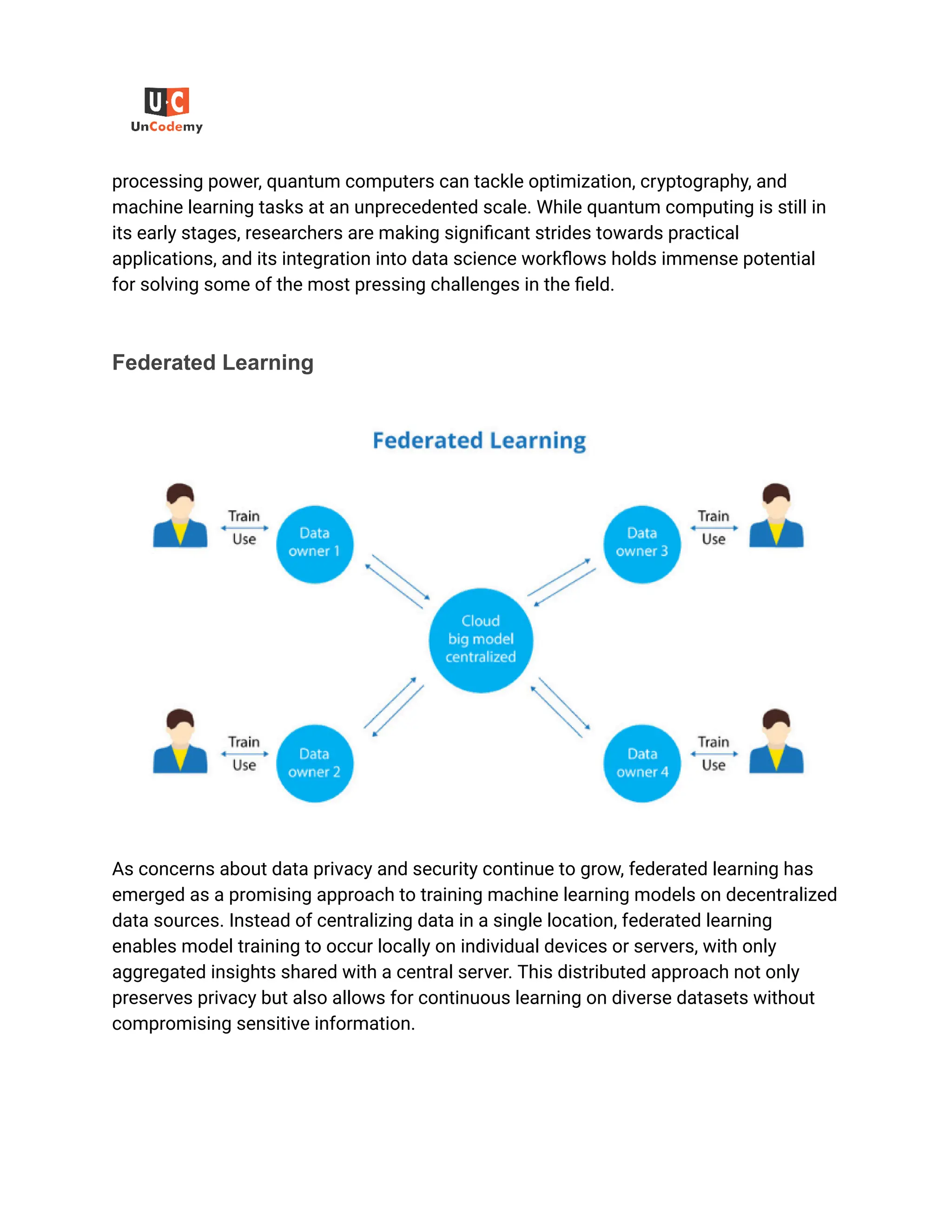
As concerns about data privacy and security continue to grow, federated learning has‬
‭
emerged as a promising approach to training machine learning models on decentralized‬
‭
data sources. Instead of centralizing data in a single location, federated learning‬
‭
enables model training to occur locally on individual devices or servers, with only‬
‭
aggregated insights shared with a central server. This distributed approach not only‬
‭
preserves privacy but also allows for continuous learning on diverse datasets without‬
‭
compromising sensitive information.‬
‭
Explainable AI‬
‭
As AI systems become more prevalent in decision-making processes, there is a growing‬
‭
need for transparency and accountability. Explainable AI aims to provide insights into‬
‭
how machine learning models arrive at their predictions, enabling stakeholders to‬
‭
understand and trust the decisions made by AI systems. By uncovering the underlying‬
‭
factors influencing model outputs, explainable AI not only enhances interpretability but‬
‭
also helps identify biases and errors that may arise during the model development‬
‭
process.‬
‭
Automated Machine Learning (AutoML)‬
‭
While machine learning has traditionally required a high level of expertise to develop and‬
‭
deploy models, AutoML is democratizing access to AI by automating the entire machine‬
‭
learning pipeline. From data preprocessing and feature engineering to model selection‬
‭
and hyperparameter tuning, AutoML platforms streamline the process of building and‬
‭
deploying machine learning models, allowing non-experts to leverage the power of AI for‬
‭
their applications. As AutoML continues to advance, it will empower organizations to‬
‭
extract valuable insights from their data with minimal manual intervention.‬
‭
Augmented Analytics‬
‭
Augmented analytics combines traditional analytics with AI and ML techniques to‬
‭
enhance the capabilities of data analysts and business users. By automating data‬
‭
preparation, analysis, and insight generation, augmented analytics platforms enable‬
‭
users to uncover hidden patterns and trends in their data more efficiently. With natural‬
‭
language processing and automated visualization tools, augmented analytics‬
‭
democratizes data science and empowers users at all levels of an organization to make‬
‭
data-driven decisions.‬
‭
Ethical AI and Responsible Data Science‬
‭
As data science becomes increasingly integrated into society, ensuring ethical and‬
‭
responsible use of data is paramount. Ethical AI frameworks and guidelines are‬
‭
emerging to address concerns related to bias, fairness, transparency, and accountability‬
‭
in AI systems. Data scientists are now expected to consider the ethical implications of‬
‭
their work throughout the entire data lifecycle, from data collection and preprocessing‬
‭
to model development and deployment. By prioritizing ethical considerations, data‬
‭
scientists can build trust with stakeholders and mitigate the potential risks associated‬
‭
with AI technologies.‬
‭
Conclusion‬
‭
The future of data science is bright and full of possibilities. As emerging technologies‬
‭
continue to reshape the landscape of data science, professionals in the field need to‬
‭
stay abreast of the latest trends and innovations. By embracing AI, edge computing,‬
‭
quantum computing, federated learning, explainable AI, AutoML, augmented analytics,‬
‭
and ethical AI practices, data scientists can unlock new opportunities and address‬
‭
complex challenges in a rapidly evolving digital ecosystem. As we embark on this‬
‭
journey into the future of data science, let us remember the importance of using‬
‭
technology responsibly and ethically to create a better world for all. Also, if you want to‬
‭
know more about Data Science then there are‬‭
Best Data Science course in Noida‬
‭
, Delhi‬
‭
and all other cities of India from where you can get further information.‬
‭
Source of link:‬
‭
https://vaishaliit.wordpress.com/2024/04/17/tips-for-building-a-portfolio-to-showcase-‬
‭
your-data-science-skills/‬

The Future of Data Science: Emerging Trends and Technologies

  • 1.
    ‭ The Future ofData Science: Emerging‬ ‭ Trends and Technologies‬ ‭ Introduction‬ ‭ In today's data-driven world, the role of data science continues to evolve at a rapid pace.‬ ‭ From predictive analytics to machine learning algorithms, data science has‬ ‭ revolutionized industries ranging from healthcare to finance. However, as technology‬ ‭ advances and new challenges arise, it's crucial to explore the emerging trends and‬ ‭ technologies shaping the future of data science.‬
  • 2.
    ‭ Artificial Intelligence andMachine Learning‬ ‭ Artificial intelligence (AI) and machine learning (ML) are at the forefront of data science‬ ‭ innovation. As algorithms become more sophisticated and capable of learning from‬ ‭ vast amounts of data, they are powering everything from recommendation systems to‬ ‭ autonomous vehicles. The future of data science will undoubtedly be driven by AI and‬ ‭ ML, with applications spanning diverse fields such as natural language processing,‬ ‭ computer vision, and robotics.‬ ‭ Edge Computing‬ ‭ With the proliferation of IoT devices and the increasing demand for real-time data‬ ‭ processing, edge computing is emerging as a critical technology in data science. By‬ ‭ moving computational tasks closer to the data source, edge computing reduces latency‬ ‭ and bandwidth usage while improving scalability and reliability. In the future, data‬ ‭ scientists will leverage edge computing to analyze and act on data in near real-time,‬ ‭ enabling applications like smart cities, autonomous drones, and industrial automation.‬ ‭ Quantum Computing‬ ‭ Quantum computing promises to revolutionize data science by solving complex‬ ‭ problems that are currently intractable for classical computers. With exponentially more‬
  • 3.
    ‭ processing power, quantumcomputers can tackle optimization, cryptography, and‬ ‭ machine learning tasks at an unprecedented scale. While quantum computing is still in‬ ‭ its early stages, researchers are making significant strides towards practical‬ ‭ applications, and its integration into data science workflows holds immense potential‬ ‭ for solving some of the most pressing challenges in the field.‬ ‭ Federated Learning‬ ‭ As concerns about data privacy and security continue to grow, federated learning has‬ ‭ emerged as a promising approach to training machine learning models on decentralized‬ ‭ data sources. Instead of centralizing data in a single location, federated learning‬ ‭ enables model training to occur locally on individual devices or servers, with only‬ ‭ aggregated insights shared with a central server. This distributed approach not only‬ ‭ preserves privacy but also allows for continuous learning on diverse datasets without‬ ‭ compromising sensitive information.‬
  • 4.
    ‭ Explainable AI‬ ‭ As AIsystems become more prevalent in decision-making processes, there is a growing‬ ‭ need for transparency and accountability. Explainable AI aims to provide insights into‬ ‭ how machine learning models arrive at their predictions, enabling stakeholders to‬ ‭ understand and trust the decisions made by AI systems. By uncovering the underlying‬ ‭ factors influencing model outputs, explainable AI not only enhances interpretability but‬ ‭ also helps identify biases and errors that may arise during the model development‬ ‭ process.‬ ‭ Automated Machine Learning (AutoML)‬ ‭ While machine learning has traditionally required a high level of expertise to develop and‬ ‭ deploy models, AutoML is democratizing access to AI by automating the entire machine‬ ‭ learning pipeline. From data preprocessing and feature engineering to model selection‬ ‭ and hyperparameter tuning, AutoML platforms streamline the process of building and‬ ‭ deploying machine learning models, allowing non-experts to leverage the power of AI for‬ ‭ their applications. As AutoML continues to advance, it will empower organizations to‬ ‭ extract valuable insights from their data with minimal manual intervention.‬ ‭ Augmented Analytics‬ ‭ Augmented analytics combines traditional analytics with AI and ML techniques to‬ ‭ enhance the capabilities of data analysts and business users. By automating data‬ ‭ preparation, analysis, and insight generation, augmented analytics platforms enable‬ ‭ users to uncover hidden patterns and trends in their data more efficiently. With natural‬ ‭ language processing and automated visualization tools, augmented analytics‬ ‭ democratizes data science and empowers users at all levels of an organization to make‬ ‭ data-driven decisions.‬
  • 5.
    ‭ Ethical AI andResponsible Data Science‬ ‭ As data science becomes increasingly integrated into society, ensuring ethical and‬ ‭ responsible use of data is paramount. Ethical AI frameworks and guidelines are‬ ‭ emerging to address concerns related to bias, fairness, transparency, and accountability‬ ‭ in AI systems. Data scientists are now expected to consider the ethical implications of‬ ‭ their work throughout the entire data lifecycle, from data collection and preprocessing‬ ‭ to model development and deployment. By prioritizing ethical considerations, data‬ ‭ scientists can build trust with stakeholders and mitigate the potential risks associated‬ ‭ with AI technologies.‬ ‭ Conclusion‬ ‭ The future of data science is bright and full of possibilities. As emerging technologies‬ ‭ continue to reshape the landscape of data science, professionals in the field need to‬ ‭ stay abreast of the latest trends and innovations. By embracing AI, edge computing,‬ ‭ quantum computing, federated learning, explainable AI, AutoML, augmented analytics,‬ ‭ and ethical AI practices, data scientists can unlock new opportunities and address‬ ‭ complex challenges in a rapidly evolving digital ecosystem. As we embark on this‬ ‭ journey into the future of data science, let us remember the importance of using‬ ‭ technology responsibly and ethically to create a better world for all. Also, if you want to‬ ‭ know more about Data Science then there are‬‭ Best Data Science course in Noida‬ ‭ , Delhi‬ ‭ and all other cities of India from where you can get further information.‬ ‭ Source of link:‬ ‭ https://vaishaliit.wordpress.com/2024/04/17/tips-for-building-a-portfolio-to-showcase-‬ ‭ your-data-science-skills/‬